 Date & Time
- April 14th, 2026
- 10:00 – 14:30 CET
 Location
- Basel, Switzerland


Structure Prediction, Target Enablement & Rational Predictive Tox
Dear Colleague,
Join us for an interactive, free-of-charge session on Tuesday, April 14th at the Radisson Blu Hotel, Basel, as we explore how to overcome the critical bottlenecks of static crystal structures and “black box” toxicology in modern drug discovery.
In this Lunch & Learn, Schrödinger Scientists will demonstrate a physics-based workflow to bypass the “Rigid-Receptor” problem (Session I) and refine AI-generated global folds into actionable, modeling-ready 3D blueprints (Session II). Finally, we demonstrate how to transform off-target liabilities (hERG, CYP, Nuclear Receptors) into manageable design parameters, allowing you to generate structural hypotheses from as few as 10 assayed compounds and surgically engineer out safety risks while maintaining primary potency (Session III).
Induced-Fit Modeling | De Novo Structure Prediction | Rational Predictive Toxicology | Lead Optimization |Structural Enablement | Physics-based ML
Program:
+09:30 – 10:00 Welcome Coffee
10:00 – 11:00 Session I: Achieving Structural Enablement for Novel Chemotypes
- Challenge: Existing structures or close homologs are rarely enough; a single misplaced side chain can render a structure useless for a new chemical series.
- Solution: Bypass the “Rigid-Receptor” problem using physics-based induced-fit modeling to characterize protein-ligand binding modes without waiting for new crystallography.
11:00 – 12:00 Session II: De Novo Structure Prediction for Rational Design
- Challenge: AI models like AlphaFold lack the atomic-level pocket precision required for reliable lead optimization.
- Solution: We introduce an automated pipeline that integrates AI folds with physics-based refinement to unlock precise structural modeling.
+12:00 – 13:30 Lunch Buffet & Networking
13:30 – 14:30 Session III: Transforming Toxicology into a Design Tool
- Challenge: Off-target liabilities (hERG, CYP) are typically “black box” failures, forcing teams into expensive “guess-and-check” cycles.
- Solution: Use atomic-resolution modeling to visualize interactions driving toxicity. Generate structural hypotheses from as few as 10 compounds to mitigate safety risks while maintaining primary potency.
14:30 – open end Discussion & Networking
Join us in the afternoon for a Q&A and networking session with our Scientists and Account Managers, providing an opportunity to present your questions and challenges, which the Schrödinger team will endeavor to address.
Register today to secure your seat!
The seminar is free to attend but preregistration is required as seats are limited. Previous-experience with the Schrödinger suite is not required.
Our Speaker
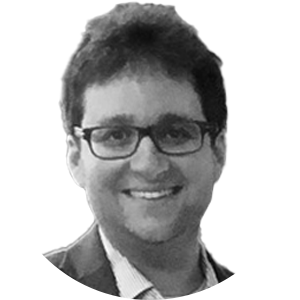
Ed Miller
Vice President, Life Science Software
Edward Miller, Senior Director of Protein Structure Modeling, joined Schrödinger in 2014, and is responsible for advancing the domain of applicability of structure-based drug discovery into challenging targets and off-targets. Dr. Miller obtained his PhD from Columbia University, where he was awarded a DOE research fellowship. His thesis work with Professor Richard Friesner involved developing methods to accurately model loop conformations across a broad array of protein families. His recent work has been focused on methods development for induced fit docking and protein structure refinement.