FEP+

High-performance free energy calculations for drug discovery

Life Science: FEP+

Discover better quality molecules, faster with FEP+

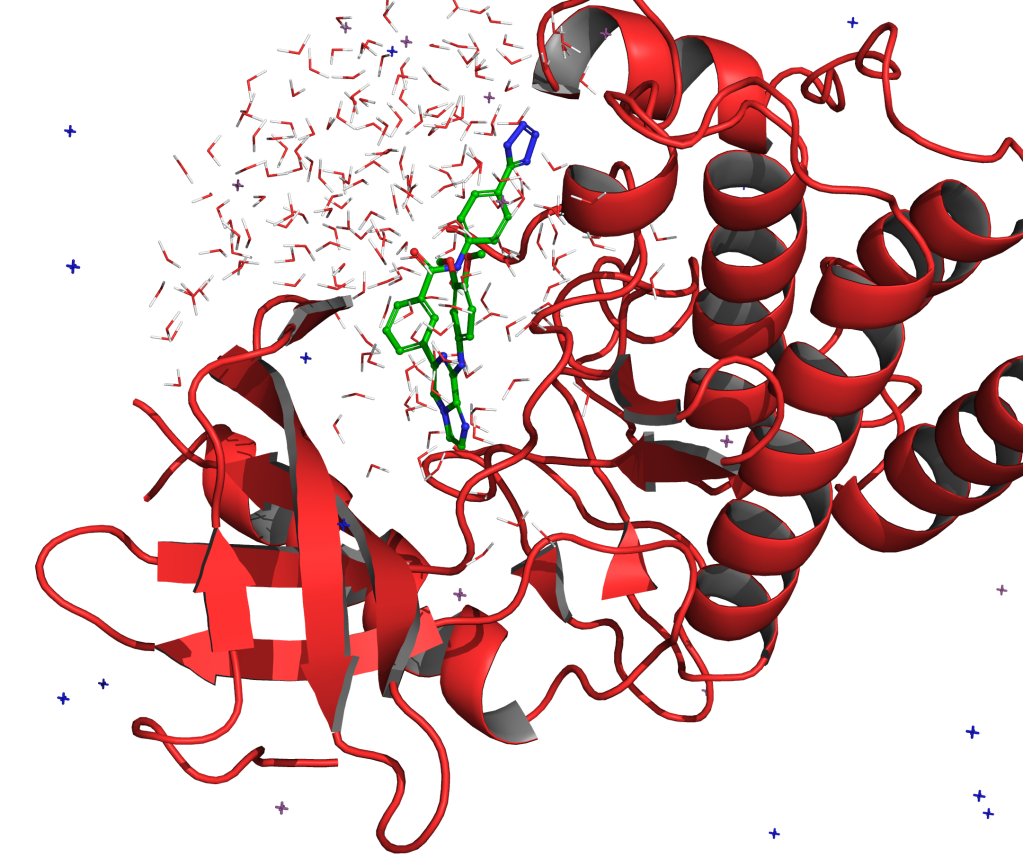
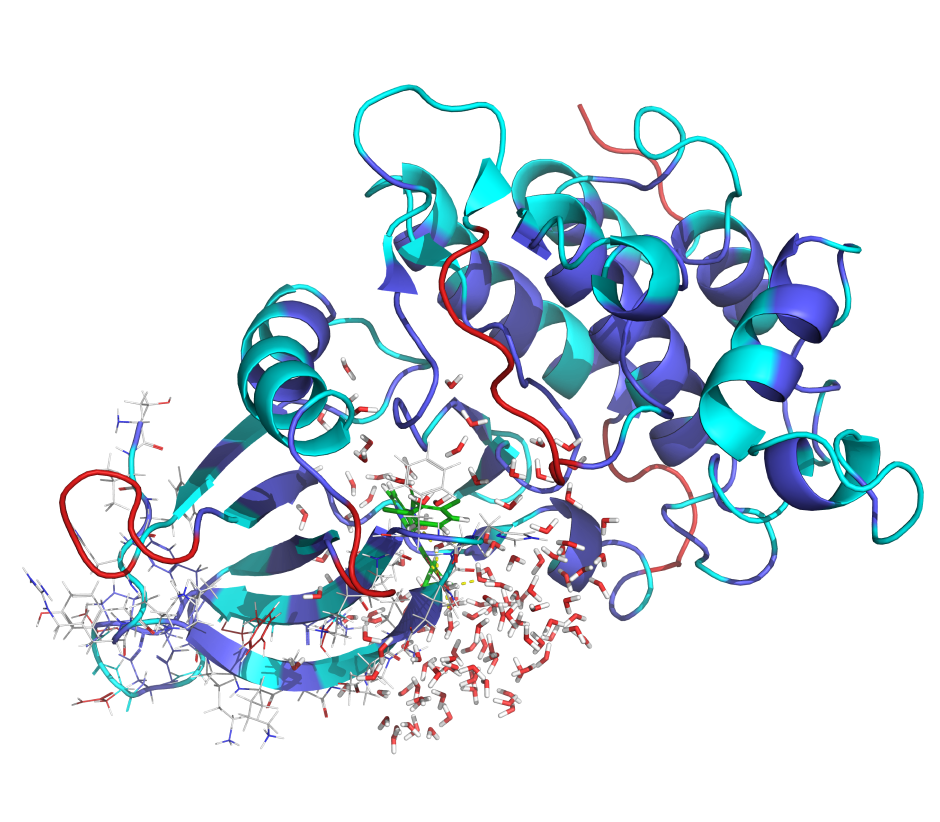
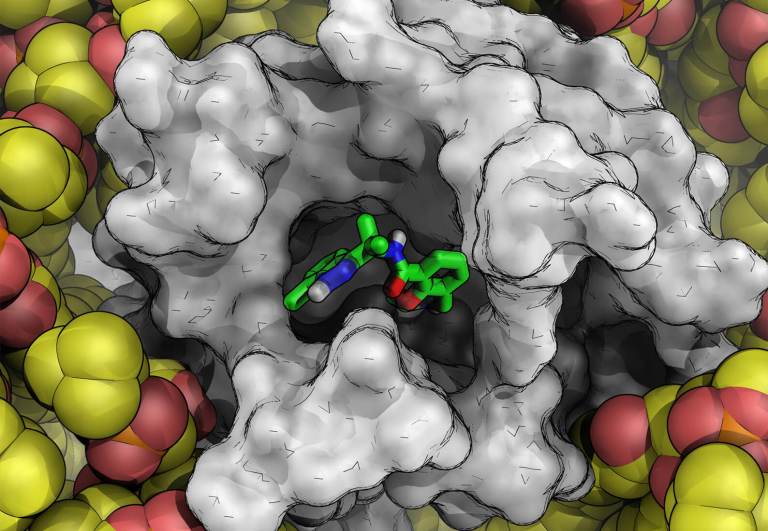
FEP+ is Schrödinger’s proprietary, physics-based free energy perturbation technology for computationally predicting protein-ligand binding at an accuracy matching experimental methods, across broad chemical space.

Explore vast chemical space and reduce costs

Leverage FEP+ as an accurate in silico binding affinity assay to drive rapid virtual design cycles and focus experimental efforts on only the highest quality ideas

Improve molecular profiles, efficiently

Optimize multiple properties simultaneously, including potency, selectivity, and solubility, to improve the profile and developability of small and large molecules

Pursue novel chemistry with confidence

Synthesize novel and challenging chemistry with a high degree of confidence through prospective application of FEP+

Continuously pushing the state of the art in free energy methods

Gold standard accuracy

Predictive accuracy approaching experiment (1 kcal/mol) as demonstrated in large-scale validation studies across diverse ligands and protein classes

Proven impact in drug discovery

Widely adopted by leading pharma and biotech companies, with several drug candidates in the clinic driven by FEP+

Highly versatile

Supports the broadest range of applications and perturbation types common in drug discovery scenarios and consistently expanded through active R&D

Apply FEP+ to diverse applications across the drug discovery process

Structure Prediction & Target Enablement

Structure Prediction & Target Enablement

  • Check greenValidate protein models without experimental structures or from low resolution structures using IFD-MD with FEP+
  • Check greenStructurally enable off-targets and design out common ADMET liabilities
Hit Discovery

Hit Discovery

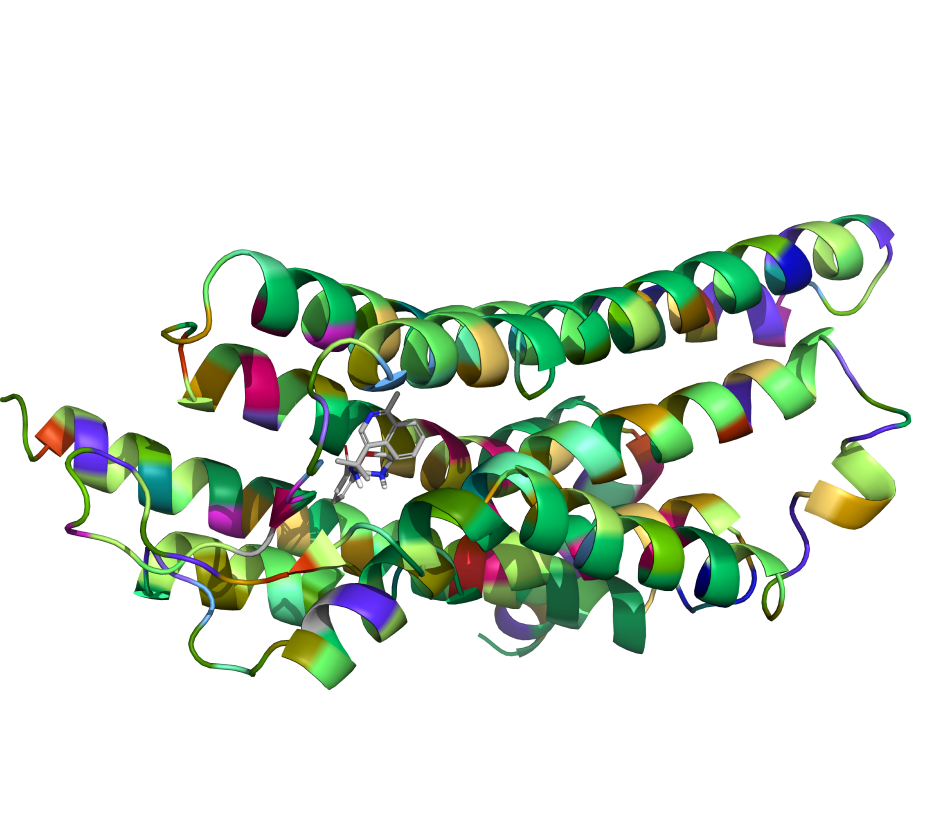
  • Check greenRescore hits from virtual screens to prioritize synthesis lists and improve using absolute binding FEP+

  • Check greenLeverage available chemical matter to efficiently discover novel cores via core hopping 

  • Check greenPerform large-scale in silico fragment screens using absolute binding FEP+ and solubility FEP+
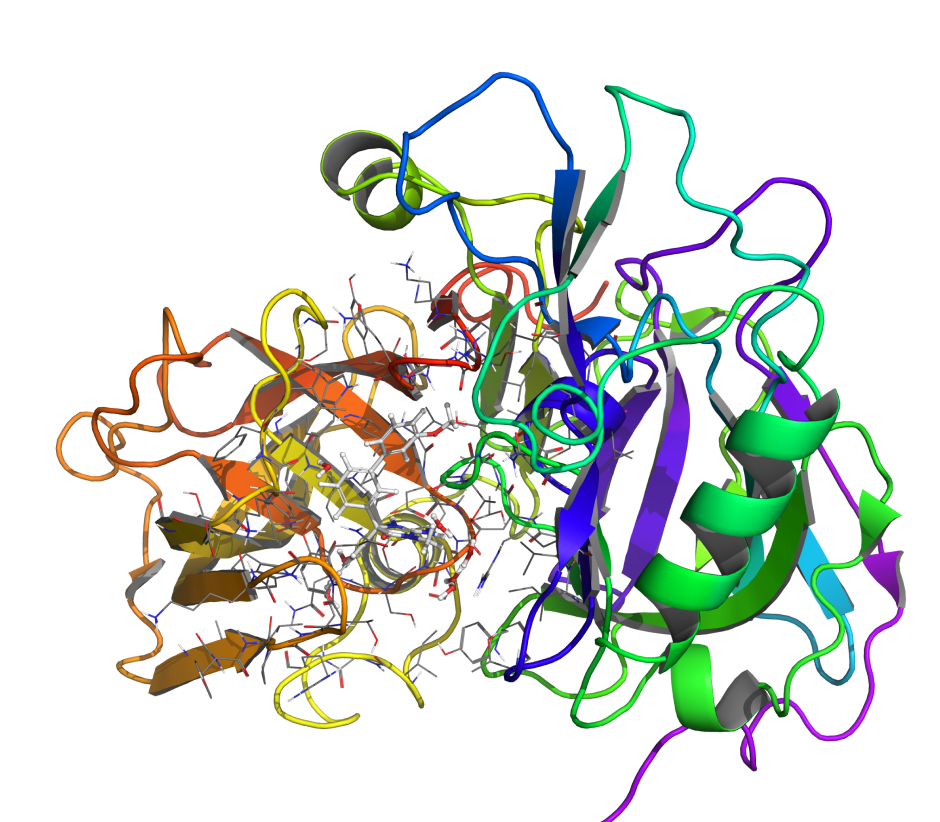
Hit-to-Lead & Lead Optimization

Hit-to-Lead & Lead Optimization

  • Check greenRapidly optimize on-target potency by leveraging FEP+ as an in silico binding affinity assay

  • Check greenOptimize selectivity to known off-targets and across large gene families

  • Check greenMaintain on-target potency and selectivity while optimizing ADMET properties
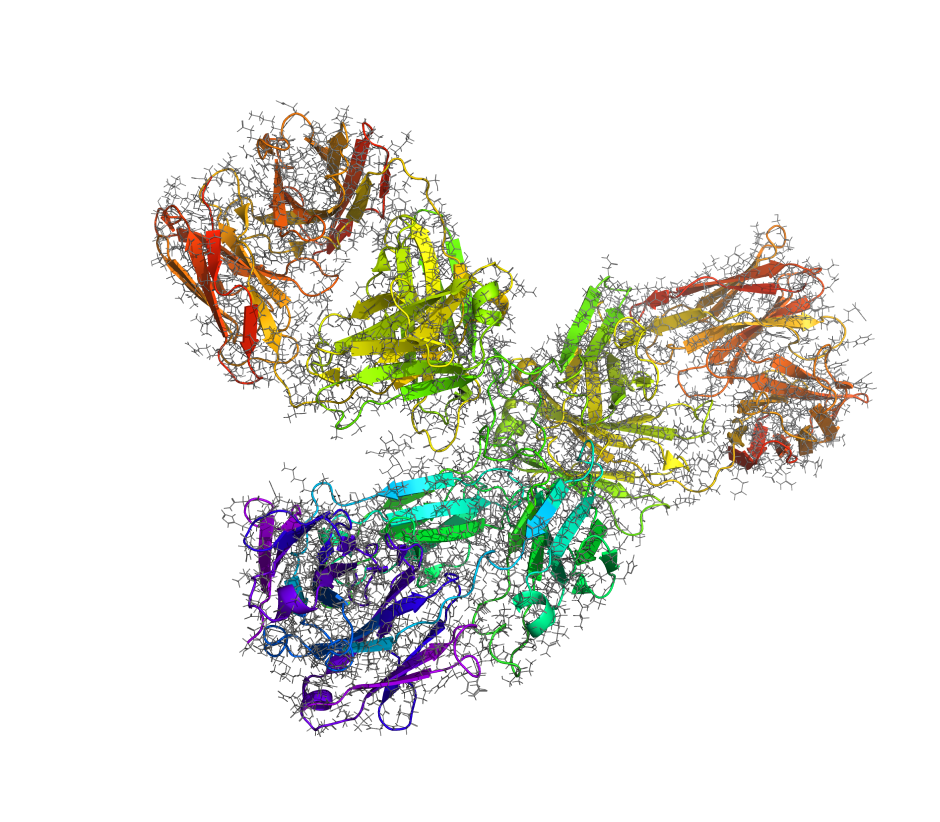
In Silico Protein Engineering

In Silico Protein Engineering

  • Check greenRefine antibody candidate selection with accuracy that reproduces experimentally determined relative free energies
  • Check greenPredict binding affinity, selectivity, and thermostability of peptides
  • Check greenEngineer enzymes for substrate selectivity and specificity
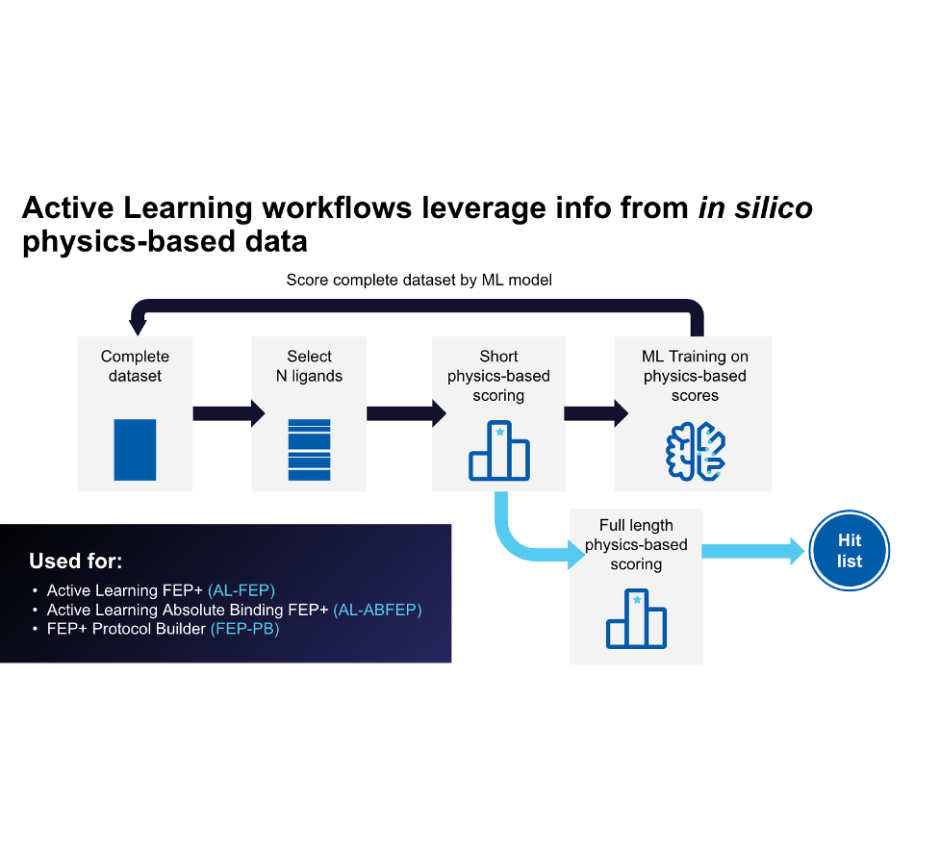
Accelerate FEP+ calculations across large compound libraries with Active Learning

Leverage a well-validated, automated workflow which trains a machine learning model on project-specific FEP+ data to allow processing of up to millions of compounds with highly accurate FEP+ calculations efficiently.

Featured CourseFree energy calculations for drug design with FEP+

Learn how to apply FEP+ to your project with our online certification course

Level-up your FEP+ skills and enroll in our online molecular modeling course, Free Energy Calculations for Drug Design with FEP+.

View Course

Case studies & webinars

Discover how Schrödinger technology is being used to solve real-world research challenges.

Life Science Webinar

Rethinking the rules: Exploiting solvent exposed salt-bridge interactions with free energy perturbation simulations for the discovery of potent inhibitors of SOS1

In this webinar, we will walk you through the SOS1 program, as well as our exploration of other examples where these salt-bridge interactions are influential.

Life Science Webinar

FEP+ State of the Union: Advancing computational rigor and scaling predictivity in drug discovery

In this webinar, Robert Abel, Schrödinger’s chief scientific officer, and Schrödinger’s FEP+ experts will provide an in-depth analysis of FEP+’s latest accuracy benchmarks and its expanding domain of applicability, maintaining its position as the gold standard in the industry.

Life Science Webinar

6th EFMC² Tandem Talks

Schrödinger is excited to be participating in the 6th EFMC² Tandem Talks virtual event taking place on October 9th.

Life Science Webinar

Structure-based discovery of highly potent dihydroorotate dehydrogenase inhibitors for once-monthly malaria chemoprevention

In this webinar, Zhe Nie, medicinal chemist and project leader at Schrödinger, and Margaret Phillips, professor at UT Southwestern Medical School, Dallas, share in conversation how their teams worked collaboratively towards the discovery of novel DHODH inhibitors.

Life Science Webinar

Building stable and accurate FEP models for agonist affinity for GPCRs

In this webinar, Ferran Planas will discuss how the team at Lundbeck routinely uses FEP to predict binding affinities for GPCR agonists.

Life Science Webinar

In silico cryptic binding site detection and prioritization

In this webinar, we will introduce a novel computational workflow that integrates mixed solvent molecular dynamics (MxMD) with SiteMap to reveal and identify cryptic binding sites.

Life Science Webinar

How to find a druggable target: A computational perspective

Join us in this beginner-friendly webinar that will introduce you to strategies and best-in-class tools for identifying druggable, technology-enabled targets.

Life Science Webinar

MAY 14, 2025 | Schrödinger デジタル創薬セミナー17 | Schrödinger’s approach to physics-based antibody analysis and design

Schrödinger’s approach to physics-based antibody analysis and design

Life Science Webinar

Schrödinger デジタル創薬セミナー: Into the Clinic~計算化学がもたらす創薬プロセスの変貌~第16回

APR 16, 2025 | Accelerating protein degrader discovery: Computational strategies for degrader design and optimization

Life Science Webinar

Next-generation protein engineering with physics: Predicting affinity, stability, selectivity, and pH-dependent binding

In this webinar, we will introduce Schrödinger’s FEP+ Residue Scan, a next-generation tool that achieves approximately 15x speedup compared to traditional Protein FEP methods, without significant loss of accuracy.

Official NVIDIA Partner

Schrödinger has a strategic partnership with NVIDIA to optimize our computational drug discovery platform for NVIDIA GPU technology.

Documentation & Tutorials

Get answers to common questions and learn best practices for using Schrödinger’s software.

Life Science Documentation

Learning Path: Oligonucleotide Modeling

A structured overview of tools and workflows for nucleic acids in drug discovery.

Life Science Tutorial

Potency Predictions for RNA-Binding Small Molecules Using RB-FEP

Performing RB-FEP calculations to predict binding affinities for congeneric ligands binding to an RNA receptor.

Life Science Documentation

FEP+

Computational prediction of protein-ligand binding using physics-based free energy perturbation technology at an accuracy matching experimental methods.

Life Science Documentation

Learning Path: Virtual Screening

A structured overview of how to construct a virtual screening pipeline.

Life Science Tutorial

Protein pKa Prediction with Constant pH Molecular Dynamics

Determine pKa values and protonation states for protein residues.

Life Science Tutorial

Improving the Thermostability of T4 Lysozyme Using Protein FEP+ Guided Design

Increase protein thermostability by filling a buried cavity through mutation with protein FEP+.

Life Science Tutorial

Ligand Binding Pose Prediction for FEP+

Generate starting poses for FEP simulations for a series of BACE1 inhibitors using core constrained docking.

Life Science Tutorial

Identifying impactful mutations using FEP+ residue scanning

Perform an FEP+ residue scan for identifying the impact of mutations on the stability and affinity of a protein-protein system.

Life Science Tutorial

FEP Solubility

Perform a Free Energy of Perturbation (FEP) Solubility simulation on ibuprofen.

Life Science Tutorial

BACE1 Inhibitor Design Using Free Energy Perturbation

Prepare, run, and analyze a free energy perturbation (FEP) simulation for a series of BACE1 inhibitors using FEP+.

Related Products

Learn more about the related computational technologies available to progress your research projects.

Active Learning Applications

Accelerate discovery with machine learning

De Novo Design Workflow

Fully-integrated, cloud-based design system for ultra-large scale chemical space exploration and refinement

OPLS4 & OPLS5 Force Field

A modern, comprehensive force field for accurate molecular simulations

IFD-MD

Accurate ligand binding mode prediction for novel chemical matter, for on-targets and off-targets

Maestro

Complete modeling environment for your molecular discovery

LiveDesign

Your complete digital molecular design lab

Publications

Browse the list of peer-reviewed publications using Schrödinger technology in related application areas.

Life Science Publication

Accelerated in silico discovery of SGR-1505: A potent MALT1 allosteric inhibitor for the treatment of mature B-cell malignancies

Life Science Publication

Discovery of highly potent noncovalent inhibitors of SARS-CoV-2 main protease through computer-aided drug design

Life Science Publication

Accurate hydration free energy calculations for diverse organic molecules with a machine learning force field

Life Science Publication

Knowledge and structure-based drug design of 15-PGDH inhibitors

Life Science Publication

Harnessing free energy calculations to achieve kinome-wide selectivity in drug discovery campaigns: Wee1 case study

Life Science Publication

ToxBench: A Binding Affinity Prediction Benchmark with AB-FEP-Calculated Labels for Human Estrogen Receptor Alpha

Life Science Publication

Enabling in-silico Hit Discovery Workflows Targeting RNA with Small Molecules

Life Science Publication

Active Learning FEP: Impact on Performance of AL Protocol and Chemical Diversity

Life Science Publication

Drugit: crowd-sourcing molecular design of non-peptidic VHL binders

Life Science Publication

Exploiting solvent exposed salt-bridge interactions for the discovery of potent inhibitors of SOS1 using free-energy perturbation simulations

Training & Resources

Online certification courses

Level up your skill set with hands-on, online molecular modeling courses. These self-paced courses cover a range of scientific topics and include access to Schrödinger software and support.

Tutorials

Learn how to deploy the technology and best practices of Schrödinger software for your project success. Find training resources, tutorials, quick start guides, videos, and more.