JUN 13, 2023
Finding a CURE for the Common Classroom: Reimagining Undergraduate Research


Course-based research experiences (CUREs) are an innovative and effective way to introduce undergraduate students to scientific research. These experiences provide students with the opportunity to engage in research within the context of a course, allowing them to gain practical experience in scientific inquiry while still fulfilling course requirements. CUREs have numerous benefits for students, including improving critical thinking, problem-solving, and communication skills, as well as providing valuable hands-on experience with scientific methods and techniques. Additionally, CUREs have been shown to increase retention and graduation rates for students in science, technology, engineering, and mathematics (STEM) fields, particularly among underrepresented minority groups. Furthermore, CUREs can provide meaningful research experiences to students who may not have the opportunity to participate in traditional research internships or programs.
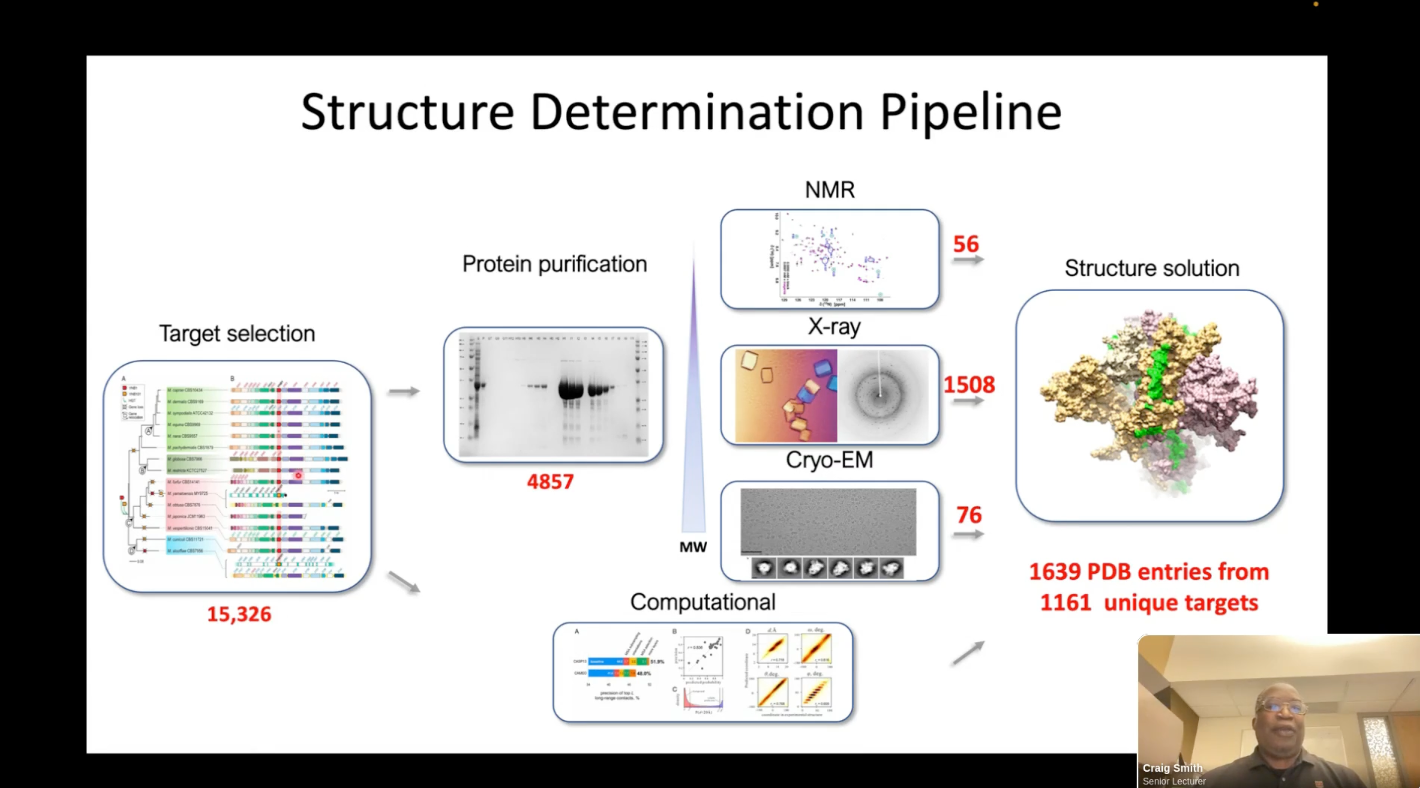
In this lecture, I will talk about a course I created called Structural Bioinformatics of Proteins. This course is divided into two parts. The first half of the semester, students learn how to use the visualization software PyMOL and other cutting-edge bioinformatics tools and methods to analyze protein structures. In the second half of the semester, students are given recently determined, high-quality, three-dimensional coordinates provided by the Seattle Structural Genomics Center for Infectious Disease and must write a final paper based on the analysis of their datasets using the skills learned in the first half of the course. At the end of the semester, students give an oral or a poster presentation at our university-wide Undergraduate Research Symposium. Students who produce outstanding work have the opportunity to publish it in a peer-review scientific journal. Course evaluations from students consistently report that this class provided them with valuable skills, experiences, and opportunities needed to succeed in scientific research and STEM fields.
Our Speaker

Craig Smith
Washington University – St. Louis
Craig Smith received a B.S. in Biological Sciences from Purdue University and a Ph.D. in Biological Chemistry from the University of Michigan. He received the UNCF-Merck Postdoctoral Fellowship and did his postdoctoral research in Molecular Microbiology at Washington University in St. Louis. He is currently a Senior Lecturer in the Biology Department at Washington University. He has interests in structural biology, biochemistry, bioinformatics, and bacterial pathogenesis. Using his background in structural biology, Dr. Smith has created innovative courses that help students gain a greater understanding of molecular interactions and develop visuospatial thinking skills. His current duties involve teaching courses introductory biology, biochemistry, and bioinformatics. He also serves as a Co-Principal Investigator for the Seattle Structural Genomics Center for Infectious Disease where he is currently developing a course-based research experience (CURE) in structural bioinformatics.