JUN 15, 2023
Teaching computer-aided drug design techniques to graduate students specializing in medicinal chemistry


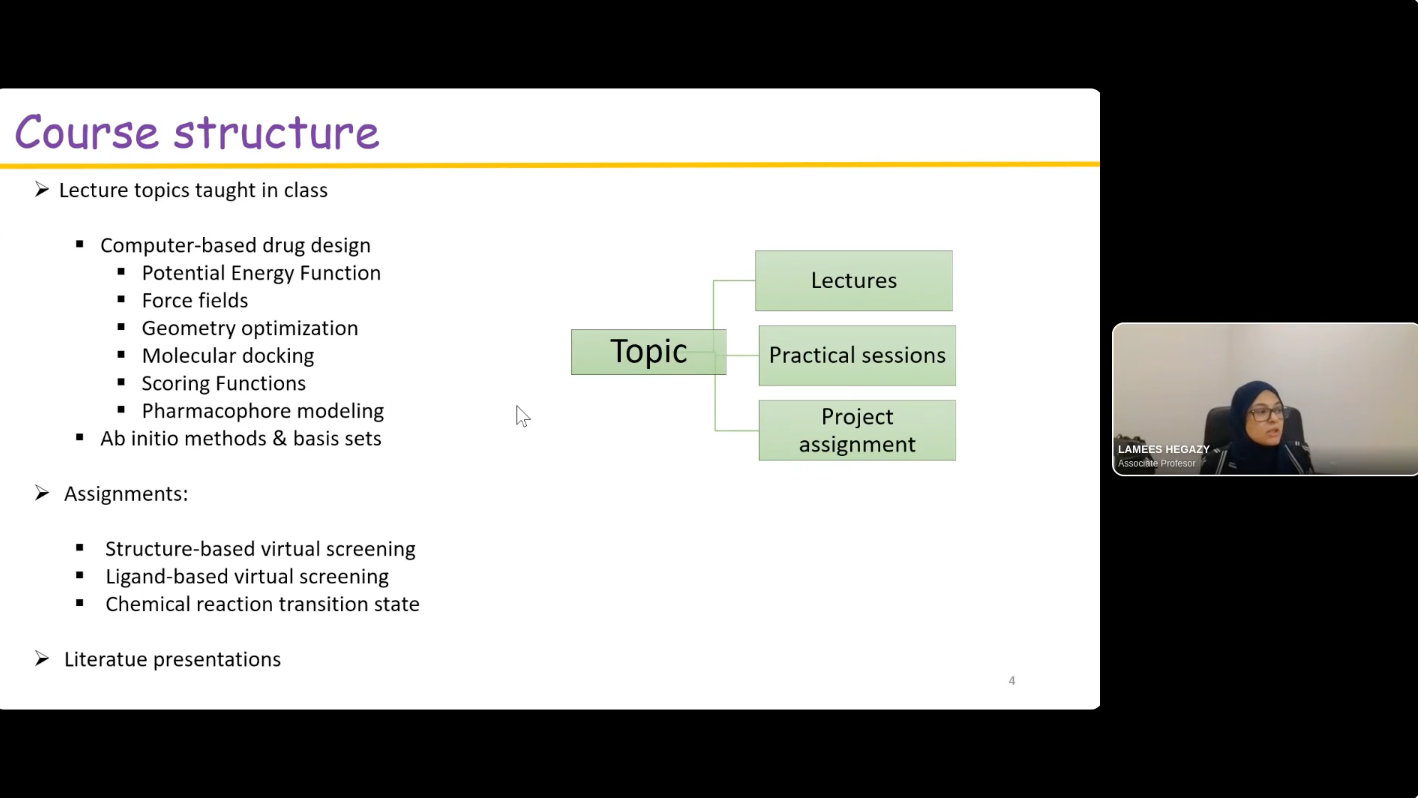
Medicinal chemists are scientists who specialize in the design, synthesis, and optimization of molecules with therapeutic properties. They work in the pharmaceutical industry, government research institutions, or academia, and collaborate with other scientists, such as biologists, pharmacologists, and clinicians, to develop new drugs. Teaching computational chemistry is important for medicinal chemists because it can help to streamline the drug discovery process, improve the potency and selectivity of drug candidates, and provide insights into drug-target interactions. It also provides medicinal chemists with a valuable skillset that can be applied to a variety of research problems. During my presentation, I will elaborate on our utilization of Schrödinger educational resources to improve the instruction of computer-based drug design approaches to students pursuing a master’s degree in Medicinal Chemistry. Additionally, I will outline the practical application of these concepts by students through computer-based drug design assignments.
Our Speaker

Lamees Hegazy
University of Health Sciences & Pharmacy
Dr. Hegazy is an Associate Professor in the Department of Pharmaceutical and Administrative Sciences at the University of Health Sciences & Pharmacy in Saint Louis. She holds a secondary appointment as an adjunct professor at Washington University School of Medicine. Dr. Hegazy received her B.Sc. degree in Biochemistry from Mansoura University, Egypt. She earned her PhD in Biochemistry from the University of Florida. Prior to joining UHSP, she worked at Saint Louis University School of Medicine as a Research Assistant Professor. The research focus of Dr. Hegazy is the rational drug design and optimization of therapeutic compounds using computational and experimental approaches. She uses molecular dynamics simulations and enhanced sampling simulations to study the conformational behavior of important drug targets and design modulators that target different conformational states. Her computational and modeling efforts make valuable contributions through the identification of new chemical entities and generation of new testable hypotheses to support the discovery of improved therapies. Her research is funded by the national institute of diabetes and digestive and kidney diseases and the national institute of neurological disorders and stroke.