All Schrödinger offices worldwide will be closed for the week of August 17-21 as part of a company-wide initiative to rest and recharge. Please expect limited responses during this time. Scientific and Technical Support team members will be available to answer emergency support issues only.

Predictive Tox

Stop guessing at tox — start designing around it

Late-stage discovery failures due to hERG, CYP, or nuclear receptor liabilities cost teams months of chemistry cycles and millions in downstream assays. Schrödinger’s Predictive Tox Solution enables early, physics-based identification and rational mitigation of tox liabilities — before they derail your program.

Don't just flag off-targets — leverage atomic structural models to design out the liability

3X

Cost savings

10X

Faster to fit into your DMTA cycles

1 day

In silico screening results

Rethink how you address tox liabilities

More than just binary predictions

Move beyond pass/fail with actionable, comprehensive readouts in a single day to supercharge your design process in lead optimization

De-risk from the get-go

Rapidly dial out liabilities with atom-level toxicity attribution required to not just fix a compound, but to design the superior compound from the start

A closer look at Schrödinger’s Predictive Tox solution

Capability

Description

Benefits

Best-in-class predictive models (FEP+ and IFD-MD)

Rationalize structure activity relationship (SAR) to effectively dial-out known liabilities

Avoid de-railing, or worse, abandoning your programs with predictions you can trust

Actionable, comprehensive readouts in 24hrs

Atom-level attribution and affinity data to move beyond traditional binary reports

Reduce evaluation time from weeks to a single day, while gaining guidance to address each liability

No complex setup and deployment

A credit-based SaaS cloud solution for immediate project impact

Simply upload your ligands and click “submit” to screen virtual compounds

Schedule a demo with predictive tox solutions

Start screening off-targets with computational predictive models—contact us today to discuss how you can start using Schrödinger’s solutions on your programs.

Don’t see your off-target of interest in the current lists above? Reach out so we can help.

Form submitted

Thank you, we’ll be in touch soon.

Predictive Tox FAQ

What is Predictive Tox?

Predictive Tox is Schrödinger’s physics-based solution for identifying and rationally addressing toxicity liabilities, such as hERG, CYP, and nuclear receptor interactions, before they derail a drug discovery program. It combines best-in-class predictive models, including FEP+ and IFD-MD, to deliver atom-level toxicity attribution and rationalize structure-activity relationships (SAR).

What can I do with Predictive Tox?

Upload your ligands and submit them for virtual screening against known toxicity targets. Predictive Tox returns actionable, comprehensive readouts (typically within 24 hours) that show not just whether a liability exists, but which atoms or substructures are driving it – so your team can design around the problem rather than discover it late.

Which toxicity endpoints does Predictive Tox cover?

As of the 2026-3 release, Predictive Tox features 76 total targets in screening mode. This includes kinases, GPCRs, bromodomains, and nuclear hormone receptors. Additionally, key anti-targets requiring supplied SAR (such as hERG, CYP3A4, CYP2C9, CYP3D6, and PXR) are supported. Our team is actively working on expanding coverage, please reach out to your Account Manager for the latest information.

What makes Predictive Tox different from other tox prediction tools?

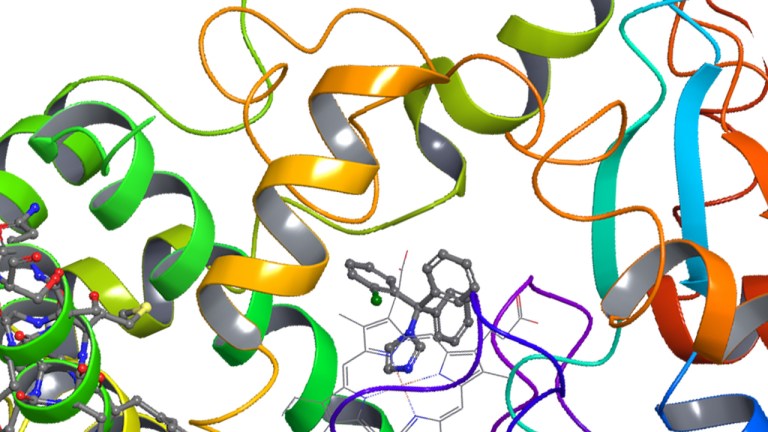
Unlike black-box QSAR/ML classifiers or open-source tools that depend heavily on rigid training sets, Predictive Tox leverages physics-based methods (FEP+ and IFD-MD) to deliver explicit 3D structures of problematic ligand-protein interactions. This atom-level attribution explains why a molecule is flagged, enabling chemists to execute rational, surgical redesigns rather than simple library triage. Furthermore, experimental validation shows that competitive metrics like “Percent of Control” (POC) carry up to three log units of uncertainty (e.g., a 1% POC could span 1 nM to 1 µM), whereas Predictive Tox provides clear thermodynamic binding hypotheses.

Can Predictive Tox predict whether a ligand acts as an agonist or antagonist?

Yes. Predictive Tox incorporates validated absolute binding free energy perturbation (AB-FEP) thermodynamic models that compare ligand binding affinities between active and inactive receptor states. A favorable calculated binding free energy to the active state versus the inactive state (𝚫 Gactive < 𝚫 Ginactive) serves as a strong, actionable predictor that a ligand will function as an agonist rather than an antagonist.

How does Predictive Tox handle my proprietary data?

Predictive Tox is delivered as a credit-based SaaS solution.

Does Predictive Tox replace my existing Schrödinger tools?

No. It’s built on the same underlying methods you already rely on, FEP+ and IFD-MD, packaged as a fast, focused screening workflow. It complements your existing lead optimization and structure-based design work, rather than replacing it.

Is Schrödinger expanding Predictive Tox’s coverage?

Yes, our team is actively adding new anti-targets to the panel, please contact your Schrödinger Account Manager for the most up to date information.

How do I get access to Predictive Tox?

Schedule a demo or contact your Schrödinger Account Manager to get started.