APR 29, 2026
Appreciating diversity at sequence level with Jalview


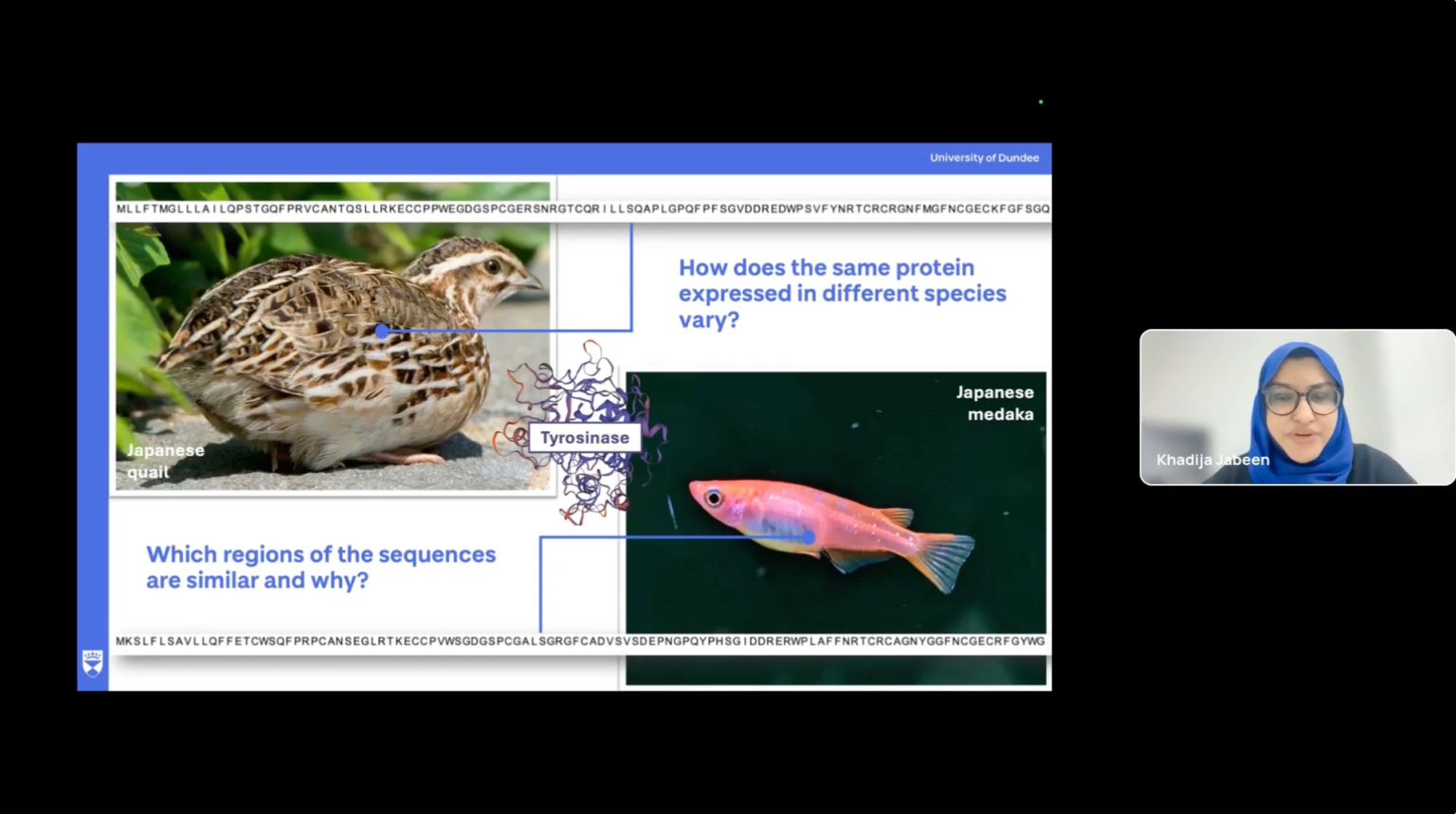
The model described here clarifies similarities between sequences of a single protein when expressed across many di:erent species. For example, how does insulin produced by various mammals like cats, dogs and humans vary in terms of amino acid order? Which regions are conserved and why? What about the melanin-producing enzyme, tyrosinase, which is also produced in birds like Korean quails, where it determines plumage colour and the Japanese medaka, where it governs the shade of fish scales? How is this key enzyme di:erent when expressed in fish than when in species as vastly di:erent as birds or humans? Jalview is a free bioinformatics tool that is available online for students wishing to satiate their curiosities in this regard. It allows protein, DNA and RNA sequence data to be imported either directly from industry standard databases or elsewhere to enable regions of high similarity to be visually and mathematically deduced. Sequence overlap and variation can be ascertained in both 2D alignment and 3D molecular views. Students will have the opportunity to download the Jalview Schools Workbook, an educational resource designed for students aged 16-18. This guide shows how phylogenetic trees can be constructed to determine genetic similarities between various species of mammals, reptiles, birds, insects, microbes and more that express the same protein. The resulting stack of sequences, known as an ‘alignment’ can also be inspected for conservation and visualized in 3D. These exercises are to be conducted using JalviewJS, the web version of Jalview, but students can also install the desktop version to explore the software in depth. Using Jalview will help students gain an appreciation for the fundamental principle that diversity can only ever become meaningful when grounds for similarity are established first – a powerful realization that extends well beyond the sciences.
Slides | Workbook | Tutorial | Woolly Mammoth Workbook
Our Speaker
Khadija Jabeen
Training and Outreach Officer, University of Dundee in Scotland
” Khadija is Training and Outreach Officer for Jalview and the Dundee Resource for Sequence Analysis and Structure Prediction (DRSASP) at the University of Dundee in Scotland. She has built a career at the intersection of science, education and the public forum and contributed to major community science projects including Citizen Sense, the Study of Cognition, Adolescents and Mobile Phones (SCAMP), DustSafe and Jalview. Her research has explored a variety of topics from ambient air pollution, teenage mobile phone use, dust in British households and the development of not-for-profit bioinformatics tools to bolster science education for all. Khadija brings extensive research and science communication experience to her role, strengthening training and outreach across the global Jalview and DRSASP communities.”