APR 28, 2026
Teaching Structure-Based Drug Discovery Through a Guided Molecular Docking


Teaching Structure-Based Drug Discovery Through a Guided Molecular Docking Workflow
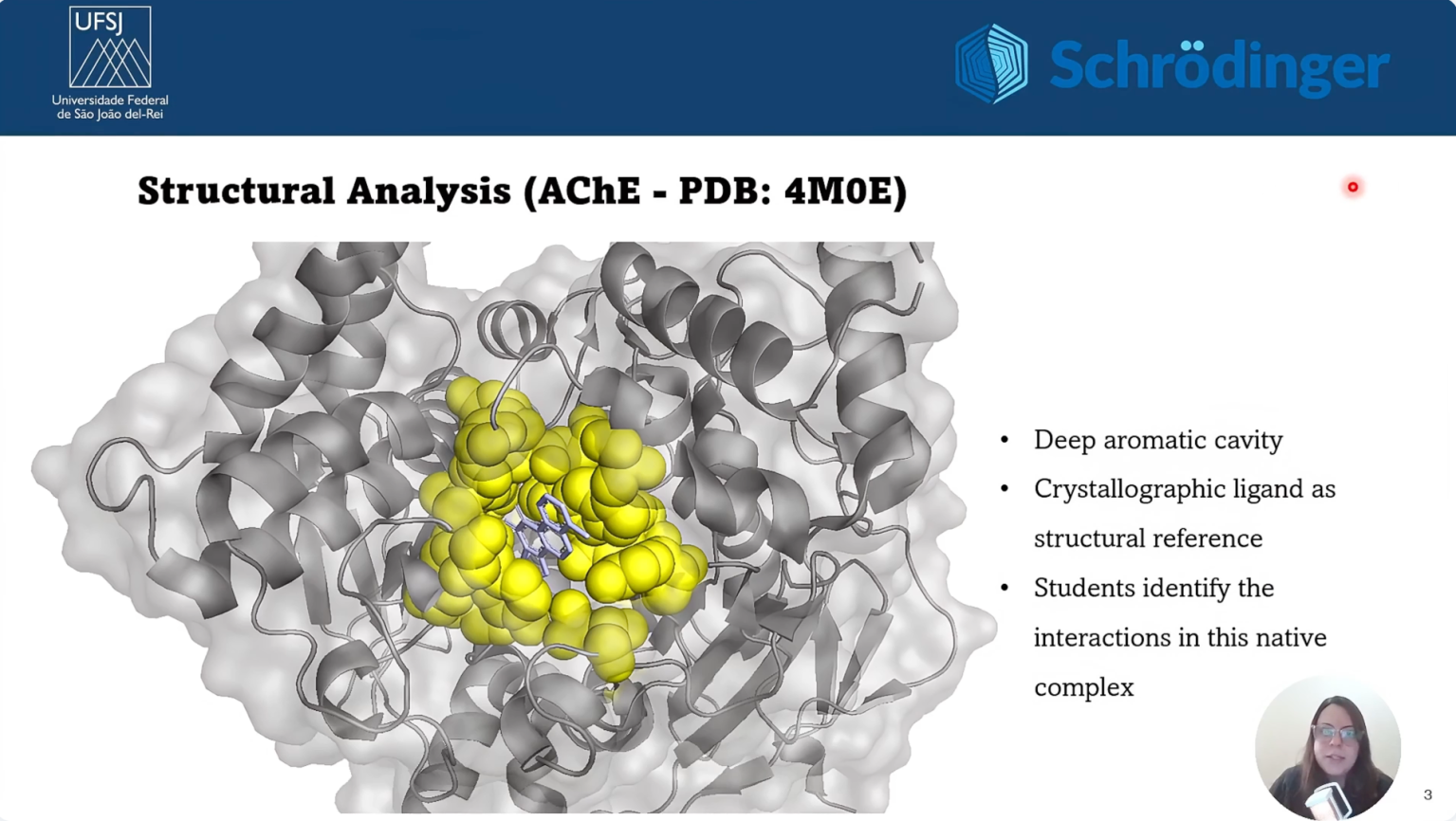
Concepts such as molecular recognition, noncovalent interactions, and protein structure are foundational to chemistry and biochemistry curricula. However, students frequently encounter these topics in isolation, without fully appreciating how they converge in structure-based drug discovery. This session introduces a guided molecular docking workflow designed to bridge this gap by transforming theoretical knowledge into structured molecular reasoning.
The proposed teaching framework integrates a curated Protein Data Bank (PDB) structure with freely accessible tools (UCSF Chimera and AutoDock Vina) to create a concept-driven learning sequence. Students progress through receptor and ligand preparation, execution of docking, and systematic evaluation of predicted binding poses.
The emphasis is placed not on computational sophistication, but on analytical
interpretation, relating hydrogen bonding networks, hydrophobic interactions, steric complementarity, and predicted binding affinities to established chemical principles. A central feature of the module is critical assessment. Rather than treating docking outputs as definitive answers, students are encouraged to interrogate scoring functions, evaluate pose plausibility, identify potential artifacts, and distinguish computational prediction from experimental validation. This approach positions molecular docking as a structured inquiry tool rather than a procedural or “black-box” exercise.
Participants will receive an implementation-ready teaching package, including curated structural files, a detailed instructional guide, and a structured worksheet designed to promote analytical discussion and independent interpretation. The module is adaptable to upper-level undergraduate or early graduate courses and requires only foundational knowledge in chemistry or biochemistry.
Slides | PDF
Our Speaker
Isabela Wiermann
Ph.D. Student
Isabela Wiermann holds a B.Sc. in Biotechnology from the Federal University of São João del-Rei (Brazil) and a M.Sc. in Bioengineering with a focus on Bioinformatics and Molecular Modeling. Her research centers on computational drug discovery, including structure-based drug design, molecular docking, molecular dynamics simulations, and binding free energy analysis. She is currently a Ph.D. candidate in Bioengineering, where her work integrates cheminformatics, pharmacophore modeling, and molecular simulation approaches to identify potential therapeutic candidates for neurodegenerative diseases. In addition to her research activities, she is particularly interested in advancing the integration of computational molecular modeling into chemistry and biochemistry education, promoting analytical reasoning and critical interpretation of predictive models in the classroom.