MS Dielectric

Automatic workflow to calculate dielectric properties and refractive index

Materials Science: Dielectric

Overview

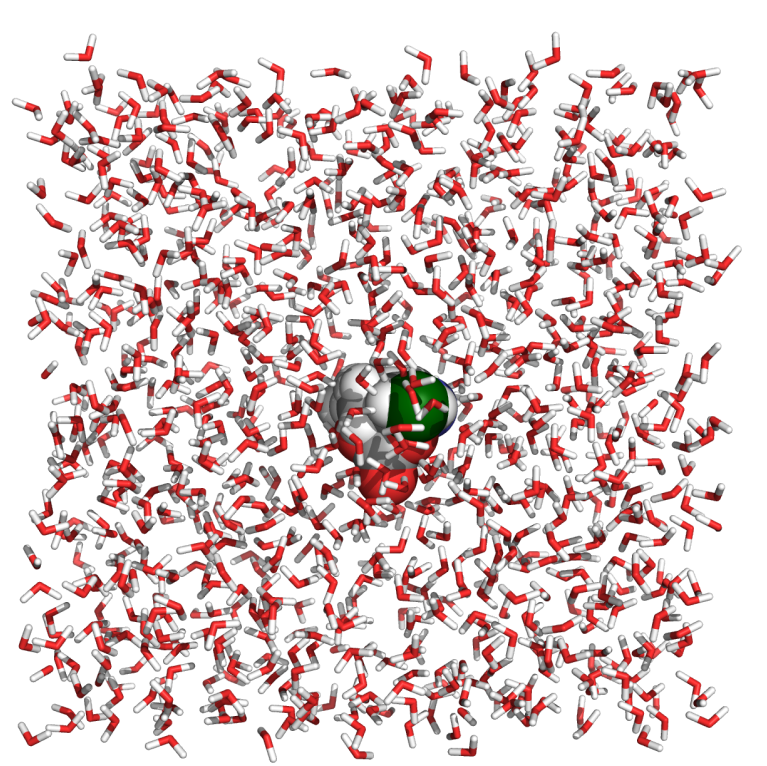
MS Dielectric employs both Jaguar quantum mechanics (QM) and Desmond molecular dynamics (MD) calculations to obtain key optical and dielectric properties. With simple settings and input of only a single molecule or polymer monomer, all the subsequent system building, simulations, and analyses are performed automatically.

Key Capabilities

Check mark icon
Compute dielectric properties of molecular and polymer materials with combined QM & MD workflows
Check mark icon
Calculate the refractive index and Abbe number of molecular and polymer materials
Check mark icon
Simulate and plot complex dielectric constant and dielectric loss versus frequency

Case Study

Battery and energy storage materials

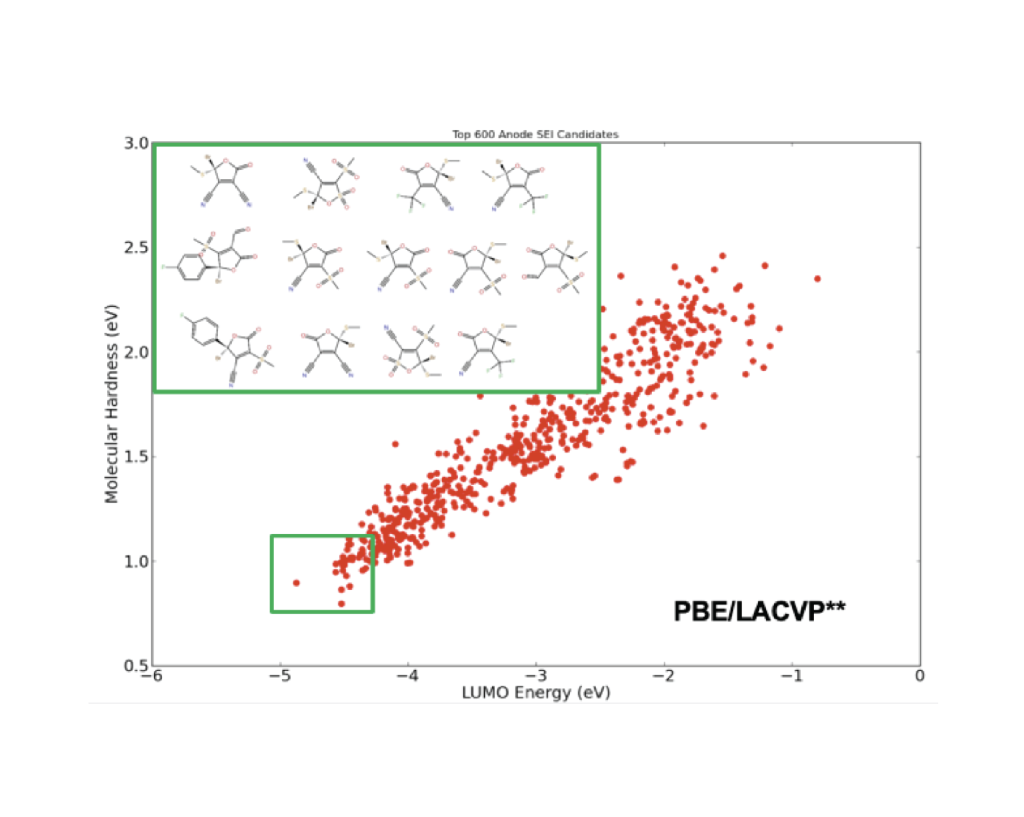
Schrödinger’s Materials Science software platform provides a powerful atomic-scale modeling solution for comprehensive analysis of ion diffusion, mechanical response, and electrochemical response in electrodes and electrolytes, dielectric properties of potential electrolyte compounds, and other relevant properties.

Broad applications across materials science research areas

Get more from your ideas by harnessing the power of large-scale chemical exploration and accurate in silico molecular prediction.

Organic Electronics
Polymeric Materials
Energy Capture & Storage
Catalysis & Reactivity

Documentation & Tutorials

Get answers to common questions and learn best practices for using Schrödinger’s software.

Materials Science Documentation

MS Dielectric

An automatic workflow to calculate dielectric properties and refractive index.

Materials Science Documentation

Materials Science Panel Explorer

Quickly learn which Schrödinger tools are the best fit for your research.

Materials Science Tutorial

Liquid Electrolyte Properties: Part 1

Learn to perform a variety of calculations on a liquid electrolyte system using Materials Science (MS) Maestro. These properties include: density, radial distribution function, viscosity, and dielectric properties such as polarizability, refractive index, and dielectric constant.

Materials Science Tutorial

Dielectric Properties

Learn how to obtain dielectric and optical properties of organic molecules and polymers.

Related Products

Learn more about the related computational technologies available to progress your research projects.

Jaguar

Quantum mechanics solution for rapid and accurate prediction of molecular structures and properties

Desmond

High-performance molecular dynamics (MD) engine providing high scalability, throughput, and scientific accuracy

MS Maestro

Complete modeling environment for your materials discovery

Case studies & webinars

Discover how Schrödinger technology is being used to solve real-world research challenges.

Materials Science Webinar

Digital forum on atomic layer deposition: Bridging theory and experiment to design a process for silicon carbonitride

Join us as we discuss how effectively theory and experiment are working together to solve the R&D challenges facing high-tech industries.

Materials Science Webinar

Electrodes, electrolytes & interfaces: Harnessing molecular simulation and machine learning for rapid advancements in battery materials development

In this webinar, we demonstrate the application of automated solutions for accurate prediction of electrode materials.

Materials Science Webinar

Schrödinger Materials Science Seminar Japan 2024 

《無料Webセミナー》材料開発向けシミュレーション・ソフトウェアおよびマテリアルズ・インフォマティクスの活用事例を紹介。

Materials Science Webinar

Taking experimentation digital: Materials innovation using atomistic simulation and machine learning at-scale

In this webinar, we introduce a modern approach to materials R&D using a digital chemistry platform for in silico analysis, optimization and discovery.

Materials Science Webinar

In silico materials development: Integrating atomistic simulation into academic chemistry and engineering labs

In this webinar, we explore Schrödinger’s leading physics-based and machine learning computational technologies and provide a comprehensive introduction to the capabilities of computational modeling in chemistry, materials science, and engineering.

Materials Science Case Study

Molecular dynamics simulations accelerate the development and optimization of recyclable tire materials

Materials Science Case Study

Exploration and validation of polycyanurate thermoset crosslinking mechanisms

Materials Science Webinar

Battery Tech – Leveraging Atomic Scale Modeling for Design and Discovery of Next-Generation Battery Materials

In this webinar, we present an advanced digital chemistry platform for developing next-generation battery materials with improved properties.

Materials Science Webinar

Chinese: 利用原子尺度建模设计和发现下一代电池材料 | Leveraging Atomic Scale Modeling for Design and Discovery of Next-Generation Battery Materials

This webinar discussed how to drive the development of novel battery materials with molecular simulations.

Materials Science Webinar

Leveraging Atomic Scale Modeling for Design and Discovery of Next-Generation Battery Materials

In this webinar, we demonstrate how Schrödinger’s advanced digital chemistry platform can be leveraged to accelerate the design and discovery of next-generation battery materials with improved properties.

Training & Resources

Online certification courses

Level up your skill set with hands-on, online molecular modeling courses. These self-paced courses cover a range of scientific topics and include access to Schrödinger software and support.

Tutorials

Learn how to deploy the technology and best practices of Schrödinger software for your project success. Find training resources, tutorials, quick start guides, videos, and more.