アーカイブ配信: QuickShape Screening in the Age of Ultra-large Libraries

Webinar

アーカイブ配信: QuickShape Screening in the Age of Ultra-large Libraries

CalendarDate & Time
  • September 18th, 2024
LocationLocation
  • Virtual

手軽に入手できる化合物の数が急速に増加する一方、創薬ターゲットに実際に作用する新規化合物探索のニーズは依然として高いままです。

化合物の3D Shapeを用いた類似構造検索は、トポロジー的に異なるが形状が類似している化合物を見つけることができる効果的なアプローチではありますが、超大規模な化合物ライブラリーをスクリーニングするためには、ハードウェアの要件が非常に高くなる可能性があります。

そこで、本ウェビナーでは、1Dファーマコフォアに基づくフィンガープリントとGPUベースの3D Shape Screeningの性能を、既知の活性物質の濃縮率および計算速度の両面で比較してご紹介します。

このウェビナーの録画視聴をご希望の方は、こちらの申込書にご記入ください。

※ご質問、ご不明な点がございましたら下記までお問い合わせください。
シュレーディンガー株式会社 ショートセミナー事務局
E-mail: info-japan@schrodinger.com

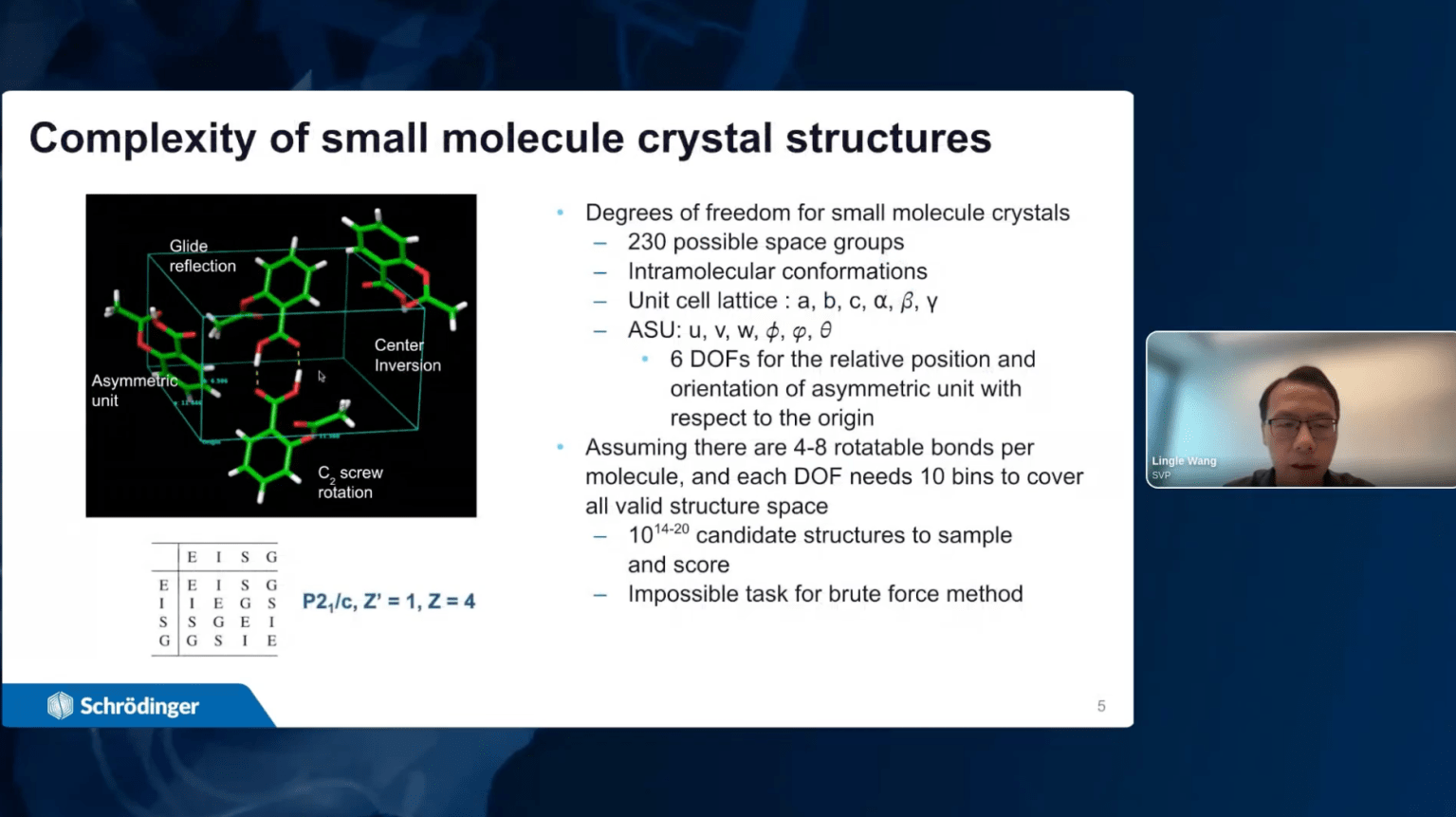
Crystal structure prediction workflow for small molecule drug formulation

OCT 23, 2024

Crystal structure prediction workflow for small molecule drug formulation

Abstract:

Early assessment of crystal polymorphism and thermodynamic solubility continues to be elusive for drug discovery and development despite its critical importance, especially for the ever-increasing fraction of poorly soluble drug candidates. We have developed a crystal structure prediction (CSP) method that combines a novel systematic crystal packing search algorithm and a hierarchical energy ranking protocol to predict crystal polymorphs. This is complemented by a free energy perturbation (FEP+) approach for computing thermodynamic aqueous solubility. The high accuracy, reliability, and efficiency of our CSP and FEP+ methods with large scale validations is designed to support polymorph screening and solubility prediction in drug substance and drug product development processes.

Webinar Highlights:

  • Introduction to Schrödinger’s Crystal Structure Prediction platform and validation on a large and diverse dataset of 65 drug-like molecules with 135 experimentally found polymorphic forms
  • Overview of physics-based free energy perturbation (FEP+) approach for computing thermodynamic aqueous solubility and assessment across a diverse chemical space spanning several pharmaceutically relevant compounds

Our Speaker

Lingle Wang

Senior Vice President, Schrödinger

Lingle Wang, senior vice president, scientific development, joined Schrödinger in 2012. He is responsible for advancing Schrödinger’s physics-based computational drug discovery platform. He obtained his Ph.D. from Columbia University working with Professors Richard Friesner and Bruce Berne on methods to quantify the role of water molecules in protein-ligand binding, enhanced sampling in biomolecular simulations and free energy calculations. Lingle has published extensively in the areas of free energy methods development and applications in drug discovery.

Schrödinger Maestro Workshop

Workshop

Schrödinger Maestro Workshop

CalendarDate & Time
  • December 4th-5th, 2024
LocationLocation
  • Espoo, Finland

Welcome to the Schrödinger Maestro workshop at CSC! This year’s workshop focuses on small molecule drug discovery and drug formulation with Schrödinger Maestro software suite. No prior simulation experience is required. The focus will be on hands-on experience and application.

It’s possible to participate on-site at CSC premises in Espoo, or join via Zoom (link provided for registered participants). Registration is required, but the event is free of charge both onsite and online.

Speakers:

Irene Bechis, Senior Scientist I, Schrödinger
Philipp Dohmen, Senior Scientist I, Schrödinger

Day 1: Wednesday, December 4th 2024

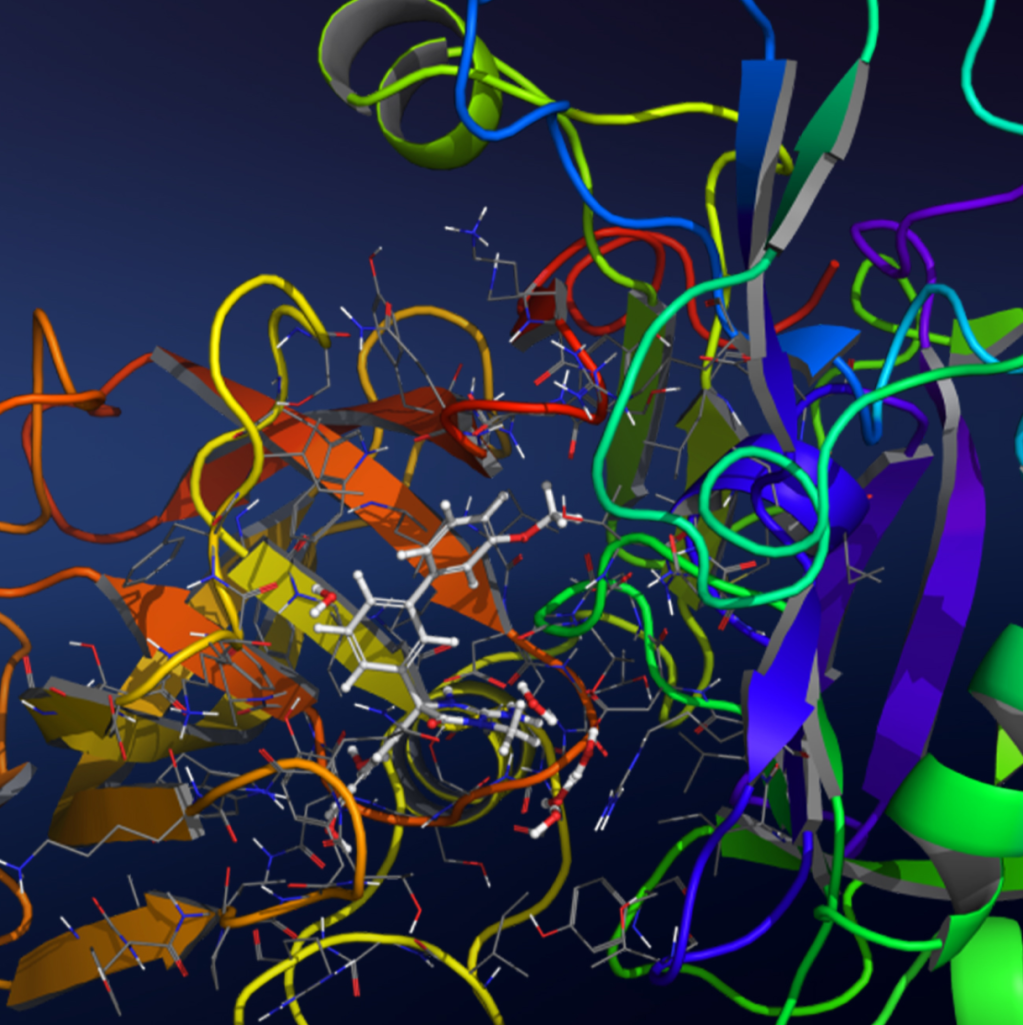
Small molecule drug discovery part I: Computational modeling can support and enhance various stages of the drug discovery and design process. The Maestro interface contains all the tools needed to import and prepare your starting small molecule and protein system, and provides access to the computational tools within the Schrödinger suite for life sciences. In this session we will go through the necessary steps to prepare ligand and protein structures. We will then explore ligand design in an automated fashion using the Ligand Designer GUI, which facilitates on-the-fly ideation through ‘build and dock’ workflows. Finally, we will set up and run docking calculations with Glide, and analyze how the resulting docked compounds satisfy the basic criteria of shape and molecular interactions that lead to the final Glide scoring term.

Drug formulation part I: A smart, strategic drug formulation can efficiently advance your drug development projects and inform downstream processes. Simulations can help selecting and combining the right formulation ingredients in the appropriate manner. In this session, we will introduce our Materials Science Suite for materials science applications, demonstrating the tools available for pharmaceutical formulations and drug development processes. We will guide you through building systems, running molecular dynamics simulations, and calculating the miscibility of active pharmaceutical ingredients (APIs).

Day 2: Thursday, December 5th 2024

Drug formulation part II: In this session we will focus on extracting key properties and information from simulations of various formulations. Prediction of chemical and physical stability of formulations in storage conditions are pivotal for understanding a product’s shelf life. In particular, prediction of the glass transition temperature (Tg) for APIs and mixtures is an important indicator of thermodynamic stability in the solid state and a relevant information for the
manufacturing process. Similarly, predicting the tendency for a formulation to uptake water at certain humidity conditions is important for knowing its behaviour and stability in different storage conditions. Using MS Maestro and the tools available in the MS Suite, we will calculate Tg and hygroscopicity of APIs and API/polymer mixtures. Finally, we will introduce Coarse Grained simulations, useful for describing those complex and evolving structures, often in fluid states, that play a crucial role for API delivery.

Small molecule drug discovery part II: By studying the dynamics of a molecular system in a thermodynamic environment, we can investigate processes such as protein folding, protein-protein or protein-ligand interactions, and gain new structural insights for drug discovery and design. In this session we will learn how to set up, run and analyze the results of an unrestrained all-atom molecular dynamics simulation using Desmond and Maestro. We will focus on a protein-ligand complex and go through different ways and tools to analyze a simulation. The analysis will improve our understanding of the binding pocket and the interactions between protein and ligand.

Schrödinger デジタル創薬セミナー: Into the Clinic ~計算化学がもたらす創薬プロセスの変貌~ 第14回

NOV 19, 2024

Schrödinger デジタル創薬セミナー 14:
Advancements in machine learning enhanced in silico design: Impact on a pipeline of drug discovery programs

分子特性のシミュレーションは、物理ベースのアプローチを使用することで、構造と特性の関係に関する洞察を提供し、新薬の設計を支援する分野で長らく成功を収めてきました。近年では、AIや機械学習(ML)が物理ベースのモデリング技術と組み合わさり、革新の加速に大いに貢献しています。物理ベースのモデリングの精度と一般化能力が、AI/MLモデルのパフォーマンスを向上させ、データが少ない領域でも効果的に使用できるようにしています。逆に、AI/MLのスピードと柔軟性は、物理ベースのモデルが抱える時間的・空間的な限界を克服する手助けをし、予測精度と計算効率の両方を最適化する相乗効果を生み出します。

このウェビナーでは、機械学習を活用して創薬プログラムを推進する、以下の応用例について議論します。

  • FEP+を使用したアクティブラーニングによる、大規模なインシリコフラグメントスクリーニングでのヒット探索
  • インテリジェントな分子コア設計のためのde novoデザインワークフローの適用
  • インタラクティブなMLダッシュボードを用いたリード最適化におけるADMETプロファイルの強化のための実験データの活用

Our Speaker

Karl Leswing

Vice President Machine Learning, Schrödinger

Karl Leswing is the Vice President for Machine Learning at Schrödinger. In this role he oversees the research and execution of machine learning applications for Schrödinger’s digital chemistry platform. In 2017 he was a visiting researcher at the Pande Lab working on using deep learning techniques for drug discovery. During that time he co-authored MoleculeNet, a benchmarking paper analyzing machine learning techniques for chemoinformatics. Karl received his undergraduate degree from the University of Virginia, and a Master’s in machine learning from Georgia Tech.

10/29(火)【ランチョンセミナー】CBI学会2024年大会「OPLS5(分極力場)及び解離速度定数(koff)の予測技術のご紹介」

Conference

10/29(火)【ランチョンセミナー】CBI学会2024年大会「OPLS5(分極 力場)及び解離速度定数(koff)の予測技術のご紹介」

CalendarDate & Time
  • October 29th, 2024
  • 0:15PM
LocationLocation
  • Tokyo, Japan

シュレーディンガー株式会社は、CBI学会2024年大会におきまして、ランチョンセミナーを開催いたします。
SchrödingerではFEP+に代表されるような分子動力学ベースでの創薬支援ツールに強みがあり、現在においても精力的に新機能開発を行っております。本セミナーでは本年9月にリ
リースされた最新機能の技術的な内容や精度検証した結果について解説いたします。

この他、ポスター発表や展示ブースもございますので、ぜひお立ち寄りください。

【ランチョンセミナー】
日時 10月29日(火)12:15 – 13:15
会場 東京都江戸川区船堀4-1-1 タワーホール船堀 4階<406>
演題 OPLS5(分極力場)及び解離速度定数(koff)の予測技術のご紹介

【ポスター発表】
日時 10月29日(火)16:00-17:00、30日(水)17:00-18:00
演題 Predicting Lysine Reactivity: Insights from Constant-pH MD Simulations and Experimental Correlation

Modeling the structural and reactivity properties of capsaicin [(E)-N-[(4-hydroxy-3-methoxyphenyl)methyl]-8-methylnon-6-enamide] wavefunction-dependent properties, pharmacokinetics, in-silico analysis, and molecular dynamics simulation