Spring ACS

Conference
Spring ACS
 Date & Time
 - March 17th-21st, 2024
 Location
 - New Orleans, Louisiana


Schrödinger is excited to be participating in the Spring ACS conference taking place on March 17th – 21st in New Orleans, Louisiana. Stop by our booth to speak with Schrödinger scientists.
In silico materials development: Integrating atomistic simulation into academic chemistry and engineering labs
DEC 12, 2023
In silico materials development: Integrating atomistic simulation into academic chemistry and engineering labs
Speakers
Michael Rauch
Principal Scientist I
Abstract
Computational chemistry is ubiquitous in academic research in chemistry, materials science, and engineering. Applied molecular modeling can drive or supplement a research project – accelerating discovery processes, minimizing the need for extensive experimental testing, and providing atomic scale insights.
In this webinar, we explore Schrödinger’s leading physics-based and machine learning computational technologies and provide a comprehensive introduction to the capabilities of computational modeling in chemistry, materials science, and engineering.
We will discuss workflows and applications for polymeric materials, electronics, aerospace, renewable energy, catalysis, and formulations.
- Molecular and periodic quantum mechanics (DFT) for property prediction and reaction mechanism elucidation
- Accelerated polymer modeling with all-atom molecular dynamics
- Coarse-grained methods to explore larger systems and longer timescales
- Advanced machine learning models for new material discovery
- Educational and training resources, such as Schrödinger’s seven online materials science certification courses
Following the webinar, the speaker will also be available to answer questions. Whether you are a student, an early career researcher, or an established expert seeking to expand your field of knowledge, this webinar promises to be a valuable resource for all levels of expertise interested in staying at the forefront of computational modeling in materials science.
In silico enabled discovery of KAI-11101, a potent, selective, and brain-penetrant DLK inhibitor for the treatment of neurodegenerative diseases
DEC 7, 2023
In silico enabled discovery of KAI-11101, a potent, selective, and brain-penetrant DLK inhibitor for the treatment of neurodegenerative diseases
Speakers
Eric Therrien, PhD
Director, Schrödinger Therapeutics Group
H. Rachel Lagiakos, PhD
Senior Principal Scientist, Schrödinger Therapeutics Group
Abstract
Dual leucine zipper kinase (DLK), also known as MAP3K12, is a member of the mixed lineage kinase (MLK) family that is expressed primarily in neuronal cells. Recent work has demonstrated that genetic deletion or pharmacological inhibition of DLK results in attenuation of synapse loss, neuronal degeneration, and functional decline in models of both Alzheimer’s Disease and Amyotrophic Lateral Sclerosis (ALS), making DLK an attractive therapeutic target for the treatment of neurodegenerative diseases.
In this webinar, we will detail the program led by Schrödinger Therapeutics Group to discover a novel, potent, selective, and brain-penetrant DLK inhibitor (KAI-11101). The case study demonstrates various innovations in modeling to overcome common drug discovery challenges encountered over the course of the program:
- Large-scale, free energy perturbations (FEP+) was used to predict compound binding affinity to hDLK in silico and to prioritize design ideas for synthesis, facilitating rapid program progression
- Predictive ADMET modeling, including a novel energy of solvation method for predicting brain Kp,uu (E-sol), helped to mitigate multiple med chem challenges such as brain penetration, hERG inhibition, and CYP3A4 TDI
- In addition to on-target potency, FEP+ technology was also applied to improve off-target selectivity, allowing the team to establish an exquisite selectivity profile, imperative for a chronically dosed CNS drug profile
This effort culminated in the identification of DLK inhibitor (KAI-11101) which showed neuroprotective properties in an ex vivo axon fragmentation assay and demonstrated dose-dependent p-c-Jun reduction in in vivo mouse cerebellum PD model. With favorable preclinical PK, in vitro safety and predicted human dose, KAI-11101 is a promising preclinical candidate.
MAM 2024

Conference
MAM 2024
Date & Time - March 18th-21st, 2024
Location - Milan, Italy
Schrödinger is excited to be participating in the MAM 2024 conference taking place on March 18 – 21 in Milan, Italy. Join us for a presentation by Simon Elliott, Research Leader at Schrödinger, titled “Simulating conditions for the atomic level processing of metals.” Stop by our booth to speak with Schrödinger scientists.
Abstract:
The ambition of atomic level (or atomic layer) processing (ALP) is to be able to control the deposition onto or etching away of atomic thicknesses of a target material selectively at a chosen substrate, and not at other substrates, through the choice of reagent and reactor conditions. In this talk we present a conceptual scheme for the ALP of metals [1] and a simulation approach to find which conditions to use for each type of deposition or etching. In the general case, four types of process are conceivably in competition when a metal surface is treated with any reagent or reagent-combination: continuous deposition (CVD) or etching, or selflimiting pulsed deposition (ALD) or etching (ALE). We show that first principles thermodynamics based on density functional theory (DFT) of bulk and surfaces is a computationally-efficient approach for distinguishing between the four processes. Crossover temperatures and pressures can be estimated, with the accuracy depending on how entropy, coverage and diffusion are treated. We use the example of ruthenium metal to illustrate the simulation strategy. Ru continues to be investigated as a possible seed layer for interconnect electroplating in the fabrication of electronic devices. Ru can also be used as a capacitor electrode and as a heterogeneous catalyst. Ru was one of the first noble metal ALD processes to be discovered [2] and, coincidentally, Ru oxidation was the subject of a pioneering exposition of DFT thermodynamics [3]. Ru metal or RuO2 can be either deposited or etched depending on exposure to oxidants (O2, O3, O2- plasma) or reductants (H2 and a variety of Ru precursors) [4]. Quasi-catalytic cycling between metal and oxide is key to the deposition mechanism [5]. RuO4 gas can play the role of deposition precursor or etch product, with the mechanism of etching recently computed by Shong et al. [6]. Lowtemperature deposition allows substrate-selectivity, which can be enhanced by punctuating the process with an additional self-limiting etch step [7]. We therefore focus on the conditions for selflimiting versus continuous ALP of Ru metal, hydride, hydroxide and oxide with respect to H2 and RuO4 reagents.
Applied Pharmaceutical Chemistry 2024

Conference
Applied Pharmaceutical Chemistry 2024
Date & Time - April 4th, 2024
Location - Cambridge, Massachusetts
Schrödinger is excited to be participating in the Applied Pharmaceutical Chemistry 2024 conference taking place on April 4th in Cambridge, Massachusetts. Join us for a presentation by Abba E. Leffler, Senior Principal Scientist at Schrödinger, titled “Exploiting High-Energy Hydration Sites for the Discovery of Potent Peptide Aldehyde Inhibitors of the SARS-CoV-2 Main Protease with Cellular Antiviral Activity.”
Abstract: Small molecule antivirals that prevent the replication of the SARS-CoV-2 virus by blocking the enzymatic activity of its Main Protease (Mpro) are and will be a tenet of pandemic preparedness. However, the peptidic nature of such compounds often precludes the design of compounds within favorable physical property ranges, limiting cellular activity. Here we describe the discovery of peptide aldehyde Mpro inhibitors with potent enzymatic and cellular antiviral activity. This structure-activity relationship (SAR) exploration was guided by the use of calculated hydration site thermodynamic maps (WaterMap) to drive potency via displacement of waters from high-energy sites. Thousands of diverse compounds were designed to target these high-energy hydration sites and then prioritized for synthesis by physics- and structure-based Free Energy Perturbation (FEP+) simulations, which accurately predict biochemical potencies. This approach ultimately led to the rapid discovery of lead compounds with unique SAR that exhibited potent enzymatic and cellular activity with excellent pan-coronavirus coverage.

Abba E. Leffler, Ph.D.
Senior Principal Scientist, Schrödinger
Abba E. Leffler, Ph.D. is a Senior Principal Scientist in the drug discovery group at Schrödinger, where he currently focuses on small-molecule drug discovery. He received his AB in Chemistry with a Certificate in Applied Mathematics from Princeton University, after which he worked at D. E. Shaw Research before going on to obtain his Ph.D. in Neuroscience from NYU School of Medicine. His research has been published in Science, The Journal of Neuroscience, The Journal of Chemical Information and Modeling, and Proceedings of the National Academy of Sciences among others. He is also an inventor on multiple patents.
EMFC-ACS MEDI Frontiers Conference

Conference
EMFC-ACS MEDI Frontiers Conference
Date & Time - April 8th-11th, 2024
Location - Utrecht, Netherlands
Schrödinger is excited to be participating in the EMFC-ACS MEDI Frontiers Conference taking place on April 8th – 11th in Utrecht, Netherlands. Join us for a presentation and workshop. Stop by booth #8 to speak with Schrödinger scientists.
 April 10 | 12:45
 Workshop: LiveDesign
Olivia Lynes
Strategic Deployment Manager II, Schrödinger
April 11 | 14:30 Presentation: In silico Enabled Discovery of KAI-11101, a Potent, Selective and Brain Penetrant DLK Inhibitor for the Treatment of Neurodegenerative Diseases (IL18)
Rachel Lagiakos, Ph.D.
Director, Schrödinger
Tire Technology Expo

Conference
Tire Technology Expo
Date & Time - March 19th-21st, 2024
Location - Hannover, Germany
Schrödinger is excited to be participating in the Tire Technology Expo taking place on March 19th – 21st in Hannover, Germany. Join us for a presentation by Eli Sedghamiz, Senior Scientist II at Schrödinger, titled “Tire polymer formulation from molecules to performance properties.”
Date/Time: March 21 | 12:00 – 12:25 CET
Speaker: Eli Sedghamiz, Senior Scientist II
Abstract: New regulations and sustainability goals are forcing companies to enhance their recycling capabilities and/or switch to bio-based formulations. Atomic-scale simulation provides the ability to screen new cross-linkers, dispersants and compatibilizers that are necessary for new recycled and bio-based formulations. This presentation will include case studies from Schrödinger in the application of molecular simulations and machine learning to tire-relevant formulations, including an example from a leading chemical supplier. These studies illustrate how new analysis features targeted to various polymer and polymer formulation application areas can influence design for sustainability.
Festival of Biologics US 2024

Conference
Festival of Biologics US 2024
Date & Time - April 15th-17th, 2024
Location - San Diego, California
Schrödinger is excited to be participating in the Festival of Biologics US 2024 conference taking place on April 15th – 17th in San Diego, California. Stop by our booth to speak with Schrödinger scientists.
Future Food-Tech

Conference
Future Food-Tech
Date & Time - March 21st-22nd, 2024
Location - San Francisco, California
Schrödinger is excited to be participating in the Future Food-Tech conference taking place on March 21st – 22nd in San Francisco, California. Join us for a presentation by Jeffrey Sanders, Product Manager, Consumer Packaged Goods at Schrödinger, titled “Beyond AI: The Importance of Physics-Based Simulations in Next Generation Food Design”. Stop by booth #40 to speak with Schrödinger scientists.
Date/Time: Mar 21 | 1:25-2:10pm
Speaker: Jeffrey Sanders, Product Manager, Consumer Packaged Goods
Automated Digital Prediction of Chemical Degradation Products
Webinar
Automated Digital Prediction of Chemical Degradation Products
Date & Time - April 10th, 2024
- 8:00 AM PT / 11:00 AM ET / 4:00 PM BST / 5:00 PM CEST
Location - Virtual
*Registration to this event is at Schrödinger’s discretion. We reserve the right to restrict attendees as necessary.
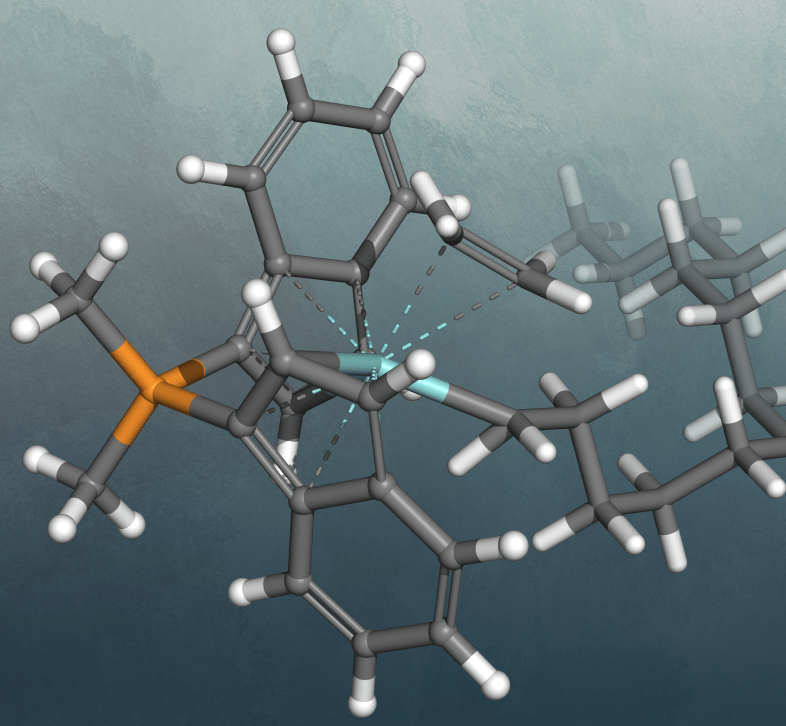
Chemical degradation is the process by which chemical substances undergo structural changes, leading to the breakdown of their molecular integrity into simpler chemical compounds. This process is at the heart of chemical failure and material lifetime, natural degradation and aging, and recycling. It unfolds through diverse mechanisms, among which thermal decomposition, photolysis, oxidation, and hydrolysis are the most prevalent.
The automated prediction of chemical degradation products, or degradants, for small molecules has long posed a challenge for computational chemistry, but could broadly benefit a range of industrial use cases. These include pharmaceutical ingredient degradation, disposal of chemical waste through incineration, electrolyte components decomposition in Li-ion batteries, consumer packaged good ozonolysis and many others. Current methodologies mostly rely on heuristic approaches rooted in a knowledge base of rules or cheminformatics.
In this webinar, we will present Schrödinger’s enhanced Nanoreactor, expanding upon the tool developed by Grimme and co-workers1 with many new features, including improved energy refinement of results and integrated user interface. Schrödinger Nanoreactor is a transformative digital solution for predicting chemical degradants of small molecules and sorting them directly from quantum mechanics and without any prior knowledge.
Webinar highlights
- Overview of the Nanoreactor technology which integrates automated potential energy surface exploration through semiempirical metadynamics, landscape refinement, and density functional theory-based sorting
- Demonstration of the user-friendly interface for identifying all possible degradation products, visualizing results, and classifying results based on thermodynamic principles — all from the computing power of a basic laptop
- Examples of how the technology can be applied to address challenges in pharmaceutical drug development, chemicals incineration, battery development, consumer packaged goods and more
1. Exploration of Chemical Compound, Conformer, and Reaction Space with Meta-Dynamics Simulations Based on Tight-Binding Quantum Chemical Calculations, Stefan Grimme, J. Chem. Theory Comput. 2019, 15, 5, 2847–2862
8:00 AM PT / 11:00 AM ET / 4:00 PM BST / 5:00 PM CEST Automated Digital Prediction of Chemical Degradation Products
Our Speaker

Pavel Dub, PhD
Senior Principal Scientist, Schrödinger
Pavel serves as a Senior Principal Scientist and Product Manager for Reactivity & Catalysis at Schrödinger, Inc. He holds a PhD in Chemistry from the A. N. Nesmeyanov Institute of Organoelement Compounds, as well as a second PhD from the Université de Toulouse. Following two postdoctoral fellowships at the Tokyo Institute of Technology and the Los Alamos National Laboratory, where he later held a position as Staff Scientist, Pavel joined Schrödinger, Inc. in 2022. His research endeavors encompass computational molecular chemistry across classical and quantum computers.
*Registration to this event is at Schrödinger’s discretion. We reserve the right to restrict attendees as necessary.
BioIT World

Conference
BioIT World
Date & Time - April 16th-17th, 2024
Location - Boston, Massachusetts
Schrödinger is excited to be participating in the BioIT World conference taking place on April 16th – 17th in Boston, Massachusetts. Stop by booth 804 to speak with Schrödinger scientists.