Active Learning Accelerates Design and Optimization of Hole-Transporting Materials for Organic Electronics
Exploring the Mechanism of Cr(VI) Catalyzed Hypochlorous Acid Decomposition
Atomistic molecular dynamics in PEO/PMMA blends having the significantly different glass transition temperatures
Molecular Dynamics Prediction Verified by Experimental Evaluation of the Solubility of Different Drugs in Poly(decalactone) for the Fabrication of Polymeric Nanoemulsions
Design of organic electronic materials with a goal-directed generative model powered by deep neural networks and high-throughput molecular simulations
A Descriptor Set for Quantitative Structure-Property Relationship Prediction in Biologics
Accurate Prediction of Protein Thermodynamic Stability Changes upon Residue Mutation using Free Energy Perturbation
Intense bitterness of molecules: Machine learning for expediting drug discovery
How digital molecular simulations will drive the next generation of innovation in reformulation and sustainability of consumer-packaged goods

APR 14, 2022
How digital molecular simulations will drive the next generation of innovation in reformulation and sustainability of consumer-packaged goods


Abstract:
Molecular modeling has historically been viewed as a research tool with little connection back to commercial products. Computational power, expertise, and precise knowledge of chemical space, along with mismanaged expectations has limited the impact of molecular modeling in industrial settings until recently. With advances in physics-based simulation methods and machine learning, molecular simulation is quickly becoming routine alongside experimentation. In this talk, the utility of modeling to develop new products, rationalize product (mis)behavior, and understand how modeling can empower researchers to drive innovation will be highlighted. Case studies will be discussed that illustrate how modeling, when correctly applied, can provide novel insight into design and selection of surfactant-based formulations and interactions with packaging.

Jeffrey M. Sanders, Ph.D.
Product Manager and Scientific Lead of Consumer Goods
Jeffrey M. Sanders received his B.S. in applied physics from Worcester Polytechnic Institute and then his Ph.D. in biophysics and molecular pharmacology from Thomas Jefferson Medical College. Since joining Schrödinger in 2013, Jeff has served several roles in both the scientific and technical aspects of computational chemistry software. He is currently the technical lead and product manager for consumer goods.
Driving the Development of Bio-Based Polymers with Molecular Simulation

APR 13, 2022
Driving the Development of Bio-Based Polymers with Molecular Simulation
Speaker
Dr. Andrea Browning
Scientific Lead, Polymers and Soft Matter
Abstract
Renewable sources have become a valuable asset to industries, driven by the desire for bio-based polymers in consumer packaging, carbon fibre composites and much more. While undeniably positive, this shift in materials production presents unique challenges. For example, how do we expand and build on the experience our teams already have in developing and manufacturing petroleum-based polymers in a way that transfers seamlessly to these new systems?
Molecular simulation presents a way to deal with these adaptations. By providing a critical window into how bio-based polymers behave and allowing effective formulation, there are exciting opportunities for progress, coupled with sizeable time and cost-saving potential.
In this hour-long webinar with industry expert Andrea Browning, we’ll explore how research leaders, material scientists and polymer scientists can learn new techniques for screening and evaluating the performance of bio-based polymer materials.
How to Adopt the Next-Generation of Materials Screening for Catalysis Discovery: In Silico Design at the Enterprise Scale
MAR 30, 2022
How to Adopt the Next-Generation of Materials Screening for Catalysis Discovery: In Silico Design at the Enterprise Scale
Speaker
Dr. Thomas Mustard
Scientific Lead of Catalysis and Reactivity
Summary
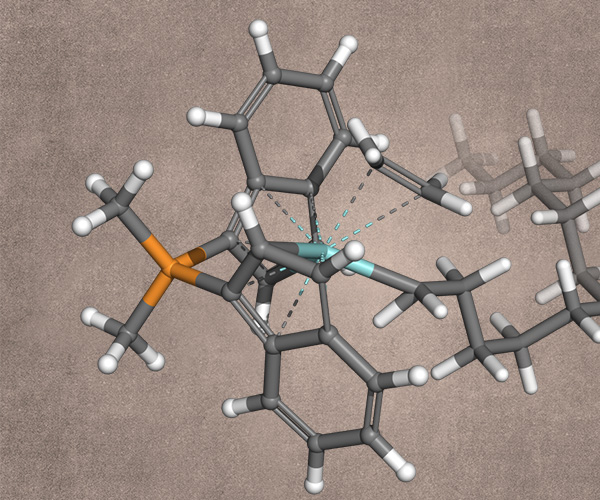
Catalysts facilitate the creation of almost all synthetic materials we interact with every day. New materials require new catalysts with enhanced and novel properties. Traditional synthetic approaches for materials discovery are expensive and slow. First-principles simulation has become a reliable tool for the prediction of structures, chemical mechanisms, and reaction energetics for the fundamental steps in homogeneous catalysis. Details of reaction coordinates for competing pathways can provide the fundamental understanding of observed catalytic activity, selectivity, and specificity. Such predictive capability raises the possibility for computational discovery and design of new catalysts with enhanced properties. Unfortunately, this is an arduous process that requires meticulous maintenance, specialized training, and accounting of hundreds of files and properties. To facilitate the fundamental understanding, design, and discovery of novel catalysts, an automated enterprise solution was designed and developed for collaboration between synthetic and computational chemists on a single web-based platform.