Potency-Enhancing Mutations of Gating Modifier Toxins for the Voltage-Gated Sodium Channel NaV1.7 Can Be Predicted Using Accurate Free-Energy Calculations
Accelerating innovation for polymeric materials with molecular modeling
APR 8, 2021
Accelerating innovation for polymeric materials with molecular modeling


Speaker:
Andrea Browning, Principal Scientist
Abstract:
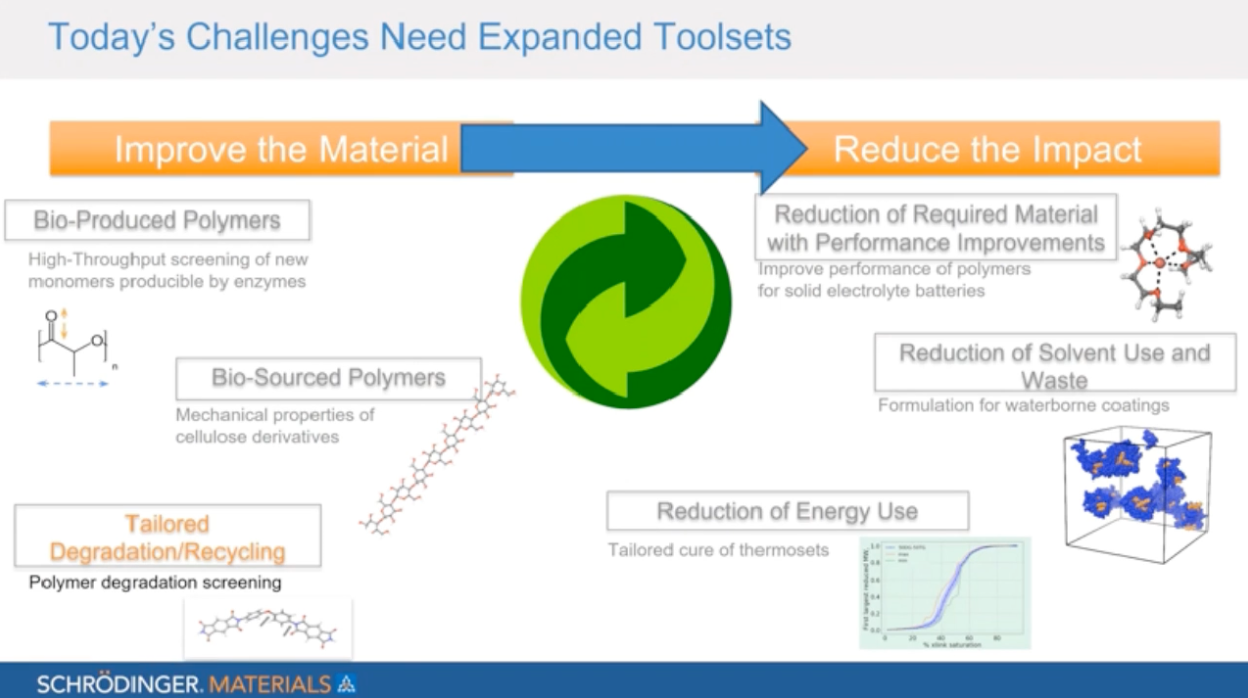
Polymeric materials have found widespread applications across a diverse range of industries. Their development has traditionally relied on experimental exploration of candidate chemistries; which is time-consuming, expensive and limited in scope. As we push toward the next generation of polymers with enhanced performance and sustainability, computational chemistry and informatics provide a critical connection between chemistry and properties. Molecular modeling can be used for high throughput screening, gaining fundamental understanding and providing the foundation for enhanced collaboration between teams working on polymer development. This webinar will review how molecular modeling has become a practical and important tool for polymer research engineers and scientists to have in their toolbox.
Highlights of the webinar will include:
- Polymer innovation and manufacturing support using chemically informed simulations
- Examples in areas of bio-based polymers, thermoset resins, thermoplastics such as polyacrylates, polyolefins
- Techniques for integrating simulation into industrial research and development
Reliable and Accurate Solution to the Induced Fit Docking Problem for Protein-Ligand Binding
Efficient Exploration of Chemical Space with Docking and Deep-Learning
Creating workflows with KNIME – Beyond the basics
NOV 5, 2018
Creating workflows with KNIME – Beyond the basics
Speaker
Katalin Phimister
Senior Tech Support
Abstract
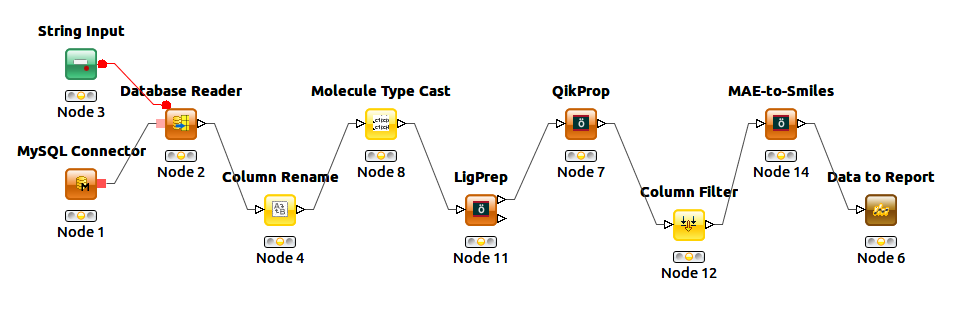
We would like to introduce some more advanced concepts to help you to create more complex workflows including:
- Parameter flow variables
- Integration with other command line tools
- Data manipulation
- Loops
Fundamental Limits to the Electrochemical Impedance Stability of Dielectric Elastomers in Bioelectronics
Improving Protein-Ligand Modeling into Cryo-EM Data and the use of those Models in Drug Discovery Efforts
FEB 23, 2021
Improving Protein-Ligand Modeling into Cryo-EM Data and the use of those Models in Drug Discovery Efforts
Speaker
Dr. Ken Borrelli
Sr. Principal Scientist, Schrödinger
Abstract
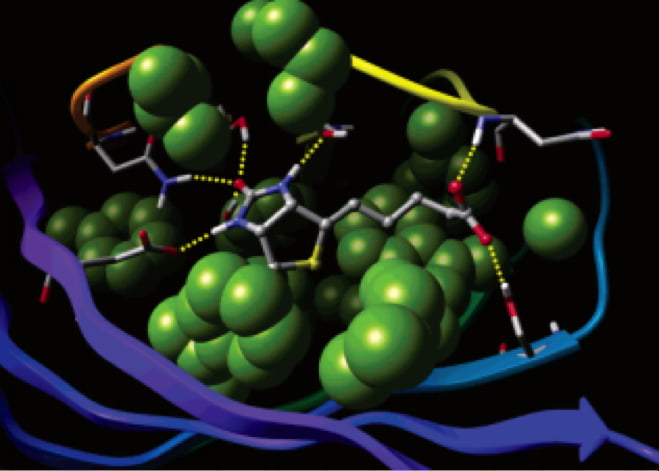
Producing an accurate atomic model of protein-ligand interactions from the data generated by cryo-electron microscopy is often a challenging problem due to a combination of the noise in the experiment and the dynamic nature of protein-ligand binding. In order to address this problem, we have developed ways to combine established computational modeling techniques with EM map potentials to create more accurate and more validated structural models of protein-ligand binding.
Here we report on the incorporation of the OPLS3e force field with the VSGB2.1 implicit solvation model into popular Phenix package for real and reciprocal space model refinement. With the advent of the resolution revolution in cryo-electron microscopy, low resolution atomic refinement is more common, and complex force fields may aid in refinement by avoiding implausible structures, due to ligand strain or protein-ligand contacts, permitted by the simpler restraints. Our results show significantly improved structure quality at lower resolution for X-ray refinement with reduced ligand strain, while showing only a slight increase in R-factors. For real space refinement of cryo-EM based structures, we find comparable quality structures and goodness-of-fit and reduced ligand strain. In addition, we explicitly show how structure quality is related with the map-model cross correlation as a function of data weight, and how it can be an insightful tool for detecting both over- and underfitting, especially coupled with accurate ligand energies. In addition to the tool, we will present its application to a structure-enabled drug discovery effort to identify modifications to streptogramin class antibiotics with improved resistance profiles.
We will also present modifications to our Glide ligand docking software to allow it to place ligands into unmodeled density. Combining this with the modified version of together can produce one or more poses that are consistent with both the experimental data and computational modeling at a range of resolutions for several ligand types. The pipeline is validated through several published cryo-EM structures of complexes in different resolution ranges and various types of ligands. In all cases, at least one identified pose produced both excellent interactions with the target and agreement with the map.
We will also demonstrate using alchemical FEP calculations, along with the affinities of a series of congeneric compounds, to confirm a prospective protein ligand-pose in cases where some ambiguity remained in the atomic details of the protein-ligand binding site. These tools will be valuable for the robust identification and confirmation of ligand poses to enable structure-based drug discovery efforts enabled by cryo-EM.