Quenching-Resistant Solid-State Photoluminescence of Graphene Quantum Dots: Reduction of –? Stacking by Surface Functionalization with POSS, PEG, and HDA
A chemist’s view on R&D digitalization

MAY 11, 2021
A chemist’s view on R&D digitalization


Speaker:
Dr. Laura Scarbath-Evers, Senior Scientist
Abstract:
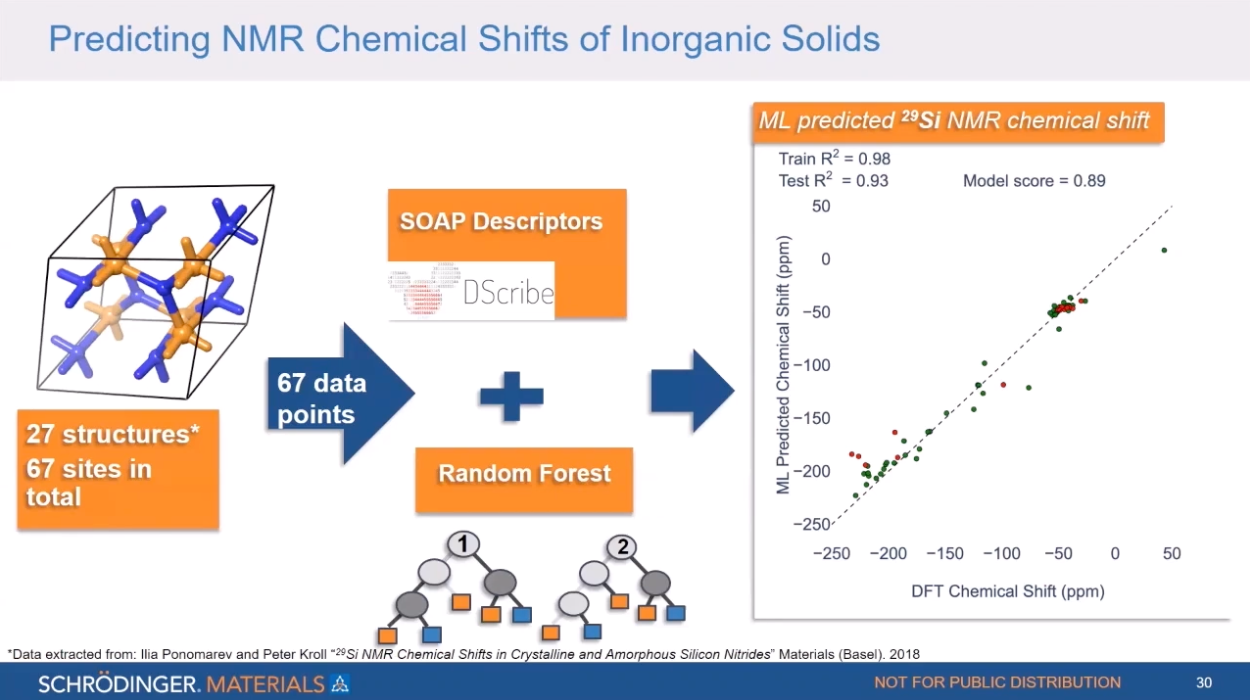
How the integration of machine learning with physics based modelling and enterprise informatics transforms materials discovery.
Global challenges, like a clean energy future or circular economy, have increased the demand for new materials. Typically, the performance of materials depends on a multitude of parameters which makes traditional research approaches, relying on experiments solely, slow, inefficient, and prohibitively expensive. Data driven approaches can significantly speed up the discovery process and shorten the time from idea to market.
In this presentation, we will illustrate how the integration of Schrödinger’s machine learning technologies with physics based modelling can be utilized to predict properties of new materials. Use cases from important materials science areas, like polymers and opto-electronic materials, will illustrate how data generated from experiment as well as physics-based modelling can be used to build machine learning models to predict physical properties and even suggest new compounds. Finally, we demonstrate how the integration of machine learning approaches into collaborative design schemes can maximize their usability and accessibility to non-expert users.
Chinese webinar: Polymer innovation with computational chemistry
MAY 10, 2021
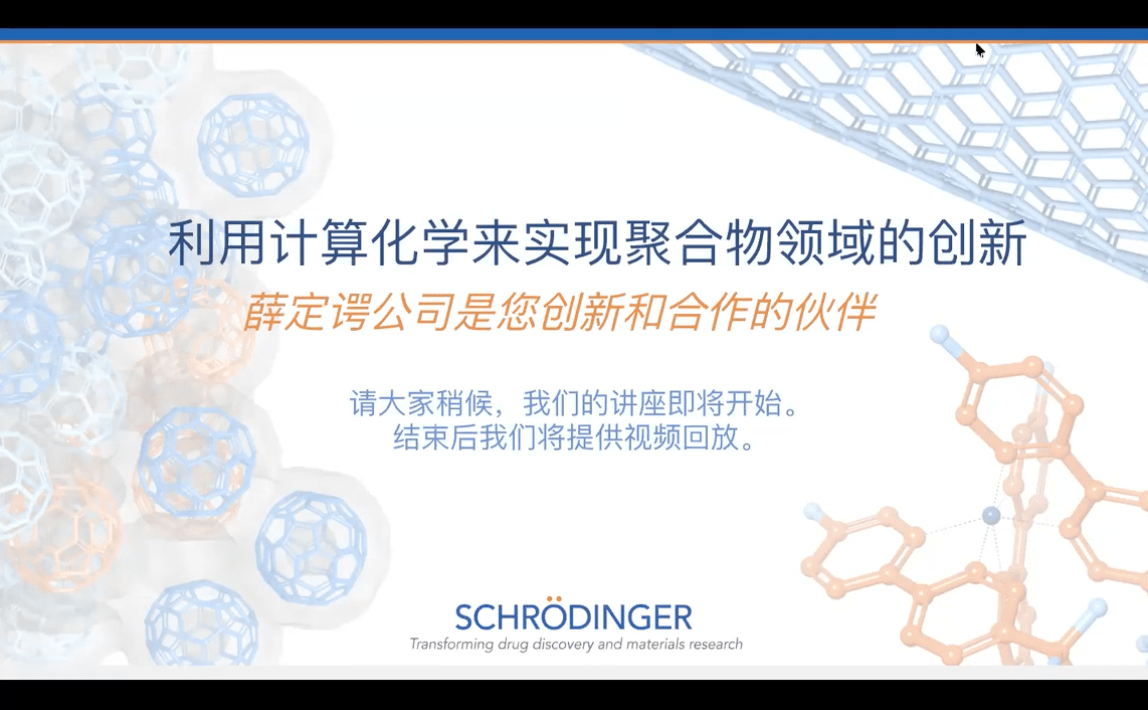
Chinese webinar: Polymer innovation with computational chemistry
Speaker:
Dr. Yuling An, Product Manager for Materials Science Machine Learning and Enterprise Informatics
Abstract:
Polymers have found use in industries from aerospace composites to food packaging to drug delivery. Their usefulness is tied to the intersection of chemistry, macromolecular structure, and microscale behavior. As the use of polymers has grown so has the need for better tools to predict and understand how the chemistry, processing, and macromolecular structure impacts performance. This webinar will review computational chemistry developed for polymers and how it has become a practical tool for polymer research engineers and scientists to have in their toolbox.
- Polymer property predictions using chemically informed simulations
- Computational chemistry techniques for thermosets and thermoplastics
- Examples in area of epoxy resins, polyacrylates, polyolefins
- Techniques for integrating simulation into industrial research and development
利用计算化学来实现聚合物领域的创新
聚合物已广泛应用于航空复合材料,食品包装,药物输送等多方行业。它们的实用性与化学,大分子结构和微观行为交叉联系在一起。随着聚合物用途的增长,对更好的了解并预测化学和大分子结构是如何影响性能的工具的需求也越来越大。我们借此网络研讨会将回顾聚合物开发的计算化学发展技术,以及它们如何成为可以帮助聚合物研究工程师和科学家的实用工具。
- 使用化学信息模拟进行聚合物性能预测
- 应用于热固性和热塑性塑料的计算化学技术
- 环氧树脂,聚丙烯酸酯,聚烯烃领域的实例
- 如何将计算模拟技术融合到工业研发中
Thermal Atomic Layer Etching of Aluminum Oxide (Al2O3) Using Sequential Exposures of Niobium Pentafluoride (NbF5) and Carbon Tetrachloride (CCl4): A Combined Experimental and Density Functional Theory Study of the Etch Mechanism
Computational Investigations of the Lithium Superoxide Dimer Rearrangement on Noisy Quantum Devices
A quantitative evaluation of computational methods to accelerate the study of alloxazine-derived electroactive compounds for energy storage
TD-DFT and Experimental Methods for Unraveling the Energy Distribution of Charge-Transfer Triplet/Singlet States of a TADF Molecule in a Frozen Matrix
Highly Efficient Deep Blue Phosphorescent OLEDs Based on Tetradentate Pt(II) Complexes Containing Adamantyl Spacer Groups
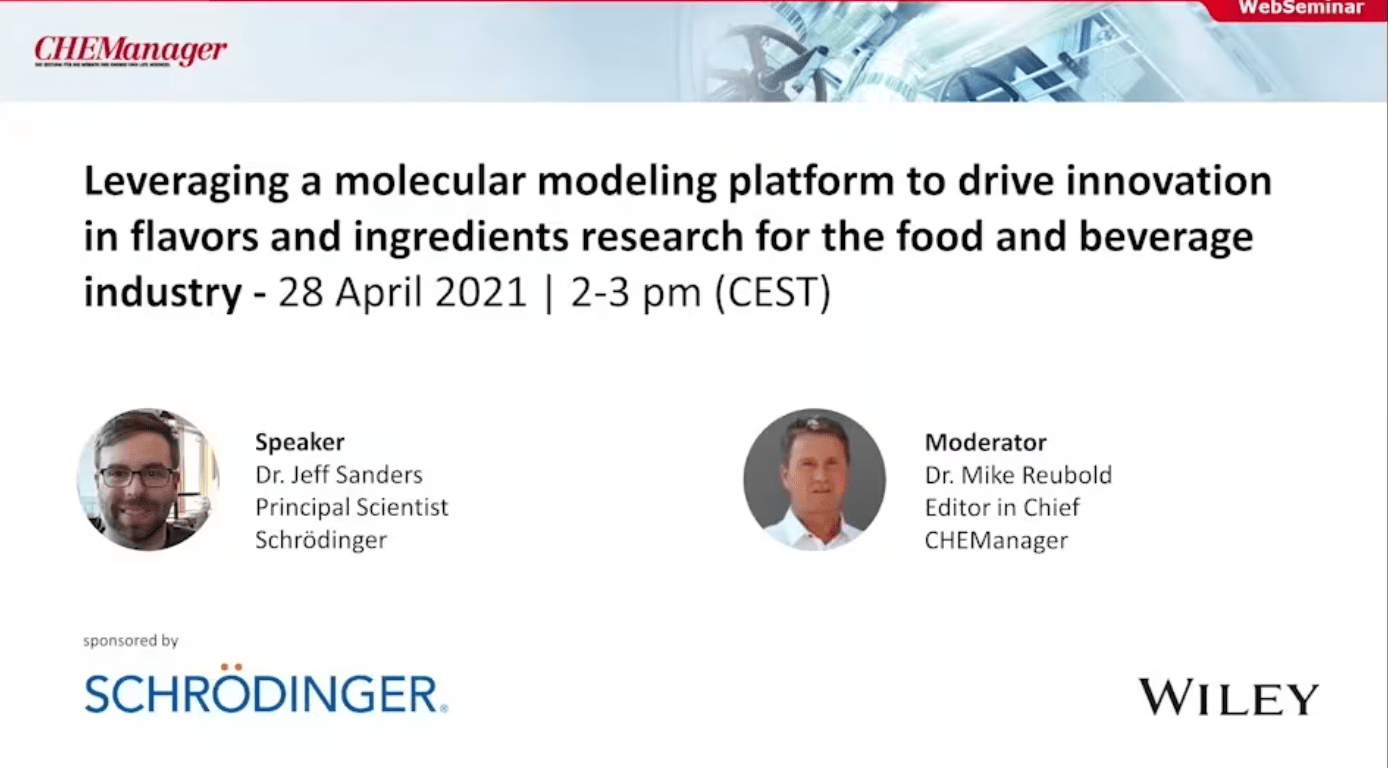
Leveraging a molecular modeling platform to drive innovation in flavors and ingredients research for the food and beverage industry
APR 28, 2021
Leveraging a molecular modeling platform to drive innovation in flavors and ingredients research for the food and beverage industry
Speaker
Jeffrey Sanders
Product Manager of Consumer Packaged Goods
Abstract
As trends in the food and beverage industry continue to change, the demand for new and innovative products is increasing. More and more, customers are becoming more discerning, choosing foods based on understanding ingredients, where their food comes from and what is the best choice for healthy living. These concerns highlight some of the weak points in food research and development: stagnation and “renovation over innovation”.
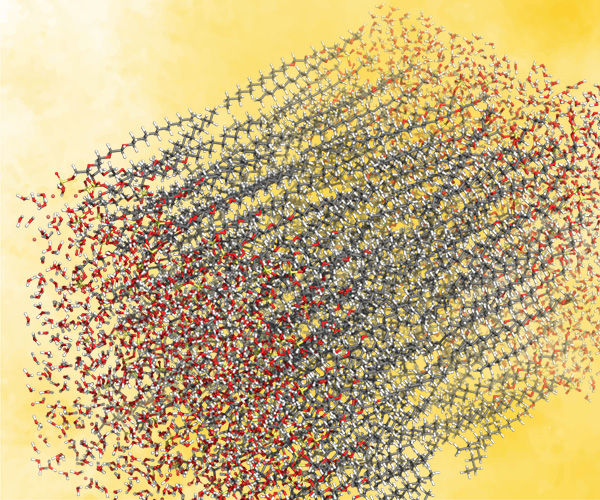
To meet these challenges and retain their position in the consumer marketplace, new food and drink formulations need to be developed. Understanding how ingredients behave in products will be necessary to drive not only new development but also end to end product tracing. To streamline this process, multi-scale physics simulations can be utilized to cut down product development costs and optimize large scale production. Molecular simulation provides a unique opportunity to predict how individual ingredients will behave in formulations. Atomistic simulations can help researchers and engineers understand product morphology, solubility and other physical properties if the components are known. Unlike process simulations, only the chemistry and composition is required to build molecular models of up to millions of atoms and predict properties. Beyond physics-based modeling, chemical information can be used to build machine learned models with existing experimental or sensory data. In this talk, we will explore the state of the art in molecular modeling of flavors and ingredients.