Enzymes by Design: Structure-based Methods for Modeling Enzymes

JUL 8, 2020

Enzymes by Design: Structure-based Methods for Modeling Enzymes

Speaker

Dr. Agustina Rodriguez-Granillo
Principal Scientist II

Abstract

An overview of how the Schrödinger technology can be used to optimize enzymes using structure-based rational design.

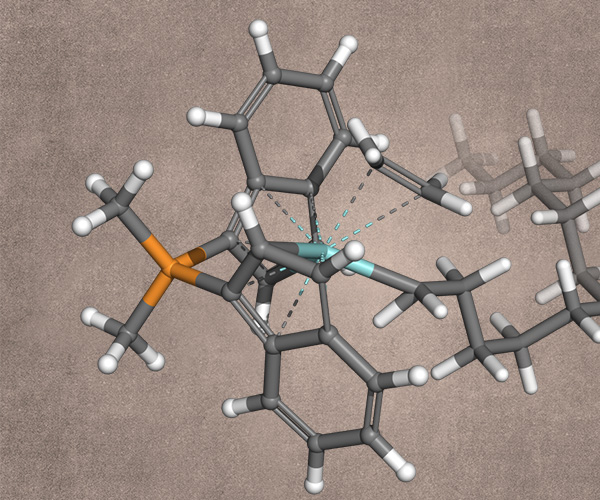
Enumeration as a Computational Strategy for Automating the Design of CVD and ALD Precursors

JUL 8, 2020

Enumeration as a computational strategy for automating the design of CVD and ALD precursors

Speaker:
Simon D. Elliott, Director, Atomic Level Process Simulation

Abstract: 
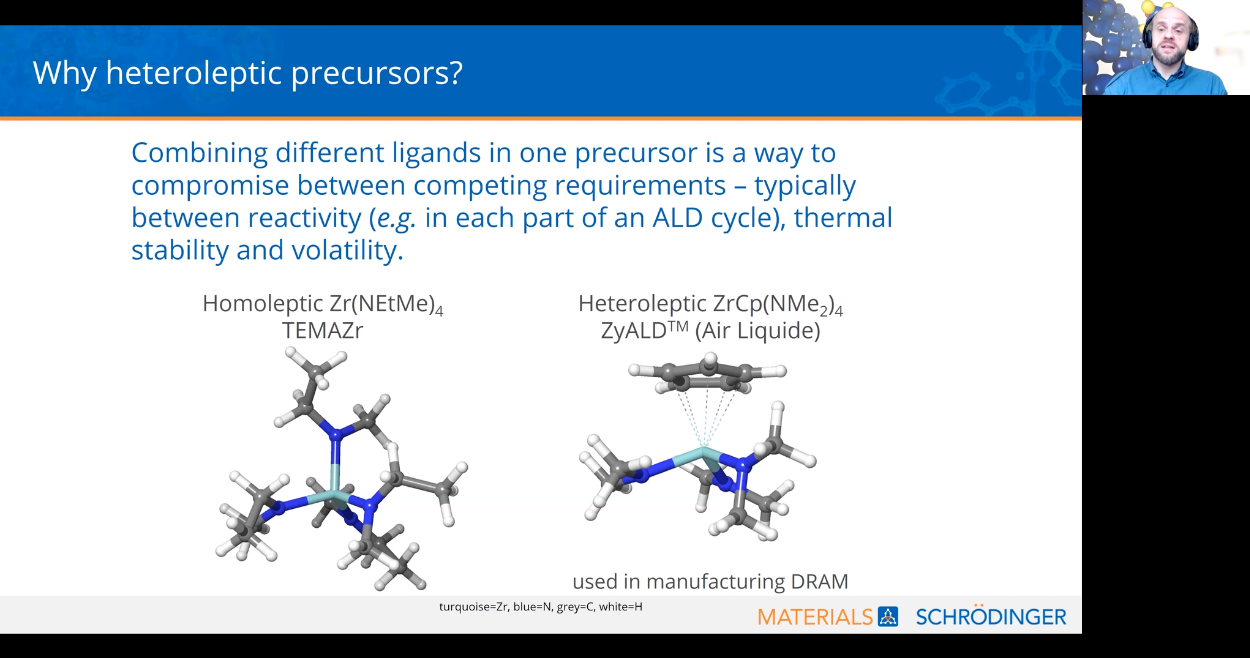
The success of chemical-based deposition and etch depends primarily on the choice of gas-phase chemicals. For atomic layer deposition (ALD) and chemical vapor deposition (CVD) more generally, the precursor chemicals are often metalorganic complexes with ligands surrounding a metal center. Ligand choice in ALD/CVD precursors is crucial for throughput, stoichiometry, impurities, and process temperature. Heteroleptic precursors (containing more than one type of ligand) are one way to compromise between conflicting chemical requirements. However, to date we have barely ‘scratched the surface’ of the vast chemical space of possible heteroleptic precursors. Since an exhaustive experimental analysis is not possible, we look to computational screening to narrow down the search to the most promising options. Here we present a computational approach for screening metal precursors with respect to thermal stability. The computational strategy is illustrated on the example of Zr precursors for zirconium nitride, used as a hard coating to protect industrial parts in corrosive environments.
Antibody modeling with the Schrödinger Platform

MAY 27, 2020

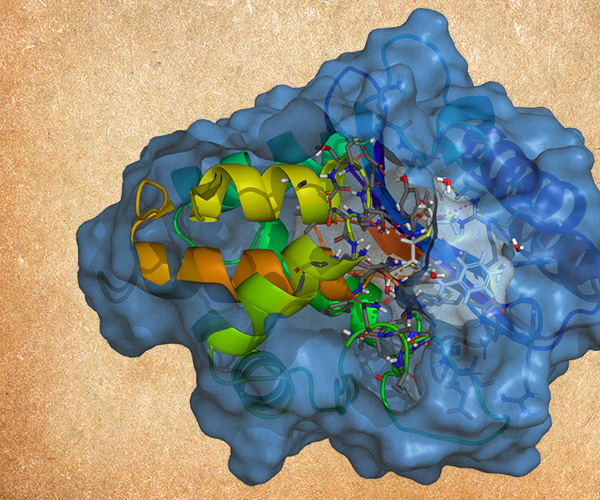
Antibody modeling with the Schrödinger Platform

Speaker

Dr. Guido Scarabelli
Senior Scientist I

Abstract

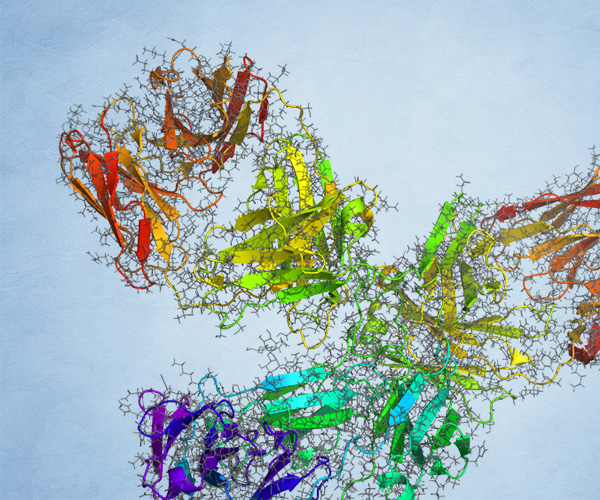
This webinar presents the tools available in BioLuminate to model antibody structures, covering homology modeling, humanization, antigen-antibody docking, liability prediction, and in silico mutations.

Automated High-throughput In Silico Reaction Screening for Design and Discovery of Enhanced Reactivity and Tailored Chemo-, Regio-, and Stereo-selectivity

MAY 20, 2020

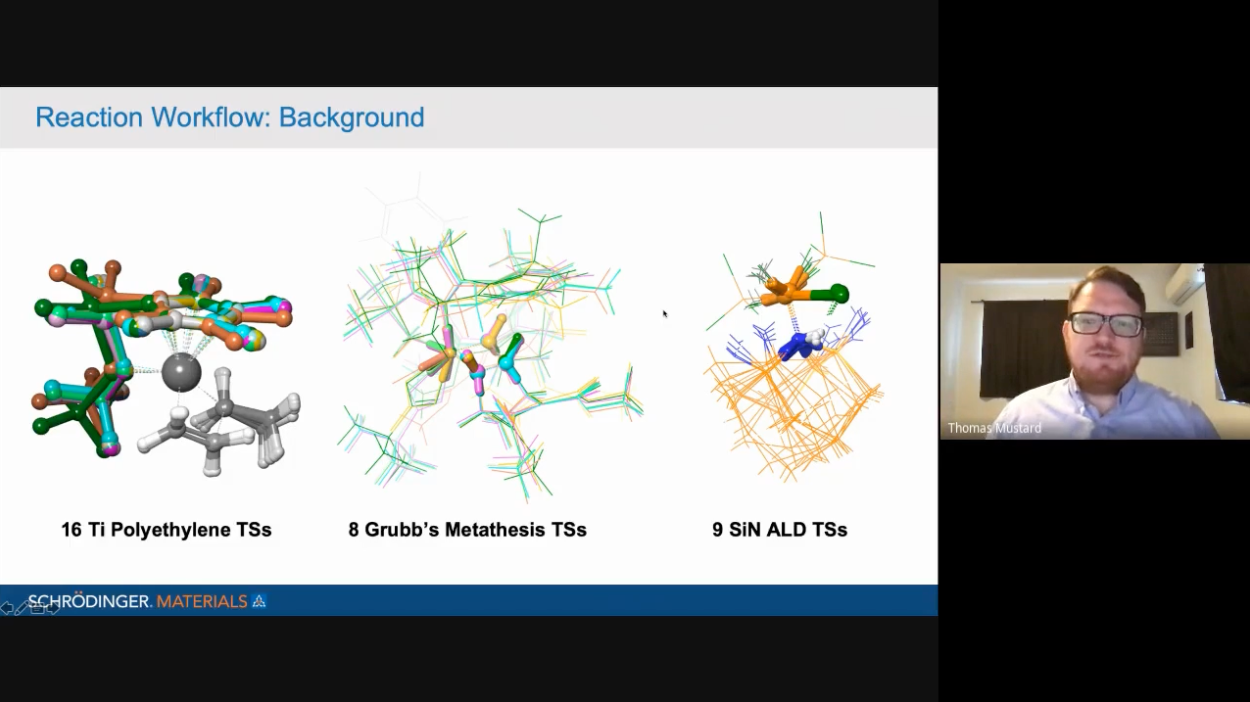
Automated high-throughput in silico reaction screening for design and discovery of enhanced reactivity and tailored chemo-, regio-, and stereo-selectivity

Speaker:
Thomas Mustard, Principal Scientist

Abstract:
First-principles simulation has become a reliable tool for the prediction of structures, chemical mechanisms, and reaction energetics for the fundamental steps in catalysis. Details of reaction coordinates for competing pathways can be elucidated to provide the fundamental understanding of observed catalytic activity, selectivity, and specificity. Such predictive capability raises the possibility for computational discovery and design of new catalysts with enhanced properties.

Efficient and Accurate Modeling of Thermosets via a Synergistic Combination of Quantum Mechanics and Molecular Dynamics Simulations

MAY 14, 2020

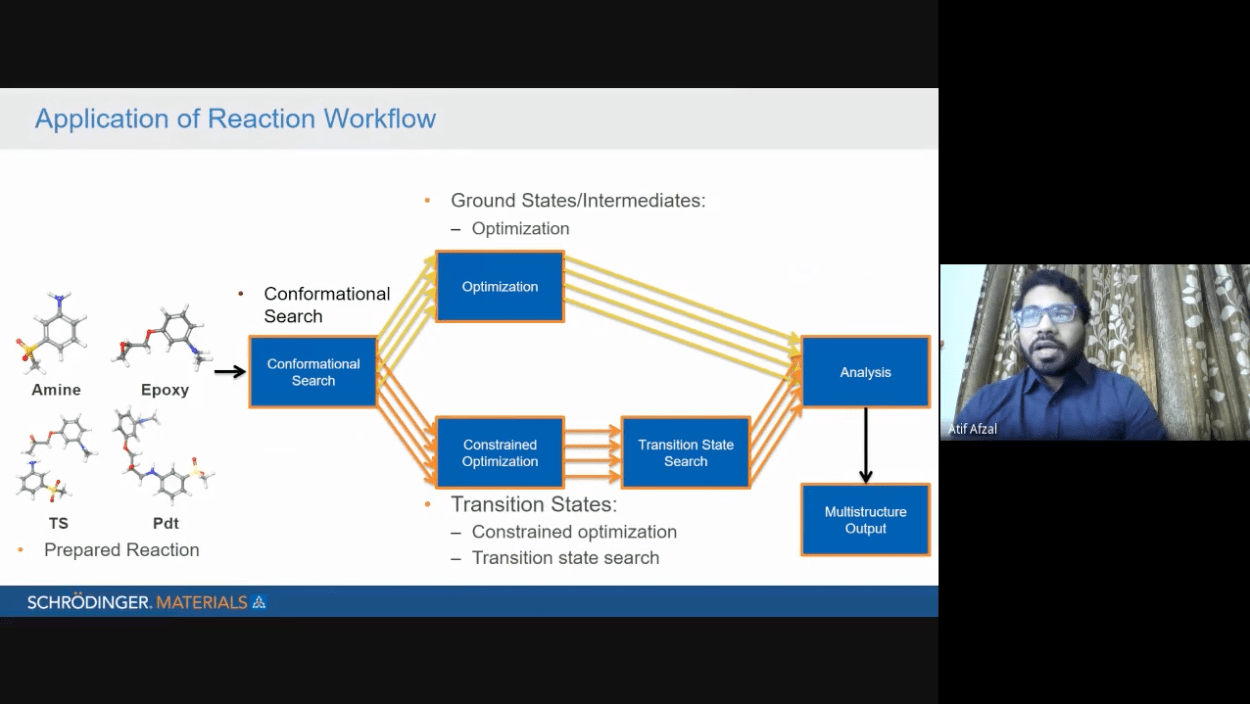
Efficient and accurate modeling of thermosets via a synergistic combination of quantum mechanics and molecular dynamics simulations

Speaker:
Atif Afzal, Senior Scientist

Abstract: 
Epoxy-amine thermosets, due to their unique properties, are widely used materials in various structural and specialty composites applications. In our work, we apply molecular dynamics (MD) approach to efficiently study the properties of these cross-linked polymers. When creating such systems in silico, capturing the kinetics involved in the cross-linking step is critical in building realistic systems. We employ automated quantum mechanics (QM) tools to identify key reaction steps and their kinetics involved in polymer synthesis and matrix-crosslinking, and include this information in our crosslinking tool. We evaluate several properties such as gelation point, glass transition temperatures, and mechanical properties of these systems and report the trends. We demonstrate that a synergistic combination of QM and MD simulation enables the generation of realistic thermoset polymer morphologies and reliable prediction of their properties.