MS Force Field Applications

Cutting-edge force field technologies for accurate property predictions

MS Force Field Applications

MS Force Field Applications (MS FF Applications) includes access to Schrödinger’s widely-used OPLS4 and new OPLS5 force field, as well as all the Schrödinger machine learning force fields (MLFFs) for diverse property prediction workflows. Schrödinger is committed to advancing innovations in force fields to help you achieve more accurate, reliable modeling outcomes.

What’s New: 

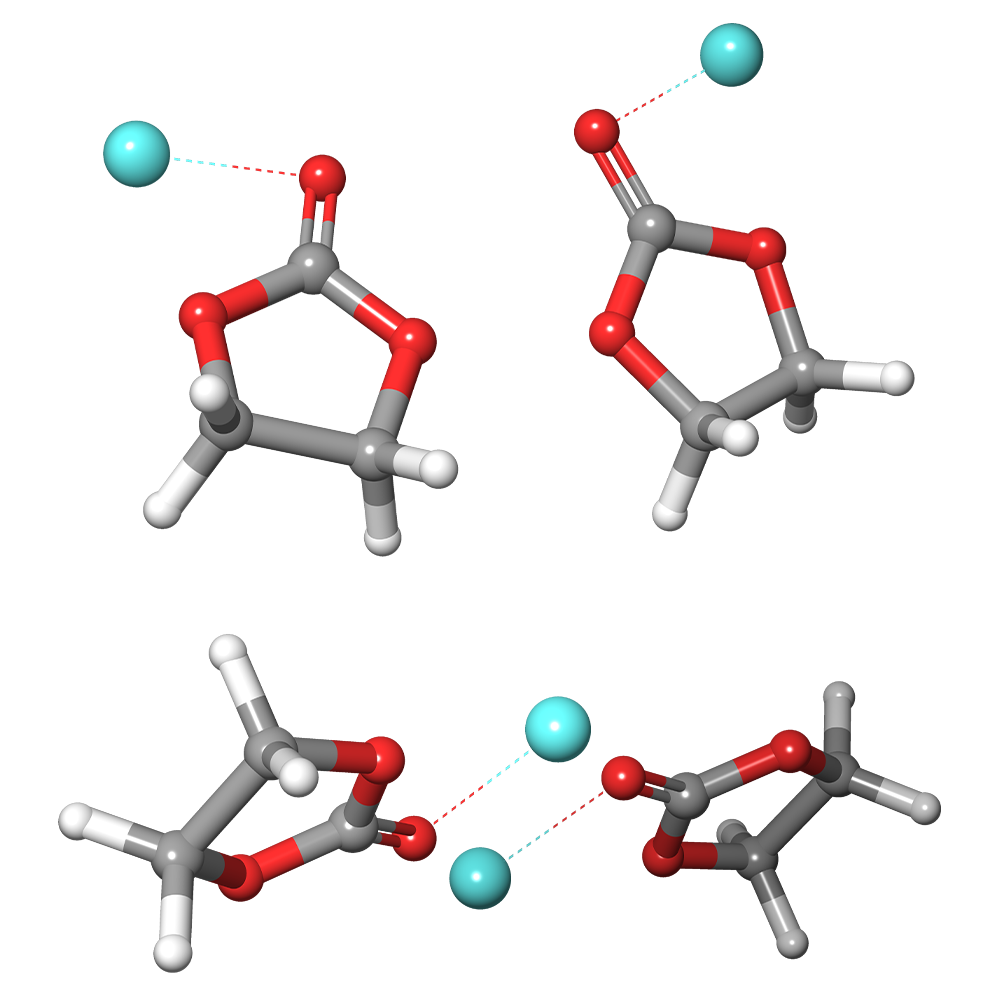
  • OPLS5: Includes an explicit treatment of polarizability via the addition of Drude oscillators that enables accurate modeling of cation-pi interactions and more accurate treatment of hydrogen bonding to charged systems.
  • MPNICE: Machine learning force fields, also known as machine learning interatomic potentials, represent an intermediate between classical force fields and DFT, maintaining the linear scaling of the former while approaching the accuracy of the latter. Message Passing Network with Iterative Charge Equilibration (MPNICE) is an MLFF architecture developed by Schrödinger for which multiple pre-trained models covering 89 elements are available, and which explicitly incorporates equilibrated atomic charges and long range electrostatics.
background pattern

Benefits of MLFFs

Near DFT-level accuracy with orders of magnitude reduction in computational time
Option for GPU accelerated molecular dynamics with Desmond
Large chemical space spanning 89 elements
Specialized force fields for organics, inorganics, and hybrid materials

Key Capabilities

Batteries

  • Calculate bulk and transport properties, such as diffusion, viscosity, and conductivity, of liquid electrolytes
  • Simulate Li-ion diffusion in solid state electrolytes and cathode coating materials
  • Model electrolyte reactivity and SEI formation

Polymers

  • Evaluate polymer dynamical properties
  • Investigate solid polymer electrolyte

Adsorption on surfaces

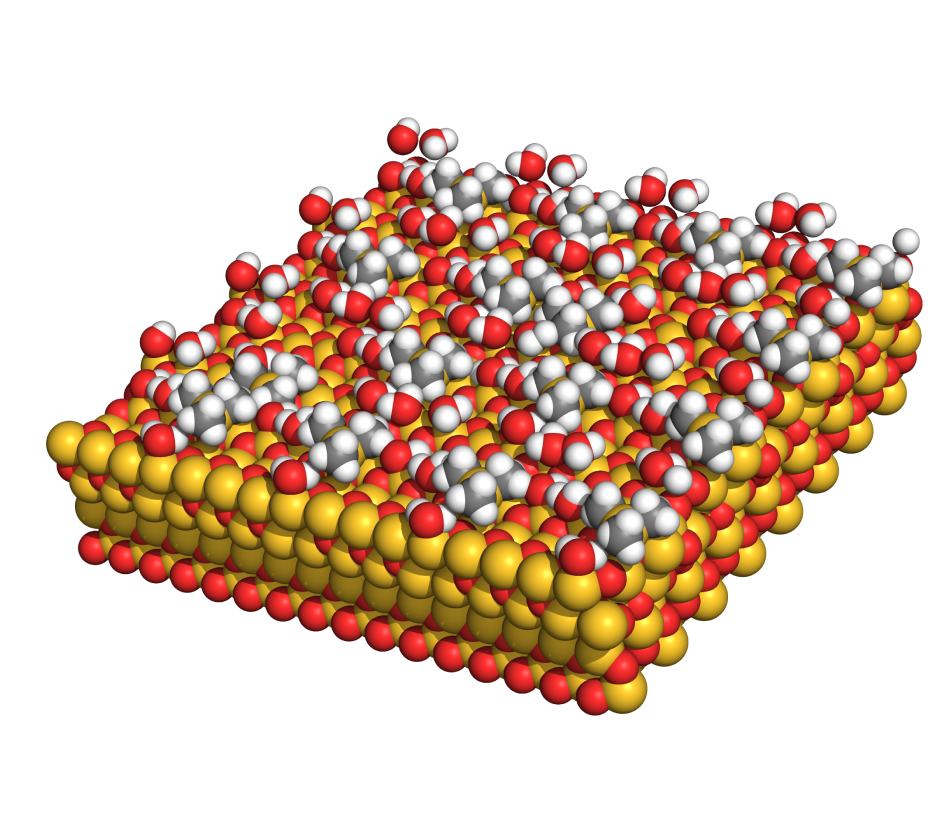
  •  Study reactivity of multiple adsorbates in extended models of complex surfaces

Crystal structure prediction

  • Rank order organic crystal structures

OLED materials

  • Simulate molecular packing and thin-film morphology 
  • Investigate doping, host–guest, and interlayer interactions
  • Link device properties to the static and dynamic disorder of molecular systems
  • Facilitate thermomechanical property prediction
  • Model charge and exciton transport

Case studies & webinars

Discover how Schrödinger technology is being used to solve real-world research challenges.

Materials Science Webinar

Advancing machine learning force fields for materials science applications 最新機能 MPNICEのご紹介

シュレーディンガーが開発した最先端のMLFFアーキテクチャ「MPNICE(Message Passing Network with Iterative Charge Equilibration)」をご紹介します。

Materials Science Webinar

Advancing machine learning force fields for materials science applications

In this webinar, we will introduce Schrödinger’s state-of-the-art MLFF architecture, called Message Passing Network with Iterative Charge Equilibration (MPNICE), which incorporates explicit electrostatics for accurate charge representations.

Materials Science Webinar

In silico materials development: Integrating atomistic simulation into academic chemistry and engineering labs

In this webinar, we explore Schrödinger’s leading physics-based and machine learning computational technologies and provide a comprehensive introduction to the capabilities of computational modeling in chemistry, materials science, and engineering.

Materials Science Webinar

Overview of Molecular Modelling for Formulations

In this webinar, we give an overview of molecular modeling calculations relevant for formulations in the pharmaceuticals, inks, 3D printing, polymers, batteries and agricultural chemicals industries.

Materials Science Webinar

Chinese: Driving the development of bio-based polymer materials with molecular simulations | 分子模拟技术推进生物基聚合物材料的发展

生物基聚合物(由可再生资源制成的聚合物材料)的应用正在为各个行业,从消费品包装到碳纤维复合材料,带来整体效益。

Materials Science Webinar

Quick Start Workshop: Materials Simulation for Experimentalists

In this webinar, learn how an experimentalist can take advantage of simulation and modeling, as well as practical knowledge about how to get started.

Materials Science Webinar

Driving the Development of Bio-Based Polymers with Molecular Simulation

In this webinar, we’ll explore how research leaders, material scientists and polymer scientists can learn new techniques for screening and evaluating the performance of bio-based polymer materials.

Materials Science Webinar

A Molecular-Level Examination of Amorphous Solid Dispersion Formulation Dissolution

Materials Science Webinar

Demonstration of Coarse-grained Modeling of Drug Formulations using Schrödinger Materials Science Suite

Materials Science Webinar

A chemist’s view on R&D digitalization

In this webinar, we illustrate how the integration of Schrödinger’s machine learning technologies with physics based modelling can be utilized to predict properties of new materials.

Documentation & Tutorials

Get answers to common questions and learn best practices for using Schrödinger’s software.

Materials Science Tutorial

Locating Adsorption Sites on Surfaces

Learn how to locate adsorption sites on surfaces.

Materials Science Documentation

Machine Learning Force Fields

Machine Learning Force Fields (MLFFs) offer a novel approach for predicting the energies of arbitrary systems.

Materials Science Quick Reference Sheet

MLFF Calculations: Quick Reference Sheet

Get an overview of the MLFF Calculations panel for predicting quantum mechanical calculations for systems using machine learning force fields.

Materials Science Tutorial

Machine Learning Force Field

Learn how to use machine learning force field optimization methods to prepare and simulate various systems.

Related Products

OPLS4

Modern, comprehensive force field for accurate molecular simulations

Desmond

High-performance molecular dynamics (MD) engine providing high scalability, throughput, and scientific accuracy

Force Field Builder

Efficient tool for optimizing custom torsion parameters in OPLS4

MS Maestro

Complete modeling environment for your materials discovery

Crystal Structure Prediction

De-risk your solid form selection process by identifying the most stable polymorph at room temperature

Publications

Materials Science Publication

Efficient long-range machine learning force fields for liquid and materials properties

Materials Science Publication

Leveraging high-throughput molecular simulations and machine learning for the design of chemical mixtures

Materials Science Publication

Advancing material property prediction: using physics-informed machine learning models for viscosity

Materials Science Publication

Machine learning force field ranking of candidate solid electrolyte interphase structures in Li-ion batteries

Schedule a demo on MS Force Field Applications

Contact us today to discuss how you can leverage MLFFs to solve your R&D challenges.

Don’t see your areas of interest in the current lists above? Reach out so we can help.

Form submitted

Thank you, we’ll be in touch soon.

Software & services to meet your organizational needs

Software Platform

Deploy digital materials discovery workflows with a comprehensive and user-friendly platform grounded in physics-based molecular modeling, machine learning, and team collaboration.

Research Services

Leverage Schrödinger’s expert computational scientists to assist at key stages in your materials discovery and development process.

Support & Training

Access expert support, educational materials, and training resources designed for both novice and experienced users.