
- Tutorial
Sequence Annotation of Antibodies with the Multiple Sequence Viewer/Editor
Annotate an antibody sequence with residue-level properties with the Multiple Sequence Viewer/Editor (MSV).
- Tutorial
Membrane-Bound FEP+ with A2A
Prepare, run, and analyze a free energy perturbation (FEP) simulation with a membrane-bound protein for a series of A2A inhibitors using FEP+.
- Tutorial
pKa Predictions with Jaguar pKa
Predict the pKa of organic molecules with more than one acidic functional group.
- Tutorial
Defining QM and MM regions in QSite
Define regions to treat with QM and with MM for a QSite calculation.
- Tutorial
Evaluating Large Ligand Libraries with Active Learning Glide
Set up a virtual screen to analyze a 1M ligand library from using Active Learning Glide.
- Tutorial
Glide WS Evaluation of HSP90 Ligands
Build and use Glide WS models to evaluate Hsp90 ligands.
- Tutorial
Forming Protein-Ligand Interactions with the Ligand Designer
Form protein-ligand interactions and optimize a hit molecule with the Ligand Designer.
- Tutorial
Absolute Binding Free Energy Perturbation to Postprocess Docking Results
Use Absolute Binding Free Energy calculations to enrich virtual screening results.
- Tutorial
Dynamic Relaxed Coordinate Scans
Explore potential energy surfaces using dynamic relaxed coordinate scans.
- Tutorial
Rigid and Relaxed Coordinate Scans
Explore potential energy surfaces using rigid and relaxed coordinate scans.
- Tutorial
Computing Atomic Charges
Calculate atomic partial charges and compare different methods for determining charges.
- Tutorial
Vibrational Circular Dichroism (VCD)
Learn to perform vibrational circular dichroism (VCD) calculations.
Events
 Event
Life Science
Event
Life Science
- Sep 13th-16th, 2026
30th National Meeting on Medicinal Chemistry 2026
Schrödinger is excited to be participating in the 30th National Meeting on Medicinal Chemistry 2026 conference taking place on September 13th – 16th in Messina, Italy.
 Event
Life Science
Event
Life Science
- Sep 13th-16th, 2026
EUROTOX 2026
Schrödinger is excited to be participating in the EUROTOX 2026 conference taking place on September 13th – 16th in Vienna, Austria.
 Event
Life Science
Event
Life Science
- Sep 15th-16th, 2026
Schrödinger Live Cambridge 2026
This two-day, in-person user group meeting (UGM) event will bring together scientists and industry professionals to exchange ideas, explore new approaches, and connect with peers across the industry.
Webinars
 Webinar
Life Science
Materials Science
Webinar
Life Science
Materials Science
- Sep 23, 2026
Bunsen: Where Validated Scientific Workflows Meet Agentic AI
Join Schrödinger CTO Pat Lorton for an introduction to Bunsen. Pat will share how Bunsen allows researchers to set up, run, and troubleshoot multi-stage workflows without command-line friction or manual setup.
 Webinar
Life Science
Webinar
Life Science
- Sep 10, 2026
Is structure-based drug design and toxicology ready for ion channels and transporters?
In this webinar, we will answer this question by presenting the results of a large scale study of potency prediction for seven clinically relevant ion channels and two transporters.
Webinar
Life Science
- Jun 11, 2026
Physics-Based Approaches for Exploring Off-Target Compound Binding: An In Silico Kinase Panel
This presentation describes an evaluation of a workflow based on Schrödinger’s IFD-MD and FEP methodologies applied within an in silico kinase panel.
Documentation
- Documentation
Predicitive Tox Documentation
Documentation covering the panel help for Predictive Tox.
- Documentation
Learning Path: Oligonucleotide Modeling
A structured overview of tools and workflows for nucleic acids in drug discovery.
- Documentation
WaterMap
Efficiently converged MD simulations are run with explicit water molecules, and resultant trajectories are analyzed to cluster hydration sites.
Tutorials
- Tutorial
Structure-Based Virtual Screening using Glide
Prepare receptor grids for docking, dock molecules and examine the docked poses.
- Tutorial
Ligand Binding Pose Generation for FEP+
Generate starting poses for FEP simulations for a series of BACE1 inhibitors using core constrained docking.
- Tutorial
Homology Modeling of Protein-Ligand Binding Sites with IFD-MD
Create a homology model of TYK2 from JAK3 and including a bound ligand. Compare this model with the crystal structure for TYK2 bound to 4GIH.
Training Videos
 Video
Life Science
Video
Life Science
Getting Going with Maestro BioLuminate
A free video series introducing the basics of using Maestro Bioluminate.
 Video
Life Science
Video
Life Science
- Tutorial
- Video
The LiveDesign Assistant
Learn how to build and adjust coloring rules, create Freeform and Formula columns, and plot data using the LiveDesign Assistant.
Publications
- Publication
- May 8, 2026
Discovery of 2H-Pyrrolo[3,4-c]pyridin-3-one Derivatives as Type-III c-MET Inhibitors Enabled by Free-Energy Perturbation CalculationsCl
Therrien, et al. ACS Medicinal Chemistry Letters, 2026
- Publication
- Apr 8, 2026
Structure-Based Discovery of Imidazo[4,5-c]pyridine SARM1 Modulators Showing Paradoxical Activation
Albanese, et al. Journal of Medicinal Chemistry, 2026, 69(8), 9521–9536
- Publication
- Mar 21, 2026
Structure-Based Calculation of Excipient Effects on the Viscosity of Concentrated Antibody Solutions
Shelley, et al. mAbs, 2026, 18(1)
Case Studies
 Case Study
Life Science
Materials Science
Case Study
Life Science
Materials Science
 Case Study
Life Science
Case Study
Life Science
 Case Study
Life Science
Case Study
Life Science
White Papers
 White Paper
Life Science
White Paper
Life Science
- Jan 29, 2026
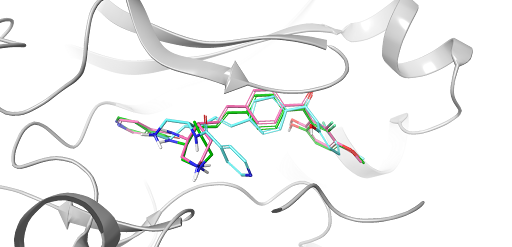
FEP+ Pose Builder — maximizing utility and productivity in FEP simulations
FEP+ Pose Builder is a methodological advancement introduced as an integrated feature to drastically enhance accessibility, user-friendliness, and productivity within the FEP+ pipeline.
 White Paper
Life Science
White Paper
Life Science
- Oct 29, 2024
20 Years of Glide: A Legacy of Docking Innovation and the Next Frontier with Glide WS
Glide has long set the gold standard for commercial molecular docking software due to its robust performance in both binding mode prediction and empirical scoring tasks, ease of use, and tight integration with Schrödinger’s Maestro interface and molecular discovery workflows.
 White Paper
Life Science
White Paper
Life Science
Quick Reference Sheets
- Quick Reference Sheet
Force Field Builder
A one-page guide to calculate missing torsion parameters for ligands using the Force Field Builder panel.
- Quick Reference Sheet
Ligand Interaction Diagram
A one-page guide to using the Ligand Interaction Diagram for examining ligand-receptor interactions.
- Quick Reference Sheet
GlideMap
A one-page guide to using the GlideMap GUI for ligand placement guided by experimental density.

Latest insights from Extrapolations blog

With FEP+, “The Experiment is the Limit.”
Over the past century, small molecule drugs have represented the dominant modality in drug research, enabling medical breakthroughs that have saved countless lives.

Tackling Drug Solubility: AbbVie and Schrödinger Collaborate to Advance Accurate Prediction Methods
The complexity and size of drug candidates has grown in recent years as scientists pursue novel targets once considered undruggable.
 Blog
Blog
Can AlphaFold Models be Used for Structure-Based Drug Design? A Perspective Two Years In
We recently sat down with Edward Miller, Senior Director of Protein Structure Modeling at Schrödinger, to discuss his experience using AlphaFold models for SBDD.
Training & Resources
Online certification courses
Level up your skill set with hands-on, online molecular modeling courses. These self-paced courses cover a range of scientific topics and include access to Schrödinger software and support.
Free learning resources
Learn how to deploy the technology and best practices of Schrödinger software for your project success. Find training resources, tutorials, quick start guides, videos, and more.
Other Resources