RICT 2025

Conference
RICT 2025
 Date & Time
 - July 2nd-4th, 2025
 Location
 - Orléans, France


Schrödinger is excited to be participating in the RICT – 59th International Conference on Medicinal Chemistry conference taking place on July 2nd – 4th in Orléans, France. Join us for a workshop by Jean-Christophe Mozziconacci, Senior Principal Scientist and Zeineb Si Chaib Senior Scientist at Schrödinger titled, Computationally-driven lead optimization and KPI tracking: A DLK inhibitor design challenge. Stop by booth #25 to speak with Schrödinger scientists.
HairS’25

Conference
HairS’25
Date & Time - June 25th-27th, 2025
Location - Augsburg, Germany
Schrödinger is excited to be participating in the HairS’25 – International Hair-Science Symposium taking place on June 25th – 27th in Augsburg, Germany. Join us for a presentation by Jeffrey Sanders, Research Leader at Schrödinger, titled “Accelerating hair care product design through formulations modeling at the molecular level.”
 JUN 26 | 12:00 – 12:25
  Room Teehalle
 Accelerating hair care product design through formulations modeling at the molecular level
Speaker:
Jeffrey Sanders, Research Leader, Schrödinger
Abstract:
The journey to develop and reformulate products to become more sustainable presents many challenges. Research and development in these areas often demand substantial time, resources, and new raw materials. To accelerate this process, predictive modeling offers the potential to identify promising ingredients, formulations, and even new packaging materials that meet the required standards. Virtual testing of hair care ingredients and formulations using computational methods can provide a mechanistic understanding at the molecular level. This allows for a better understanding of how individual ingredients behave, the morphology and stability of formulations, and their interaction with hair cuticle surface models. Additionally, interactions between products and packaging materials, which are key drivers of shelf-life, can also be explored. Case studies in these areas will highlight the utility of computational chemistry methods in understanding products in development, in their packaging, and in action.
Active Learning FEP: Impact on Performance of AL Protocol and Chemical Diversity
Schrödinger Polymer Workshop 2025

Workshop
Schrödinger Polymer Workshop 2025
Date & Time - May 21st, 2025
Location - Mannheim, Germany
Using Schrödinger’s Materials Science Suite for atomic-scale simulations
Schrödinger invites you to a one-day in-person workshop in Mannheim, Germany to gain hands-on experience with Schrödinger software for polymer design and simulation for a variety of applications.
Participants will get practical experience and in-person guidance in using our Materials Science Suite and the tools involved in building molecules, polymers, and complex mixtures for use in molecular dynamics simulations. Leveraging automated property prediction workflows as well as analysis tools will play an important role. Another aspect will be the application of machine learning.
Examples of how molecular-scale simulations can inform polymer and polymer formulation development will be included throughout the day.
Full agenda TBD
When & Where:
Wednesday 21st May 2025
Glücksteinallee 25
68163 Mannheim
Germany
(5 minutes walk from Mannheim Hauptbahnhof)
Please see our FAQs page for information regarding what to bring, getting to the venue, and accessibility.
If you need further information please contact Patrick Heasman: patrick.heasman@schrodinger.com
If you are interested but unable to attend in person, please reach out to the contact above.
Registration:
Registration is free and includes lunch and refreshments.
Participants must bring their own laptop to access the software, and an external mouse is recommended. We will be utilising our Virtual Computer, which is accessed via web browser – No software installation is required prior to the session.
Places are limited, so please ensure to register as soon as possible.
Registration will close at latest on Friday 16th May 2025.
Who should attend:
Any researcher studying polymer design, polymer application, or generally interested in learning about computational materials science. No prior experience is required.
Instructional material can be reviewed before or after the workshop for free on our website:
Schrödinger Tutorials and Documentation
Speakers and demonstrators:
- Dr. Caroline Krauter
- Dr. Irene Bechis
- Dr. Patrick Heasman
Agenda
FAQs
How long is the workshop?
The workshop is an all day event to give you the best opportunity to learn about our tools and benefit from the practical sessions throughout. We will start at 10:00 am and finish at approximately 4:00 pm.
Where is the venue and how can I get there?
The workshop is being help at our offices in Mannheim, Germany. The building is accessible via car, and the train station is within a 5 minute walk.
What is included with my registration?
Registration is completely free to attend the workshop. We will also be providing food and refreshments throughout the day.
Can I join the session virtually / remotely?
As we want to give the attendees help and guidance during the workshop we currently have no intention of running this workshop online. Please reach out if you are interested but are unable to travel to the event location.
Please contact Patrick Heasman (patrick.heasman@schrodinger.com) for any additional information about the event and the location.
Travel:
- Via plane / train:
Frankfurt / Frankfurt Airport – A direct train to Mannheim takes approximately 45 minutes. - Via car:
There are several car parks located on Glücksteinallee.
Hotel recommendations:
- Holiday Inn Mannheim City
- LanzCarré Hotel Mannheim
- Premier Inn Mannheim City Centre hotel
- Hilton Garden Inn Mannheim
What do I need to bring?
A laptop is required for this workshop. We will not be providing any on the day, so please ensure that you bring one. We also recommend that you bring a personal laptop to avoid any firewall restrictions.
An external mouse is not required, but we do recommend that you bring one as our software makes full use of the 3 buttons.
Do I need to download and install the software prior to the event?
No. We will be utilising the Schrödinger Virtual Computer for all hands-on sessions. A suitable web browser is required for accessing this (Chrome, Edge, Firefox).
Schrödinger India User Group Meeting 2025

User Group Meeting
Date & Time
- June 19th-20th, 2025
Location
- Hyderabad, India


Join us for the Schrödinger India User Group Meeting in Hyderabad!
We warmly invite you to attend the Schrödinger India User Group Meeting on June 19-20, 2025, in the beautiful city of Hyderabad at the ITC Kohenur, Hitec City.
This event will feature a mix of scientific presentations, panel discussions, and networking opportunities. It is a great chance to connect with others in the field and gain insights into the latest developments in computational molecular design and drug discovery.
Registration for this event will close on Friday, June 6th.
Event Highlights
- User talks highlighting applications of computational molecular design methods for drug discovery
- Schrödinger presentations outlining the latest developments of our molecular design platform
- Interactive panel discussions
- Opportunities for 1:1 meetings
- Evening dinner and networking social
Agenda
FAQs![]()
Registration
How do I register for the event?
To register, simply complete the registration form on our homepage. Once submitted, you’ll receive a confirmation email. As space is limited, we recommend registering early.
Is there a registration fee?
No, there is no fee to register for the event.
Can I cancel my registration if I am unable to attend?
Yes, you can cancel your registration by contacting us directly at shelvia.malik@schrodinger.com.
Event Information
Will meals be provided during the event?
Yes, meals and refreshments will be served during designated breaks throughout the event. Please indicate any dietary restrictions or special accommodations when registering.
Is parking available at the event venue?
Yes, parking and valet services are available at the venue.
How do I reach the event venue?
The venue is located 50 minutes by road from Rajiv Gandhi International Airport.
Advancing drug discovery programs with machine learning-enhanced de novo design


MAY 21, 2025
Advancing drug discovery programs with machine learning-enhanced de novo design
De novo molecular design creates entirely new chemical entities from scratch, accelerating drug discovery by generating billions of novel molecular structures. Subsequent computational profiling of these ideas harnesses physics-based calculations and machine learning algorithms to rigorously and rapidly predict experimental endpoints for this vast chemical space.
In this webinar, we will demonstrate how large-scale de novo design workflows in Schrödinger’s AutoDesigner, combined with rigorous free energy-based scoring methods, have been applied to several recent programs to overcome critical design challenges. We will outline the use of de novo design with AutoDesigner to accelerate an EGFR discovery project, enabling the exploration of 23 billion novel chemical structures and identifying four novel scaffolds with favorable potency and property profiles in just six days. We further highlight de novo core design strategies applied to WEE1 inhibitor development, in which an automated approach generated entirely new chemotypes achieving >10,000X selectivity over PLK1 while maintaining potent target inhibition.
Finally, we introduce AutoDesigner LinkerDesign, a workflow capable of de novo generation and evaluation of billions of potential linkers between molecular fragments, further expanding computational design capabilities. We conclude with an overview of how we track the impact of these tools using interactive dashboards in LiveDesign.
Webinar Highlights
- How to design novel cores for hit identification and R-groups and linkers for hit-to-lead and lead optimization using AutoDesigner
- Examples of dramatically improving potency and selectivity in several drug discovery programs
- Requirements and best practices to apply the technology to your drug discovery programs
- Methods for tracking key performance metrics using dashboards in LiveDesign
Our Speakers
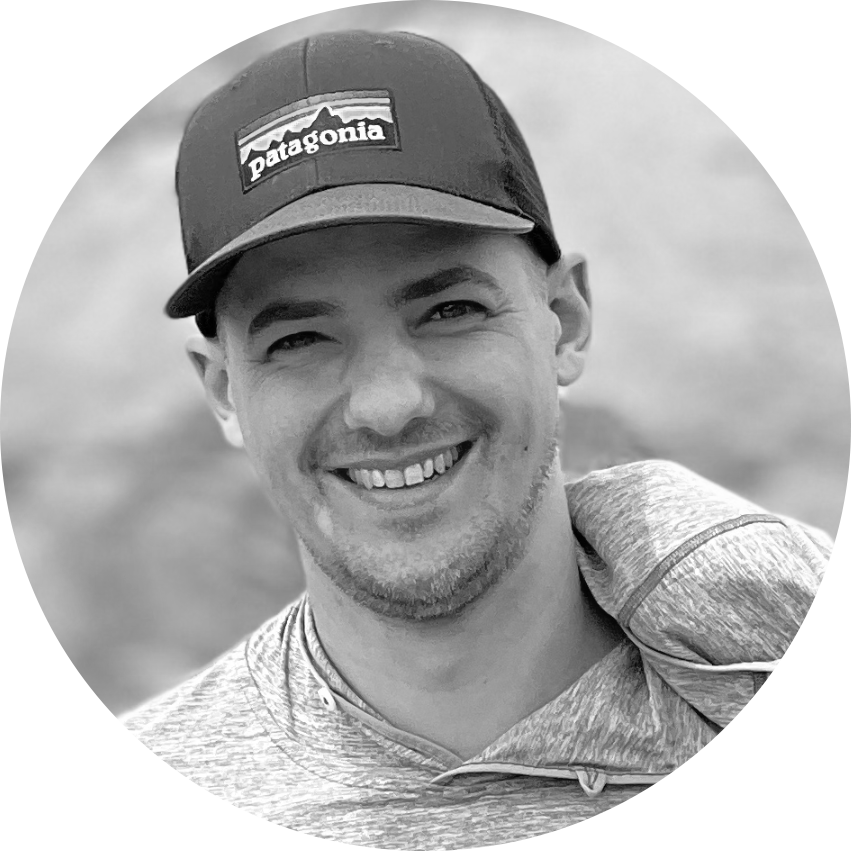
Pieter Bos
Principal Scientist II, Schrödinger
Pieter Bos, Ph.D., is a principal scientist and product manager of AutoDesigner and De Novo Design workflows. At Schrödinger, his main focus is the research, development and optimization of automated compound design algorithms. Lead scientist for the design and execution of enumerated drug molecule libraries for internal and collaborative drug design projects. He received his Ph.D. in Synthetic Organic Chemistry from the University of Groningen in the laboratory of Prof. Ben Feringa. Prior to joining Schrödinger, he worked as a postdoctoral researcher in synthetic methodology development at Boston University (Prof. John Porco and Prof. Corey Stephenson) and small molecule drug discovery at Columbia University (Prof. Brent Stockwell).

Sathesh Bhat
Executive Director, Therapeutics Group, Schrödinger
Sathesh Bhat, Ph.D., executive director in the therapeutics group, joined Schrödinger in 2011. He is responsible for overseeing computational chemistry efforts on internal and partnered drug discovery programs at Schrödinger. Previously, Sathesh worked at both Merck and Eli Lilly leading computational efforts in several drug discovery programs. He obtained his Ph.D. from McGill University, which involved developing structure-based methods to predict binding free energies. Sathesh has co-authored multiple patents and publications and continues to publish on a wide variety of topics in computational chemistry.
3rd Schrödinger Korea User Group Meeting 2025

User Group Meeting
3rd Schrödinger Korea User Group Meeting 2025
Date & Time - June 5th, 2025
Location - Pangyo, Korea
신청서 작성 후, 참석확정 메일을 받으시면 등록이 완료됩니다.
Agenda
Preclinical Form and Formulation for Drug Discovery Gordon Research Conference

Conference
Preclinical Form and Formulation for Drug Discovery Gordon Research Conference
Date & Time - June 22nd-27th, 2025
Location - Portland, Maine
Schrödinger is excited to be participating in the Preclinical Form and Formulation for Drug Discovery Gordon Research Conference taking place on June 22nd – 27th in Portland, Maine. Join us for a presentation by Shiva Sekharan, Senior Director of Formulations Business Development & CSP Software at Schrödinger, titled “Schrödinger’s Modeling Platform and Solutions to Accelerate Drug Substance and Drug Product Formulation and Delivery Processes.”
Schrödinger’s Modeling Platform and Solutions to Accelerate Drug Substance and Drug Product Formulation and Delivery Processes
Speaker:
Shiva Sekharan, Senior Director of Formulations Business Development & CSP Software, Schrödinger
Abstract:
Early assessment of stereoconfiguration, degradation, reactivity, catalysis, polymorphism and solubility of active pharmaceutical ingredients (API) is critical for small molecule drug discovery and development processes. We have developed automated computational platform leveraging physics-based methods, chemistry-informed AI and ML models to efficiently predict 1) Boltzmann-averaged spectra of small molecules without crystallizing the molecule or using X-ray spectroscopy, 2) bond dissociation energies and decomposition products to elucidate reaction mechanisms, 3) crystal polymorphs to aid selection of a stable solid form, 4) solubility enhancement via organic cosolvents using free energy perturbation (FEP+) method, 5) polymer excipients that can interact strongly with the API and reduces the risk of recrystallization, and 6) enable calculation of apparent pKa values of ionizable lipids and simulate the self-assembly and structural properties of lipid nanoparticles.
NERDG 2025 Annual Meeting

Conference
NERDG 2025 Annual Meeting
Date & Time - April 11th, 2025
Location - Groton, Connecticut
Schrödinger is excited to be participating in the NERDG 2025 Annual Meeting conference taking place on April 11th in Groton, Connecticut. Join us for a presentation by Shiva Sekharan, Senior Director of Formulations Business Development & CSP Software at Schrödinger, titled “A highly accurate, reliable, and efficient CSP platform and FEP+ solubility prediction workflow for small molecule drug formulation.”
San Diego Digital Chemistry Lunch & Workshop

Workshop
San Diego Digital Chemistry Lunch & Workshop
Date & Time - May 29th, 2025
- 12:00 PM PDT
Location - SD Tech by Alexandria
Schrödinger is excited to host the Digital Chemistry Lunch & Workshop at SD Tech by Alexandria in San Diego on Thursday, May 29th. This event offers a unique chance to connect in person with Schrödinger team members, network with users from the region, and engage in a fun and friendly drug design competition with your peers.
We will commence the day with a welcome lunch at 12:00 PM and conclude with a networking reception at 3:30 PM.
Agenda Highlights:
- Presentation on building a digital drug discovery infrastructure at Interdict Bio
- Panel discussion on digitizing DMTA cycles
- Hands-on design challenge – Prioritizing DLK inhibitors for potency, selectivity, and brain-penetration with LiveDesign
Our Speakers

Zhe Nie
Executive Director, Medicinal Chemistry, Schrödinger
Dr. Zhe Nie is the Executive Director of Medicinal Chemistry at Schrödinger’s Therapeutic Group. She has been leading multiple wholly owned and partnered drug discovery programs at Schrödinger. Most recently, she led Schrödinger’s MALT1 discovery project team, successfully developed the small molecule drug SGR-1505 (Schrödinger’s first internal clinical asset currently in Ph1) applying Schrödinger’s computational platform. It took less than two years from the start of the project to the selection of the clinical candidate. She also led the DLK collaboration project with Takeda Pharmaceuticals which discovered a potent, selective, and brain-penetrate DLK inhibitor as a promising preclinical candidate for the treatment of neurodegenerative diseases using Schrödinger’s computational platform. She has extensive experiences in applying advanced computational tools to assist in the design of small molecule drug candidates. She previously worked at Takeda, Celgene and Quanticel Pharmaceuticals (acquired by Celgene), led and contributed to advancing multiple small molecule drugs to the clinics including TAK-960, TAK-659 and CC-90011.

Morgan Lawrenz
Senior Principal Scientist, Computational Chemistry, Schrödinger
Dr. Morgan Lawrenz is a computational chemist and has been with STG for 5 years, based in San Diego. Before joining Schrodinger, Dr. Lawrenz worked on molecular glue compounds to target protein-protein interactions at Nurix therapeutics in San Francisco. In STG, She enjoys leveraging the Schrödinger technology platform and is actively working to expand it. Dr. Lawrenz interfaces with software developers to bring new tools to bear on difficult problems in drug discovery projects.

Prabhu Raman
Director of Computational Chemistry, Nurix Therapeutics
Agenda
2025 TechConnectWorld

Conference
2025 TechConnectWorld
Date & Time - June 9th-11th, 2025
Location - Austin, Texas
Schrödinger is excited to be participating in the 2025 TechConnectWorld conference taking place on June 9th – 11th in Austin, Texas. Join us for a presentation by Eric Collins, Senior Scientist II at Schrödinger, titled “Towards Complex Materials Development: Integration of Physics-Based and Machine Learning Approaches.” Additionally, Michael Rauch, Associate Director at Schrödinger will co-chair a symposium titled, “AI, Modeling, and Simulation or Advanced Materials Design.”
JUN 9 | 1:30PM Towards Complex Materials Development: Integration of Physics-Based and Machine Learning Approaches
Speaker:
Eric Collins, Senior Scientist II, Schrödinger
Abstract:
The simulation of material properties using physics-based approaches, such as density functional theory (DFT) and time-dependent DFT (TD-DFT), has proven invaluable in understanding structure-property relationships and guiding materials design. While these methods offer powerful insights, they face inherent limitations in computational scaling and cost, particularly for large-scale materials screening. Machine learning (ML) has emerged as a promising complement to traditional physics-based modeling, offering the potential to dramatically accelerate materials innovation while maintaining physical accuracy. In this talk, we first demonstrate how combining ML with physics-based approaches can overcome these challenges in designing functional materials, such as battery electrolytes, organic light-emitting diodes (OLEDs), and fluorescent dyes. By incorporating physical insights into our ML frameworks, we show how these hybrid approaches can maintain accuracy even in data-limited regimes while significantly improving computational efficiency. We then explore the extension of these methods to more complex systems, particularly formulations or mixtures of multiple materials, where emergent properties arise from subtle intermolecular interactions dependent on both structure and composition. Through the evaluation of various molecular representations and ML architectures, we demonstrate strategies for optimizing both predictive power and computational throughput. Finally, we showcase how these developed frameworks can be applied to accelerate the discovery and design of novel materials with targeted properties. This work highlights the potential of combining physics-based modeling with machine learning to advance materials innovation across multiple domains.