Educator’s Month: How can high school students use computational chemistry for scientific inquiry? Insights from the development of the Comp-Chem Lab

JUN 4, 2025

Educator’s Month: How can high school students use computational chemistry for scientific inquiry? Insights from the development of the Comp-Chem Lab

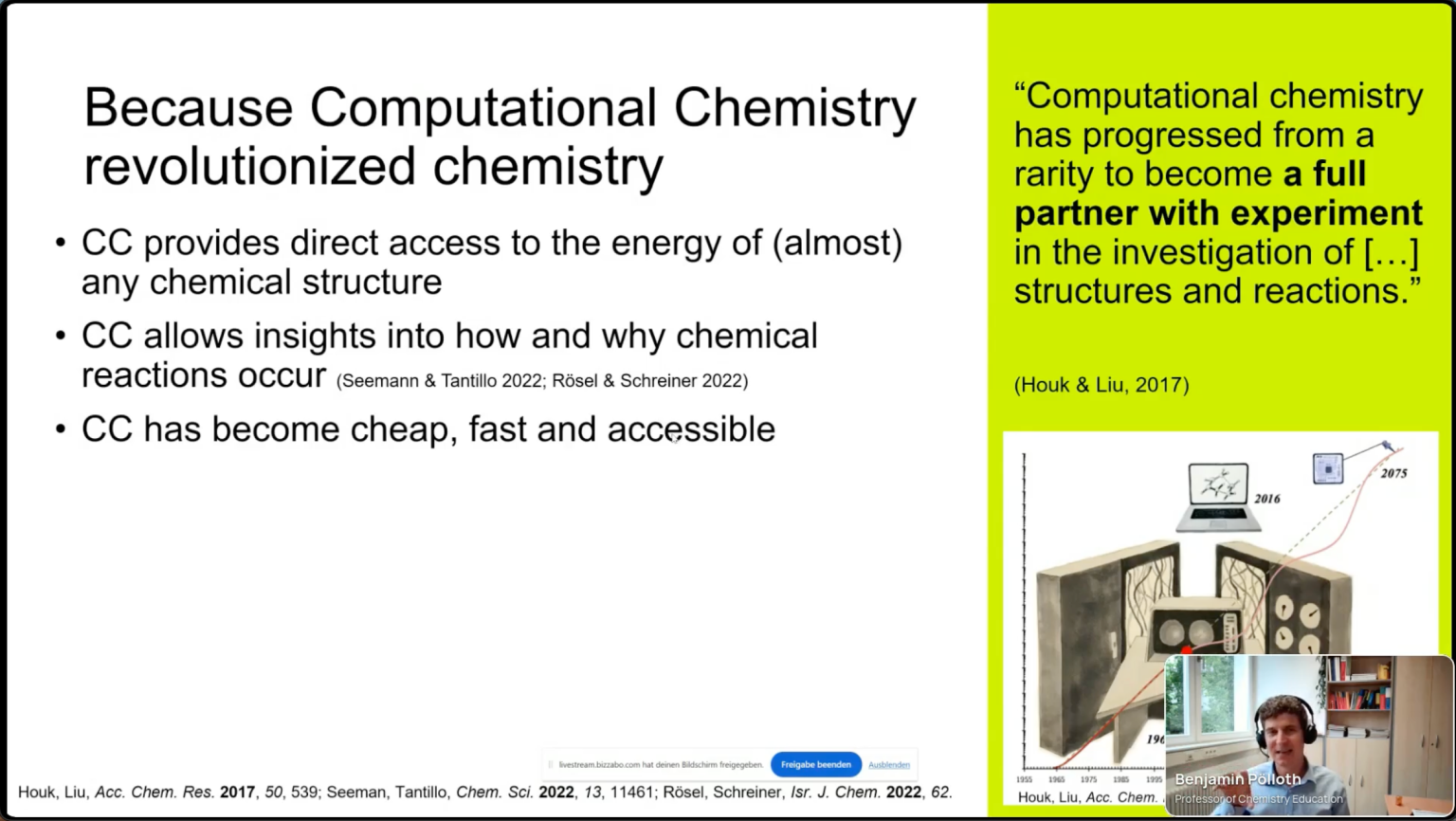
The understanding of chemistry has been revolutionized in the last decade by the rise of computational chemistry (CC), which allows direct access to the energy of chemical structures. CC is a powerful example of the essential role that simulations now play in exploring scientific questions. Bringing CC into the chemistry classroom has great potential-not only to deepen students’ understanding of the energy involved in chemical reactions, but also to introduce them to modern tools used in scientific research.

However, the use of CC in high school still faces several technical and pedagogical challenges. To address these challenges, we have developed the Comp-Chem-Lab (CCL), a web-based learning environment that allows high school students to use CC for scientific inquiry in the classroom.

In this session, participants will have the opportunity to actively explore how CCL enables students to investigate bond dissociation and reaction energetics through guided, interactive activities.

Based on the results of an empirical study, we will show how high school students worked with CCL. Their problem-solving strategies evolved from initial trial-and-error approaches to strategic searches for energy minima, supported by adaptive feedback. Overall, the empirical findings highlight both the potential and the challenges of using CC tools to support conceptual understanding, scientific inquiry, and computational thinking.

We look forward to discussing with you how computational chemistry can be further integrated into secondary and undergraduate education.

Our Speaker
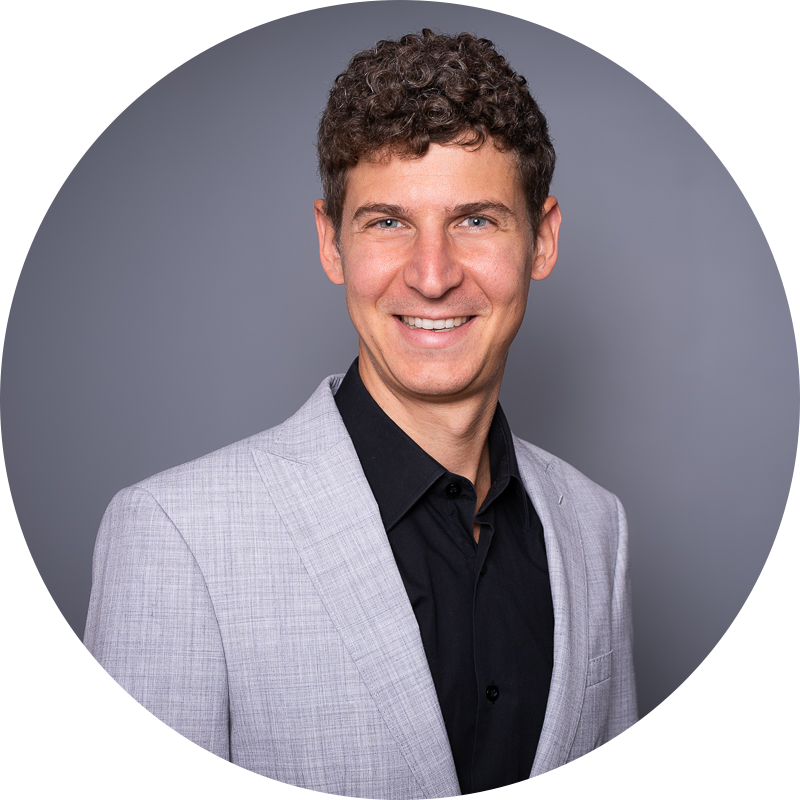
Benjamin Pölloth

Professor of Chemistry Education, Freie Universität Berlin

Prof. Dr. Benjamin Pölloth studied Chemistry and Mathematics at the University of Regensburg, Germany. After graduation, he worked for two years as a teacher in German academic high schools. Subsequently, he did research in physical-organic chemistry at the LMU Munich with Prof. Dr. Zipse, investigating the role of dispersion interactions on reaction rates in enantioselective catalysis. After receiving his Ph.D., he worked as a post-doc in chemistry education research with Prof. Schwarzer at the University of Tübingen. Since December 2024 he is Professor for Chemistry Education at the Freie Universität Berlin. His research investigates how a modern understanding and recent research in chemistry can be implemented in science education to foster conceptual understanding, e.g. of the core idea of energy, and scientific inquiry skills, e.g. through the use of simulations. To this end, he investigates learning processes empirically and develops learning opportunities such as experiments or online learning environments.


Educator’s Month: Intelligence Amplified: Human-Centered Education in the Age of AI

JUN 3, 2025

Educator’s Month: Intelligence Amplified: Human-Centered Education in the Age of AI

As artificial intelligence accelerates into our labs, classrooms, and learning spaces, educators face a pivotal question: whether to use AI, how to use AI, and why to use it. In this keynote, Toni-Marie Achilli, Associate Dean of Biology at Brown University and Senior Lecturer, argues that educators are not merely participants in AI integration, we are its stewards. This responsibility spans institutional policy, ethical foresight, and transformative pedagogy.

The talk unfolds in three acts, each illuminating a sphere of educational influence. Act I focuses on the programmatic level, urging institutions to lead the ethical conversation about AI’s role in shaping curricula, equity in access, and intellectual integrity. Act II brings us into the classroom, exploring how AI can transform learning and assessment. A case study of AI-augmented grading in a bioethics unit on the film GATTACA reveals how educators can balance efficiency and ethical nuance. Act III turns to experiential learning and research. Here, we examine how AI can democratize access to advanced research training, using a case study in vitro modeling in collaboration with the Brown Center for Alternatives to Animal Testing.

Throughout, this talk, Dean Achilli affirms a core belief: educators are irreplaceable, not in spite of AI, but because of our capacity to guide students toward ethical, imaginative, and human-centered futures. This is not a time to resist change, but to lead it.

Our Speakers

Toni-Marie Achilli

Associate Dean of Biology Undergraduate Education, Brown University

Toni-Marie Achilli is the Associate Dean of Biology Undergraduate Education at Brown University. Toni-Marie’s education includes a Bachelor of Science in Chemical and Biomolecular Engineering from The Johns Hopkins University and a PhD in Biomedical Engineering from Brown University. Her expertise lies in the field of 3D in vitro models for drug discovery and development. Toni-Marie has been actively engaged in teaching since her graduate student years and further enhanced her pedagogical skills through the INBRE Teaching Postdoc in the Biology Department at Rhode Island College. Since joining the Brown Faculty in 2016, her courses have fostered a dynamic learning environment that intertwines theoretical understanding with practical applications in biology. She is passionate about advising undergraduate students in the biology concentrations and providing guidance and support to help students navigate their academic and career paths. Toni-Marie serves as the BEAR Faculty Liaison to several athletic teams at Brown, including Women’s Ice Hockey, where she directly supports student-athletes. She was the 2021 recipient of The Elizabeth Leduc Award in Teaching Excellence. Toni-Marie teaches BIOL 0150D Techniques in Regenerative Medicine: Cells, Scaffolds, and Staining, BIOL 0170 Biotechnology, and BIOL 0940G Antibiotic Drug Discovery: Identifying Novel Soil Microbes to Combat Antibiotic Resistance, as well as courses in the Summer@Brown Program.

Matt Repasky

Senior Vice President, Life Sciences Products, Schrödinger

Matt Repasky, senior vice president of life sciences products, and leader of the scientific and technical support groups, joined Schrödinger in 2002. He received his Ph.D. in Chemistry from Yale University in the laboratory of Prof. William Jorgensen. Since joining the company as a scientific developer, he has held several management roles including product manager of the industry-leading docking application, Glide, since 2006. Matt has published extensively in the area of structure-based virtual screening and has provided leadership in the development of software products in the areas of docking, pharmacophore modeling, conformation generation, and QSAR modeling.

How to find a druggable target: A computational perspective

JUN 25, 2025

How to find a druggable target: A computational perspective

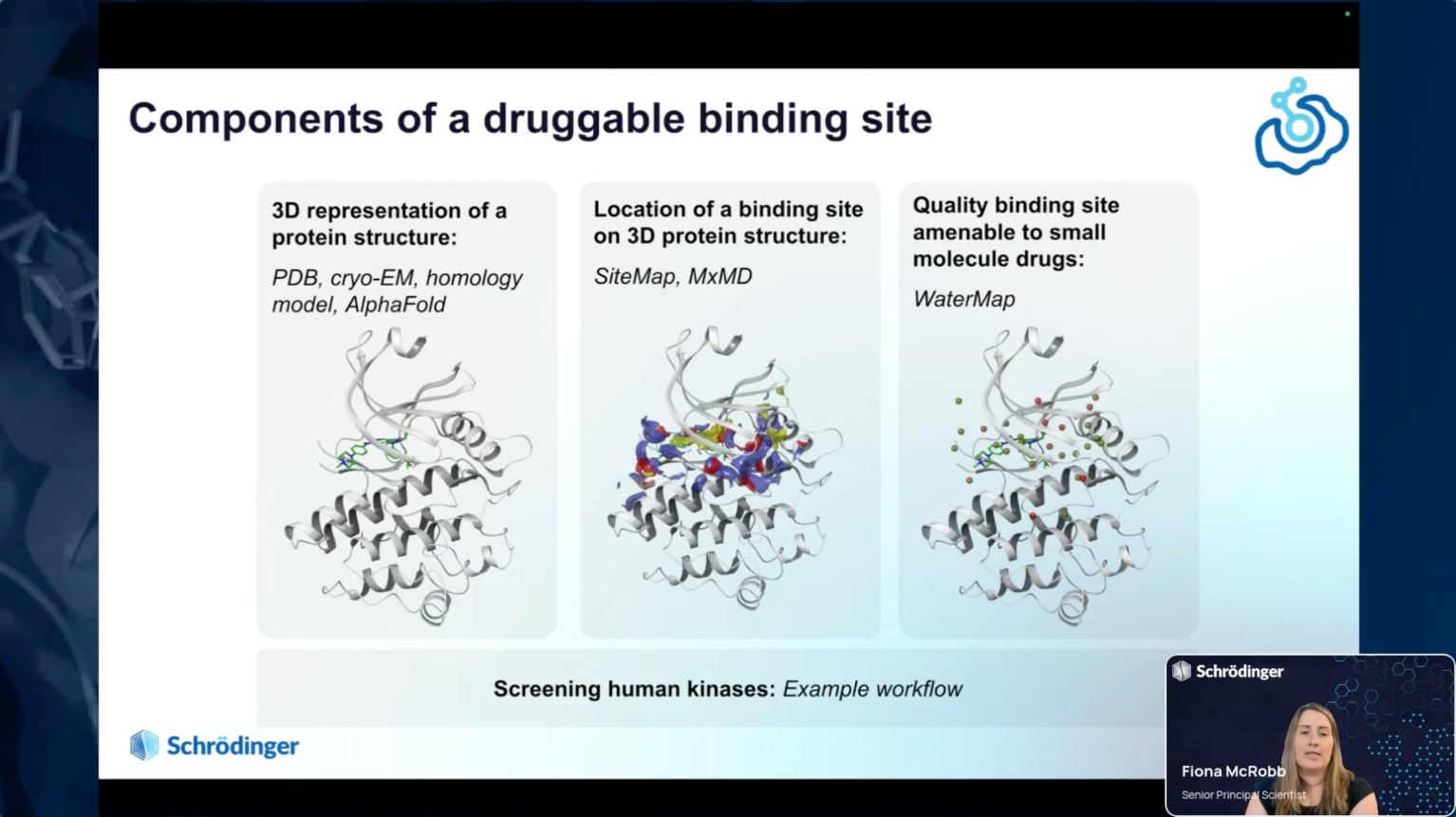
Roughly 20,000 proteins make up the human proteome, yet not all proteins are suitable drug targets. This makes finding druggable targets a critical early step in drug discovery. Structure-based techniques can enable better, quicker, and more cost effective target tractability assessment. These technologies can also expedite hit discovery and ligand binding potency and selectivity optimization and guide medicinal chemistry rationale.

Join us in this beginner-friendly webinar that will introduce you to strategies and best-in-class tools for identifying druggable, technology-enabled targets. We will review workflows to assess protein binding sites and identify protein-ligand complexes suitable for structure-based drug design. We will also discuss how to reduce uncertainty in structure-based drug models using free energy methods (FEP+), as well as examine how modern physics-based modeling approaches amplified by machine learning can reveal new therapeutic opportunities.

Last, we will highlight a real-world case study from Schrödinger’s Therapeutics Group, showcasing how these strategies were used to assess the druggability of the Wee1 binding site and subsequently how FEP+ was used to enable the discovery of a highly selective Wee1 inhibitor for the treatment of solid tumors. The case study demonstrates the power of computational approaches to unlock challenging targets and drive successful drug discovery programs.

Whether you’re new to modeling or looking to expand your toolkit, this session will provide a practical foundation and a comprehensive guide to help you get started.

Webinar highlights:

  • Discussion of what a computationally druggable target is and how to identify one
  • Overview of structure-based techniques, including docking, molecular dynamics, and free energy methods
  • Introduction to integrated tools and workflows for binding site detection, druggability assessment, and target prioritization
  • Leveraging FEP+ to validate structural models and reduce uncertainty by comparing predicted and experimental ligand affinities
  • Case study: Applying these approaches in Schrödinger’s Wee1 inhibitor discovery program

Our Speaker

Fiona McRobb

Senior Principal Scientist, Computational Chemistry, Therapeutics Group, Schrödinger

Fiona McRobb received her Ph.D. in Medicinal Chemistry from Monash University in Australia in 2012. Her Ph.D. encompassed both synthetic and computational approaches to study G protein-coupled receptors (GPCRs). In 2011, she joined Prof. Ruben Abagyan’s lab at UCSD as a postdoc, studying allosteric modulators of GPCRs and environmental toxicology. Fiona joined Schrödinger in 2014 as an Applications Scientist before transitioning to Schrödinger’s Therapeutics Group in 2016. As a Senior Principal Scientist, she applies Schrödinger’s computational chemistry software to address challenging problems in drug discovery, with a focus on identifying new targets and early drug discovery programs.

Digital and AI-Driven Materials Innovation

Symposium

Digital and AI-Driven Materials Innovation

CalendarDate & Time
  • July 8th, 2025
LocationLocation
  • Hong Kong

We hope you can join us at the Hong Kong University of Science and Technology (HKUST) on July 8th for the Digital and AI-Driven Materials Innovation symposium.

Co-organized by the Office of Knowledge Transfer and the Department of Chemistry, this premier industry-academic forum brings together leading experts, pioneering technologists, and academic innovators to explore how artificial intelligence is transforming materials science.

Attendees will:

  • Gain insights into how AI and computational tools are transforming materials discovery, from atomic-scale simulations to industrial applications
  • Learn from leading experts across academia and industry, including speakers from industry, R&D centers and academics
  • Explore real-world case studies on AI-enabled innovations in semiconductors, OLEDs, specialty polymers, and pharmaceutical formulations
  • Engage in discussions on the future of materials informatics, high-throughput screening, and machine-learned force fields
  • Network with scientists, engineers, and innovators driving the next wave of digital and AI-driven materials research

Through keynote presentations, technical talks, and a panel discussion, participants will gain actionable insights into how AI is accelerating materials innovation across sectors—from lab discovery to commercial impact.

icon time 09:30 – 10:00
Guest Registration

HKUST Clear Water Bay Campus

icon time 10:00 – 10:05
Welcome Remarks

Speaker: Prof. Tim Cheng, VPRD, HKUST

icon time 10:05 – 10:10
Opening Remarks

Speaker: Prof. Jianzhen Yu, Head and Chair Professor, Department of Chemistry, HKUST

icon time 10:10 – 10:15
Opening Remarks

Speaker: Dr. Michael Rauch, Associate Director of Materials Science, Schrödinger

icon time 10:15 – 10:20

Session Chair: Zhenyang Lin, HKUST

icon time 10:20 – 10:40
Physics-Enabled AI for Next-Generation Materials Discovery: Bridging Atomic-Scale Simulation and Machine Learning with Schrödinger

Speaker: Dr. Michael Rauch, Associate Director of Materials Science, Schrödinger

icon time 10:40 – 11:10
Materials Design in Electronics Industry: Application of Materials Informatics and High-Throughput Calculations

Speaker: Dr. Nobuyuki N. Matsuzawa, Director, Panasonic Corporation

icon time 11:10 – 11:30
Designing Tomorrow’s Materials: The Role of AI in Exchange-Correlation Functional

Speaker: Prof. Guanhua Chen, Chair Professor, Department of Chemistry, The University of Hong Kong

icon time 11:30 – 2:00
Lunch

Session Chair: Kevin Chen, HKUST

icon time 2:00 – 2:20
AI in Semiconductor Industry

Speaker: Dr. Ziyang Gao, Senior director, Hong Kong Microelectronics Research and Development Institute

icon time 2:20 – 2:40
Simulations of Atomic Level Processing with Examples from Metal ALD

Speaker: Dr. Simon Elliott, Senior Research Leader, Schrödinger

icon time 2:40 – 3:00
AI-Enabled OLED Materials Discovery

Speaker: Dr. Wei Xu, Research scientist, TCL AI Lab

icon time 3:00 – 3:20
Coffee break

Session Chair: Ping Gao, HKUST

icon time 3:20 – 3:40
AI-Guided Interfacial Engineering for Rational Design of Polymeric Microcapsules

Speaker: Prof. Jinglei Yang, Professor, Department of Mechanical and Aerospace Engineering, HKUST

icon time 3:40 – 4:00
Advancing Specialty Polymer Innovation Using Molecular Simulation and Machine Learning

Speaker: Dr. Atif Afzal, Principal Scientist, Schrödinger

icon time 4:00 – 4:20
Accelerating Pharmaceutical Formulations using the Schrödinger Software Suite

Speaker: Dr. Sudharsan Pandiyan, Principal Scientist, Schrödinger

icon time 4:20 – 5:00
Panel discussion / Closing remarks

Our Speakers

Tim Cheng

Professor, VPRD, HKUST

Jianzhen Yu

Professor, Chem, HKUST

Dr. Michael Rauch

Associate Director of Materials Science, Schrödinger

Dr. Nobuyuki N. Matsuzawa

Director, Panasonic Corporation

Dr. Ziyang Gao

Senior Director, Hong Kong Microelectronics Research and Development Institute

Dr. Wei Xu

Research Scientist, TCL AI Lab

Guanhua Chen

Professor, The University of Hong Kong

Dr. Simon Elliott

Senior Research Leader, Schrödinger

Dr. Atif Afzal

Principal Scientist, Schrödinger

Dr. Sudharsan Pandiyan

Principal Scientist, Schrödinger

Jinglei Yang

Professor, HKUST

CRS 2025

Conference

CRS 2025

CalendarDate & Time
  • July 14th-18th, 2025
LocationLocation
  • Philadelphia, Pennsylvania

Schrödinger is excited to be participating in the CRS Annual Meeting 2025 taking place on July 14th – 18th in Philadelphia, Pennsylvania. Join us for a presentation by Schrödinger’s John Shelley and David Nicholson, titled “Molecular modeling and machine learning for drug formulation.” Stop by booth #302 to speak with Schrödinger scientists.

icon time JUL 15 | 9:00AM – 10:00AM
Molecular modeling and machine learning for drug formulation

Speakers:
John Shelley, Fellow, Schrödinger
David Nicholson, Principal Scientist I, MS Applications Scientist, Schrödinger

Abstract:
Schrödinger, a leader in the application of structure-based molecular modeling and machine learning to drug discovery and development, will provide a brief, broad overview on the emerging field of structure-based molecular modeling for drug formulation followed by two more focused presentations: 1. Modeling the formation, structure and behavior of mRNA-containing lipid nanoparticles and 2. Excipient/polymer selection for small-molecule drug formulation including amorphous solid dispersions. We anticipate that attendees will gain an understanding of:
The value and limitations of structure-based molecular modelling and machine learning for drug formulation
Employing modeling to impact excipient selection
How molecular modeling, particularly when combined with experiment, can lead to a competitive advantage by providing insight into complex formulations

DDIF 2025

Conference

DDIF 2025

CalendarDate & Time
  • September 10th-11th, 2025
LocationLocation
  • Barcelona, Spain

Schrödinger is excited to be participating in the Drug Discovery Innovation Forum conference taking place on September 10th – 11th in Barcelona, Spain. Join us for a presentation by Aleksey Gerasyuto, Senior Vice President, Drug Discovery at Schrödinger, titled “Predict-first: Where physics and AI/ML shape the future of drug discovery.” Stop by booth #11 to speak with Schrödinger scientists.

icon time SEPT 10 | 11:50 – 12:10
Predict-first: Where physics and AI/ML shape the future of drug discovery

Speaker:
Aleksey Gerasyuto, Senior Vice President, Drug Discovery, Schrödinger

Abstract:
Advances in computational methods, breakthroughs in structural biology, and the exponential growth of computing power are transforming drug discovery into a predictive science. This presentation will highlight how accurate physics-based approaches, integrated with AI/ML methods, can accelerate and guide real-world discovery programs. Case studies will illustrate rapid in silico driven optimization of key drug properties including potency, selectivity and brain penetration, along with structure-based strategies to mitigating the key off-target liabilities, such as hERG.

Our Speaker

Aleksey Gerasyuto

Senior Vice President, Drug Discovery, Schrödinger

Aleksey Gerasyuto is a medicinal chemistry leader with deep expertise in computationally driven drug discovery. He champions “Predict-First” approach, integrating modern physics-based and AI/ML methods to accelerate and guide medicinal chemistry campaigns. At Schrödinger, Aleksey leads the Medicinal Chemistry, CMC and Toxicology teams, and co-leads the strategic oversight and execution of the company’s proprietary and collaborative discovery portfolio. Prior to joining Schrödinger, Aleksey held roles of increasing responsibilities at PTC Therapeutics, where he led and contributed to programs in RNA splicing, antibacterial discovery and oncology. His work has contributed to the discovery of multiple clinical candidates, including: PTC518 for Huntington’s disease (Phase 2), MORF-057 for IBD (Phase 2), SGR-3515 for solid tumors (Phase 1), LOXO-783 for breast cancer and other tumors (Phase 1). Aleksey earned his Ph.D. from the University of Wisconsin–Madison and his B.S./M.S. from the Higher Chemical College of the Russian Academy of Sciences.

IFT First Annual Event and Expo 2025

Conference

IFT First Annual Event and Expo 2025

CalendarDate & Time
  • July 13th-16th, 2025
LocationLocation
  • Chicago, Illinois

Schrödinger is excited to be participating in the IFT First Annual Event and Expo 2025 conference taking place on July 13th – 16th in Chicago, Illinois. Stop by booth S1869 to speak with Schrödinger scientists.

Schrödinger 디지털 플랫폼 솔루션을 응용한 디스플레이 소재/소자 및 배터리 소재 기술의 혁신

Schrödinger 디지털 플랫폼 솔루션을 응용한 디스플레이 소재/소자 및 배터리 소재 기술의 혁신

최근 계산과학과 신소재기술의 발전에 힘입어, 컴퓨터를 활용한 디지털 재료 설계 솔루션을 보다 쉽고 빠르게 연구개발에 적용할 수 있는 기회가 마련되었습니다. 한국의 인더스트리 리더들을 대상으로 한 이번 Schrödinger 웨비나에서는, 디스플레이 및 배터리 애플리케이션의 혁신을 위해 설계된 최신의 머신 러닝 알고리즘과 물리 기반 시뮬레이션 기술이 탑재된 디지털 화학 플랫폼을 아래의 예시와 함께 소개합니다.

  • 머신러닝 솔루션을 이용한 OLED 소자 성능 예측
  • 자동화된 머신러닝 애플리케이션을 사용한 물질조성의 최적화
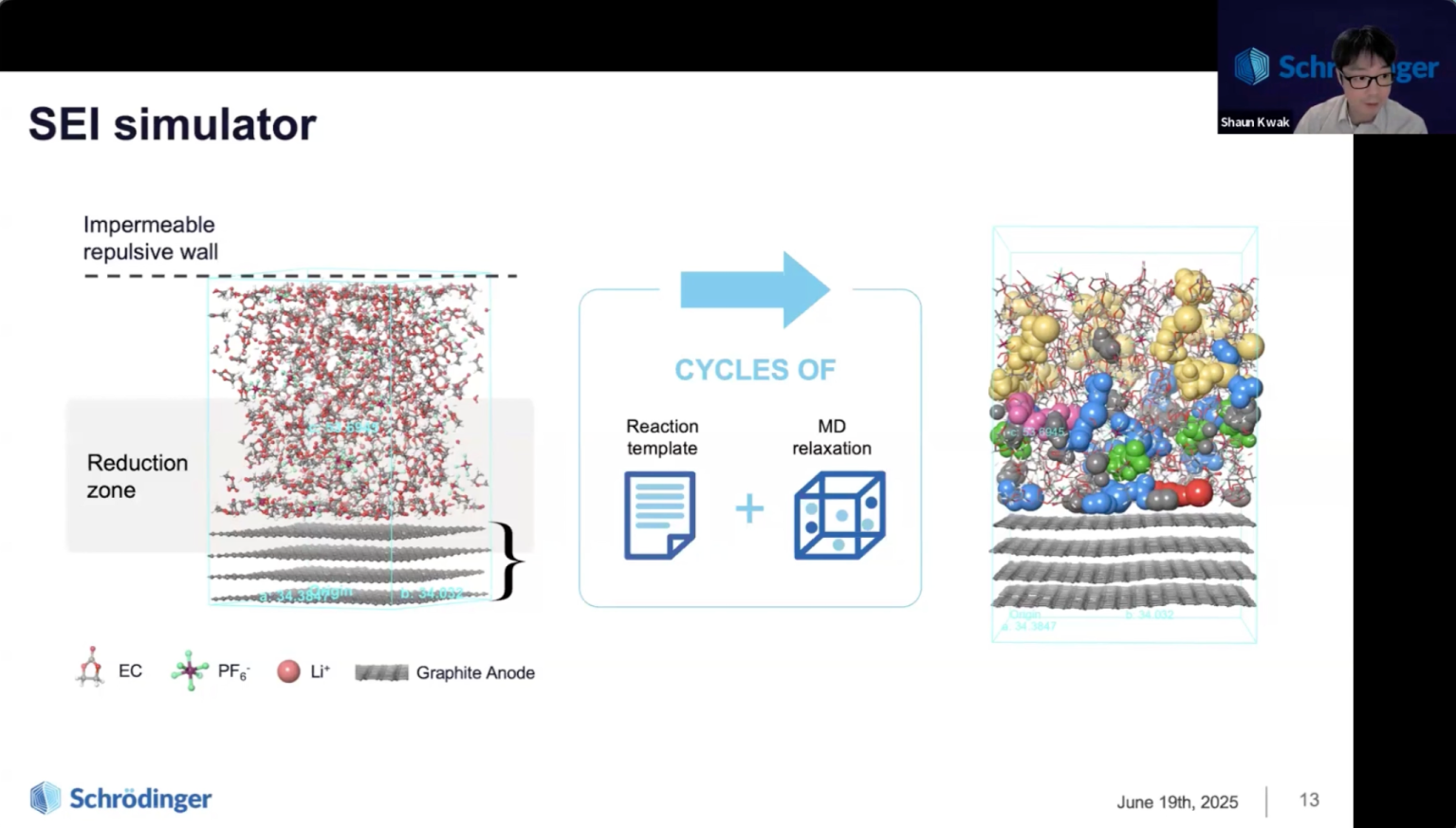
  • 배터리 소재 설계 및 검증을 위한 최첨단 분자 시뮬레이션 솔루션
  • Schrödinger의 최신 MLFF 기술 실증 사례 및 연구

보다 빠르고 사용자 친화적인 Schrödinger의 디지털 화학 솔루션을 통해, 글로벌 트렌드에 맞춘 소재 및 소자 디자인 과정에서의 혁신을 기대할 수 있을 것입니다.

Our Speaker

Shaun Kwak, Ph.D.

Director of Materials Science, Schrödinger

Lunch & Learn: Accelerating molecular discovery using an in silico design platform

Lunch and Learn

Accelerating molecular discovery using an in silico design platform

CalendarDate & Time
  • June 27th, 2025
  • 10:00 to 16:00 CET
LocationLocation
  • Basel, Switzerland
Register

Take a break from your other obligations and let’s talk! We are inviting you to join us on Friday, June 27th at the Hotel Essential by Dorint Basel City for an extended version of our Lunch and Learn series where we will introduce the diverse capabilities of Schrödinger’s molecular design platform. Schrödinger scientists will present how modern physics-based simulation methods as well as machine learning can help to create better molecules faster and answer your questions around computer-driven molecular design.

Date & Time:

Friday, June 27, 2025

From 10:00 AM to 16:00 PM CET

Program:

Part 1: Small Molecule

10:00 – 12:00

Accelerating small molecule drug discovery combining physics-based methods, machine learning techniques, and digital chemistry

David Rinaldo, Senior Principal Scientist, Applications Science

Drug design is a highly complex task literally consisting in finding a molecule with defined properties in the ocean of all possible molecules. In the past 10 years the field has experienced dramatic changes including an explosion in the size of commercial chemical libraries, a significant increase in available computing power (GPU, cloud computing), and significant advances in machine learning techniques. In this workshop, we will see how Schrödinger has been leveraging those technological revolutions to accelerate the small molecule drug discovery process.

First, we will present a few physics-based methods that Schrödinger has been recently developing and then we will see how those techniques can be combined to efficiently and collaboratively find new drug candidates.

+ Lunch

Part 2: Biologics

13:00 – 16:00

Accelerating biologics design through computational modelling and collaborative enterprise informatics

Dan Cannon, Principal Scientist II, Applications Science

Jelena Vucinic, Senior Scientist I, Applications Science

This Schrödinger workshop will explore how to use physics-based computational methods (BioLuminate, FEP+) and collaborative enterprise informatics (LiveDesign) to accelerate biologics design. We will present case studies on large-scale mutagenesis for affinity, analyzing and correcting developability issues, variant selection based on cross-reactivity, multi-parameter ideation, and more. Whether you’re new to computational tools or looking for a deeper dive into advanced methods, this session is designed to provide valuable insights for all experience levels.

+ Coffee and Cake

Location:

Hotel Essential by Dorint Basel City
Schönaustrasse 10, CH-4058 Basel
Click here to view map of room location.

Register

Accelerating chemical innovation with AI/ML: Breakthroughs across materials applications

JUN 17, 2025

Accelerating chemical innovation with AI/ML: Breakthroughs across materials applications

Artificial intelligence (AI) and machine learning (ML) are transforming materials science, unlocking new possibilities for innovation by enabling data-driven design and optimization across a wide range of applications. From accelerating the discovery of novel materials to optimizing formulations for specific performance criteria, AI/ML allows researchers to explore complex chemical spaces with unprecedented speed and precision. These approaches reduce reliance on trial-and-error experimentation, even in data-limited environments; empowering scientists to tackle challenges across diverse technology domains, including electronics, energy storage, polymers, and catalysis. Schrödinger’s integrated platform, which combines chemistry-informed ML with physics-based simulations, enhances predictability, scalability, and overall innovation in materials design.

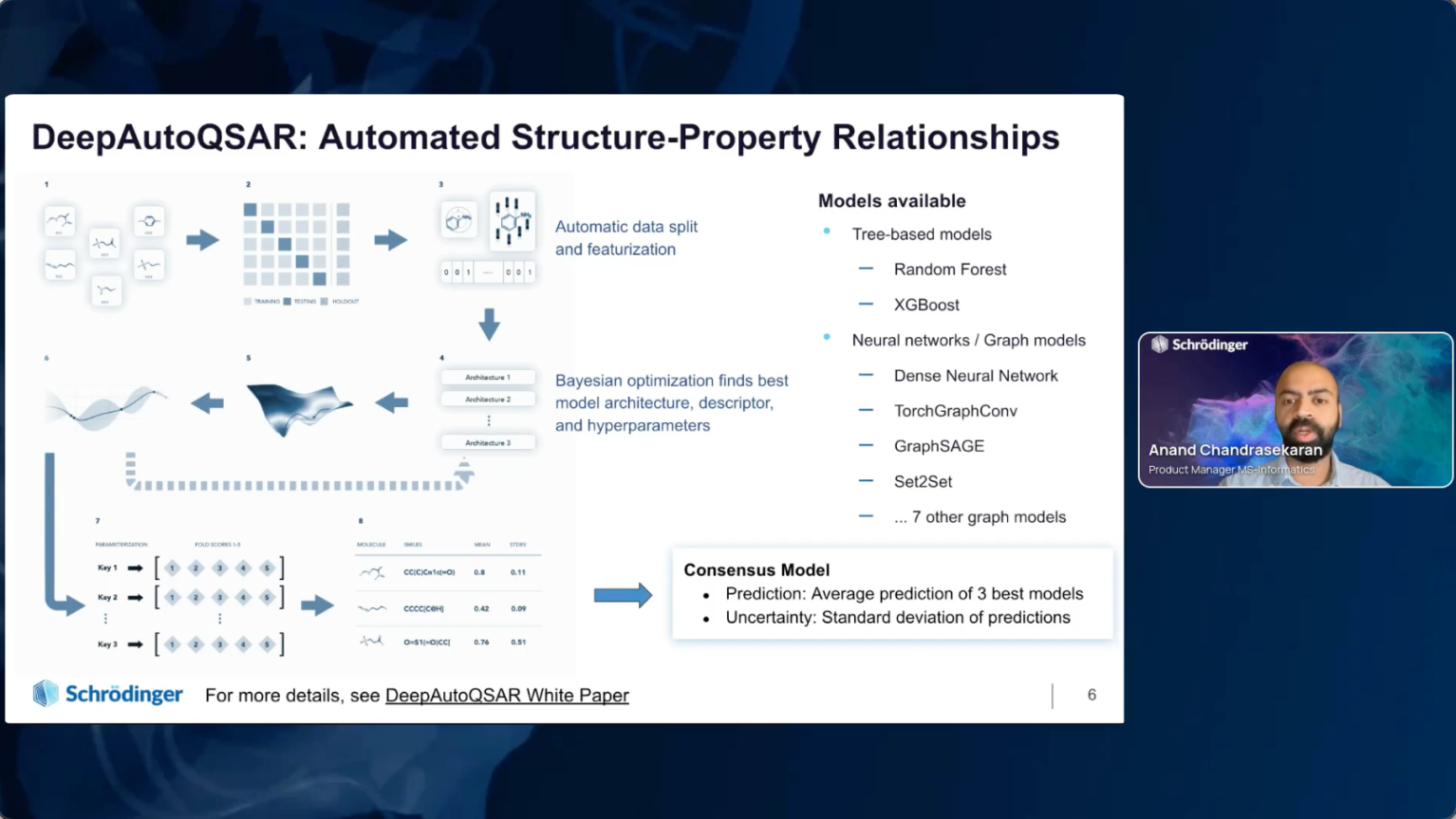
In this webinar, we will explore how AI/ML is driving impactful advancements in materials innovation, highlighting case studies that illustrate cutting-edge ML techniques in diverse applications. Additionally, we will introduce the Schrödinger platform, illustrating how it empowers researchers to efficiently design and optimize materials. Specifically, we will highlight:

  • Design of novel OLED devices with physics-augmented machine learning
  • Optimization of materials properties for consumer packaged goods, battery electrolytes, polymers, and catalysis
  • Utilization of machine learning force fields (MLFF) for enhanced throughput and precision of atomistic simulations

Our Speaker

Anand Chandrasekaran

Senior Principal Scientist, Schrödinger

Anand Chandrasekaran joined Schrödinger in 2019 and currently serves as the Product Manager for MS Informatics. His expertise lies in applying machine learning across various domains within materials science and computational modeling. He earned his Ph.D. in Materials Science under Prof. Nicola Marzari at the Swiss Federal Institute of Technology, Lausanne. Prior to joining Schrödinger, Anand worked with Prof. Rampi Ramprasad, focusing on polymer informatics, machine learning force fields, and machine learning for electronic structure calculations.

Schrödinger User Group Meeting – Materials Science Japan 2025 Part 3

User Group Meeting
CalendarDate & Time
  • July 23rd, 2025
LocationLocation
  • Tokyo, Japan

Schrödinger User Group Meeting – Materials Science Japan 2025 Part 3

Formulation and Cosmeticsをテーマに、弊社サイエンティストや各製品の開発責任者から、最新機能、応用事例、今後の展望などを、セミナー形式でご紹介いたします。

発表要旨はこちらからご覧いただけます。

icon time 10:00-10:10
ご挨拶

icon time 10:10-11:10
計算を用いた医薬品開発における原薬形態開発の実例

小野薬品工業株式会社 製剤研究部 サイエンティフィックアドバイザー 真野 高司様

icon time 11:10-11:55
Advancing Materials Science with Schrödinger: Latest Innovations, Future Roadmap, and Key Applications Impacting Personal Care, Foods and Fragrances, and Pharmaceutical Formulations

Mathew D. Halls, Senior Vice President, Materials Science

icon time 12:55-13:40
Schrödinger’s Modeling Platform and Solutions to Accelerate Drug Substance and Drug Product Formulation and Delivery Processes

Shiva Sekharan, Senior Director of Formulations Business Development & CSP Software

icon time 13:40-14:25
Schrödinger Reactivity and Catalysis Tools for Pharma Formulation and Cosmetics

Pavel A. Dub, Product Manager Catalysis and Reactivity

icon time 14:25-15:10
Combined Physics-Based and Machine Learning Approaches in the Design of Complex Formulations

Anand Chandrasekaran, Senior Principal Scientist

icon time 15:40-16:25
Enabling Formulation via Coarse-Grained Modeling: Application to Proteins Solutions and LNPs

John C. Shelley, Fellow

icon time 16:25-17:10
Transforming Cosmetic Innovation with Physics-Based Modeling and AI

Jeffrey M. Sanders, Product Manager and Scientific Lead of Consumer Goods

icon time 17:10 – 17:20
クロージング

icon time 17:30 –
懇親会

【開催形式と会場】
・現地開催です。オンライン配信はございません。
会場
トラストシティ カンファレンス・丸の内
〒100-0005 東京都千代田区丸の内1-8-1 丸の内トラストタワーN館11階

※登録受付は7月15日(火)23:59までといたします。
※会場の収容可能人数には限りがあり、登録受付期日前であっても、上限に達し次第締め切りとなります。お早めにお申し込みください。
※参加者様へは、別途メールにて詳細をご案内いたします。

【参加費】
無料

【お申込みにあたって】
所属企業または所属機関のメールアドレスにて、登録をお願いします。
フリーメールや個⼈メールアドレスでご登録の場合などは、出席をご遠慮いただく場合がございます。
同業他社さまには参加をご遠慮頂いております。ご理解のほど宜しくお願い致します。

※ご質問、ご不明な点がございましたら下記までお問い合わせください。
シュレーディンガー株式会社 UGM3事務局
E-mail: info-japan@schrodinger.com

Modelling amorphous solid dispersion (ASD) release mechanisms

JUN 10, 2025

Modelling amorphous solid dispersion (ASD) release mechanisms

Drug molecules with poor water solubility or limited bioavailability present significant clinical challenges. One solution is to disperse a non-crystalline form of the drug in a polymer matrix, creating an Amorphous Solid Dispersion, or ASD. When developing a new ASD drug formulation, it’s essential to understand how factors – such as drug load and surface interactions with water – influence the release of the medication. These factors can modify delivery, drive phase separation and drug crystallisation and even lead to a failure mechanism known as Loss of Release (LoR).

In this webinar, experts from AbbVie and Schrödinger will present the results of a study using a combination of perturbed-chain statistical associating fluid theory, thermodynamic modelling and molecular simulation to investigate the release mechanism and the occurrence LoR of an ASD formulation consisting of ritonavir as the active pharmaceutical ingredient in a polyvinylpyrrolidone-co-vinyl acetate matrix. This study provides insights into the potential of blending thermodynamic modelling, molecular simulation and experimental research to understand ASD formulations.

Key Learning Objectives:

  • Explore how the integration of thermodynamic modeling, molecular simulation, and experimental approaches can enhance understanding of ASD formulation behavior
  • Hear practical case studies of a complex ASD formulation that is comparable to commercially available formulations
  • Identify key areas in R&D where this combinational approach applies

Our Speakers

Stefanie Walter

Senior Scientist, AbbVie Deutschland GmbH & Co. KG

Stefanie Walter is a senior scientist in the Physical Pharmacy and Formulation Group in NCE Formulation Sciences at AbbVie Deutschland GmbH & Co. KG. Her work focuses on the thermodynamic modelling support for drug product formulation development.

Samuel Kyeremateng

Principal Scientist, AbbVie Deutschland GmbH & Co. KG

Samuel Kyeremateng is a principal research scientist at Molecular Profiling & Drug Delivery at AbbVie Deutschland GmbH & Co. KG. His team focuses on the application of in-silico physics-based approaches to aid understanding, designing, and predicting the performance and stability of pharmaceutical formulations.

Irene Bechis

Senior Scientist II, Schrödinger GmbH

Irene Bechis obtained her PhD in computational chemistry from Imperial College London and joined Schrödinger in 2023 as a Materials Science Application Scientist. Her work focuses on applying particle-scale simulation techniques to a diverse set of materials science problems, with a particular focus on polymers and pharmaceutical formulations.