Deciphering the structure-property relationship and antioxidant mechanisms of Trehalose – An in-silico approach
In Vitro and In Silico Studies of Antimicrobial, and Antioxidant Activities of Chemically Characterized Essential Oil of Artemisia flahaultii L. (Asteraceae)
Polymorphic amyloid nanostructures of hormone peptides involved in glucose homeostasis display reversible amyloid formation
Brewers’ spent hop revalorization for the production of high added-value cosmetics ingredients with elastase inhibition capacity
Structural basis of odorant recognition by a human odorant receptor
Automated digital prediction of chemical degradation products
APR 10, 2024
Automated digital prediction of chemical degradation products


Chemical degradation is the process by which chemical substances undergo structural changes, leading to the breakdown of their molecular integrity into simpler chemical compounds. This process is at the heart of chemical failure and material lifetime, natural degradation and aging, and recycling. It unfolds through diverse mechanisms, among which thermal decomposition, photolysis, oxidation, and hydrolysis are the most prevalent.
The automated prediction of chemical degradation products, or degradants, for small molecules has long posed a challenge for computational chemistry, but could broadly benefit a range of industrial use cases. These include pharmaceutical ingredient degradation, disposal of chemical waste through incineration, electrolyte components decomposition in Li-ion batteries, consumer packaged good ozonolysis and many others. Current methodologies mostly rely on heuristic approaches rooted in a knowledge base of rules or cheminformatics.
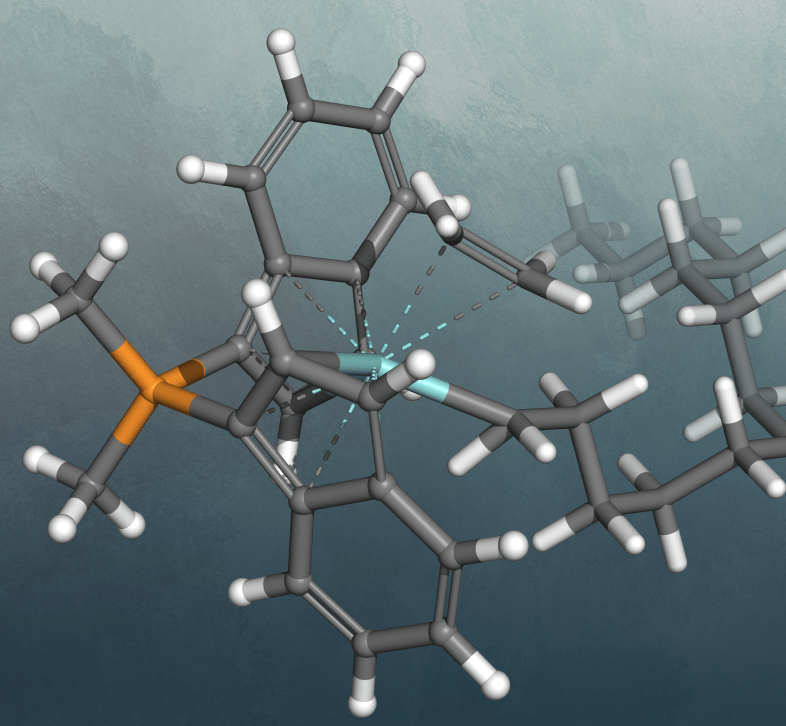
In this webinar, we will present Schrödinger’s enhanced Nanoreactor, expanding upon the tool developed by Grimme and co-workers1 with many new features, including improved energy refinement of results and integrated user interface. Schrödinger Nanoreactor is a transformative digital solution for predicting chemical degradants of small molecules and sorting them directly from quantum mechanics and without any prior knowledge.
Webinar highlights
- Overview of the Nanoreactor technology which integrates automated potential energy surface exploration through semiempirical metadynamics, landscape refinement, and density functional theory-based sorting
- Demonstration of the user-friendly interface for identifying all possible degradation products, visualizing results, and classifying results based on thermodynamic principles — all from the computing power of a basic laptop
- Examples of how the technology can be applied to address challenges in pharmaceutical drug development, chemicals incineration, battery development, consumer packaged goods and more
1. Exploration of Chemical Compound, Conformer, and Reaction Space with Meta-Dynamics Simulations Based on Tight-Binding Quantum Chemical Calculations, Stefan Grimme, J. Chem. Theory Comput. 2019, 15, 5, 2847–2862
Our Speaker

Pavel Dub, PhD
Senior Principal Scientist, Schrödinger
Pavel serves as a Senior Principal Scientist and Product Manager for Reactivity & Catalysis at Schrödinger, Inc. He holds a PhD in Chemistry from the A. N. Nesmeyanov Institute of Organoelement Compounds, as well as a second PhD from the Université de Toulouse. Following two postdoctoral fellowships at the Tokyo Institute of Technology and the Los Alamos National Laboratory, where he later held a position as Staff Scientist, Pavel joined Schrödinger, Inc. in 2022. His research endeavors encompass computational molecular chemistry across classical and quantum computers.
2024 Peter O. Stahl advanced design forum

Conference
2024 Peter O. Stahl advanced design forum
 Date & Time
 - April 19th, 2024
 Location
 - Minneapolis, Minnesota
Schrödinger is excited to be participating in the 2024 Peter O. Stahl advanced design forum taking place on April 19th in Minneapolis, Minnesota. Join us for a presentation by Andrea Browning, Director of Polymer Simulations at Schrödinger, titled “Digital Innovation Across Sectors: Lessons Learned.”
This forum is a thought leadership event, aims to bring together industry leaders, government stakeholders, and academic researchers, to foster collaboration and sharing of data science, artificial intelligence, and machine learning best practices, to transform the ways in which chemicals and materials are designed, developed, and produced.
Speaker:
Andrea Browning, Director
Date/Time:
April 19 | 1:30-3:10 PM CDT
Andrea will be joining other leaders in materials innovation from across multiple industries to discuss how lessons learned from early challenges in the application of model based design have enabled the current platform for digital design. Examples from multiple industries will be shared to illustrate how physics-based and machine learning is now being applied to add value in product development.
Schrödinger materials polymer workshop

Workshop
Schrödinger materials polymer workshop
Date & Time - April 22nd, 2024
Location - Sittard-Geleen, Netherlands
Using Materials Science Suite for atomic-scale simulations of polymer chemistry
Schrödinger invites you to a one-day workshop in Sittard-Geleen, Netherlands to gain hands-on training in the use of our Materials Science Suite for simulating polymer chemistry and properties.
Participants will get practical experience and in-person guidance in using our Maestro GUI and the tools involved in building molecules, oligomers, mixtures, and polymers for use in molecular dynamics simulations. Examples of how molecular-scale simulations can inform polymer research and development projects will be included through-out the day.
When & Where:
Monday 22nd April 2024
Brightlands Campus Chemelot,
Urmonderbaan 22, Center Court,
6167 RD Sittard-Geleen
Netherlands
Hotel Recommendations:
Sittard-Geleen:
- ibis budget Stein Maastricht
- Hotel Stein-Urmond (10% discount available. Use code CORPBRIG at checkout)
Maastricht (for those also attending the UTECH conference):
If you have any questions regarding the event, please contact Patrick Heasman: patrick.heasman@schrodinger.com
If you are interested but unable to attend in person, please reach out to the contact above.
Who should attend:
Any researcher interested in polymer chemistry, polymer properties, or a general interest in computational simulations. No prior experience is required.
Instructional material can be reviewed before or after the workshop for free here.
Speakers and demonstrators:
- Dr Andrea Browning
- Dr Eli Sedghamiz
- Dr Irene Bechis
- Dr Patrick Heasman
Registration:
Registration is free and includes lunch and refreshments. Participants must bring their own laptop to access the software. An external mouse is recommended. Places are limited, so please ensure to register as soon as possible. Registration will close Monday 15th April 2024
Agenda
FAQs
What is included with my registration?
Registration is completely free to attend the workshop. We will also be providing food and refreshments throughout the day.
What do I need to bring?
A laptop is required for this workshop. We will not be providing any on the day, so please ensure that you bring one. An external mouse is not required, but we do recommend that you bring one as our software makes full use of the 3 buttons.
Where is the venue and how can I get there?
The workshop is being help at the Brightlands Chemelot Campus, Sittard-Geleen. The campus is accessible via car and public transport. Further details can be found on the Brightlands website. You will be provided with an access card to the building upon arrival. Please report to reception to collect this.
How long is the workshop?
For accommodation and travel, we ask that attendees make their own arrangements. We have suggested some hotels in the area on the main page, and we recommend booking any accommodation well in advance to secure the best options. Please contact Patrick Heasman (patrick.heasman@schrodinger.com) for any additional information about the event.
Area Selective Deposition Workshop 2024

Conference
Area Selective Deposition Workshop 2024
Date & Time - April 14th-17th, 2024
Location - Montreal, Canada
Schrödinger is excited to be participating in Area Selective Deposition Workshop 2024 taking place on April 14th – 17th in Montreal, Canada. Join us for a presentation by Simon Elliott, Director of Atomic Level Process Simulation at Schrödinger, titled “Microkinetic modelling to asses sensitivity of area-selective deposition to aspects of substrate chemistry.”
Speaker:
Simon Elliott, Director
Date/Time:
April 16th | 1:10pm EDT
Abstract:
Microkinetic modelling is a technique for determining the turnover of a gas-surface process by solving the coupled kinetic rate equations of its constituent elementary reaction steps. Here we present a microkinetic model of the atomic layer deposition (ALD) of alumina from trimethylaluminium (TMA) and water and discuss its utility in investigating the selectivity of the process towards various substrates. We first outline the computational scheme, where elementary steps and their activation energies have been computed with density functional theory. We emphasize the importance of converting the DFT energies to free energies at the temperatures and pressures of interest. The resulting microkinetic model for alumina-on-alumina growth yields measurable quantities (relative growth per cycle and sticking coefficients) as a function of temperature and pressure, which are validated against experiment. For instance, the values of sticking coefficient from the model, s0(TMA)=7 x 10⁻³ and s0(H2O)= 3 x 10⁻⁴ at 1 Torr and 300°C, compare well with experiment. We then systematically adjust the activation energies to represent the different chemistry that may exist during nucleation on a substrate, without explicitly modelling any one substrate at the atomic scale. Specifically, we examine the sensitivity of each sticking coefficient towards adsorption energy and towards acidity of substrate protons, as both of these mechanistic features are candidates for tuning the area-selectivity of oxide ALD towards a substrate. The influence of temperature and pressure is quantified, with the latter giving information on conformality. The results thus increase our understanding of how various aspects of substrate chemistry affect area-selective deposition. This example illustrates more generally how existing mechanistic data from atomic-scale DFT can be leveraged in computationally-inexpensive higher-scale models to allow ‘what-if’ experiments to be carried out that link directly to measurements.
UTECH Europe 2024

Conference
UTECH Europe 2024
Date & Time - April 23rd-25th, 2024
Location - Maastricht, Netherlands
Schrödinger is excited to be participating in UTECH Europe 2024 taking place on April 23rd – 25th in Maastricht, Netherlands. Join us for a presentation by Irene Bechis, Senior Scientist I at Schrödinger, titled “Predicting critical properties of classical and non-isocyanate polyurethanes with efficient molecular dynamics simulations.” Stop by booth P41 to speak with Schrödinger scientists.
Date/Time:
April 24th | 10:45am – 11:00am
Location:
Auditorium 2
Abstract:
Polyurethanes (PU) belong to a highly adaptable group of polymers. Their thermophysical and mechanical properties can be tuned via monomer chemistry and processing conditions, making them suitable for various applications like foams, adhesives, and coatings. Nevertheless, there is a growing concern related to the toxicity of isocyanates and their precursors which are employed in PU synthesis. This concern is driving the industry towards exploring new avenues, seeking eco-friendlier alternatives that do not rely on isocyanates while still retaining the essential properties of PU.
Particle-scale simulations can be a powerful tool for new polymer development. They can link the precursor chemistry to the polymer properties, and can be leveraged to derive useful structure-property relationships or to test new monomer chemistries in silico. This approach can accelerate the development of new materials, either by uncovering promising candidates or by eliminating underperforming ones before subjecting them to laboratory testing. Here, we demonstrate how molecular simulations enable the study of classic PUs as well as newer non-isocyanate polyurethanes (NIPU), capturing the influence of monomer chemistry, monomer ratio or cross-linking saturation on important bulk polymer properties such as thermophysical or mechanical properties.
Importantly, the approach presented has a high degree of automation, which makes it accessible to both expert modelers and non-modellers and enables efficient exploration of large chemical spaces.

Irene Bechis, Ph.D.
Senior Scientist I
Dr. Irene Bechis has a strong background in computational chemistry and materials modeling. She obtained her Ph.D. in 2023 from Imperial College London, where she studied computational approaches to model microporous materials for membrane separation applications under the supervision of Prof. Kim E. Jelfs. Before receiving her Ph.D., she obtained a BSc and a MSc in chemistry from the University of Turin, and she briefly worked as a Computational Scientist for Syngenta. Dr. Bechis joined Schrödinger in 2023 as a Materials Science Application Scientist and she is working on applying particle-scale simulation techniques to a diverse set of materials science problems.
In-cosmetics global

Conference
In-cosmetics global
Date & Time - April 16th-18th, 2024
Location - Paris, France
Schrödinger is excited to be participating in In-cosmetics global taking place on April 16th – 18th in Paris, France. Join us for a presentation by Jeffrey Sanders, Product Manager and Scientific Lead of Consumer Goods at Schrödinger, titled “Beyond AI: Leveraging physics-based modeling and machine learning to develop new cosmetic products.”
Date/Time:
April 16 | 14:30 – 15:00
Abstract:
In today’s dynamic market, businesses are spearheading a sustainability revolution, propelling the exploration of biomaterials to the forefront. Harnessing the power of cutting-edge data-driven multi-scale physics simulations and machine learning, researchers are meeting demand with unprecedented speed and precision. Join us for a dive into how these simulations are transforming cosmetics R&D, with illustrative real-world case studies from industrial collaborations. Experience the fusion of science and sustainability, shaping a vibrant, eco-conscious future.

Jeffrey M. Sanders, Ph.D.
Product Manager and Scientific Lead of Consumer Goods
Jeffrey M. Sanders received his B.S. in applied physics from Worcester Polytechnic Institute and then his Ph.D. in biophysics and molecular pharmacology from Thomas Jefferson Medical College. Since joining Schrödinger in 2013, Jeff has served several roles in both the scientific and technical aspects of computational chemistry software. He is currently the technical lead and product manager for consumer goods.