International Battery Seminar & Exhibition

Conference

International Battery Seminar & Exhibition

CalendarDate & Time
  • March 12th-15th, 2024
LocationLocation
  • Orlando, Florida

Schrödinger is excited to be participating in the International Battery Seminar & Exhibition taking place on March 12th – 15th in Orlando, Florida. Stop by our booth to speak with Schrödinger scientists.

Chemical innovation for regulatory changes: Leveraging digital simulations for efficient molecular design

Webinar

Chemical innovation for regulatory changes: Leveraging digital simulations for efficient molecular design

CalendarDate & Time
  • February 27th, 2024
LocationLocation
  • Virtual

Regulations in chemical and materials manufacturing continue to evolve as our understanding of the impact of man-made materials on the environment and human health improves. Together with the increased focus on improved sustainability to help ensure the long-term safety of products, these concerns have caused substitute chemistry activities to grow across nearly all industries.

Given the need to change core chemistries in more and more cases, how can scientists and engineers be more effective in their search?

In this webinar we will explore:

  • How digital simulations and molecular modeling tools can be leveraged to better screen substitute chemistry
  • How digital workflows can help build understanding of the critical performance characteristics of existing and substitute chemistry
  • Examples of how the computational technologies in Schrödinger’s Materials Science Suite have been applied to respond to regulatory changes in the consumer products, specialty chemicals, and plastics industries


Please note that we will host the same webinar at two different times, each with a live Q&A.  Secure your participation by clicking on the registration buttons below.

  • Session 1, February 27th: 8:00 AM PT / 11:00 AM ET / 4:00 PM GMT / 5:00 PM CET 
  • Session 2, February 28th: 5:00 AM PT / 8:00 AM ET / 1:00 PM GMT / 2:00 PM CET
Session 1
Session 2
icon time 8:00 AM PT / 11:00 AM ET

Chemical innovation for regulatory changes: Leveraging digital simulations for efficient molecular design

icon time 1:00 PM GMT / 2:00 PM CET

Chemical innovation for regulatory changes: Leveraging digital simulations for efficient molecular design

Our Speaker

Andrea Browning

Director – Polymers and Soft Matter Schrödinger

Andrea Browning is responsible for leading efforts related to polymer and soft matter simulation. Prior to joining Schrödinger in 2017, she was a lead research engineer and project manager at The Boeing Company. She brings over a decade of experience in connecting simulations to industrial decisions.

Session 1
Session 2

The 47th Annual Composites, Materials & Structures Conference

Conference

The 47th Annual Composites, Materials & Structures Conference

CalendarDate & Time
  • January 21st-25th, 2024
LocationLocation
  • St. Augustine, Florida

Schrödinger is excited to be participating in The 47th Annual Composites, Materials & Structures Conference taking place on January 21st – 25th in St. Augustine, Florida. Stop by booth #36 to speak with Schrödinger scientists.

Schrödinger デジタル創薬セミナー: Into the Clinic | ~計算化学がもたらす創薬プロセスの変貌~ | 第9回

Webinar

Schrödinger デジタル創薬セミナー: Into the Clinic
~計算化学がもたらす創薬プロセスの変貌~
第9回

CalendarDate & Time
  • March 19th, 2024
  • 10:00 AM
LocationLocation
  • Virtual

Free Energy Calculations beyond Small Molecule Binding: Predicting Antibody Affinity, pH Sensing, Receptor Functional Response and More

錬金術的な自由エネルギー計算は、タンパク質-リガンドの結合自由エネルギー計算において前例のないレベルの精度と信頼性を示し、新規で有力な化学物質を迅速に特定することを 通じて小分子薬物探索プロジェトにポジティブな影響を与えています。
タンパク質-リガンドの結合に加えて、自由エネルギー計算はタンパク質-タンパク質の結合親和性、pHセンシング、受容体の機能的応答、溶解度など、多くの高価値な薬物探索関連 エンドポイントを正確にモデル化することができます。

この講演では、FEP+メソッドの最近の拡張により、小分子結合以外の高付加価値のアプリケーションが能になった事例を紹介します。

icon time 日本時間10:00AM – 11:00AM

Free Energy Calculations beyond Small Molecule Binding: Predicting Antibody Affinity, pH Sensing, Receptor Functional Response and More

Our Speaker

Lingle Wang, PhD

Senior Vice President, Schrödinger

Lingle Wang, senior vice president, scientific development, joined Schrödinger in 2012. He is responsible for advancing Schrödinger’s physics-based computational drug discovery platform. He obtained his Ph.D. from Columbia University working with Professors Richard Friesner and Bruce Berne on methods to quantify the role of water molecules in protein-ligand binding, enhanced sampling in biomolecular simulations and free energy calculations. Lingle has published extensively in the areas of free energy methods development and applications in drug discovery.

紹介事例

  • タンパク質FEP+および定数pHシミュレーションを用いたpH依存性バイオロジクスの設計
  • GPCRおよびそれ以上の受容体機能応答の正確なモデリング
  • 医薬品開発のための小分子の溶解度の計算

【セミナー形式】
Zoom webinarを使用したオンライン形式

【お申込み方法】
▼参加のお申し込みはこちらから▼
https://schrodinger.zoom.us/webinar/register/WN_xEvIT3ElRKGUqUteJMTtLg#/registration

所属企業または所属機関のメールアドレスにて、ご登録をお願いします。
所属が明らかでない、また、個人メールアドレスでご登録の場合などは、出席をご遠慮いただく場合がございますのであらかじめご了承ください。
参加お一人様につき一登録をお願いします。アクセスリンクの共有はご遠慮ください。
当日は、お申し込みの際に登録いただいた氏名·メールアドレスにてご参加ください。
同業他社さまにはご参加をご遠慮頂いております。申し訳ございませんが、ご理解のほど宜しくお願い致します。

※ご質問、ご不明な点がございましたら下記までお問い合わせください。
シュレーディンガー株式会社
E-mail: info-japan@schrodinger.com

Biologics 2024

Conference

Biologics 2024

CalendarDate & Time
  • March 13th-15th, 2024
LocationLocation
  • London, United Kingdom

Europe’s premier platform for key opinion leaders to discuss the latest innovations & technological advancements in biologics discovery & development.

Schrödinger is excited to be participating in the Biologics 2024 conference taking place on March 13th – 15th in London, United Kingdom. Join us for a workshop by Cindy Gerson, Lead Product Manager at Schrödinger, titled “Computational approaches for engineering peptides and proteins with enhanced properties.” Stop by  booth #49 to speak with Schrödinger scientists.

Workshop: Computational approaches for engineering peptides and proteins with enhanced properties
Presenters: Cindy Gerson, Lead Product Manager, Enterprise Informatics & Schrödinger Team

In our upcoming workshop, we will cover:
  • Introduction to LiveDesign
  • Support of biologics modalities within LiveDesign
  • Working with peptide sequence, structures, experimental and in silico data within LiveDesign
  • Workflows for examining and identifying therapeutic peptide candidates with desirable properties
  • Computational strategies for multiparameter optimisation of protein variants
  • Triaging diverse antibodies based on combined experimental and in silico data

This workshop aims to provide valuable insights and practical approaches for leveraging computational methods in the design and optimization of therapeutic modalities.

Cindy Gerson

Lead Product Manager, Enterprise Informatics & Schrödinger Team

Abstract:
The enhancement of existing properties and the introduction of new functionalities are pivotal objectives in the development of therapeutic protein modalities such as peptides, antibodies, T cell receptors and enzymes. Typically, achieving these goals involves iterative rounds of time-consuming directed evolution. However, the incorporation of computational structure-based methods, rooted in physics, can expedite this process by providing reliable predictions for the location and identities of potentially beneficial mutations. This approach resulted in targeted selection of a few productive variants, prioritized for expression, or a smaller enriched library that simplifies variant screening. Our workflow has been seamlessly integrated into the Schrödinger collaborative design platform, LiveDesign. This integration allows for the assimilation of various technologies, expediting the discovery cycle.

AI in Drug Discovery

Conference

AI in Drug Discovery

CalendarDate & Time
  • March 11th-12th, 2024
LocationLocation
  • London, United Kingdom

Schrödinger is excited to be participating in the AI in Drug Discovery conference taking place on March 11th – 12th in London, United Kingdom. Join us for a presentation by Karl Leswing, Executive Director at Schrödinger, titled “Latest advancements in machine learning-enhanced in silico design: Impact on a pipeline of drug discovery programs”. Stop by our booth to speak with Schrödinger scientists.

Speaker: Karl Leswing, Executive Director, Machine Learning, Schrödinger

Abstract:

  • Using active learning with FEP+ for large-scale in silico fragment screens in hit discovery
  • Applying de novo design workflows for intelligent molecular core design 
  • Leveraging experimental data for enhancing ADMET profiles in lead optimization using an interactive ML dashboard

Lab of the Future Congress 2024

Conference

Lab of the Future Congress 2024

CalendarDate & Time
  • March 11th-12th, 2024
LocationLocation
  • Boston, Massachusetts

Schrödinger is excited to be participating in the Lab of the Future Congress 2024 conference taking place on March 11th – 12th in Boston, Massachusetts. Join us for a presentation by Erin Davis, SVP Enterprise Informatics at Schrödinger, titled “Empowering the Future of Collaborative, Digital Drug Discovery – From Small to Large Molecules.” Stop by our booth to speak with Schrödinger scientists.

Keynote Session:
Empowering the Future of Collaborative, Digital Drug Discovery – From Small to Large Molecules
Date/Time: March 12th, 11:00 – 11:15 ET
Speaker: Erin Davis, SVP Enterprise Informatics, Schrödinger

Panel Discussion & Q&A:
Date/Time: March 12th, 11:15 – 11:35 ET

Accurate modeling of receptor functional response: GPCRs and beyond

Webinar

Accurate modeling of receptor functional response: GPCRs and beyond

CalendarDate & Time
  • February 28th, 2024
  • 8:00 AM PT / 11:00 AM ET / 4:00 PM GMT / 5:00 PM CET
LocationLocation
  • Virtual
Register

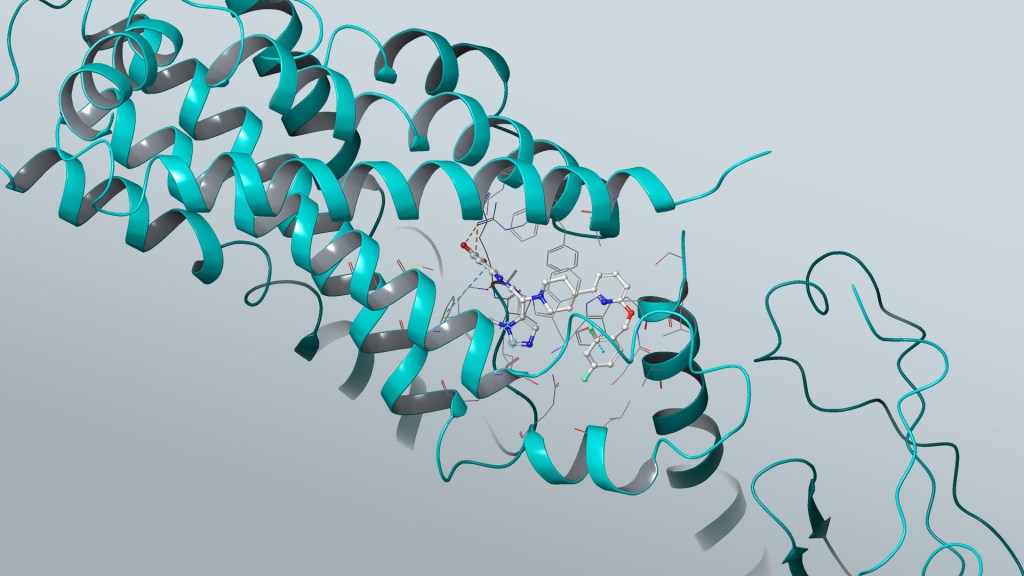
For a drug to be effective, potent binding to the target protein is a prerequisite, but it is not sufficient. Rather, in order to produce the desired functional response, the drug must either inhibit the function of the protein or modulate the activity of the protein, most typically by modifying its conformational equilibrium. The long timescales for such protein conformational changes prohibit them from being directly modeled via physics-based simulations. However, our recent work has demonstrated that the consequences of these long-timescale processes can be accurately modeled with alchemical free energy calculations using FEP+.

In this webinar, we present a tractable and computationally efficient protocol that can accurately and reliably predict the functional response of a receptor to ligand binding, including:

  • The use of Absolute Binding Free Energy Perturbation (ABFEP) to score the difference of the ligand bound to active and inactive states of the receptor and accurately predict the functional response of ligand binding

  • Validation on a large set of systems including eight G protein-coupled receptors (GPCRs) and one nuclear receptor

  • How this FEP-based workflow can be used to achieve unprecedented performance in classifying ligands as agonists or antagonists in drug discovery programs

  • Best practices for applying this approach to your own research projects

icon time 8:00 AM PT / 11:00 AM ET / 4:00 PM GMT / 5:00 PM CET

Accurate modeling of receptor functional response: GPCRs and beyond

Our Speakers

Lingle Wang, PhD

Senior Vice President, Schrödinger

Lingle Wang, senior vice president, scientific development, joined Schrödinger in 2012. He is responsible for advancing Schrödinger’s physics-based computational drug discovery platform. He obtained his Ph.D. from Columbia University working with Professors Richard Friesner and Bruce Berne on methods to quantify the role of water molecules in protein-ligand binding, enhanced sampling in biomolecular simulations and free energy calculations. Lingle has published extensively in the areas of free energy methods development and applications in drug discovery.

Martin Vögele, PhD

Senior Scientist I, Schrödinger

Martin Vögele is a senior scientist in the life science software department at Schrödinger, Inc. in New York City. Previously, he was a postdoc in computer science at Stanford University where he worked on simulations of G-protein-coupled receptors and on machine learning for structural biology and drug discovery. Before moving to the United States, he obtained a PhD for work on diffusion and self-organization in lipid membranes at the Max Planck Institute of Biophysics in Frankfurt, Germany.

Register

Schrödinger デジタル創薬セミナー: Into the Clinic | ~計算化学がもたらす創薬プロセスの変貌~ | 第8回 

Webinar

Schrödinger デジタル創薬セミナー: Into the Clinic
~計算化学がもたらす創薬プロセスの変貌~
第8回

CalendarDate & Time
  • February 21st, 2024
  • 9:00 AM
LocationLocation
  • Virtual

Impacting drug discovery programs with large-scale de novo design

高品質な化学物質の創製をより包括的かつ効果的に可能にする技術の開発は、薬物探索の長年の目標でした。

シュレーディンガーは近年、大規模な合成に注意を払ったde novoデザイン手法(AutoDesigner)と厳密な自由エネルギーに基づくスコアリング手法(Active Learning FEP+)を組み合わせ、小分子の効力と選択性を最適化するためのワークフローの開発を主導しています。この技術の最新の進展では、R-グループの設計を超えてコアの探索に進化し、初期のヒット同定の取り組みや代替系列の発見に拡張されました。

本セミナーでは、重要なデザインの課題を克服し、プログラムを加速させた、 de novoデザイン技術の最新事例を紹介します。

icon time 日本時間9:00am – 10:00am
Impacting drug discovery programs with large-scale de novo design

Pieter Bos, Principal Scientist II Sathesh Bhat, Executive Director, Therapeutics Group Zef Könst, Principal Scientist II, Therapeutics Group

Highlights

  • AutoDesignerと他の一般的なデザイン手法の実際の比較。化学的なスペースの探索、費やされた時間、デザインの目標の達成能力の評価を含む。
  • AutoDesignerを使用したヒット同定中の新しいコアの設計。
  • AutoDesignerを使用したhit-to-leadおよびリード最適化におけるR-グループの設計。
  • 分子接着剤の効力と選択性の向上の例、およびde novoデザインを使用して知的財産権を強化する例。
  • 技術を薬物探索プログラムに適用するための要件とベストプラクティス。

【セミナー形式】
Zoom webinarを使用したオンライン形式

【お申込み方法】
参加のお申し込みはこちらから▼
https://schrodinger.zoom.us/webinar/register/WN_k8iHc8W6RlajaNiThRdggQ

所属企業または所属機関のメールアドレスにて、ご登録をお願いします。
所属が明らかでない、また、個人メールアドレスでご登録の場合などは、出席をご遠慮いただく場合がございますのであらかじめご了承ください。
参加お一人様につき一登録をお願いします。アクセスリンクの共有はご遠慮ください。
当日は、お申し込みの際に登録いただいた氏名·メールアドレスにてご参加ください。
同業他社さまにはご参加をご遠慮頂いております。申し訳ございませんが、ご理解のほど宜しくお願い致します。

ご質問、ご不明な点がございましたら下記までお問い合わせください。
シュレーディンガー株式会社
E-mail: info-japan@schrodinger.com

9th Fragment-based Drug Discovery Meeting

Conference

9th Fragment-based Drug Discovery Meeting

CalendarDate & Time
  • March 3rd-5th, 2024
LocationLocation
  • Cambridge, United Kingdom

Schrödinger is excited to be participating in the 9th Fragment-based Drug Discovery Meeting taking place on March 3rd – 5th in Cambridge, United Kingdom at Hinxton Hall. Join us for a poster by Antonija Kuzmanic, Principal Scientist I at Schrödinger, titled “Large-scale in silico Fragment Screening Based on Absolute Free Energy Perturbation (AB-FEP+).”

Title: Large-scale in silico Fragment Screening Based on Absolute Free Energy Perturbation (AB-FEP+)
Speaker:
Antonija Kuzmanic, Principal Scientist I
Abstract:
Fragment screening has witnessed remarkable success with 6 FDA approved drugs and many more in clinical trials. Here we present a computational innovation to dramatically expand the scope of fragment screening, from screening typical ~3k – 30k experimental fragment libraries to screening ~200 million fragments with high hit rates. This approach involves a virtual screening funnel based on Absolute Free Energy Perturbation to rigorously score diverse fragments based on their predicted binding affinities, allowing for only a small number of fragments (~25-50) to be purchased and/or synthesized for experimental testing. This approach has already been successfully applied during the hit finding stage for several active internal drug discovery projects, resulting in potent (nM – uM), ligand efficient (LE 0.38 – 0.51) starting points from which to initiate our discovery campaigns. In the TPL2 project, five fragments hits (<100 uM) were identified from fragment screening and were expanded to develop initial SAR, which led to discovery of the hit compounds.

Impacting Drug Discovery Programs with Large-Scale De Novo Design

Webinar

Impacting drug discovery programs with large-scale de novo design

CalendarDate & Time
  • January 25th, 2024
  • 8:00 AM PT / 11:00 AM ET / 4:00 PM GMT / 5:00 PM CET
LocationLocation
  • Virtual
Register

Developing technologies to more comprehensively and effectively enable de novo design of high-quality chemical matter has been a long-standing goal of drug discovery.

To this end, Schrödinger has recently spearheaded the development of workflows that combine large-scale synthetically-aware de novo design methods (AutoDesigner) with rigorous free energy-based scoring methods (Active Learning FEP+) for potency and selectivity optimization of small molecules. Recent developments of this technology move beyond R-group design to core exploration, enabling its expanded application to early stage hit identification efforts and the discovery of back-up series.

In this webinar, we will describe several recent case studies from Schrödinger’s therapeutics group where these de novo design technologies have allowed teams to overcome critical design challenges and accelerate programs.

Highlights

  • Real-life comparison of AutoDesigner versus other common design methods, including an evaluation of chemical space explored, time spent, and ability to meet design goals
  • Design of novel cores during hit identification using AutoDesigner
  • Design of R-groups during hit-to-lead and lead optimization using AutoDesigner
  • Examples of improving potency and selectivity of a molecular glue and using de novo design to strengthen IP
  • Requirements and best practices to apply the technology to your drug discovery programs
icon time 11:00 AM – 12:00 PM EST (1 Hour)

Impacting Drug Discovery Programs with Large-Scale De Novo Design

Our Speakers

Pieter Bos, PhD

Principal Scientist II, Schrödinger

Pieter Bos is a principal scientist and product manager of AutoDesigner and De Novo Design workflows. At Schrödinger, his main focus is the research, development and optimization of automated compound design algorithms. Lead scientist for the design and execution of enumerated drug molecule libraries for internal and collaborative drug design projects. He received his Ph.D. in Synthetic Organic Chemistry from the University of Groningen in the laboratory of Prof. Ben Feringa. Prior to joining Schrödinger, he worked as a postdoctoral researcher in synthetic methodology development at Boston University (Prof. John Porco and Prof. Corey Stephenson) and small molecule drug discovery at Columbia University (Prof. Brent Stockwell.).

Sathesh Bhat, PhD

Executive Director, Schrödinger

Sathesh Bhat, Ph.D., executive director in the therapeutics group, joined Schrödinger in 2011. He is responsible for overseeing computational chemistry efforts on internal and partnered drug discovery programs at Schrödinger. Previously, Sathesh worked at both Merck and Eli Lilly leading computational efforts in several drug discovery programs. He obtained his Ph.D. from McGill University, which involved developing structure-based methods to predict binding free energies. Sathesh has co-authored multiple patents and publications and continues to publish on a wide variety of topics in computational chemistry.

Zef Könst, PhD

Principal Scientist II, Schrödinger

Zef Könst is a principal scientist in the therapeutics group at Schrödinger where he is responsible for drug discovery project execution as a medicinal chemist. Zef joined Schrödinger in 2020 after working at Novartis and Nurix Therapeutics and has contributed to four compounds in clinical development. He received his Ph.D. from University of California, Irvine under Professor Vanderwal.

Register