Impacting Drug Discovery Programs with Large-Scale De Novo Design

Webinar

Impacting drug discovery programs with large-scale de novo design

CalendarDate & Time
  • January 25th, 2024
  • 8:00 AM PT / 11:00 AM ET / 4:00 PM GMT / 5:00 PM CET
LocationLocation
  • Virtual
Register

Developing technologies to more comprehensively and effectively enable de novo design of high-quality chemical matter has been a long-standing goal of drug discovery.

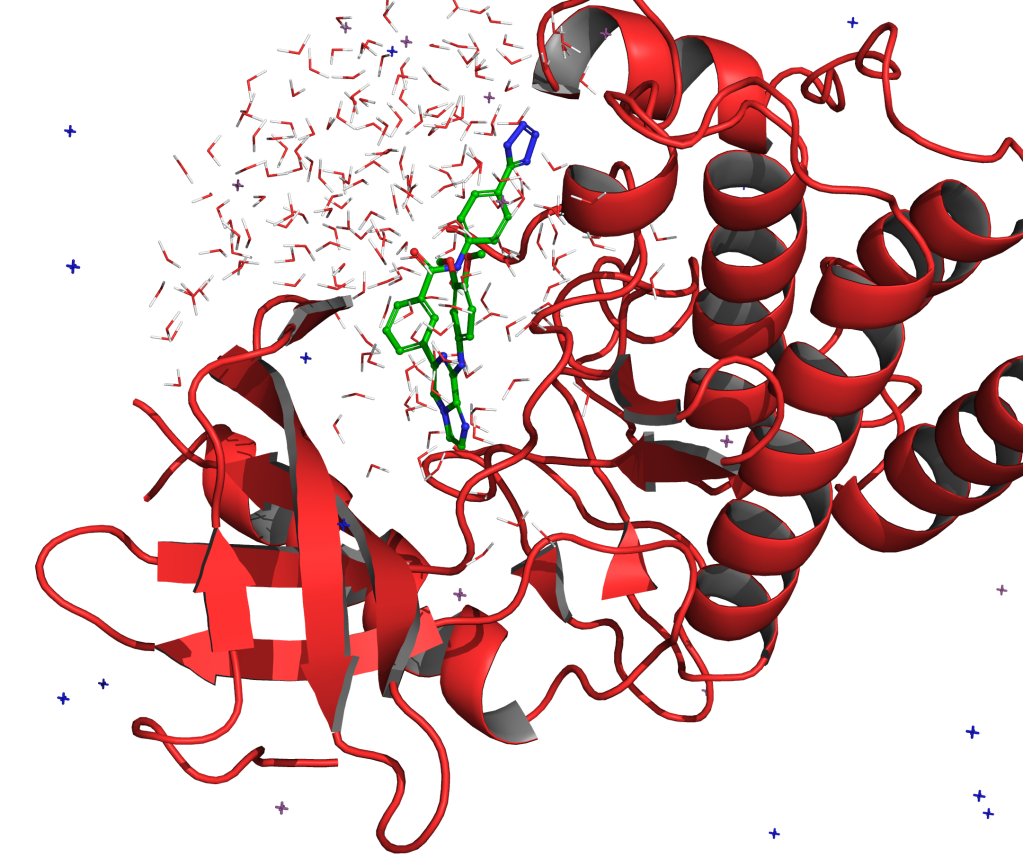
To this end, Schrödinger has recently spearheaded the development of workflows that combine large-scale synthetically-aware de novo design methods (AutoDesigner) with rigorous free energy-based scoring methods (Active Learning FEP+) for potency and selectivity optimization of small molecules. Recent developments of this technology move beyond R-group design to core exploration, enabling its expanded application to early stage hit identification efforts and the discovery of back-up series.

In this webinar, we will describe several recent case studies from Schrödinger’s therapeutics group where these de novo design technologies have allowed teams to overcome critical design challenges and accelerate programs.

Highlights

  • Real-life comparison of AutoDesigner versus other common design methods, including an evaluation of chemical space explored, time spent, and ability to meet design goals
  • Design of novel cores during hit identification using AutoDesigner
  • Design of R-groups during hit-to-lead and lead optimization using AutoDesigner
  • Examples of improving potency and selectivity of a molecular glue and using de novo design to strengthen IP
  • Requirements and best practices to apply the technology to your drug discovery programs
icon time 11:00 AM – 12:00 PM EST (1 Hour)

Impacting Drug Discovery Programs with Large-Scale De Novo Design

Our Speakers
Pieter Bos, PhD

Principal Scientist II, Schrödinger

Pieter Bos is a principal scientist and product manager of AutoDesigner and De Novo Design workflows. At Schrödinger, his main focus is the research, development and optimization of automated compound design algorithms. Lead scientist for the design and execution of enumerated drug molecule libraries for internal and collaborative drug design projects. He received his Ph.D. in Synthetic Organic Chemistry from the University of Groningen in the laboratory of Prof. Ben Feringa. Prior to joining Schrödinger, he worked as a postdoctoral researcher in synthetic methodology development at Boston University (Prof. John Porco and Prof. Corey Stephenson) and small molecule drug discovery at Columbia University (Prof. Brent Stockwell.).

Sathesh Bhat, PhD

Executive Director, Schrödinger

Sathesh Bhat, Ph.D., executive director in the therapeutics group, joined Schrödinger in 2011. He is responsible for overseeing computational chemistry efforts on internal and partnered drug discovery programs at Schrödinger. Previously, Sathesh worked at both Merck and Eli Lilly leading computational efforts in several drug discovery programs. He obtained his Ph.D. from McGill University, which involved developing structure-based methods to predict binding free energies. Sathesh has co-authored multiple patents and publications and continues to publish on a wide variety of topics in computational chemistry.

Zef Könst, PhD

Principal Scientist II, Schrödinger

Zef Könst is a principal scientist in the therapeutics group at Schrödinger where he is responsible for drug discovery project execution as a medicinal chemist. Zef joined Schrödinger in 2020 after working at Novartis and Nurix Therapeutics and has contributed to four compounds in clinical development. He received his Ph.D. from University of California, Irvine under Professor Vanderwal.

Register

Antibody Engineering & Therapeutics 2024

Conference

Antibody Engineering & Therapeutics 2024

CalendarDate & Time
  • December 15th-18th, 2024
LocationLocation
  • San Diego, California

Schrödinger is excited to be participating in the Antibody Engineering & Therapeutics event taking place on December 15th – 18th in San Diego, California. Stop by our booth to speak with Schrödinger scientists.

Schrödinger Japan Science Seminars: Into the Clinic

Webinar

Schrödinger Japan Science Seminars: Into the Clinic

CalendarDate & Time
  • November 21st, 2023
LocationLocation
  • Virtual

Schrödinger デジタル創薬セミナー: Into the Clinic 
~計算化学がもたらす創薬プロセスの変貌~ 
第7回


創薬現場での計算化学設計手法は、近年では創薬に欠かせない基盤技術のひとつとしてその存在を確立しつつあります。

Schrödingerは、1990年の会社創立以来、分子設計向けソフトウェアとインフォマティクスの機能強化を、医薬品および化学品材料への実用的なソリューションとして提供することに継続的に取り組んでいます。そして、これらを駆使し、数々の創薬研究プロジェクトにおいて、効率的に質の高い医薬品設計実績を示してまいりました。

本セミナーは、Schrödinger創薬研究プロジェクトに携わった研究者が計算化学創薬の実例をご紹介し、皆様からの質疑応答の機会をご提供します。

定量的なシミュレーションの最新技術、実験による検証を加えたDMTA(Design-Make-Test-Analyze)サイクルの更なる効率化を通した創薬プロセスの加速化などにご関心があり、次世代の創薬研究に意欲的に取り組まれようとしている方々からの広いご参加をお待ちしております。

Agenda

Time

(日本時間 / JST)

Seminar Title

Speaker

11月21日(火)

9:00 – 10:00

Democratizing Access to Molecular Modeling Across Discovery Team

Abba E. Leffler
Principal Scientist, Schrödinger Therapeutics Group

Abstract

In this talk, I will discuss the impact of “democratizing” free-energy perturbation (FEP+) calculations of potency on oncology and antiviral drug discovery programs. Specifically, I will highlight how implementing FEP+ as a “click-to-run” model in LiveDesign, a web-based enterprise informatics platform, promotes ideation and cooperation between medicinal and computational chemists, the rapid development of highly potent compounds, and the discovery of diverse chemical moieties to drug pockets in novel ways.  For an oncology program, the potency of a weak-binding hit from a virtual screen was improved by >100,000-fold in approximately six months. For the antiviral program (joint with Takeda), the discovery of a high-energy water site in the SARS-CoV-2 main protease binding site was exploited to discover compounds with cell potency comparable to the FDA approved drug nirmatrelvir. I will conclude by discussing lessons learned for how to effectively implement this approach in practice.

Speaker

Abba E. Leffler

Principal Scientist, Schrödinger Therapeutics Group

プリンストン大学で化学学士号を取得し、ニューヨーク大学メディカルスクールで神経科学の博士号を取得しました。 彼の研究成果はScience、The Journal of Neuroscience、JCIM、PNASなどに掲載されており、第 I 相臨床試験中の化合物を含む、複数の特許を取得しています。 現在は、主任科学者として、低分子創薬プロジェクトをリードしています。

【セミナー形式】
Zoom webinarを使用したオンライン形式

【お申込み方法】
▼参加のお申し込みはこちらから▼
https://schrodinger.zoom.us/webinar/register/WN_i4O3ad7ARn6sJVLTOfTkGw
所属企業または所属機関のメールアドレスにて、ご登録をお願いします。
所属が明らかでない、また、個人メールアドレスでご登録の場合などは、出席をご遠慮いただく場合がございますのであらかじめご了承ください。
参加お一人様につき一登録をお願いします。アクセスリンクの共有はご遠慮ください。
当日は、お申し込みの際に登録いただいた氏名・メールアドレスにてご参加ください。
同業他社さまにはご参加をご遠慮頂いております。申し訳ございませんが、ご理解のほど宜しくお願い致します。

※ご質問、ご不明な点がございましたら下記までお問い合わせください。
シュレーディンガー株式会社
E-mail: info-japan@schrodinger.com

2nd Industrial Polymers & CPG Summit

2nd Industrial Polymers & CPG Summit

CalendarDate & Time
  • November 15th-16th, 2023
LocationLocation
  • Bismarckstraße 118, 51373 Leverkusen, Germany Lindner Hotel Leverkusen BayArena

We are pleased to invite you to the 2nd Industrial Polymers & CPG Summit: Driving Product Innovation Through Molecular Modeling


Hosted by Covestro & Schrödinger

This event will bring together leaders in industrial polymers and consumer packaged goods to explore how digital chemistry can drive innovation in product research and development. We will discuss how the combination of physics-based molecular simulation and machine learning can help reduce innovation timelines for new products and optimize existing product portfolios.


Agenda Highlights

  • Case study presentations by industrial scientists from Bayer, Cambrium, Covestro, Henkel and more on the impact of molecular simulations on their R&D projects
  • Panel discussion on opportunities for applying these methods within polymer and CPG R&D and challenges to adopt new technologies in an industrial setting
  • Presentation from Schrödinger scientist on the state of the industry and future technology developments
  • 1:1 meetings and networking with industry peers and academic thought leaders

Agenda


In silico materials development: Integrating atomistic simulation into academic chemistry and engineering labs

Webinar

In silico materials development: Integrating atomistic simulation into academic chemistry and engineering labs

CalendarDate & Time
  • November 14th, 2023
  • 12:00 PM PT / 3:00 PM ET / 8:00 PM GMT
LocationLocation
  • Virtual

Computational chemistry is ubiquitous in academic research in chemistry, materials science, and engineering. Applied molecular modeling can drive or supplement a research project – accelerating discovery processes, minimizing the need for extensive experimental testing, and providing atomic scale insights.

In this webinar, we will explore Schrödinger’s leading physics-based and machine learning computational technologies and provide a comprehensive introduction to the capabilities of computational modeling in chemistry, materials science, and engineering.

We will discuss workflows and applications for polymeric materials, electronics, aerospace, renewable energy, catalysis, and formulations.

    • Molecular and periodic quantum mechanics (DFT) for property prediction and reaction mechanism elucidation
    • Accelerated polymer modeling with all-atom molecular dynamics
    • Coarse-grained methods to explore larger systems and longer timescales
    • Advanced machine learning models for new material discovery
    • Educational and training resources, such as Schrödinger’s seven online materials science certification courses

Following the webinar, the speaker will also be available to answer questions. Whether you are a student, an early career researcher, or an established expert seeking to expand your field of knowledge, this webinar promises to be a valuable resource for all levels of expertise interested in staying at the forefront of computational modeling in materials science.

icon time 3:00 PM – 4:00 PM EST (1 Hour)

In silico materials development: Integrating atomistic simulation into academic chemistry and engineering labs

Our Speaker

Dr. Michael Rauch

Principal Scientist I Schrodinger

Dr. Michael Rauch is a Principal Scientist I at Schrödinger specializing in materials science and education. Michael earned his Ph.D. from Columbia University in synthetic organometallic chemistry as an NSF Graduate Research Fellow before pursuing a postdoctoral role in organic chemistry at the Weizmann Institute of Science as a Zuckerman Postdoctoral Scholar. Michael is particularly interested in green, sustainable chemistry and transforming the way that synthetic chemists utilize molecular modeling via practical education.

Register

Button

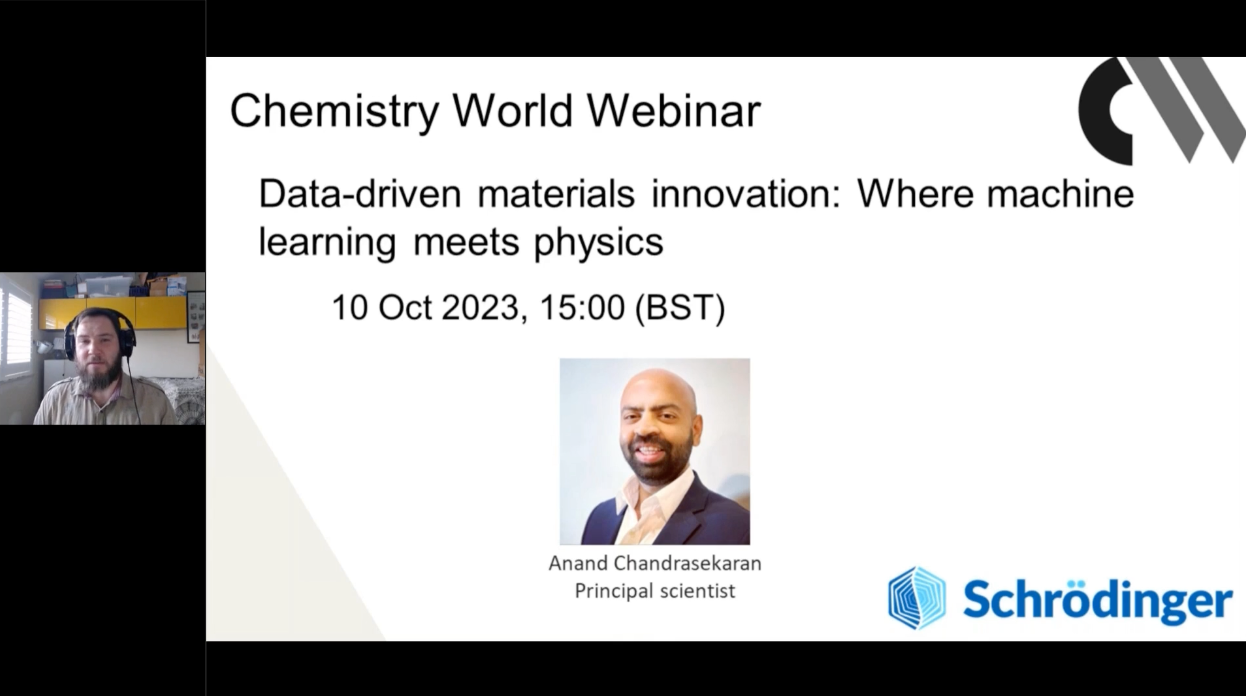
Data-driven materials innovation: Where machine learning meets physics

OCT 10, 2023

Data-driven materials innovation: Where machine learning meets physics

Abstract:

The surge of machine learning (ML) in materials science and chemistry has been driven by advancements in deep learning methodologies. While many industrial scientists aspire to transition to a data-centric and AI-guided design paradigm, companies often deal with limited datasets and complex materials that require customised featurisation techniques. Moreover, commonly used ML techniques often grapple with issues of explainability and extrapolation into unexplored chemical spaces.

In this webinar, we demonstrate how Schrödinger’s tools can help overcome these common challenges by using a combination of physics-based simulation data, enterprise informatics, and chemistry-informed ML. We highlight how this synergistic approach can transform materials innovation across a wide-range of technology verticals. Specifically, we will highlight case studies in the following areas:

  • Using molecular dynamics simulations to generate descriptors that enhance the accuracy of ML models for viscosity predictions
  • Developing explainable ML models to predict the ionic conductivity of Li-ion battery electrolytes
  • Augmenting the performance of ML models for predicting properties such as absorption and emission wavelengths, fluorescence lifetime, and extinction coefficients of organic electronics using descriptors rooted in density functional theory

This integrated approach signifies a new frontier in materials science and chemistry, combining the strengths of ML and physics-informed methods.

Anand Chandrasekaran

Senior Principal Scientist

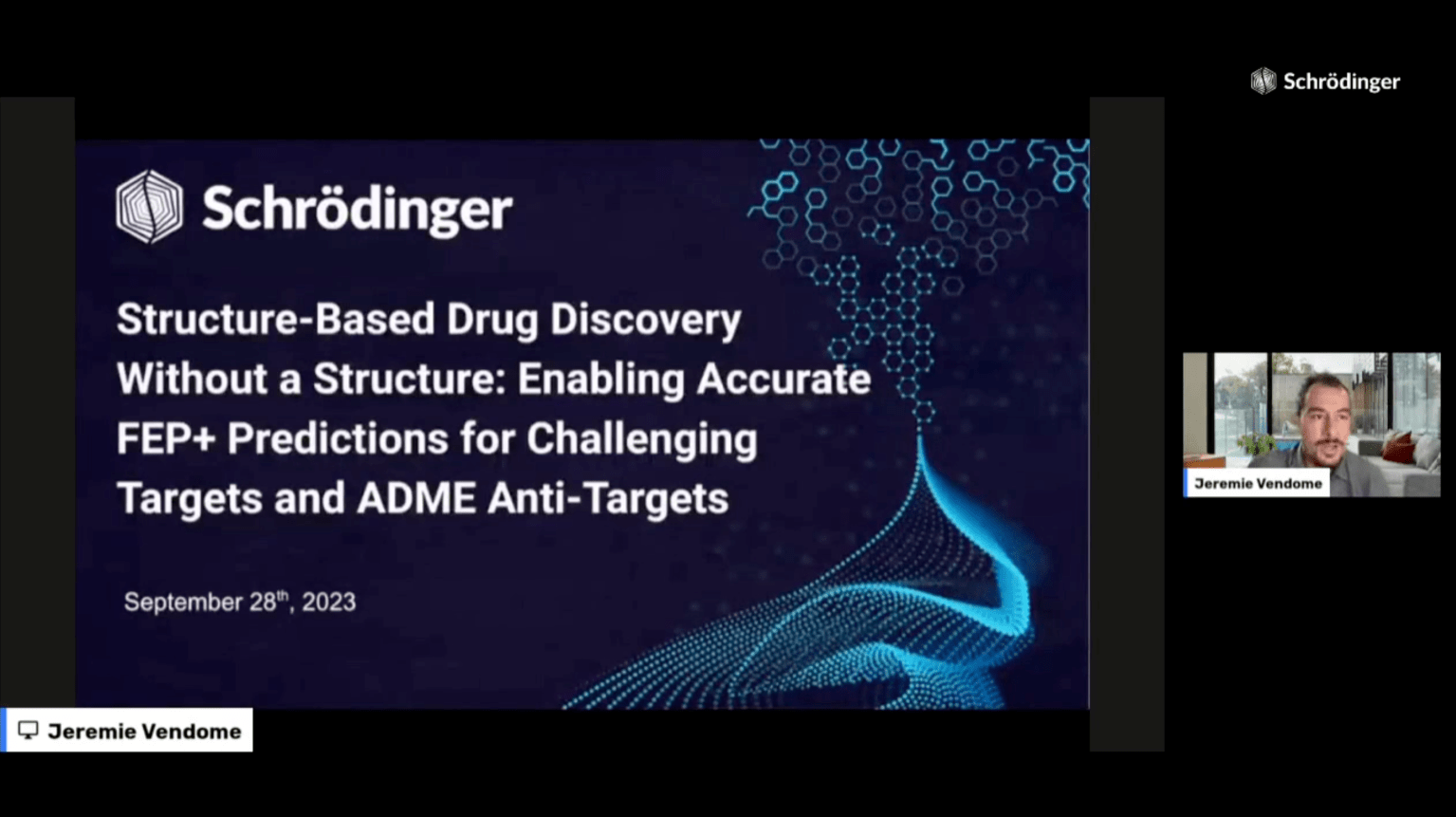
Structure-Based Drug Discovery Without a Structure: Enabling Accurate FEP+ Predictions for Challenging Targets and ADMET Anti-Targets

SEPT 28, 2023

Structure-Based Drug Discovery Without a Structure: Enabling Accurate FEP+ Predictions for Challenging Targets and ADMET Anti-Targets

Speakers

Edward Miller, Senior Director at Schrödinger
Jeremie Vendome, Director at Schrödinger

Abstract

In recent years, Schrödinger has led a deep transformation in the field of structure-based drug discovery, where free energy perturbation (FEP+) has emerged as an in silico assay with enormous and increasing impact on active drug discovery programs. However, the application of this technology is constrained by the availability of accurate structure for the relevant protein-ligand complex. And while advances in cryo-EM and AlphaFold are giving access to an ever increasing number of structures across diverse protein classes, significant refinement and accurate ligand placement is necessary to use these models for accurate FEP+ calculations.

During this webinar, Ed Miller, Director of Protein Structure Modeling and Jeremie Vendome, Director of Applications Science and Research Enablement at Schrödinger, will showcase the successful utilization of unique technologies and dedicated workflows to enable accurate FEP+ predictions for:

  • Challenging on-targets, including the use of AlphaFold models for structure-based design of GPCRs
  • Off-target liabilities, including common ADMET anti-targets CYP3A4 and hERG
    Examples from active drug discovery programs will be presented.

Finally, the speakers will describe how dedicated Target Enablement Research Services can give you full access to these technologies and Schrödinger’s expertise to enable FEP+ for your own program.

Japanese: Schrödinger デジタル創薬セミナー Structure Based Drug Discovery without a Structure -Enabling Accurate FEP+ Predictions for Challenging Targets and ADMET Anti Targets

SEPT 20, 2023

Schrödinger デジタル創薬セミナー: Structure Based Drug Discovery without a Structure -Enabling Accurate FEP+ Predictions for Challenging Targets and ADMET Anti Targets

Speakers

Jeremie Vendome
Director of Applications Sciences and Head of Research Enablement, Schrödinger
Edward Miller
Senior Director, Protein Structure Modeling, Schrödinger

Abstract

In recent years, Schrödinger has led a deep transformation in the field of structure-based drug discovery, where free energy perturbation (FEP+) has emerged as an in silico assay with enormous and increasing impact on active drug discovery programs. However, the application of this technology is constrained by the availability of accurate structure for the relevant protein-ligand complex. And while advances in cryo-EM and AlphaFold are giving access to an ever increasing number of structures across diverse protein classes, significant refinement and accurate ligand placement is necessary to use these models for accurate FEP+ calculations.

During this webinar, Ed Miller, Director of Protein Structure Modeling and Jeremie Vendome, Director of Applications Science and Research Enablement at Schrödinger, will showcase the successful utilization of unique technologies and dedicated workflows to enable accurate FEP+ predictions for:

  • Challenging on-targets, including the use of AlphaFold models for structure-based design of GPCRs
  • Off-target liabilities, including common ADMET anti-targets CYP3A4 and hERG

Examples from active drug discovery programs will be presented.

Finally, the speakers will describe how dedicated Target Enablement Research Services can give you full access to these technologies and Schrödinger’s expertise to enable FEP+ for your own program.

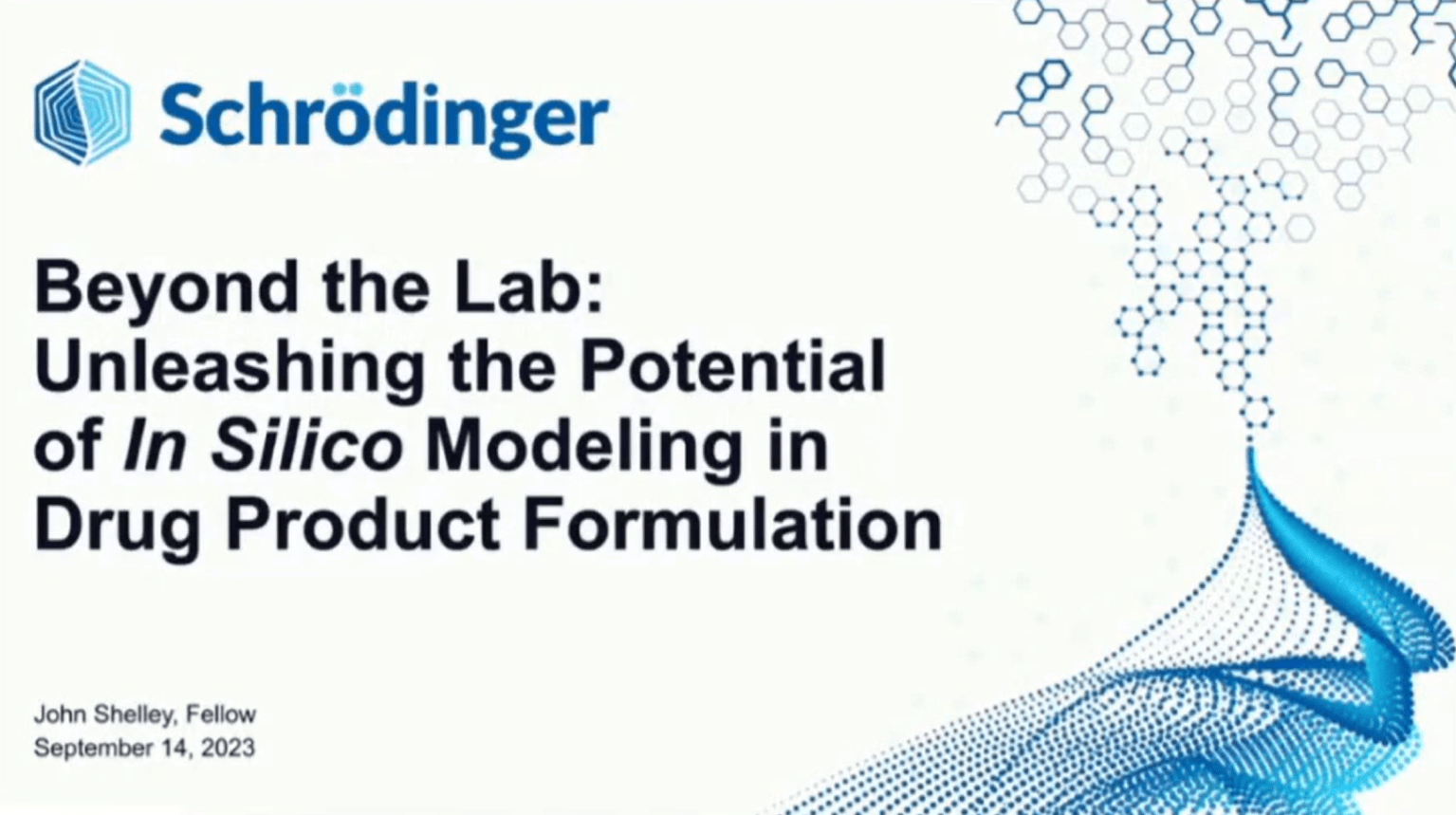
Beyond the Lab: Unleashing the Potential of In Silico Modeling in Drug Product Formulation

SEPT 14, 2023

Beyond the Lab: Unleashing the Potential of In Silico Modeling in Drug Product Formulation

Speaker

John Shelley
Fellow

Abstract

In this webinar, we will explore Schrödinger’s leading molecular modeling and machine learning platform, including workflows for:

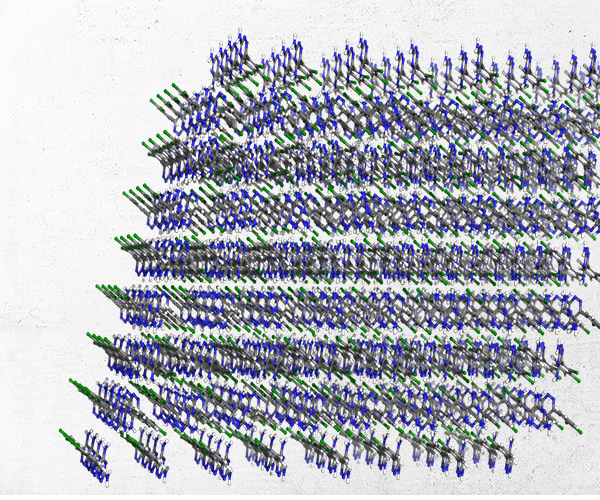
  • Drug product characterization: Predicting stability & reactivity, solubility, solid form characterization, and crystal polymorphs
  • Drug formulation: Modeling drug-excipient interactions and predicting complex thermodynamic and mechanical formulation properties

You will learn how digital chemistry tools facilitate rapid screening of formulation parameters, aiding in the identification of optimal drug delivery systems, excipient selection, and dosage forms. Following the webinar, a panel of Schrödinger researchers and scientists will be available to answer questions.

Whether you are a pharmaceutical scientist, researcher, or computational chemist, this webinar offers an opportunity to stay ahead of the curve and explore the potential of in silico drug formulation to optimize drug development, reduce costs, and accelerate time to market.