Quantum ESPRESSO Interface

Integrated graphical user interface for nanoscale quantum mechanical simulations

Quantum ESPRESSO GUI

Overview

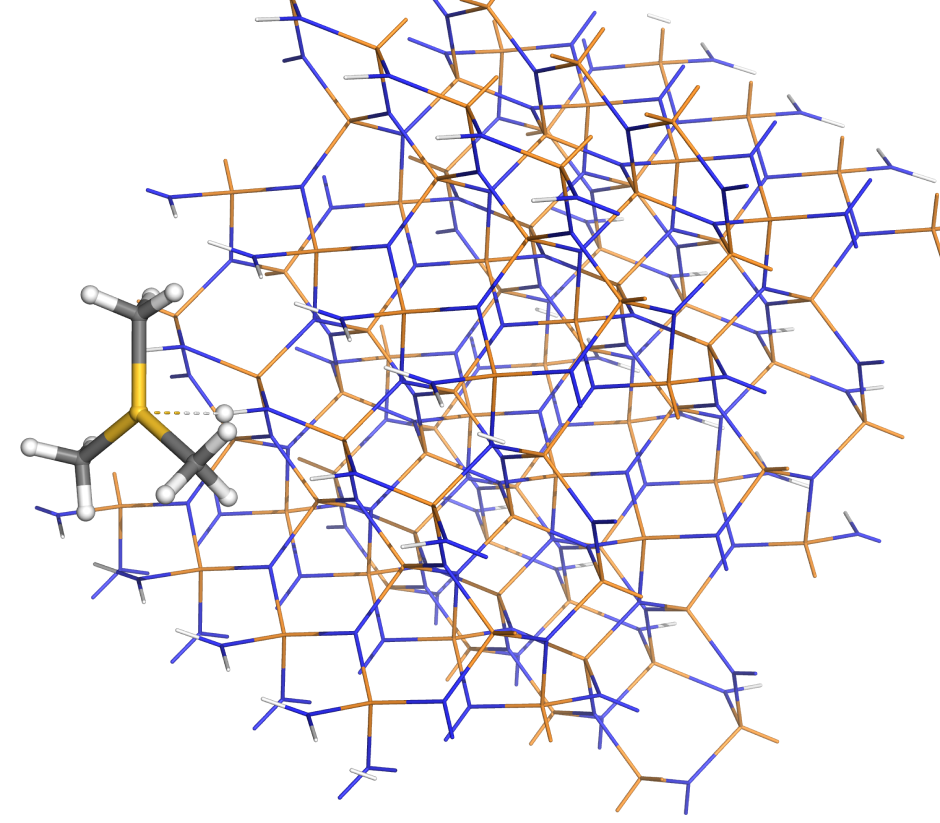
Quantum ESPRESSO, developed by Quantum ESPRESSO Foundation (QEF), is the leading high-performance, open-source quantum mechanical software package for nanoscale modeling of materials. Quantum ESPRESSO implements plane wave density-functional theory in conjunction with periodic boundary conditions and pseudopotentials.

Schrödinger collaborates with QEF in methods development and develops the proprietary Quantum ESPRESSO interface automating complex workflows for structure generation, calculations, and analysis. The QE Interface  provides a comprehensive graphical user interface for streamlined calculation set-up, job control, and results analysis, enabling ab initio modeling of bulk materials, their surfaces, and interfaces. The tool is embedded directly into MS Maestro to provide a simple user interface.

Key Capabilities

Provide predictions for bulk, surface and interface properties
Support Ultrasoft (US), Norm-Conserving (NC) and Projector Augmented Wave (PAW) pseudopotentials
Perform structural optimization and ab initio molecular dynamics
Simulate transition states and minimum energy paths using Nudged Elastic Bands (NEB) method 
Model linear response properties within Density Functional Perturbation theory (DFPT)
Predict spectroscopic properties
Calculate defect formation energy

Case studies & webinars

Discover how Schrödinger technology is being used to solve real-world research challenges.

Materials Science Webinar

Purposeful simulation: Maximising impact in surface chemistry modelling

In this webinar, learn about a variety of atomistic models of surfaces and gain perspective on the underlying rationale, benefits and limitations of each.

Materials Science Webinar

Schrödinger Materials Science Seminar Japan 2024 

《無料Webセミナー》材料開発向けシミュレーション・ソフトウェアおよびマテリアルズ・インフォマティクスの活用事例を紹介。

Materials Science Webinar

Taking experimentation digital: Materials innovation using atomistic simulation and machine learning at-scale

In this webinar, we introduce a modern approach to materials R&D using a digital chemistry platform for in silico analysis, optimization and discovery.

Materials Science Webinar

In silico materials development: Integrating atomistic simulation into academic chemistry and engineering labs

In this webinar, we explore Schrödinger’s leading physics-based and machine learning computational technologies and provide a comprehensive introduction to the capabilities of computational modeling in chemistry, materials science, and engineering.

Materials Science Webinar

Progress in understanding atomic level processing at the atomic scale

In this webinar, we dip into stories about how simulations have advanced our understanding of the growth mechanisms of ALD, and lately of ALE too.

Materials Science Webinar

Sublime Precursors: How Modelling Organometallics at Surfaces Drives Innovation in Materials Processing

In this webinar, we look at simulations of organometallic complexes as precursor molecules for the deposition or etching of materials.

Materials Science Webinar

Quick Start Workshop: Materials Simulation for Experimentalists

In this webinar, learn how an experimentalist can take advantage of simulation and modeling, as well as practical knowledge about how to get started.

Materials Science White Paper

Innovation in atomic-level processing with atomistic simulation and machine learning

Materials Science White Paper

How machine learning enables accurate prediction of precursor volatility

Materials Science White Paper

Massive theoretical screening of organic semiconductor materials using cloud computing

Broad applications across materials science research areas

Get more from your ideas by harnessing the power of large-scale chemical exploration and accurate in silico molecular prediction.

Organic Electronics
Energy Capture & Storage
Catalysis & Reactivity
Semiconductor
Metals, Alloys & Ceramics

Documentation & Tutorials

Get answers to common questions and learn best practices for using Schrödinger’s software.

Materials Science Documentation

Machine Learning Force Fields

Machine Learning Force Fields (MLFFs) offer a novel approach for predicting the energies of arbitrary systems.

Materials Science Quick Reference Sheet

MLFF Calculations: Quick Reference Sheet

Get an overview of the MLFF Calculations panel for predicting quantum mechanical calculations for systems using machine learning force fields.

Materials Science Tutorial

Machine Learning Force Field

Learn how to use machine learning force field optimization methods to prepare and simulate various systems.

Materials Science Documentation

Quantum ESPRESSO Interface

A comprehensive graphical user interface for calculation set-up, job control and results analysis.

Materials Science Tutorial

Ab initio Molecular Dynamics Simulations of Li-ion Diffusion in Solid State Electrolytes

Learn to perform an ab initio molecular dynamics simulation and calculate the Li-ion diffusion in a solid state electrolyte.

Materials Science Tutorial

Phase Diagrams

Plot phase diagrams for a two- and three-component system.

Materials Science Tutorial

Defect Energy Calculation

Learn to generate the defect energy correction for MgO.

Materials Science Tutorial

Electronic Structure Calculations of Bulk Crystals Using Quantum ESPRESSO

Learn the basics of the Quantum ESPRESSO interface for periodic density functional theory (DFT) calculations of bulk solids, including convergence testing, geometry optimization, band structures, the density of states (DOS), and the projected density of states (PDOS).

Materials Science Tutorial

Atomic Layer Deposition

Tutorial to show how to use adsorption tools to model atomic layer deposition (ALD) processes.

Materials Science Tutorial

Microkinetic Modeling

Learn to generate a microkinetic model to study the activity of a heterogeneous catalyst for COO (carbon monoxide oxidation).

Related Products

Learn more about the related computational technologies available to progress your research projects.

Jaguar

Quantum mechanics solution for rapid and accurate prediction of molecular structures and properties

MS Maestro

Complete modeling environment for your materials discovery

DeepAutoQSAR

Automated, scalable solution for the training and application of predictive machine learning models

AutoTS

Automatic workflow for locating transition states for elementary reactions

MS Reactivity

Automated workflows for design, optimization, and unsupervised mechanism discovery in molecular chemistry

Training & Resources

Online certification courses

Level up your skill set with hands-on, online molecular modeling courses. These self-paced courses cover a range of scientific topics and include access to Schrödinger software and support.

Tutorials

Learn how to deploy the technology and best practices of Schrödinger software for your project success. Find training resources, tutorials, quick start guides, videos, and more.