Frontiers in Digital Chemistry: Tokyo Pharmaceutical Formulation Workshop Event

CalendarDate & Time
  • June 30th, 2026
LocationLocation
  • Tokyo, Japan

Tokyo | Pharmaceutical Formulation Workshop
次世代デジタル製剤開発 実践ワークショップ
June 30 2026

この度、シュレーディンガーが開催するフラッグシップイベント「Frontiers in Digital Chemistry」のPharmaceutical Formulation Workshop「次世代デジタル製剤開発 実践ワークショップ」を2026年6月30日に開催する運びとなりました。

本セッションは、欧州のグローバル企業の研究者たちから絶賛されたプログラムを日本向けに再構築したものです 。
単なる聴講型のセミナーではなく実践的なワークショップをご用意しております。

既にご利用いただいている皆様にとっては新たなインサイトを見出す1日に、これから利用を検討される皆様にとっては、今後の可能性を評価し戦略に組み込むことのできる機会となりますよう、弊社一同、皆様のご参加を心よりお待ち申し上げます。

導入レクチャーのアブストラクトはこちらからご覧いただけます。

icon time 9:30-10:00
受付・Welcome coffee

icon time 10:00-10:10
ご挨拶

icon time 10:10-10:45
Accelerating Materials Development with Physics and AI: New Capabilities for Pharmaceutical Formulation in the Schrödinger MS Platform

Mathew D. Halls, Senior Vice President, Materials Science

icon time 10:45-11:15
Leveraging Schrödinger’s Formulation Tools and Automated Workflows to Mitigate Technical Risks in Small Molecule Formulation

Shiva Sekharan, Global Portfolio Leader of Formulations/CSP

icon time 11:30-12:30
Workshop 1 – Automated workflows (pKa Prediction with Macro-pKa) spectroscopy, catalysis

pKa予測、触媒化学、分光学解析に加え、実務でニーズの高い「分解物予測」などの発展的アプローチを習得。

icon time 12:30-13:30
ランチ

icon time 13:30-14:30
Workshop 2 – Predictive modeling ASD model building, Excipients, Polymer screening/ Tg property prediction

ASD(非晶質固体分散体)における賦形剤・ポリマーの高精度なスクリーニングや、ガラス転移温度(Tg)の予測手法を解説。

icon time 14:30-15:30
Workshop 3 – Machine learning workflows (Solvent, coformer screening)

溶液系における機械学習(AI)を用いた最新の解析手法を解説。

icon time 15:30-16:30
Workshop 4 – Biologics Formulation Simulating Complex Protein Solutions Creating a Coarse-Grained Model for Protein Formulations

タンパク質の溶液中での分子としての挙動をシミュレーション。バイオ医薬品の添加剤等のスクリーニングへの応用を想定。

icon time 16:30-17:00
フィードバック・Q&A

icon time 17:00-18:30
レセプション

【本イベントならではの特別プログラム】
理論と実践を繋ぐ「ハンズオンセッション」
弊社マテリアル部門 シニア・バイス・プレジデントの Mathew D. HallsとグローバルポートフォリオリーダーのShiva Sekharanから最新アプローチをご紹介します 。また、弊社サイエンティストの直接サポートのもと、実際のツールに触れながらプロセス(How)をご体感いただくワークショップをご用意しております。弊社ソフトウェアの利用経験がない場合でも、実践的な体験ができるようサポートいたしますので、ぜひお気軽にご参加ください。

ワークショップ参加特典
ワークショップに参加いただいた方限定で、弊社ソフトウェア1ヶ月間評価ライセンスや、オンライントーレニングコース受講クーポンを進呈。ご自身のR&Dプロジェクトで直ちにシミュレーションを評価、お試しいただけます。(※評価ライセンス付与、受講クーポン発行については諸条件がございます。詳細については、弊社担当までお問い合わせください)

英語セッションも安心のサポート体制
英語で実施されるセッションについては、翻訳資料の提供を予定しています。また、日本人サイエンティストが同席し、質疑応答もサポートいたします。

【 開催概要】

  • イベント名: Frontiers in Digital Chemistry | Formulation Workshop
    「次世代デジタル製剤開発 実践ワークショップ」
  • 日時: 2026年6月30日(火)10:00-18:30 (レセプション17:00-18:30)
  • イベント形式:会場開催です。オンライン配信はございません。
  • 会場: 東京ミッドタウン八重洲 5F 八重洲ミッドタウン カンファレンス
  • 参加費: 無料(事前登録制)

※登録受付は6月22日(月)23:59までといたします。
※会場の収容可能人数には限りがあり、登録受付期日前であっても、上限に達し次第締め切りとなります。お早めにお申し込みください。
※参加者様へは、別途メールにて詳細をご案内いたします。

【お申込みにあたって】
所属企業または所属機関のメールアドレスにて、登録をお願いします。
フリーメールや個⼈メールアドレスでご登録の場合などは、出席をご遠慮いただく場合がございます。
同業他社さまには参加をご遠慮頂いております。ご理解のほど宜しくお願い致します。

※ご質問、ご不明な点がございましたら下記までお問い合わせください。
シュレーディンガー株式会社 FIC2事務局
E-mail: info-japan@schrodinger.com

Schrödinger Live Cambridge 2026

In-Person Event
CalendarDate & Time
  • September 15th-16th, 2026
LocationLocation
  • Cambridge, Massachusetts
Register

We are excited to host the inaugural Schrödinger LIVE on September 15–16, 2026 at the Royal Sonesta Boston, in the heart of one of the world’s leading biotech and scientific hubs.

This two-day, in-person event will bring together scientists and industry professionals to exchange ideas, explore new approaches, and connect with peers across the industry. Through a mix of scientific presentations and interactive discussions, attendees will gain practical insights into how computational methods are shaping drug discovery.

What to Expect

The program will be an interactive, forward-looking forum that combines technical depth with strategic perspective. It will feature talks from industry leaders, alongside presentations from Schrödinger scientists, moderated discussions, and interactive sessions.

Throughout the event, there will be ample opportunity for direct exchange, enabling meaningful dialogue with peers as well as with Schrödinger’s scientific and product leadership. The format is intended to encourage thoughtful discussion and contribute to ongoing conversations around innovation in computational drug discovery.

Preview of select talks:

  • Accelerating Drug Discovery with Federated Computing: Inside Lilly’s TuneLab Platform, Jonathan Gilbert, Eli Lilly and Company
  • Advancing WRN Helicase Inhibitors Through Structure-Based Design and PK/PD Modeling, Cindy Yan, Novartis
  • Bunsen: From Agentic Coding to Agentic Chemistry, Karl Leswing, Schrödinger
  • Closing the Loop on Computationally-Driven Drug Discovery: Synthetically-Aware De Novo Design, Predictive Toxicology, and Agentic AI at Scale, Robert Abel, Schrödinger 
  • FEP Protein-Ligand Interaction Signatures Reveal Key Potency Driver for Chemical Series, Kiran Kumar, Johnson & Johnson Innovative Medicine
  • FEP+ Reveals Structural Drivers of Lenacapavir Resistance in HIV-1 Capsid, Cooper S. Jamieson, Gilead Sciences
  • Physics-Based Approaches for Exploring Off-Target Compound Binding, Usha Viswanathan, Johnson & Johnson Innovative Medicine
  • Predictive Sciences at Antares Therapeutics: Enabling Efficient Covalent Drug Discovery, Jack Henderson, Antares Therapeutics
  • RetroSynth: Accurate Retrosynthesis at ScaleSathesh Bhat and Jonty Macdonald, Schrödinger

Meeting sessions include:

  • Structure Enablement and Predictive Design
  • Predictive Modeling for Alternative Modalities
  • AI and Machine Learning in Drug Discovery
  • Hands-On Workshops

Who Should Attend

This event is designed for professionals across drug discovery, including those working in medicinal and computational chemistry, molecular modeling, AI/ML, and the broader digital transformation of R&D. Schrödinger users and non-users alike are encouraged to attend.

Whether already working with Schrödinger or exploring new solutions, participants will have the opportunity to learn from real-world applications, engage directly with experts and users, and identify new ways to advance their research.

Venue Location

The Royal Sonesta Boston, 40 Edwin H Land Boulevard, Cambridge, MA, USA

Accommodations & Lodging

A dedicated block of hotel rooms has been reserved for attendees of Schrödinger LIVE. To secure the preferred event rate, please book your stay directly through our Hotel Room Block Link. Rooms are limited and available on a first-come, first-served basis, so we encourage you to make your reservations early.

Link: https://book.passkey.com/go/SchrodingerLive

Register

17th Global Drug Delivery & Formulation Summit

Conference

17th Global Drug Delivery & Formulation Summit

CalendarDate & Time
  • May 18th-20th, 2026
LocationLocation
  • Berlin, Germany

Schrödinger is excited to be participating in the 17th Global Drug Delivery & Formulation Summit taking place on May 18th – 20th in Berlin, Germany. Join us for a presentation by John Shelley, Fellow at Schrödinger, titled “Molecular Modeling and Machine Learning for Small Molecule and Biologic Drug Formulation.” Stop by booth #4 to speak with Schrödinger scientists.

icon time MAY 18 | 15:35
icon location Room 3
Molecular Modeling and Machine Learning for Small Molecule and Biologic Drug Formulation

Speaker:
John Shelley, Fellow at Schrödinger

Abstract:
Selecting and combining the right ingredients in the appropriate manner is essential for successful drug formulation given the inherent challenges and competitive market. With advances in modern machine learning, physics-based simulation techniques and computer hardware, modelling is emerging as a valuable source of information that complements experimental characterization.  We showcase a cross-section of capabilities within Schrödinger’s Suite for modeling related to formulations of small-molecule or biologic drugs.  For small-molecule drugs workflows have been created for characterizing crystal polymorphs, crystal morphology and degradation risks as well as calculating elastic constants (bulk modulus, shear modulus, etc.), powder diffraction patterns, glass transition temperatures (Tg), diffusion constants, pKa values, melting points, water adsorption and various solubilities. For biologics our toolset supports homology modeling, and the calculation of aggregation propensity, titration curves, isoelectric points and viscosity among other things.  Complex and evolving structures, often in fluid states, play a crucial role in the pharmaceutical industry.   For both small-molecule and biologics formulations powerful simulation tools employing atomistic or coarse-grained models to permit the characterization of molecular interactions and nanoscale structuring, sometimes within otherwise disordered bulk systems (e.g., LNP formation, self-assembly of polymer-based structures, dissolving amorphous solid dispersions, liposomes and protein-excipient interactions).

2026 Annual Spring Meeting of the Polymer Society of Korea

Conference

2026 Annual Spring Meeting of the Polymer Society of Korea

CalendarDate & Time
  • April 8th-10th, 2026
LocationLocation
  • Daejeon, Korea

Schrödinger is excited to be participating in the 2026 Annual Spring Meeting of the Polymer Society of Korea conference taking place on April 8th – 10th in Daejeon, Korea. Join us for a presentation by Shaun Kwak, Senior Director of Materials Science Applications Science at Schrödinger, titled “Digital chemistry calling for a paradigm shift in polymer materials innovation.” Stop by booth #33 to speak with Schrödinger scientists.

icon time APR 9 | 16:45
Digital chemistry calling for a paradigm shift in polymer materials innovation

Speaker:
Shaun Kwak, Senior Director of Materials Science Applications Science, Schrödinger

Abstract:
Recent advances in molecular simulation and machine learning technologies are fundamentally reshaping the framework of the discovery and optimization of polymeric materials, quickly replacing the traditional concept of iterative experimentation guided by chemical intuition. Here, we showcase an advanced digital platform technology that combines physics-based molecular simulations with machine learning algorithms to develop novel polymer materials, effectively navigating the vast macromolecular design spaces. Case studies will include, but are not limited to, designing copolymers for semiconductor packaging, optimizing thermochemistry of acrylate-based coating, and assessment of thermal oxidation in thermoset resins. The work demonstrates a major shift of paradigm in the usage of information technology in materials research with broad implications in product lifecycle management, positioning digital chemistry as a cornerstone of the next-generation polymer industry.

Battery Seminar 2026

Conference

Battery Seminar 2026

CalendarDate & Time
  • July 14th-16th, 2026
LocationLocation
  • San Jose, California

Schrödinger is excited to be participating in the Battery Seminar 2026 conference taking place on July 14th – 16th in San Jose, California. Join us for a presentation by Garvit Agarwal, Principal Scientist II, Materials Science Applications Science at Schrödinger, titled “Integrating Physics-Based Simulations and Machine Learning to Fast-Track Battery Materials Innovation.”

icon time JUL 14 | 2:30PM
Integrating Physics-Based Simulations and Machine Learning to Fast-Track Battery Materials Innovation

Speaker:
Garvit Agarwal, Ph.D. Scientific Lead, Energy Storage Materials Science Group, Schrödinger

Abstract:
Developing next-generation batteries requires deep insight into complex phenomena like ion transport and the SEI. Integrated physics-based modeling and machine learning approaches are revolutionizing the development of next-generation battery chemistries. We demonstrate how ML Force Fields and advanced ML models can rapidly predict material properties, significantly reducing R&D timelines for high-performance energy storage systems.

Accelerating sustainable chemical innovation with physics-powered AI and predictive modeling

JUL 23, 2026

Accelerating sustainable chemical innovation with physics-powered AI and predictive modeling

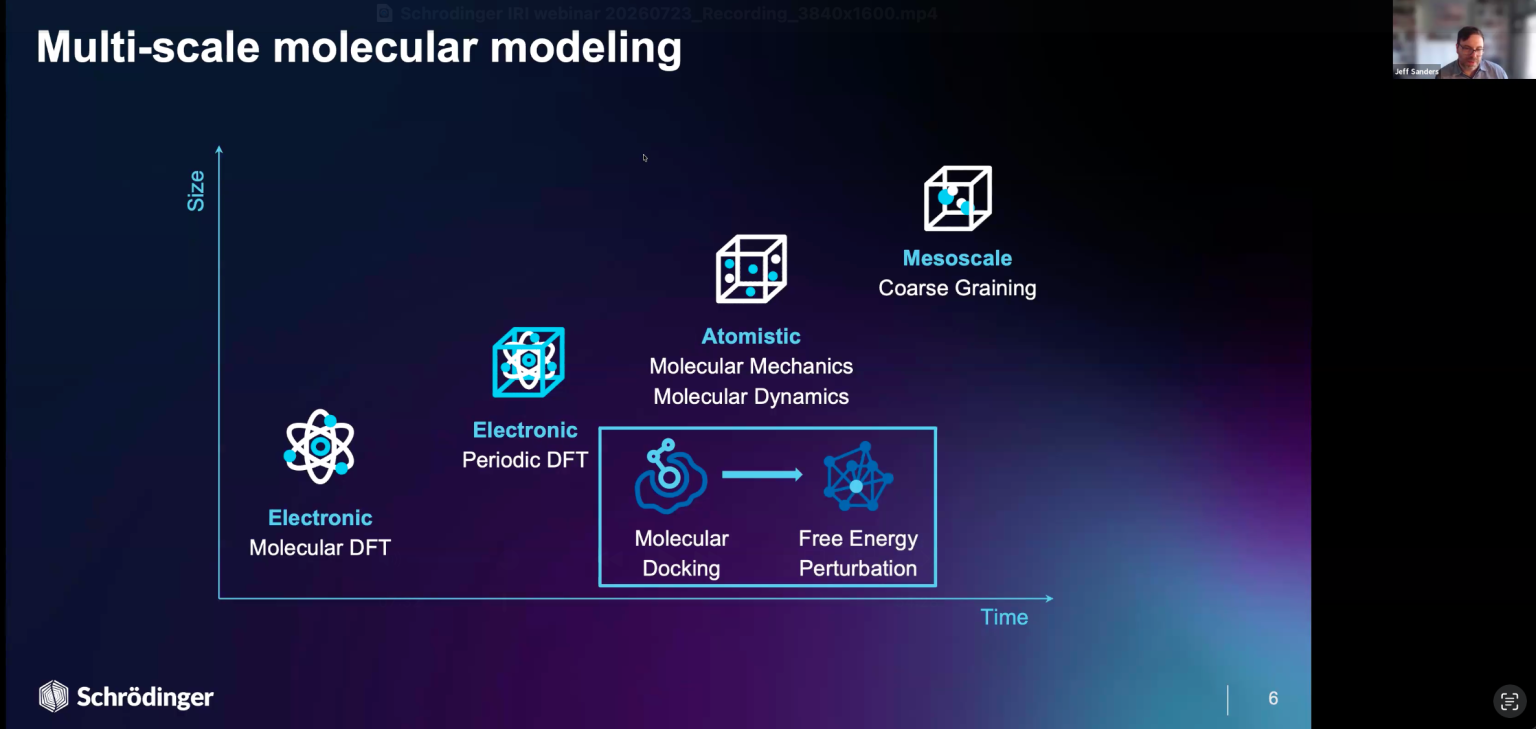
The global chemical industry—spanning consumer goods, specialty materials, and industrial chemicals—is navigating a massive transition. Driven by stringent regulatory shifts and a global demand for sustainable, high-transparency ingredient portfolios, companies are under pressure to innovate at unprecedented speeds. However, replacing established synthetic chemicals or ingredients with bio-based or green alternatives often introduces complex challenges regarding stability, performance consistency, and material compatibility.

This webinar explores how a “predict-first” digital chemistry platform can mitigate these risks by shifting the discovery from the laboratory alone to a high-throughput computational environment.

Central to this digital transformation is the synergy between physics-based simulations and machine learning (ML). While traditional ML often struggles with the data sparsity typical of novel chemicals and complex mixtures, physics-based methods generate high-fidelity, molecular-level descriptors that provide the “ground truth” for ingredient interactions. These simulations allow R&D teams to characterize key properties—such as solubility, phase behavior, rheology, and chemical stability—of complex, multi-component systems before a single physical sample is synthesized.

Key Highlights:

  • Solving the Data Gap: Discover how physics-informed AI overcomes the limitations of small datasets, allowing for the design of innovative chemicals where historical experimental data is non-existent
  • Real-World Case Studies: Showcase how modern industries utilize physics-based modeling and ML to accelerate product development and solve complex R&D challenges
  • A Scalable Foundation for Industrial R&D: Learn how to improve R&D velocity and meet evolving global regulatory demands in an increasingly volatile market

Our Speaker

Jeffrey Sanders

Global Portfolio Leader for CPG, Schrödinger

Jeff Sanders received his B.S. in applied physics from Worcester Polytechnic Institute and then his Ph.D. in biophysics and molecular pharmacology from Thomas Jefferson Medical College. Since joining Schrödinger in 2013, he has served several roles. Jeff is currently the global portfolio leader for the consumer packaged goods applications. Additionally, he is a managing board member of the Food Engineering, Expansion, and Development (FEED) Institute, and also holds a faculty position in the Food Science Department at UMass Amherst

Michael Rauch

Director and Global Portfolio Leader for Chemicals, Schrödinger

Dr. Michael Rauch is a Principal Scientist I at Schrödinger specializing in materials science and education. Michael earned his Ph.D. from Columbia University in synthetic organometallic chemistry as an NSF Graduate Research Fellow before pursuing a postdoctoral role in organic chemistry at the Weizmann Institute of Science as a Zuckerman Postdoctoral Scholar. Michael is particularly interested in green, sustainable chemistry and transforming the way that synthetic chemists utilize molecular modeling via practical education.

BioTechX 2026

Conference

BioTechX 2026

CalendarDate & Time
  • October 6th-8th, 2026
LocationLocation
  • Basel, Switzerland

Schrödinger is excited to be participating in the BioTechX conference taking place on October 6th – 8th in Basel, Switzerland. Join us for a presentation by Steven Jerome, Executive Director, Life Science Software at Schrödinger, titled “Predictive Toxicology: Rational Digital Toxicology in the Cloud with a New AI-Accelerated Physics-Based Workflow.” Stop by booth #274 to speak with Schrödinger scientists.

icon time OCT 6 | 16:50
Predictive Toxicology: Rational Digital Toxicology in the Cloud with a New AI-Accelerated Physics-Based Workflow

Speaker:
Steven Jerome, Executive Director, Life Science Software, Schrödinger

Abstract:
By one estimate, unmanaged toxicity is responsible for roughly 30%1 of all drug discovery project failures. The adoption of experimental screening panels have contributed to the overall improved safety profile of drugs on the market. However, the high cost and latency associated with performing these screens means that such panels are run later in the pre-clinical discovery process and cannot be effectively incorporated into hit finding and lead-optimization stages of the project. To meet the demand for off-target screening during the design process, many teams deploy digital toxicology screening in the form of ligand-based machine learning models. These models, which are fast and inexpensive to operate are typically limited by poor generalizability to ligand matter dissimilar from data used to train the models and are missing the protein context to help designers dial-out liabilities rationally. We present a novel in-silico, physics-based solution for the identification and mitigation of off-target liabilities that constructs a full 3D, atomistic, representation of the ligand interacting with the target and leverages free energy calculations to model off-target binding. Molecules can be evaluated against a single off-target or a panel of representative targets in a screening mode. Calculations are run in the cloud, eliminating any need for local hardware. AI and ML models trained to the physics-based predictions have significant potential to enable high-throughput application in the near future. Already, this workflow has been successfully applied to a wide range of relevant targets across many protein classes. Here, we present both retrospective validation from literature data and prospective application to internal drug discovery projects, where the workflow has seen significant impact throughout our internal drug discovery pipeline, emphasizing the efficient resolution of tox-related liabilities in CYP3A4 and hERG.

Frontiers in Digital Chemistry: Industry Summit

Summit
CalendarDate & Time
  • June 9th-10th, 2026
LocationLocation
  • Schrödinger NYC Office
Register

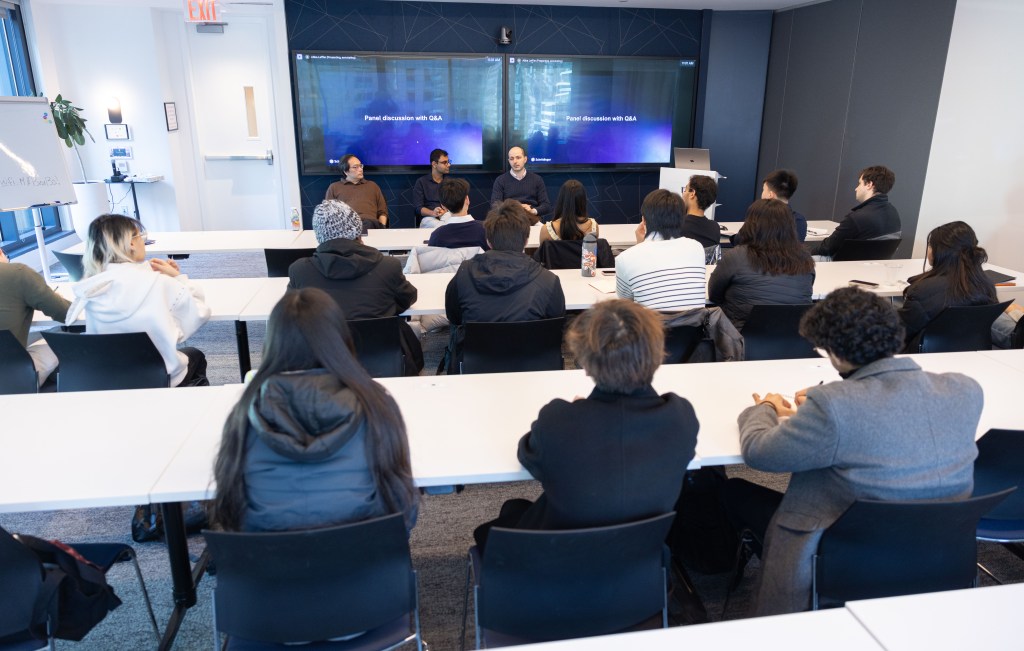
Schrödinger is pleased to host the inaugural Frontiers in Digital Chemistry: Industry Summit, an in-person gathering for industry professionals in the materials-science digital-chemistry community.

This two-day event convenes scientists, technical leaders, and R&D decision-makers from across industries — including polymers, consumer packaged goods (CPG), specialty chemicals, energy, petrochemicals, thin film processing and advanced materials. Together, we will explore how the integration of AI, physics-based modeling, and computational workflows is reshaping materials innovation and accelerating discovery.

Hosted at our New York City headquarters overlooking Times Square, the event brings digital chemistry discussions to the heart of Manhattan.

The event will begin on June 9 at 1:30 PM, with afternoon sessions followed by an evening dinner. Sessions will continue on June 10 with a full day of programming, concluding at 5:15 PM.

Agenda

What to Expect

The summit is designed as an interactive and forward-looking forum that blends technical depth with strategic discussion. The agenda will feature:

  • Presentations from Schrödinger scientists and leadership
  • Perspectives from industry practitioners
  • A moderated panel discussion
  • Structured and informal peer-to-peer exchange
  • Select interactive or workshop-style sessions

Beyond formal sessions, the event is intentionally structured to encourage meaningful dialogue. Attendees will engage directly with fellow practitioners and Schrödinger’s scientific and product leadership to exchange insights and help shape future directions in digital chemistry.

Who Should Attend

Both Schrödinger users and non-users are welcome.  This event is intended for industry professionals involved in:

  • Materials research and development
  • Computational chemistry and molecular modeling
  • AI and machine learning applied to materials science
  • Digital transformation of industrial R&D
  • Innovation across polymers, CPG, chemicals, energy, and related sectors

The summit aims to foster open, cross-industry dialogue — uniting diverse perspectives around a shared goal: advancing materials innovation through digital chemistry.

Register

Venue Location

Schrödinger, NYC office,
1540 Broadway 21st floor,
New York, NY, USA

ICDT 2026

Conference

ICDT 2026

CalendarDate & Time
  • March 31st – April 3rd, 2026
LocationLocation
  • Chongqing, China

Schrödinger is excited to be participating in the International Conference on Display Technology, ICDT 2026  taking place on March 31st – April 3rd in Chongqing, China. Stop by Booth 3A4 and catch Hadi Abroshan, Principal Scientist II, Materials Science Product and Discovery presenting in Session 43: OLED – Simulations 1 on April 2, 15:40–16:00.

icon time APR 2 | 15:40
icon location Session 43: OLED – Simulations 1
Accelerating OLED Design: Integrating Machine Learning and Physics-based Simulation

Speaker:
Hadi Abroshan, Principal Scientist II, Materials Science Product and Discovery

Abstract:
The experimental development of innovative OLED device architectures and material compositions is time-consuming, labor-intensive, and resource-heavy due to the complexity and cost associated with fabrication, characterization, and analysis. Predictive modeling offers a powerful alternative, enabling efficient and targeted evaluation of devices across broad design spaces.

CRS 2026

Conference

CRS 2026

CalendarDate & Time
  • July 6th-9th, 2026
LocationLocation
  • Lisbon, Portugal

Schrödinger is excited to be participating in the CRS 2026 conference taking place on July 6th – 9th in Lisbon, Portugal. Join us for a presentation by Irene Bechis, Principal Scientist I, Materials Science Applications Science at Schrödinger, titled “Combining physics-based and machine learning approaches to accelerate pharmaceutical formulations design and development.” Stop by booth #38 to speak with Schrödinger scientists.

icon time JUL 7 | 9:00AM
icon location Industry Tech Forum
Combining physics-based and machine learning approaches to accelerate pharmaceutical formulations design and development

Speaker:
Irene Bechis, Principal Scientist I, Materials Science Applications Science, Schrödinger

Abstract:
The successful translation of an active pharmaceutical ingredient (API) into a viable clinical therapy hinges critically on the development of an optimal drug formulation. Engineering a formulation that balances bioavailability, stability, and targeted delivery often presents a complex physicochemical challenge. With advances in machine learning, physics-based simulation and compute hardware, modeling is emerging as a valuable source of information to complement experimental characterization and guide decisions in formulation development.

In this talk, we showcase how the tools from the Schrödinger platform can be applied to modeling formulations across a diverse set of therapeutic modalities, ranging from small molecules to peptides to biologics.

The talk will feature case studies on crystalline solid formulations, demonstrating the use of crystal structure prediction to map polymorph landscapes and machine learning approaches for optimal co-former selection for co-crystals. Furthermore, we will explore amorphous solid dispersions, showcasing how physics-based simulations can help predict formulation stability and understand the drug release mechanism. Finally, we will discuss methods to analyze those complex, dynamic structures that are typical of formulations in the fluid state, such as lipid-based formulations for nucleic acid delivery and excipient-protein interactions in injectables.

Lab of the Future 2026

Conference

Lab of the Future 2026

CalendarDate & Time
  • March 2nd-3rd, 2026
LocationLocation
  • Boston, Massachusetts

Schrödinger is excited to be participating in the Lab of the Future 2026 conference taking place on March 2nd – 3rd in Boston, Massachusetts. Join us for a presentation by Karl Leswing, Vice President, Machine Learning at Schrödinger, titled, “Integrated Intelligence: Scaling Collaborative AI with Live Design ML and Retrosynthesis.” Stop by booth #20 to speak with Schrödinger scientists.

icon time 1:50 PM
icon location Grand Ballroom
Integrated Intelligence: Scaling Collaborative AI with Live Design ML and Retrosynthesis

Speaker:
Karl Leswing, Vice President, Machine Learning, Schrödinger

Peter O. Stahl Advanced Design Forum 2026

Conference

Peter O. Stahl Advanced Design Forum 2026

CalendarDate & Time
  • May 14th-15th, 2026
LocationLocation
  • Wayzata, Minnesota

Schrödinger is excited to be participating in the Peter O. Stahl Advanced Design Forum taking place on May 14th – 15th in Wayzata, Minnesota. Join us for a presentation by Anand Chandrasekaran, Product Manager, Materials Science Informatics at Schrödinger, titled “Generative AI for Materials.”

icon time MAY 14 | 1:30 PM
Empowering the Digital Chemistry Laboratory: Generative AI, Agentic Workflows, and the Future of Materials Design

Speaker:
Anand Chandrasekaran, Product Manager, Materials Science Informatics at Schrödinger

Abstract:
The rapid evolution of artificial intelligence is shifting materials science from expensive, trial-and-error experimentation to autonomous, data-driven design. Drawing on recent advancements at Schrödinger, this talk will address the efficient adoption of AI, its impact on daily scientific practice, and strategies for future-proofing R&D organizations. First, we will explore how AI accelerates existing operations and enables new opportunities. By leveraging Machine Learning Force Fields (MLFFs) like MPNICE, we can drastically speed up computationally expensive quantum mechanics and molecular dynamics workflows while maintaining ab initio accuracy. Furthermore, Generative AI capabilities like REINVENT unlock the true de novo inverse design of novel molecules and complex formulations optimized for specific target properties using reinforcement learning. Next, we will examine how AI enhances autonomy in materials design. We will highlight Formulation Machine Learning and Optimization, which maps chemical structure and composition directly to physical properties to autonomously suggest the “next best experiment”. We will also introduce agentic AI, such as Schrödinger’s digital chemistry assistant, demonstrating how expert digital assistants capable of multi-tasking, pipelining jobs, and executing complex research projects are fundamentally altering how scientists interact with computational platforms. Finally, we will discuss how a digital chemistry strategy built on thesynergy of physics-based modeling and machine learning is the most effective way to future-proof AI adoption. By utilizing rigorous physics-based simulations to generate massive, highly accurate training datasets, organizations can overcome data scarcity limitations and confidently extrapolate into the vast space of synthesizable chemistry.