
- Publication
- Apr 26, 2023
Rational design of a highly immunogenic prefusion-stabilized F glycoprotein antigen for a respiratory syncytial virus vaccine
Che, et al. Sci Transl Med, 2023, 15(693)
- Publication
- Apr 15, 2023
Scaffold Hopping and Optimization of Small Molecule Soluble Adenyl Cyclase Inhibitors Led by Free Energy Perturbation
Shan Sun, et al. Journal of Chemical Information and Modeling, 2023
- Publication
- Apr 10, 2023
On Ternary Complex Stability in Protein Degradation: In Silico Molecular Glue Binding Affinity Calculations
Weiss, et al. Journal of Chemical Information and Modeling, 2023, 63(8), 2382-2392
- Publication
- Apr 6, 2023
Epik: pKa and Protonation State Prediction through Machine Learning
Ryne C. Johnston, et al. Journal of Chemical Theory and Computation, 2023
- Publication
- Mar 10, 2023
Benchmark and Refinement of AlphaFold2 Structures for Hit Discovery
Yuqi Zhang, et al. Journal of Chemical Information and Modeling, 2023, 63(6), 1656-1667
- Publication
- Jan 11, 2023
Structure-Activity Relationship Studies of Antimalarial Plasmodium Proteasome Inhibitors-Part II
Hao Zhang, et al. Journal of Medicinal Chemistry, 2023, 66(2), 1484-1508
- Publication
- Dec 29, 2022
A novel method for in silico assessment of Methionine oxidation risk in monoclonal antibodies: Improvement over the 2-shell model
Davide Tavella, et al. PLoS ONE, 2022, 17(12)
- Publication
- Dec 27, 2022
Target-template relationships in protein structure prediction and their effect on the accuracy of thermostability calculations
Muyun Lihan, et al. Protein Science, 2023, 32(2)
- Publication
- Dec 5, 2022
Pathfinder-Driven Chemical Space Exploration and Multiparameter Optimization in Tandem with Glide/IFD and QSAR-Based Active Learning Approach to Prioritize Design Ideas for FEP+ Calculations of SARS-CoV-2 PLpro Inhibitors
Gumede NJ., Molecules, 2022, 27, 8569
- Publication
- Nov 16, 2022
Reliable and Accurate Prediction of Single-Residue pKa Values through Free Energy Perturbation Calculations
Dilek Coskun, et al. Journal of Chemical Theory and Computation, 2022, 18(12), 7193-7204
- Publication
- Oct 1, 2022
Potent and selective TYK2-JH1 inhibitors highly efficacious in rodent model of psoriasis
Leit et al., Bioorg. Med. Chem. Lett. , 2022, 73, 28891
- Publication
- Sep 13, 2022
Are Deep Learning Structural Models Sufficiently Accurate for Free-Energy Calculations? Application of FEP+ to AlphaFold2-Predicted Structures
Thijs Beuming, et al. Journal of Chemical Information and Modeling, 2022, 62(18), 4351-4360
Events
 Webinar
Materials Science
- Dec 1st-8th, 2026
Bunsen in Action: Agentic AI co-scientist deep-dive series for polymers, batteries, and reactivity
Join us for this series featuring demonstrations where our scientists show directly how your team can leverage Bunsen for specific applications to accelerate innovation, de-risk experimental testing, and unlock high-performing candidates faster than ever before.
 Event
Life Science
- Dec 2, 2026
Lunch & Learn: Physics-Driven and AI-Accelerated Modeling of Macrocycles and Cyclic Peptides
Join us in person to explore how integrating these powerful technologies can de-risk your lead optimization pipeline and deliver meaningful impact on your projects.
 Webinar
Materials Science
- Dec 11, 2026
中文讲座:融合基于物理的建模和人工智能加速电池材料创新
电池为个人电子设备到电动汽车以及用于可再生能源整合的大规模电网储能系统提供动力。然而,当前的电池技术(主要是锂离子电池)在性能、安全性、成本以及对钴等稀缺材料的依赖方面面临着重大局限。因此,电池材料的创新是解锁下一代储能的关键。
Webinars
 Webinar
Life Science
- Nov 5, 2026
Schrödinger デジタル創薬セミナー~計算化学がもたらす創薬プロセスの変貌~第25回
Schrödingerの計算化学プラットフォームによるタンパク質設計技術の紹介と、課題対応・開発加速への活用法を詳しく解説します。
 Webinar
Life Science
- Nov 4, 2026
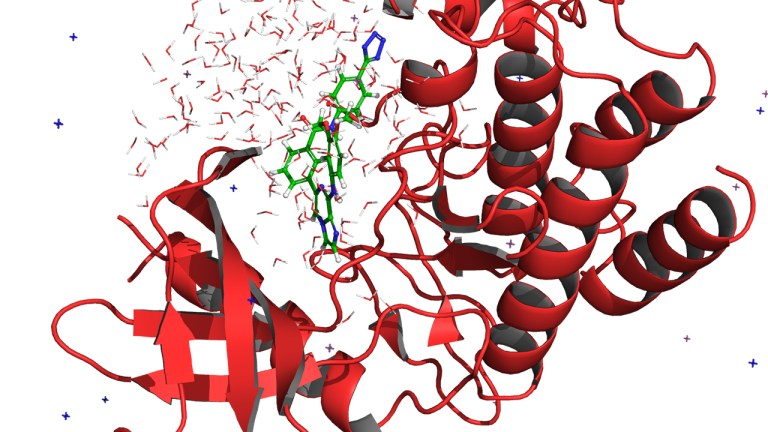
Steering high-throughput de novo design toward synthesis-ready leads with an agentic co-scientist
In this webinar, we explore how Schrödinger’s platform brings AutoDesigner, FEP+, and RetroSynth together inside Bunsen, our agentic co-scientist.
 Webinar
Life Science
- Oct 22, 2026
Advanced chemical space exploration for the discovery of mutant-selective EGFR inhibitors
In this webinar, Schrödinger’s medicinal and computational chemists will show how they tackled the EGFR triple-mutant problem by coupling industry-leading free energy perturbation technology (FEP+) with de novo design workflows to effectively explore novel chemical space and identify reversible inhibitor scaffolds.
Tutorials
- Tutorial
Structure-Based Virtual Screening using Glide
Prepare receptor grids for docking, dock molecules and examine the docked poses.
- Tutorial
Ligand Binding Pose Generation for FEP+
Generate starting poses for FEP simulations for a series of BACE1 inhibitors using core constrained docking.
- Tutorial
Homology Modeling of Protein-Ligand Binding Sites with IFD-MD
Create a homology model of TYK2 from JAK3 and including a bound ligand. Compare this model with the crystal structure for TYK2 bound to 4GIH.
Training Videos
 Video
Life Science
Getting Going with Maestro BioLuminate
A free video series introducing the basics of using Maestro Bioluminate.
 Video
Life Science
- Tutorial
- Video
The LiveDesign Assistant
Learn how to build and adjust coloring rules, create Freeform and Formula columns, and plot data using the LiveDesign Assistant.
Publications
- Publication
- May 8, 2026
Discovery of 2H-Pyrrolo[3,4-c]pyridin-3-one Derivatives as Type-III c-MET Inhibitors Enabled by Free-Energy Perturbation CalculationsCl
Therrien, et al. ACS Medicinal Chemistry Letters, 2026
- Publication
- Apr 8, 2026
Structure-Based Discovery of Imidazo[4,5-c]pyridine SARM1 Modulators Showing Paradoxical Activation
Albanese, et al. Journal of Medicinal Chemistry, 2026, 69(8), 9521–9536
- Publication
- Mar 21, 2026
Structure-Based Calculation of Excipient Effects on the Viscosity of Concentrated Antibody Solutions
Shelley, et al. mAbs, 2026, 18(1)
Case Studies
 Case Study
Life Science
Materials Science
 Case Study
Life Science
 Case Study
Life Science
White Papers
 White Paper
Life Science
- Jan 29, 2026
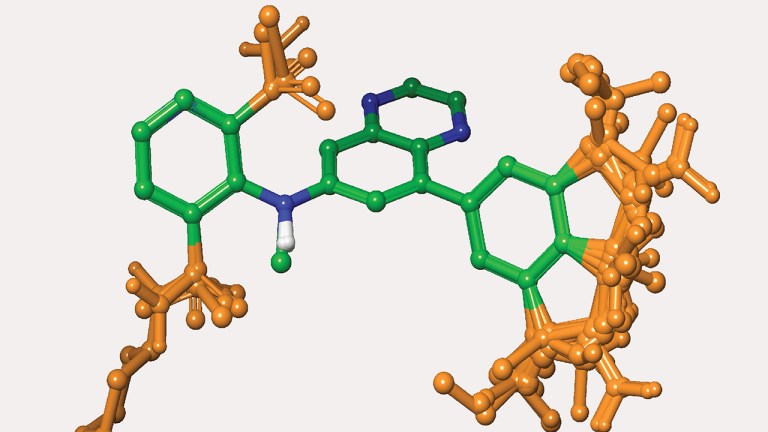
FEP+ Pose Builder — maximizing utility and productivity in FEP simulations
FEP+ Pose Builder is a methodological advancement introduced as an integrated feature to drastically enhance accessibility, user-friendliness, and productivity within the FEP+ pipeline.
 White Paper
Life Science
- Oct 29, 2024
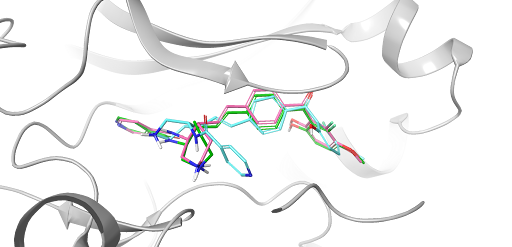
20 Years of Glide: A Legacy of Docking Innovation and the Next Frontier with Glide WS
Glide has long set the gold standard for commercial molecular docking software due to its robust performance in both binding mode prediction and empirical scoring tasks, ease of use, and tight integration with Schrödinger’s Maestro interface and molecular discovery workflows.
 White Paper
Life Science
Quick Reference Sheets
- Quick Reference Sheet
Force Field Builder
A one-page guide to calculate missing torsion parameters for ligands using the Force Field Builder panel.
- Quick Reference Sheet
Ligand Interaction Diagram
A one-page guide to using the Ligand Interaction Diagram for examining ligand-receptor interactions.
- Quick Reference Sheet
GlideMap
A one-page guide to using the GlideMap GUI for ligand placement guided by experimental density.

Latest insights from Extrapolations blog

With FEP+, “The Experiment is the Limit.”
Over the past century, small molecule drugs have represented the dominant modality in drug research, enabling medical breakthroughs that have saved countless lives.

Tackling Drug Solubility: AbbVie and Schrödinger Collaborate to Advance Accurate Prediction Methods
The complexity and size of drug candidates has grown in recent years as scientists pursue novel targets once considered undruggable.
 Blog
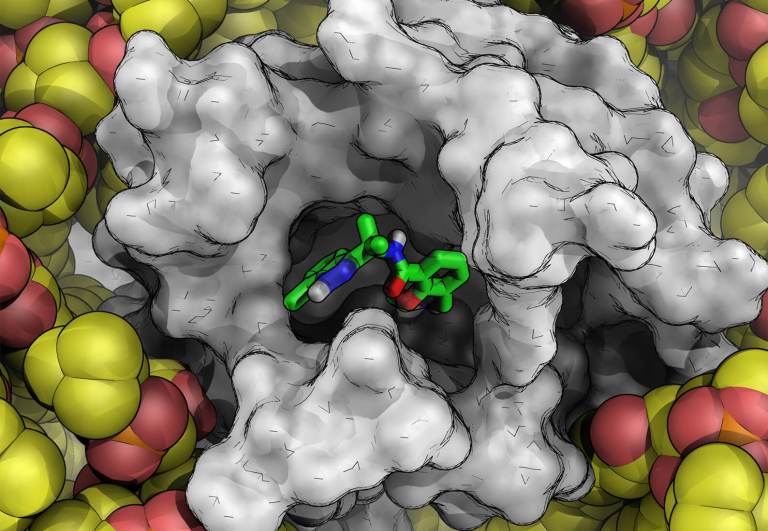
Can AlphaFold Models be Used for Structure-Based Drug Design? A Perspective Two Years In
We recently sat down with Edward Miller, Senior Director of Protein Structure Modeling at Schrödinger, to discuss his experience using AlphaFold models for SBDD.
Training & Resources
Online certification courses
Level up your skill set with hands-on, online molecular modeling courses. These self-paced courses cover a range of scientific topics and include access to Schrödinger software and support.
Free learning resources
Learn how to deploy the technology and best practices of Schrödinger software for your project success. Find training resources, tutorials, quick start guides, videos, and more.
Other Resources