Insights into electrolyte reactivity at the Li metal surface from density functional theory
Taste-Guided Isolation of Bitter Compounds from the Mushroom Amaropostia stiptica Activates a Subset of Human Bitter Taste Receptors
Screening Antioxidant Ingredients Using Quantum Mechanics and Machine Learning
8th Annual RNA – Targeted Drug Discovery & Development Summit

Conference
8th Annual RNA – Targeted Drug Discovery & Development Summit
 Date & Time
 - December 2nd-4th, 2025
 Location
 - Boston, Massachusetts


Schrödinger is excited to be participating in the 8th Annual RNA – Targeted Drug Discovery & Development Summit conference taking place on December 2nd – 4th in Boston, Massachusetts. Join us for a presentation by Ara Abramyan, Principal Scientist I at Schrödinger, titled “Computational strategies for discovering and optimizing RNA- and DNA-targeting molecules.”
24th Schrödinger European User Group Meeting

User Group Meeting
Date & Time
- May 19th-21st, 2026
Location
- Munich, Germany


We are delighted to invite you to the 24th Schrödinger European User Group Meeting
The event will bring together customers from across Europe and Middle-East with a dedicated group of Schrödinger experts. This year’s program will feature an engaging mix of scientific presentations, hands-on workshops, and group discussion spanning the full scope of Schrödinger’s life science molecular design platform. Attendees will also enjoy ample opportunities for networking during coffee breaks and evening social events.
You will have the chance to enjoy Munich – a captivating city celebrated for its rich history, elegant architecture, and vibrant cultural scene at the foot of the Bavarian Alps. The event venue, the Hilton Munich City, is situated near the Isar River and the Deutsches Museum, one of the world’s oldest and most prestigious science and technology museums.
Event Highlights
- User talks highlighting applications of computational molecular design methods for small-molecule and biologics drug discovery
- Schrödinger presentations and hands-on workshops outlining the latest developments of our molecular design platform
- Interactive group discussions
- Opportunities for 1:1 meetings
- Networking dinners and receptions
Meeting Details
The event will begin on Tuesday, May 19th in the morning and end in the afternoon on Thursday, May 21st. To ensure that you don’t miss the opening morning talks, we recommend arriving on Monday, May 18th.
An optional pre-event training session will be offered at Schrödinger’s Munich office on Monday afternoon.
For the first time, the User Group Meeting will include two parallel tracks focusing on:
- Small-molecule modeling
- Biologics design
While our sessions are available to all participants, we kindly ask to indicate your main area of interest during registration to help us with event logistics.
Pre-conference expert session
Are you new to the Schrödinger platform and would like an introduction to the basics of using Maestro and LiveDesign before joining the workshops in the main program?
Are you an experienced practitioner looking to try out new tools or learn tips and tricks for making your work more efficient?
Or would you like to sit down with an expert from Schrödinger’s support team to talk through a particularly challenging workflow or project?
If any of the above resonate with you, please join us at a pre-event session on Monday, May 18th from 14:00 — 17:00! Please specify whether you are interested in participating in this session during registration.
REGISTRATION & HOTEL PACKAGES
We are pleased to offer a specially negotiated conference package at the Hotel Hilton Munich, available when you register for the event (subject to availability). This comprehensive package includes accommodation, lunches, and dinners (dinners on May 19th and 20th).
Hotel Hilton Package
Stay dates: Monday, May 18 – Thursday, May 21 2026
This conference package includes:
- Conference registration
- Three nights of accommodation
- Daily breakfast
- Daily lunch
- Dinner on May 19th and 20th
Early bird rate: EUR 850,- (Until March 17, 2026)
Regular rate: EUR 1.150,- (Until April 29, 2026)
Conference Only – Registration
This option includes:
- Conference registration
- Daily lunch
- Dinner on May 19th and 20th
Early bird rate: EUR 400,- (Until March 17, 2026)
Regular rate: EUR 550,- (Until April 29, 2026)
Agenda
FEP+ State of the Union: Advancing computational rigor and scaling predictivity in drug discovery
NOV 19, 2025
FEP+ State of the Union: Advancing computational rigor and scaling predictivity in drug discovery
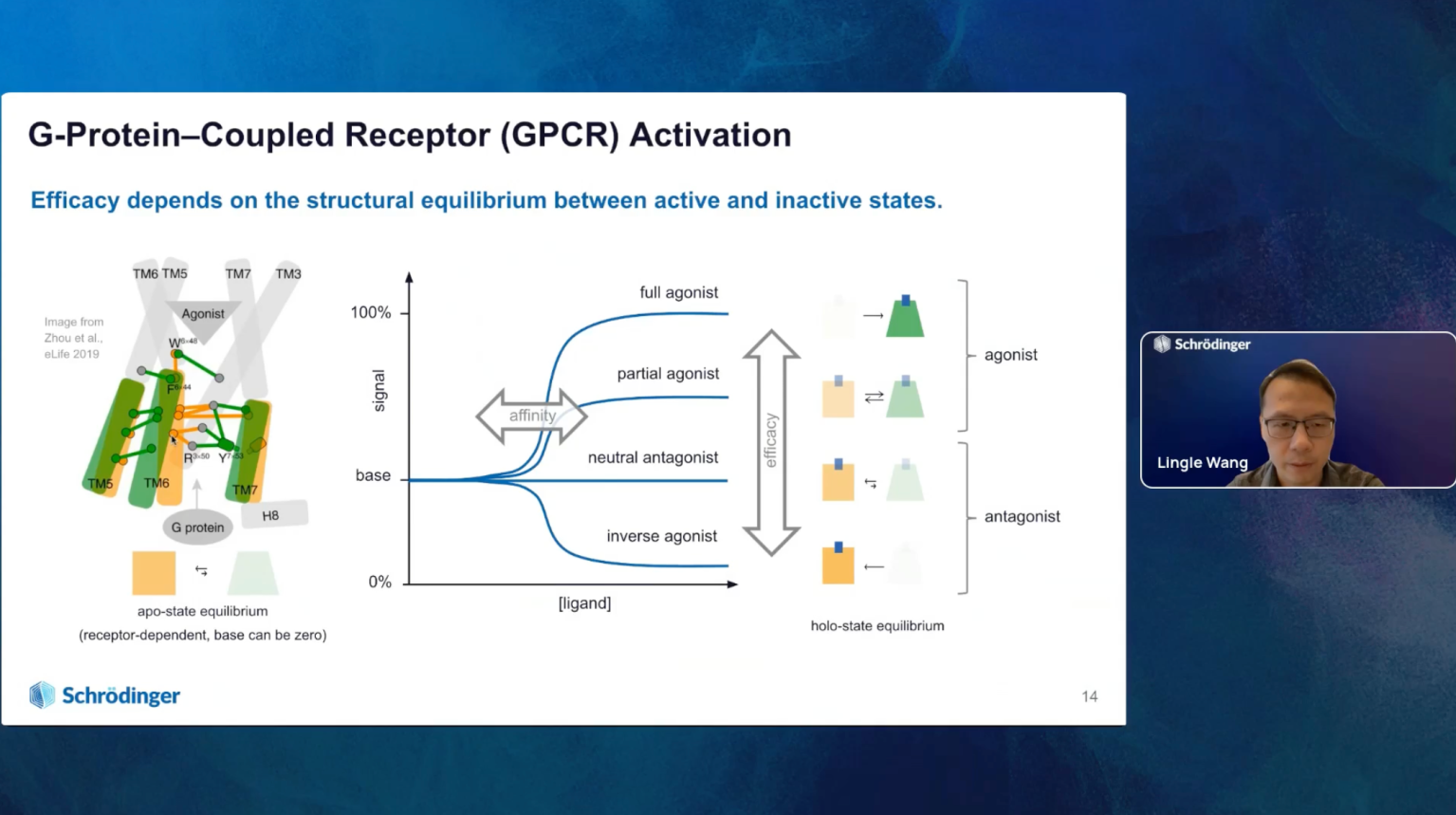
The demands on modern drug discovery – faster timelines, reduced costs, and increasingly challenging targets – require computational models to operate with unprecedented speed and confidence. The core challenge is scaling the predictive power of FEP+, Schrödinger’s free energy perturbation technology, while maintaining its scientific rigor and accuracy. This session will deliver a scientific and technical “state of the union” on FEP+, highlighting the latest and upcoming advancements that have transformed FEP+ into a reliably scalable computational assay that is accessible to entire project teams.
In this webinar, Robert Abel, Schrödinger’s chief scientific officer, and Schrödinger’s FEP+ experts will provide an in-depth analysis of FEP+’s latest accuracy benchmarks and its expanding domain of applicability, maintaining its position as the gold standard in the industry. The core of this session will be the unveiling of key usability innovations engineered to streamline model generation, FEP+ Protocol Builder and FEP+ Pose Builder. These tools are designed to abstract complexity, dramatically reducing the effort required to set up and run robust FEP calculations, thereby accelerating the entire model validation and deployment lifecycle.
Join us to gain insight into the scientific advancements and new tools that are making FEP+ faster, more accurate, more intuitive, and more effective. Discover how FEP+ is crucial for advancing your computational strategies and a key game changer in modern drug discovery.
Webinar Highlights:
- FEP+ Accuracy and Robustness: Presentation of the latest scientific data verifying the high accuracy and reproducibility of FEP+ predictions, including new benchmarks against experimental values
- Expanding Domain of Applicability: A clear discussion on the current scientific domain where FEP+ is proven to be most reliable, ensuring chemists can apply the technology with confidence
- FEP+ Protocol Builder: Learn how this new tool simplifies and accelerates the setup of FEP calculations by guiding users through a streamlined, step-by-step process
- FEP+ Pose Builder: See a demonstration of the FEP+ Pose Builder, a tool designed to make initial model generation easier, faster, and more effective by simplifying complex pose selection and refinement
- FEP+ Integration with LiveDesign: Learn how integration of advanced predictive modeling directly into an enterprise informatics platform enables more efficient, data-driven decisions and collaboration
Our Speakers

Dima Lupyan
Senior Principal Scientist, Life Science Software, Schrödinger
Dr. Dmitry Lupyan, a product manager, spearheads the development of Desmond and FEP analysis tools, showcasing his expertise in the realm of molecular dynamics. Notably, he’s behind the Python API for simulation analysis, a cornerstone utilized across Schrödinger’s MD, MxMD, and FEP+ products. Driven by a passion for scientific advancement, he actively promotes the utilization of simulation analysis tools, fostering a community of exploration. His research interests delve into the intricate domains of protein engineering, membrane-bound systems, and the fascinating dynamics of unbinding kinetics.
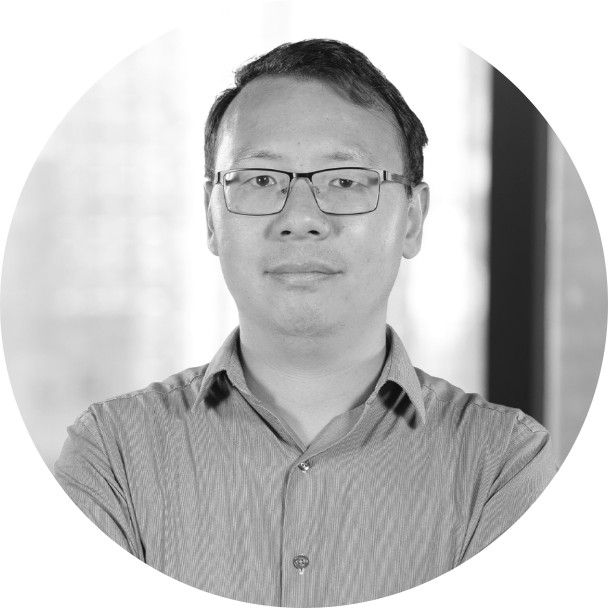
Lingle Wang
Senior Vice President, Scientific Development, Schrödinger
Lingle joined Schrödinger in 2012. He is responsible for advancing Schrödinger’s physics-based computational drug discovery platform. He obtained his Ph.D. from Columbia University working with Professors Richard Friesner and Bruce Berne on methods to quantify the role of water molecules in protein-ligand binding, enhanced sampling in biomolecular simulations and free energy calculations. Lingle has published extensively in the areas of free energy methods development and applications in drug discovery.
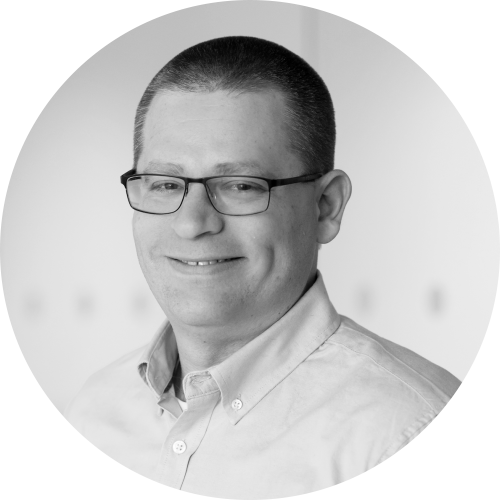
Robert Abel
Executive Vice President, Chief Computational Scientist, Schrödinger
Robert Abel, executive vice president, chief scientific officer, platform, joined Schrödinger in 2009, is responsible for advancing Schrödinger’s computational science platform. He also leads the computational chemistry team within Schrödinger’s drug discovery group. Robert obtained his Ph.D. from Columbia University, where he was awarded NSF and DHS research fellowships. His thesis work with Professor Richard Friesner involved developing methods to quantify the role of solvent in protein-ligand binding. Robert has co-authored multiple patent applications, and continues to publish extensively on a wide variety of topics in computational chemistry.
Rethinking the rules: Exploiting solvent exposed salt-bridge interactions with free energy perturbation simulations for the discovery of potent inhibitors of SOS1

DEC 2, 2025
Rethinking the rules: Exploiting solvent exposed salt-bridge interactions with free energy perturbation simulations for the discovery of potent inhibitors of SOS1
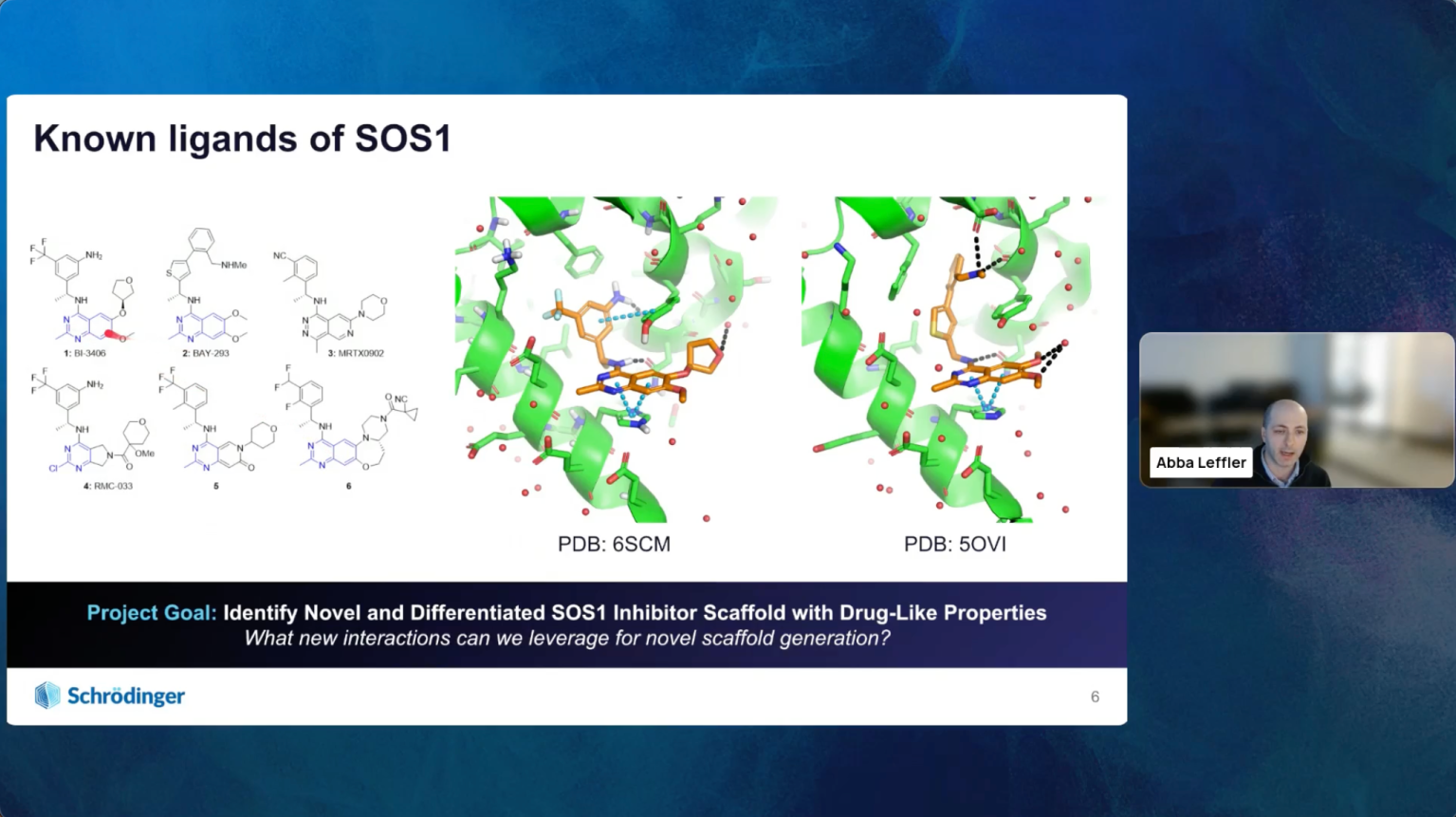
As chemists, we often search for ways to drive potency using traditional “rules” of medicinal chemistry, but what should be done when that doesn’t get a program to where it needs to be? In silico prediction techniques like free energy perturbation (FEP+) can now offer opportunities to explore new territory and quickly test what happens if we rethink the rules by exploring new regions of chemical space in unconventional ways. In our SOS1 program, the Schrödinger therapeutics team sought to exploit overlooked interactions to discover novel and potent chemical series. FEP+ gave us the ability to explore non-traditional regions of the binding pocket with low risk and high confidence, culminating in the IND-ready SOS1 inhibitor SGR-4174.
Guided by free energy perturbation (FEP+) simulations, we discovered that two acidic residues on the perimeter of a known small molecule binding site on SOS1, E906 and E909, constitute a potency handle that can improve inhibitor affinity by as much as 750-fold when targeted with basic groups to form salt bridges, despite being solvent exposed. Structure-activity relationship (SAR) and X-ray crystallographic studies demonstrate that this effect is attributable to the electrostatic interaction between the protein and ligand. This interaction could be repurposed to create new SOS1 inhibitors, documenting its general utility for core exploration.
Furthermore, recent examples in the literature suggest that this phenomenon may be applicable to a number of target classes. In this webinar, we will walk you through the SOS1 program, as well as our exploration of other examples where these salt-bridge interactions are influential.
Webinar Highlights:
- Learn new in silico strategies for exploring non-traditional regions of the binding pocket to drive potency that can be applied to your drug discovery programs
- Discover how a ‘predict-first’ strategy using FEP+ enabled the exploration of new design ideas, leading to the identification of influential solvent-exposed salt bridge interactions
- See how the Schrödinger team applied this new understanding to explore the effects of solvent-exposed salt bridges in other systems
- Ask questions to gain further insight from the speakers to apply to your work
Our Speaker
Abba Leffler
Senior Principal Scientist, Computational Chemistry, Therapeutics Group, Schrödinger
Abba E. Leffler, Ph.D. is a senior principal scientist in the therapeutics group at Schrödinger, where he currently focuses on small-molecule drug discovery. He received his AB in Chemistry with a Certificate in Applied Mathematics from Princeton University, after which he worked at D. E. Shaw Research before going on to obtain his PhD in Neuroscience from NYU School of Medicine. His research has been published in Science, The Journal of Neuroscience, The Journal of Chemical Information and Modeling, and Proceedings of the National Academy of Sciences among others. He is an inventor on multiple patents as well.
3rd Industrial Polymers & CPG Summit 2026

Summit
3rd Industrial Polymers & CPG Summit 2026
Date & Time - February 3rd-4th, 2026
Location - Heidelberg, Germany
We are pleased to invite you to the 3rd Industrial Polymers & CPG Summit
Register now for February 3-4, 2026, in the picturesque city of Heidelberg. Immerse yourself in the city of science and marvel at the majestic castle overlooking the Neckar River. Experience the unique charm of the NH Collection Heidelberg, a beautifully renovated old brewery transformed into a modern hotel, blending history with contemporary comfort.
Hosted by Covestro & Schrödinger
This event will bring together leaders in industrial polymers and consumer packaged goods to explore how digital chemistry can drive innovation in product research and development.
Companies like BASF, AbbVie, Covestro, Allnex, Reckitt, and Bayer have already confirmed their participation.
Agenda Highlights
As in the previous editions, we are preparing an interactive program including:
- Scientific presentations
- Panel discussions
- Opportunities for networking during breaks
- Evening social event…more to come!
Book your package now
FAQs
EVENT INFORMATION:
Who should come to the event?
This event is ideal for professionals and experts working in the fields of industrial polymers and consumer packaged goods (CPG) industries.
REGISTRATION:
What does the ticket include?
We are pleased to offer a specially negotiated conference package at the Hotel NH Collection Heidelberg, available when you register for the event (subject to availability). This comprehensive package includes accommodation, breakfast, lunch and dinner. It also grants access to the event sessions and networking opportunities. Alternatively, a Conference-Only option is available for attendees who do not require accommodation and breakfast. This ticket grants access to the event sessions and networking opportunities. It also includes refreshments, lunch, and the evening dinner.
Are attendee substitutions permitted?
Yes, attendee substitutions are permitted. If you are unable to attend the event, you can request a substitution by contacting us at marketing_europe@schrodinger.com. Please provide the name and contact information of the person who will attend as your substitute.
Whom should I contact if I have special needs?
If you have special needs, please inform us during the registration process. You can also contact us at marketing_europe@schrodinger.com to discuss your requirements.
PLAN YOUR VISIT:
The event will take place at the Hotel NH Collection Heidelberg, located in Bergheimer Str. 91, 69115 Heidelberg, Germany.
Public Transportation:
From Heidelberg Central Station – Approximate time: 15 min
Upon arrival at Heidelberg Central Station, the venue is easily accessible on foot. The walk covers a distance of approximately 900 metres and takes an estimated 10 minutes.
From Frankfurt Airport (FRA) – Approximate time: 80 minutes
From Frankfurt Airport (FRA), take the S8 from the Frankfurt Airport for the station “Frankfurt Hauptbahnhof”. Upon arrival, take a fast train (ICE, IC or EC) to get to central station “Heidelberg Hauptbahnhof”. The hotel is reachable in a walking distance from about 10 minutes.
From Stuttgart Airport (STR) – Approximate time: 2 hours
From Stuttgart Airport (STR), take a local train or metropolitan service to Stuttgart Main Station. Upon arrival, transfer to a fast train (ICE or IC) for the direct route to Heidelberg Central Station.
Taxi:
From Frankfurt Airport (FRA) – Approximate time: 50 minutes
The trip takes 50 minutes and costs around 175-200€.
From Mannheim Main Station (Hbf) – Approximate time: 30 minutes
From Mannheim Main Station (Hbf), taxi services can be secured directly opposite the station entrance. Travel time to the venue is approximately 30 minutes.
Aerobus shuttle:
There is the opportunity to take the Lufthansa Airport shuttle from the Frankfurt Airport to get to the hotel. You can view the schedule and make a booking here or contact the hotel directly.
More information are available on the hotel website.
Building a biotech: Enabling a successful digital drug discovery program with a connected platform
DEC 4, 2025
Building a biotech: Enabling a successful digital drug discovery program with a connected platform
Translating your scientific hypotheses into promising lead compounds is complex and time-sensitive. In order to design better compounds and make faster decisions, your team needs to be able to confidently move ideas through the design-make-test-analyze (DMTA) cycle – from building accurate 3D models to iterating together on new designs to analyzing in silico and experimental data in real time.
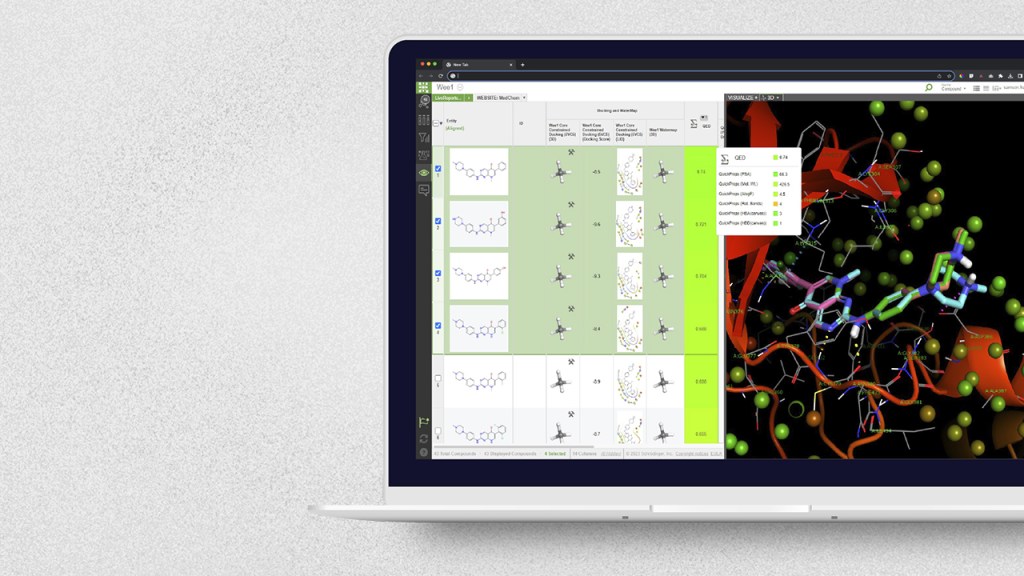
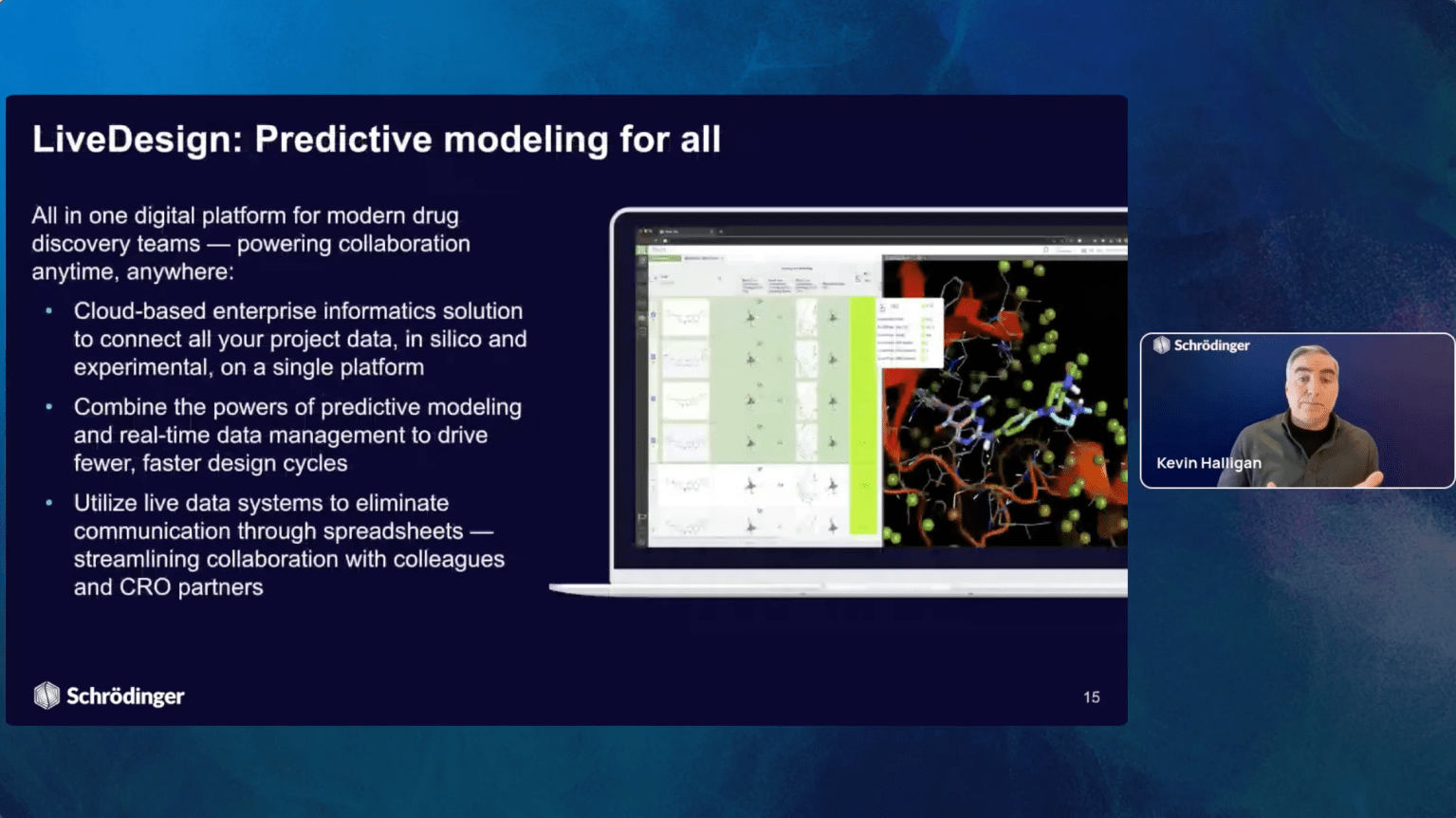
It’s time to transform your drug discovery process. In this exclusive webinar, we will go beyond theory to provide a live demonstration of how Schrödinger’s flagship platforms, Maestro and LiveDesign, work together to create a unified, collaborative discovery workflow made available to the entire project team, from modelers to medicinal chemists.
We will show you how to leverage the power of Maestro to construct robust predictive models with precise 3D structural data. Then, we’ll demonstrate the seamless deployment of these models directly into the LiveDesign environment. You’ll see firsthand how computational and medicinal chemists can use these models to quickly test new ideas, evaluate designs, and collaborate with their team in a single, integrated platform.
Join us to see how this powerful solution can accelerate your DMTA cycles and enable your teams – this isn’t about complex simulations, it’s about giving your team the tools they need to make better decisions, faster.
Webinar Highlights:
- Maximize the value of your data: We’ll show you how to create predictive models using Maestro and integrate these in silico results with your experimental data in LiveDesign for real-time, centralized analysis
- Empower collaboration across teams and CROs: We’ll demonstrate how the LiveDesign platform facilitates sharing and tracking of data for improved collaboration
- Get started: We’ll show you how Schrödinger’s world-class support team makes implementation and training easy to enable your success
- Ask questions: Schrödinger experts will be on hand to answer any questions you may have
Our Speakers
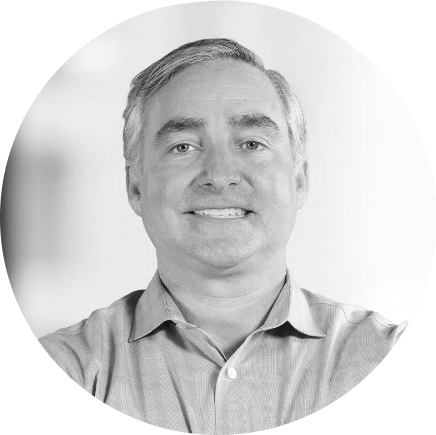
Kevin Halligan
Vice President, Schrödinger
Kevin Halligan joined Schrödinger in 2014, and currently serves as a Vice President, Sales, where he is responsible for the growth and management of the company’s life science software and drug discovery services business in the US and Canada. He completed his MS in Biological and Pharmaceutical Biotechnology at St. John’s University and holds a BA in Communication and Media Studies from Fordham University. He has extensive experience in scientific sales and business development and a proven track record of growing the Schrödinger Platform. Kevin’s tenure at Schrödinger has afforded him a comprehensive understanding of the preclinical drug discovery process and the opportunity to directly impact the computational drug discovery revolution.
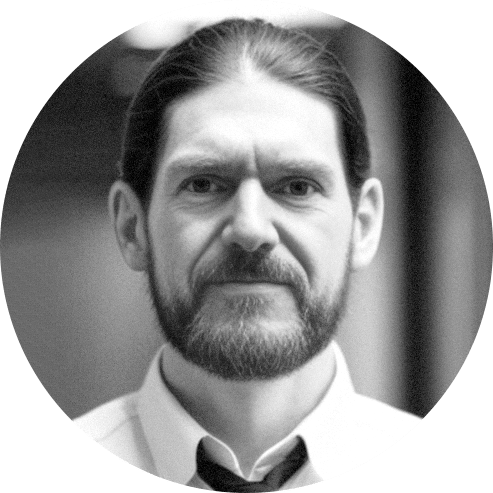
Paul Sanschagrin
Lead Strategic Deployment Manager, Schrödinger
Paul Sanschagrin joined Schrödinger in 2018 and serves as a Lead Strategic Deployment Manager supporting LiveDesign and the Schrodinger platform across diverse customers, including major global pharma customers and several biotech customers. Paul received his BS in Biochemistry and PhD in Biochemistry from Michigan State University with a postdoctoral position at Philipps-Universität Marburg, Germany. Paul’s background in computational chemistry and drug discovery alongside his past experience in technical roles including software support and systems administration enable him to bridge the gap between the scientists’ needs and the technical possibilities to effectively deliver the Schrödinger Platform.
Schrödinger Suite Workshop 2025

Hybrid Event
Schrödinger Suite Workshop 2025
Date & Time - November 26th-28th, 2025
Location - Espoo, Finland
We are pleased to invite you to the Schrödinger Suite Workshop 2025 on November 26th – 27th. This year’s Schrödinger Workshop will be composed of a set of “mini-workshops” to better cover the diverse interests of CSC’s user base.
After a general introduction to Schrödinger Maestro for all, including both life science and materials science suites, the participants will group up based on their areas of interest and level of experience to work in mini-workshops on life science topics such as:
- Virtual Screening
- Computational Target Analysis & system preparation
- Computational Structure Prediction
- Molecular Dynamics applications
- Lead optimization and Medicinal Chemistry design
- Working with Immunotherapeutics
On the materials science side we’ll focus on pharmaceutical formulation, consumer packaged goods, and general polymer/soft matter applications with topics like:
- Building and equilibrating complex organic systems
- Properties of solid amorphous materials
- Properties of structured liquids on the atomistic level
- Building coarse-grained systems and automated parameter fitting
- Applications of coarse-grained simulations
Experts from Schrödinger Inc. will be available to help out, answer questions, share insights and make case-specific recommendations for participants interested in topics not covered by the selection above.
The aim is that everyone has a chance to try 2–3 mini-workshops per day. At the end of each day there will be one hour reserved for working on your own data and systems and start applying what you’ve learned.
This “hackathon”-like workshop set-up will give plenty of opportunities for participants to work together in the room throughout the event, hopefully sparking conversations and allowing you to network. On-site participation is thus heavily encouraged. Lunches will be included.
Speakers
Alice Panzeri, Account Manager, Schrödinger
Mila Krämer, Senior Scientist II, Schrödinger
 09:00
09:00 Registration at the reception (on-site participants)
09:30 Workshop Day 1 start
12:00 Lunch
13:00 Workshop Day 1 continued
15:00 Closing
09:30 Workshop Day 2 start
12:00 Lunch
13:00 Workshop Day 2 continued
15:00 Closing & goodbyes
Preparation
All material for the workshop will be provided on the day. It is recommended that beginners watch the “Getting going with Maestro/MS Maestro” video series to familiarize themselves with the interfaces of the Schrödinger suite for life science and material science, respectively.
Also note that CSC has a limited number of free-of-charge seats for introductory-level Schrödinger Online Certification courses available upon application. Apply for a course coupon here.
Remote participants will need to install Schrödinger Maestro locally themselves. The same applies if you intend to use your own laptop on-site instead of provided workstations. If you’re an academic user affiliated with a Finnish higher-education institute, see our Maestro page in Docs CSC for installation instructions, as well as general details on using Maestro in CSC’s computing environment.
AABC 2025

Conference
AABC 2025
Date & Time - December 8th-11th, 2025
Location - Las Vegas, Nevada
Schrödinger is excited to be participating in the AABC 2025 conference taking place on December 8th – 11th in Las Vegas, Nevada. Stop by booth #314 to speak with Schrödinger scientists.