DFT calculations in materials science courses

JUN 22, 2022

DFT calculations in materials science courses

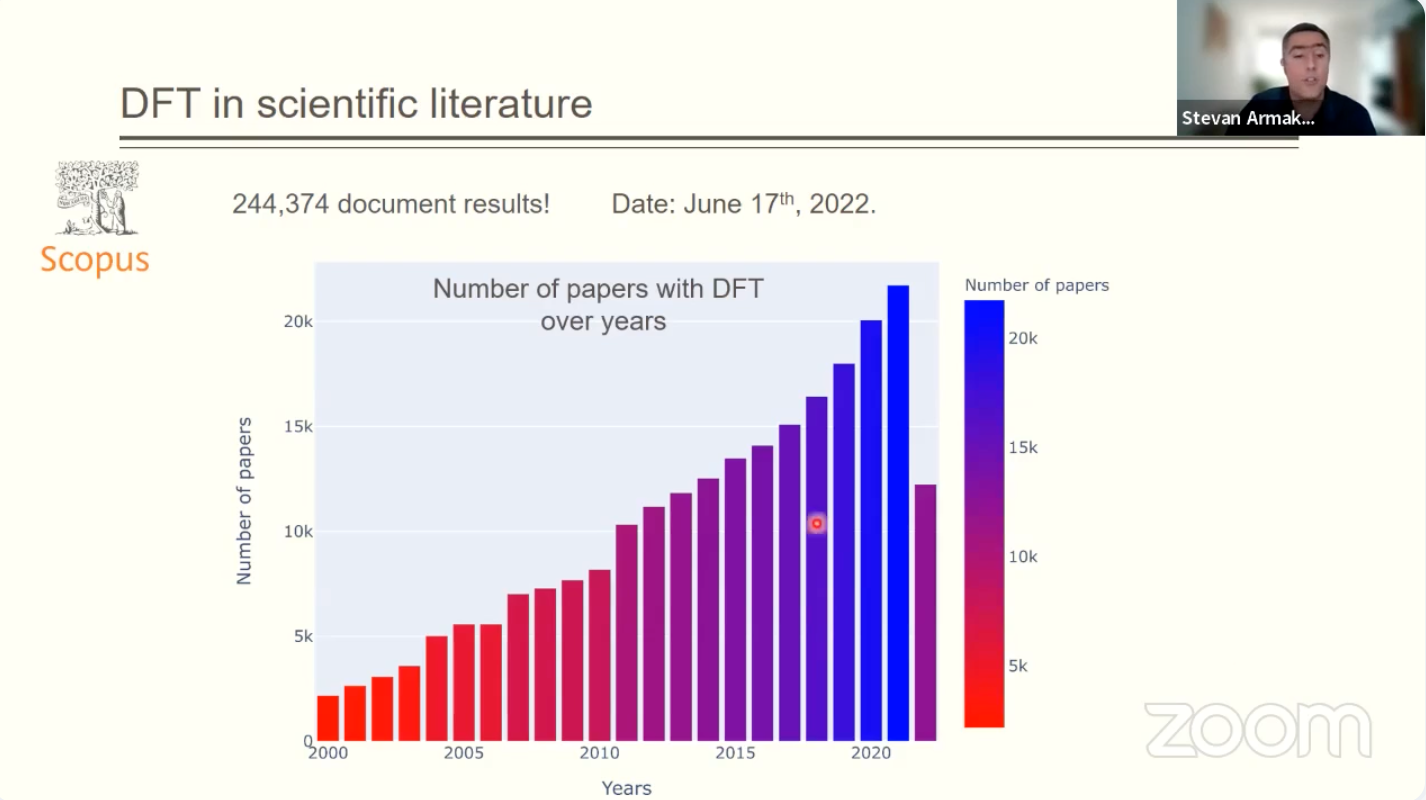
The development of computational methods for studying molecules and periodic structures has strongly influenced materials science. Over the years, computational studies have become the first step in developing novel materials. Many computational methods have become available, but the density functional theory (DFT) stood out due to the best cost-efficiency ratio.

Understanding the properties of both molecules and periodic structures is equally important in materials science, and the corresponding DFT methods have been developed. For convenience, it is imperative for users to perform both molecular and periodic DFT calculations in a single modeling package. Since the incorporation of the Quantum Espresso program, Schrödinger Materials Science Suite (SMSS) has become a unique modeling package covering both molecular and periodic DFT calculations. This move expanded the possibilities for Schrödinger users to investigate the periodic structures and allowed them to use SMSS to teach the fundamentals of computational condensed matter physics and address any relevant topic in materials science.

In this lecture it will be demonstrated how molecular and periodic DFT calculations available in SMSS can be used to teach selected concepts in materials science. The simple and intuitive graphical user interface of SMSS allows students to quickly adopt the fundamentals of materials modeling and the opportunity to engage in research activities with their professors. The experience from the recent training using the Teaching with Schrödinger platform at the University of Novi Sad will also be shared.

Our Speaker

Stevan Armakovic

University of Novi Sad

Stevan is a physicist with expertise in computational materials and molecular modeling. He applies atomistic calculations to understand structural, reactive, transport and optoelectronic properties of various molecules, (in)organic (nano)materials, ionic liquids, polymers, etc. He has a demonstrated history of applying a vast number of computational tools for atomistic calculations. He is currently affiliated with the Department of Physics, Faculty of Sciences of the University of Novi Sad, where he teaches various physics courses. Stevan is also a high-school professor, teaching “Atomic and molecular physics” and “Modeling in physics” to students with exceptional abilities in physics at the “Jovan Jovanović Zmaj” high school. Stevan has published more than 120 papers in journals with impact factors, and he regularly involves high school and faculty students in his research activities. He is a verified peer reviewer at Publons, with more than 300 pre-publication reviews for journals with impact factors. He serves as a Board President of an NGO dedicated to the international development of academic and scientific collaboration (www.aidasco.org).

Modernizing High School Science Curriculum Panel

JUN 22, 2022

Modernizing High School Science Curriculum Panel

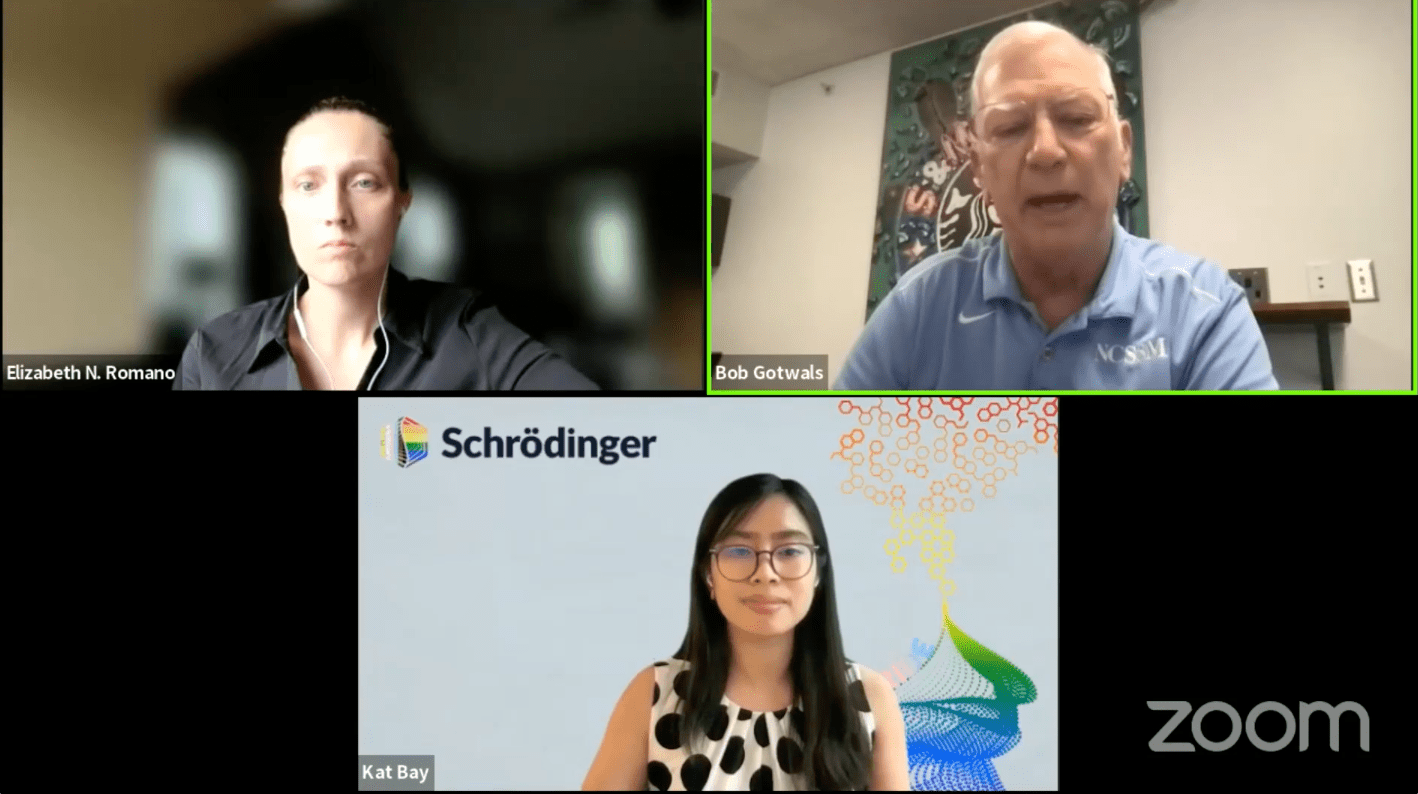
Educators are increasingly encouraged to update the learning experiences in their classrooms. This includes more attention to STEM learning, such as promoting the integration of technology and science instruction into everyday classroom experiences, and implementing pedagogical frameworks like open-ended inquiry learning and project-based learning that often mirror the work real professionals engage in. Join two high school STEM educators, Elizabeth Romano, Ph.D. and Robert Gotwals for a conversation on how modernizing high school curriculum with educational technology can help explain difficult concepts with digital learning, contribute to the transfer of scientific understandings, and increase students’ overall sense of identity in science.

Our Speakers

Elizabeth Romano

The Governor’s School at Innovation Park

Dr. Elizabeth Romano is a science educator at the Governor’s School at Innovation Park. She received her PhD in Environmental Science and Policy from George Mason University and has developed a rigorous research program at the high school level that we will learn more about in the panel. Robert Gotwals from the North Carolina School of Science and Math. He has developed the largest program in the computational sciences at the high school level in the country and provides students with opportunities to study a wide variety of scientific topics from a computational approach.

Robert Gotwals

North Carolina School of Science and Mathematics

Virtual Chemistry: Revolutionizing Pharmacy Learning

JUN 22, 2022

Virtual Chemistry: Revolutionizing Pharmacy Learning

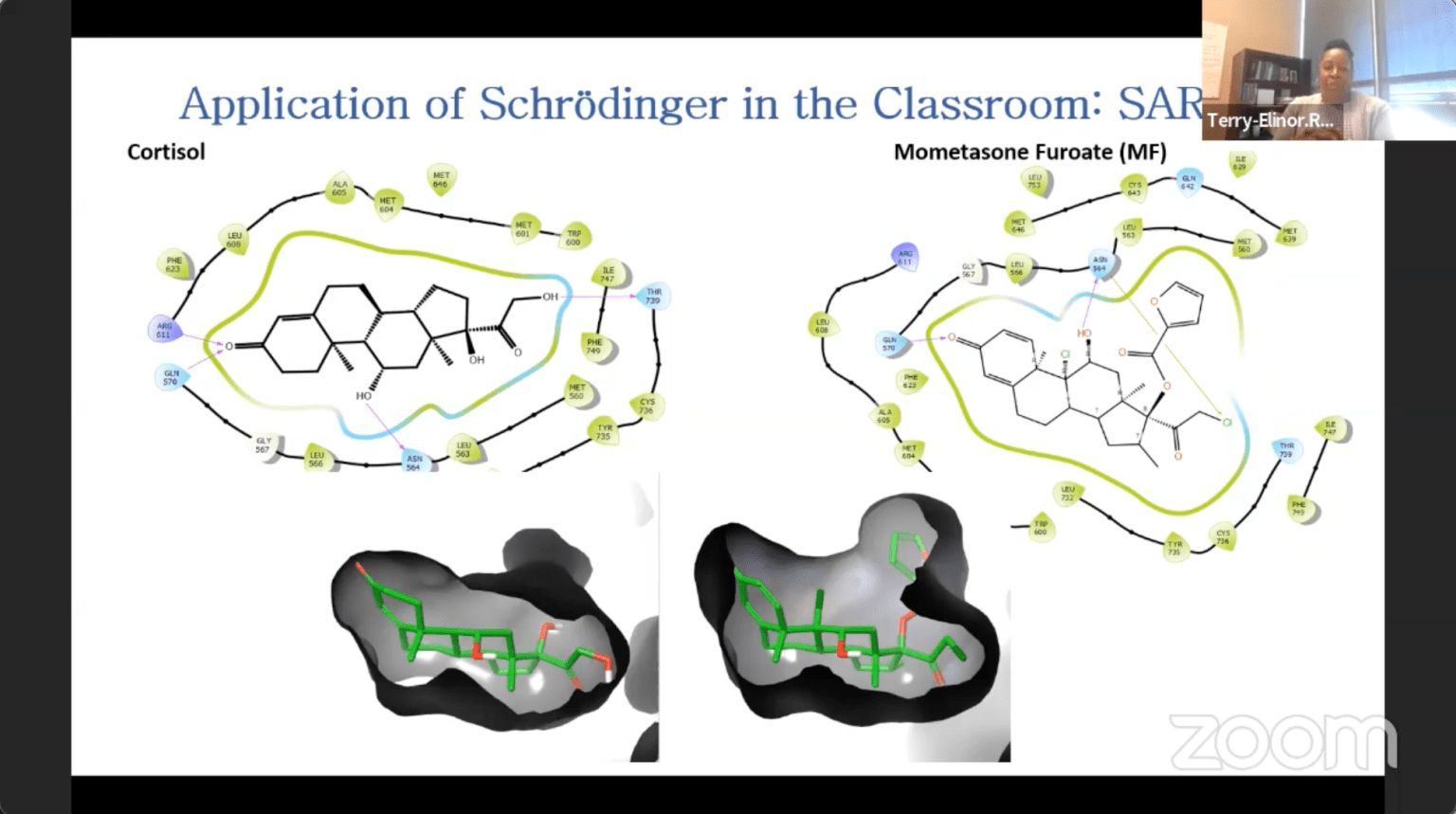
One of the most dreaded courses, that is essential in pharmacy education, is Medicinal Chemistry. The course is difficult in part due to the abstract nature of science. Concepts such as protein-drug interaction which informs the mechanism of action, rational drug design, and the pharmacokinetics of a drug can be challenging topics for students to grasp and in turn applied to make clinical decisions. Within our Pharmacology and Medicinal Chemistry course series, we have introduced the Schrödinger Small Molecule Drug Discovery platform to the classroom as both a teaching aid and a virtual learning and exploration tool for pharmacy students. Its application in the classroom provides a platform for experiential and exploratory learning. It fosters the active learning pedagogy, which encourages collaboration, reinforces important scientific concepts, reduces ambiguity, promotes critical thinking, and motivates students to learn. This presentation will highlight ways in which we use the Schrödinger Computational Software to enhance the teaching and learning of concepts taught in Pharmacology & Medicinal Chemistry. In addition, we will describe how students apply what they learn through a drug design project and poster presentation that is held at the end of the course series.

Our Speaker

Terry-Elinor Reid

Concordia University Wisconsin School of Pharmacy

Dr. Terry-Elinor Reid is an Assistant Professor and Medicinal-Computational Chemist at the Concordia University Wisconsin School of Pharmacy. She obtained a bachelor’s of Science degree in Chemical engineering in 2005 from Howard University, and a Ph.D. in Pharmaceutical Sciences in 2015 also from Howard University in Washington DC. Dr. Reid held roles in the biotech industry, healthcare, and academia where she still maintains collaborations with industry partners. Dr. Reid actively maintains multiple research programs involving the discovery and design of HIV latency-reversing agents, anti-cancer agents, and antimicrobial agents. If you are interested in learning about Dr. Reid’s research endeavors, you can find her published work in journals such as the Journal of Chemical Information, Modeling and Current Topics in Medicinal Chemistry, just to name a few. Dr. Reid has found a way to incorporate computational tools like Schrodinger into her teaching to allow for a practical experience that is impossible to gain in the lab given the limited teaching hours as a result of the rigorous nature of the Pharmacy program.

5th Summer School on Cheminformatics 2025

Conference

5th Summer School on Cheminformatics 2025

CalendarDate & Time
  • August 25th-29th, 2025
LocationLocation
  • Hamburg, Germany

Schrödinger is excited to be participating in the 5th Summer School on Cheminformatics 2025 conference taking place on August 25th – 29th in Hamburg, Germany.

EFMC-ASMC 2025

Conference

EFMC-ASMC 2025

CalendarDate & Time
  • August 31st – September 4th, 2025
LocationLocation
  • Porto, Portugal

Schrödinger is excited to be participating in the EFMC-ASMC 2025 conference taking place on August 31st – September 4th in Porto, Portugal. Join us for a poster presentation by David Papin, Principal Scientist II at Schrödinger, titled “In silico enabled discovery of KAI-11101, a preclinical DLK inhibitor for the treatment of neurodegenerative disease and neuronal injury.” Stop by booth 11 to speak with Schrödinger scientists.

icon time SEPT 2 | 13:30 – 14:30
icon location Alfândega Porto Congress Centre
In silico enabled discovery of KAI-11101, a preclinical DLK inhibitor for the treatment of neurodegenerative disease and neuronal injury

Speaker:
David Papin, Principal Scientist II, Schrödinger

XXIX National Meeting on Medicinal Chemistry

Conference

XXIX National Meeting on Medicinal Chemistry

CalendarDate & Time
  • September 14th-17th, 2025
LocationLocation
  • Parma, Italy

Schrödinger is excited to be participating in the XXIX National Meeting on Medicinal Chemistry conference taking place on September 14th – 17th in Parma, Italy. Join us for a presentation by Giulia D’Arrigo, Senior Scientis I at Schrödinger, titled “Accelerating Drug Discovery through Integrated Physics-Based and Machine Learning Approaches using Schrödinger’s Computational Platform.”

Speaker:

Giulia D’Arrigo, Senior Scientis I, Schrödinger

Abstract:

Schrödinger’s computational platform accelerates molecular design and drug discovery by integrating physics-based methods and machine learning to address the complexities of multi-parameter optimization using a comprehensive suite of in silico tools and workflows spamming the entire research and development pipeline. Here, real-world applications of these technologies will be illustrated across different case studies from the Schrödinger Therapeutics Group (STG).

Ultra-large scale chemical space exploration using AutoDesigner [1,2] allows the generation and efficient prioritization of potentially billions of novel structures to systematically explore novel chemical scaffolds or R-groups that meet project requirements. Combining machine learning with rigorous free energy calculations using FEP+ [3,4] in an iterative fashion (Active Learning FEP+), further allows to rapidly score the ultra-large libraries generated by AutoDesigner to identify designs with optimal potency and selectivity profile. Examples of this automated large scale approach are the identification, after 7 months of project initiation, of novel WEE1 inhibitors with >10,000X selectivity over PLK [1] as well as the discovery of four novel scaffolds of EFGR inhibitors in only six days [5].

A new, in-silico approach for addressing ADME/T liabilities and enabling precise control over key endpoints is presented. This approach leverages state of the art computational tools such as induced-fit docking (IFD-MD) [6,7], FEP+, and solvation energy calculations with E-sol [8], in order to enable a rational approach to ADME. Applications of these workflows to hERG inhibition, CYP rate of metabolism, and brain exposure and efflux are presented. . A prime example is the in silico-enabled discovery of KAI-11101 [9], a DLK inhibitor for neurodegenerative disease treatment. Here, accurate ADMET profiling and large scale on-target and off-target FEP+ were fundamental to elect KAI-11101 as a brain penetrant, potent and highly selective kinase inhibitor preclinical candidate.

Altogether, these examples demonstrate the impact of Schrödinger’s computational platform in facilitating and accelerating drug discovery programs.

References

[1] Bos et al. J Chem Inf Model. 2024 Oct 14;64(19):7513-7524.
[2] Bos et al. J. Chem. Inf. Model. 2022, 62, 8, 1905–1915.
[3] Wang et al.  J. Am. Chem. Soc., 2015, 137(7), 2695–2703.
[4] Ross et al. Commun. Chem., 2023, 6(222).
[5] Igawa et al. J Med Chem. 2024 Dec 26;67(24):21811-21840.
[6] Miller EB, et al. Cell, 2024, 187, 3, 521-525.
[7] Miller et al. J. Chem. Theory Comput. 2021, 17, 4, 2630–2639.
[8] Lawrenz et al. J Chem Inf Model. 2023 Jun 26;63(12):3786-3798.
[9]Lagiakos et al. J Med Chem. 2025 Feb 13;68(3):2720-2741.

Surface Chemistry Workshop 2025

Workshop

Surface Chemistry Workshop 2025

CalendarDate & Time
  • September 18th, 2025
LocationLocation
  • Mannheim, Germany
Register

Using Schrödinger’s Materials Science Suite for atomic-scale simulations of solid surfaces for thin film deposition, catalysis, and batteries

Schrödinger invites you to a one-day in-person workshop in Mannheim, Germany to gain hands-on experience with Schrödinger software for modelling surfaces for applications such as atomic layer deposition, catalysis, battery design, and polymer property prediction.

Participants will get practical experience and in-person guidance in using our Materials Science Suite and the tools involved in building structures, from single molecules to complex disordered systems for use in quantum mechanics and molecular dynamics simulations. Leveraging automated property prediction workflows as well as analysis tools will play an important role.

Examples of how molecular-scale simulations can inform surface level reactions and interactions will be included throughout the day.

When:

Thursday 18th September 2025

Where:

Schrödinger GmbH
Glücksteinallee 25
68163 Mannheim
Germany
(5 minutes walk from Mannheim Hauptbahnhof)

Please see our FAQs page for information regarding what to bring, getting to the venue, and accessibility.

If you need further information please contact Patrick Heasman: patrick.heasman@schrodinger.com

If you are interested but unable to attend in person, please reach out to the contact above.

Registration:

Registration is free and includes lunch and refreshments.

Participants must bring their own laptop to access the software, and an external mouse is recommended. We will be utilising our Virtual Computer, which is accessed via web browser – No software installation is required prior to the session.

Places are limited, so please ensure to register as soon as possible.

Registration will close at latest on Friday 12th September 2025

The workshop is being held in-person. We may change this to allow remote attendance, but this is not guaranteed.

Who should attend:

Speakers and demonstrators:

  • Dr Simon Elliott
  • Dr Leonie Koch
  • Dr Patrick Heasman

Agenda

FAQs

  • Where is the venue and how can I get there?

The workshop is being help at our offices in Mannheim, Germany. The building is accessible via car, and the train station is within a 5 minute walk.

  • What is included with my registration?

Registration is completely free to attend the workshop. We will also be providing food and refreshments throughout the day.

  • Can I join the session virtually / remotely?

As we want to give the attendees help and guidance during the workshop we currently have no intention of running this workshop online. Please reach out if you are interested by are unable to travel to the event location.

  • What do I need to bring?

A laptop is required for this workshop. We will not be providing any on the day, so please ensure that you bring one. We also recommend that you bring a personal laptop to avoid any firewall restrictions.

An external mouse is not required, but we do recommend that you bring one as our software makes full use of the 3 buttons.

  • Do I need to download and install the software prior to the workshop?

No. We will be utilising the Schrödinger Virtual Computer for all hands-on sessions. A suitable web browser is required for accessing this (Chrome, Edge, Firefox).

  • How long is the workshop?

The workshop is an all day event to give you the best opportunity to learn about our tools and benefit from the practical sessions throughout. We will start at 10:00 am and finish at approximately 4:00 pm.

For accommodation and travel, we ask that attendees make their own arrangements. There are several hotels within walking distance to the venue, and the train station is situated close by.

Please contact Patrick Heasman (patrick.heasman@schrodinger.com) for any additional information about the event and the location.

Travel:

  • Via plane / train:
    Frankfurt / Frankfurt Airport – A direct train to Mannheim takes approximately 45 minutes.
  • Via car:
    There are several car parks located on Glücksteinallee.

Hotel recommendations:

  • Holiday Inn Mannheim City
  • LanzCarré Hotel Mannheim
  • Premier Inn Mannheim City Centre hotel
  • Hilton Garden Inn Mannheim

Advancing sustainable food processing through integrated experimental and molecular simulation approaches

Advancing sustainable food processing through integrated experimental and molecular simulation approaches

Prolamin zein and its formulations were utilized in collaborative studies between Schrödinger and University of Massachusetts (UMass) to comprehensively investigate rheological and structural properties, extrudability, textural attributes, and the underlying molecular mechanisms.

Summary

  • Demonstrated the feasibility of creating meat alternatives with improved texture and reduced energy demands at up to 50% lower temperatures, opening avenues for the inclusion of heatsensitive ingredients
  • Gained visual and deeper insights into ingredient interactions, molecular mechanisms behind structuring, textures, and extrudability through molecular simulations, accelerating the optimization of food formulations
  • Proved the efficiency and effectiveness of integrating molecular simulations into experimental approaches

Approach

Scientists from Schrödinger and UMass carried out comprehensive studies experimentally and computationally to investigate the key properties and extrusion performance of zein-formulated meat alternatives. Experiments were done by scientists at UMass. Molecular and coarse-grained (CG) simulations with in-house developed CG Martini force field parameters were carried out using the Schrödinger Materials Science Suite, Desmond molecular dynamics engine, and OPLS4 force field.

  1. Explored the texture-forming properties of zein using a combination of rheological analysis and molecular dynamics simulations to understand how zein behaves under different temperature and pH conditions
  2. Three proteins were chosen to mix with zein (dry matter content of 20%) and subsequently heated to understand the gelling behavior of the composite at pH 3 to 6
  3. Screened three different types of hydrocolloids, which have previously been employed in meat analogs, to identify the optimum hydrocolloid mixture
  4. Studied the effect of the presence of HA-gellan gum and starch ingredients (i.e. amylose) on extrusion process parameters and textural properties
  5. Carried out coarse-grained molecular dynamics simulation at elevated temperatures and ideal pH to study the structures and morphologies at the molecular level and to understand the driving force for ingredient interplays


Outlook

Scientists demonstrated an efficient combined approach to develop more sustainable food formulations.1,2 By selecting the appropriate ingredients that provide tailored colloidal interactions (specifically hydrophobic ones in this instance), processing parameters can be significantly adjusted and improved (e.g., lower T) while obtaining similar textural attributes. Future research should prioritize uncovering detailed mechanisms by which hydrophobic proteins can be tailored to form anisotropic structures at low temperatures, as well as exploring new sources for these proteins.

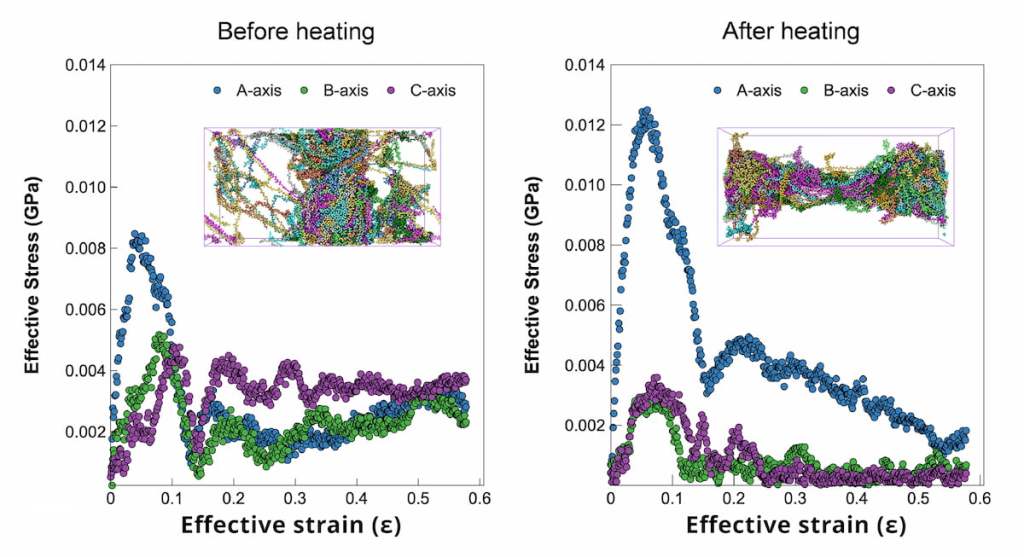
Tensile pulling simulation at T = 300 K for native zein and after heat treatment. Structural visualization after the completed pulling test (water molecules are not visualized).

References

  1. Molecular insights into the structure forming properties of zein and a rheological comparison with hordein

    Devnani B, et al. Future Foods, 2024, 10, 100503.

  2. Hydrophobic plant protein-polysaccharide composite enables high moisture extrusion of anisotropic textures at low temperature

    Tan NK, et al. Food Hydrocolloids, 2026, 170, 111711.

Display Innovation China 2025

Conference

Display Innovation China

CalendarDate & Time
  • August 7th-9th, 2025
LocationLocation
  • Shanghai, China

Schrödinger is excited to be participating in the Display Innovation China (DIC) conference taking place on August 7th – 9th in Shanghai, China. Stop by our booth 1D60 to speak with Schrödinger scientists.

Advancing machine learning force fields for materials science applications

AUG 6, 2025

Advancing machine learning force fields for materials science applications

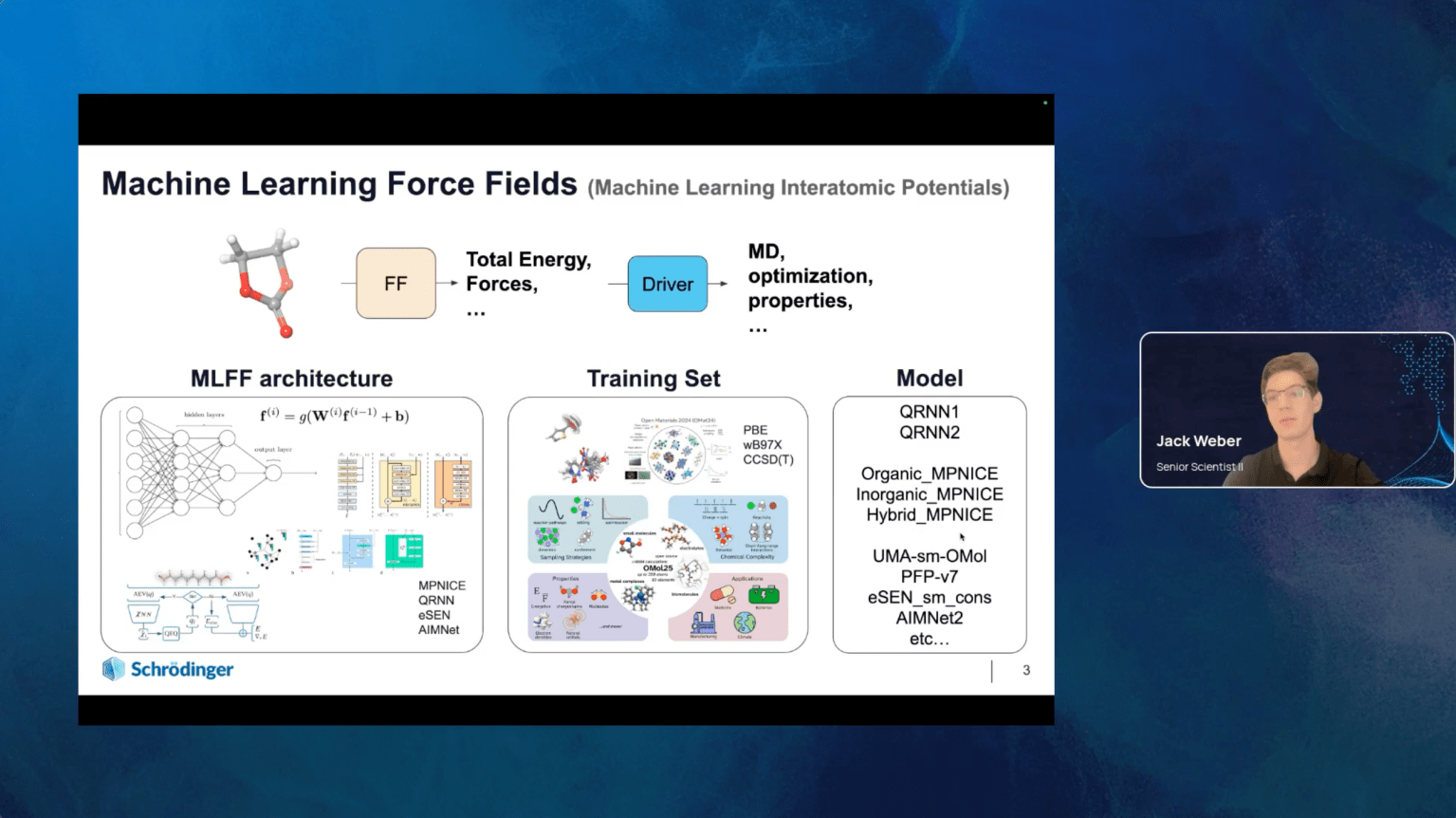
Machine learning force fields (MLFFs), also referred to as machine learning interatomic potentials, have emerged as a critical tool for the cost-efficient atomistic simulations of diverse chemical systems, often achieving density functional theory (DFT) accuracy at a fraction of the cost. Recent advances in message passing networks have removed the drawback of previous MLFFs that were limited by the number of unique atomic elements they could model. Furthermore, inclusion of atomic charges and electrostatics through charge equilibration approaches have enabled accurate representations of multiple charge states, ionic systems, and electronic response properties, while simultaneously improving accuracy using explicit long-range interactions.

In this webinar, we will introduce Schrödinger’s state-of-the-art MLFF architecture, called Message Passing Network with Iterative Charge Equilibration (MPNICE), which incorporates explicit electrostatics for accurate charge representations. We present a family of pre-trained models trained on materials covering the entire periodic table (89 elements). MPNICE prioritizes efficient throughput, enabling atomistic simulations at length and time scales that were previously inaccessible without sacrificing accuracy. We will outline available tools in the Schrödinger suite that incorporate MLFFs to enable larger and more complex simulations for materials design, providing industry relevant examples throughout.

Highlights:

  • Overview of MPNICE – a message passing MLFF architecture that includes atomic partial charges and long-range interactions, while maintaining speeds an order of magnitude faster than comparable models
  • Highlights of recent applications of MPNICE, including general organic, inorganic, and hybrid (organic and inorganic) models to address industry relevant needs

Our Speaker

Jack Weber

Senior Scientist, Schrödinger

Jack Weber is a Senior Scientist at Schrödinger, where he develops machine learning force fields (MLFFs) for applications in drug discovery and materials science. Jack received his PhD in Chemical Physics in 2023 from Columbia University, advised by Professors Richard Friesner and David Reichman. In his doctoral research, he used advanced computational methods to investigate fundamental problems in chemistry and materials science, including improving ab-initio methods in electronic structure to treat strongly correlated systems.