Pharma Crystallization Summit 2024

Conference

Pharma Crystallization Summit 2024

CalendarDate & Time
  • September 26th-27th, 2024
LocationLocation
  • Princeton, New Jersey

Schrödinger is excited to be attending the Pharma Crystallization Summit conference taking place on September 26th – 27th in Princeton, New Jersey. Stop by our table to speak with Schrödinger scientists.

2024 AIChE Annual Meeting

Conference

2024 AIChE Annual Meeting

CalendarDate & Time
  • October 27th-31st, 2024
LocationLocation
  • San Diego, California

Schrödinger is excited to be participating in the 2024 AIChE Annual Meeting taking place on October 27th – 31st in San Diego, California. Join us for presentations by Schrödinger scientists. Stop by booth #521 to speak with us.

icon time OCT 28 | 8:00AM – 8:30AM
icon location Hilton San Diego Bayfront Hotel, Sapphire Ballroom E
Accelerating Polymer Design with Targeted Properties Using Machine Learning and Physics-Based Models

Speaker:
Alex Chew, Principal Scientist I, Schrödinger

Abstract:
Designing new, industrially relevant polymers is challenging because of the need to optimize multiple materials’ properties simultaneously, which is expensive and often infeasible using traditional trial-and-error approaches. One possible solution to identifying promising polymeric materials is to employ a combination of machine learning and physics-based tools to screen the polymer design space and provide suggestions for new polymers that meet the criteria for an industrial application. In this work, we demonstrate a workflow that utilizes machine learning and molecular modeling approaches to design new polymers (specifically, polycarbonates) that satisfy five polymer properties, including the glass transition temperature, optical properties, and mechanical properties. Using a relatively modest dataset of fewer than 200 points, we developed quantitative structure-property relationship (QSPR) models to accurately predict the experimental polymer properties given the homo- or co-polymer structures and composition as input. Leveraging these computationally efficient QSPR models, we then screened over ~10,000 polymer structures that were generated through R-group enumeration tools. We used these QSPR predictions to create multi-parameter optimization scores to help down-select the large polymer space to ~10 promising candidates. We validated the predicted properties of the top polymer candidates using classical molecular dynamics simulations and density functional theory, which revealed reliable correlation between physics-based and QSPR approaches. Finally, we validated the computational predictions against experiments, which showed good agreement with QSPR and physics-based models. Our workflow demonstrates the usefulness of combining data-driven and physics-based approaches in designing new polymers given a small dataset, which is broadly useful for scientists interested in leveraging computer-aided strategies to innovate new materials while mitigating the need for extensive trial-and-error experimentation.

icon time OCT 29 | 4:00PM – 4:30PM
icon location Hilton San Diego Bayfront Hotel, Aqua 300 (AB)
Capturing the unmeasurable: How atomistic simulations are bringing understanding to interfacial phenomena

Speaker:
Andrea Browning, Director, Schrödinger

Abstract:
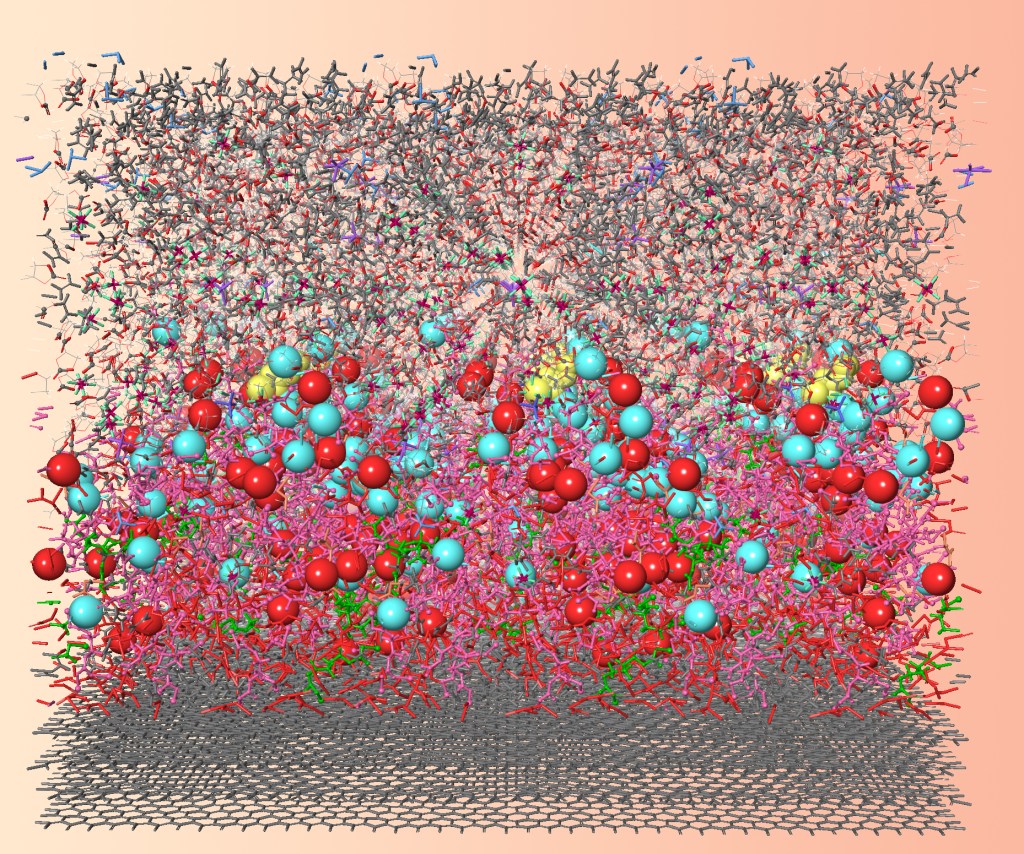
Most materials development at some point must consider an interface. Between adhesives and component parts, between matrix and filler in composite materials, and between atomic layers during assembly, the interface impacts the overall performance of the product. But these surfaces can be difficult to probe experimentally. Atomistic level modeling and simulation techniques such as quantum mechanics and molecular dynamics allows a window into the specific interactions that accumulate into the observed interfacial behavior. As simulation techniques and compute power has grown, we are now better able to explore how interfaces behave. However, there are still challenges remaining such as accounting for reactions at complex, multicomponent interfaces. From battery solid electrolyte interphases to dissolving polymers at tablet interfaces, simulations must capture discrete interactions that are important to the interface in order to be useful. This talk will review examples from various industries in how simulation of interfaces has developed and the role of technology exploration in Dr. Browning’s career evolution.

Schrödinger デジタル創薬セミナー: Into the Clinic~計算化学がもたらす創薬プロセスの変貌~第13回

OCT 17, 2024

Schrödinger デジタル創薬セミナー 13:
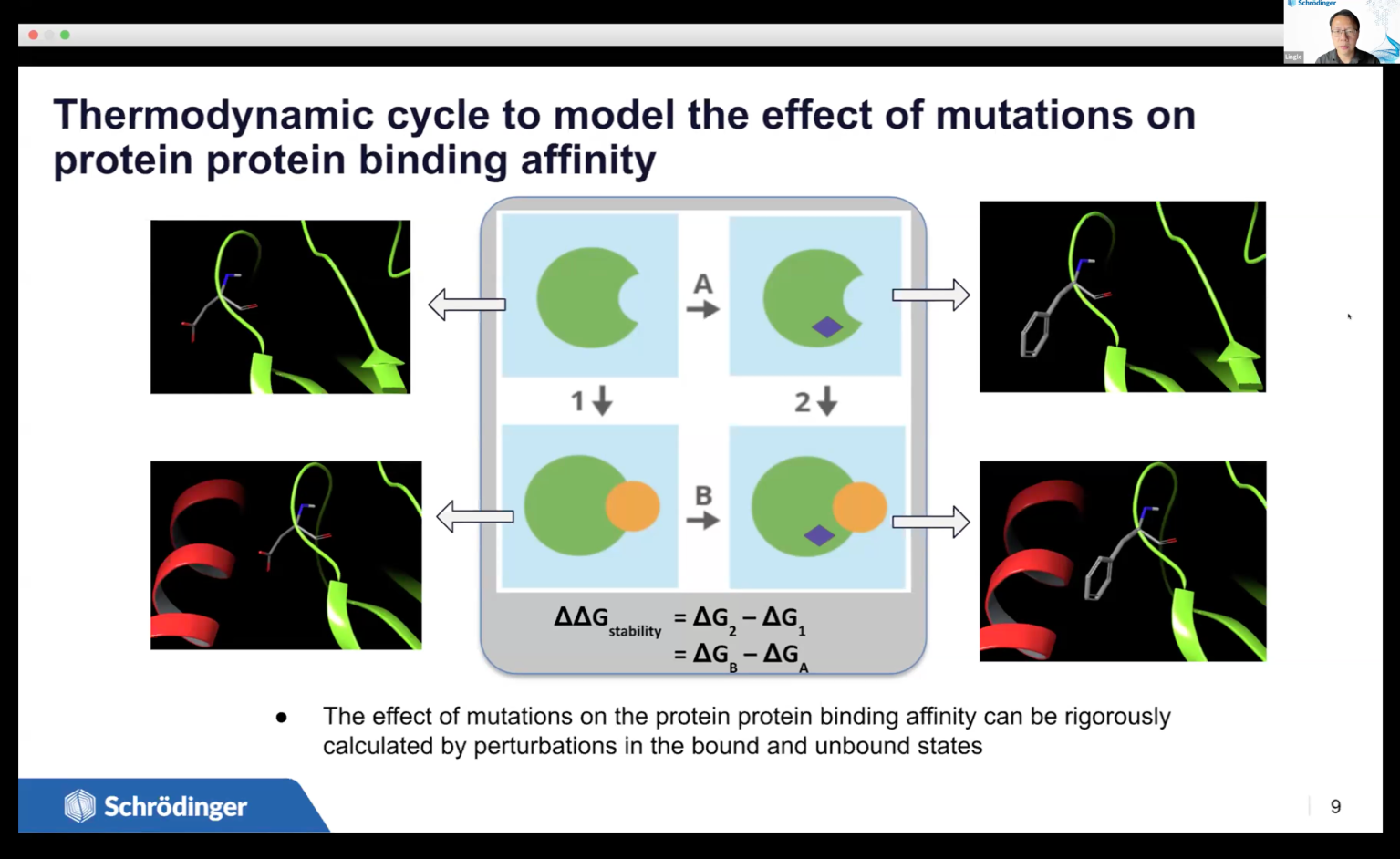
Broadly Impacting Biologics Discovery via Physics-Based Modeling: Antibody Affinity, pH-Sensing and More

バイオ医薬品の市場シェアはここ数十年で急速に拡大しています。バイオ医薬品の発見と開発には多くの課題があり、それらは物理ベースのモデリングによって解決できる可能性があります。

本セミナーでは、熱安定性、タンパク質-タンパク質結合親和性、pH感知プロファイルなど、多くの重要な物理的エンドポイントを正確にモデル化することで、バイオ医薬品の発見と最適化に幅広い影響を与えることができる、いくつかの最新技術を紹介します。また、従来のプロテインFEP+と比較して、精度を大きく損なうことなく約15倍の速度向上を実現するラムダダイナミクス強化プロテインFEP+についても説明します。計算に基づく抗体最適化の実例もご紹介します。

Our Speakers

Lingle Wang

Senior Vice President, Scientific Development, Schrödinger

Dan Cannon

Principal Scientist, Schrödinger

Computational Medicinal Chemistry School

Conference

Computational Medicinal Chemistry School

CalendarDate & Time
  • October 28th-30th, 2024
LocationLocation
  • Cambridge, Massachusetts

Schrödinger is excited to be a Founding Sponsor at the Computational Medicinal Chemistry School conference taking place on October 28th – 30th in Cambridge, Massachusetts. Join us for a presentation by Andreas Verras, Director at Schrödinger, titled “Beyond Potency: How Modeling can contribute to ADMET with structure based, ligand property, and machine learning approaches.”

icon time OCT 28 | 2:15 – 3:00 PM
Beyond Potency: How Modeling can contribute to ADMET with structure based, ligand property, and machine learning approaches.

Speaker:
Andreas Verras, Director, Schrödinger

Abstract:
Potency optimization is a general first step in drug discovery, but can be quickly overshadowed by other problems that make in vivo studies impossible. Optimizing absorption, metabolism, efflux and off-target toxicities is necessary to generate molecules that can interrogate your mechanism in an animal and ultimately go to the clinic. I will explore modeling approaches to understanding pharmacokinetic data; improving efflux, absorption, and eflux; and modeling some off target data. A combination of structure based, ligand based, and machine learning approaches is presented with some opinion on which problems they are most suited.

Harnessing Molecular Modeling to transform innovation in Polymeric Materials and Consumer Packaged Goods

SEP 18, 2024

Harnessing Molecular Modeling to transform innovation in Polymeric Materials and Consumer Packaged Goods

Speaker:

Sriram Krishnamurthy, Senior Scientist I, Schrödinger

Abstract:

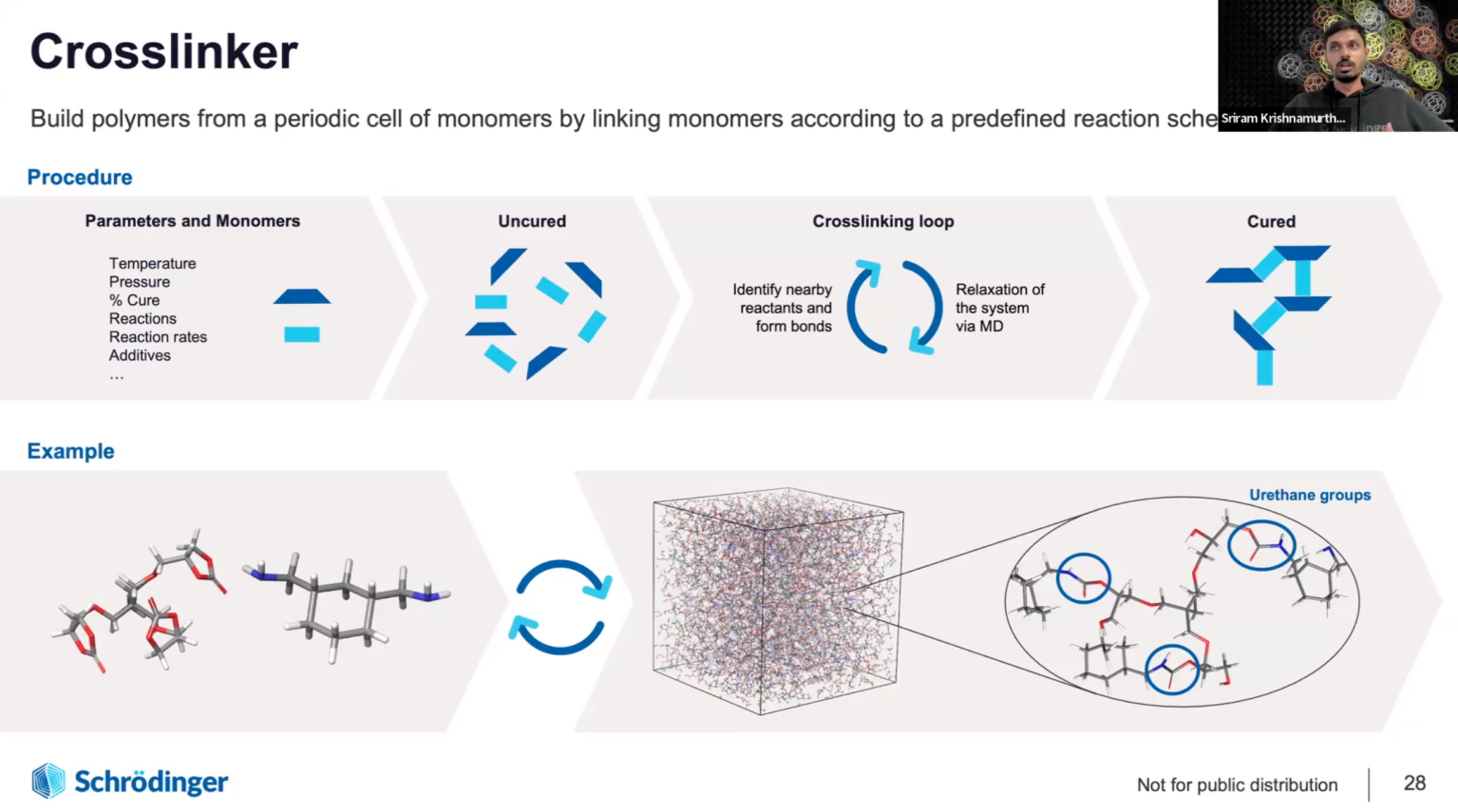
Polymeric materials and consumer packaged goods (CPGs) hold significant importance in both industrial and everyday contexts, impacting numerous aspects of modern life. Polymers play a crucial role in various industries due to their versatility and wide range of applications like construction, electronics, healthcare, and automotive. As scientific research and innovation continue to advance, polymeric materials remain at the forefront of development. In the context of consumer packaged goods (CPG), which significantly influence our daily lives, there is an ongoing push to create products that meet evolving consumer demands, such as healthier food options and more sustainable packaging solutions. Polymeric materials and CPGs are deeply interconnected in their importance to modern society. Molecular modeling has emerged as a transformative tool in the design and optimization of these materials. By providing deep insights into molecular interactions and material properties, molecular modeling accelerates the development of novel, efficient, and sustainable materials. This approach not only enhances our understanding of material behavior, but also facilitates the innovation of advanced solutions tailored to the specific needs of modern consumer products. This webinar will highlight Schrödinger’s Materials Science tools that can accelerate R&D efforts in these scientific domains. We will showcase practical case studies to tackle key problems and identify areas where molecular modeling can be applied.

Characterizing small drug-like molecules with automated computational spectra prediction

SEP 11, 2024

Characterizing small drug-like molecules with automated computational spectra prediction

Abstract:

To determine the stereoconfiguration of drug-like molecules and natural products is of critical importance in the drug discovery process. Since chirality can affect binding affinity, clinical efficacy, and safety, making well-informed decisions during the drug development process can lead to time and cost savings.

In this webinar, we will introduce Jaguar Spectroscopy, an automated computational workflow designed to predict Boltzmann-averaged spectra of small molecules without crystallizing the molecule or using X-ray spectroscopy. This workflow integrates a MacroModel conformational search with DFT calculations powered by Jaguar and supports VCD/IR, ECD/UV-vis, and NMR spectral predictions. The workflow enables NMR predictions for isotopes 1H, 13C, 15N, 19F, and 31P, and can also simulate spectra for partly deuterated compounds. In this presentation, we will present examples that demonstrate the use of Jaguar Spectroscopy to typical modeling scenarios involving flexible drug-like molecules.

Webinar Highlights:

  • Introduction to computational VCD, ECD, and NMR spectra prediction
  • Introduction to Jaguar Spectroscopy
  • Overview of computational settings available to the user – choice and treatment of the solvent (via explicit or implicit solvation models), conformational sampling, level of quantum chemical theory, and the automated comparison of theoretical and experimental spectra
  • Application of Jaguar Spectroscopy to typical modeling scenarios involving flexible drug-like molecules

Our Speaker

Art Bochevarov

Research Leader, Schrödinger

Art Bochevarov grew up in Ukraine and obtained his PhD in theoretical chemistry at the Georgia Institute of Technology, with David Sherrill as his adviser. After graduation, Art worked as a postdoctoral scientist at Columbia University with Richard Friesner. During that time, Art contributed to the quantum chemistry code Jaguar, which he began to manage several years later when he joined Schrödinger, Inc. in New York City. At Schrödinger, Art has been working on quantum chemistry code development and applications for the past 14 years. Art’s research interests lie in quantum chemical studies of protonation and solvation effects, covalent reactivity, spectroscopy, and the automation of quantum chemical workflows. In recent research projects, he has been investigating conformational effects on computed vibrational circular dichroism (VCD) and nuclear magnetic resonance (NMR) spectra.

Molecular Modeling: A Key to Solving Real-Life Challenges in Pharma Formulations

SEP 11, 2024

Molecular Modeling: A Key to Solving Real-Life Challenges in Pharma Formulations

Speaker:

Sudharsan Pandiyan, Principal Scientist II, Schrödinger

Abstract:

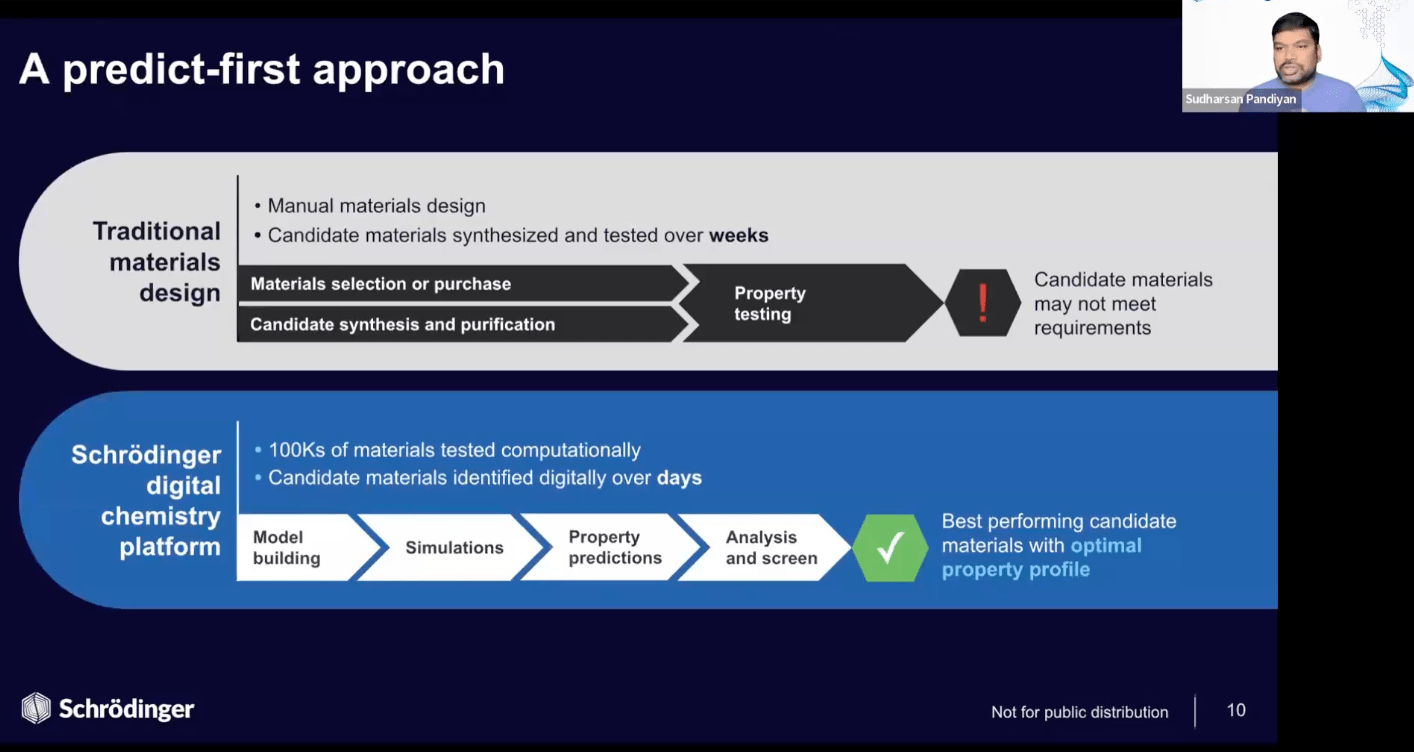
The demand for innovative drug delivery methods has driven researchers to explore the intricate structure-property relationships within pharmaceutical formulations. Quantum Mechanical (QM) and Molecular Dynamics (MD) simulations are powerful tools for understanding these formulations at a molecular level. Key areas of interest in pharmaceutical sciences include chemical stability, reactivity, molecular degradation, impurity profiling, excipient selection, and polymorph prediction. A thorough understanding of the Active Pharmaceutical Ingredient (API) is essential before embarking on the formulation development process. The Schrödinger Materials Science Suite (MS-Suite) offers comprehensive computational workflows to predict spectra (IR, Raman, NMR, UV-Visible, XRD) and assess the API’s behavior under varying pH conditions, including its degradation pathways and chemical reactivity. Recent advancements in GPU technology have significantly accelerated MD simulations, enabling previously unattainable time scales. This dramatic speedup, combined with predictive accuracy, is poised to revolutionize the use of MD simulations in pharmaceutical formulation development. MD-based workflows can help us address critical formulation design questions on physical stability of formulations, phase transitions, miscibility, solubility and diffusion of API through membranes, morphology, excipient compatibility, encapsulation, and coating selections. This presentation will highlight several successful case studies that demonstrate these capabilities from a molecular perspective.

SEPAWA 2024

Conference

SEPAWA 2024

CalendarDate & Time
  • October 16th-18th, 2024
LocationLocation
  • Berlin, Germany

Schrödinger is excited to be participating in the SEPAWA 2024 conference taking place on October 16th – 18th in Berlin, Germany. Join us for a presentation by Jeff Sanders, Senior Principal Scientist at Schrödinger, titled “Beyond AI: The importance of Physics-based Modeling and Machine Learning to Develop New Cosmetic Products.”

icon time OCT 18 | 10:45 – 11:15
icon location Room 15
Beyond AI: The importance of Physics-based Modeling and Machine Learning to Develop New Cosmetic Products

Speaker:
Jeff Sanders, Senior Principal Scientist

Abstract:
Despite the increasing popularity of machine learning and AI tools in consumer goods industries, methods are often applied ad hoc, lacking systematic data sampling or a comprehensive understanding of resulting ML models. This can lead to a knowledge gap between ML/AI proponents and researchers, especially when datasets are small or not easily transferable. Newer methodologies, like active learning, aim to bridge this gap by integrating physics-based simulation and experimental data to not only construct models but also identify blind spots in relevant property space coverage. In cosmetic formulation research projects where chemistry and composition are crucial, active learning can be utilized to develop models and guide experimentation in an iterative feedback loop, offering unique insights into model performance. By prioritizing chemistry first, many physicochemical descriptors can be generated using physics-based simulations, thereby enriching experimental datasets and averting the “blackboxing” of valuable models.