Device Packaging Conference 2026

Conference

Device Packaging Conference 2026

CalendarDate & Time
  • March 3rd-5th, 2026
LocationLocation
  • Phoenix, Arizona

Schrödinger is excited to be participating in the Device Packaging Conference 2026 taking place on March 2nd – 5th in Phoenix, Arizona. Join us for a presentation on by David Nicholson, Principal Scientist I at Schrödinger, titled “Predicting the Thermomechanical and Adhesive Properties of a Layered Polyimide Packaging Material Using Molecular Simulations.” Stop by booth #404 to speak with Schrödinger scientists.

icon time MAR 5 | 11:00AM
Predicting the Thermomechanical and Adhesive Properties of a Layered Polyimide Packaging Material Using Molecular Simulations

Speaker:
David Nicholson, Principal Scientist I, Schrödinger

Abstract:
This study evaluates the thermomechanical and adhesive properties of a photo-imageable dielectric (PID) polyimide and reference Kapton (PMDA-ODA) using atomistic simulations. Molecular dynamics (MD) with the OPLS4 force field was employed to predict the glass transition temperature, coefficients of thermal expansion (CTE), and elastic moduli, showing strong agreement with experimental benchmarks for bulk properties. Interfacial simulations of PMDA-ODA and Upilex (BPDA-PPD) on bare Cu(111) revealed delamination failure at strains of 0.03. BPDA-PPD showed slightly stronger strength under strain, in agreement with experimental trends for similar interfaces.

NextGen BioMed 2026

Conference

NextGen BioMed 2026

CalendarDate & Time
  • March 23rd-25th, 2026
LocationLocation
  • London, United Kingdom

Schrödinger is excited to be participating in the NextGen BioMed 2026 conference taking place on March 24th – 25th in London, United Kingdom. Join us for a workshop and panel discussion. Stop by booth #60 to speak with Schrödinger scientists.

icon time MAR 23 | 13:25
Panel Discussion: Accelerating Workflows With Computational Design

Moderator:
• Sarah Harris, Professor of Biological and Materials Physics, University of Sheffield

Panelists:
• Esam Abualrous, Principal Scientist, Applications Science, Schrödinger
• Randall Brezski, Director of Antibody Business Intelligence and Engagement, The Antibody Society
• Amjad Khan, Global Digital Client Partner for Vaccines, Hospital and Medical Affairs, Pfizer
• Stephanie Linker, Senior Computational Biochemist, Merck & Cie KmG

Key objectives:
In silico discovery & optimisation
• Structure prediction
• Future directions

icon time MAR 23 | 15:00
Workshop: Accelerating Biologics Design with State-of-the-Art In Silico Modeling and Collaborative Enterprise Informatics

Speakers:
• Esam Abualrous, Principal Scientist, Applications Science, Schrödinger
• Freddie Martin, Senior Scientist, Applications Science, Schrödinger

Abstract:
This Schrödinger workshop will demonstrate how physics-based computational modeling (BioLuminate, FEP+) and collaborative enterprise informatics (LiveDesign) work together to accelerate modern biologics design. Participants will be introduced to an end-to-end workflow covering early structural assessment, liability and developability analysis, and structure-guided engineering using advanced free-energy methods. The session will also show how in silico predictions can be combined with experimental data in LiveDesign to support iterative design cycles, hypothesis generation, and variant prioritization. Designed to be valuable for both new and experienced users, the workshop highlights how integrated modeling and informatics tools enable faster, more informed biologics discovery and optimization.

【1月28日(水)~30日(金)】nano tech 2026 出展

Event

【1月28日(水)~30日(金)】nano tech 2026 出展

CalendarDate & Time
  • January 28th-30th, 2026
LocationLocation
  • Tokyo, Japan

分子シミュレーション技術の発展により、ナノレベルの現象をコンピュータ・シミュレーションで扱うことができるようになってきました。また、シミュレーションと機械学習の組み合わせによってできることの幅が広がりつつあります。

シュレーディンガーは最新の分子シミュレーションや機械学習、その両者を融合した技術を使って、お客様の材料開発における解析力の強化と高効率化・開発期間の短縮化を支援します。

展示ブースでは、先進の技術について専門技術者が解説し、お客様からのご質問にお答えします。
※会期中、弊社展示ブースにてセミナーを開催いたします。
テーマ: 『ナノレベルで「材料の中」を見る ― シミュレーションと機械学習による新材料開発』
様々な材料の物性値予測をコンピュータ上で可能に。事例をご紹介します。

さらに、各ソフトウェアを実機体験いただけます。ぜひお立ち寄りください。

【展示会情報】
展示会名:nano tech
会期:2026年1月28日~30日
会場:東京ビッグサイト 西3ホール
小間番号:3W-H07
出展ゾーン:【材料・素材】マテリアルゾーン

Formulation ML and Optimization: Making advanced property prediction and experimental design fast and accessible

JAN 21, 2026

Formulation ML and Optimization: Making advanced property prediction and experimental design fast and accessible

AI-driven materials discovery is no longer experimental, it is the new national standard. With the recent launch of the Genesis Mission, the United States is declaring a national commitment to accelerating materials discovery through AI, high-performance computing, and integrated scientific data infrastructure. For teams at the forefront of materials innovation, now is the ideal opportunity to integrate computational workflows into your R&D pipeline.

Many R&D teams are hindered from adopting AI/ML due to the complexity of software tools, steep learning curves, and limited data science support. Schrödinger’s Materials Science Suite is designed to address these challenges by providing a unified and easy-to-use AI/ML platform, powered by state-of-the-art ML technology and backed by a dedicated scientific support team.

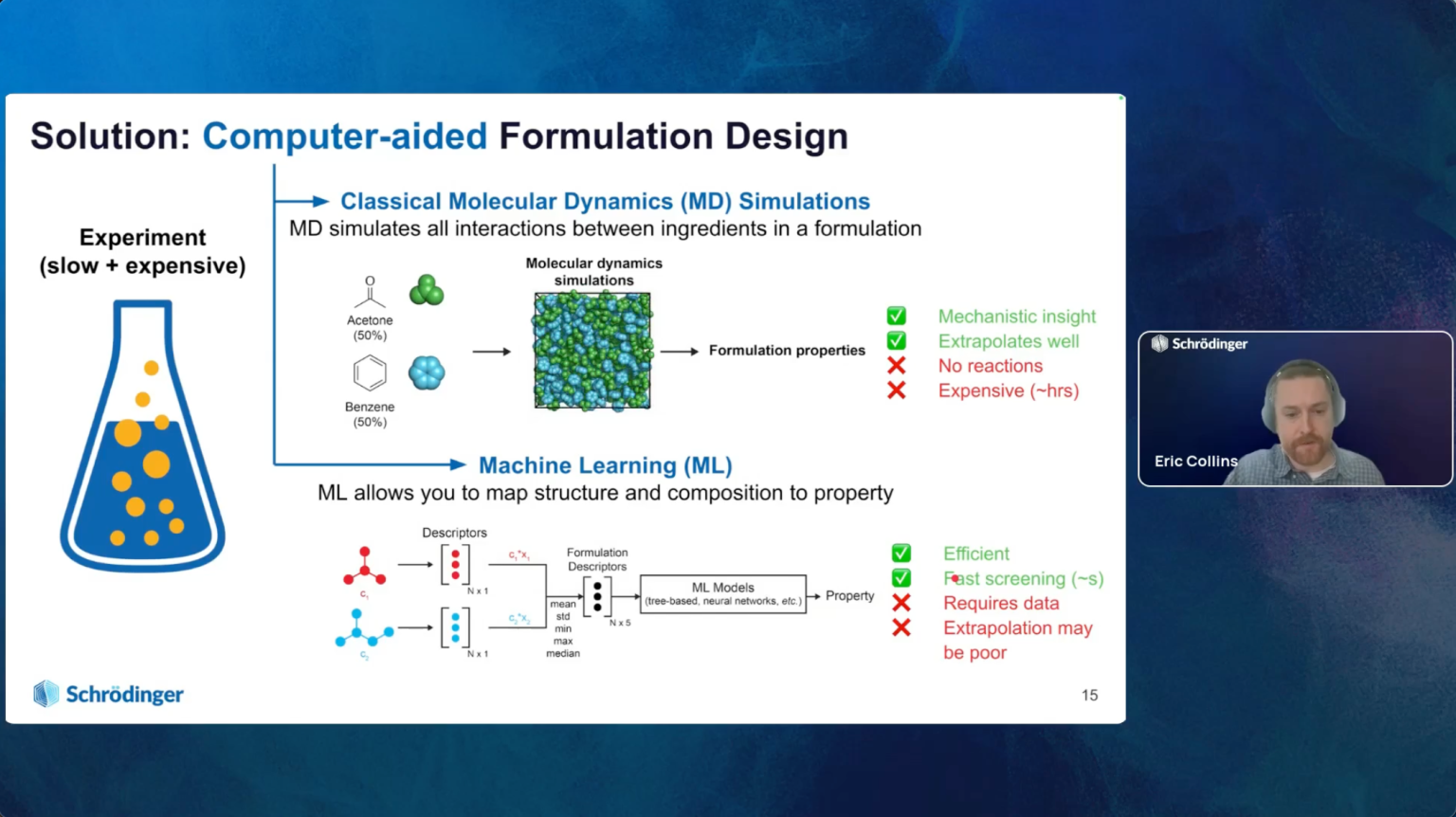
Join our upcoming webinar to learn how your R&D organization can remove adoption barriers, accelerate discovery cycles, and align with national AI initiatives. In this webinar, we will demonstrate how MS Informatics, Formulation ML, and Formulation Optimization make advanced property prediction, model building, and ML-driven design of experiments simple, fast, and accessible – even for non-experts. We will showcase how easy it is to apply these tools using experimental datasets across broad MS applications, including formulations, consumer goods, batteries, pharmaceuticals, and beyond.

Join us and see live demos on:

  • Training accurate viscosity ML models for binary liquids that can be applied to a variety of material applications
  • Scaling up to complex shampoo formulations, where ML models can be predictive of complicated multicomponent systems and provide suggestions of next best experiments

Who should attend:

  • R&D leaders
  • Innovation managers
  • Digitization managers
  • Synthetic chemists
  • Materials scientists
  • Formulation scientists
  • Computational materials scientists

Our Speaker

Eric M. Collins

Senior Scientist II, Schrödinger

Eric M. Collins is a Senior Scientist at Schrödinger, where he develops machine learning tools for applications in materials science. Eric received his PhD in Chemistry in 2022 from Indiana University, advised by Professor Krishnan Raghavachari. In his doctoral research, Eric’s work focused on combining quantum mechanics with cheminformatics/machine learning to accurately screen thermochemical properties of molecules and materials.

From silos to synthesis: Fostering collaborative AI through platform integration with LiveDesign ML

JAN 29, 2026

From silos to synthesis: Fostering collaborative AI through platform integration with LiveDesign ML

Successfully leveraging AI investments demands a platform that delivers unparalleled predictive accuracy and seamless operationalization. Many organizations struggle with fragmented ML infrastructure and models built on inconsistent data, leading to low adoption and high MLOps friction.

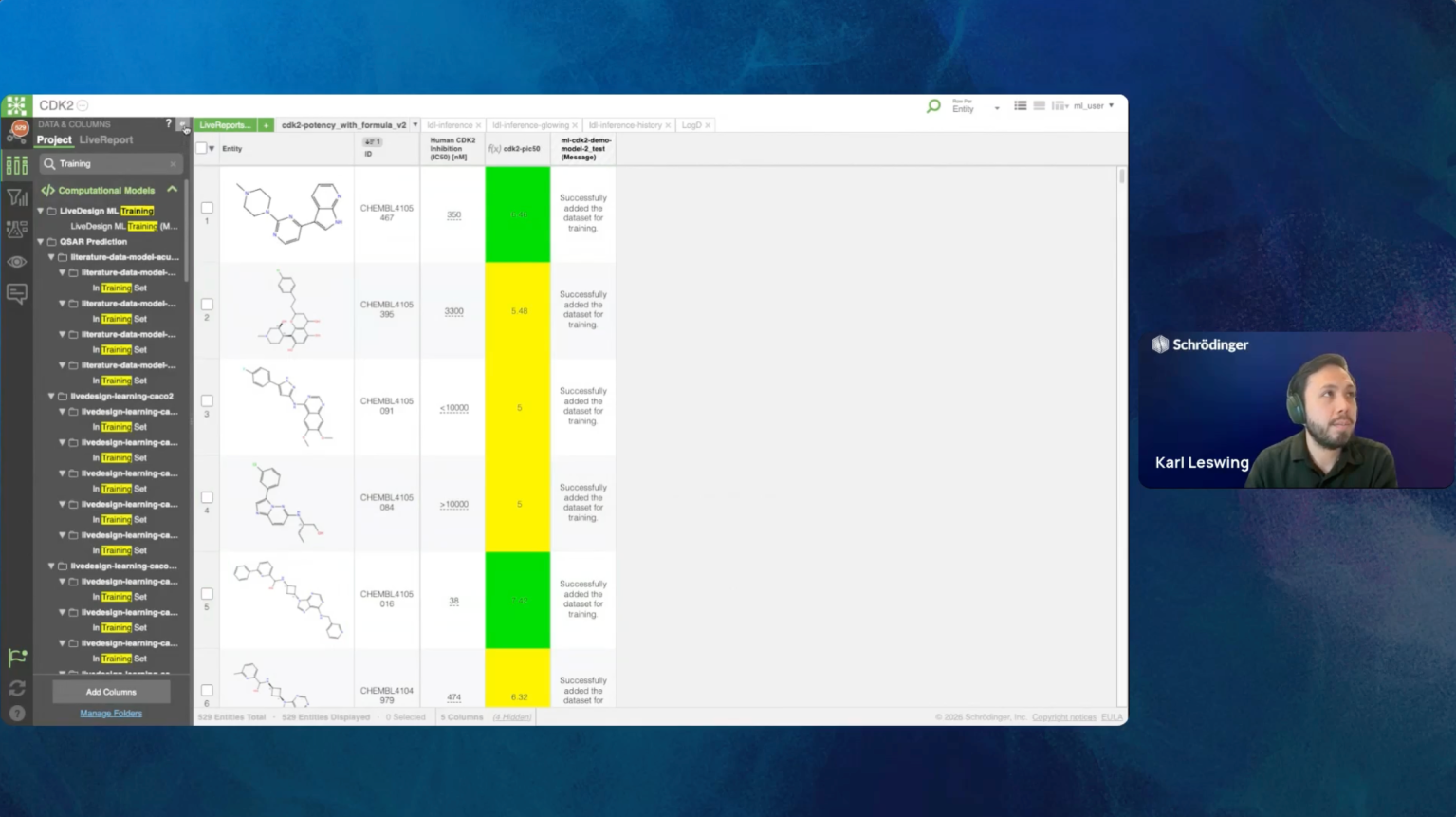
LiveDesign ML transforms AI into a strategic asset by providing a centralized, integrated ML platform engineered for scale and collaboration. This platform breaks down data silos by unifying disparate data sources and computational tools into a single, cohesive workflow. This integration enables the real-time sharing of models, features, and experimental results, allowing domain experts and data scientists to collaboratively build and iterate on ML solutions. LiveDesign ML leverages best-in-class training data from Schrödinger’s gold-standard modeling tools for superior model quality and prospective confidence. Furthermore, it fully automates the entire MLOps lifecycle – from training and validation to deployment – guaranteeing high-performance models are available in real-time.

In this session, we will demonstrate how to:

  • Maximize AI ROI: Eliminate model deployment friction and minimize manual MLOps with our automated platform.
  • Achieve Gold-Standard Accuracy: Leverage models trained on data from validated, physics-informed simulation tools.
  • Scale and Integrate: See current features like Retrosynth and Chemical Property Predictions in action, and explore the strategic roadmap to GenerativeML, Co folding, and LD Assistant
  • Live demo: See how LiveDesign ML leads to accelerated discovery cycles, enhanced model fidelity, and a higher return on ML investment from our product expert

Who should attend: 

This webinar is tailored for leaders and practitioners focused on driving efficiency and accuracy in drug discovery using advanced computation and AI.

  • Heads/VPs of Computational Chemistry, AI/ML, and R&D
  • Cheminformatics and MLOps Leads
  • Computational Chemists and Biologists
  • Informatics and Data Science Strategists

Our Speaker

Karl Leswing

Vice President, Machine Learning, Schrödinger

Karl Leswing is the Vice President for Machine Learning at Schrödinger. In this role he oversees the research and execution of machine learning applications for Schrödinger’s digital chemistry platform. In 2017 he was a visiting researcher at the Pande Lab working on using deep learning techniques for drug discovery. During that time he co-authored MoleculeNet, a benchmarking paper analyzing machine learning techniques for chemoinformatics. Karl received his undergraduate degree from the University of Virginia, and a Master’s in machine learning from Georgia Tech.

InventU Sustainable Future Congress 2026

Conference

InventU Sustainable Future Congress

CalendarDate & Time
  • February 25th-26th, 2026
LocationLocation
  • Amsterdam, Netherlands

Schrödinger is excited to be participating in the InventU Sustainable Future Congress conference taking place on February 25th – 26th in Amsterdam, Netherlands. Join us for a presentation by Jeff Sanders, Research Leader at Schrödinger, titled “From Natural Ingredients to Packaging: Computational Strategies for Sustainable Personal Care Products.” Stop by booth S14 to speak with Schrödinger scientists.

icon time FEB 25 | 16:10
icon location Personal Care Stream
From Natural Ingredients to Packaging: Computational Strategies for Sustainable Personal Care Products

Speaker:
Jeff Sanders, Research Leader, Schrödinger

Abstract:
Research and development in cosmetic and personal care products increasingly face sustainability-driven challenges, including reducing development time and resource consumption while limiting reliance on new or scarce raw materials. To address these constraints, predictive modeling, formulation machine learning, and natural product ingredient characterization provide complementary approaches to accelerate sustainable innovation. Formulation machine-learning models leverage existing experimental and performance data to optimize ingredient combinations, reduce redundant testing, and guide reformulation toward more sustainable and bio-based alternatives. Computational chemistry methods enable molecular-level characterization of natural ingredients, improving understanding of their structural diversity, physicochemical properties, and stability within complex formulations. These tools also provide insight into formulation morphology, interactions with biological surfaces such as skin and hair, and product–packaging interactions that influence shelf-life and material compatibility. Through representative case studies, we demonstrate how integrating formulation ML with physics-based simulations reduces trial-and-error experimentation, maximizes the value of existing data, and supports the design of high-performance, sustainable cosmetic products from formulation through packaging and end use.

AI in drug discovery 2026

Conference

AI in drug discovery 2026

CalendarDate & Time
  • March 9th-10th, 2026
LocationLocation
  • London, United Kingdom

Schrödinger is excited to be participating in the AI in drug discovery 2026 conference taking place on March 9th – 10th in London, United Kingdom. Join us for a presentation by Pieter H. Bos, Principal Scientist II at Schrödinger, titled “Overcoming Data Scarcity in Lead Optimization: A Physics-Guided Generative AI Workflow for Selective p38α/MK2 Molecular Glues.” Stop by our booth to speak with Schrödinger scientists.

icon time MAR 9 | 10:00am
Overcoming Data Scarcity in Lead Optimization: A Physics-Guided Generative AI Workflow for Selective p38α/MK2 Molecular Glues

Speaker:
Pieter H. Bos, Principal Scientist II, Schrödinger

Abstract:
Generative AI in lead optimization is frequently bottlenecked by data scarcity. We present a workflow synergizing de novo design (AutoDesigner) with physics-based simulations (WaterMap/FEP+) to train generative models in low-data regimes. We applied this framework to the design of selective p38α/MK2 molecular glues, starting from a single reference compound with no established selectivity SAR. AutoDesigner first enumerated ~1 billion permutations to define the project’s physicochemical boundaries. By training on the AutoDesigner structural prior, a high-fidelity dataset of 1,500 active learning FEP+ affinities and WaterMap scores, the Generative AI learned to architect novel, potent drug-like molecules that displace high-energy hydration sites. The model learned to architect molecules that displace high-energy hydration sites, yielding 12,000 MPO-compliant candidates, a 56-fold increase over standard filtering. This generative cycle required just 4.5 hours, bypassing the 180,000 CPU hours needed for equivalent exhaustive enumeration. Experimental validation confirmed the method’s precision, yielding compounds with pIC50s up to 10.3 and 451-fold selectivity against p38α. This demonstrates that physics-empowered Generative AI can autonomously and efficiently solve complex specificity challenges without significant experimental data.

• Overcoming Data Scarcity: New workflow that integrates de novo design with physics-based simulations, enabling the training of generative models to initiate projects with only a single reference compound.

• Targeted Structural Optimization: Through active learning on FEP+ and WaterMap data, the generative AI learned to design molecules that displace high-energy hydration sites to enhance binding potency.

• Experimental validation: the workflow solved complex selectivity challenges, yielding compounds with high potency (pIC50 up to 10.3) and 451-fold selectivity against p38α.

In-Cosmetics Global 2026

Conference

In-Cosmetics Global 2026

CalendarDate & Time
  • April 14th-16th, 2026
LocationLocation
  • Paris, France

Schrödinger is excited to be participating in the In-Cosmetics Global 2026 conference taking place on April 14th – 16th in Paris, France. Join us for a presentation by Jeffrey Sanders, Research Leader, Materials Science Product and Discovery at Schrödinger, titled “Bridging Ingredient Functionality and Formulation Performance with Physics-Informed AI.” Stop by booth 1A100 to speak with Schrödinger scientists.

icon time APR 14 | 14:00 – 14:30
icon location Sustainability Forum
Bridging Ingredient Functionality and Formulation Performance with Physics-Informed AI

Speaker:
Jeffrey Sanders, Research Leader, Materials Science Product and Discovery, Schrödinger

Abstract:
Advances in AI offer powerful opportunities to accelerate cosmetic innovation, yet model performance is limited by sparse datasets, complex formulation effects, and the difficulty of representing ingredient functionality. Physics-based molecular simulations help overcome these challenges by providing mechanistic, high-resolution descriptors that strengthen AI model accuracy a. Building on recent work in hair biophysics, skin–formulation interactions, antioxidant chemistry, packaging migration, and formulation-aware ML, we show how molecular dynamics, coarse-grained models, quantum calculations, and free-energy methods can be integrated into data-driven pipelines. This combined Physics+AI framework delivers rapid, reliable functional ingredient characterization and accelerates the design of high-performance, sustainable cosmetic products.

Antibody Engineering & Therapeutics 2025

Conference

Antibody Engineering & Therapeutics 2025

CalendarDate & Time
  • December 14th-17th, 2025
LocationLocation
  • San Diego, California

Join us for a poster presentation by Sunidhi Lenka, Senior Scientist I at Schrödinger, titled “Improving antibody recycling and release through pH dependent engineering with FEP+ and cpHMD.” Stop by booth 419 to speak with Schrödinger scientists.

icon time DEC 15 | 4:00PM
Improving antibody recycling and release through pH dependent engineering with FEP+ and cpHMD

Speaker:
Sunidhi Lenka, Senior Scientist I, Schrödinger

Abstract:
pH-dependent binding is a valuable strategy in antibody engineering for improving antibody recycling, targeting acidic tumor microenvironments, and enabling controlled antigen release. Antibodies that bind tightly at neutral pH but dissociate under endosomal acidic conditions can be recycled to circulation while the antigen is directed to the lysosome for degradation. We developed a physics-based computational workflow that integrates FEP+ and constant-pH molecular dynamics to design and evaluate variants with tunable pH sensitivity. Using a representative antibody–antigen complex, histidine substitutions were predicted to modulate binding energetics across pH conditions. Experimental testing confirmed these predictions, showing strong binding at neutral pH and weaker binding at acidic pH. This approach provides a generalizable and efficient method for rationally designing pH-dependent antibodies with applications in Fc engineering and therapeutic antibody optimization.

SFCi 2025

Conference

SFCi 2025

CalendarDate & Time
  • December 10th-11th, 2025
LocationLocation
  • Paris, France

Schrödinger is excited to be participating in the 12th conference of the Société Française de Chémoinformatique (SFCi) taking place on December 10th – 11th in Paris, France. Join us for a presentation by David Papin, Principal Scientist II, Applications Science at Schrödinger, titled “Modern Virtual Screening workflows.”

icon time DEC 10 | 18:00 – 18:15
Modern Virtual Screening workflows

Speaker:
David Papin, Principal Scientist II, Applications Science at Schrödinger

Abstract:
Schrödinger has a long history of developing virtual screening technologies. Modern virtual screening faces new challenges, particularly with the emergence of ultra-large chemical libraries over the past 10 years. As Schoichet et al. highlighted [1], there is a clear need to explore a much larger chemical space to improve the number and quality of hits found. We will be presenting a modern virtual screening workflow that efficiently screens ultralarge libraries. This workflow combines ligand-based approaches and machine learning-guided docking with advanced scoring methods, such as – 1D-sim which measures molecular similarity by projecting 2D structures into a single atomic coordinate [2]. When combined with Shape Screening, it gives rise to a cascaded screening workflow named QuickShape [3]. – GlideWS [4]: an advanced docking method that combines enhanced ligand sampling and a physics-based empirical scoring function to improve hit discovery and pose prediction in virtual screening – ABFEP (Absolute Binding Free Energy Perturbation) [5]: a highly accurate, physics-based computational method that calculates absolute binding free energy We will also emphasize the benefits of screening large libraries with a combination of machine learning and physics-based methods (Active Learning workflows). 

Designing better biologics: A blueprint for leveraging in silico methods in biologics R&D

DEC 9, 2025

Designing better biologics: A blueprint for leveraging in silico methods in biologics R&D

The development of biologics is a complex, high-risk process, often slowed by challenges in protein stability, selectivity, and affinity. Join us for a detailed look into how Schrödinger’s advanced computational protein design platform can help you navigate these hurdles and accelerate your pipeline.

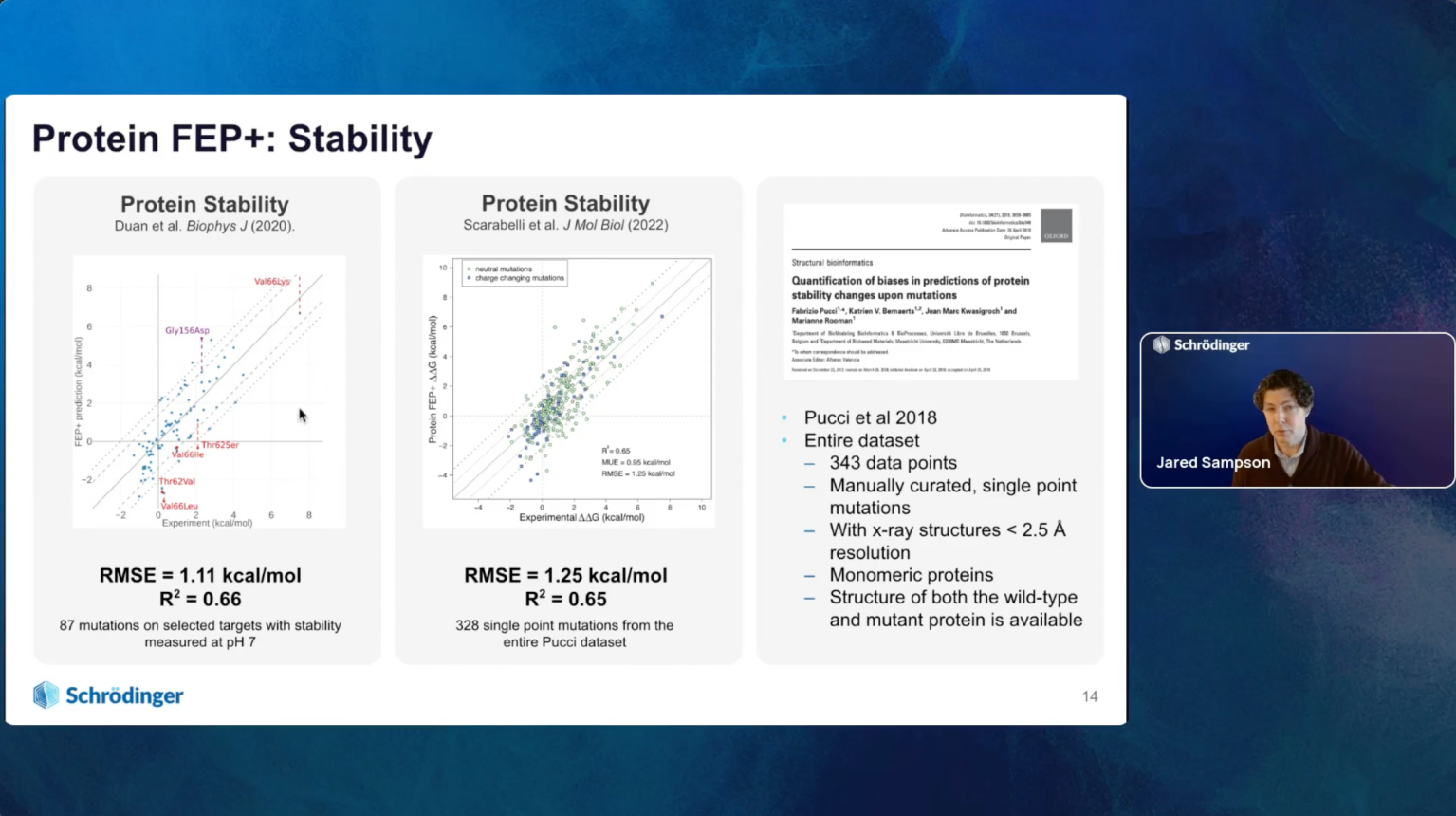
In this exclusive webinar, our experts will provide a technical overview of our unique, physics-based approach to protein engineering and customizable in silico workflow, and discuss several relevant examples. We’ll then dive into a case study, showcasing a recent collaboration where we successfully implemented this rational, structure-based approach to guide the design of a protein cage that assembles stably at neutral pH and disassembles at low pH for controlled payload delivery. By incorporating our computational workflow, the customer was able to dramatically reduce the number of variants tested experimentally, saving valuable time and resources.

Finally, we will provide a clear guide on how to engage with us – from small-scale pilot projects to full-scale collaborations – and show you how our platform can become a powerful extension of your R&D team. Discover how to leverage cutting-edge technology to bring your next biologic to the clinic faster and with a higher probability of success.

Webinar Highlights:

  • Overview of Schrödinger’s biologics capabilities and offerings for rational antibody design
  • Introduction to Schrödinger’s biologics services and how to get started
  • Case study: Collaboration in which a structure-based approach successfully guided the design of a pH-controlled protein cage

Our Speakers

Dan Cannon

Director, Head of Biologics Modeling, Schrödinger

Dr. Dan Cannon is the Director, Head of Biologics Modeling, as well as the lead for biologics services in Europe. Prior to joining Schrödinger, Dan received his Ph.D. from the University of Strathclyde in Glasgow, UK and in 2016 began working at MedImmune (now AstraZeneca) in Cambridge, UK, using computational approaches for therapeutic protein design. Since joining Schrödinger in 2018, Dan has leveraged his extensive biologics expertise to enable Schrödinger customers to create and deploy cutting-edge computational workflows and design better molecules, faster.

Jared Sampson

Senior Scientist II, Life Science Software, Schrödinger

Jared Sampson joined Schrödinger in 2020, working primarily on analysis of and development of improved workflows for Protein FEP+ calculations. He received a Ph.D. from Columbia University, training in computational molecular biophysics and experimental structural biology and biophysics under Rich Friesner and Larry Shapiro, respectively. With 17 years of experience in the field, his prior work and research interests include host-pathogen, antibody-antigen, and antibody-receptor interactions; protein engineering; and pH-dependent binding.

Scaling FEP+ for success: Strategic deployment of FEP+ and AI/ML to accelerate chemical space exploration

DEC 10, 2025

Scaling FEP+ for success: Strategic deployment of FEP+ and AI/ML to accelerate chemical space exploration

The ultimate challenge in modern drug discovery is converting scientific rigor into organizational scale and speed. While FEP+ provides the gold standard in predictive power, its full potential is unrealized when deployment is siloed. To access untapped potential and eliminate wasted resources, you must first address the bottlenecks and fragmentation across the project that are hindering the shift to a truly “predict-first” enterprise.

In this session, we will share experiences from expert users detailing the different tiers of FEP+ implementation and the necessary architectural support at each stage to demonstrate success. We will show how proper deployment, particularly through integration with AI/ML workflows, fundamentally changes the pace of exploration, enabling full chemical space mapping and in silico multiparameter optimization (MPO). This strategy empowers the entire project team, democratizing predictive insight and eliminating bottlenecks to design better drugs, faster.

Join us to map out your strategy for maximizing the organizational impact of FEP+ and to achieve the full potential of your computational drug discovery and business goals.

Webinar Highlights

  •  Introduction to the different levels of FEP+ deployment, guiding implementation from initial use to full enterprise integration
  •  Discussion of how integrating FEP+ with AI/ML workflows drives exponential acceleration in chemical space exploration and optimization
  •  Demonstration of how scaling FEP+ eliminates bottlenecks and empowers entire project teams to accelerating DMTA cycles as shown by Schrödinger’s therapeutics group success stories

Our Speakers

Aditya Kaushik

Senior Scientist II, Life Science Software, Schrödinger

Aditya Kaushik is an ML Research Scientist and the lead developer for the Generative Design and Retrosynthesis technologies at Schrödinger. His primary focus is on the research, development and integration of machine learning approaches to accelerate and optimize Design-Make-Test-Analyze (DMTA) cycles in active drug discovery programs. He received his B.S. from Johns Hopkins University, where he double majored in Computer Science and Chemical & Biomolecular Engineering.

Pieter Bos

Principal Scientist II, Schrödinger

Pieter Bos, Ph.D., is a principal scientist and product manager of AutoDesigner and De Novo Design workflows. At Schrödinger, his main focus is the research, development and optimization of automated compound design algorithms. Lead scientist for the design and execution of enumerated drug molecule libraries for internal and collaborative drug design projects. He received his Ph.D. in Synthetic Organic Chemistry from the University of Groningen in the laboratory of Prof. Ben Feringa. Prior to joining Schrödinger, he worked as a postdoctoral researcher in synthetic methodology development at Boston University (Prof. John Porco and Prof. Corey Stephenson) and small molecule drug discovery at Columbia University (Prof. Brent Stockwell).