Introducing RetroSynth: Breaking the synthesis bottleneck with AI and physics-based modeling

FEB 19, 2026

Introducing RetroSynth: Breaking the synthesis bottleneck with AI and physics-based modeling

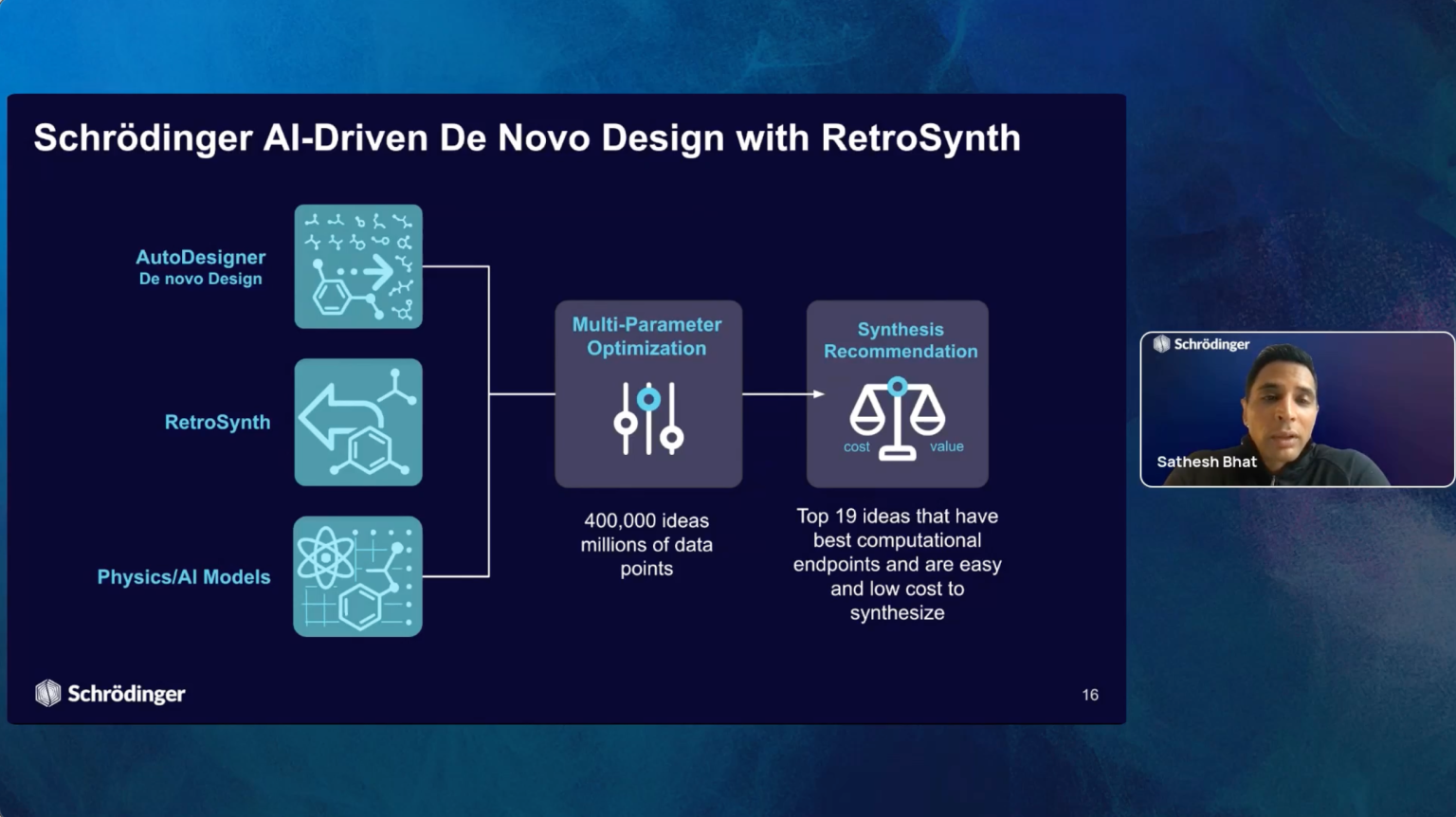
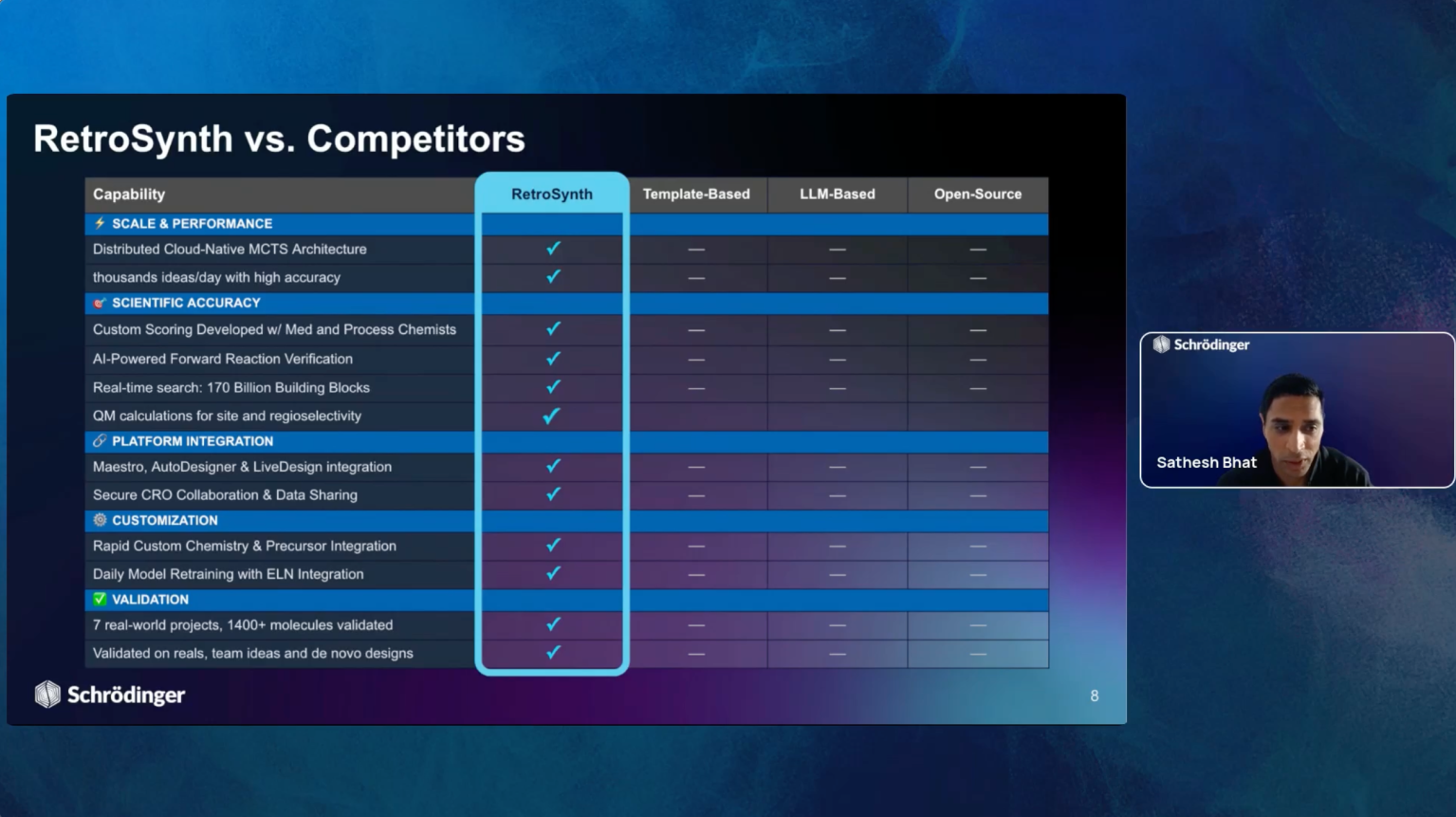
Join us for the introduction of RetroSynth, Schrödinger’s AI-driven synthesis planning platform. RetroSynth is engineered to accelerate and scale conventional retrosynthesis by harnessing advanced deep learning algorithms. RetroSynth uses a distributed cloud-native Monte Carlo tree search (MCTS) architecture to perform highly exhaustive searches to predict and score optimal, accurate, and cost-efficient synthetic pathways. RetroSynth helps you move from complex chemical targets to actionable synthesis plans accurately and efficiently. By integrating real-time building block data with AI and physics-based modeling, RetroSynth unlocks accurate retrosynthetic analysis across millions of de novo designed molecules, leading to massive project acceleration and cost savings in hit identification and lead optimization.

Key Highlights:

  • Introduction to RetroSynth: Schrödinger’s product manager will give a detailed description of how RetroSynth works and its advantages over conventional retrosynthesis solutions
  • Live Demo: See how RetroSynth performs in action
  • Ask questions: Direct technical discussion with our experts

Who Should Attend:

  • Medicinal Chemists: Looking to accelerate lead optimization and SAR exploration
  • Process Chemists: Focused on identifying scalable and cost-effective synthetic routes early in development
  • Computational Chemists: Interested in the integration of ML/AI frameworks into standard R&D workflows
  • R&D IT Directors: Evaluating enterprise-grade cheminformatics solutions for chemical synthesis

Our Speakers

Aditya Kaushik

Senior Scientist II, Life Science Software, Schrödinger

Aditya Kaushik is an ML Research Scientist and the lead developer for the generative design and retrosynthesis technologies at Schrödinger. His primary focus is on the research, development, and integration of machine learning approaches to accelerate and optimize Design-Make-Test-Analyze (DMTA) cycles in active drug discovery programs. He received his B.S. from Johns Hopkins University, where he double majored in Computer Science and Chemical & Biomolecular Engineering.

Sathesh Bhat

Executive Director, Therapeutics Group, Schrödinger

Sathesh Bhat, Ph.D., executive director in the therapeutics group, joined Schrödinger in 2011. He is responsible for overseeing computational chemistry efforts on internal and partnered drug discovery programs at Schrödinger. Previously, Sathesh worked at both Merck and Eli Lilly leading computational efforts in several drug discovery programs. He obtained his Ph.D. from McGill University, which involved developing structure-based methods to predict binding free energies. Sathesh has co-authored multiple patents and publications and continues to publish on a wide variety of topics in computational chemistry.

David Papin

Principal Scientist II, Applications Science, Schrödinger

David Papin joined Schrödinger in 2024 as an Application Scientist. David has a background in chemistry and computational chemistry. He held positions in computational sciences in the industry where he provided in silico support for small molecules and large molecules projects.

From silos to synthesis: Fostering collaborative AI through platform integration with LiveDesign ML

FEB 12, 2026

From silos to synthesis: Fostering collaborative AI through platform integration with LiveDesign ML

Successfully leveraging AI investments demands a platform that delivers unparalleled predictive accuracy and seamless operationalization. Many organizations struggle with fragmented ML infrastructure and models built on inconsistent data, leading to low adoption and high MLOps friction.

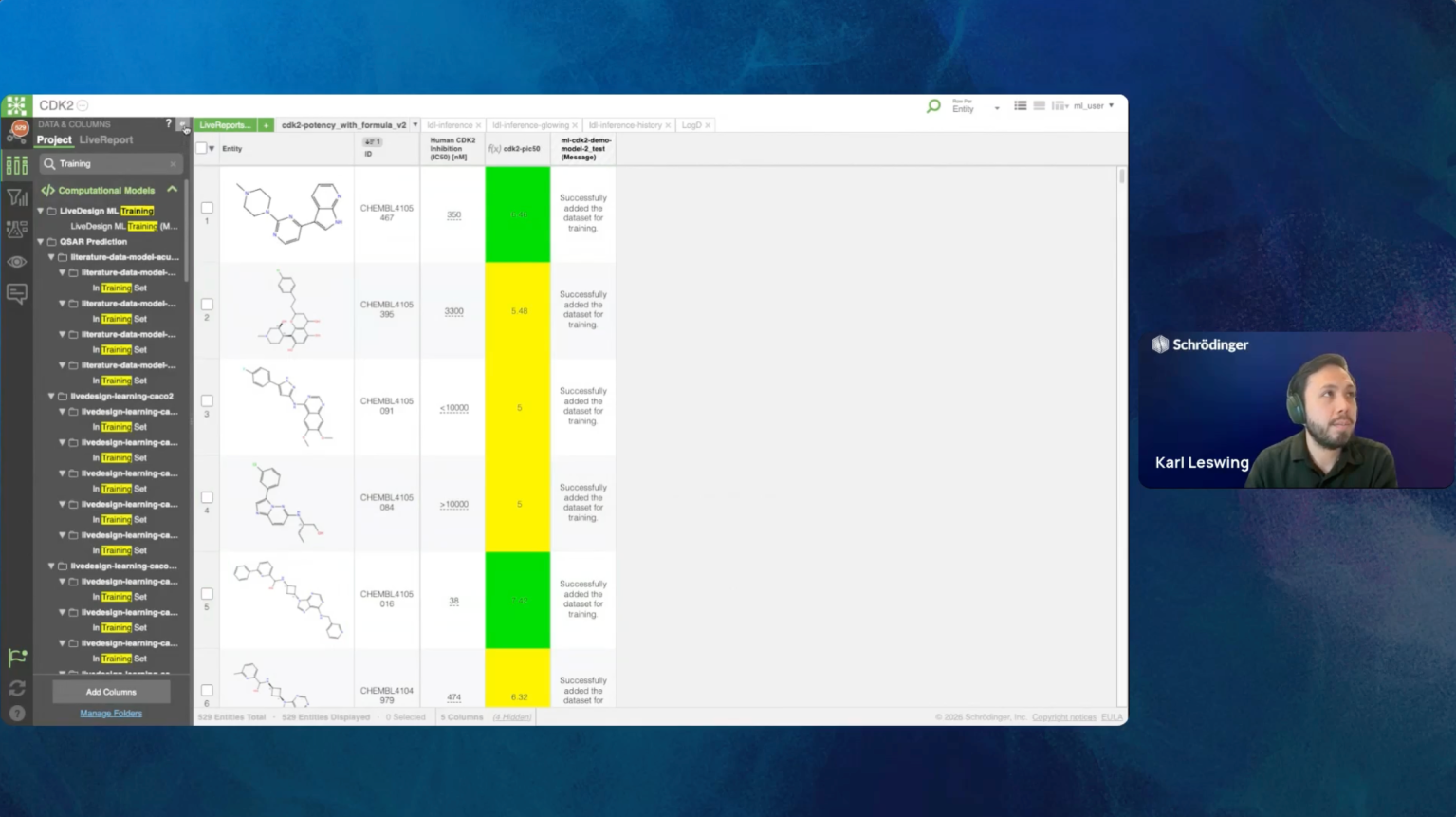
LiveDesign ML transforms AI into a strategic asset by providing a centralized, integrated ML platform engineered for scale and collaboration. This platform breaks down data silos by unifying disparate data sources and computational tools into a single, cohesive workflow. This integration enables the real-time sharing of models, features, and experimental results, allowing domain experts and data scientists to collaboratively build and iterate on ML solutions. LiveDesign ML leverages best-in-class training data from Schrödinger’s gold-standard modeling tools for superior model quality and prospective confidence. Furthermore, it fully automates the entire MLOps lifecycle – from training and validation to deployment – guaranteeing high-performance models are available in real-time.

In this session, we will demonstrate how to:

  • Maximize AI ROI: Eliminate model deployment friction and minimize manual MLOps with our automated platform.
  • Achieve Gold-Standard Accuracy: Leverage models trained on data from validated, physics-informed simulation tools.
  • Scale and Integrate: See current features like Retrosynth and Chemical Property Predictions in action, and explore the strategic roadmap to GenerativeML, Co folding, and LD Assistant
  • Live demo: See how LiveDesign ML leads to accelerated discovery cycles, enhanced model fidelity, and a higher return on ML investment from our product expert

Who should attend: 

This webinar is tailored for leaders and practitioners focused on driving efficiency and accuracy in drug discovery using advanced computation and AI.

  • Heads/VPs of Computational Chemistry, AI/ML, and R&D
  • Cheminformatics and MLOps Leads
  • Computational Chemists and Biologists
  • Informatics and Data Science Strategists

Our Speaker

Jonas Kaindl

Principal Scientist I, Applications Science, Schrödinger

Jonas Kaindl is a Principal Scientist in Schrödinger’s Applications Scientist team in Europe where he’s helping customers to use Schrödinger’s solutions to their full potential. He is a trained pharmacist and obtained his PhD from the University of Erlangen-Nuremberg for his research studying GPCRs, where he was introduced to computational modeling. In 2021, he joined Schrödinger.

Karl Leswing

Vice President, Machine Learning, Schrödinger

Karl Leswing is the Vice President for Machine Learning at Schrödinger. In this role he oversees the research and execution of machine learning applications for Schrödinger’s digital chemistry platform. In 2017 he was a visiting researcher at the Pande Lab working on using deep learning techniques for drug discovery. During that time he co-authored MoleculeNet, a benchmarking paper analyzing machine learning techniques for chemoinformatics. Karl received his undergraduate degree from the University of Virginia, and a Master’s in machine learning from Georgia Tech.

Schrödinger China Drug Discovery Forum 2026

In-Person Event

Schrödinger China Drug Discovery Forum 2026

CalendarDate & Time
    • February 1, 2026,   
    • February 7, 2026,   
LocationLocation
  • Beijing, China & Shanghai, China

Sunday, February 1, 2026

Beijing Chaolin Songyuan Hotel (No. 19 Ronghua Middle Road, Yizhuang, Beijing)

北京朝林松源酒店(北京亦庄荣华中路19号)

Saturday, February 7, 2026

Park Hyatt Shanghai (100 Century Avenue, Pudong, Shanghai)

上海柏悦酒店(世纪大道100号上海环球金融中心)

Register
icon time 8:30am – 9:30am
Event check-in

icon time 9:30am – 10:15am
“Predict-First” – Where Physics and AI/ML Shape the Future of Drug Discovery – Aleksey Gerasyuto

icon time 10:15am – 11:00am
Structure-Based Discovery of Highly Potent Dihydroorotate Dehydrogenase Inhibitors for Once-Monthly Malaria Chemoprevention – Zhe Nie

icon time 11:00am – 11:30am
Networking break (photo session)

icon time 11:30am – 12:15pm:
Diverse Computational Strategies Enable the Discovery of p38α-MK2 Molecular Glues – Yefen Zou

icon time 12:15pm – 1:15pm
Catered lunch

icon time 1:15pm – 1:30pm
How to work with Schrödinger? – Maurice Shen

icon time 1:30pm – 2:30pm
Modern Virtual Screening and De Novo Design Enabled by Free Energy Calculations with the Schrodinger Platform – Tao Jiang

icon time 2:30pm – 2:45pm
Networking break

icon time 2:45pm – 3:15pm
Predictive Tox: Structure Enablement of ADMET Off-Targets with IFD-MD and FEP+ – Tao Jiang

icon time 3:15pm – 3:30pm
Networking break

icon time 3:30pm – 4:00pm
New Modality: Degrader Modeling and Optimization – Tao Jiang

icon time 4:00pm – 5:00pm
Networking & Event close

Our Speakers

Aleksey Gerasyuto

Senior Vice President, Discovery Science, Schrödinger

Tao Jiang

Senior Scientist II, Application Science, Schrödinger

Yefen Zou

Senior Principal Scientist, Medicinal Chemistry, Schrödinger

Zhe Nie

Executive Director, Medicinal Chemistry, Schrödinger

Maurice Shen

Director, Account Management, Greater China Region, Schrödinger

Register

Educator’s Week 2026

Virtual Event

Educator’s Week 2026

CalendarDate & Time
  • April 28th-30th, 2026
  • 11:00AM – 2:00PM EDT
LocationLocation
  • Virtual
Register

Bring Educational Technology Into the Science Classroom

While science curricula are ever-evolving, many lines of evidence show that modernizing teaching tools and methodologies can tremendously benefit students.

Join us for a series of live webinar presentations from leading educators at top academic institutions, as well as talks by Schrödinger scientists.

All registrants will receive recordings of the talks once the event concludes.

Who Should Attend

Chemistry and biology professors (undergraduate, graduate) High school chemistry and biology teachers (college prep, honors, AB/IB level) Chemistry and biology postdoctoral scholars or graduate students who are interested in teaching.

About the Event

Schrödinger’s Educator’s Week is connecting educators from all over the world to discuss the growing role of educational technology in the classroom and integrating computational molecular modeling into modern science curriculums.

April 28-30, 2026 (VIRTUAL)
11:00 AM–2:00 PM ET

Toolbox Top-Ups: Fast-paced sessions from educators to immediately add a new resource or method to your teaching toolkit

Virtual Demos: Hands-on, step-by-step demos by the Schrödinger Education team dedicated to exploring computational molecular modeling for the classroom

Molecules & Models: A virtual science fair open to undergraduate and graduate students pursuing computational research projects

Agenda

Register

Frequently Asked Questions

How do I join a session?
In order for you to join and watch any of the virtual sessions, you need to register for the event and have a ticket. To view the live broadcast, please go to the agenda tab and login with your personal details (used at the time of registration): https://events.bizzabo.com/educators_week_2026/home

Which browser should I use?
For optimal performance, please use Google Chrome, Firefox, or Microsoft Edge. The Safari browser is not currently supported.

How do I contact the event organizers?
For any questions, please email teaching@schrodinger.com.

Will the presentations be available on-demand after the event?
Yes, the presentations will be available after the event in an on-demand capacity.

Schrödinger デジタル創薬セミナー: Into the Clinic ~計算化学がもたらす創薬プロセスの変貌~ 第22回

FEB 18, 2026

Schrödinger デジタル創薬セミナー 22:
Predictive toxicology solutions: Actionable, structure-based insights to dial-out tox liabilities early
予測毒性ソリューション:構造ベース解析による“実行可能な洞察”で毒性リスクを早期に低減

現代の創薬における大きな課題のひとつは、後期開発段階での毒性による高い脱落率です。標準的なin vitroアッセイでは、毒性リスクの存在を特定することはできても、なぜオフターゲット結合が起こるのかという根本的な原因を明らかにすることはできません。そのため、メディシナルケミストリーの現場では、コストと時間のかかる試行錯誤や、複数のオフターゲットに対する構造生物学的解析を余儀なくされています。

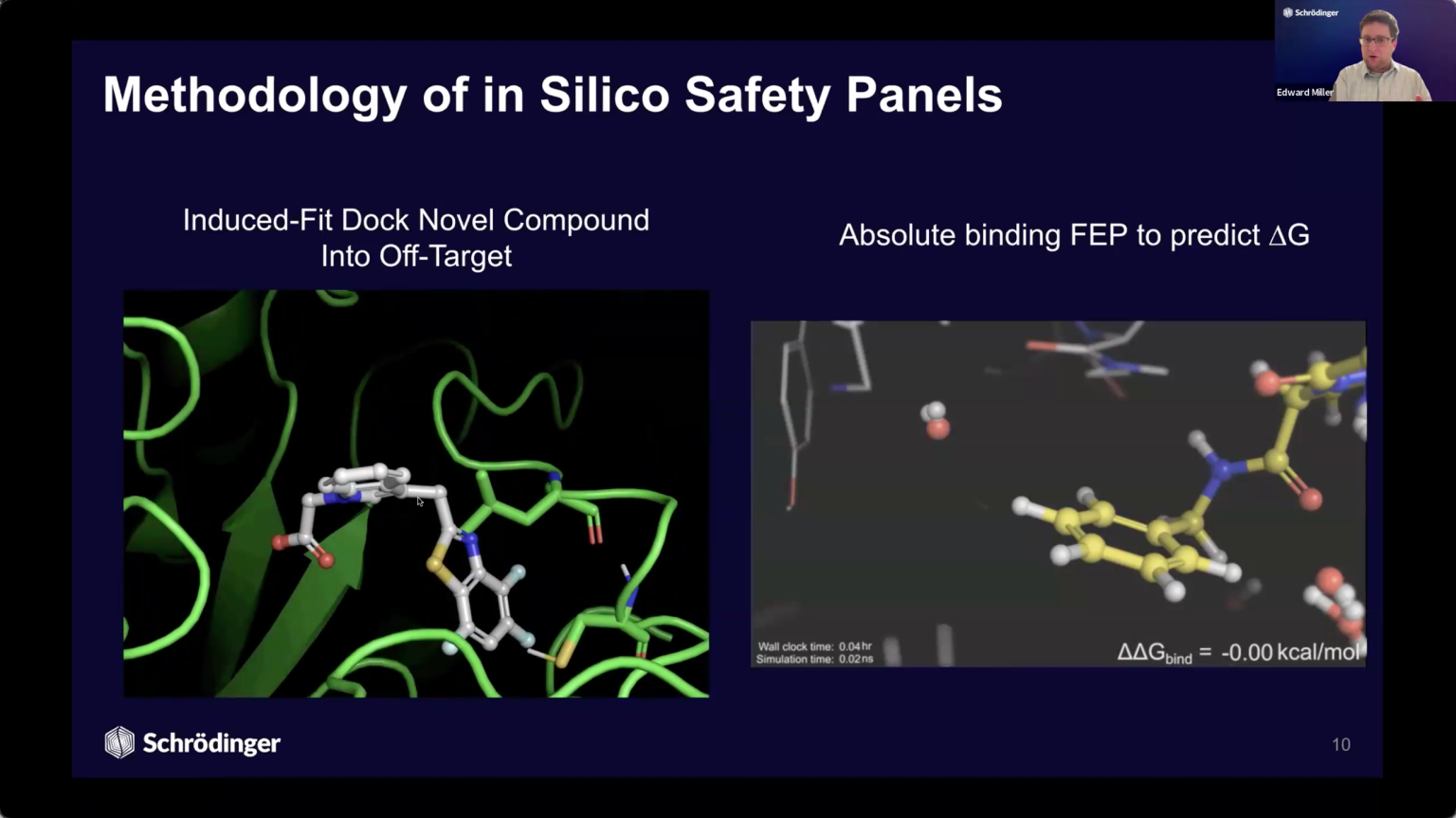
本ウェビナーでは、シュレーディンガーが新たに提供を開始した予測毒性評価ソリューションが、従来の枠を超えたアプローチにより、構造に基づく定量的かつ実用的な評価指標を提供し、創薬の設計プロセスをいかに根本から変革するかをご紹介します。

具体的には、有害事象の強度を定量評価し、原子レベルおよびR基単位での要因分析を行うことで、問題の原因となる分子構造を特定し、早期のリスク回避を可能にする手法を解説します。

Key Highlights

  • Predictive Toxicology Solution のご紹介: シュレーディンガー独自の構造ベースアプローチにより、創薬初期段階でのリスク回避を可能にする合理的な分子設計手法をご紹介します。
  • ライブデモ: 毒性予測から有効な設計修正案の導出までを、実際のプラットフォーム操作を通じてご覧いただけます。
  • Q&Aセッション: 登壇サイエンティストが、ご質問にリアルタイムでお答えします。

Our Speaker

Ed Miller

Executive Director of Protein Structure Modeling, Schrödinger

コロンビア大学にて博士号(DOE研究フェロー)を取得。2014年よりSchrödingerに在籍し、構造ベース創薬手法の高度化を牽引。Induced Fit Dockingやタンパク質構造精密化手法の開発にも注力している。

Introducing RetroSynth: Breaking the synthesis bottleneck with AI and physics-based modeling

FEB 11, 2026

Introducing RetroSynth: Breaking the synthesis bottleneck with AI and physics-based modeling

Join us for the introduction of RetroSynth, Schrödinger’s AI-driven synthesis planning platform. RetroSynth is engineered to accelerate and scale conventional retrosynthesis by harnessing advanced deep learning algorithms. RetroSynth uses a distributed cloud-native Monte Carlo tree search (MCTS) architecture to perform highly exhaustive searches to predict and score optimal, accurate, and cost-efficient synthetic pathways. RetroSynth helps you move from complex chemical targets to actionable synthesis plans accurately and efficiently. By integrating real-time building block data with AI and physics-based modeling, RetroSynth unlocks accurate retrosynthetic analysis across millions of de novo designed molecules, leading to massive project acceleration and cost savings in hit identification and lead optimization.

Key Highlights:

  • Introduction to RetroSynth: Schrödinger’s product manager will give a detailed description of how RetroSynth works and its advantages over conventional retrosynthesis solutions
  • Live Demo: See how RetroSynth performs in action
  • Ask questions: Direct technical discussion with our experts

Who Should Attend:

  • Medicinal Chemists: Looking to accelerate lead optimization and SAR exploration
  • Process Chemists: Focused on identifying scalable and cost-effective synthetic routes early in development
  • Computational Chemists: Interested in the integration of ML/AI frameworks into standard R&D workflows
  • R&D IT Directors: Evaluating enterprise-grade cheminformatics solutions for chemical synthesis

Our Speakers

Aditya Kaushik

Senior Scientist II, Life Science Software, Schrödinger

Aditya Kaushik is an ML Research Scientist and the lead developer for the generative design and retrosynthesis technologies at Schrödinger. His primary focus is on the research, development, and integration of machine learning approaches to accelerate and optimize Design-Make-Test-Analyze (DMTA) cycles in active drug discovery programs. He received his B.S. from Johns Hopkins University, where he double majored in Computer Science and Chemical & Biomolecular Engineering.

Sathesh Bhat

Executive Director, Therapeutics Group, Schrödinger

Sathesh Bhat, Ph.D., executive director in the therapeutics group, joined Schrödinger in 2011. He is responsible for overseeing computational chemistry efforts on internal and partnered drug discovery programs at Schrödinger. Previously, Sathesh worked at both Merck and Eli Lilly leading computational efforts in several drug discovery programs. He obtained his Ph.D. from McGill University, which involved developing structure-based methods to predict binding free energies. Sathesh has co-authored multiple patents and publications and continues to publish on a wide variety of topics in computational chemistry.

RICT 2026

Conference

RICT 2026

CalendarDate & Time
  • July 1st-3rd, 2026
LocationLocation
  • Paris, France

Schrödinger is excited to be participating in the RICT 2026 – 60th edition of the International Conference on Medicinal Chemistry taking place on July 1st – 3rd in Paris, France. Join us for a workshop by Schrödinger scientists, titled “Accelerating drug discovery through efficient AI/ML integration with LiveDesign ML.” Stop by booth #13 to speak with Schrödinger scientists.

icon time JUL 3
Accelerating drug discovery through efficient AI/ML integration with LiveDesign ML

Speakers:
Jean-Christophe Mozziconacci, Senior Principal Scientist, Schrödinger
David Papin, Principal Scientist II, Schrödinger

Abstract:
AI/ML models are powerful tools essential for modern drug discovery, enabling the prediction of protein structures, protein-ligand 3D binding poses, de novo design of novel molecules, and the prediction of diverse physical and chemical properties. However, leveraging these tools effectively presents significant challenges. Indeed, the vast landscape of AI/ML algorithms for structural and property predictions necessitates a centralized platform, offering efficient comparison, visualization, and analysis tools for the effective validation and integration of predictions into the design workflow.

LiveDesign ML, a module in Schrödinger’s LiveDesign collaborative enterprise informatics platform, is designed to overcome these hurdles. It enables the generation, optimization, validation, and deployment of state-of-the-art AI/ML models with minimal manual intervention. Model predictive power in evolving chemistry is monitored with confidence via data visualizations and performance metrics. By treating datasets as dynamic information feeds that evolve as scientists explore new chemistry, LiveDesign ML delivers optimized AI/ML models that allow teams to triage newly sketched design ideas or screen hundreds of thousands of compound ideas rapidly.

In this workshop, we will showcase the range of capabilities available within LiveDesign ML, including target enablement tools and de novo design to seamlessly generate, evaluate and optimize compounds, diverse physical and chemical properties predictions including accurate retrosynthesis prediction at scale. This will be demonstrated through a successful case study on the discovery of novel p38/MK2 molecular glue inhibitors. Free Energy Perturbation (FEP+) was successfully applied, with its performance significantly improved by proprietary crystal structures. The lead series shows high potency but needs improved p38/pMK2 selectivity, which highlights the continuous optimization cycle enabled by LiveDesign ML.

Lunch & Learn: Advanced Solutions for Medicinal Chemistry Mannheim 2026

Lunch and Learn
CalendarDate & Time
  • February 26th, 2026
  • 10:00 to 14:00 CET
LocationLocation
  • Mannheim, Germany

Advanced Solutions for Medicinal Chemistry

Boosting MedChem Success: Schrödinger Solutions for ADMET Challenges

Register

Dear Medicinal Chemists,

Ever found yourself struggling to predict brain permeation (Kp,uu), efflux, hERG inhibition, or CYP3A4 TDI in your projects? Take a break from your other obligations and let’s talk!

We are inviting you to join us in an interactive and free-of-charge session on Thursday, February 26th at our Mannheim Schrödinger Office for an extended version of our Lunch and Learn series where Schrödinger scientists will be diving deep into these crucial areas, bringing your practical solutions and expert insights, and demonstrating how modeling approaches can significantly help medicinal chemists make their projects more efficient and successful. You can either join for the whole event or solely for the presentation session.

Date & Time:

Thursday, February 26th, 2026

From 10:00 to 14:00 CET

Program:

+ Welcome Coffee
09:30 – 10:00

Interactive Session on Advanced Modeling Approaches in Medicinal Chemistry

10:00 – 12:30

David Papin, Principal Scientist II, Applications Science
Jonas Kaindl, Principal Scientist I, Applications Science

  • Brain Penetration with Kp,uu: Strategy for predicting central nervous system (CNS) drug delivery.
  • Efflux: Overcoming drug efflux mechanisms.
  • Cyp3A4 TDI: Understanding and addressing CYP3A4 time-dependent inhibition.
  • hERG: Mitigating hERG liability by using a quantum mechanics-based pKa calculation and a structure-based approach.

Our seminar will use the DLK story as a framework to explore the topics in detail throughout our session. Afterwards, lunch is served.

+ Lunch
12:30 – 14:00

Discussion & Networking

14:00 – open end

Join us in the afternoon for a Q&A and networking session with our Scientists and Account Managers, providing an opportunity to present your questions and challenges, which the Schrödinger team will endeavor to address.

Register today to secure your seat!

The seminar is free to attend but preregistration is required as seats are limited. Previous-experience with the Schrödinger suite is not required.

Register

Our Speakers

David Papin

Principal Scientist II, Applications Science, Schrödinger

Jonas Kaindl

Principal Scientist I, Applications Science, Schrödinger

Lunch & Learn: Accelerating biologics innovation Utrecht 2026

Lunch and Learn
CalendarDate & Time
  • February 11th, 2026
  • 12:00 to 15:30 CET
LocationLocation
  • Utrecht, Netherlands

Accelerating Biologics Innovation

Register

Dear Biologists,

Seeking to explore new frontiers in protein engineeringantibody optimization, as well as developability and liability assessment through modeling and experimental data across the end-to-end biologics pipeline? Take a break from your other obligations and let’s talk!

We invite you to join us for an interactive, free-of-charge session on Wednesday, February 11th at the Crowne Plaza Hotel, Utrecht. In this extended version of our Lunch & Learn series, Schrödinger scientists will demonstrate how physics-based computational modeling (BioLuminateFEP+) and collaborative enterprise informatics (LiveDesign) work together to accelerate modern biologics design. This session is designed to provide practical solutions and expert insights for both new and experienced Schrödinger users.

Keywords:

Protein Engineering | Antibody Modeling | Antibody Optimisation | Developability | Protein FEP+

Date & Time:

Wednesday, February 11th, 2026

From 12:00 to 15:30 CET

Program:

12:00 – 13:30: Welcome Coffee & Networking Lunch

13:30 – 15:30: Accelerating Biologics Innovation with Advanced In Silico Modeling and Integrated Enterprise Informatics

Esam Abualrous, Principal Scientist, Applications Science
Ilaria Salutari, Senior Scientist I, Applications Science

  • Explore an end-to-end workflow from early structural assessment to structure-guided engineering
  • Learn how BioLuminateFEP+, and LiveDesign work together to accelerate biologics design
  • Analyze developability and liability risks using physics-based modeling
  • Apply advanced free-energy methods to support rational variant design
  • Combine in silico predictions with experimental data for faster, data-driven decisions

+ Coffee Break

15:30 – open end: Discussion & Networking

Join us in the afternoon for a Q&A and networking session with our Scientists and Account Managers, providing an opportunity to present your questions and challenges, which the Schrödinger team will endeavor to address.

Register today to secure your seat!

The seminar is free to attend but preregistration is required as seats are limited. Previous-experience with the Schrödinger suite is not required.

Register

Our Speakers

Esam Abualrous

Principal Scientist, Applications Science Schrödinger

Ilaria Salutari

Senior Scientist I, Applications Science, Schrödinger

Physics-driven ML to accelerate the design of layered multicomponent electronic devices

FEB 10, 2026

Physics-driven ML to accelerate the design of layered multicomponent electronic devices

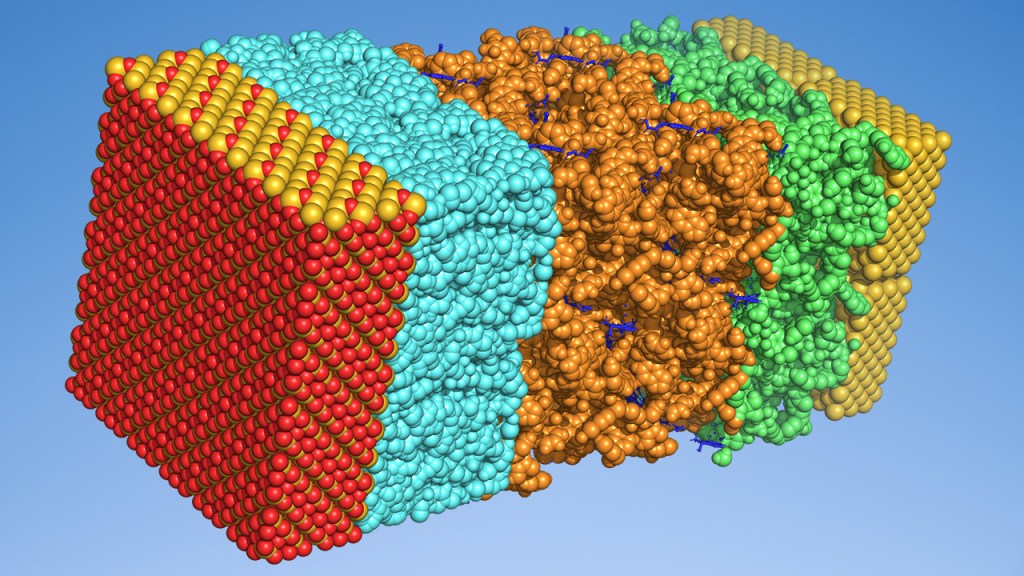
Many advanced electronic devices – such as OLEDs, batteries, solar cells, and transistors – rely on complex multilayer architectures composed of multiple materials. Optimizing device performance, stability, and efficiency requires precise control over layer composition and arrangement, yet experimental exploration of new designs is costly and time-intensive. Although physics-based simulations offer insight into individual materials, they are often impractical for full device architectures due to computational expense and methodological limitations.

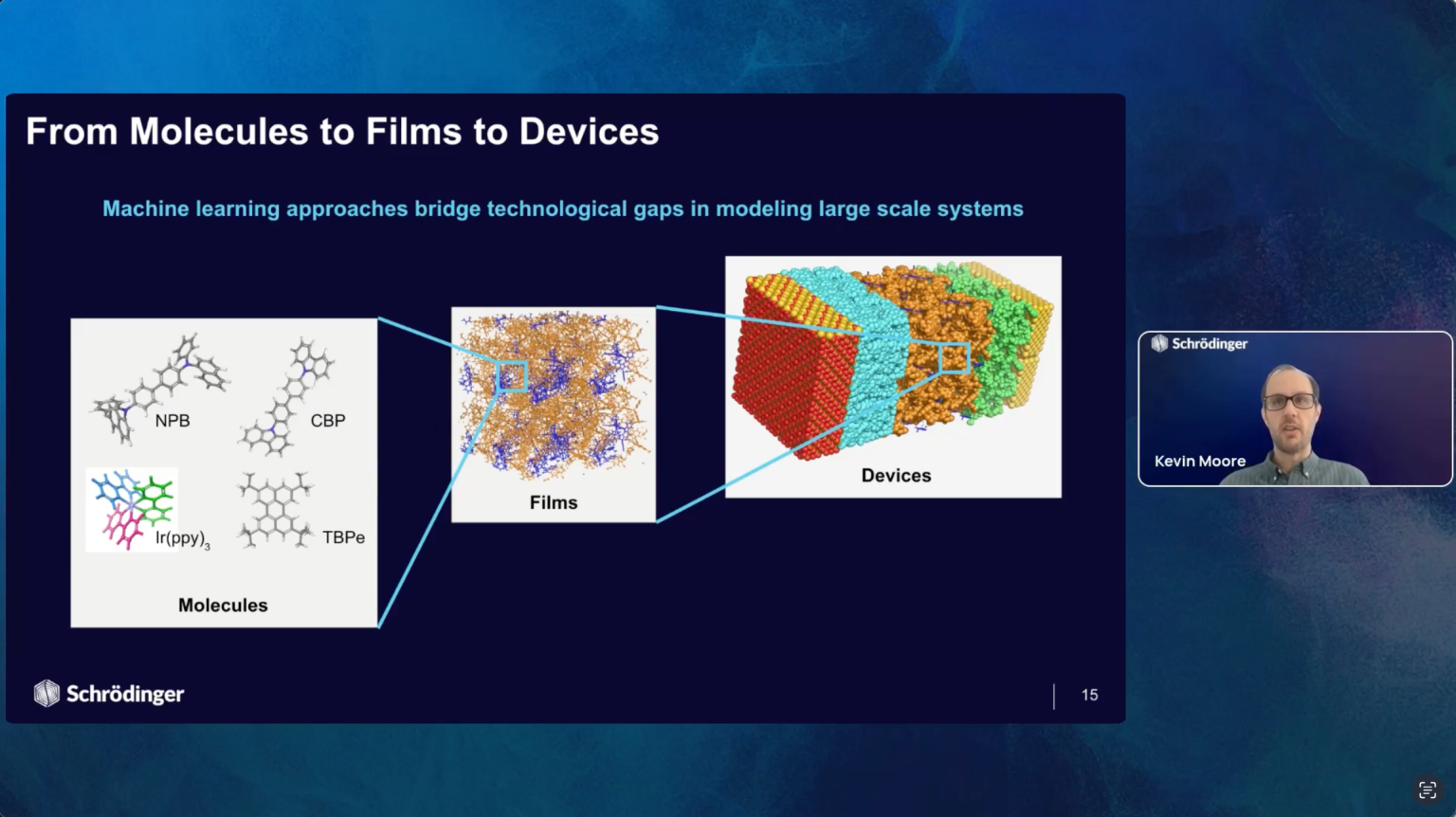
Schrödinger has developed a machine learning (ML) framework that enables users to predict key performance metrics of multilayered electronic devices from simple, intuitive descriptions of their architecture and operating conditions. This approach integrates automated ML workflows with physics-based simulations in the Schrödinger Materials Science suite, leveraging physics-based simulation outputs to improve model accuracy and predictive power. This advancement provides a scalable solution for rapidly exploring novel device design spaces – enabling targeted evaluations such as modifying layer composition, adding or removing layers, and adjusting layer dimensions or morphology. Users can efficiently predict device performance and uncover interpretable relationships between functionality, layer architecture, and materials chemistry. While this webinar focuses on single-unit and tandem OLEDs, the approach is readily adaptable to a wide range of electronic devices.

Key highlights:

  • A machine learning framework for modeling electronic device performance, allowing users to define architectural features to explore novel device configurations
  • Model accuracy demonstrated with a dataset of over 2,000 OLED architectures for multiple key performance metrics
  • Pre-trained ML models for six device performance metrics available out-of-the box, including external quantum efficiency, current efficiency, power efficiency, electroluminescence maximum peak position, bandwidth, and emission color
  • Intuitive graphical interface for designing, training, and exploring new chemistries and device architectures
  • Demonstration of the framework’s extensibility to a broad range of electronic devices

Who should attend:

  • Device developers
  • R&D leaders
  • Innovation managers
  • Digitization managers
  • Synthetic chemists
  • Computational materials scientists

Our Speaker

Kevin Moore

Senior Scientist II, Materials Science Software, Schrödinger

Kevin Moore is a scientist at Schrӧdinger working on development of multiscale and hybrid physics-AI predictive frameworks for discovery and optimization of next generation materials, devices and fabrication. Prior to joining Schrӧdinger, he earned a Ph.D. in computational chemistry from the University of Georgia and conducted postdoctoral research at Argonne National Laboratory. He specializes in quantum physics-based calculations to predict the structure, properties, and reactivity of chemical systems. Recently, his efforts have been on training and validating new ML architectures and models, leveraging first-principles data, informatics and physics featurization. These new AI frameworks bridge chemistries and length scales, spanning from atoms to devices. One particular target area involves the design of electronic devices such as OLEDs, batteries, solar cells, transistors, and more.

Molecules & Models – A Virtual Science Fair Educator’s Week 2026

Virtual Science Fair

Molecules & Models – A Virtual Science Fair

CalendarDate & Time
  • May 1st, 2026
LocationLocation
  • Virtual

Applications for the virtual science fair have closed. Finalists will be notified via email. Thank you!

As part of Educator’s Week, Schrödinger will host its second annual Virtual Science Fair on May 1st, 2026. This free event invites both undergraduate and graduate students from across the U.S. to showcase their research, engage in discussions with Schrödinger judges, and compete for awards recognizing their creativity, effort, and commitment.

Schrödinger’s Virtual Science Fair is open to undergraduate and graduate student participants across a wide range of disciplines, including, but not limited to, biomedical, biological, and chemical sciences; ecology and environmental sciences; computer science; mathematics; physical sciences; and engineering. While all projects must incorporate a computational component, the use of Schrödinger software is not required.

Computational components may be through: artificial intelligence, experimental design, and molecular modeling in the fields of drug discovery, agrochemicals, materials science, medicinal and organic chemistry, pharmaceuticals, polymers, catalysis, computational biology, biophysics or theoretical chemistry.

Winners will receive a cash prize and access to Schrödinger online courses, supporting their continued exploration of computational science.

Presentation recordings will be posted online following the science fair.

Key Dates:

  • Abstract applications: Open now
  • Abstract applications close: Monday, March 30th
  • Finalists are notified: Friday, April 10th
  • Top applicants present their work: Friday, May 1st

Application Details:

Applications are open until Monday, March 30th and require a brief abstract (300-word maximum) summarizing key aspects of the project:

  • Title – Clear and informative, reflecting the study’s focus.
  • Background & Research Question – Briefly introduce the topic, its importance, and your hypothesis.
  • Methods – Summarize key techniques, materials, or computational approaches.
  • Results – Highlight main findings, trends, or discoveries (even if preliminary).
  • Conclusion & Implications – Explain the broader impact, applications, and/or future directions.

Applicants may also attach an optional statement of support from a research advisor (1-page maximum).

Finalists will be invited to present their work to a Schrödinger judging panel in a 10-minute presentation on Friday, May 1st, 2026.

Contact us:

Please reach out to teaching@schrodinger.com for questions pertaining to the application process or science fair.

Diverse computational strategies enable the discovery of p38α-MK2 molecular glues

FEB 5, 2026

Diverse computational strategies enable the discovery of p38α-MK2 molecular glues

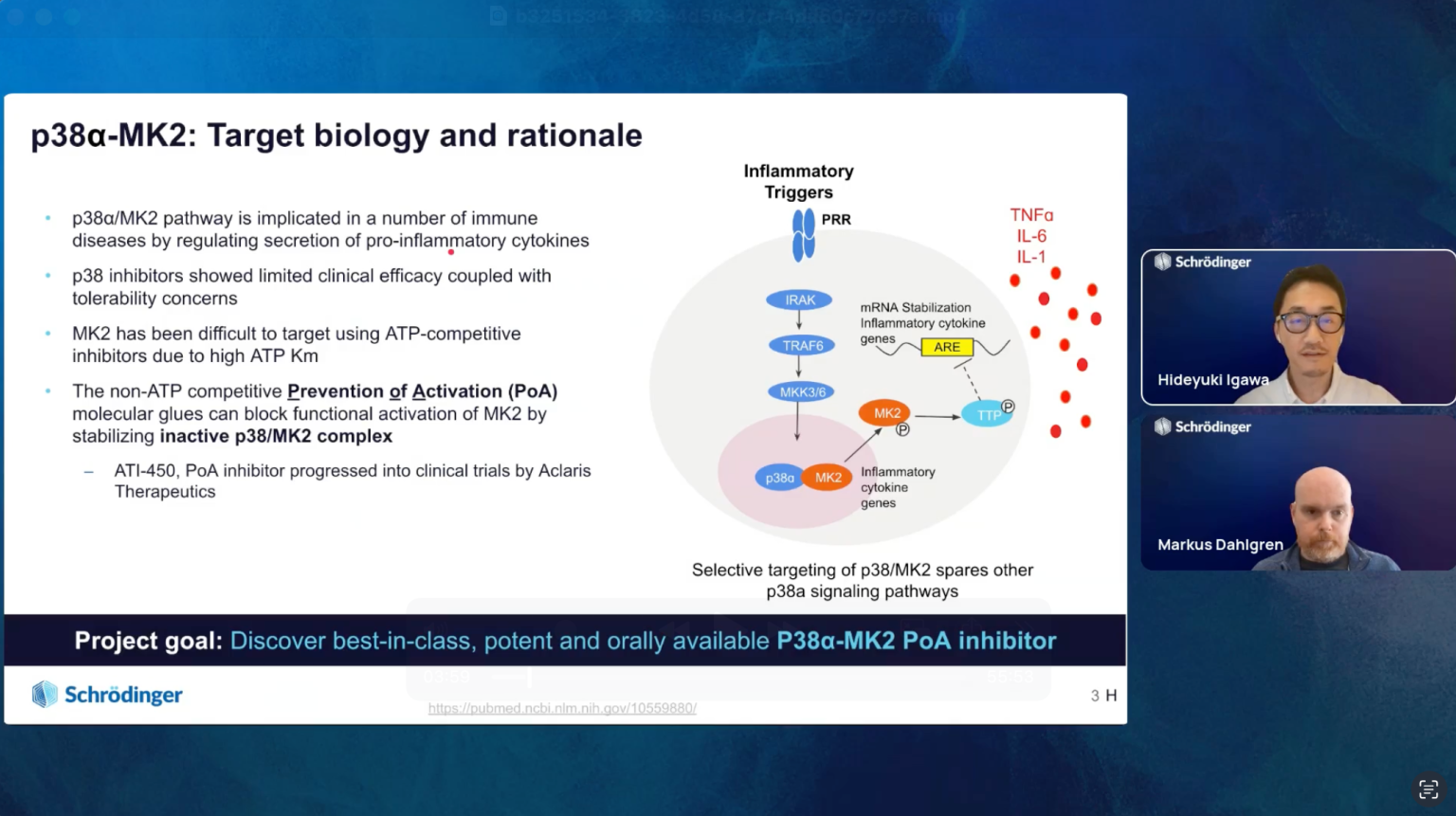
Molecular glues continue to offer drug hunters novel opportunities to target “undruggable” proteins – given their ability to enhance protein-protein interactions, their small size, and advantageous physicochemical properties (as compared to PROTACs). Recent work done by Schrödinger’s therapeutics group has shown how p38α-MK2 molecular glues can be designed that demonstrate superior properties relative to traditional orthosteric inhibitors. The resulting compounds have already demonstrated impact, as shown by a pronounced reduction in TNFα levels after PO dosing in LPS mouse models, and represent the validation of this modeling workflow for molecular glues.

In this webinar, Schrödinger’s medicinal and computational chemists will show how they used a multipronged computational design strategy to discover multiple structurally diverse, potent, and highly selective molecular glues. By using Schrödinger’s industry-leading free energy perturbation technology (FEP+), coupled with AutoDesigner, and machine learning tools (including AL-FEP and generative ML), the team successfully navigated vast chemical space while optimizing across multiple project criteria. For R&D teams, this workflow provides a blueprint for tackling challenging targets and accelerating the discovery of novel molecular glues for your own complex protein systems.

Webinar Highlights:

  • Learn new in silico strategies for the discovery of structurally diverse, potent, and selective molecular glues
  • See how Schrödinger’s medicinal and computational chemists use enumerations, physics-based methods, and AI/ML tools to tackle drug discovery and multiparameter optimization challenges
  • Ask questions to gain further insight from the speakers to apply to your work

Our Speakers

Hideyuki Igawa

Senior Director, Schrödinger

Hideyuki Igawa is a senior director in the therapeutics group at Schrödinger, where has been leading multiple drug discovery programs using Schrödinger’s computational platform. He received his MS in Chemistry from Kyoto University, then obtained his Ph.D. in Pharmaceutical Sciences from Nagoya City University. He previously worked at Takeda Pharmaceuticals and Tri-Institutional Therapeutics Discovery Institute, where he contributed to the discovery of multiple small molecule drug candidates towards the clinic.

Markus Dahlgren

Senior Principal Scientist, Schrödinger

Markus Dahlgren is a computational chemist at Schrödinger, where he has led drug discovery efforts using molecular modeling technologies since 2013. He received his Ph.D. in Organic Chemistry from Umeå University in Sweden in the laboratory of Professor Mikael Elofsson and subsequently completed a postdoctoral fellowship at Yale University in the laboratory of Professor William Jorgensen. His expertise bridges synthetic organic chemistry and computational methods, accelerating the discovery and development of novel small-molecule therapeutics.