Organic Electronics

Unlock the next generation of organic electronics

Organic Electronics

Discover and optimize organic electronic materials at the molecular level

The reduced weight, flexibility and low-cost of organic electronics has led to their strong — but delivering the next generation of high performance organic electronics remains a challenge.

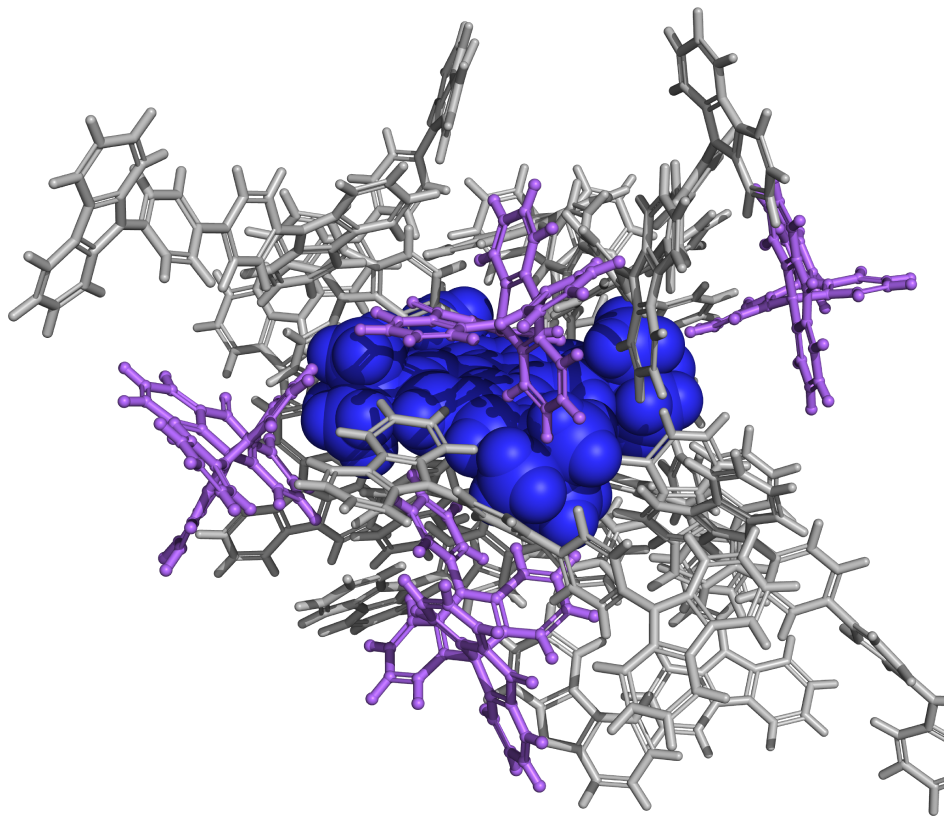
With Schrödinger’s digital chemistry platform, you can access advanced computational workflows leveraging both physics-based modeling and machine learning to discover optimal organic electronic materials, with good conductivity, mechanical and thermal stability, and suitability for fabrication — setting you on the path to deliver materials that enable the future of displays and flexible electronics.

background pattern

Intuitive computational workflows designed by experts in organic electronics

Easy-to-use system builders for all material types
Powerful workflows for molecular simulation, machine learning, and data analysis
Dedicated customer support and extensive training resources

Your toolkit for organic electronics innovation

Optimize device efficiency

  • Compute carrier mobility and optical properties such as refractive index, along with molecular orientation in films for achieving high outcoupling efficiency
  • Accurately predict key properties of optoelectronic materials including color, spectrum, excited states, and intersystem crossing
  • Model the characteristics of electronic transitions including hyperfluorescence and luminescence quenching

Extend device lifetime

  • Better understand the atmospheric impact on device lifetime, such as exposure to oxidants
  • Accurately predict the thermal and electrochemical degradation of materials
  • Model and gain insights into the degradation of excitons

Optimize Fabrication

  • Predict key thermophysical properties such as mechanical response and glass transition temperature (Tg)
  • Simulate layer fabrication processing, including vapor deposition and solution processing
  • Model film morphology, including solvent, as well as materials compatibility during processing

Technology in action

Panasonic leverages Schrödinger’s platform to design novel materials faster Blog
Panasonic leverages Schrödinger’s platform to design novel materials faster

Learn how Panasonic incorporated molecular simulations to their innovation approach to speed up the development of new materials.

Case studies & webinars

Discover how Schrödinger technology is being used to solve real-world research challenges.

Materials Science Webinar

Accelerating materials discovery with physics-informed AI/ML

This webinar series will explore how cutting-edge computational methods are revolutionizing the design and optimization of pharmaceutical drugs, biologics , and advanced materials.

Materials Science Webinar

Advancing machine learning force fields for materials science applications

In this webinar, we will introduce Schrödinger’s state-of-the-art MLFF architecture, called Message Passing Network with Iterative Charge Equilibration (MPNICE), which incorporates explicit electrostatics for accurate charge representations.

Materials Science Webinar

Schrödinger 디지털 플랫폼 솔루션을 응용한 디스플레이 소재/소자 및 배터리 소재 기술의 혁신

최근 계산과학과 신소재기술의 발전에 힘입어, 컴퓨터를 활용한 디지털 재료 설계 솔루션을 보다 쉽고 빠르게 연구개발에 적용할 수 있는 기회가 마련되었습니다.

Materials Science Webinar

Accelerating chemical innovation with AI/ML: Breakthroughs across materials applications

In this webinar, we will explore how AI/ML is driving impactful advancements in materials innovation, highlighting case studies that illustrate cutting-edge ML techniques in diverse applications.

Materials Science Webinar

Accelerating OLED innovation with multi-scale, multi-physics simulations

Join us to explore how integrated digital workflows drive the design of next-generation, high-performance OLEDs.

Materials Science Webinar

High-performance materials discovery: A decade of cloud-enabled breakthroughs

This talk will showcase how Schrödinger’s integrated materials science platform enables massive parallel screening and de novo design campaigns across diverse applications.

Materials Science Webinar

How Physics-based Modeling and Machine Learning Enable Accelerated Development of Battery Materials

In this webinar, we focus on examples to demonstrate the application of automated solutions for accurate prediction of thermodynamic stability and voltage profile of cathode materials, ion diffusion pathways and kinetics in electrode materials, transport properties of liquid electrolytes and modeling the nucleation and growth of solid electrolyte interphase (SEI) layers using Schrödinger’s SEI simulator module.

Materials Science Webinar

AI/ML meets physics-based simulations: A new era in complex materials design

In this webinar, we demonstrate the application of this combined approach in designing materials and formulations across diverse materials science applications, from battery electrolytes and fuel mixtures to thermoplastics and OLED devices. 

Materials Science Webinar

Webinar Series: From Molecules to Materials Applications

In this webinar series, we present molecular modeling techniques and their transformative impact on Materials Science research using the Schrödinger Materials Science tools.

Materials Science Webinar

Leveraging atomistic simulation, machine learning, and cloud-based collaborative ideation for display materials discovery

In this webinar, we explore the union of physics-based simulations, machine learning (ML), and cloud-native collaboration and informatics tools in revolutionizing R&D innovation for display materials.

Featured courseMolecular modeling for materials science applications: Organic electronics course

Molecular modeling for materials science applications: Organic electronics course

Online certification course: Level-up your skill set in organic electronics modeling

Learn how to apply industry-leading computational software to predict key optoelectronic properties to accelerate the discovery of novel materials for organic electronics.

  • Self-paced learning content
  • Hands-on access to Schrödinger software
  • Guided and independent case studies
Learn More

Documentation & Tutorials

Get answers to common questions and learn best practices for using Schrödinger’s software.

Materials Science Tutorial

Locating Adsorption Sites on Surfaces

Learn how to locate adsorption sites on surfaces.

Materials Science Tutorial

Computational Ellipsometry

Learn how to compute the refractive index and extinction coefficient of systems of organic optoelectronics.

Materials Science Documentation

Machine Learning Force Fields

Machine Learning Force Fields (MLFFs) offer a novel approach for predicting the energies of arbitrary systems.

Materials Science Tutorial

Machine Learning Force Field

Learn how to use machine learning force field optimization methods to prepare and simulate various systems.

Materials Science Documentation

MS Reactivity

Automated workflows for design, optimization, and unsupervised mechanism discovery in molecular chemistry.

Materials Science Documentation

MS Informatics

Automated machine learning tools for materials science applications

Materials Science Documentation

MS Dielectric

An automatic workflow to calculate dielectric properties and refractive index.

Materials Science Documentation

MS Mobility

Atomistic simulation and analysis of charge mobility in solid-state films of organic semiconductors.

Materials Science Documentation

GA Optoelectronics

A design solution for novel molecular materials in optoelectronic applications based on a generative algorithm.

Materials Science Documentation

Active Learning Applications

Active Learning Glide documentation including online help and user manual.

Key Products

Learn more about the key computational technologies available to progress your research projects.

OLED Device ML

Machine learning solution to investigate relationships between the architecture and performance of OLED devices for accelerated screening

Virtual Cluster

Secure, scalable environment for running simulations on the cloud

GA Optoelectronics

Design solution for novel molecular materials in optoelectronic applications based on a generative algorithm

Jaguar

Quantum mechanics solution for rapid and accurate prediction of molecular structures and properties

Desmond

High-performance molecular dynamics (MD) engine providing high scalability, throughput, and scientific accuracy

MS Mobility

Atomistic simulation and analysis of charge mobility in solid-state films of organic semiconductors

OPLS4 & OPLS5 Force Field

A modern, comprehensive force field for accurate molecular simulations

DeepAutoQSAR

Automated, scalable solution for the training and application of predictive machine learning models

LiveDesign

Your complete digital molecular design lab

Publications

Browse the list of peer-reviewed publications using Schrödinger technology in related application areas.

De novo design of molecules with low hole reorganization energy based on a quarter-million molecule DFT screen: Part 2

Staker J et al. J. Phys. Chem. A 2022, 126, 34, 5837–5852

Design of organic electronic materials with a goal-directed generative model powered by deep neural networks and high-throughput molecular simulations

Kwak S.H et al. Front. Chem., 17 January 2022

Design and Synthesis of Novel Oxime Ester Photoinitiators Augmented by Automated Machine Learning

Kwak S.H et al. Chem. Mater. 2022, 34, 1, 116–127

Software and services to meet your organizational needs

Software Platform

Deploy digital materials discovery workflows with a comprehensive and user-friendly platform grounded in physics-based molecular modeling, machine learning, and team collaboration.

Research Services

Leverage Schrödinger’s expert computational scientists to assist at key stages in your materials discovery and development process.

Support & Training

Access expert support, educational materials, and training resources designed for both novice and experienced users.