Standing out in a competitive landscape: The power of structure-based biologics design recording

APR 23, 2026

Standing out in a competitive landscape: The power of structure-based biologics design

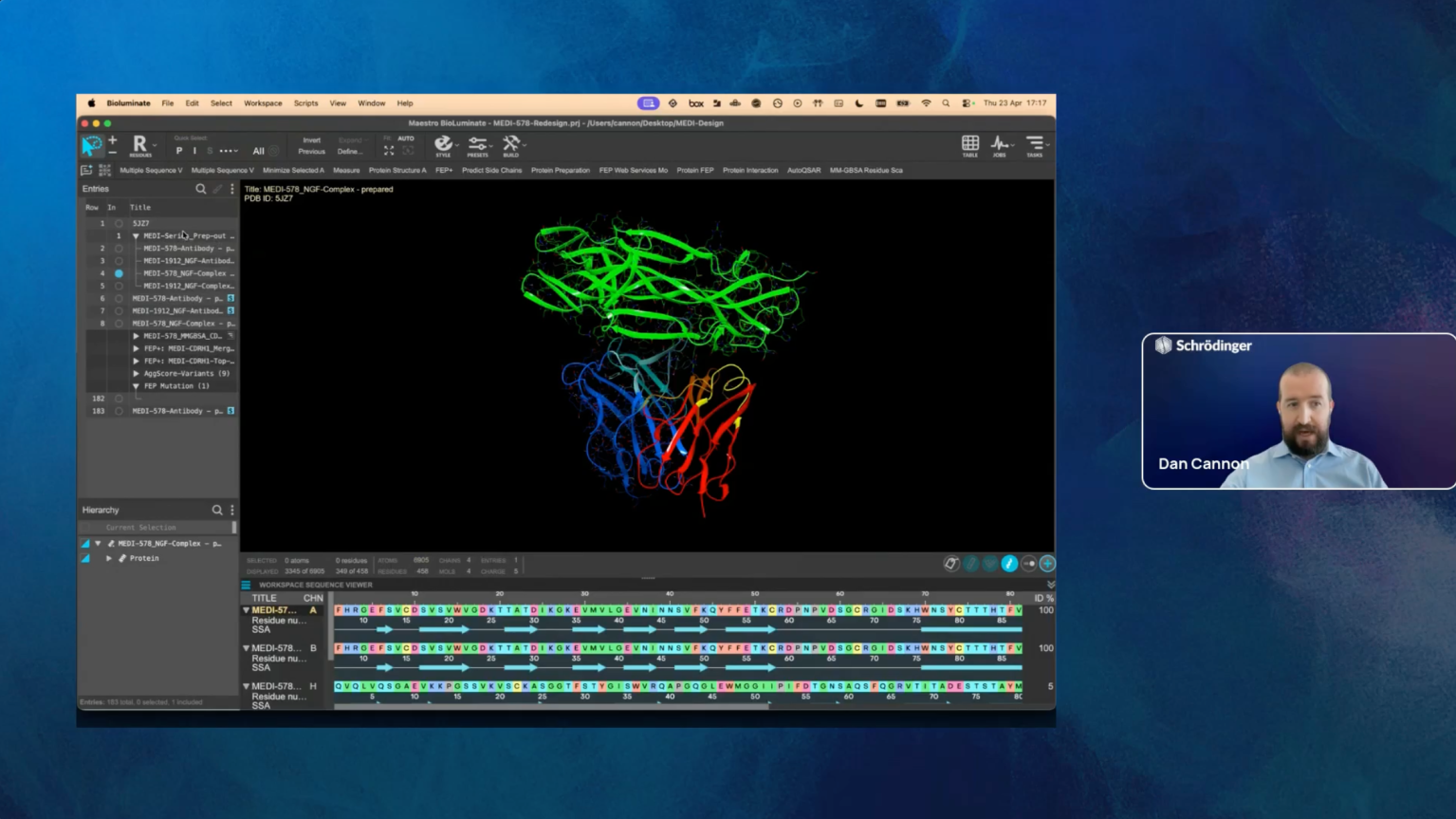
In a competitive landscape, the success of a biologics program depends on the ability to identify high-quality candidates early. Traditional experimental screening approaches are often limited in that they are directed to a singular function of the protein, carry liabilities, or have relatively low hit rates. Schrödinger’s protein design toolkit, powered by Protein FEP+, offers a way to rapidly ideate and assess multiple key features of best-in-class therapeutics. Through computational optimization with advanced, but easy to use, in silico methods, biologists can de-risk molecules and improve experimental hit rates. Affinity, pH dependent affinity, specificity, stability, developability, and more can be evaluated in silico, enabling more efficient prioritization of molecules and delivering superior biologics with a >4x speed-up in development cycles.

Join our upcoming webinar to learn how to leverage advanced in silico methods to de-risk your molecules and increase your experimental success rates.

Highlights:

  • Intro to advanced in silico methods: An overview of high-fidelity structure-based modeling for modern biologics discovery
  • How to de-risk and optimize hit rates: How high-accuracy computational prioritization ensures you spend lab time only on the most promising candidates
  • FEP+ 101 for biologists: Understanding the physics-based workflow for high-accuracy affinity and stability predictions across diverse modalities
  • See it in action: A walkthrough of in silico lead optimization and residue scanning workflows in a real-world design context

Who should attend:

  • Bench Biologists and Protein Engineers looking for easy-to-use, comprehensive models to surpass the limitations of empirical screening
  • Current MM-GBSA Users seeking higher-fidelity predictions to identify superior variants and gain a competitive advantage
  • R&D Directors and VPs focused on engineering best-in-class biologics and accelerating their path to the clinic
  • Principal Investigators interested in modernizing their research with high-precision, structure-based design workflows

Our Speaker
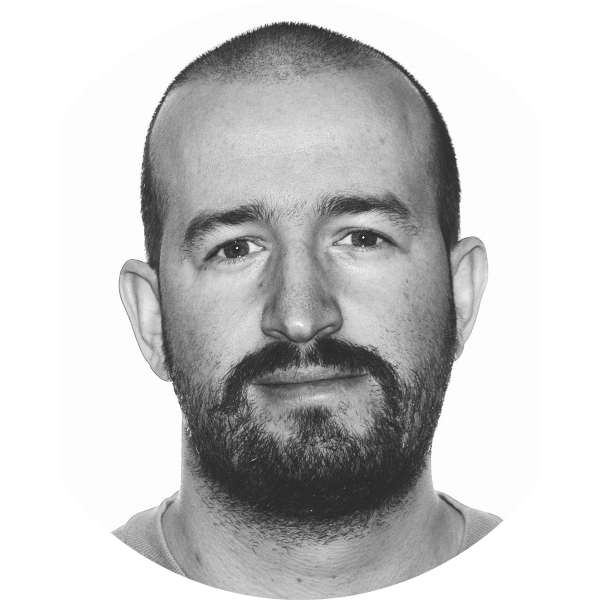
Dan Cannon

Director, Product Management, Applications Science, Schrödinger

Dan Cannon, Director, Head of Biologics Modelling is responsible for advancing Schrödinger’s biologics modelling platform capabilities. He is also the Product Manager for Schrödinger’s Protein Design Services. Dan received his Ph.D. from the University of Strathclyde in Glasgow, UK, under the supervision of Prof. Tell Tuttle. In 2016, he began working at MedImmune (now AstraZeneca) in Cambridge, UK, using computational approaches for therapeutic protein design before joining Schrödinger in August of 2018 as an Applications Scientist. Dan continues to publish novel approaches towards structure-based protein design and develop innovative computational solutions for the rational design of biologics.

Formulation ML and Optimization: Making advanced property prediction and experimental design fast and accessible recording

APR 22, 2026

Formulation ML and Optimization: Making advanced property prediction and experimental design fast and accessible

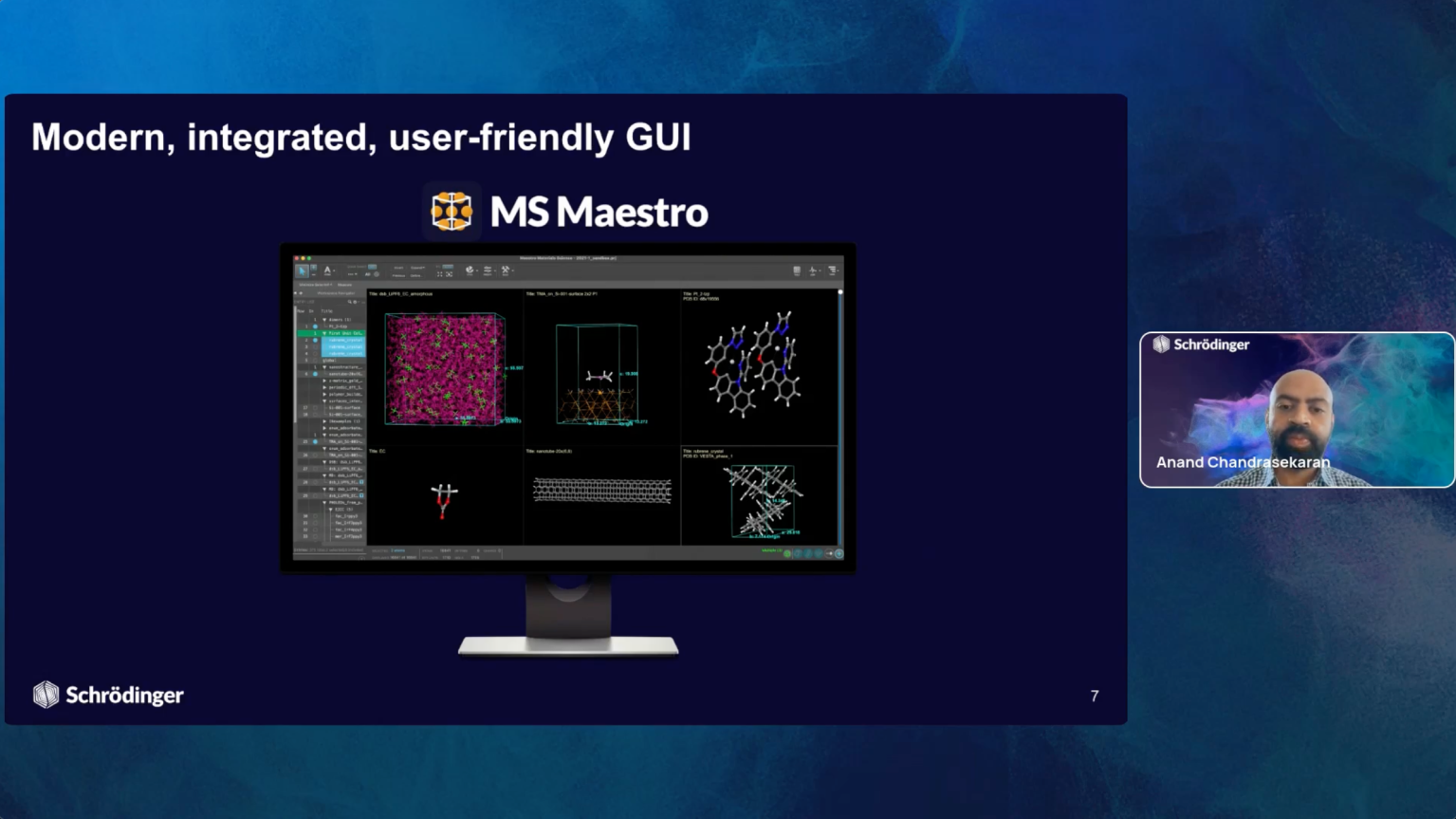
Many R&D teams are hindered from adopting AI/ML due to the complexity of software tools, steep learning curves, and limited data science support. Schrödinger’s Materials Science Suite is designed to address these challenges by providing a unified and easy-to-use AI/ML platform, powered by state-of-the-art ML technology and backed by a dedicated scientific support team.

Join our upcoming webinar to learn how your R&D organization can remove adoption barriers, accelerate discovery cycles, and align with national AI initiatives. In this webinar, we will demonstrate how MS Informatics, Formulation ML, and Formulation Optimization make advanced property prediction, model building, and ML-driven design of experiments simple, fast, and accessible – even for non-experts. We will showcase how easy it is to apply these tools using experimental datasets across broad MS applications, including formulations, consumer goods, batteries, pharmaceuticals, and beyond.

Join us and see live demos on:

  • Training accurate viscosity ML models for binary liquids that can be applied to a variety of material applications
  • Scaling up to complex shampoo formulations, where ML models can be predictive of complicated multicomponent systems and provide suggestions of next best experiments

Who should attend:

  • R&D leaders
  • Innovation managers
  • Digitization managers
  • Synthetic chemists
  • Materials scientists
  • Formulation scientists
  • Computational materials scientists

Our Speaker

Anand Chandrasekaran

Senior Principal Scientist, Materials Science Product and Discovery, Schrödinger

Anand Chandrasekaran joined Schrödinger in 2019 and he is currently the Product Manager of MS-Informatics. His expertise is in applying machine learning to different areas in Materials Science and computational modeling. He graduated from the group of Prof.Nicola Marzari in the Swiss Federal Institute of Technology, Lausanne with a PhD in Materials Science. Before joining Schrödinger, Anand also worked in the group of Prof. Rampi Ramprasad on a number of topics including polymer informatics, machine-learning force-fields, and machine-learning for electronic structure calculations.

Frontiers in Digital Chemistry: Tokyo | Day 1 CPG & Chemical Day

CalendarDate & Time
  • June 23rd, 2026
LocationLocation
  • Tokyo, Japan

Tokyo | Day 1 CPG & Chemical Day June 23 2026

この度、シュレーディンガーが開催するフラッグシップイベント「Frontiers in Digital Chemistry」のCPG & Chemical DAYを2026年6月23日に開催する運びとなりました。

本イベントは、既存ユーザーの知見共有にとどまらず、マテリアル開発における次世代R&Dのあり方を提示する場として、今年より大きく進化しました。

材料開発、CPG(消費財)、化学業界を対象に、計算化学・AI・データドリブンR&Dを軸として、第一線で活躍する研究者や企業、パートナーが一堂に会します。実践的な知見の共有とともに、将来の研究開発を見据えた洞察を得られる機会として、ぜひご活用ください。

Agenda

9:30 – 10:00 受付・Welcome coffee

10:00 – 10:10 オープニング

10:10 – 10:55 ロードマップ

10:55 – 11:40 弊社サイエンティスト講演

11:55 – 12:35 ユーザーパネルディスカッション1 (CPG)

12:35 – 14:05 ランチ

14:05 – 14:45 ユーザーパネルディスカッション2 (Chemical)

14:45 – 17:15 弊社サイエンティスト講演

17:15 – 17:25 クロージング

17:40 – 19:40 レセプション

※詳細は順次アップデートしてまいります。

【本イベントならではの特別プログラム】

グローバルトップ陣の来日とビジョン共有
弊社マテリアル部門 シニア・バイス・プレジデントの Mathew D. Halls をはじめ、最高商務責任者(CCO)などの経営陣が来日。最先端の製品ロードマップと、デジタルケミストリーが切り拓く未来像を直接お届けします。

圧倒的な実践知の共有
世界的な消費財メーカーや国内の先進ユーザーをお招きし、実際のプロジェクトで得られた成功事例や、ビジネスインパクトにつながる具体的な活用法をご紹介いただきます。

トップ研究者同士の濃密なネットワーキング
ランチ、パネルディスカッション、レセプションを通じて、業界のフロントランナーが集結。計算化学の未来を「共に描く」ための、密度の高い交流機会をご提供します。

英語セッションも安心のサポート体制
英語で実施されるセッションについては、翻訳資料の提供を予定しています。また、日本人サイエンティストが同席し、質疑応答もサポートいたします。

【 開催概要】

  • イベント名: Frontiers in Digital Chemistry DAY 1 | CPG & Chemical
    日時: 2026年6月30日(火)9:30 – 19:30 (レセプション 17:30 – 19:30)
  • イベント形式:会場開催です。オンライン配信はございません。
  • 会場: 東京ミッドタウン八重洲 5F 八重洲ミッドタウン カンファレンス
  • 参加費: 無料(事前登録制)

※登録受付は6月15日(月)23:59までといたします。
※会場の収容可能人数には限りがあり、登録受付期日前であっても、上限に達し次第締め切りとなります。お早めにお申し込みください。
※参加者様へは、別途メールにて詳細をご案内いたします。

【お申込みにあたって】
所属企業または所属機関のメールアドレスにて、登録をお願いします。
フリーメールや個⼈メールアドレスでご登録の場合などは、出席をご遠慮いただく場合がございます。
同業他社さまには参加をご遠慮頂いております。ご理解のほど宜しくお願い致します。

※ご質問、ご不明な点がございましたら下記までお問い合わせください。
シュレーディンガー株式会社 FIC1事務局
E-mail: info-japan@schrodinger.com

高機能素材Week大阪マテリアルDX展出展 @インテックス大阪

Event

【5月13日(水)~15日(金)】高機能素材Week 出展

CalendarDate & Time
  • May 13th-15th, 2026
LocationLocation
  • Osaka, Japan

分子シミュレーション技術の進化により、原子・分子レベルの現象をコンピュータ上で再現・解析できる時代が到来しています。さらに、機械学習と組み合わせることで、実験データが限られていても、高精度な材料予測・設計が可能になってきました。シュレーディンガーは、最先端の分子シミュレーションとAI/ML技術、そしてそれらを融合した独自のデジタルプラットフォームにより、お客様の解析力向上と研究開発の効率化を強力に支援します。

本展示ブースでは、これらの技術の概要や活用事例について、専門スタッフがわかりやすくご紹介し、ご質問にもお答えします。

※会期中、弊社展示ブースにてセミナーを開催いたします。
場所: 弊社展示ブース
テーマ: 機械学習と原子レベルシミュレーションで加速する!次世代ポリマー材料開発

さらに、各ソフトウェアを実機体験いただけます。ぜひお立ち寄りください。

【展示会情報】
展示会名:高機能素材Week内 第1回マテリアルDX展
会期:2026年5月13日(水)~15日(金)10:00 ~ 17:00
会場:インテックス大阪3号館
小間番号:K21-26

Lunch & Learn: Advanced Solutions for Medicinal Chemistry Paris 2026

Lunch and Learn
CalendarDate & Time
  • June 8th, 2026
LocationLocation
  • Paris, France
Register

Advanced Solutions for Medicinal Chemistry

June 8, 2026

Boosting MedChem Success: Schrödinger Solutions for ADMET Challenges
Future4care campus, Paris 13th arrondissement – 10:00 to 14:00 CET

Dear Medicinal Chemists,

Ever found yourself struggling to predict brain permeation (Kp,uu), efflux, hERG inhibition, or CYP3A4 TDI in your projects? Take a break from your other obligations and let’s talk!

We are inviting you to join us in an interactive and free-of-charge session on Monday, June 8th at Future for Care in Paris for an extended version of our Lunch and Learn series. Schrödinger scientists will be diving deep into these crucial areas, bringing you practical solutions and expert insights, and demonstrating how modeling approaches can significantly help medicinal chemists make their projects more efficient and successful.
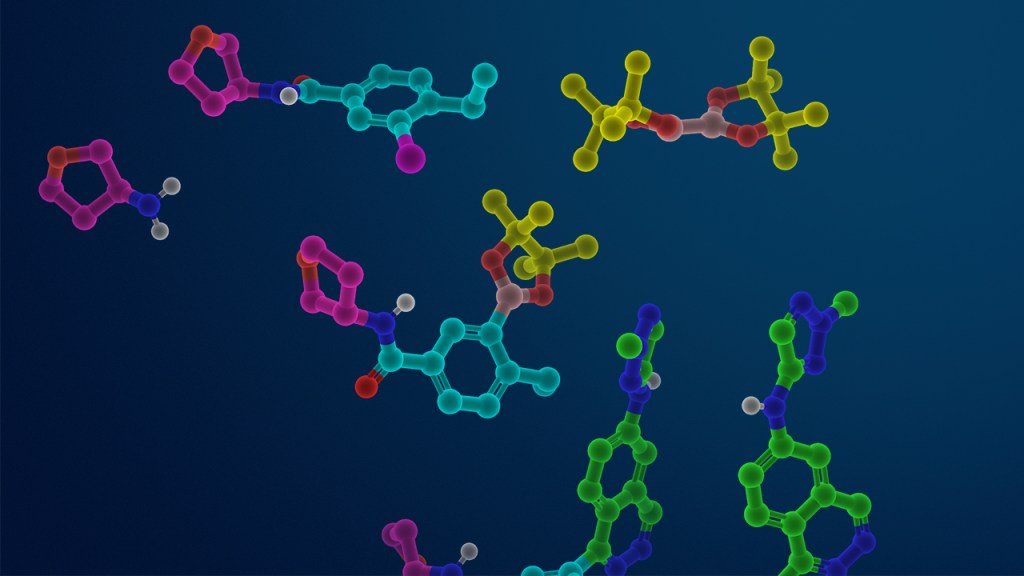
Additionally, they will showcase RetroSynth, our AI-driven platform designed to optimize retrosynthesis at scale. RetroSynth identifies reliable, short and efficient synthesis routes, accelerating go/no-go decisions by automatically generating and scoring thousands of plausible synthetic pathways.

You can either join for the whole event or solely for the presentation session.

Date & Time:

Monday, June 8th, 2026

From 10:00 to 14:00 CET

Program:

+ Welcome Coffee
09:30 – 10:00

Interactive Session on Advanced Modeling Approaches in Medicinal Chemistry

10:00 – 12:30

David Papin, Principal Scientist II, Applications Science
Zeineb Si Chaib, Principal Scientist II, Applications Science

  • Brain Penetration with Kp,uu: Strategy for predicting central nervous system (CNS) drug delivery.
  • Efflux: Overcoming drug efflux mechanisms.
  • Cyp3A4 TDI: Understanding and addressing CYP3A4 time-dependent inhibition.
  • hERG: Mitigating hERG liability by using a quantum mechanics-based pKa calculation and a structure-based approach.

Our seminar will use the DLK story as a framework to explore the topics in detail throughout our session. Additionally, we will showcase Retrosynth, our AI-driven platform designed to optimize retrosynthesis at scale.

+ Lunch
12:30 – 14:00

Discussion & Networking

14:00 – open end

Join us in the afternoon for a Q&A and networking session with our Scientists and Account Managers, providing an opportunity to present your questions and challenges, which the Schrödinger team will endeavor to address.

Register today to secure your seat!

The seminar is free to attend but preregistration is required as seats are limited. Previous-experience with the Schrödinger suite is not required.

Register

Our Speakers

David Papin

Principal Scientist, Schrödinger

Zeineb Si Chaib

Senior Scientist, Applications Science, Schrödinger

Accelerating amorphous solid dispersion (ASD) formulation with Schrödinger’s Materials Science Suite

Webinar

Accelerating amorphous solid dispersion (ASD) formulation with Schrödinger’s Materials Science Suite

CalendarDate & Time
    • May 12, 2026,   8:00 AM PDT | 11:00 AM EDT
    • May 26, 2026,   15:00 CEST | 14:00 BST
LocationLocation
  • Virtual

Amorphous solid dispersions (ASDs) remain an essential strategy for enhancing oral bioavailability of poorly water-soluble drugs. Traditionally, the advanced molecular modeling used to inform formulation design has been exclusively the domain of computational specialists. This webinar will demonstrate how experimental formulators can now actively participate in this process. We will showcase the accessibility of computational screening within Schrödinger’s Materials Science Suite, enabling bench scientists to readily evaluate standard polymer excipients and generate precise, confident lists for laboratory testing.

Divided into a presentation of core capabilities and a practical software walkthrough, this session will demonstrate how to seamlessly integrate computational insights from mixing energies to glass transition temperatures (Tg) into your existing R&D pipeline to reduce experimental iteration and accelerate time-to-market.

Webinar Highlights:

  • Democratizing Molecular Modeling
    Schrödinger’s Materials Science Suite offers a platform for experimentalists to incorporate computational screening into your formulation workflows without requiring a background in computational chemistry
  • The Digital Funnel
    A review of the simulation pipeline, moving from rapid compatibility screening (e.g., HPMCAS and copovidone) to detailed physical property predictions (e.g., moisture sorption and Tg)
  • Workflow Walkthrough
    A step-by-step look at building a polymer-API system using an user-friendly GUI
Register – MAY 12, 11AM EDT (AMER)
Register – MAY 26, 14:00 BST, (EMEA)

Our Speakers

Ben Coscia

Principal Scientist II, Materials Science Modeling Services, Schrödinger

Shiva Sekharan

Global Portfolio Leader, Formulations & CSP, Schrödinger

Sivakumar (Shiva) Sekharan, Ph.D., is the Global Portfolio Leader of Formulations and CSP at Schrödinger and is responsible for driving the business development efforts in the formulations space. Before arriving at Schrödinger, Shiva held a business development role at XtalPi Inc., where he led the US solid-state services unit, worked with departmental heads to establish effective goals, sales targets, outlined procedures and best practices and provided strategic directions to increase revenue. Shiva graduated from the University of Duisburg-Essen, Germany with a PhD in Theoretical Chemistry followed by postdoctoral training at the Max-Planck Institute for Polymer Science, Emory University, Fukui Institute for Fundamental Chemistry and Yale University. Shiva is an accomplished computational chemist, with strong research expertise in the areas of solid-state chemistry and drug discovery.

Introducing RetroSynth: Breaking the synthesis bottleneck with AI and physics-based modeling Japan recording

FEB 11, 2026

RetroSynth:AIと物理ベースのモデリングで合成のボトルネックを乗り越える

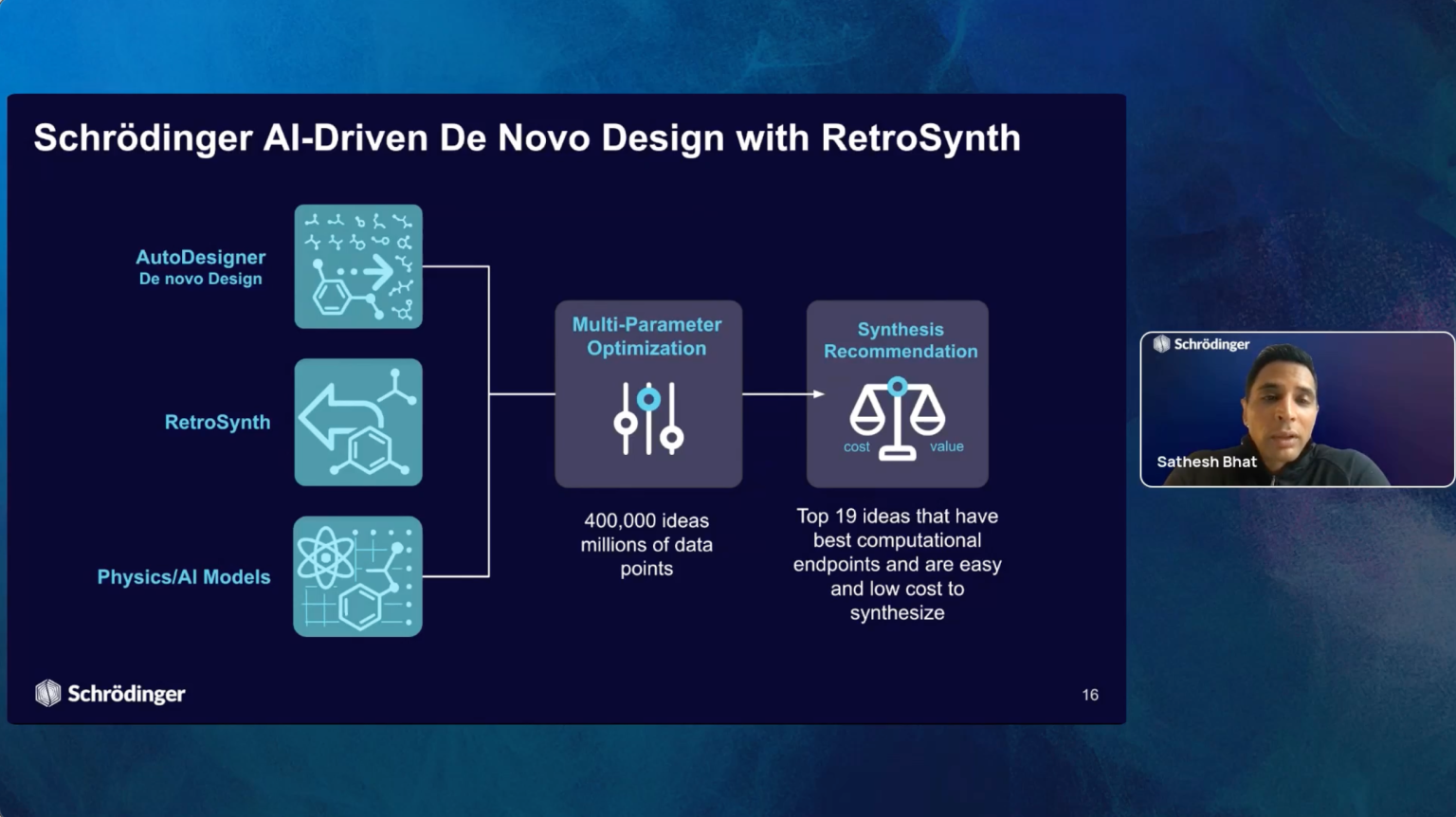
シュレーディンガーのAI駆動型合成計画プラットフォーム「RetroSynth」を新たにご紹介する動画です。RetroSynthは、高度な深層学習アルゴリズムを活用することで、従来の逆合成解析を加速し、スケーラブルにするよう設計されています。

本プラットフォームは、分散型クラウドネイティブのモンテカルロ木探索(MCTS)アーキテクチャを使用して極めて網羅的な探索を実行し、最適かつ正確で、費用対効果の高い合成ルートを予測・スコアリングします。複雑なターゲット化合物から実行可能な合成計画への移行を、正確かつ効率的に支援します。リアルタイムのビルディングブロックデータとAI、そして物理ベースのモデリングを統合することで、RetroSynthは数百万ものde novoデザインされた分子に対する正確な逆合成解析を可能にし、ヒット同定およびリード最適化におけるプロジェクトの大幅な加速とコスト削減をもたらします。

本ウェビナーでは、以下の内容について詳しく解説いたします。

  • RetroSynthの紹介:当社のプロダクトマネージャーが、RetroSynthの仕組みや、従来の逆合成解析ソリューションに対する優位性について詳しく解説します。
  • ライブデモ:RetroSynthが実際に動作する様子をご覧いただけます。

■ 対象となるお客様

  • メディシナルケミスト(創薬化学者):リード最適化とSAR(構造活性相関)探索を加速させたい方
  • プロセスケミスト:開発の初期段階で、スケールアップ可能かつ費用対効果の高い合成ルートを特定することに注力している方
  • 計算化学者:標準的な研究開発ワークフローへのML(機械学習)/AIフレームワークの統合に関心のある方
  • 研究開発ITディレクター:化学合成向けのエンタープライズクラスのケモインフォマティクス・ソリューションを評価・検討している方

■本動画の視聴にあたり、以下の点にご留意ください。

  • 自動翻訳字幕の制限: 本動画の字幕は自動翻訳を用いて生成されています。 専門用語等、不自然な表現や、不正確な訳出が含まれる可能性がございます。
  • 詳細情報の参照: 厳密な背景や詳細については、直接弊社までお問い合わせください。

Our Speakers

Aditya Kaushik

Senior Scientist II, Life Science Software, Schrödinger

機械学習(ML)リサーチサイエンティストであり、シュレーディンガーにおける生成デザインおよび逆合成技術のリード開発者。進行中の創薬プログラムにおけるDMTA(Design-Make-Test-Analyze:設計・合成・評価・解析)サイクルを加速し最適化するための機械学習アプローチの研究、開発、および統合に注力しています。ジョンズ・ホプキンス大学にてコンピュータサイエンスおよび化学・生体分子工学を二重専攻し、理学士号(B.S.)を取得しました。

Sathesh Bhat

Executive Director, Therapeutics Group, Schrödinger

セラピューティクス・グループのエグゼクティブ・ディレクターとして、2011年にシュレーディンガーに入社。社内および提携先の創薬プログラムにおける計算化学分野の取り組みを統括しています。前職では、Merck社およびEli Lilly社で複数の創薬プログラムにおいて計算化学チームを牽引しました。マギル大学にて、結合自由エネルギーを予測するための構造ベースの手法の開発に関する研究で博士号(Ph.D.)を取得しています。複数の特許および論文の共同執筆者であり、計算化学の幅広いトピックについて継続的に論文を発表しています。

【留意点】

  • 予告なく動画の配信を中止することがあります。ご了承をお願いいたします。
  • 本動画は、ご登録いただいた方向けの機密性の高い技術情報を含んでおります。トラブル防止のため、以下の事項を遵守いただけますようお願い申し上げます。
  • 撮影・録画の禁止: 動画内のスライド、データのスクリーンショット撮影および録画・録音はご遠慮ください。

【お申込みにあたって】

職場・学校で使用されるメールアドレスをご入力ください。Gmail、キャリアメール等は利用できません。
参加お一人様につき一登録をお願いします。アクセスリンクの共有はご遠慮ください。
同業他社さまにはご参加をご遠慮頂いております。ご理解のほど宜しくお願い致します。

※ご質問、ご不明な点がございましたら下記までお問い合わせください。
シュレーディンガー株式会社
E-mail:info-japan@schrodinger.com

Fast, accurate, and tunable: Advancing battery materials innovation with Schrödinger’s Machine Learning Force Fields recording

APR 15, 2026

Fast, accurate, and tunable: Advancing battery materials innovation with Schrödinger’s Machine Learning Force Fields

The problem:

Developing next-generation energy storage solutions requires a deep understanding of complex, multiscale phenomena—from ion transport in electrolytes to the reactive formation of the solid-electrolyte interphase (SEI). Historically, researchers have been forced to choose between two extremes: the high accuracy but prohibitive computational cost of Density Functional Theory (DFT), or the speed of classical force fields that often lack the “physics” necessary to capture reactive events or complex chemistries. This “simulation gap” delays time-to-market and limits the ability to explore a vast chemical space.

The solution:

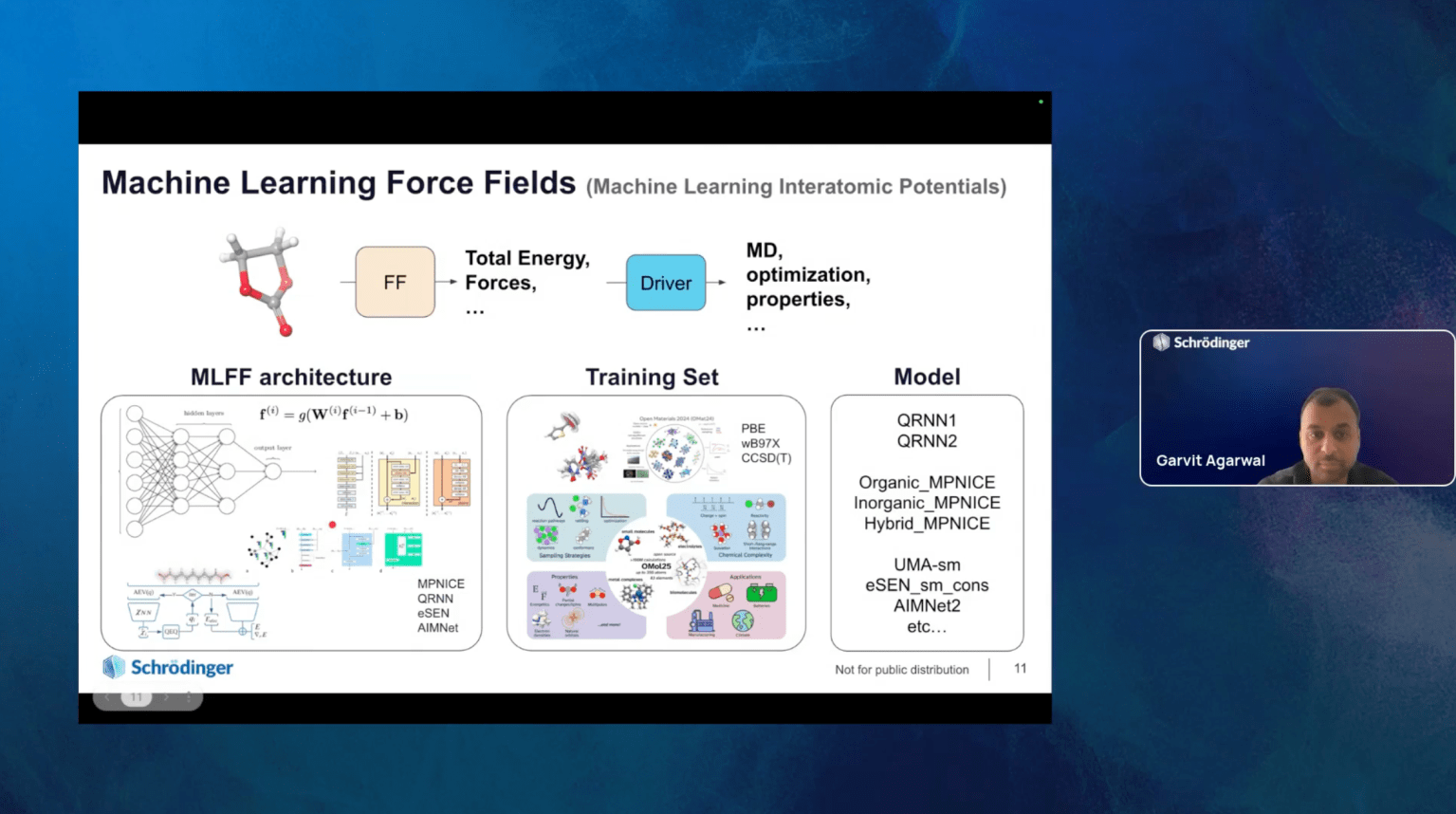
This webinar introduces Schrödinger’s state-of-the-art machine learning force field (MLFF) framework, featuring the MPNICE (Message Passing Network with Iterative Charge Equilibration) and QRNN (Charge Recursive Neural Network) architectures. By combining the accuracy of physics-based modeling with the transformative speed of machine learning, Schrödinger provides a “best-of-both-worlds” solution that eliminates traditional trade-offs. We will present live demos showcasing applications of MLFFs for accurate modeling of complex systems including liquid and solid-state electrolytes.

Key highlights:

  • Rapid Efficiency: Utilize GPU-accelerated engines like Desmond to accelerate the MD simulations, enabling accurate modeling of complex systems like electrolyte formulations and cathode coatings
  • Near-DFT Accuracy at Scale: Achieve quantum-level precision for energy and force predictions while simulating large systems at timescales previously reserved for classical MD
  • Unrivaled Tunability: Unlike “black-box” models, Schrödinger’s MLFFs are highly customizable, allowing researchers to incorporate explicit electrostatics and iterative charge equilibration to model ionic liquids and battery interfaces with high fidelity
  • Seamless Usability: Integrated within the intuitive Schrödinger Materials Science platform, these tools allow users to deploy advanced digital workflows without machine learning expertise

Our Speaker

Garvit Agarwal

Scientific Lead, Energy Storage Materials Science Group, Schrödinger

Garvit Agarwal is Senior Scientist and Scientific Lead for Energy Storage at Schrödinger, working to extend and apply molecular modeling tools for the accelerated discovery of next-generation clean energy technologies. Garvit obtained his Ph.D. in Materials Science and Engineering from the University of Connecticut. He worked as a post-doctoral researcher in the Materials Science Division at Argonne National Laboratory prior to joining the Materials Science team at Schrödinger.

Scaling drug discovery with Rich Friesner: What’s next at Schrödinger

In-Person Event

Scaling drug discovery with Rich Friesner: What’s next at Schrödinger

CalendarDate & Time
  • May 6th, 2026
LocationLocation
  • Schrödinger Cambridge Office
Register

We are pleased to invite you to a special scientific session with Richard Friesner, one of the leading scientists in computational chemistry who has been at the forefront of applying physics-based modeling and, more recently, AI-driven approaches to drug discovery.

Dr. Friesner is the William P. Schweitzer Professor of Chemistry at Columbia University, a member of the National Academy of Sciences, and has led groundbreaking work in molecular simulation and predictive modeling for decades. As a co-founder of Schrödinger, he continues to shape the scientific direction of the platform and its impact on modern drug discovery.

In this session, Dr. Friesner will share recent scientific advances and provide a forward-looking perspective on the integration of physics-based methods and AI in drug discovery. The discussion will highlight key innovations across Schrödinger’s platform, including predictive toxicology (with new kinase panel models and lead optimization capabilities), emerging applications of BRAID in cryoEM structure refinement, and retrosynthesis.

This will be an opportunity for scientific leaders to engage directly in a focused dialogue on how these innovations are being applied to accelerate discovery and improve decision-making across the R&D pipeline.

icon time 8:30 AM – 9:00 AM
Arrival, Registration, and Breakfast

icon time 9:00 AM – 9:15 AM
Opening and Vision

Speaker:
Richard A. Friesner, Co-founder, Board Member, and Scientific Advisory Chairman, Schrödinger

icon time 9:15 AM – 10:15 AM
Predictive Toxicology and Structure Enablement

Speaker:
Richard A. Friesner, Co-founder, Board Member, and Scientific Advisory Chairman, Schrödinger

icon time 10:15 AM – 10:45 AM
Predictive Toxicology Roundtable Discussion and Q&A

Speakers:
Richard A. Friesner, Co-founder, Board Member, and Scientific Advisory Chairman, Schrödinger

Edward Miller, Vice President of Protein Structure Modeling, Schrödinger

icon time 10:45 AM – 11:00 AM
Coffee Break

icon time 11:00 AM – 11:45 AM
Accelerating Drug Discovery Projects with RetroSynth and De novo Design

Speaker:
Sathesh Bhat, Vice President, Therapeutics Group, Schrödinger

icon time 11:45 AM – 1:00 PM
Lunch and Networking

Register

Our Speakers

Richard A. Friesner

Co-founder, Board Member, and Scientific Advisory Chairman, Schrödinger

Richard A. Friesner, Ph.D. has served as a member of our board of directors since August 1990, when he co-founded us. Dr. Friesner is currently the William P. Schweitzer professor of chemistry at Columbia University, the principal investigator of the Friesner Research Group, a research laboratory within the Department of Chemistry at Columbia University, and he has served as a professor of chemistry at Columbia University since September 1990. Dr. Friesner is a Fellow of the American Academy of Sciences and a member of the National Academy of Sciences. Dr. Friesner received a B.S. in Chemistry from the University of Chicago and a Ph.D. in Chemistry from the University of California, Berkeley. We believe that Dr. Friesner’s extensive experience in theoretical chemistry and his extensive knowledge of our company since inception, as well as his distinguished scientific record, qualifies him to serve on our board of directors.

Edward Miller

Vice President, Protein Structure Modeling, Schrödinger

Edward Miller, Vice President of Protein Structure Modeling, joined Schrödinger in 2014, and is responsible for advancing the domain of applicability of structure-based drug discovery into challenging targets and off-targets. Dr. Miller obtained his PhD from Columbia University, where he was awarded a DOE research fellowship. His thesis work with Professor Richard Friesner involved developing methods to accurately model loop conformations across a broad array of protein families. His recent work has been focused on methods development for induced fit docking and protein structure refinement.

Sathesh Bhat

Vice President, Therapeutics Group, Schrödinger

Sathesh Bhat, Ph.D., Vice President in the Life Sciences group, joined Schrödinger in 2011. He oversees the development and application of large-scale automation products — spanning de novo design, generative AI, and retrosynthesis — across internal and partnered drug discovery programs. Previously, Sathesh worked at both Merck and Eli Lilly leading computational efforts in several drug discovery programs. He obtained his Ph.D. from McGill University, which involved developing structure-based methods to predict binding free energies. Sathesh has co-authored multiple patents and publications and continues to publish on a wide variety of topics in computational chemistry.

Venue Location

Schrödinger, Cambridge Office
1 Main Street 11th floor, Cambridge, MA, USA


Frontiers in Digital Chemistry: Tokyo Pharmaceutical Formulation Workshop

CalendarDate & Time
  • June 30th, 2026
LocationLocation
  • Tokyo, Japan

Tokyo | Pharmaceutical Formulation Workshop
次世代デジタル製剤開発 実践ワークショップ
June 30 2026

この度、シュレーディンガーが開催するフラッグシップイベント「Frontiers in Digital Chemistry」のPharmaceutical Formulation Workshop「次世代デジタル製剤開発 実践ワークショップ」を2026年6月30日に開催する運びとなりました。

本セッションは、欧州のグローバル企業の研究者たちから絶賛されたプログラムを日本向けに再構築したものです 。

単なる聴講型のセミナーではなく実践的なワークショップをご用意しております。

既にご利用いただいている皆様にとっては新たなインサイトを見出す1日に、これから利用を検討される皆様にとっては、今後の可能性を評価し戦略に組み込むことのできる機会となりますよう、弊社一同、皆様のご参加を心よりお待ち申し上げます。

Agenda

9:30 – 10:00  受付・Welcome coffee

10:00 – 10:55  導入セミナー

10:55 – 12:40  ユーザー特別講演

12:40 – 13:55  ランチ

13:55 – 17:30  ワークショップ

17:30 – 19:30  レセプション

【本イベントならではの特別プログラム】

  • 理論と実践を繋ぐ「ハンズオンセッション」 午前中は、弊社グローバルポートフォリオリーダーのShiva Sekharanから最新アプローチをご紹介します 。午後は、弊社のサイエンティストの直接サポートのもと、実際のツールに触れながらプロセス(How)をご体感いただくワークショップをご用意しております。
  • 午後のワークショップ参加特典:弊社ソフトウェア1ヶ月間評価ライセンスや、オンライントーレニングコース受講クーポンを進呈。ご自身のR&Dプロジェクトで直ちにシミュレーションを評価、お試しいただけます。(※評価ライセンス付与、受講クーポン発行については諸条件がございます。詳細については、弊社担当までお問い合わせください)
  • 英語で実施されるプログラムについては、英語翻訳サポートを予定しています。また弊社日本人サイエンティストが終日サポートを致しますので、ぜひお気軽にお越しください。


【 開催概要】

  • イベント名: Frontiers in Digital Chemistry | Formulation Workshop
    「次世代デジタル製剤開発 実践ワークショップ」
  • 日時: 2026年6月30日(火)9:30 – 19:30 (レセプション 17:30 – 19:30)
  • イベント形式:会場開催です。オンライン配信はございません。
  • 会場: 東京ミッドタウン八重洲 5F 八重洲ミッドタウン カンファレンス
  • 参加費: 無料(事前登録制)

※登録受付は6月22日(月)23:59までといたします。
※会場の収容可能人数には限りがあり、登録受付期日前であっても、上限に達し次第締め切りとなります。お早めにお申し込みください。
※参加者様へは、別途メールにて詳細をご案内いたします。

【お申込みにあたって】
所属企業または所属機関のメールアドレスにて、登録をお願いします。
フリーメールや個⼈メールアドレスでご登録の場合などは、出席をご遠慮いただく場合がございます。
同業他社さまには参加をご遠慮頂いております。ご理解のほど宜しくお願い致します。

※ご質問、ご不明な点がございましたら下記までお問い合わせください。
シュレーディンガー株式会社 FIC2事務局
E-mail: info-japan@schrodinger.com

Inside the design loop: A day in the life of a digital medicinal chemist

Webinar

Inside the design loop: A day in the life of a digital medicinal chemist

CalendarDate & Time
    • May 6, 2026,   15:00 CEST | 14:00 BST
    • May 13, 2026,   8:00 AM PDT | 11:00 AM EDT
LocationLocation
  • Virtual

There is often a gap between knowing a tool exists and knowing how to actually use it to drive a program forward. In this session, we’re stepping away from the high-level overviews to give you an honest look at how medicinal chemists at Schrödinger actually work.

We’ll take you behind the scenes for a “day in the life” walkthrough with a member of our Schrödinger Therapeutics Group (STG). You’ll see exactly how we use LiveDesign as our centralized hub to move past static data and into real-time collaboration with all members of the project team.

What we’ll dive into:

  • The Design Hub: How we centralize team data in LiveDesign to stop “searching” for results and start making cohesive decisions

  • Applied Workflows: A transparent look at how we deploy WaterMap, Ligand Designer, and predictive modeling for CNS permeability and hERG inhibition to prioritize the right analogs

  • From Prediction to Synthesis: How retrosynthesis tools and real-time integration help us focus on the molecules that actually move the needle

Who should attend: 

  • Medicinal Chemists looking to replace fragmented spreadsheets with a real-time, integrated design space

  • Bench Scientists interested in how computational tools could fit into their daily workflow

  • Synthetic Chemists who want a practical look at using retrosynthesis to efficiently prioritize synthesis

  • Discovery Program Leads who need to synchronize chemistry and modeling teams to hit milestones faster

Register – MAY 6, 14:00 BST (EMEA)
Register – MAY 13, 11:00 AM EDT (AMER)

Our Speakers

Daigo Inoyama

Senior Principal Scientist, Medicinal Chemistry, Schrödinger Therapeutics Group, Schrödinger

Daigo Inoyama is a Senior Principal Scientist at Schrödinger who joined the company in 2018. As a medicinal chemist in the Schrödinger Therapeutics Group (STG), he coordinates interdisciplinary drug discovery teams working across multiple disease areas. He holds a PhD in Medicinal Chemistry from Rutgers University with expertise in integrating rational drug design with computational approaches to accelerate discovery of novel therapeutics. Prior to joining Schrödinger, his postdoctoral work with Professor Joel Freundlich in infectious diseases including tuberculosis, contributed to the development of a promising compound targeting M. tuberculosis KasA.

David Papin

Principal Scientist II, Schrödinger

David Papin joined Schrödinger in 2024 as an Application Scientist. David has a background in chemistry and computational chemistry. He held positions in computational sciences in the industry, providing in silico support for small and large molecule projects.

Steven Jerome

Executive Director, Life Science Software, Schrödinger

Dr. Steven Jerome completed his PhD at Columbia University in the Chemistry Department under the supervision of Richard Friesner. While at Columbia, he contributed to tools for molecular docking and protein structure refinement. After Columbia, he joined Schrödinger as a scientific developer working on the Glide team, before transitioning to product management. He has since advanced through several roles at Schrödinger to his current dual role as Executive Director of Hit Discovery, directing the development of a broad portfolio of state-of-the-art computational tools for small molecule hit identification and head of EU+ Application Science, supporting greater adoption of the Schrödinger platform within Europe.

Schrödinger Live Cambridge 2026

In-Person Event
CalendarDate & Time
  • September 15th-16th, 2026
LocationLocation
  • Cambridge, Massachusetts
Register

We are excited to host the inaugural Schrödinger LIVE on September 15–16, 2026 at the Sonesta Boston Cambridge, in the heart of one of the world’s leading biotech and scientific hubs.

This two-day, in-person event will bring together scientists and industry professionals to exchange ideas, explore new approaches, and connect with peers across the industry. Through a mix of scientific presentations and interactive discussions, attendees will gain practical insights into how computational methods are shaping drug discovery.

Speaker announcements and the full agenda will be shared soon.

What to Expect

The program will be an interactive, forward-looking forum that combines technical depth with strategic perspective. It will feature talks from industry leaders, alongside presentations from Schrödinger scientists, moderated discussions, and interactive sessions.

Throughout the event, there will be ample opportunity for direct exchange, enabling meaningful dialogue with peers as well as with Schrödinger’s scientific and product leadership. The format is intended to encourage thoughtful discussion and contribute to ongoing conversations around innovation in computational drug discovery.

Who Should Attend

This event is designed for professionals across drug discovery, including those working in medicinal and computational chemistry, molecular modeling, AI/ML, and the broader digital transformation of R&D. Schrödinger users and non-users alike are encouraged to attend.

Whether already working with Schrödinger or exploring new solutions, participants will have the opportunity to learn from real-world applications, engage directly with experts and users, and identify new ways to advance their research.

Venue Location

The Royal Sonesta, CambridgeThe Royal Sonesta Boston, Edwin H Land Boulevard, Cambridge, MA, USA
Register