
 Webinar
Life Science
Webinar
Life Science
- Jul 16, 2025
Schrödinger デジタル創薬セミナー: Into the Clinic ~計算化学がもたらす創薬プロセスの変貌~ 第18回
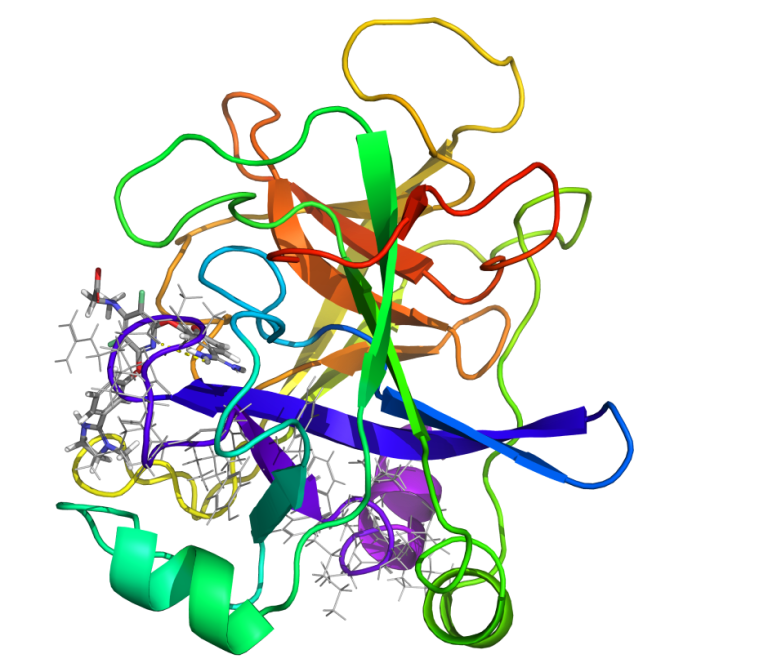
Enabling cryoEM structures for drug discovery with the Schrödinger Suite
 Webinar
Life Science
Webinar
Life Science
- Jun 25, 2025
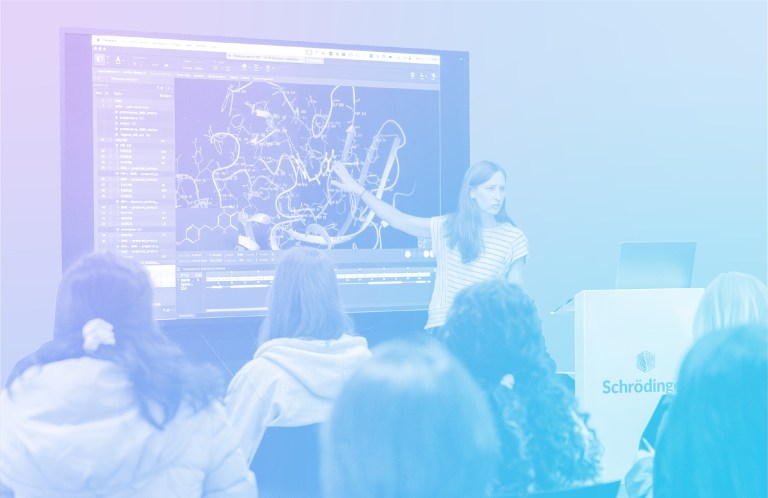
How to find a druggable target: A computational perspective
Join us in this beginner-friendly webinar that will introduce you to strategies and best-in-class tools for identifying druggable, technology-enabled targets.
 Webinar
Life Science
Webinar
Life Science
- Jun 24, 2025
Educator’s Month: Visualizing atomic and molecular orbitals and calculations exploring protonation of nitrogen versus oxygen
A computational activity exploring the thermodynamics of protonation of nitrogen versus oxygen will also be presented.
Webinar
Life Science
- Jun 11, 2025
Educator’s Month: Targeted Protein Degradation Goes to School: From Bench to Browser with DEGRADATOR
In this talk, I will take you behind the scenes of DEGRADATOR (https://degradator-game.com), the first educational computer game designed to teach students about the ubiquitin-proteasome system and innovative targeted protein degradation therapies, such as PROTACs.
 Webinar
Life Science
Materials Science
Webinar
Life Science
Materials Science
- Jun 10, 2025
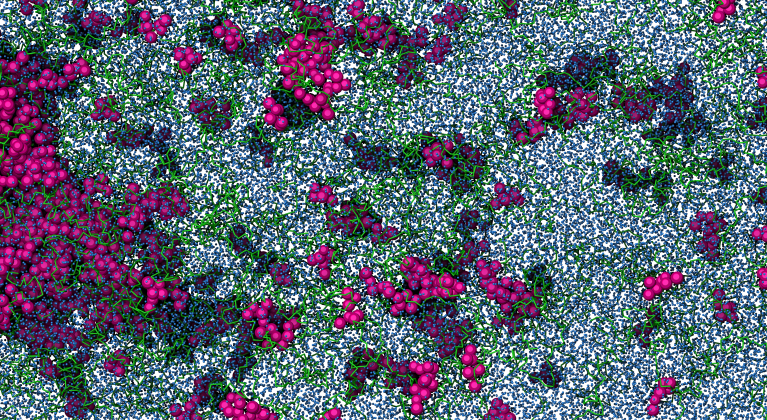
Modelling amorphous solid dispersion (ASD) release mechanisms
In this webinar, AbbVie and Schrödinger will present the results of a study using a combination of Perturbed-Chain Statistical Associating Fluid Theory (PC-SAFT) thermodynamic modeling and molecular simulation to investigate the release mechanism and the occurrence LoR of an ASD formulation.
Webinar
Life Science
- Jun 9, 2025
Educator’s Month: Drug discovery in the classroom
In this webinar, we’ll discuss the growing significance of in silico protein-ligand docking underscores its importance as a requisite skill for graduating biochemists.
Webinar
Life Science
- Jun 5, 2025
Educator’s Month: Molecular visualization and teaching with Schrodinger for sophomore organic chemistry courses
Physical models for organic chemistry and visualization of molecules in 3D using computers and software (cyberinfrastructure) with hands-on experience are very helpful for students in learning organic chemistry.
Webinar
Life Science
- Jun 5, 2025
Educator’s Month: Powerful computational tools to help bring proteins to life for students
In this talk, Arthur Sikora will showcase two examples of how technology has brought biochemistry to life for his students.
Webinar
Life Science
- Jun 4, 2025
Educator’s Month: How can high school students use computational chemistry for scientific inquiry? Insights from the development of the Comp-Chem Lab
In this session, participants will have the opportunity to actively explore how CCL enables students to investigate bond dissociation and reaction energetics through guided, interactive activities.
Webinar
Life Science
- Jun 3, 2025
Educator’s Month: Intelligence Amplified: Human-Centered Education in the Age of AI
In this keynote, Toni-Marie Achilli, Associate Dean of Biology at Brown University and Senior Lecturer, argues that educators are not merely participants in AI integration, we are its stewards.
 Webinar
Life Science
Webinar
Life Science
- May 21, 2025
Advancing drug discovery programs with machine learning-enhanced de novo design
In this webinar, we will demonstrate how large-scale de novo design workflows in Schrödinger’s AutoDesigner, combined with rigorous free energy-based scoring methods, have been applied to several recent programs to overcome critical design challenges.
 Webinar
Life Science
Webinar
Life Science
- May 14, 2025
MAY 14, 2025 | Schrödinger デジタル創薬セミナー17 | Schrödinger’s approach to physics-based antibody analysis and design
Schrödinger’s approach to physics-based antibody analysis and design
Events
 Event
Materials Science
Event
Materials Science
- Oct 15, 2026
The Battery Show 2026
Schrödinger is excited to be participating in the The Battery Show 2026 conference taking place on October 12th – 15th in Detroit, Michigan.
 Event
Life Science
Event
Life Science
- Oct 15, 2026
Festival of Biologics Basel 2026
Schrödinger is excited to be participating in the Festival of Biologics 2026 conference taking place on October 13th – 15th in Basel, Switzerland.
 Event
Materials Science
Event
Materials Science
- Oct 14th-16th, 2026
CECAM Workshop 2026
Schrödinger is thrilled to serve on the organizing committee for the upcoming workshop, “Coarse-Graining in the Age of Machine Learning and Molecular Design” on October 14th – 16th in Lyon, France.
Webinars
 Webinar
Life Science
Webinar
Life Science
- Oct 22, 2026
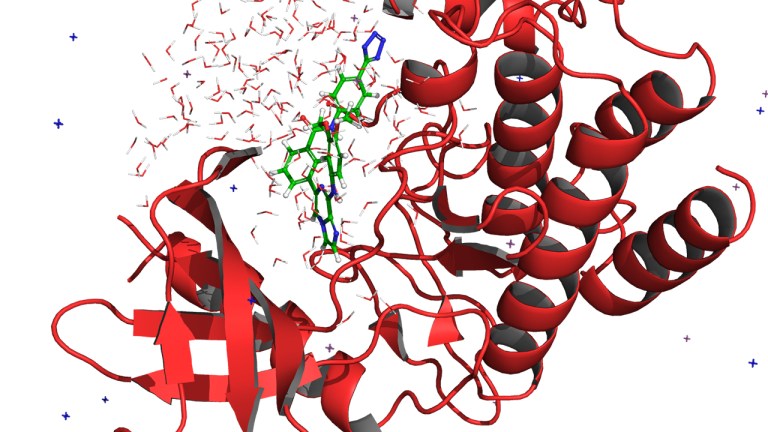
Advanced chemical space exploration for the discovery of mutant-selective EGFR inhibitors
In this webinar, Schrödinger’s medicinal and computational chemists will show how they tackled the EGFR triple-mutant problem by coupling industry-leading free energy perturbation technology (FEP+) with de novo design workflows to effectively explore novel chemical space and identify reversible inhibitor scaffolds.
 Webinar
Life Science
Webinar
Life Science
- Nov 4, 2026
Steering high-throughput de novo design toward synthesis-ready leads with an agentic co-scientist
In this webinar, we explore how Schrödinger’s platform brings AutoDesigner, FEP+, and RetroSynth together inside Bunsen, our agentic co-scientist.
 Webinar
Life Science
Webinar
Life Science
- Nov 5, 2026
Schrödinger デジタル創薬セミナー~計算化学がもたらす創薬プロセスの変貌~第25回
Schrödingerの計算化学プラットフォームによるタンパク質設計技術の紹介と、課題対応・開発加速への活用法を詳しく解説します。
Tutorials
- Tutorial
Structure-Based Virtual Screening using Glide
Prepare receptor grids for docking, dock molecules and examine the docked poses.
- Tutorial
Ligand Binding Pose Generation for FEP+
Generate starting poses for FEP simulations for a series of BACE1 inhibitors using core constrained docking.
- Tutorial
Homology Modeling of Protein-Ligand Binding Sites with IFD-MD
Create a homology model of TYK2 from JAK3 and including a bound ligand. Compare this model with the crystal structure for TYK2 bound to 4GIH.
Training Videos
 Video
Life Science
Video
Life Science
Getting Going with Maestro BioLuminate
A free video series introducing the basics of using Maestro Bioluminate.
 Video
Life Science
Video
Life Science
- Tutorial
- Video
The LiveDesign Assistant
Learn how to build and adjust coloring rules, create Freeform and Formula columns, and plot data using the LiveDesign Assistant.
Publications
- Publication
- May 8, 2026
Discovery of 2H-Pyrrolo[3,4-c]pyridin-3-one Derivatives as Type-III c-MET Inhibitors Enabled by Free-Energy Perturbation CalculationsCl
Therrien, et al. ACS Medicinal Chemistry Letters, 2026
- Publication
- Apr 8, 2026
Structure-Based Discovery of Imidazo[4,5-c]pyridine SARM1 Modulators Showing Paradoxical Activation
Albanese, et al. Journal of Medicinal Chemistry, 2026, 69(8), 9521–9536
- Publication
- Mar 21, 2026
Structure-Based Calculation of Excipient Effects on the Viscosity of Concentrated Antibody Solutions
Shelley, et al. mAbs, 2026, 18(1)
Case Studies
 Case Study
Life Science
Materials Science
Case Study
Life Science
Materials Science
 Case Study
Life Science
Case Study
Life Science
 Case Study
Life Science
Case Study
Life Science
White Papers
 White Paper
Life Science
White Paper
Life Science
- Jan 29, 2026
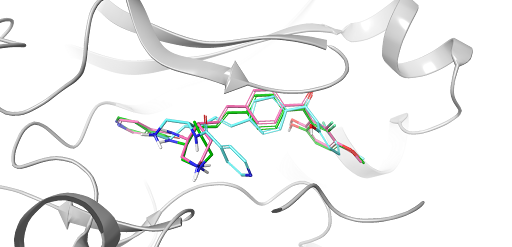
FEP+ Pose Builder — maximizing utility and productivity in FEP simulations
FEP+ Pose Builder is a methodological advancement introduced as an integrated feature to drastically enhance accessibility, user-friendliness, and productivity within the FEP+ pipeline.
 White Paper
Life Science
White Paper
Life Science
- Oct 29, 2024
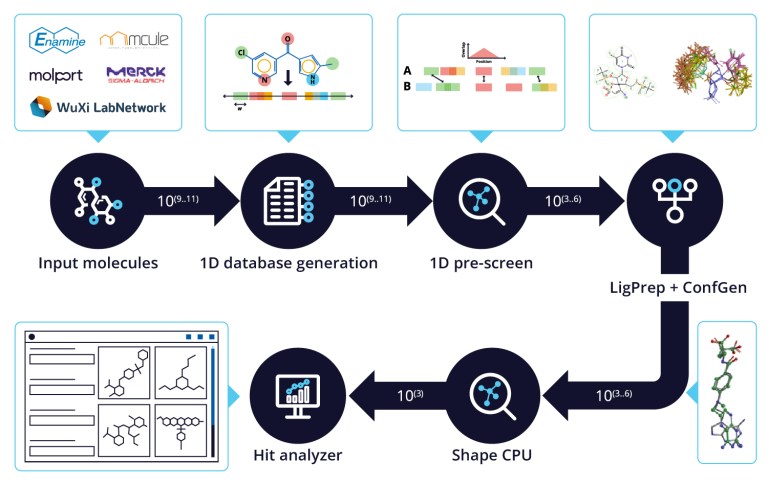
20 Years of Glide: A Legacy of Docking Innovation and the Next Frontier with Glide WS
Glide has long set the gold standard for commercial molecular docking software due to its robust performance in both binding mode prediction and empirical scoring tasks, ease of use, and tight integration with Schrödinger’s Maestro interface and molecular discovery workflows.
 White Paper
Life Science
White Paper
Life Science
Quick Reference Sheets
- Quick Reference Sheet
Force Field Builder
A one-page guide to calculate missing torsion parameters for ligands using the Force Field Builder panel.
- Quick Reference Sheet
Ligand Interaction Diagram
A one-page guide to using the Ligand Interaction Diagram for examining ligand-receptor interactions.
- Quick Reference Sheet
GlideMap
A one-page guide to using the GlideMap GUI for ligand placement guided by experimental density.

Latest insights from Extrapolations blog

With FEP+, “The Experiment is the Limit.”
Over the past century, small molecule drugs have represented the dominant modality in drug research, enabling medical breakthroughs that have saved countless lives.

Tackling Drug Solubility: AbbVie and Schrödinger Collaborate to Advance Accurate Prediction Methods
The complexity and size of drug candidates has grown in recent years as scientists pursue novel targets once considered undruggable.
 Blog
Blog
Can AlphaFold Models be Used for Structure-Based Drug Design? A Perspective Two Years In
We recently sat down with Edward Miller, Senior Director of Protein Structure Modeling at Schrödinger, to discuss his experience using AlphaFold models for SBDD.
Training & Resources
Online certification courses
Level up your skill set with hands-on, online molecular modeling courses. These self-paced courses cover a range of scientific topics and include access to Schrödinger software and support.
Free learning resources
Learn how to deploy the technology and best practices of Schrödinger software for your project success. Find training resources, tutorials, quick start guides, videos, and more.
Other Resources