
 Webinar
Life Science
Webinar
Life Science
- Dec 9, 2025
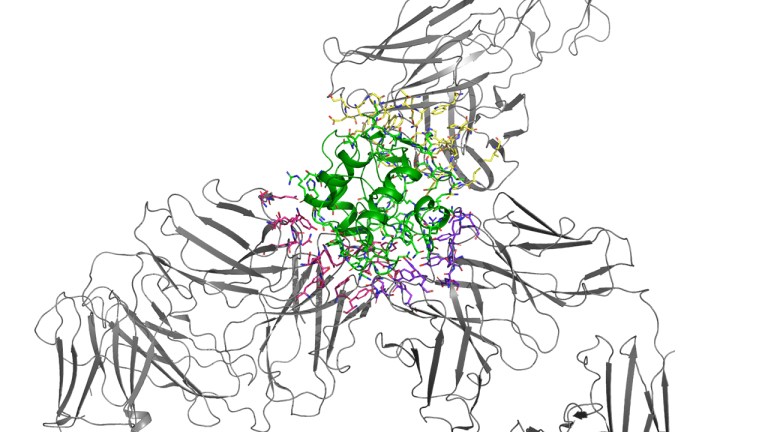
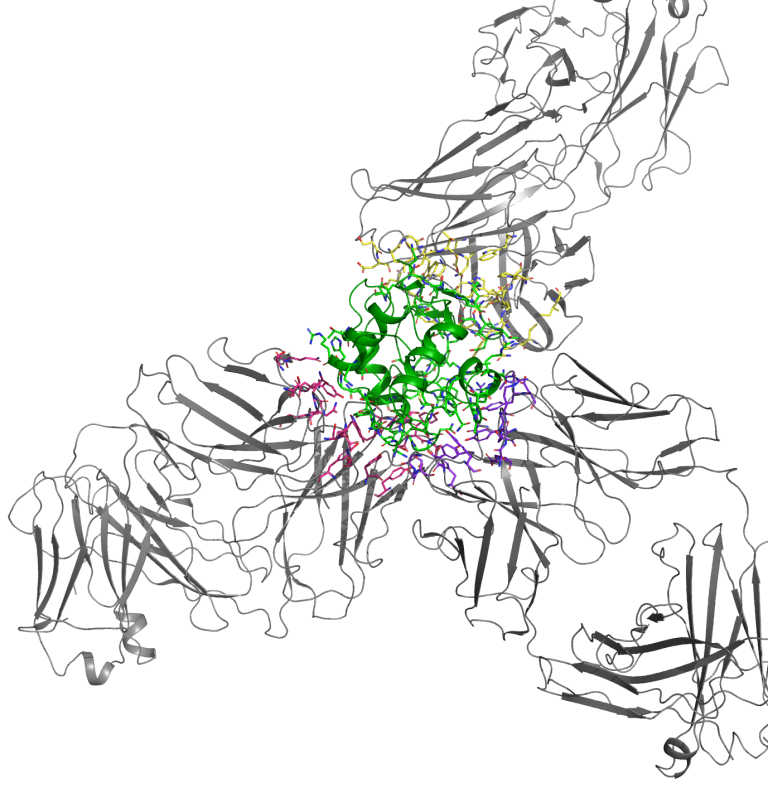
Designing better biologics: A blueprint for leveraging in silico methods in biologics R&D
In this exclusive webinar, our experts will provide a technical overview of our unique, physics-based approach to protein engineering and customizable in silico workflow, and discuss several relevant examples.
 Webinar
Life Science
Webinar
Life Science
- Dec 2, 2025
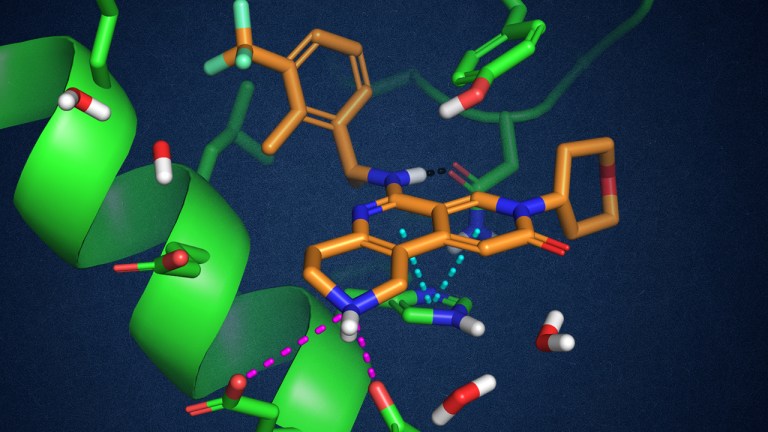
Rethinking the rules: Exploiting solvent exposed salt-bridge interactions with free energy perturbation simulations for the discovery of potent inhibitors of SOS1
In this webinar, we will walk you through the SOS1 program, as well as our exploration of other examples where these salt-bridge interactions are influential.
 Webinar
Life Science
Webinar
Life Science
- Nov 19, 2025
FEP+ State of the Union: Advancing computational rigor and scaling predictivity in drug discovery
In this webinar, Robert Abel, Schrödinger’s chief scientific officer, and Schrödinger’s FEP+ experts will provide an in-depth analysis of FEP+’s latest accuracy benchmarks and its expanding domain of applicability, maintaining its position as the gold standard in the industry.
 Webinar
Life Science
Webinar
Life Science
Webinar
Life Science
Webinar
Life Science
- Oct 31, 2025
Schrödinger デジタル創薬セミナー: Into the Clinic ~計算化学がもたらす創薬プロセスの変貌~ 第20回
In silico cryptic binding site detection and prioritization
 Webinar
Life Science
Webinar
Life Science
- Oct 9, 2025
6th EFMC² Tandem Talks
Schrödinger is excited to be participating in the 6th EFMC² Tandem Talks virtual event taking place on October 9th.
Webinar
Life Science
- Oct 8, 2025
Structure-based discovery of highly potent dihydroorotate dehydrogenase inhibitors for once-monthly malaria chemoprevention
In this webinar, Zhe Nie, medicinal chemist and project leader at Schrödinger, and Margaret Phillips, professor at UT Southwestern Medical School, Dallas, share in conversation how their teams worked collaboratively towards the discovery of novel DHODH inhibitors.
Webinar
Life Science
- Sep 24, 2025
Schrödinger デジタル創薬セミナー: Into the Clinic ~計算化学がもたらす創薬プロセスの変貌~ 第19回
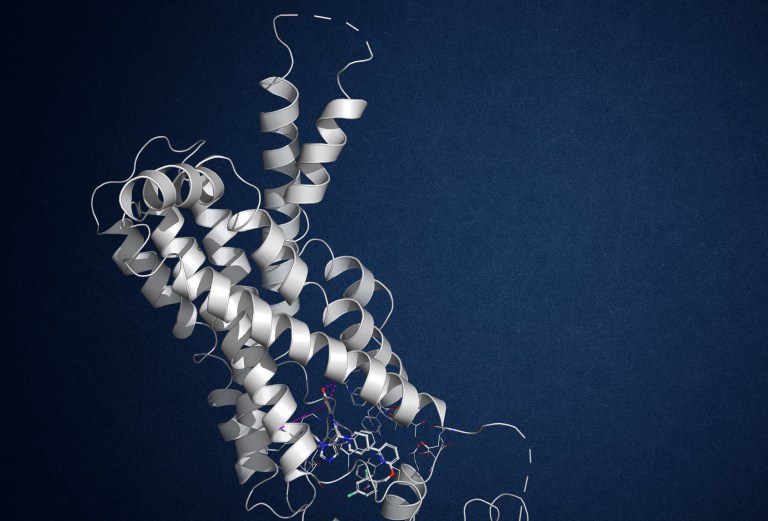
Computational strategies for discovering and optimizing RNA- and DNA-targeting molecules
 Webinar
Life Science
Webinar
Life Science
- Sep 23, 2025
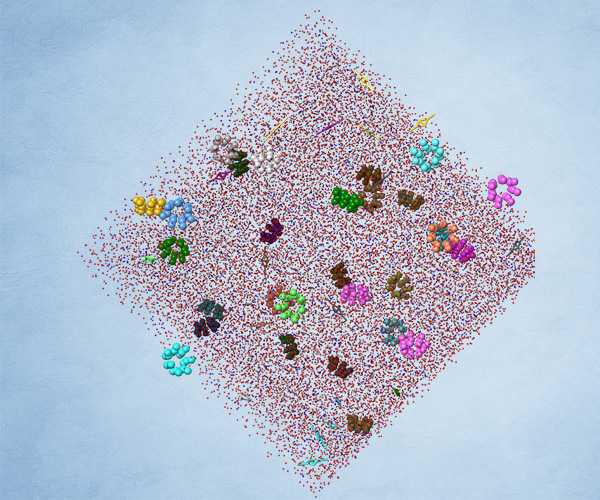
Building stable and accurate FEP models for agonist affinity for GPCRs
In this webinar, Ferran Planas will discuss how the team at Lundbeck routinely uses FEP to predict binding affinities for GPCR agonists.
 Webinar
Life Science
Materials Science
Webinar
Life Science
Materials Science
- Sep 16, 2025
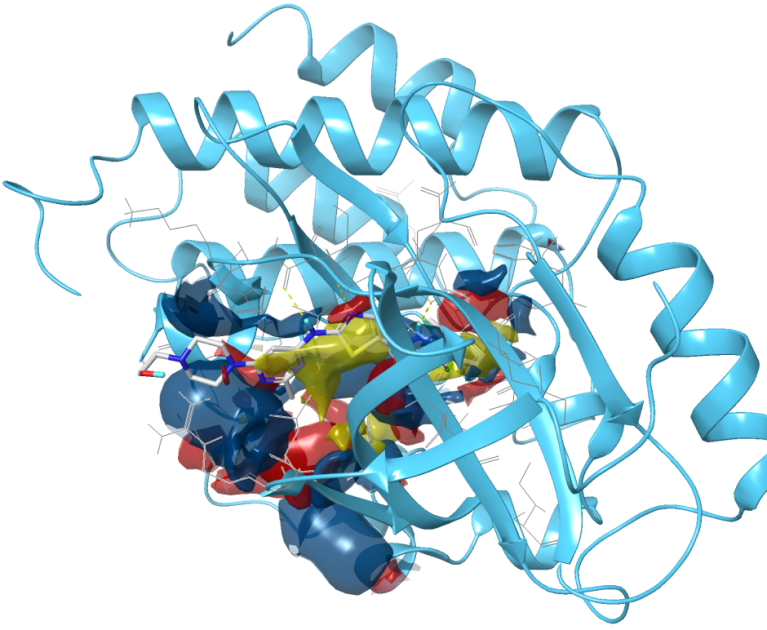
Innovations in Digital Chemistry: Computational Approaches for Drug & Materials Discovery
This webinar series will explore how cutting-edge computational methods are revolutionizing the design and optimization of pharmaceutical drugs, biologics , and advanced materials.
 Webinar
Life Science
Webinar
Life Science
- Jul 30, 2025
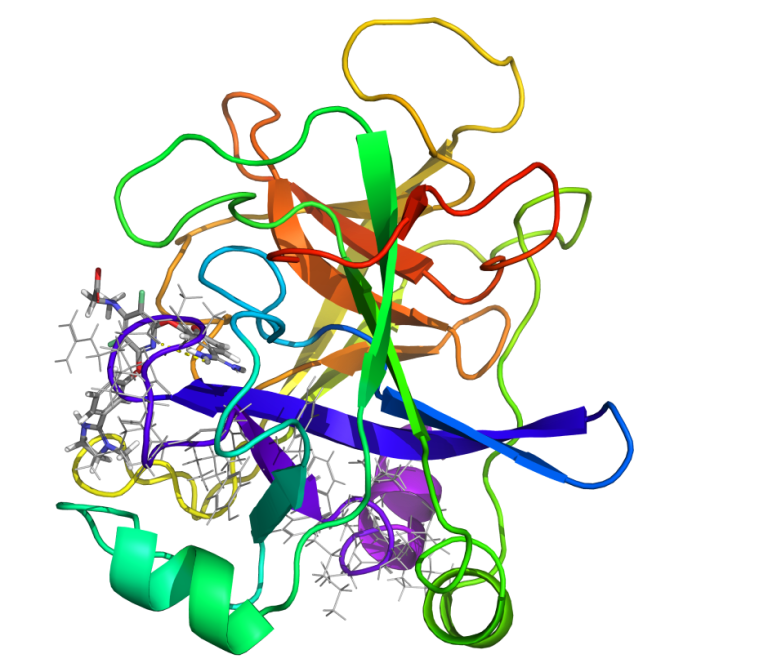
In silico cryptic binding site detection and prioritization
In this webinar, we will introduce a novel computational workflow that integrates mixed solvent molecular dynamics (MxMD) with SiteMap to reveal and identify cryptic binding sites.
 Webinar
Life Science
Webinar
Life Science
- Jul 16, 2025
Schrödinger デジタル創薬セミナー: Into the Clinic ~計算化学がもたらす創薬プロセスの変貌~ 第18回
Enabling cryoEM structures for drug discovery with the Schrödinger Suite
Events
 Event
Materials Science
Event
Materials Science
- Oct 12th-15th, 2026
The Battery Show 2026
Schrödinger is excited to be participating in the The Battery Show 2026 conference taking place on October 12th – 15th in Detroit, Michigan.
 Event
Life Science
Event
Life Science
- Oct 13th-15th, 2026
Festival of Biologics Basel 2026
Schrödinger is excited to be participating in the Festival of Biologics 2026 conference taking place on October 13th – 15th in Basel, Switzerland.
 Event
Materials Science
Event
Materials Science
- Oct 14th-16th, 2026
CECAM Workshop 2026
Schrödinger is thrilled to serve on the organizing committee for the upcoming workshop, “Coarse-Graining in the Age of Machine Learning and Molecular Design” on October 14th – 16th in Lyon, France.
Webinars
 Webinar
Life Science
Webinar
Life Science
- Oct 22, 2026
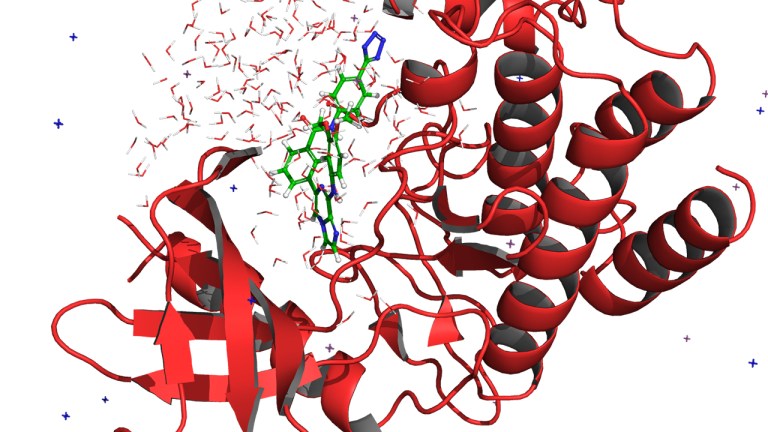
Advanced chemical space exploration for the discovery of mutant-selective EGFR inhibitors
In this webinar, Schrödinger’s medicinal and computational chemists will show how they tackled the EGFR triple-mutant problem by coupling industry-leading free energy perturbation technology (FEP+) with de novo design workflows to effectively explore novel chemical space and identify reversible inhibitor scaffolds.
 Webinar
Life Science
Webinar
Life Science
- Nov 5, 2026
Schrödinger デジタル創薬セミナー~計算化学がもたらす創薬プロセスの変貌~第25回
Schrödingerの計算化学プラットフォームによるタンパク質設計技術の紹介と、課題対応・開発加速への活用法を詳しく解説します。
 Webinar
Life Science
Materials Science
Webinar
Life Science
Materials Science
- Sep 23, 2026
Bunsen: Where Validated Scientific Workflows Meet Agentic AI
Join Schrödinger CTO Pat Lorton for an introduction to Bunsen. Pat will share how Bunsen allows researchers to set up, run, and troubleshoot multi-stage workflows without command-line friction or manual setup.
Tutorials
- Tutorial
Structure-Based Virtual Screening using Glide
Prepare receptor grids for docking, dock molecules and examine the docked poses.
- Tutorial
Ligand Binding Pose Generation for FEP+
Generate starting poses for FEP simulations for a series of BACE1 inhibitors using core constrained docking.
- Tutorial
Homology Modeling of Protein-Ligand Binding Sites with IFD-MD
Create a homology model of TYK2 from JAK3 and including a bound ligand. Compare this model with the crystal structure for TYK2 bound to 4GIH.
Training Videos
 Video
Life Science
Video
Life Science
Getting Going with Maestro BioLuminate
A free video series introducing the basics of using Maestro Bioluminate.
 Video
Life Science
Video
Life Science
- Tutorial
- Video
The LiveDesign Assistant
Learn how to build and adjust coloring rules, create Freeform and Formula columns, and plot data using the LiveDesign Assistant.
Publications
- Publication
- May 8, 2026
Discovery of 2H-Pyrrolo[3,4-c]pyridin-3-one Derivatives as Type-III c-MET Inhibitors Enabled by Free-Energy Perturbation CalculationsCl
Therrien, et al. ACS Medicinal Chemistry Letters, 2026
- Publication
- Apr 8, 2026
Structure-Based Discovery of Imidazo[4,5-c]pyridine SARM1 Modulators Showing Paradoxical Activation
Albanese, et al. Journal of Medicinal Chemistry, 2026, 69(8), 9521–9536
- Publication
- Mar 21, 2026
Structure-Based Calculation of Excipient Effects on the Viscosity of Concentrated Antibody Solutions
Shelley, et al. mAbs, 2026, 18(1)
Case Studies
 Case Study
Life Science
Materials Science
Case Study
Life Science
Materials Science
 Case Study
Life Science
Case Study
Life Science
 Case Study
Life Science
Case Study
Life Science
White Papers
 White Paper
Life Science
White Paper
Life Science
- Jan 29, 2026
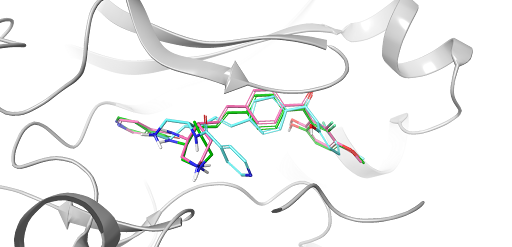
FEP+ Pose Builder — maximizing utility and productivity in FEP simulations
FEP+ Pose Builder is a methodological advancement introduced as an integrated feature to drastically enhance accessibility, user-friendliness, and productivity within the FEP+ pipeline.
 White Paper
Life Science
White Paper
Life Science
- Oct 29, 2024
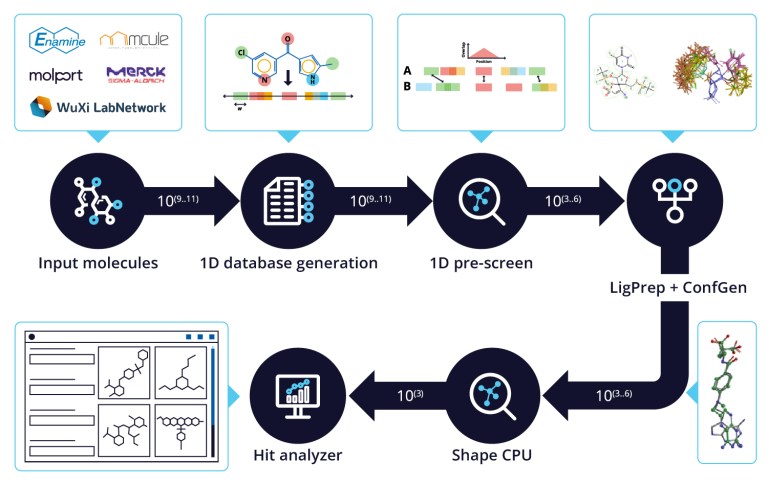
20 Years of Glide: A Legacy of Docking Innovation and the Next Frontier with Glide WS
Glide has long set the gold standard for commercial molecular docking software due to its robust performance in both binding mode prediction and empirical scoring tasks, ease of use, and tight integration with Schrödinger’s Maestro interface and molecular discovery workflows.
 White Paper
Life Science
White Paper
Life Science
Quick Reference Sheets
- Quick Reference Sheet
Force Field Builder
A one-page guide to calculate missing torsion parameters for ligands using the Force Field Builder panel.
- Quick Reference Sheet
Ligand Interaction Diagram
A one-page guide to using the Ligand Interaction Diagram for examining ligand-receptor interactions.
- Quick Reference Sheet
GlideMap
A one-page guide to using the GlideMap GUI for ligand placement guided by experimental density.

Latest insights from Extrapolations blog

With FEP+, “The Experiment is the Limit.”
Over the past century, small molecule drugs have represented the dominant modality in drug research, enabling medical breakthroughs that have saved countless lives.

Tackling Drug Solubility: AbbVie and Schrödinger Collaborate to Advance Accurate Prediction Methods
The complexity and size of drug candidates has grown in recent years as scientists pursue novel targets once considered undruggable.
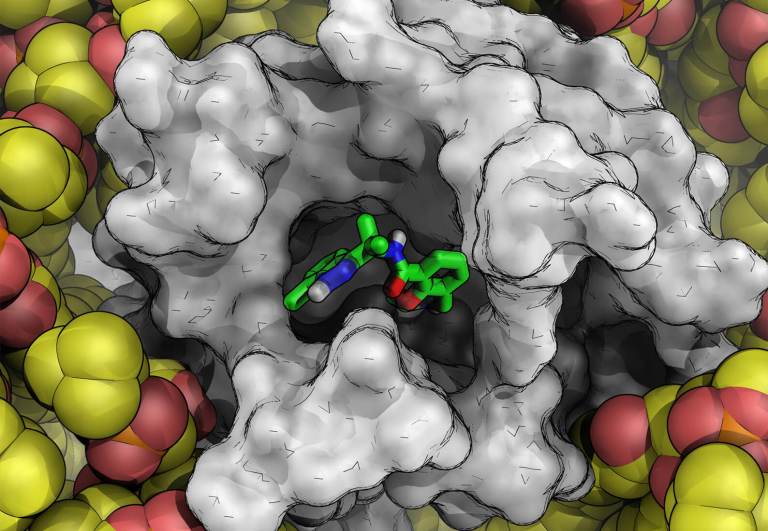 Blog
Blog
Can AlphaFold Models be Used for Structure-Based Drug Design? A Perspective Two Years In
We recently sat down with Edward Miller, Senior Director of Protein Structure Modeling at Schrödinger, to discuss his experience using AlphaFold models for SBDD.
Training & Resources
Online certification courses
Level up your skill set with hands-on, online molecular modeling courses. These self-paced courses cover a range of scientific topics and include access to Schrödinger software and support.
Free learning resources
Learn how to deploy the technology and best practices of Schrödinger software for your project success. Find training resources, tutorials, quick start guides, videos, and more.
Other Resources