The Importance of Human Know-How in AI Execution for Materials R&D

MAR 18, 2026

The Importance of Human Know-How in AI Execution for Materials R&D

AI and machine learning (ML) are often sold as push-button solutions for materials design and discovery, but they lack value without a rigorous foundation. While the current AI revolution provides unprecedented speed and possibilities, human know-how is a key ingredient for ensuring complex methods lead to high impact outcomes. True innovation happens at the intersection of physics-based simulation, AI/ML, and human expertise. Join us to explore how Schrödinger’s domain experts integrate these three pillars to streamline material optimization. 

We’ll discuss how to move beyond the hype and apply digital chemistry strategies that deliver meaningful business results. We will introduce Schrödinger’s Materials Science platform, and share high-impact case studies from a variety of industries and applications, ranging from small molecules to formulations and electronics to industrials. Recent advancements, such as device level ML and cutting-edge machine learning force field (MLFF) architectures will be presented. 

Key Learning Objectives:

  • Why physics-based modeling is essential to complement AI/ML predictions
  • Real-world applications where digital chemistry has reduced discovery timelines from years to months across industries
  • How our expert-led support ensures project success for modeling novices and veterans alike

Who Should Attend:

  • R&D Leaders 
  • Innovation Managers 
  • Digitization Managers
  • Synthetic Chemists
  • Materials Scientists
  • Chemical Engineers
  • Materials Research Engineers
  • Computational Chemists
  • Computational Materials Scientists

Our Speaker

Michael Rauch

Director of Materials Science, Schrödinger

Michael Rauch is a Director at Schrödinger specializing in materials science and education. Michael earned his Ph.D. from Columbia University in synthetic organometallic chemistry as an NSF Graduate Research Fellow before pursuing a postdoctoral role in organic chemistry at the Weizmann Institute of Science as a Zuckerman Postdoctoral Scholar. Michael is particularly interested in green, sustainable chemistry and transforming the way that synthetic chemists utilize molecular modeling via practical education.

SID Display Week 2026

Conference

SID Display Week 2026

CalendarDate & Time
  • May 3rd-8th, 2026
LocationLocation
  • Los Angeles, California

Schrödinger is excited to be participating in the SID Display Week 2026 conference taking place on May 3rd – 8th in Los Angeles, California. Join us for a presentation by Hadi Abroshan, Principal Scientist at Schrödinger, titled “Accelerating Optoelectronic Innovation via Integrating Machine Learning and Physics-Based Modeling.”

icon time MAY 7 | 4:00 PM
icon location Room 408A
Accelerating Optoelectronic Innovation via Integrating Machine Learning and Physics-Based Modeling

Speaker:
Hadi Abroshan, Principal Scientist, Schrödinger

Abstract:
We present Schrödinger’s digital platform integrating physics-based simulations and machine learning modeling to accelerate the design of novel display materials and devices. Spanning atomic-scale modeling to device-level insights, it enables predictive, high-throughput exploration, bridging the gap “from atoms to devices” for next-generation optoelectronic solutions.

Eurocoat 2026

Conference

Eurocoat 2026

CalendarDate & Time
  • March 24th-26th, 2026
LocationLocation
  • Paris, France

Schrödinger is excited to be participating in the Eurocoat 2026 conference taking place on March 24th – 26th in Paris, France. Join us for a presentation by Irene Bechis, Senior Scientist II at Schrödinger, titled “Digital chemistry approach to accelerate polymer development for coatings.” Stop by booth C30 to speak with Schrödinger scientists.

icon time MAR 26 | 11:30 AM
icon location Congress Area
Digital chemistry approach to accelerate polymer development for coatings

Speaker:
Irene Bechis, Senior Scientist II, Schrödinger

Abstract:
Coatings are indispensable in modern life, offering protection and unique functionalities to materials across diverse industries such as construction, automotive, and aerospace. 

Developing new and improved materials for coating applications is a challenging process driven by the need to optimize the candidates towards superior performance, cost-effectiveness, and sustainability. This often requires several rounds of experimental exploration of candidate chemistries, considering material responses to various substrates but also different process and environmental conditions.

Adoption of digital design in polymers has gained in both visibility and impact as more industries see the value in computer-based analysis of materials. Molecular modelling approaches can accelerate material selection and characterization, ensuring that target properties are met, leveraging the description and understanding of the material chemistry and microstructure with atomistic resolution. 

In this talk, we will showcase how Schrödinger’s digital chemistry platform can accelerate acrylate development for self-healing applications. We will show how chemistry-informed machine learning can be used for efficient screening of monomer chemistries for target copolymer properties and how physics-based modeling can provide fundamental understanding by connecting key thermomechanical properties to molecular interactions between polymer chains and other components of the formulations.

Our suite combines the possibility to create and automate custom workflows to build, simulate and analyze complex systems with fast simulation engines covering different time and length scales. The platform is intuitive and versatile, maximizing collaborations across teams and accessibility to both expert and non-expert modelers.

Release 2026-1

Library Background

Release Notes

Release 2026-1

Small Molecule Drug Discovery

Platform Environment

Maestro Graphical Interface

  • Redesigned Surface Manager – Control complex visualizations effortlessly with a modern, persistent interface that allows for real-time, non-modal editing of surface styles, colors, and transparency
  • Persistent measurements – Geometric measurements now persist with the entries, allowing for uninterrupted structural comparison across multiple conformers and states
  • Standalone density map import – Accelerate Cryo-EM and crystallography workflows with direct, standalone density map import
  • Maestro Assistant modes (open beta) – A context-aware AI partner that intelligently toggles between ‘Ask’, ‘Execute’, and ‘Auto’ modes to seamlessly bridge documentation and direct action

Binding Site & Structure Analysis

Mixed Solvent MD (MxMD)

  • Added support to command line MxMD driver to seamlessly execute all simulations and compile results from combined MxMD/SiteMap cryptic pocket identification workflow

WaterMap

  • WaterMap now supports use of the OPLS_2005 forcefield and TIP4P water model

Hit Identification & Virtual Screening

Docking

  • Understand, optimize, and troubleshoot native redocking experiments with new Docking Report to maximize docking performance

Lead Optimization

FEP+

  • GraphDB/Web services can optionally download only the primary FMP file and not the FMPdb reducing time to analyzing results
  • FEP+ workflows now support execution on cost-effective preemptible nodes
  • Use 2D Sketcher to define Core SMARTS for FEP+
  • Improved handling of categorical assay data in FEP+ statistical analysis

FEP+ Protocol Builder

  • Sample three levels of salt concentrations in protocol optimization
  • Sample automatic membrane placement in protocol optimization

FEP+ Pose Builder

  • Automatically create accurate and clash-aware FEP-ready poses with FEP+ Pose Builder: Generate high-quality ligand alignments faster to run FEP+ at scale with an automated workflow designed for unbiased selection and robust atom-mapping
  • LiveDesign FEP+ Pose Builder protocol now supports generating FMP files for cycle-closure FEP calculations

Quantum Mechanics

  • Employ xTB and MLFFs including QRNN, MPNICE, and UMA in AutoTS from command line for shorter calculation times
  • Faster batch calculations by optimized CPU core assignments for all multithreaded Jaguar batch calculations

Spectroscopy

  • New corrections for C-Br and C-I bonds in 13C NMR spectra

De Novo Design

AutoDesigner – R-group Design

  • Explore large chemical spaces to identify optimal R-groups with new AutoDesigner R-group Design Panel now accessible by setting a feature flag
  • Added optional QED score (Quantitative Estimate of Drug-Likeness) for AutoDesigner R-group Design ideas

AutoDesigner – Core Design

  • Explore large chemical spaces to identify optimal core replacements with new AutoDesigner Core Design Panel now accessible by setting a feature flag
  • Added optional QED score (Quantitative Estimate of Drug-Likeness) for AutoDesigner Core Design ideas

Education Content

Biologics Drug Discovery

  • Release of MacroMolecular Pose Filter – Select the most plausible or relevant structural models of a macromolecular complex from a larger set of generated possibilities
  • New protein descriptor – ASPmax – Added ASPmax (Maximum Average Surface Property) to our descriptor set. Used to predict the retention time of proteins in hydrophobic interaction chromatography (HIC) columns and aggregation risk
  • Search and filter non-standard residues – Support for text-based searching and filtering of non-standard residues based on labels in the Name, Code, and Description columns
  • Residue Lookup in the MMGBSA residue scanning panel – Quickly search and find residues to mutate
  • Classification of residue scanning results – Color codes residue scanning results to designate positive, neutral or negative mutational variants based on energy score cut-offs

Materials Science

GUI for Quantum ESPRESSO

Product: Quantum ESPRESSO (QE) Interface

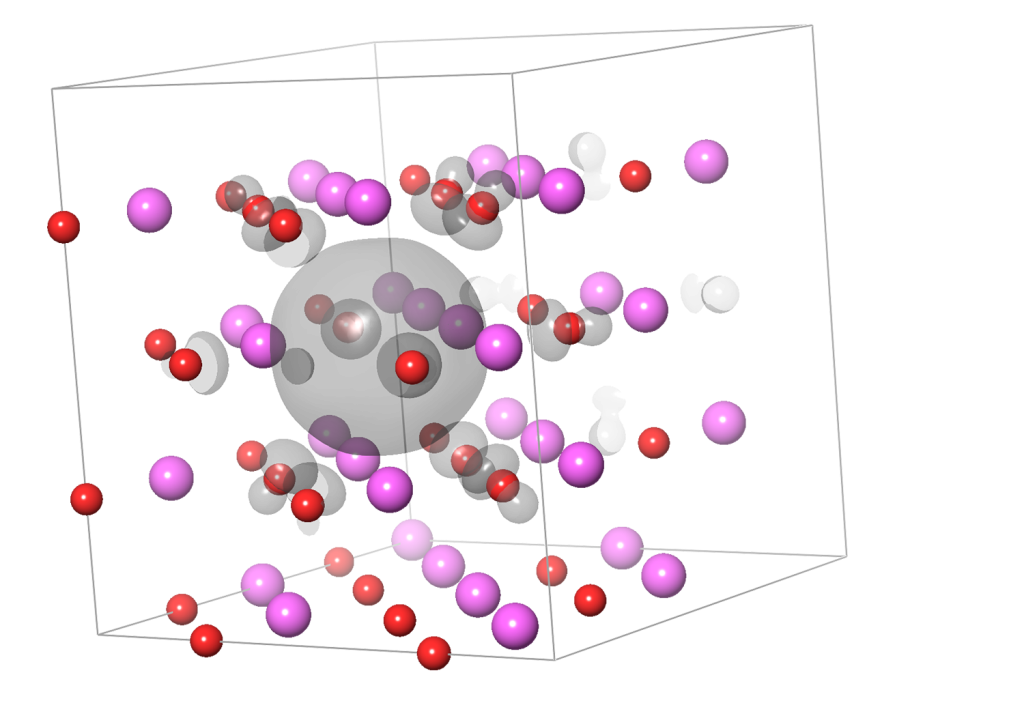
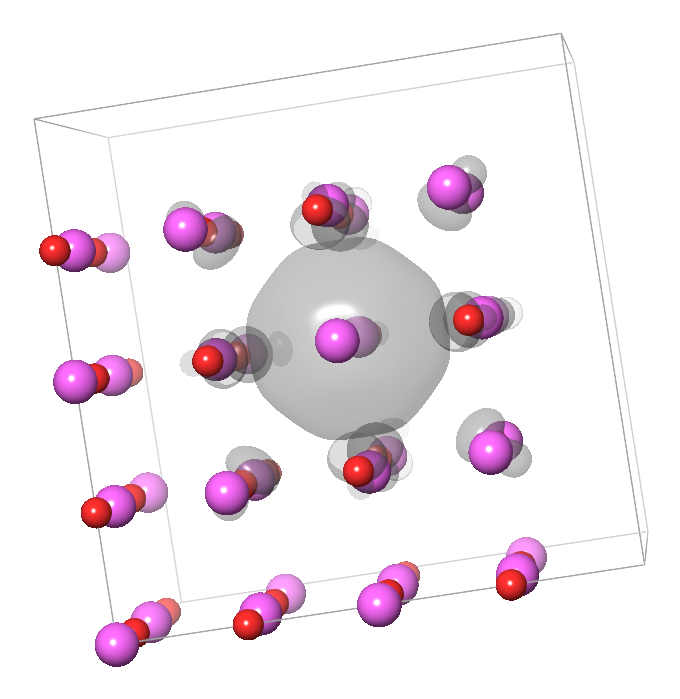
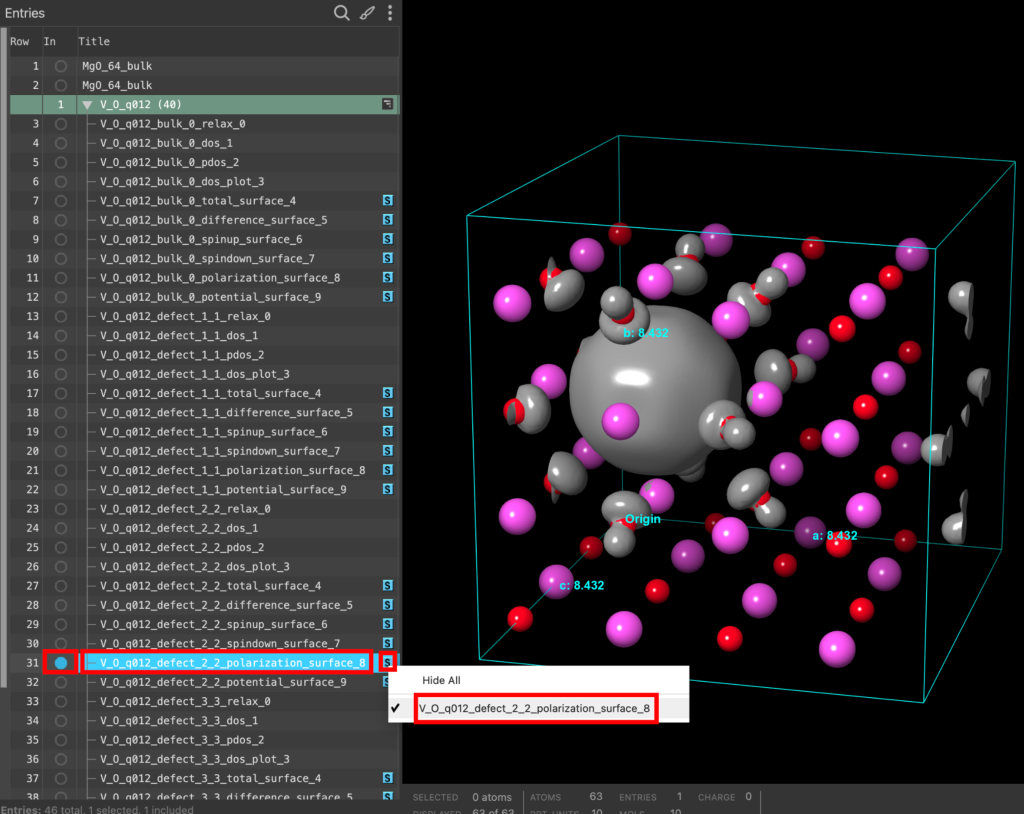
  • Defect Formation Energy: Workflow solution to analyze point defects in crystals
  • Options to set frequency cutoff / harmonic threshold in the Phonon DOS Viewer
  • Support for TB09 density functional (command line)
  • Support for rVV10-SCAN density functional (command line)
  • Support for NpT ensemble in QE BOMD simulations (command line)
  • (+MATSCI_NEB_MLFF) MLFF integration in NEB

MS Surface

Product: MS SurfChem

  • Desorption Enumeration: WAM to open results in Adsorption Energy

Microkinetics

Product: MS Microkinetics

  • Option to view selectivities and degrees of selectivity control
  • Option to load/save archived MKM output
  • Option to export reaction view as an image (PNG) file
  • Results from individual stages made visible from the analysis panel

Optoelectronics Genetic Optimization

Product: Genetic Optimization (GA)

  • Support for setting target property based on models from ML Property Prediction

Active Learning Optoelectronics

Product: Active Learning Optoelectronics

  • Option to set target values excluded from optimizations

Reactivity

Product: MS Reactivity

  • Nanoreactor: Option to specify separate hosts for driver and subjobs
  • Nanoreactor: (+NANOREACTOR_AUTOTS) Automatic transition state search for elementary reaction network calculations via AutoTS
  • Nanoreactor: Option to skip generating trajectory files
  • Nanoreactor: User control over the time interval between trajectory frames
  • Reaction Network Profiler: Option to refine conformer geometries using UMA (MLFF)
  • Reaction Network Profiler: Option to assign stoichiometric multipliers for reactants

Transport Calculations via MD simulations

Product: MS Transport

  • Ionic Conductivity: Support for MLFF

Dielectric properties

Product: MS Dielectric

  • Complex Permittivity: Support for multi-component systems

Coarse-Grained (CG) Molecular Dynamics

Product: MS CG

  • CG FF Builder: Improved detection and mapping of non-isomorphic residues
  • CG FF Builder: Automated particle naming scheme with chemical context
  • CG FF Assignment: Up to 15x speed-up for models with a large number of particle types
  • Coarse-Grained Mapping: Residue number and name retained through mapping
  • Coarse-Grained Mapping: Option to import SMARTS patterns from previous use
  • Speed-up for DPD simulations of up to 30% with improved cutoff margins

Complex Bilayer Builder

Product: MS Complex Bilayer Builder

  • Complex Bilayer: (+COMPLEX_BILAYER_BUILDER_EXTENDED_LIPID_LIB) Expanded list of default lipids
  • Complex Bilayer: Increased limit for water padding depth to 5000 Å
  • Complex Bilayer: Support for custom-trained OPLS
  • Membrane Analysis: (+MEMBRANE_ANALYSIS_PREP_FOR_FEP) Support for generating poseviewer formatted files compatible with FEP calculations
  • Membrane Analysis: Support for applying multiple leaflet-finding algorithms

Materials Informatics

Product: MS Informatics

  • Machine Learning Property: Improved panel interface for model selection
  • MD Descriptors: User control over simulation system size (max # of atoms)
  • MD Descriptors: Support for formulation input with path assigned to structure files
  • MLFF Calculations: Option to set constraints to atomic positions
  • MLFF Calculations: Support for running on GPU nodes

Formulation ML

Product: MS Formulation ML

  • Formulation ML: ‘Learned Fingerprint’ as a new option to feature space
  • Formulation ML: Advanced option to process (‘impute’) training set data with partially missing descriptors
  • Formulation ML: Improved UI for parity plot
  • Formulation ML: Support for building machine learning models using training datasets with missing chemical (SMILES) information
  • Formulation ML: Target property displayed in the ‘Performance’ tab
  • Formulation ML: User control over correlation threshold between features
  • Formulation ML Optimization: Support for custom-ingredient descriptors
  • Formulation ML Optimization: Support for multi-CPU parallelization
  • Formulation ML Optimization: Option to use genetic algorithms for formulation optimization

Layered Device ML

Product: MS Layered Device ML

  • OLED Device ML: User control over correlation threshold between features
  • OLED Device ML: Target property displayed in the ‘Performance’ tab

MS Maestro Builders and Tools

  • Adsorption Enumeration: WAM to open results in Adsorption Site Finder / Adsorption Energy
  • Adsorption Site Finder: WAM to open results in Adsorption Energy
  • Adsorption Enumeration: Improved organization of output structures in the Project Table
  • Adsorption Site Finder: Up to 200x of speed-up for jobs using MLFF
  • Clean Up Structures: Support for MLFF
  • Disordered System: Option to define residue name for components
  • Support for converting *.vis files to *.cub formatted files (command line)
  • Polymer: Import of coupling probabilities from a CSV formatted file
  • Polysaccharide: (+POLYSACCHARIDE_BUILDER) Simplified model building solution for linear-chain polysaccharides
  • Single Complex: Updated list of bridging ligands
  • Query Bonds: Display of polyhedra for molecular crystals
  • Query Bonds: Search for and modification of non-bonded atom pairs

Classical Mechanics

  • Droplet: Support for using pre-assembled droplet models
  • Droplet: Support for computing contact angles with hydrate surfaces
  • Elastic Constants: Support for MLFF
  • (+ALLOW_OLD_FORCEFIELD_PARAMETERS) Support for running MD using OPLS4/OPLS5 parameters with backwards compatibility (2025-4 and older)
  • MD Multistage: FF type for the input structure displayed in the panel
  • Stress Strain: Support for MLFF
  • Stress Strain: Option to use velocities from previous strain steps
  • Surface Tension: Improved analysis with block averaging scheme
  • Tg: (+THERMOPHYSICAL_PROPERTIES_MLFF) Support for MLFF
  • Umbrella Sampling: Workflow solution to run umbrella sampling algorithm for small molecules near lipid and surfactant bilayers
  • Umbrella Sampling: Displaying quantity of overlap between windows
  • Viscosity: Adjusted default timestep (0.5 fs) for MLFF simulations

Quantum Mechanics

  • Adsorption Energy: Option to pre-optimize structures with MLFF
  • Adsorption Energy: Support for atomic positional constraints with MLFF
  • Crest: (+MATSCI_CREST_QCG) CREST Quantum Cluster Growth Utility
  • QM Multistage: Option to select GFN2-xTB from the list of theory
  • Optoelectronic Film Properties: Display of refractive index ratio per molecular species
  • Reaction Network Viewer: Comprehensive analysis viewer GUI for viewing networks created by Reaction Network Profiler and Nanoreactor

Education Content

Education Content

Life Science

Materials Science

LiveDesign

What’s New in 2026-1

  • Biologics
    • Design new biologics with point mutations using natural monomers
    • Upload custom monomers via API access, and view the monomers in the sequence viewer
    • Search for a subsequence within an annotated region of a Biologics entity, by selecting the annotation and numbering scheme from pre-filled dropdowns
    • Users can now color residues by property in the sequence viewer with any model that outputs the per-residue property/properties and color scheme mapping(optional) in the specified format, or with any Freeform column that contains the output
    • The “Biologics” and “Generic Entity” options in the “Type” dropdown menu of the Advanced search panel, have been unified to “Biologics/Others”
    • View branched and cyclic peptides in the sequence viewer
  • LiveDesign AI Assistant: interact with LiveDesign using an AI assistant to create Freeform and Formula columns, create and update coloring rules, perform data analyses and plot data within the Assistant, and instantly find help documentation. Note that this capability requires the LiveDesign ML plugin
  • Project Dashboards
    • View a project activity stream of newly added assay data and comments using the new “Activity” section
    • Entity count statistics and recently added entities shown in the Project Dashboard will now include all entities that are searchable to the project (e.g., compounds imported to unrestricted projects), instead of entities specifically imported to the project
  • Models: Column as parameter models that use a 3D column as input now have access to the favorited pose, and the pose order that is represented in the LiveReport
  • UX Improvements
    • Filter out un-run, failed, and pending model cells from your LiveReport
    • Drag a compound structure from the main spreadsheet directly to the Design, Search,or Advanced search panels without opening the panel first
    • Close LiveReport tabs by clicking on them with a middle mouse button click
    • 3D Visualizer: apply Stereolabels, Element label, and Atom Number labels to the selected atoms/residues/Chains

What’s Been Fixed

  • Formulas that used the Lot Registration Date column as input would fail to calculate, and cause a red error bar to appear on the LiveReport. Those formulas now calculate correctly and do not cause an error
  • Icons within the main spreadsheet cells to view a pose in the 3D visualizer, or in Maestro, would disappear when the cell was resized, and now remain visible
  • Adding a click-to-run model column to a matrix widget would cause the widget to crash and not show data, and now click-to-run models appear correctly in the matrix widget
  • Formulas using if() statements would fail to calculate when the if() statement used experimental assay cells that contained multiple values, in which one of those values was Null. Those formulas now calculate correctly
  • The “Creating New Layout” dialog did not show an option to copy an existing layout, and now correctly shows that option.
  • Editing a LiveReport’s title using the “Edit LiveReport Dialog” would result in moving the LiveReport to the Project Home folder, and now editing a LiveReport with that dialog will not move the LiveReport to a different folder
  • Formatting option buttons on the Configure Matrix Widget dialog overlapped, which prevented accessing some formatting options, and now the buttons do not overlap
  • Experimental assay data would show dashed lines underneath experimental values within the spreadsheet cells, and now do not show dashed lines
  • The aggregateMax() and aggregateMin() formula functions now work for date columns
  • Multi-chain or branched peptides are now accurately identified with incremental peptide numbers in their identifiers in sequence viewer.
  • The sequence viewer now shows a message when TCRs with unsupported numbering schemes are used, and suggests to move to a supported numbering scheme for TCRs in the sequence viewer.
  • When 3D visualizer is drilling down from the sequence viewer, selecting another entity in the sequence viewer does not reset the existing residue selection in the sequence viewer and 3D visualizer
  • Parameterized models that used another model’s image columns as input would not calculate results, and now correctly calculate
  • Recalculating a deleted model return would result in a permanently flashing cell, and now the cell will correctly show a Failed message
  • When models returned a 3D output of type “other”, that 3D output was not accessible to other parameterized models, and now is accessible
  • LDClient: the method get_models_by_name now includes an option to ignore archived models

Training & Resources

Online Certification Courses

Level up your skill set with hands-on, online molecular modeling courses. These self-paced courses cover a range of scientific topics and include access to Schrödinger software and support.

Tutorials

Learn how to deploy the technology and best practices of Schrödinger software for your project success. Find training resources, tutorials, quick start guides, videos, and more.

Other Resources

LiveDesign ML

LiveDesign ML

Your ML co-pilot, where your data becomes your design
LiveDesign ML

Seamless ML model integration to transform your data into confident, actionable insights

LiveDesign ML is your complete, centralized solution for deploying and maintaining advanced machine learning models to accelerate and guide drug discovery programs. Acting as your ML co-pilot, it democratizes AI/ML model generation with a fully automated, high-throughput workflow and provides a seamless and effortless way to build, validate, and deploy models for critical tasks. By integrating directly into your central design platform, LiveDesign ML ensures your team always has access to the most accurate, scalable predictions without the burden of complex model deployment or maintenance.


Future-proof your ML-augmented projects

  • High throughput & scalable Benefit from modern cloud infrastructure to model hundreds of properties and make millions of predictions.
  • Impactful predictions Stay current with automated model re-training and optimization to ensure the most predictive model relevant to your evolving chemistry is always available.
  • Comprehensive property profiling Access advanced capabilities to rapidly profile, filter, and prioritize compounds across all discovery programs.
  • Integrated synthetic accessibility Streamline your design-make-test cycle with Retrosynth predictions to ensure molecules are synthetically viable before they are made.

Set it and forget it, ML models made accessible and comprehensive for all

  • Your ML co-pilot Democratize AI/ML model generation with a fully automated workflow—just input your data and get the best-tuned model.
  • Effortless deployment Get a turnkey solution that is integrated directly into your centralized data repository, eliminating complex deployment and maintenance headaches.
  • Not an AI blackbox Simple dashboard visualizations and performance metrics provide full transparency, allowing your team to deploy models prospectively with confidence.

Key Features

RetroSynth

AI-driven tool that helps you move from complex chemical targets to actionable synthesis plans accurately and efficiently by performing highly exhaustive searches to predict and score optimal, scalable, and cost-efficient synthetic pathways.

Chemical property prediction

ML-powered engine that helps you prioritize the most promising leads by training custom machine learning models on your chemical data to accurately forecast the physical and chemical profiles of novel molecular structures.

TuneLabTM

TuneLabTM is a collaborative platform created to offer access to AI/ML tools leveraging Lilly’s own drug discovery models.

Schedule a demo: See the AI advantage in action

Case studies and resources

Discover how Schrödinger technology is being used to solve real-world research challenges

LiveDesign ML Flyer

Complete solution for rapid AI/ML molecular property predictions

Webinar

Empowering scientists with integrated AI/ML modeling for rapid molecular property predictions

White Paper

Benchmark study of DeepAutoQSAR, ChemProp, and DeepPurpose on the ADMET subset of the Therapeutic Data Commons

Related Products

LiveDesign

Your complete digital molecular design lab

DeepAutoQSAR

Automated, scalable solution for the training and application of predictive machine learning models

RetroSynth

Breaking the synthesis bottleneck with AI and physics-based modeling

Training & Resources

Online certification courses

Level up your skill set with hands-on, online molecular modeling courses. These self-paced courses cover a range of scientific topics and include access to Schrödinger software and support.

Tutorials

Learn how to deploy the technology and best practices of Schrödinger software for your project success. Find training resources, tutorials, quick start guides, videos, and more.

Diverse computational strategies enable the discovery of p38α-MK2 molecular glues

FEB 5, 2026

Diverse computational strategies enable the discovery of p38α-MK2 molecular glues

Molecular glues continue to offer drug hunters novel opportunities to target “undruggable” proteins – given their ability to enhance protein-protein interactions, their small size, and advantageous physicochemical properties (as compared to PROTACs). Recent work done by Schrödinger’s therapeutics group has shown how p38α-MK2 molecular glues can be designed that demonstrate superior properties relative to traditional orthosteric inhibitors. The resulting compounds have already demonstrated impact, as shown by a pronounced reduction in TNFα levels after PO dosing in LPS mouse models, and represent the validation of this modeling workflow for molecular glues.

In this webinar, Schrödinger’s medicinal and computational chemists will show how they used a multipronged computational design strategy to discover multiple structurally diverse, potent, and highly selective molecular glues. By using Schrödinger’s industry-leading free energy perturbation technology (FEP+), coupled with AutoDesigner, and machine learning tools (including AL-FEP and generative ML), the team successfully navigated vast chemical space while optimizing across multiple project criteria. For R&D teams, this workflow provides a blueprint for tackling challenging targets and accelerating the discovery of novel molecular glues for your own complex protein systems.

Webinar Highlights:

  • Learn new in silico strategies for the discovery of structurally diverse, potent, and selective molecular glues
  • See how Schrödinger’s medicinal and computational chemists use enumerations, physics-based methods, and AI/ML tools to tackle drug discovery and multiparameter optimization challenges
  • Ask questions to gain further insight from the speakers to apply to your work

Our Speakers

Hideyuki Igawa

Senior Director, Schrödinger

Hideyuki Igawa is a senior director in the therapeutics group at Schrödinger, where has been leading multiple drug discovery programs using Schrödinger’s computational platform. He received his MS in Chemistry from Kyoto University, then obtained his Ph.D. in Pharmaceutical Sciences from Nagoya City University. He previously worked at Takeda Pharmaceuticals and Tri-Institutional Therapeutics Discovery Institute, where he contributed to the discovery of multiple small molecule drug candidates towards the clinic.

Markus Dahlgren

Senior Principal Scientist, Schrödinger

Markus Dahlgren is a computational chemist at Schrödinger, where he has led drug discovery efforts using molecular modeling technologies since 2013. He received his Ph.D. in Organic Chemistry from Umeå University in Sweden in the laboratory of Professor Mikael Elofsson and subsequently completed a postdoctoral fellowship at Yale University in the laboratory of Professor William Jorgensen. His expertise bridges synthetic organic chemistry and computational methods, accelerating the discovery and development of novel small-molecule therapeutics.

InventU Sustainable Future Congress 2026

Conference

InventU Sustainable Future Congress

CalendarDate & Time
  • February 25th-26th, 2026
LocationLocation
  • Amsterdam, Netherlands

Schrödinger is excited to be participating in the InventU Sustainable Future Congress conference taking place on February 25th – 26th in Amsterdam, Netherlands. Join us for a presentation by Jeff Sanders, Research Leader at Schrödinger, titled “From Natural Ingredients to Packaging: Computational Strategies for Sustainable Personal Care Products.” Stop by booth S14 to speak with Schrödinger scientists.

icon time FEB 25 | 16:10
icon location Personal Care Stream
From Natural Ingredients to Packaging: Computational Strategies for Sustainable Personal Care Products

Speaker:
Jeff Sanders, Research Leader, Schrödinger

Abstract:
Research and development in cosmetic and personal care products increasingly face sustainability-driven challenges, including reducing development time and resource consumption while limiting reliance on new or scarce raw materials. To address these constraints, predictive modeling, formulation machine learning, and natural product ingredient characterization provide complementary approaches to accelerate sustainable innovation. Formulation machine-learning models leverage existing experimental and performance data to optimize ingredient combinations, reduce redundant testing, and guide reformulation toward more sustainable and bio-based alternatives. Computational chemistry methods enable molecular-level characterization of natural ingredients, improving understanding of their structural diversity, physicochemical properties, and stability within complex formulations. These tools also provide insight into formulation morphology, interactions with biological surfaces such as skin and hair, and product–packaging interactions that influence shelf-life and material compatibility. Through representative case studies, we demonstrate how integrating formulation ML with physics-based simulations reduces trial-and-error experimentation, maximizes the value of existing data, and supports the design of high-performance, sustainable cosmetic products from formulation through packaging and end use.

SFCi 2025

Conference

SFCi 2025

CalendarDate & Time
  • December 10th-11th, 2025
LocationLocation
  • Paris, France

Schrödinger is excited to be participating in the 12th conference of the Société Française de Chémoinformatique (SFCi) taking place on December 10th – 11th in Paris, France. Join us for a presentation by David Papin, Principal Scientist II, Applications Science at Schrödinger, titled “Modern Virtual Screening workflows.”

icon time DEC 10 | 18:00 – 18:15
Modern Virtual Screening workflows

Speaker:
David Papin, Principal Scientist II, Applications Science at Schrödinger

Abstract:
Schrödinger has a long history of developing virtual screening technologies. Modern virtual screening faces new challenges, particularly with the emergence of ultra-large chemical libraries over the past 10 years. As Schoichet et al. highlighted [1], there is a clear need to explore a much larger chemical space to improve the number and quality of hits found. We will be presenting a modern virtual screening workflow that efficiently screens ultralarge libraries. This workflow combines ligand-based approaches and machine learning-guided docking with advanced scoring methods, such as – 1D-sim which measures molecular similarity by projecting 2D structures into a single atomic coordinate [2]. When combined with Shape Screening, it gives rise to a cascaded screening workflow named QuickShape [3]. – GlideWS [4]: an advanced docking method that combines enhanced ligand sampling and a physics-based empirical scoring function to improve hit discovery and pose prediction in virtual screening – ABFEP (Absolute Binding Free Energy Perturbation) [5]: a highly accurate, physics-based computational method that calculates absolute binding free energy We will also emphasize the benefits of screening large libraries with a combination of machine learning and physics-based methods (Active Learning workflows). 

Scaling FEP+ for success: Strategic deployment of FEP+ and AI/ML to accelerate chemical space exploration

DEC 10, 2025

Scaling FEP+ for success: Strategic deployment of FEP+ and AI/ML to accelerate chemical space exploration

The ultimate challenge in modern drug discovery is converting scientific rigor into organizational scale and speed. While FEP+ provides the gold standard in predictive power, its full potential is unrealized when deployment is siloed. To access untapped potential and eliminate wasted resources, you must first address the bottlenecks and fragmentation across the project that are hindering the shift to a truly “predict-first” enterprise.

In this session, we will share experiences from expert users detailing the different tiers of FEP+ implementation and the necessary architectural support at each stage to demonstrate success. We will show how proper deployment, particularly through integration with AI/ML workflows, fundamentally changes the pace of exploration, enabling full chemical space mapping and in silico multiparameter optimization (MPO). This strategy empowers the entire project team, democratizing predictive insight and eliminating bottlenecks to design better drugs, faster.

Join us to map out your strategy for maximizing the organizational impact of FEP+ and to achieve the full potential of your computational drug discovery and business goals.

Webinar Highlights

  •  Introduction to the different levels of FEP+ deployment, guiding implementation from initial use to full enterprise integration
  •  Discussion of how integrating FEP+ with AI/ML workflows drives exponential acceleration in chemical space exploration and optimization
  •  Demonstration of how scaling FEP+ eliminates bottlenecks and empowers entire project teams to accelerating DMTA cycles as shown by Schrödinger’s therapeutics group success stories

Our Speakers

Aditya Kaushik

Senior Scientist II, Life Science Software, Schrödinger

Aditya Kaushik is an ML Research Scientist and the lead developer for the Generative Design and Retrosynthesis technologies at Schrödinger. His primary focus is on the research, development and integration of machine learning approaches to accelerate and optimize Design-Make-Test-Analyze (DMTA) cycles in active drug discovery programs. He received his B.S. from Johns Hopkins University, where he double majored in Computer Science and Chemical & Biomolecular Engineering.

Pieter Bos

Principal Scientist II, Schrödinger

Pieter Bos, Ph.D., is a principal scientist and product manager of AutoDesigner and De Novo Design workflows. At Schrödinger, his main focus is the research, development and optimization of automated compound design algorithms. Lead scientist for the design and execution of enumerated drug molecule libraries for internal and collaborative drug design projects. He received his Ph.D. in Synthetic Organic Chemistry from the University of Groningen in the laboratory of Prof. Ben Feringa. Prior to joining Schrödinger, he worked as a postdoctoral researcher in synthetic methodology development at Boston University (Prof. John Porco and Prof. Corey Stephenson) and small molecule drug discovery at Columbia University (Prof. Brent Stockwell).

Maestro + LiveDesign Bundle

Starter Platform: Implementing Digital Drug Discovery

Your integrated design, model, and collaborate package to quickly start your drug discovery program with Maestro and LiveDesign
Starter Platform: Implementing Digital Drug Discovery

Empower digital discovery across entire project teams

Maestro+LiveDesign offers industry-leading computational modeling tools in a flexible, cloud-native working environment for your entire discovery team — spanning both small and large molecule research. Streamline workflows with centralized access to all project data (experiment and in silico predictions), cutting-edge computational modeling tools, and collaborative decision-making technology — all in a single interface.

background pattern

Featured Webinar

  • Life Science
  • Webinar

Building a biotech: Enabling a successful digital drug discovery program with a connected platform

  • calendar icon Date & Time: February 26th, 2026 | 11:00AM EST
  • location icon Location: Virtual
Register Now

This starter platform package includes:

Maestro is Schrödinger’s streamlined portal to access state-of-the-art predictive computational modeling and machine learning workflows for molecular discovery

  • Check greenAI-assisted, intuitive graphical interface to model and interpret molecular interactions
  • Check greenTechnology backed by 30+ years of scientific R&D and validated by thousands of customers
  • Check greenFull stack of capabilities and workflows accessible for users of all experience levels

LiveDesign is the digital platform for modern drug discovery teams – powering collaboration anytime, anywhere

  • Check greenCloud-based enterprise informatics solution to connect all your project data, in silico and experimental, on a single platform
  • Check greenCombine the powers of predictive modeling and real-time data management to drive fewer, faster design cycles
  • Check greenUtilize live data systems to eliminate communication through spreadsheets – streamlining collaboration with colleagues and CRO partners

Work with our team of solutions architects to customize your deployment

  • Check greenCloud-based, SaaS solution built to handle any type of data integration (e.g. compound and assay registration systems)
  • Check greenMultiple different access models (on-prem, virtual clusters) for your organizational needs
  • Check greenSnap-in your own corporate databases and workflows to create a true enterprise platform

Schrödinger provides expert support, educational materials, and training resources designed for both novice and experienced users

  • Check greenAccess interactive consultations and ongoing support from our large teams of application scientists, solutions architects, and customer success managers
  • Check greenLevel up your skillset with hands-on, online molecular modeling training courses available on-demand
Sustainable Food Packaging Designed at the Atomic Level

Platform in action

“Our team was globally distributed across three different companies, and LiveDesign made it feel like we were all operating seamlessly in the same office.”

Empowering Collaborative Medicinal Chemistry with LiveDesign: The Takeda Success Story

Schedule a demo to discuss Schrödinger’s starter platform

Transform your drug discovery program with Maestro and LiveDesign – make industry-leading computational modeling tools available to your entire team.

Form submitted

Thank you, we’ll be in touch soon.

ChemAI 2025

Conference

ChemAI 2025

CalendarDate & Time
  • November 21st, 2025
LocationLocation
  • Amsterdam, Netherlands

Schrödinger is excited to be participating in the ChemAI 2025 conference taking place on November 21st in Amsterdam, Netherlands. Join us for a presentation by Anand Chandrasekaran, Senior Principal Scientist at Schrödinger, titled “Revolutionizing Materials R&D with Combined Physics-Based and Machine-Learning Approaches.”

icon time 11:25 – 11:40
Revolutionizing Materials R&D with Combined Physics-Based and Machine-Learning Approaches

Speaker:
Anand Chandrasekaran, Senior Principal Scientist at Schrödinger

Abstract:
Advances in materials discovery increasingly rely on merging the predictive power of physics-based simulation with the speed and adaptability of machine learning. At Schrödinger, we integrate molecular dynamics (MD), quantum mechanics, and data-driven models to accelerate property prediction and design.

In collaboration with SABIC, machine-learning models augmented with MD simulations accurately predicted polymer glass-transition temperatures, dielectric constants, and refractive indices, guiding the selection of next-generation polycarbonates. With Panasonic, large-scale MD and reinforcement learning were combined to design and experimentally validate ultra–low-viscosity solvents for advanced electrolytes.

Extending these principles, our Formulation ML solution predicts the properties of complex mixtures by linking molecular structure, composition, and simulation-derived descriptors to target physical properties. Together, these efforts show how integrating physics-based insight with machine learning accelerates innovation, improves interpretability, and delivers experimentally validated materials far faster than traditional R&D.

Accelerating materials discovery with physics-informed AI/ML

Accelerating materials discovery with physics-informed AI/ML

Speaker:

Saientan Bag, Senior Scientist I, Schrödinger

Abstract:

Artificial Intelligence (AI) and machine learning (ML) are reshaping materials science, accelerating the discovery of novel materials and optimizing formulations with unprecedented speed and precision. From polymers to catalysts, these tools unlock design possibilities once thought unattainable. But can AI/ML succeed without a foundation in physics and chemistry? Can we overlook decades of scientific understanding in favor of purely data-driven approaches? At Schrödinger, we combine physics-based simulations with ML built on chemically meaningful representations. This synergy improves accuracy, reduces experimental costs, and delivers insights even in data-limited scenarios. In this webinar, we will explore how Schrödinger’s AI/ML approach is transforming materials R&D through real-world case studies. Our innovation operates on two levels: first, by improving the accuracy-efficiency trade-off in atomistic simulations through the development of machine learning force fields (MLFFs) for high-throughput, accurate modeling; and second, by directly applying AI/ML techniques to predict and optimize material properties in applications such as consumer goods, battery electrolytes, polymers, and catalysts.