Academic Site License

Academic Site License

Large scale, university-wide access to Schrödinger software
Academic Site License
All campus access to:
  • Small molecule drug discovery, biologics discovery, and materials science software suites
  • Active learning technologies
  • PyMOL 3 molecular visualization software
  • Seats for Schrödinger online certification courses
  • Teaching with Schrödinger course materials

What’s Included

Enable teaching and research across your entire institution with Schrödinger’s industry-leading molecular modeling and machine learning tools.

Perform cutting edge research and train the next generation of scientists at your university with Schrödinger’s most comprehensive set of large-scale software licenses, spanning life science and materials science applications.

Powering teaching and research at leading universities

Dark Background

Access leading molecular modeling software across your entire university

Academic Departments — Chemistry, Physics, Biology
Students and researchers in a variety of academic departments use Schrödinger software to:

  • Accelerate molecular design and evaluate chemical stability of molecules
  • Understand reaction mechanisms
  • Use theory to enhance product yield and output
  • Simulate IR, Raman, UV-Vis, and NMR spectroscopy
Health Sciences & Medical School
Students and researchers in medical schools and health science departments use Schrödinger software to:

  • Perform structure prediction, protein-ligand docking, virtual screening, and more
  • Computationally engineer antibodies, peptides, enzymes, antigens, and other biologics modalities
  • Speed up pharmaceutical formulation development
School of Engineering
Students and researchers in engineering schools use Schrödinger software to:

  • Model materials for batteries, fuel cells, hydrogen storage, and more
  • Simulate and analyze critical properties of component materials and interfaces
  • Build machine learning models with automated cheminformatics tools
  • Enumerate and explore vast chemical space using streamlined workflows

Academic Site License Emory University Blog Post

How an Academic Site License is transforming research at Emory University

“The implementation of the Schrödinger Academic Site License at Emory has facilitated greater collaboration and research advancements across our chemistry and medical science departments within the Emory BDCI initiative. The campus-wide access to industry-leading computational chemistry tools and impact on our work has surpassed our expectations.”

— Callie Wigington, Program Director, Emory Center for New Medicines, Managing Director, Biological Discovery through Chemical Innovation (BDCI)

Read the blog

Solutions for diverse drug discovery and materials science applications

Structure Prediction & Target Enablement

Get more from your ideas by harnessing the power of large-scale chemical exploration and highly accurate, in silico property predictions

  • Structure Prediction & Target Enablement
  • Hit Discovery
  • Hit-to-Lead & Lead Optimization
  • Drug Formulation
In Silico Protein Engineering

Rationally design high-quality biologics with Schrödinger’s state-of-the-art computational modeling technologies

  • Antibody Design
  • Peptide Discovery
  • Enzyme Engineering
Polymeric Materials

Polymeric Materials

Understand and predict product performance through simulations of polymers at molecular and atomic scale.

  • Accurately predict chemical reactivity, polymer morphology, and key physicochemical properties
  • Design new polymers, screen formulations, and optimize manufacturing
  • Leverage easy to use, automated workflows for discovery and optimization
Organic Electronics

Organic Electronics

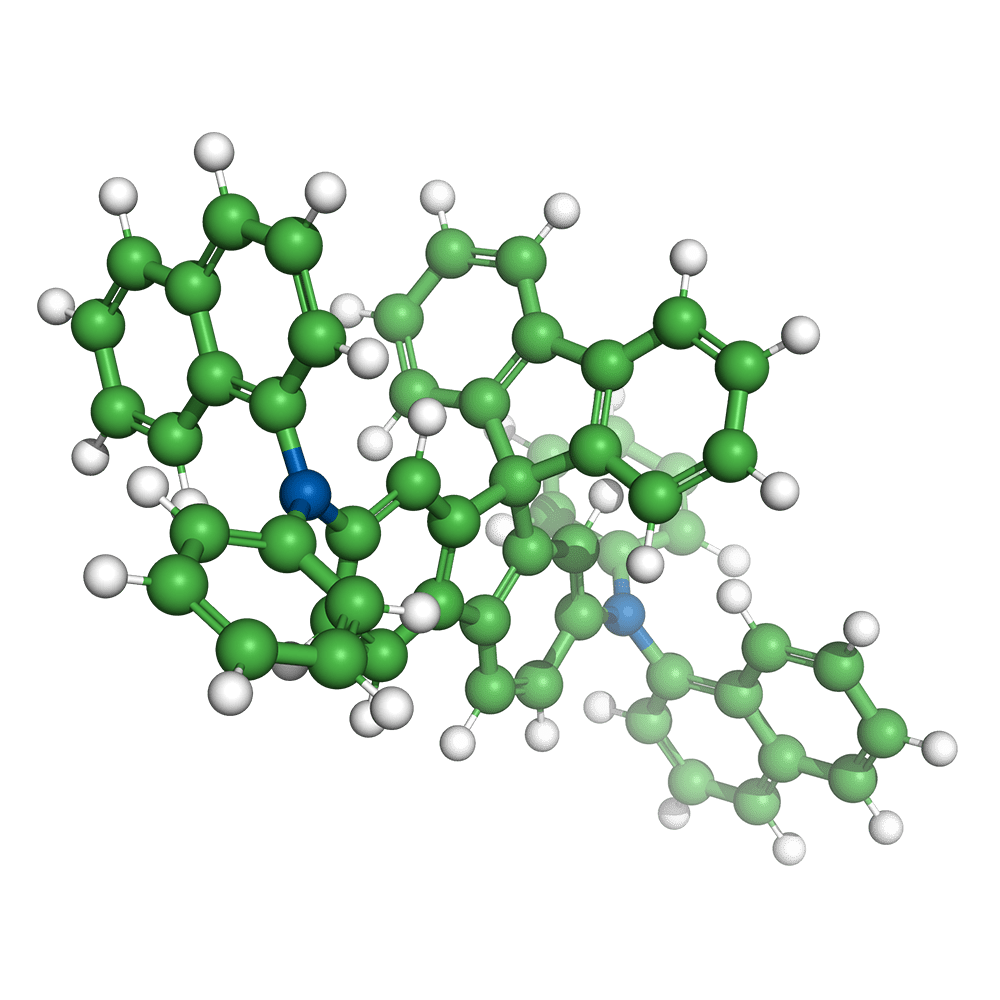
Discover optimal organic electronic materials with good conductivity, mechanical and thermal stability, and suitable for fabrication.

  • Accurately predict key optoelectronic properties
  • Run high-throughput screening for rapid design and discovery of advanced materials
  • Leverage easy-to-use, automated workflows backed by expert scientific support
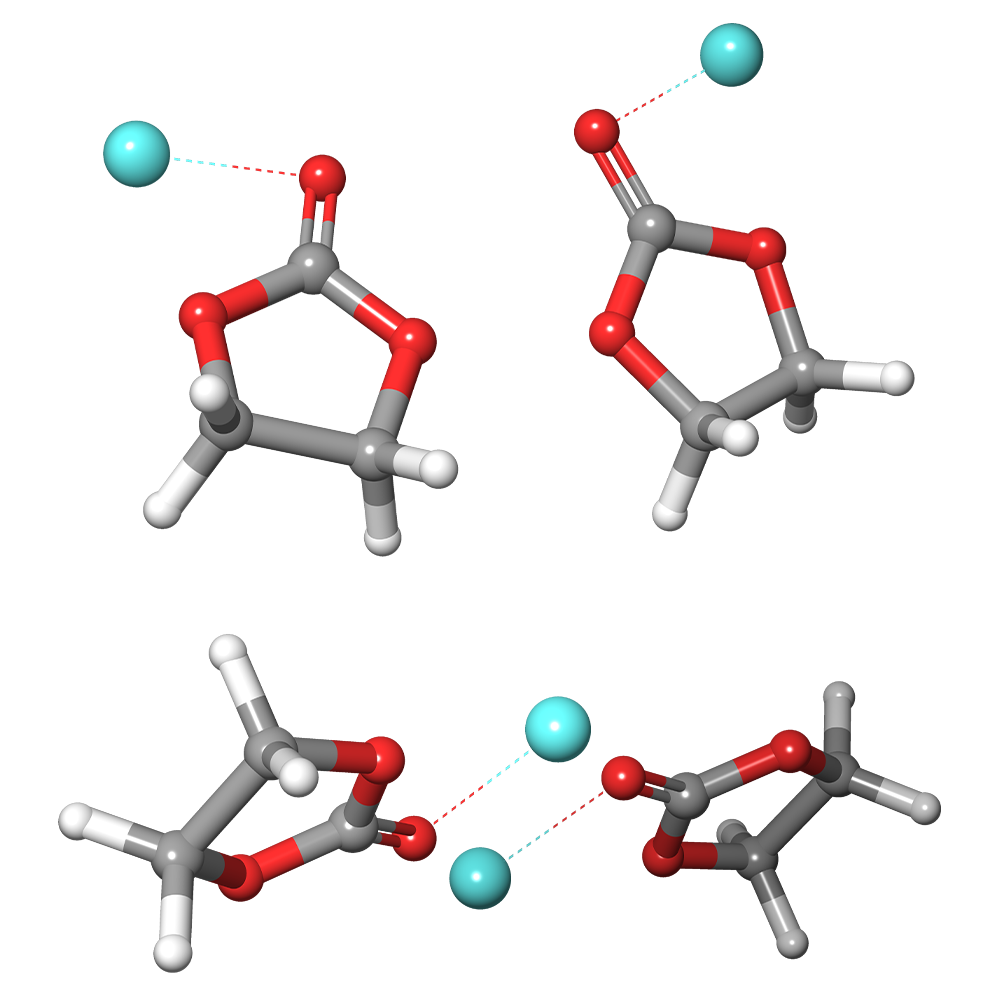
Catalysis and Reactivity Lithium EC Cluster

Catalysis & Reactivity

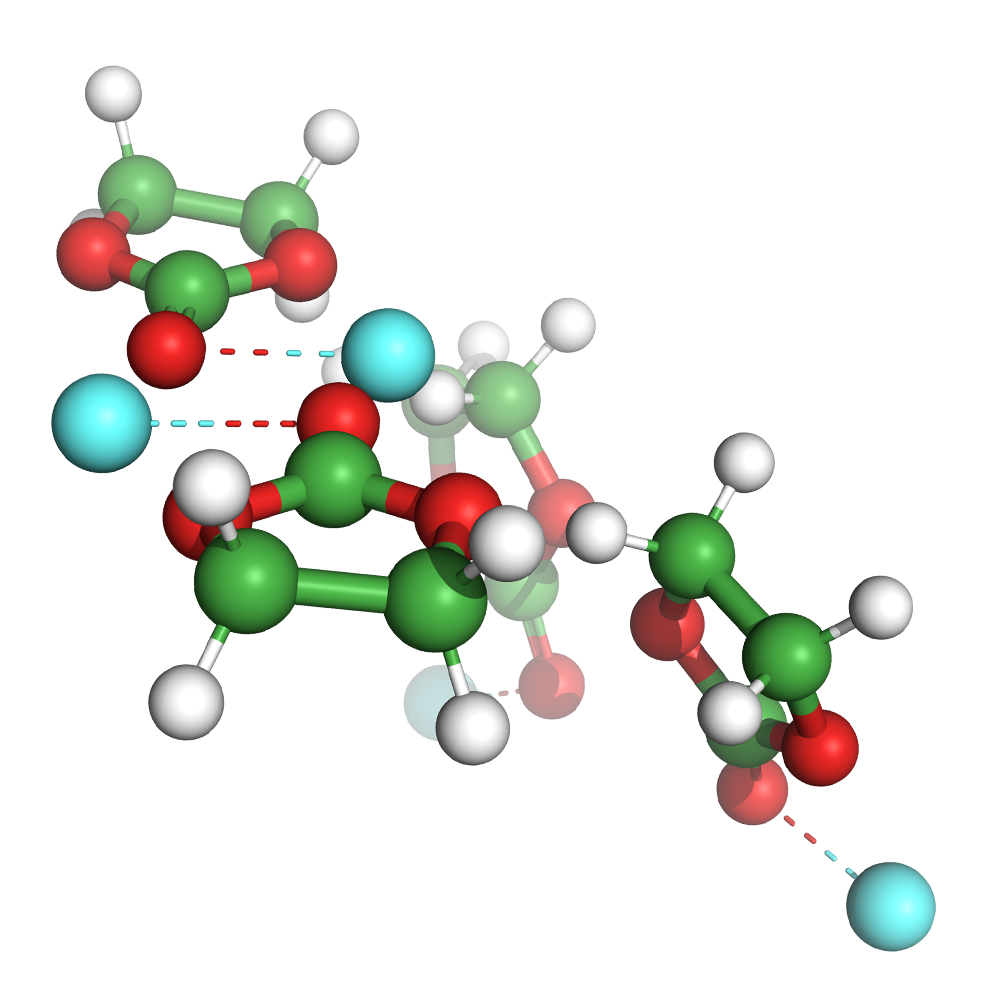
Accelerate the discovery of the next generation of catalytic and non-catalytic processes.

  • Run automated workflows for high-throughput discovery of novel catalysts and reactants
  • Elucidate the details of reactivity, selectivity, and specificity
  • Leverage a collaborative enterprise platform for novel materials discovery
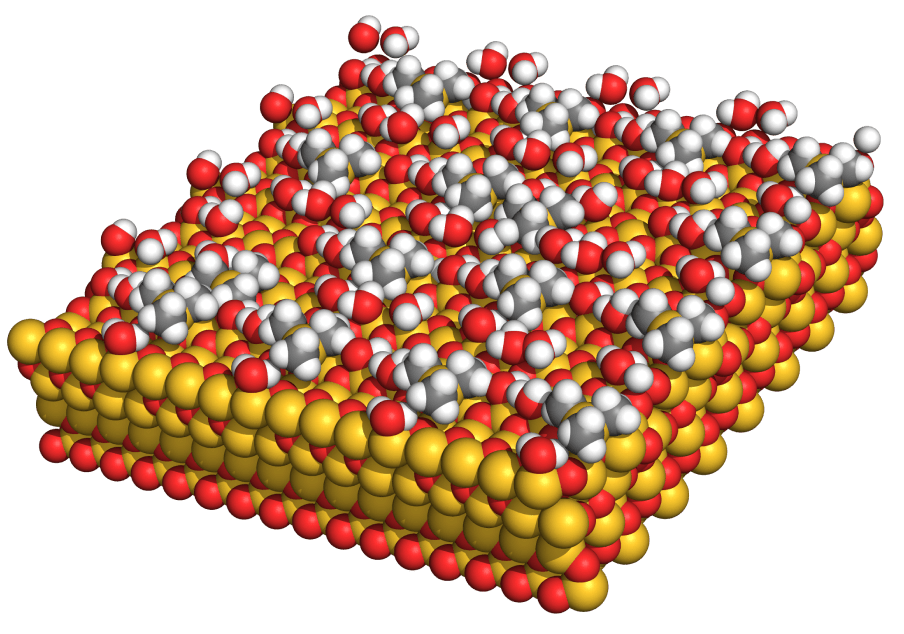
Thin Film Processing

Thin Film Processing

Optimize atomic level processing for the semiconductor industry and improve device performance.

  • Accurately predict surface reactivity to optimize deposition or etch processes
  • Validated prediction of precursor volatility by machine learning
  • Leverage efficient simulation tools for the design of novel chemicals for materials processing
Energy Capture Storage

Energy Capture & Storage

Accelerate the development of cleaner, lighter, safer, and more energy-efficient materials for batteries, fuel cells, and photovoltaics.

  • Predict key properties for batteries, fuel cells, photovoltaics, and hydrogen storage R&D
  • Simulate and analyze critical properties of component materials and interfaces
  • Enumerate and explore vast chemical space using streamlined workflows
Complex Formulations

Complex Formulations

Optimize the properties of end formulation products across the pharmaceutical, consumer product, plastic, composite, and petrochemical industries.

  • Predict key properties with automated workflows
  • Accelerate ingredients selection with high-throughput screening and machine learning
  • Identify risks and predict performance in processing

Explore Educational Resources

Prepare your students to solve the chemistry challenges of tomorrow

Academic Site License includes access to:

  • Schrödinger’s online certificate courses in life science and materials science to advance students’ career development and enhance their research skills
  • Free curriculum and tutorials for educators to use with the software and enhance your courses

Browse learning resources

In-cosmetics global

Conference

In-cosmetics global

CalendarDate & Time
  • April 16th-18th, 2024
LocationLocation
  • Paris, France

Schrödinger is excited to be participating in In-cosmetics global taking place on April 16th – 18th in Paris, France. Join us for a presentation by Jeffrey Sanders, Product Manager and Scientific Lead of Consumer Goods at Schrödinger, titled “Beyond AI: Leveraging physics-based modeling and machine learning to develop new cosmetic products.”

Date/Time:
April 16 | 14:30 – 15:00

Abstract:
In today’s dynamic market, businesses are spearheading a sustainability revolution, propelling the exploration of biomaterials to the forefront. Harnessing the power of cutting-edge data-driven multi-scale physics simulations and machine learning, researchers are meeting demand with unprecedented speed and precision. Join us for a dive into how these simulations are transforming cosmetics R&D, with illustrative real-world case studies from industrial collaborations. Experience the fusion of science and sustainability, shaping a vibrant, eco-conscious future.

Jeffrey M. Sanders, Ph.D.

Product Manager and Scientific Lead of Consumer Goods

Jeffrey M. Sanders received his B.S. in applied physics from Worcester Polytechnic Institute and then his Ph.D. in biophysics and molecular pharmacology from Thomas Jefferson Medical College. Since joining Schrödinger in 2013, Jeff has served several roles in both the scientific and technical aspects of computational chemistry software. He is currently the technical lead and product manager for consumer goods.

OLEDs: Innovations, Manufacturing, Markets

Virtual event

OLEDs: Innovations, Manufacturing, Markets

CalendarDate & Time
  • April 10th-11th, 2024
  • 8:00am PDT
LocationLocation
  • Virtual

Schrödinger is excited to be participating in OLEDs: Innovations, Manufacturing, Markets taking place on April 10th – 11th online. Join us for a presentation by Hadi Abroshan, Principal Scientist and Product Manager at Schrödinger, titled “Revolutionizing Organic Electronics: Computational Insights and Innovations in OLED Materials Design.”

Speaker:
Hadi Abroshan, Principal Scientist and Product Manager

Date/Time:
April 11 | 8:00am PDT

Abstract:
The rapidly evolving landscape of organic electronics demands innovative approaches for the design and development of materials, particularly for display applications. This presentation showcases the integration of machine learning and physics-based simulations for OLED material design and development. We explore the synergies between these computational techniques, unraveling the intricate thin-film morphology and electronic properties that underpin the performance of organic electronic materials. Viewed through a multidisciplinary lens, we navigate the complexities of OLEDs, uncovering key insights that drive the next generation of efficient and high-performance devices.

From understanding electronic transitions at the quantum level, morphology at the molecular level, to harnessing machine learning for accelerated material discovery, this presentation highlights the transformative impact of leveraging multiscale computational methodologies. We delve into several case studies, demonstrating how these computational tools empower researchers to predict, optimize, and tailor OLED materials for higher performance.

Addressing the challenge of managing extensive data in OLED design, we highlight Schrödinger’s informatics and collaboration tool, LiveDesign. This dynamic, cloud-native environment democratizes digital design processes, providing R&D teams with unified access to diverse tools such as physics-based modeling, advanced cheminformatics, and machine learning. LiveDesign streamlines collaboration and efficiency, overcoming limitations in expert availability and promoting innovation.

This presentation serves as a guide for researchers and industry professionals, pointing towards a future where computational insights drive the design and development of next-generation OLED materials.

Jaguar Datasheet

Jaguar Datasheet

Overview

Ever since its inception, Jaguar was designed with one goal in mind — to help researchers solve practical, real-world problems. To meet this goal, Jaguar’s development has focused on performance and scientific accuracy. Furthermore, Jaguar is easy to use — with a world-class graphical interface and automated workflows that guide new users through complex ab initio quantum mechanics (QM) analyses for a vast range of chemical systems. Jaguar is fully integrated into Schrödinger’s suites of scientific solutions, making interoperability with other programs seamless.


Key Advantages

Jaguar specializes in fast electronic structure predictions for molecular systems of medium and large size via the use of the pseudospectral (PS) method1 and computational strategies that scale reasonably as system size grows, in particular density functional theory (DFT). Jaguar supports parallel computation through OpenMP to further take advantage of modern hardware improvements. 

Significant ongoing efforts have been devoted to improving the accuracy of predictions including the transition metal initial guess wavefunction algorithm, recent advances in pKa predictions, and enabling access to machine learning potentials (MLP). 

Schrödinger has devoted and continues to devote development resources to enhance Jaguar’s feature set and to improve Jaguar’s robustness and performance. To date, Jaguar has made significant contributions in both life and materials science research, and we invite you to learn more about Jaguar in a published review article in the International Journal of Quantum Chemistry.2


Software and services to meet your organizational needs

Software Platform

Deploy digital materials discovery workflows with a comprehensive and user-friendly platform grounded in physics-based molecular modeling, machine learning, and team collaboration.

Research Services

Leverage Schrödinger’s expert computational scientists to assist at key stages in your materials discovery and development process.

Support & Training

Access expert support, educational materials, and training resources designed for both novice and experienced users.

Jaguar Datasheet

Jaguar Datasheet

Overview

Ever since its inception, Jaguar was designed with one goal in mind — to help researchers solve practical, real-world problems. To meet this goal, Jaguar’s development has focused on performance and scientific accuracy. Furthermore, Jaguar is easy to use — with a world-class graphical interface and automated workflows that guide new users through complex ab initio quantum mechanics (QM) analyses for a vast range of chemical systems. Jaguar is fully integrated into Schrödinger’s suites of scientific solutions, making interoperability with other programs seamless.


Key Advantages

 Jaguar specializes in fast electronic structure predictions for molecular systems of medium and large size via the use of the pseudospectral (PS) method1 and computational strategies that scale reasonably as system size grows, in particular density functional theory (DFT). Jaguar supports parallel computation through OpenMP to further take advantage of modern hardware improvements. 

Significant ongoing efforts have been devoted to improving the accuracy of predictions including the transition metal initial guess wavefunction algorithm, recent advances in pKa predictions, and enabling access to machine learning potentials (MLP). 

Schrödinger has devoted and continues to devote development resources to enhance Jaguar’s feature set and to improve Jaguar’s robustness and performance. To date, Jaguar has made significant contributions in both life and materials science research, and we invite you to learn more about Jaguar in a published review article in the International Journal of Quantum Chemistry.2


Jaguar for Materials Science

Jaguar is a powerful tool for studying the chemical reactions and properties that are implicated in the assembly, operation or failure of materials, or for the discovery and optimization of new materials solutions. Jaguar’s speed and accuracy make it an efficient and robust tool for the routine treatment of realistic chemical models. 

An exciting application of Jaguar is for the ab initio design or high throughput virtual screening for new materials with novel or enhanced properties — made possible by taking advantage of Jaguar’s industry-leading efficiency and robustness and Schrödinger Materials Science Suite’s combinatorial chemistry solutions to rapidly enumerate compound libraries. 

Below are some example applications of Jaguar for a diverse range of technologically important chemical systems. 

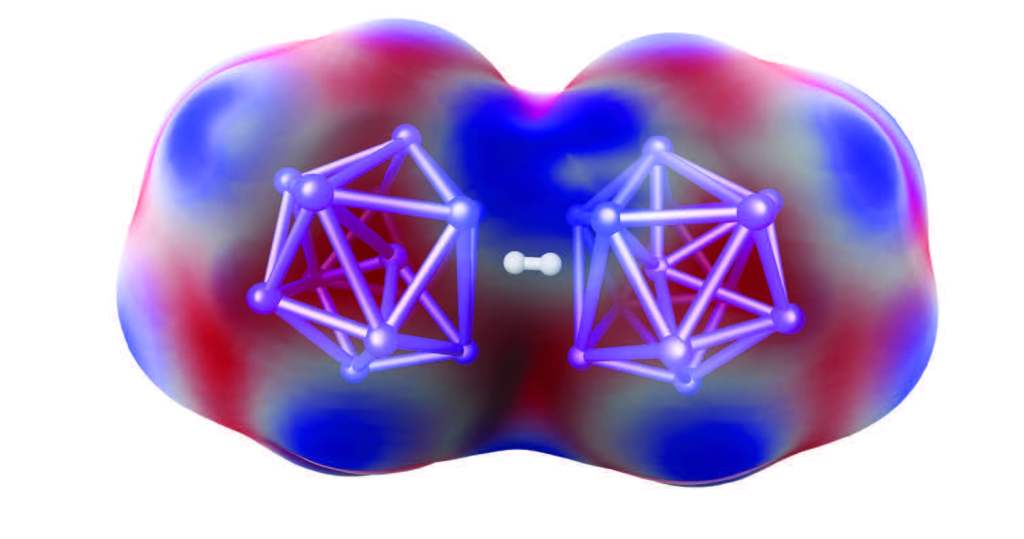
Cluster-based materials are being investigated for a variety of materials applications. Here the electronic charge distribution at the dimer is shown mapped onto the electron density. An H2 molecule is shown trapped within the dimer.


Molecular Catalysis

Jaguar has been used extensively to provide insight to enable the rational design of improved catalysts. Geometric effects and orbital/electrostatic interactions that provide the basis for catalyst stability, selectivity, and activity are difficult or impossible to gain by experiment alone, but can be efficiently computed and analyzed using Jaguar.

Optoelectronics & Photovoltaics

Molecular properties such as electronic energies, multipole moments, linear and higher order polarizabilities, ionization and reduction potentials, and charge reorganization energies can be evaluated computationally to aid in the selection or design of organic optoelectronic materials. Jaguar has been used to analyze a variety of organic semiconductors including derivatized oligothiophenes, cyanated tetracenes, and N-heteropentacenes, and other materials for dye sensitized solar cells (DSSC).

Molecular Electronics

Jaguar has been used to investigate the mechanism of carbon nanotube growth, the conformation dependence of molecular conduction, the electronic structure of molecular rectifiers, switching in mechanically interlocked molecules, and interference effects in conduction through arene molecular wires.

Energy Capture & Storage

First-principles simulations using Jaguar have been used to analyze the chemical mechanisms and controlling energetics for the operation and failure modes for candidate energy storage materials such as Li-air batteries.

Thin Film Processing

The geometric and electronic structure of organometallic precursor chemicals can be rapidly and efficiently computed with Jaguar, so as to quantify their gas-phase thermal stability, dimerization and reactivity at surfaces during thin film deposition or etch. Complementing this are tools for easily building organometallic complexes and establishing their spin state.

Software and services to meet your organizational needs

Software Platform

Deploy digital materials discovery workflows with a comprehensive and user-friendly platform grounded in physics-based molecular modeling, machine learning, and team collaboration.

Research Services

Leverage Schrödinger’s expert computational scientists to assist at key stages in your materials discovery and development process.

Support & Training

Access expert support, educational materials, and training resources designed for both novice and experienced users.

Accurate modeling of receptor functional response: GPCRs and beyond

FEB 28, 2024

Accurate modeling of receptor functional response: GPCRs and beyond

For a drug to be effective, potent binding to the target protein is a prerequisite, but it is not sufficient. Rather, in order to produce the desired functional response, the drug must either inhibit the function of the protein or modulate the activity of the protein, most typically by modifying its conformational equilibrium. The long timescales for such protein conformational changes prohibit them from being directly modeled via physics-based simulations. However, our recent work has demonstrated that the consequences of these long-timescale processes can be accurately modeled with alchemical free energy calculations using FEP+.

In this webinar, we present a tractable and computationally efficient protocol that can accurately and reliably predict the functional response of a receptor to ligand binding, including:

  • The use of Absolute Binding Free Energy Perturbation (ABFEP) to score the difference of the ligand bound to active and inactive states of the receptor and accurately predict the functional response of ligand binding
  • Validation on a large set of systems including eight G protein-coupled receptors (GPCRs) and one nuclear receptor
  • How this FEP-based workflow can be used to achieve unprecedented performance in classifying ligands as agonists or antagonists in drug discovery programs
  • Best practices for applying this approach to your own research projects

Our Speakers

Lingle Wang, PhD

Senior Vice President, Schrödinger

Lingle Wang, senior vice president, scientific development, joined Schrödinger in 2012. He is responsible for advancing Schrödinger’s physics-based computational drug discovery platform. He obtained his Ph.D. from Columbia University working with Professors Richard Friesner and Bruce Berne on methods to quantify the role of water molecules in protein-ligand binding, enhanced sampling in biomolecular simulations and free energy calculations. Lingle has published extensively in the areas of free energy methods development and applications in drug discovery.

Martin Vögele, PhD

Senior Scientist I, Schrödinger

Martin Vögele is a senior scientist in the life science software department at Schrödinger, Inc. in New York City. Previously, he was a postdoc in computer science at Stanford University where he worked on simulations of G-protein-coupled receptors and on machine learning for structural biology and drug discovery. Before moving to the United States, he obtained a PhD for work on diffusion and self-organization in lipid membranes at the Max Planck Institute of Biophysics in Frankfurt, Germany.

LiveDesign for Organic Electronics

LiveDesign for Organic Electronics

Combining Molecular Modeling, Machine Learning, and Enterprise Informatics to Accelerate R&D

Schrödinger’s LiveDesign is a flexible, cloud-native working environment to democratize digital design processes for new materials and improved formulations across R&D teams. From a single web-based platform, teams can access physics-based modeling, advanced cheminformatics, chemistry-informed machine learning, virtual design and analysis technologies, and project data. With features designed specifically for organic electronics, scientists can leverage the power of LiveDesign at every stage of the OLED materials R&D process: ideation, execution, data analysis and processing, data storage, and project management.

Overview

One-click access to powerful molecular and thin film simulations and machine learning workflows

  • Accurately predict optoelectronic properties of materials with just one click using automated workflows
  • Explore vast chemical space with large-scale screening of properties using integrated machine learning technologies

Plug-and-play with 3rd party data and scripts for efficient data management and processing

  • Automatically import experimental data from ELN/database
  • Complement any 3rd party/in-house programs/ scripts e.g. python, bash, perl, etc.
  • Enable flexible visualization of complex datasets through forms view

Real-time collaborative management of materials chemistry and device data

  • Securely and instantly share large-scale chemistry data across teams and partners to foster collaboration, empower innovation, and facilitate improved decision-making

Intuitive visualization of materials chemistry and device performance

  • Visualize device configuration using experimental or computer-simulated data
  • Gain insights into device architecture and performance to speed up decision-making processes and accelerate R&D timelines


CASE STUDY: LEVERAGING LIVEDESIGN TO DESIGN BETTER ORGANIC ELECTRONICS, FASTER

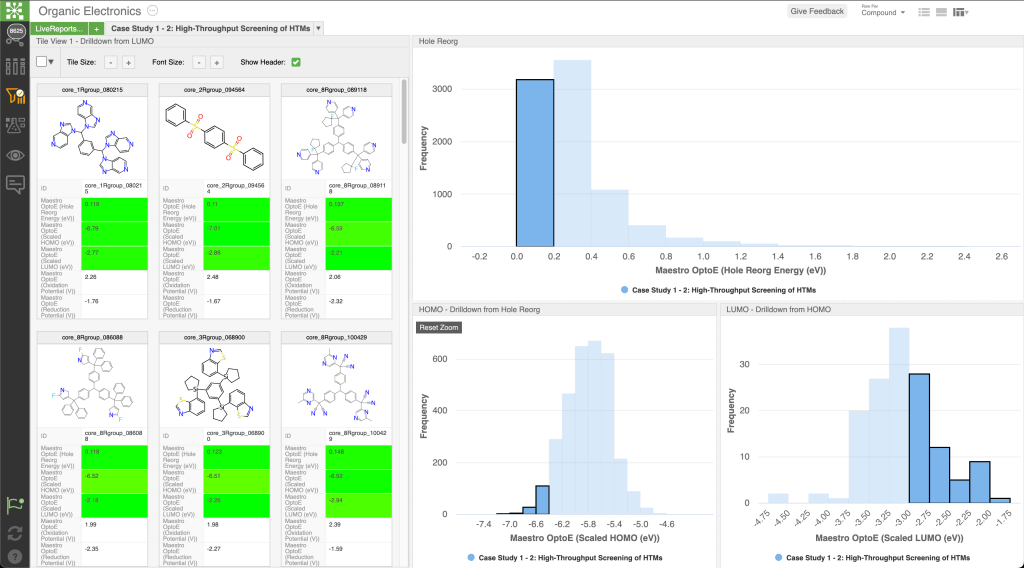
High-throughput screening of hole transport materials for QLEDs with easy-to-use, automated workflows

Solution-processed colloidal quantum dot light-emitting diodes (QLEDs) have garnered significant attention for optoelectronic applications. Nevertheless, the widespread adoption of QLED devices faces significant hurdles. The energy level mismatch between commonly used quantum dots (QDs) and traditional hole transport materials (HTMs) leads to an imbalance in charge carriers within the lightemitting layer (EML) and thus lower efficiency of OLED devices. In this study, we utilize high-throughput density functional theory (DFT) calculations on an extensive materials library comprising approximately 9,000 candidates to identify potential materials characterized by deep HOMO levels.

Schrödinger’s LiveDesign enables high-throughput quantum mechanical calculations for materials libraries of any size to predict their optoelectronic properties. One-click simulation execution allows an automated physics-based estimation of key electronic properties such as orbital energies and reorganization energies. The HOMO energies from DFT predictions as compared to experimental measurements for a set of known molecular compounds aligned well (R2=0.93), validating the DFT method, ensuring robust and accurate predictions of the orbital energies.

For high-throughput screening of the 9,000 compound library, we employed an automated workflow available in LiveDesign. First, we selected the compounds with hole reorganization energies less than 0.2 eV, see upper-right plot in Figure 1. Next, LiveDesign enables narrowing down our materials search further to those with a deep HOMO level (< -6.4 eV), and high LUMO level (> -3.0 eV), see lower-right plot in Figure 1. We search for materials with LUMO levels higher than -3.0 eV to ensure a significant energy mismatch with the conduction band of QDs (−4.0 eV), blocking electron injection from the light-emitting layer to the HTM. The chemical structures and properties of the top candidates are shown in the left panel in Figure 1.

Flexible visualization of complex datasets enables fast processing of big data, accelerating characterization and selection of promising candidates for post-processing investigation and further experimentation. LiveDesign empowers you with multi-parameter analysis, swiftly sorting through top candidates to discover those with precisely tailored properties.


Figure 1. Intuitive visualization of HTL materials candidates for QLED.

CASE STUDY: LEVERAGING LIVEDESIGN TO DESIGN BETTER ORGANIC ELECTRONICS, FASTER

Machine learning for fast screening of thermally activated delayed fluorescence (TADF) emitters

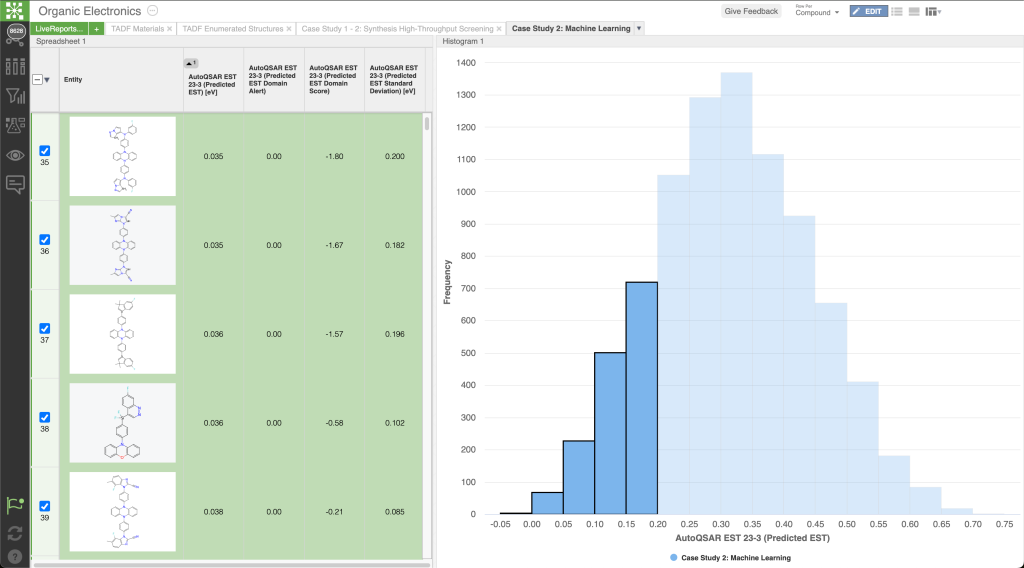
TADF emitters are a promising class of molecules for achieving high quantum efficiencies in OLEDs. In such emitters, the energetic separation between the S1 and T1 excited states (ΔEST) needs to be small (< 0.2 eV), which allows reverse intersystem crossing to up-convert the T1 state to the emissive S1 state. Tuning ΔEST allows for higher efficiency light emission in the form of delayed fluorescence.

We imported experimental data of a set of TADF molecules to LiveDesign and employed integrated machine learning workflows to develop quantitative structure-property relationships (QSPR) models. The machine learning models were then used to predict ΔEST for the library of 9,000 molecules used in the above case study.

After plotting the distribution of predicted ΔEST for the compounds (Figure 2, right plot), we selected the ones with ΔEST < 0.2. The corresponding material structures and properties are shown on the left side.

While this case study provides a focused exploration of leveraging ML models for the swift estimation of ΔEST, it serves as just one illustrative example. The platform stands ready to be seamlessly tailored for diverse material classes and a spectrum of applications, showcasing its adaptability and versatility in addressing a multitude of scientific and industrial challenges.


Figure 2. Flexible visualization of complex dataset for TADF emitter candidates in LiveDesign.

CASE STUDY: LEVERAGING LIVEDESIGN TO DESIGN BETTER ORGANIC ELECTRONICS, FASTER

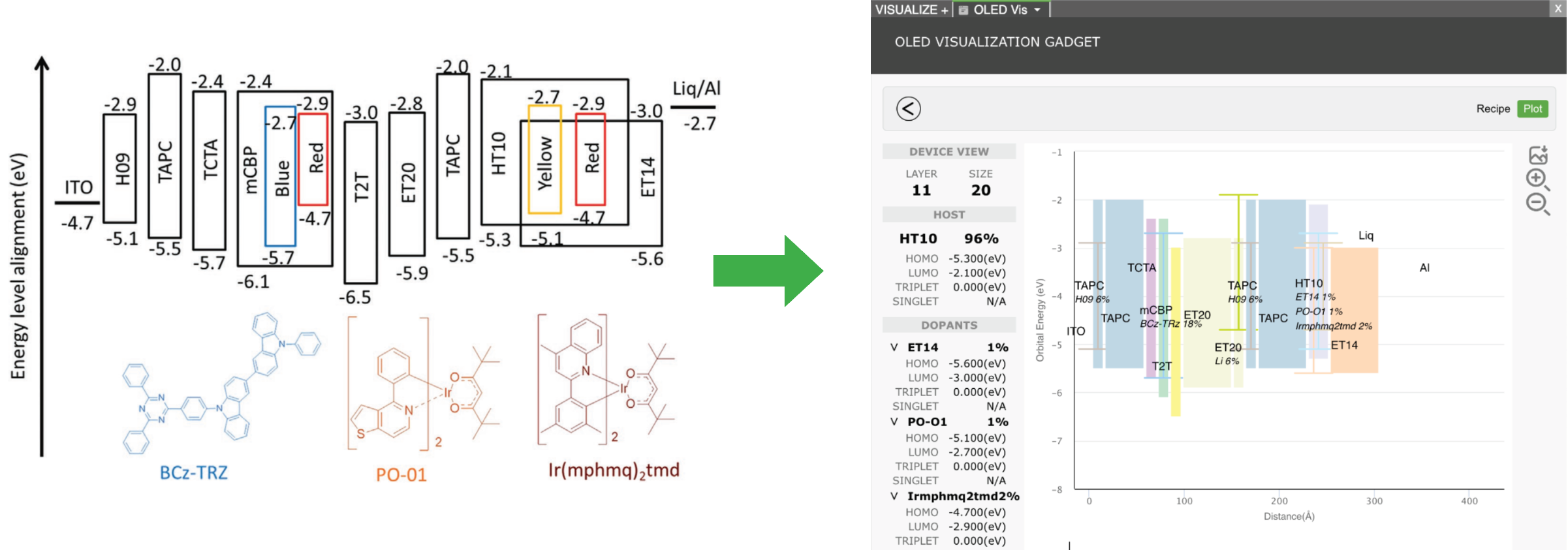
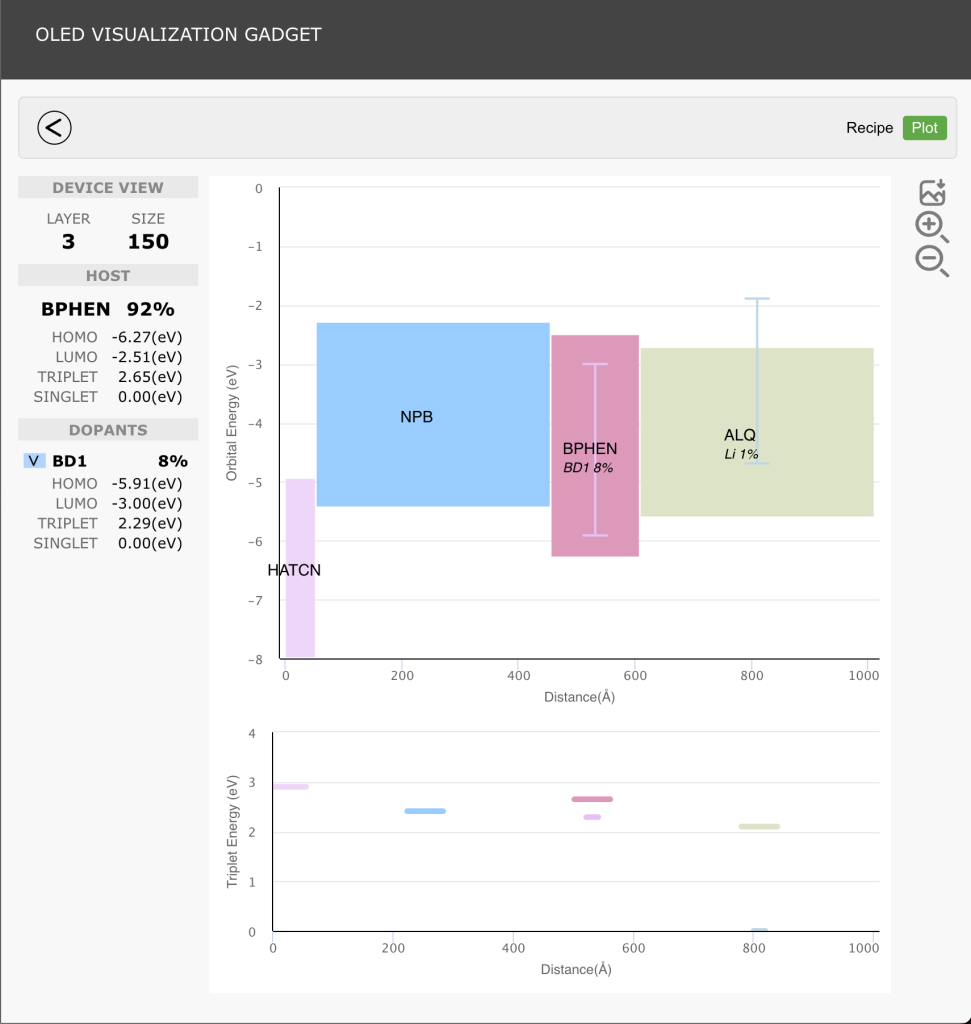
Visualization of OLED device structure for ideation

Efficiency and overall performance of electronic devices are influenced by various factors, including carrier injection, charge mobility, and device architecture. Specifically, for high-efficiency OLEDs, a multilayer device structure is employed, comprising a hole-injection/transport layer (HIL/ HTL), an emissive layer (EML), and an electron-injection/ transport layer (EIL/ETL). Such multilayer devices pose a serious challenge, requiring the use of materials with appropriate molecular orbital energy levels and excited states energies, with a key criterion being the minimization of carrier-injection barriers across the layers.

Schrödinger’s LiveDesign enables employing state-of-theart simulation methods to investigate the configuration of potential devices by considering layer thickness, orbital levels, dopant concentration, and excited state energies. As shown in Figure 3, we used data from different OLED materials (experimental or simulated properties) to visualize possible OLED device structures for quick screening of interlayer energy mismatch. The energy level mismatch is a key in OLED devices, impacting charge recombination in emissive layers along with excited state energies of components to determine device color and possibility of intermolecular energy transfer. This approach in LiveDesign allows scientists to quickly share and discuss efficiently towards the next step of designing next-generation OLEDs with higher performance.


Figure 3. Construct and visualize structures of prototype devices in LiveDesign using experimental or simulated properties of individual material.

Summary

Schrödinger’s LiveDesign offers a complete solution for the design of organic electronics across R&D teams. Integrated with physics-based simulations and machine learning, LiveDesign serves as an easy-to-use portal for efficient simulations for property prediction and largescale screening of organic electronic materials.

Meanwhile, LiveDesign is an efficient tool for teams to share, manage and process data, speeding up collaboration and innovation timelines. Moreover, with modules designed for organic electronics, scientists are able to visualize organic electronic devices, gaining insights on device performance.

Software and services to meet your organizational needs

Software Platform

Deploy digital materials discovery workflows with a comprehensive and user-friendly platform grounded in physics-based molecular modeling, machine learning, and team collaboration.

Research Services

Leverage Schrödinger’s expert computational scientists to assist at key stages in your materials discovery and development process.

Support & Training

Access expert support, educational materials, and training resources designed for both novice and experienced users.

Advancing the design and optimization of drug formulations with coarse-grained molecular simulations 

Advancing the design and optimization of drug formulations with coarse-grained molecular simulations

Scientists from AbbVie and Schrödinger gain a deep understanding of the mechanisms behind amorphous solid dispersion (ASD) dissolution behavior at the molecular level.

Executive Summary

  • Evaluated dissolution profiles of different drug and polymer combinations at specified conditions
  • Identified interactions that are responsible for delayed release in certain formulations
  • Aligned with and complemented experimental data with visual and numeric insights at the molecular level
  • Gained insights into new excipients for drug formulations to achieve targeted dissolution behavior


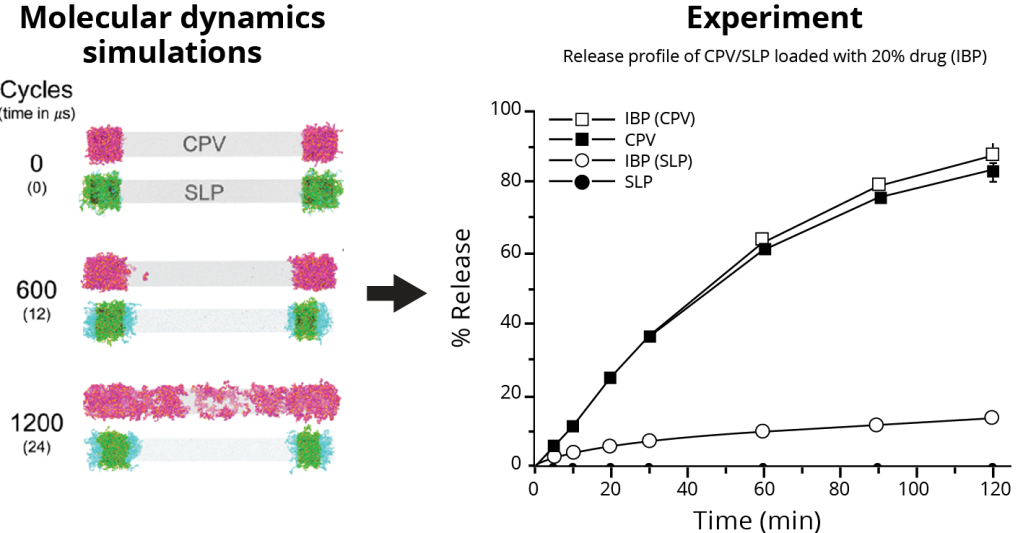
*CPV, Copovidone; SLP, Soluplus; IBP, ibuprofen


Challenges

Formulating small molecule drugs with low aqueous solubility in a hydrophilic polymer matrix, also known as amorphous solid dispersion (ASD), is one of the most common approaches to achieve effective drug delivery and, thus, bioavailability. Producing a high-performance ASD depends on various factors, such as the physical stability of the drug-excipient matrix, its interaction with polymers during dissolution, and the rate of drug release in an aqueous medium. Often, researchers perform numerous design and experimental iterations to achieve this goal. While hypotheses about drug release behaviors may be drawn from experimental data, a comprehensive understanding of the fundamental mechanisms and insights into molecular-level occurrences remains elusive. It’s challenging to obtain detailed drug/polymers/water interactions through experiments alone. Therefore, a more effective approach is needed to inform the selection of suitable excipients, including polymers, for specific drugs.


Approach

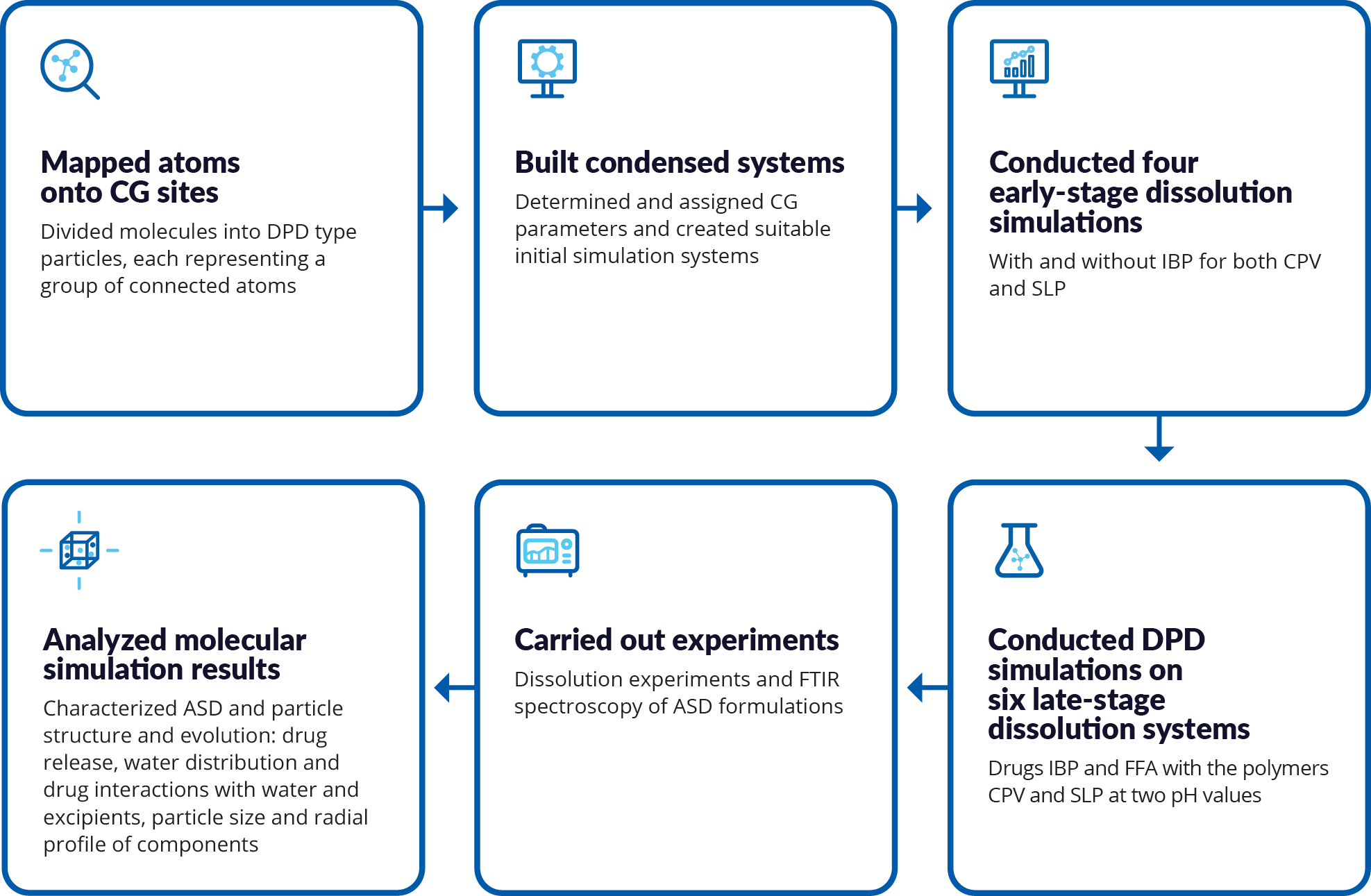
Scientists from AbbVie and Schrödinger worked together to use molecular simulations to provide insights needed to streamline time-consuming development cycles of drug formulations. A mesoscopic simulation method, dissipative particle dynamics (DPD), was employed to effectively model ASD dissolution on relatively long lengths and time scales. Two stages of the dissolution process were studied and compared with experimental investigations: the early-stage of the dissolution process, which focuses on the breakup and dissolution of the tablet at the ASD/water interface with the potential for the formation of drug-excipient particles, and the late-stage of the dissolution process where the aqueous medium contains more mature drug-excipient particles which are important for sustained supersaturation of the drug. All models and simulations were performed using the Schrödinger’s Materials Science platform and the Desmond engine for molecular dynamics (MD) and coarse-grained (CG) simulations.

*CPV, Copovidone; SLP, Soluplus; FFA, fenofibric acid; IBP, ibuprofen; PEG, polyethylene glycol


Results

  • Molecular simulation results were consistent and provided visual explanations for experiments from current and previous studies:
    • IBP/FFA interacts more with vinylcaprolactam in SLP than with vinylpyrrolidone in CPV
    • Water interacts more with vinylpyrrolidone in CPV than with vinylcaprolactam in SLP
    • Pure CPV dissolves faster than SLP, with water rapidly penetrating into CPV
    • Inclusion of IBP in CPV slows down the dissolution process
    • Release of IBP from SLP is slower than release from CPV
  • Molecular simulations provided additional insights:
    • CPV matrix showed more rapid hydration and breakup irrespective of drug presence, compared to the SLP matrix
    • Surfactant-like structures at the SLP ASD−water interface slow down water penetration into the formulation and thereby the drug release
    • Coherence of ASD degrades rapidly for low IBP/CPV ratios
    • Water distribution within the ASDs differs significantly between the two polymers
    • Within SLP, the PEG chain interacts more with water and less with drug molecules
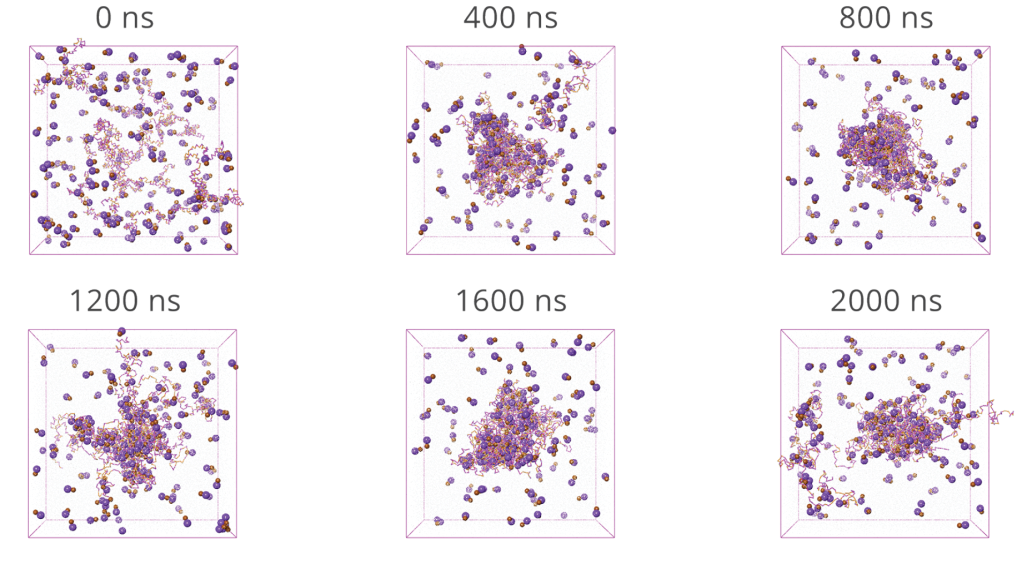
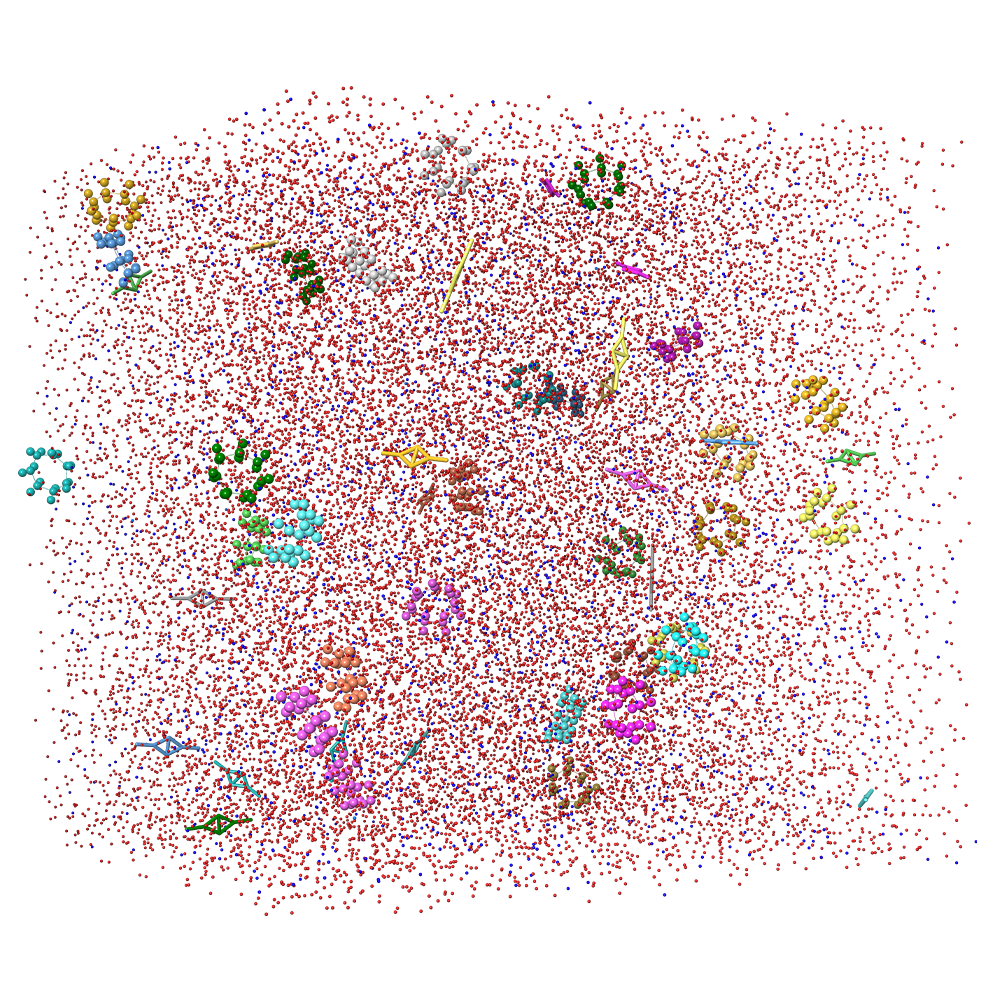
Figure 1: Snapshots at different times from the late-stage dissolution simulation of the IBP/SLP system in water at pH 6.8. The empty space in the box is occupied by water. It’s rendered transparent for better visibility of the polymer and drug molecules.


References

  1. Molecular-Level Examination of Amorphous Solid Dispersion Dissolution

    Mohammad Atif Faiz Afzal, Kristin Lehmkemper, Ekaterina Sobich, Thomas F. Hughes, David J. Giesen, Teng Zhang, Caroline M. Krauter, Paul Winget, Matthias Degenhardt, Samuel O. Kyeremateng*, Andrea R. Browning, and John C. Shelley* Mol. Pharmaceutics  2021, 18(11), 3999–4014


Learn more about our collaboration with AbbVie

Advancing the design and optimization of drug formulations with combined computational and experimental approaches

Scientists from AbbVie and Schrödinger collaborated to systematically investigate amorphous solid dispersion (ASD) dissolution behaviors by combining thermodynamic modeling, molecular simulation, and experimental research.

Read the case study

Software and services to meet your organizational needs

Software Platform

Deploy digital materials discovery workflows with a comprehensive and user-friendly platform grounded in physics-based molecular modeling, machine learning, and team collaboration.

Research Services

Leverage Schrödinger’s expert computational scientists to assist at key stages in your materials discovery and development process.

Support & Training

Access expert support, educational materials, and training resources designed for both novice and experienced users.

Release 2024-1

Library Background

Release Notes

Release 2024-1

Small Molecule Drug Discovery

Platform Environment

Maestro Graphical Interface

  • Improved usability for several Project Table dialogs including Change Property, Substructure Count, Add Property, Add Sequential Index Property, Add Standard Molecular Property, Redo Calculation, and Total Surface Area
  • Improved usability of the Find Toolbar by adding a close button and “Search in Progress” indication

Workflows & Pipelining [KNIME Extensions]

  • Stabilized version of the KNIME generic LiveDesign protocols
  • New node for pKa prediction using Epik 7
  • Added support for AB-FEP files to FEP+ reader node

Target Validation & Structure Enablement

Protein Preparation

  • Improved accuracy of ligand ionization/tautomeric state predictions in the Protein Preparation Workflow using ML-enabled Epik by default
  • Ability to optionally provide sequence information via FASTA file when filling in missing loops

Multiple Sequence Viewer/Editor

  • Ability to export sequences and annotations to seqD file

Binding Site & Structure Analysis

Desmond Molecular Dynamics

  • Added Radial Distribution Function (RDF) analyzer in Trajectory Plots

Hit Identification & Virtual Screening

Ligand Preparation

Empirical and QM-based pKa Prediction

  • Improved accuracy in empirical corrections for Macro-pKa from a new ML-based algorithm used by default

Lead Optimization

FEP+

  • Improved functionality of FEP+ Panel-managed trajectories can now be moved out of the FEP+ entry group, to retain it in the project table

Protein FEP

  • Mutation generation will now ignore water molecules for sidechain placement

Solubility FEP

  • Ability to compute hydration free energies from Solubility FEP with useful blood brain barrier penetration correlation: Hydration-only mode is now available from Advanced Options of the Solubility FEP panel

Quantum Mechanics

  • Employ different basis sets by atom in Jaguar Transition Search
  • Predict and view NMR spectra based on DFT chemical shifts and spin-spin couplings
  • Added support for analytic basis sets with high angular momenta including cc-pvXz and def2 basis sets up to QZ
  • Added support for composite 3c-functionals: HF-3c, PBEh-3c, HSE-3c, B97-3c, r2SCAN-3c, and wB97X-3c

Biologics Drug Discovery

  • Improved accuracy in antibody modeling with new curated antibody database that now excludes redundant and/or poor-quality PDB structures
  • Option to export all 1000 unclustered raw poses from PIPER protein docking
  • Report the % humanness of the Heavy and Light chain on the grafted model in Antibody humanization by CDR grafting
  • Export aggregation profile images in png format
  • Report detailed patch characteristics in Protein Patch calculations
  • Easily perform detailed analysis of residue scanning results with new csv file containing mutant descriptions and energies

Materials Science

GUI for Quantum ESPRESSO

Product: Quantum ESPRESSO (QE) Interface

  • Convergence monitor for the nudged elastic band (NEB) calculations
  • Workflow for computing dielectric constant (command line)
  • Support for parallel computation of Phonon calculations (command line)
  • Option to display discrete frequencies from dynamical matrix for phonon DOS
  • Support for phonon calculations with Hubbard U potentials for LDA+U
  • Support for mean square displacement analysis over an existing AIMD trajectory

Materials Informatics

Product: MS Informatics

  • DeepAutoQSAR: Access from the Task menu under Materials Informatics
  • Formulation ML: Machine-learning-based property predictions using chemical formulations
  • Machine Learning Property: Improved machine learning models
  • MD Descriptors: Bond, angle, torsion, and vdW energies computed as descriptors
  • MD Descriptors: Improved efficiency with the MD simulation protocol

Coarse-Grained (CG) Molecular Dynamics

Product: MS CG

  • CG FF Builder: Implicit charge assessment by dielectric constant
  • Automated DPD Mapping: Support for multiple ionization states (command line)
  • Automated DPD Mapping: Support for pre-defined patterns for use in mapping (command line)
  • Support for including CGFF file (*.json) information into other CGFF files

Reactivity

Product: MS Reactivity

  • Schrödinger Nanoreactor: Chemical reaction discovery and analysis module based on AIMD and semiempirical QM (xTB) methods
  • Auto Reaction Workflow: Improved speed in calculating custom rates and Keq

Microkinetics

Product: MS Microkinetics

  • Workflow module for microkinetic modeling of chemical reaction rates

MS Maestro Builders and Tools

  • Complex Enumeration: Support for the use of two ligand libraries as input
  • Complex Enumeration: Option to specify the number of unique ligands
  • Move Selected Atoms: Workspace tool to rotate/translate selected atoms

Classical Mechanics

  • Polymer Crosslink: Option to block formation of specific chemical structures
  • Molecular Deposition: UI update with improved control of adsorbate setup and simulation protocols

Quantum Mechanics

  • TST Rate: Jobs launched to queue

Education Content

Life Science

  • New Tutorial: Ligand-based Screening for Ultra-Large Libraries with Quick Shape and the Hit Analyzer
  • New Tutorial: Designing Out Common ADMET Liabilities using Consensus IFD-MD
  • New Tutorial: Introduction to MD Simulations with Desmond
  • Updated Tutorial: Structure-Based Virtual Screening using Glide

Materials Science

  • New Tutorial: Microkinetic Modeling
  • New Tutorial: Machine Learning for Formulations
  • New Tutorial: Nanoreactor
  • New Tutorial: Modeling Receptor Binding in an Olfactory Protein
  • New Tutorial: Building a Coarse-Grained Skin Model using Martini Force Field
  • Updated Tutorial: Activation Energies for Reactivity in Solids and on Surfaces
  • Updated Tutorial: Molecular Deposition

LiveDesign

What’s New in 2024-1

  • Limit Unrestricted Project Data Visibility: Configure a project so that compounds, data, and models from unrestricted projects and the Global project are not accessible within that project
  • Export Tile View to PowerPoint:
    • Fields defined for the Tile are automatically selected for export
    • The order of fields in the Tile match the order generated in the exported PPTX
    • Choose the number of Tiles (1-8) that should appear on each slide
    • The Compound Structure row with SMILES content is no longer included
  • Forms Improvements
    • Change the styling of Matrix Widget text labels cells with font styling, background colors, and font alignment
    • The Matrix widget will now slightly resize automatically to adapt to different screen resolutions (down to minimum column width of 75 pixels, and a maximum width of 210 pixels)
    • Boolean Freeform column cells now render smaller, more usable buttons in the Matrix Widget
  • Landing Page Improvements
    • Centralize project collateral by adding hyperlinks to key presentations, notes, or papers on a new Project Resources page
    • Tag compounds as Favorites within the Landing Page’s Compound page. Favorited Compounds are visible on Project Overview page
  • Configure Assay Tooltips: Configure what metadata appears within assay tooltips on a per-assay, per-column, or per-LiveReport basis
    • Define pattern matching rules within the Admin Panel for entire assays or specific endpoints to control which metadata shown among all Projects
    • Define LiveReport-specific metadata visibility through the Assay’s column menu
    • Configure what metadata appears in assay tooltip through LDClient
  • 3D Visualizer Improvements
    • Unit cell box can be rendered in the 3D workspace
    • Changing dihedral angle button is moved from the ‘More’ dropdown to the Ligand Designer Edit main tool bar
    • Clicking “X” on 3D window exits Ligand Designer, instead of hiding the panel, just like clicking the “Done Editing” button
    • The pose name that appears in Ligand Designer is the name of the reference file uploaded in ligand designer configuration for explicit Ligand Designer models.
  • Composite Row Improvements
    • Create a new entity or clone an existing entity in Entity Groupings Tool
    • Drag and drop an entity (or a group of entities) off the Entity Groupings Tool table to remove the entries from a relationship, or drag and drop entries within the table from one location to another
    • Create entity relationship metadata columns. List entity relationship metadata columns in the Data & Columns tree, and add entity relationship metadata columns to a LiveReport and view the metadata values in the LiveReport
    • Add Composite Metadata Columns in the Entity Groupings Tool to edit the metadata for new entities
  • The Tasks page within the Admin Panel now permits killing an unlimited number of tasks
  • Retrieve assay metadata from the LDClient python API
  • Generic Entity experiment imports now show a notification when the import is complete, with a link to the import summary
  • User-initiated operations (e.g., Filtering and R-group decompositions) are now prioritized more highly than background activities, such as auto-updating advanced searches, to reduce latency

What’s been fixed

  • Generic Entities
    • A warning message is shown when importing a Generic Entity experiment file with duplicate column headers
    • Importing generic entities through LDClient would fail if the request attempted to update the entity with a specific file, and now importing succeeds
    • Experiments imported for Generic Entities appear the Experimental Assays folder in the data and columns tree
    • The Entity Groupings tool can now quickly load tens of thousands of rows and operations within the tool are more performant
    • Generic entity metadata tooltips now correctly appear in Tile View
    • Tile View now correctly shows file icons for Generic Entities
    • Importing experimental results for Generic Entities previously showed an unnecessary error message dialog, even when importing experimental results was successful, and now no longer shows the error dialog
    • Using the “Show as text” option in the Entity column menu would show distorted icons for Generic Entities, and now correctly show empty values
    • Exporting LiveReports to CSV and XLS previously failed to export Generic Entities that had values for their Lot Properties, and now correctly exports those entities and values
    • Clicking on the Manage Files button within the Import panel would open the File Import dialog, and now opens the Manage Files dialog
    • Entity bank and relationship table are synced up with the current LR when switching LRs.
  • Models
    • Taskengine would occasionally fail to find the Schrodinger Suite when running models, and now correctly finds and mounts the Schrodinger Suite
    • PyMOL session files (.pse) generated by models failed to be truncated around the ligand, are now successfully truncated to reduce their file size and speed up loading times in the 3D visualizer
    • Long-running model tasks results would occasionally fail to get imported to LiveDesign due to network connectivity issues, and now successfully import
    • LiveDesign would incorrectly declare some model tasks as “Failed” if they remained in a TaskEngine queue in the Submitted status too long, and now LiveDesign correctly runs the tasks and imports the results
    • 3D models columns would occasionally return a blank cell, and now always show either “3D not available”, “Failed” or the Methane icon
    • Pending cells in the LiveReport would remain flashing even if the task was killed in the Admin Panel, and now the cells correctly indicate that the task was killed
    • Using the ${LIVEDESIGN_URL} macro in a model would fail to connect to LiveDesign, and now successfully connects to LiveDesign
  • 3D Visualizer
    • The 3D Visualizer’s Reset Custom Styles button failed to reset some styling options applied to proteins, and now correctly resets all styling, including for selected atoms
    • Styles applied in the 3D visualizer are now visible after switching the 3D visualizer to Popout Mode
    • Ligand Designer sessions no longer show a message that zero docking jobs are queued when the docking queue is empty
    • Not all color changes applied to ligands and proteins within the 3D visualizer would be saved, and now color changes are correctly saved
  • Plots
    • The Configure Tooltips dialog for Plots would incorrectly show columns in the Displayed Fields section of the dialog after canceling changes to the tooltip, and now correctly shows columns within the Displayed Fields section
    • Color segment orders within Histogram plots now show colors in the following order: Categorical coloring rules follow the order of the defined rules within the Coloring Rules dialog. Gradient and numerical coloring rules follow the order of the bins is based on the numeric sort order
    • Long entity IDs would previously overflow within plot tooltips, and now wrap within the plot’s tooltip
    • Plots with lots of data can export SVGs in Firefox
    • Box plots now show a border around outlier data points
    • Selecting a box within the box plot would hide the median line, and now the median line is always shown regardless of selection
    • The dialog that configures plot tooltips now correctly shows the columns in the tooltip within the Displayed Fields section
    • The jitter banner appears in front of the legend and not overlapping with each other
  • Filters
    • Dropdown lists previously listed options that were visible in a LiveReport after a Filter was applied, and now list all options for the LiveReport (including any options that have been filtered out)
    • Numeric filters now show a precision of up to 1e-9
  • The LiveReport footer’s selection navigation interface now shows the compound’s preferred ID
  • The LiveReport footer previously read “Entities displayed”, even when there were no Generic Entities within the LiveReport, and now reads “Compounds displayed”
  • Boolean Freeform columns now render the checkmark and X icon correctly in Firefox
  • Substructure and Similarity searching previously used LiveDesign’s absolute maximum number of search results to return, and now correctly use the system-configurable default value for the maximum number of results to return
  • LiveReports that contain columns from a Reaction Enumeration or R-group Enumeration now open more quickly
  • Compounds would occasionally disappear temporarily when added to a large LiveReports, and now correctly remain visible in the LiveReport
  • LiveReports with auto-updating advanced searches no longer attempt to update the report more times than necessary, which conflicted with user activities and slowed them (e.g., R-group decompositions and Filters)
  • Dropdown options were not fully visible within the Parameterized Model dialog, when the model options were defined with a picklist, and now the dropdown options are correctly displayed
  • The Matched Molecular Pair tool now functions correctly while toggling between multiple compound selections in the LiveReport and using the MMP tool
  • Usernames are no longer case sensitive, and usernames with a different case are deduplicated
  • LDClient now successfully exports a LiveReport to CSV when a token is used for authentication
  • Kanban widgets now correctly show picklist Freeform column values that have been applied to existing compounds, but that have been removed from the Freeform column configuration and aren’t available to apply to new compounds
  • Selecting a composite row parent and recalculating a model would trigger a recalculation for all children, and now only recalculates the model for the selected parent
  • Matrix widgets no longer appear broken after duplicating a LiveReport with a Matrix widget that contains unpublished columns
  • Compound orientations in the sketcher are now saved when adding the compound to a LiveReport, using a scaffold in R-group decompositions, using a scaffold for compound alignment, and using compounds in enumeration
  • The date range filter for recently added compounds in Landing Pages now renders correctly
  • Ligand Designer sessions no longer get stuck in a Loading state
  • Column-as-parameter models now provide correctly formatted CSV files when the input column is a 3D column that is tagged as an “Other” type (as opposed to a “Ligand” or “Protein” type), and the lists each input as a separate row
  • Selected compounds are highlighted in green in Heatmap
  • Model Task pages in the Admin Panel now report if a prediction column is missing from the task output
  • The Project Picker would appear after a five-second delay when there are a large number of projects to show, and now the Project Picker appears instantly
  • SDF Exports were limited to 20mb, and now are limited to 4gb
  • LiveDesign would occasionally freeze due to a database lock, and now no longer will freeze

Training & Resources

Online Certification Courses

Level up your skill set with hands-on, online molecular modeling courses. These self-paced courses cover a range of scientific topics and include access to Schrödinger software and support.

Tutorials

Learn how to deploy the technology and best practices of Schrödinger software for your project success. Find training resources, tutorials, quick start guides, videos, and more.

Other Resources

Tire Technology Expo

Conference

Tire Technology Expo

CalendarDate & Time
  • March 19th-21st, 2024
LocationLocation
  • Hannover, Germany

Schrödinger is excited to be participating in the Tire Technology Expo taking place on March 19th – 21st in Hannover, Germany. Join us for a presentation by Eli Sedghamiz, Senior Scientist II at Schrödinger, titled “Tire polymer formulation from molecules to performance properties.”

Date/Time: March 21 | 12:00 – 12:25 CET
Speaker:
Eli Sedghamiz, Senior Scientist II
Abstract: New regulations and sustainability goals are forcing companies to enhance their recycling capabilities and/or switch to bio-based formulations. Atomic-scale simulation provides the ability to screen new cross-linkers, dispersants and compatibilizers that are necessary for new recycled and bio-based formulations. This presentation will include case studies from Schrödinger in the application of molecular simulations and machine learning to tire-relevant formulations, including an example from a leading chemical supplier. These studies illustrate how new analysis features targeted to various polymer and polymer formulation application areas can influence design for sustainability.

Institute of Food Technologists Conference

Conference

Institute of Food Technologists Conference

CalendarDate & Time
  • July 14th-17th, 2024
LocationLocation
  • Chicago, Illinois

Schrödinger is excited to be participating in the Institute of Food Technologists Conference taking place on July 14th – 17th in Chicago, Illinois. Join us for a presentation by Jeffrey Sanders, Product Manager of Consumer Goods at Schrödinger, titled “Characterizing Protein-Based Ingredients From the Bottom Up.” Stop by booth #2125 to speak with Schrödinger scientists.

Speaker:
Jeffrey Sanders, Product Manager of Consumer Goods

Abstract:
The rise of alternative proteins in the food industry has brought several challenges in processing, taste, and price parity. While there have been some successes, consumption of alternative protein-based foods represents a small fraction overall. One of the reasons for this is the lack of analytical knowledge about protein sources and their physical and chemical properties that influence an overall food product and its perception by the consumer. Top down approaches to understanding these new food materials has limited their applicability. Predictive modeling, including physics-based modeling and machine learning, presents an opportunity to provide unique insight to how food ingredients behave, in a soft-matter physics framework. In this talk, the current state of the art in physics-based modeling of alternative proteins will be presented alongside case studies relevant protein-ingredients interactions at the molecular level. This information can help food scientists make more informed decisions when formulating new foods and beverages and help them understand the impact of replacing traditional protein sources with alternatives ones.

ACS Spring 2024

Conference

ACS Spring 2024

CalendarDate & Time
  • March 17th-21st, 2024
LocationLocation
  • New Orleans, Louisiana

Schrödinger is excited to be participating in the ACS Spring 2024 conference taking place on March 17th – 21st in New Orleans, Louisiana. Stop by our booth to speak with Schrödinger scientists.

icon time 11:30am, March 19
icon location Hall D, Expo Theater
Workshop 1: Expanding the Experimentalist’s Toolkit: Getting Started with FEP+ Calculations

Abigail L. Emtage, Principal Scientist I, Education Specialist, Schrödinger
Computational methods can help drive forward drug discovery campaigns through prediction of binding affinities of small molecules to protein targets. Free energy perturbation (FEP) methods, such as Schrödinger’s FEP+, can provide accurate predictions for binding affinities in drug design. Historically, learning advanced molecular modeling techniques has been difficult due to the often steep computational chemistry learning curve, limited training opportunities, and a lack of access to both industry-standard software packages and compute resources. In this workshop, we will provide an introduction to Schrödinger’s FEP+ methodology, and highlight modeling approaches that have been successful both in Schrödinger’s internal programs and collaborative drug discovery campaigns. We will additionally demonstrate how our Schrödinger online certification course Free Energy Calculation for Drug Design with FEP+ can simultaneously upskill computational researchers and the medicinal chemistry workforce by providing hands-on exposure to our FEP+ workflows and best practices via virtual cluster software access.

icon time 1:30pm, March 19
icon location Hall D, Expo Theater
Workshop 2: Empowering Exploration: A Workshop on Molecular Modeling for Materials Science and Chemistry for Non-Experts and Experimentalists

Katie Dahlquist, Senior Scientist I, Education Specialist, Schrödinger
Atomistic simulation has transitioned from being optional to indispensable in materials science, chemistry, and engineering. Applied molecular modeling can drive or supplement a research project – accelerating discovery, minimizing the need for costly experiments, and providing atomic scale insights. As simulation becomes the norm in R&D, there is increased demand for scientists with molecular modeling capabilities. In this workshop, we will showcase Schrödinger’s Materials Science Maestro interface – a single platform for atomistic simulation – with capabilities in quantum mechanics, molecular dynamics, and machine learning. We will present workflows for structure building and property prediction across several materials science application areas, including catalysis, polymeric materials, pharmaceutical formulations, and battery materials. Attendees will walk away with an understanding of how new users can take advantage of Schrödinger’s offering for simulation and modeling, as well as practical knowledge about how they can get started today.

icon time 2:00pm, March 18
icon location Hall B, Room 3
Accurate scoring for virtual screening campaigns: The transformative impact of absolute binding free energy calculations in hit discovery

Steven Jerome, Senior Director, Schrödinger

icon time 9:25am, March 19
icon location Hall B, Room 7
Applying and learning molecular modeling tools for designing battery materials

Katie Dahlquist, Senior Scientist I, Education Specialist, Schrödinger

icon time 5:15pm, March 19
icon location R03
Free energy calculations for protein-protein binding, pH sensing, functional response modeling and more

Lingle Wang, Senior Vice President, Schrödinger

icon time 11:20am, March 20
icon location Room 355
Accelerated in silico discovery of SGR-1505: A potent MALT1 allosteric inhibitor for the treatment of mature B-cell malignancies

Zhe Nie, Executive Director, Schrödinger

icon time 8:00am, March 21
icon location Room 225
Modeling nucleation and growth of solid electrolyte interphase in Lithium-ion batteries using Schrödinger SEI Simulation Workflow

Manav Bhati, Garvit Agarwal, Subodh Tiwari, Mayank Misra, Shaun Kwak, Andrea R. Browning, and Mathew D. Halls, Schrödinger

icon time 8:00am, March 21
icon location Room 2
Modeling phosphorescent OLEDs with ligand field molecular mechanics

Owen Madin, Senior Scientist II, Schrödinger