MS Reactive Interface Simulator

MS Reactive Interface Simulator

Generate physically relevant electrode-electrolyte interface morphologies for batteries
MS Reactive Interface Simulator

Overview

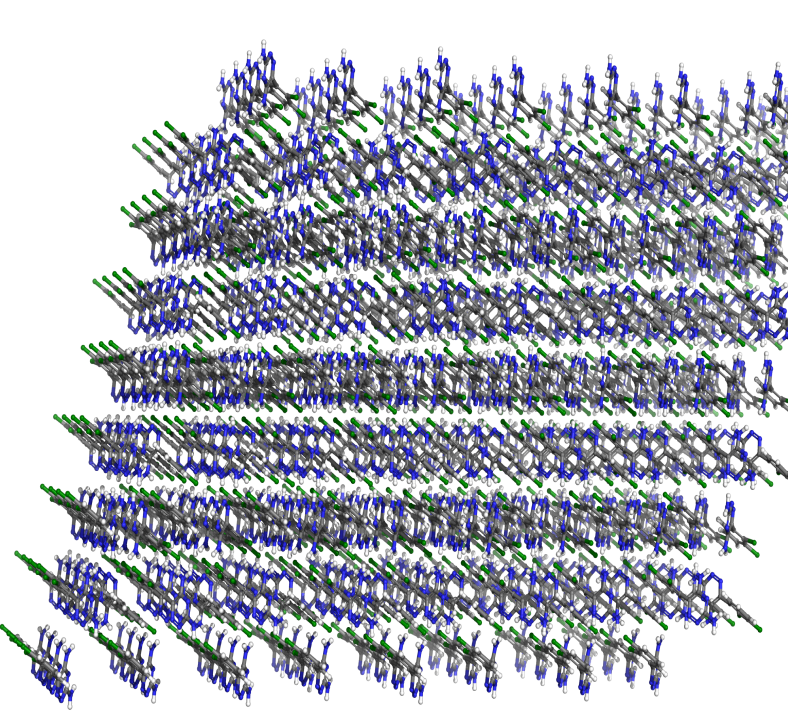
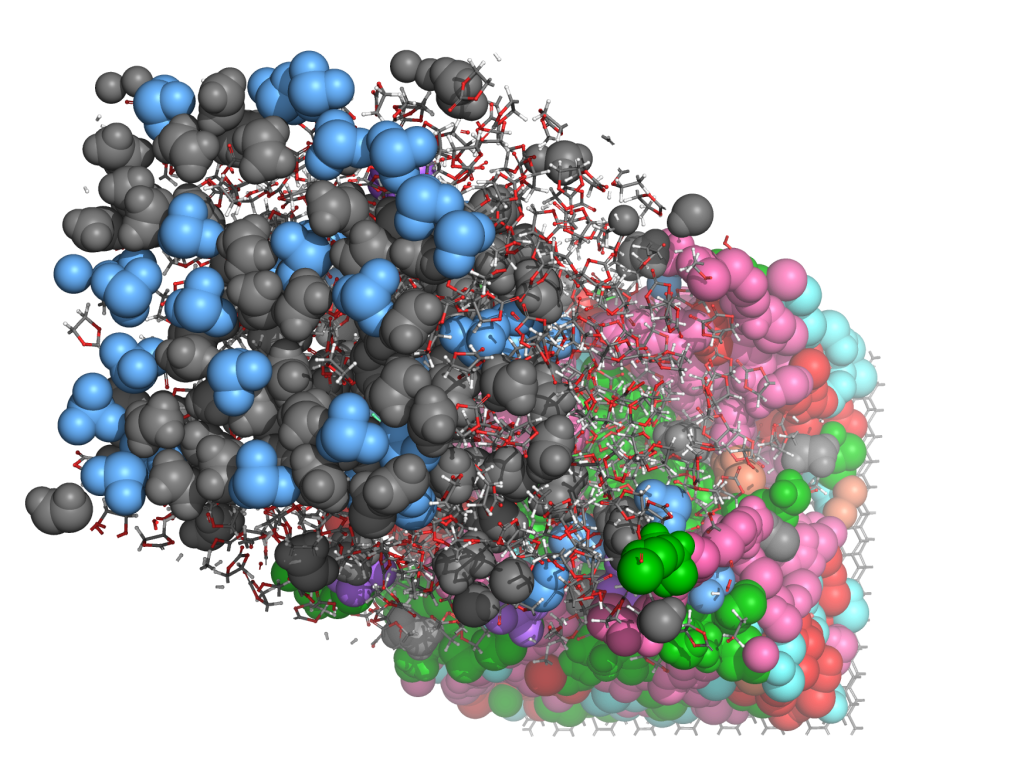
MS Reactive Interface Simulator enables rapid modeling of solid electrolyte interphase (SEI) nucleation and growth in batteries using a template-based reaction approach, and offers atomistic insights into the composition and morphology of this complex battery component. Coupled with Desmond, Schrödinger’s high-speed GPU-based molecular dynamics (MD) engine, and the OPLS force field, MS Reactive Interface Simulator facilitates efficient analysis of electrolyte chemistries by generation of realistic SEI morphologies.

Key Capabilities

Accelerate physically realistic SEI formation with GPU-accelerated MD
Execute reactions using predetermined templates
Enable exploration of multiple chemistries under varying conditions with SMARTS based reaction templates
Employ advanced analysis tools to characterize morphology and understand the properties of the SEI layer

Related Resources

Electrodes, electrolytes & interfaces: Harnessing molecular simulation and machine learning for rapid advancements in battery materials development

Taking experimentation digital: Materials innovation using atomistic simulation and machine learning at-scale

Energy Capture and Storage

Documentation & Tutorials

Get answers to common questions and learn best practices for using Schrödinger’s software.

Materials Science Documentation

MS Reactive Interface Simulator

Generate physically relevant electrode-electrolyte interface morphologies for batteries.

Related Products

Learn more about the related computational technologies available to progress your research projects.

Jaguar

Quantum mechanics solution for rapid and accurate prediction of molecular structures and properties

MS Maestro

Complete modeling environment for your materials discovery

MS Reactivity

Automated workflows for design, optimization, and unsupervised mechanism discovery in molecular chemistry

Desmond

High-performance molecular dynamics (MD) engine providing high scalability, throughput, and scientific accuracy

MS Transport

Efficient molecular dynamics (MD) simulation tool for predicting liquid viscosity, conductivity and diffusions of atoms and molecules

Broad applications across
materials science research areas

Get more from your ideas by harnessing the power of large-scale chemical exploration
and accurate in silico molecular prediction.

Polymeric Materials
Catalysis & Reactivity
Energy Capture & Storage

Publications

Browse the list of peer-reviewed publications using Schrödinger technology in related application areas.

Materials Science Publication

Data-Driven Design of Organic Semiconductors Exhibiting Low Reorganization Energy via Hierarchical Variational Autoencoders, Gaussian Mixture Regression, and Bayesian Optimization

Materials Science Publication

RedCat, an automated discovery workflow for aqueous organic electrolytes

Materials Science Publication

Band Gap and Reorganization Energy Prediction of Conducting Polymers by the Integration of Machine Learning and Density Functional Theory

Materials Science Publication

Designing polymersomes with surface-integrated nanoparticles through hierarchical phase separation

Materials Science Publication

Synthesis, optical and electrochemical properties of thiophene and thieno [3, 2-b] thiophene linked with structurally modified rhodanine based copolymers

Materials Science Publication

Stability enhancement of Amphotericin B using 3D printed biomimetic polymeric corneal patch to treat fungal infections

Materials Science Publication

Advancing efficiency in deep-blue OLEDs: Exploring a machine learning–driven multiresonance TADF molecular design

Materials Science Publication

Conformers influence on UV-absorbance of avobenzone

Materials Science Publication

Synthesis, computational studies and evaluation of benzisoxazole tethered 1,2,4-triazoles as anticancer and antimicrobial agents

Materials Science Publication

Unveiling a Novel Solvatomorphism of Anti-inflammatory Flufenamic Acid: X-ray Structure, Quantum Chemical, and In Silico Studies

Schedule a consultation on Schrödinger’s battery solutions.

Contact us today to explore how you can leverage advanced simulation and AI/ML for battery materials.

Don’t see your areas of interest above? Reach out so we can help.

Form submitted

Thank you, we’ll be in touch soon.

Training & Resources

Online certification courses

Level up your skill set with hands-on, online molecular modeling courses. These self-paced courses cover a range of scientific topics and include access to Schrödinger software and support.

Tutorials

Learn how to deploy the technology and best practices of Schrödinger software for your project success. Find training resources, tutorials, quick start guides, videos, and more.

Hit Discovery Services 

Hit Discovery Services

Hit Discovery Services

Find more diverse hits, faster

Overview

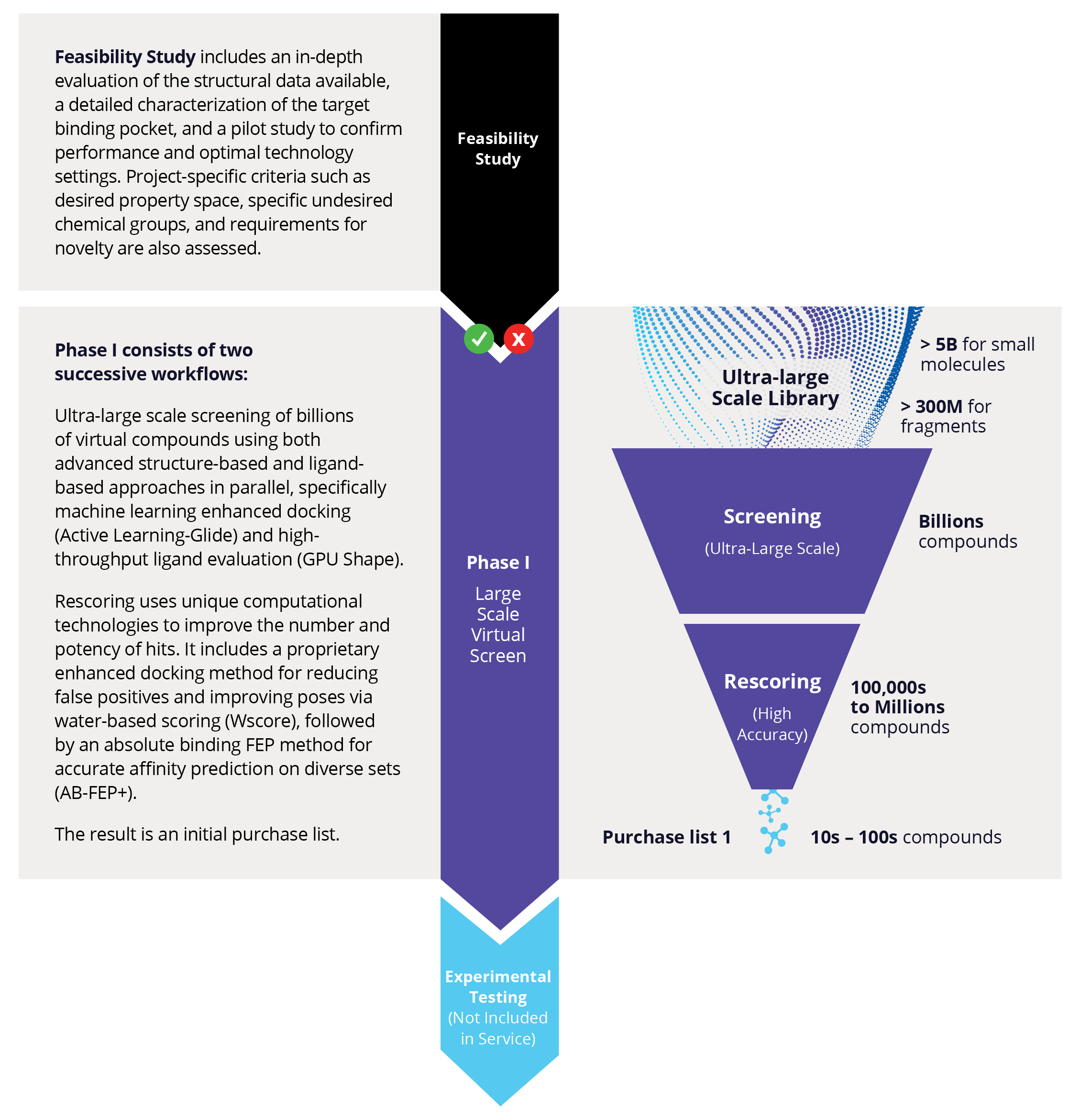
Enable your drug discovery program with Schrödinger’s unrivaled technologies and deep expertise. We’ll give your hit discovery campaigns the best chances of success by leveraging our team of experts and our most advanced technologies for ultra-large virtual screening and rigorous rescoring at scale.

Propel your discovery program with unrivaled technologies and expertise

Benefit from the full impact of Schrödinger’s hit discovery capabilities

• Our team of experts use extensively validated screening and rescoring workflows that leverage Schrödinger’s latest technologies deployed at scale
• Service includes all computing, licensing, and service hours to perform a cutting-edge hit identification campaign with no upfront licensing or hardware costs

Obtain more and higher quality hits with unique rescoring technologies

• Promising compounds are rescored with unmatched accuracy using ABFEP+ amplified by machine learning
• Accurately identify more diverse and potent hits, requiring fewer compounds to be purchased and assayed

Maximize novelty and diversity by screening billions of compounds

• Screen commercial libraries of >5 billion compounds (or >300M for fragments screens) using both structure- and ligand-based approaches simultaneously to maximize the number of unique hits identified
• Explore the largest commercially available libraries for rapid and reliable procurement, including Enamine REAL and WuXi LabNetwork
• Efficiently screen your proprietary or sculpted libraries to explore alternative chemical spaces

From Feasibility Study to Purchase List

Schrödinger has over 20 years of scientific experience in developing industry-leading virtual screening technologies which are used broadly in pharmaceutical companies worldwide.

Through continuous methodology development effort combined with extensive deployment in active drug discovery programs across diverse targets, our team of computational experts have optimized an advanced virtual screening workflow offered in the Hit Discovery Service.

Scientifically-validated solutions for virtual screening

  1. Efficient Exploration of Chemical Space with Docking and Deep Learning.

    Yang et al. J. Chem. Theory Comput. 2021, 17(11), 7106-7119.

  2. Enhancing Hit Discovery in Virtual Screening through Absolute Protein–Ligand Binding Free-Energy Calculations.

    Chen et al. J. Chem. Inf. Model. 2023, 63, 10, 3171–3185.

  3. Benchmarking Refined and Unrefined AlphaFold2 Structures for Hit Discovery.

    Zhang et al. J. Chem. Inf. Model. 2023, 63, 6, 1656–1667.

  4. WScore: A Flexible and Accurate Treatment of Explicit Water Molecules in Ligand–Receptor Docking.

    Murphy et al. J. Med. Chem. 2016, 59, 9, 4364–4384.

Software and services to meet your organizational needs

Software Platform

Deploy digital drug discovery workflows using a comprehensive and user-friendly platform for molecular modeling, design, and collaboration.

Modeling Services

Leverage Schrödinger’s computational expertise and technology at scale to advance your projects through key stages in the drug discovery process.

Support & Training

Access expert support, educational materials, and training resources designed for both novice and experienced users.

Release 2024-3

Library Background

Release Notes

Release 2024-3

Small Molecule Drug Discovery

Platform Environment

Maestro Graphical Interface

  • Create customizable histograms from numerical data that are automatically synchronized with selection or filtering in other charts, the Project Table, or Workspace
  • Improved support for T-Cell Receptors with display of their annotations in the Structure Hierarchy

Force Field

  • Full release of the OPLS5 polarizable force field for organic atoms for improved FEP+ and Desmond model accuracy

Workflows & Pipelining [KNIME Extensions]

In LiveDesign:

  • Ability to use a single generic protocol regardless of model input columns
  • LiveDesign connection node can take credentials from the session rather than storing them in the workflow
  • Date type columns are supported as LiveDesign model input

Binding Site & Structure Analysis

SiteMap

  • Enable compact mode for sites with volume larger than a cutoff
  • New RNA mode for improved performance of SiteScore for RNA

Desmond Molecular Dynamics

  • New Unbinding Kinetics workflow to gain insights into drug-target residence time and optimize in vivo efficacy, safety profiles, and ADMET (beta)
  • Analyze halogen bonds in SID Panel
  • View local strain energy in “Torsion” tab of SID Panel

Mixed Solvent MD (MxMD)

  • Improved organization of output structures and data in prjzip file

Hit Identification & Virtual Screening

  • Streamline visualization of hits in the Hit Analyzer by outputting VSDB per docking run by default
  • Streamlined generation of WScore models with new WScore Quick Model Generation panel (beta)

Ligand Preparation

Hit Analysis

  • Filter chemotypes by SMARTS in Hit Analyzer Panel

FEP+

  • Improved management of pKa/tautomer/conformer ensembles on ABFEP systems with Groups tab
  • Core-SMARTS selection no longer requires selecting explicit hydrogen atoms
  • Improved user interface allows more intuitive column sorting
  • Export to LiveDesign now includes additional fields
  • Edge analysis now includes halogen protein-ligand interactions
  • Guided access to open FEP+ Panel for analysis upon calculation completion via Workflow Action Menus (WAM) in Maestro

Protein FEP

  • New lambda dynamics (λD) enhanced protein residue mutation FEP+ for identifying high quality protein variants (beta)
  • Expanded OPLS5 support for “Protein FEP” and “Protein FEP for Ligand Selectivity” panels

Solubility FEP

  • Expanded OPLS5 support for Solubility FEP simulations

FEP Protocol Builder

  • Gain up to 35% speedup in calculations due to changed defaults in the FEP Protocol Builder panel

Biologics Drug Discovery

  • Perform DNA/RNA nucleobase mutations using residue scanning on command line via mut-pred.py
  • Analyze DNA/RNA interactions with proteins in the Protein Interaction Analysis panel
  • Search the non-standard residues library and find the closest matching natural amino acid analog
  • Automatically annotate and number T Cell Receptor (TCR) structures using IMGT or AHo schemes
  • Use pose-viewer files as input for Protein Interaction Analysis

Materials Science

GUI for Quantum ESPRESSO

Product: Quantum ESPRESSO (QE) Interface

  • Check for the number of irreducible k-points from the panel
  • Upgrade to Quantum ESPRESSO 7.3.1
  • Quicker assessment of electric field for faster phonon calculations
  • Force and stress information reported in the project table
  • Option for more diagonalization algorithms for GIPAW steps (command line)
  • Option to set separate driver and subjob hosts for NEB calculations
  • Solid State NMR Viewer: Improved UI for selecting elements

Transport Calculations via MD simulations

Product: MS Transport

  • Diffusion: Support for non-orthorhombic systems as input

Materials Informatics  

Product: MS Informatics

  • Formulation ML: Option to use Machine Learning Property predictions as descriptors
  • Formulation ML: Option to use DeepAutoQSAR predictions as descriptors
  • Machine Learning Property: Updates to existing models
  • Machine Learning Property: Prediction of S1-T1 energy gap
  • Machine Learning Property: Prediction of aqueous solubility
  • Machine Learning Property: Output entries separated for each solvent

Coarse-Grained (CG) Molecular Dynamics

Product: MS CG

  • Coarse-Grained Force Field Builder: Automated mapping for dissipative particle dynamics (DPD)
  • Coarse-Grained Force Field Builder: Visualization of CG mapping in the workspace

Reactivity

Product: MS Reactivity

  • Nanoreactor: Frames from MD trajectory added to list of products
  • Nanoreactor: Support for multistate (e.g. singlet-triplet) reactions
  • Nanoreactor: Number of loaded structures reported in the viewer
  • Nanoreactor: Plot for reactants (red) shown with products (blue) in the viewer
  • Nanoreactor: Reactant structures to be included as standard output
  • Reaction Workflow: Support for AutoTS output as input

Microkinetics

Product: MS Microkinetics

  • Microkinetic Modeling: Support for renaming of reactions and participating species
  • Microkinetic Modeling: Automatic population of molecular weight for gas/solute species
  • Microkinetic Modeling: Automatic assigning of collision factor based on reaction type

MS Maestro Builders and Tools

  • Solvate System: Option to neutralize systems with built-in counterions

Classical Mechanics

  • Barrier Potential for MD: Support for NPT ensemble
  • Elastic Constants: Option to reset the viewer panel
  • Meta Workflows: Support for trajectory-based free volume analysis
  • Order Parameter: Option to compute acentric order parameter
  • Polymer Crosslink: Option to use a barrier potential
  • Polymer Chain Analysis: Support for molecules with less than 40 atoms

Quantum Mechanics

  • Adsorption Energy: Option to constrain atomic positions for systems with PBC
  • Optoelectronic Film Properties: Workflow solution encompassing transition dipole moment orientation and singlet excitation energy transfer (SEET) calculations

Education Content

Life Science

  • New Tutorial: Introduction to MD Trajectory Analysis with Desmond
  • New Tutorial: Re-scoring Docked Ligands with MM-GBSA
  • Updated Tutorial: Understanding and Visualizing Target Flexibility
  • Updated Tutorial: Approximating Protein Flexibility without Molecular Dynamics

Materials Science

  • New Tutorial: Singlet Excitation Energy Transfer
  • New Tutorial: FEP Solubility
  • New Tutorial: Genetic Optimization
  • New Tutorial: Adsorption of Panthenol on Skin with All-Atom Molecular Dynamics
  • Updated Tutorial: Applying Barrier Potentials for Molecular Dynamics Simulations
  • Updated Tutorial: Automated Dissipative Particle Dynamics (DPD) Parameterization
  • Updated Tutorial: Design of Asymmetric Catalysts with Automated Reaction Workflow
  • Updated Tutorial: Machine Learning Property Prediction
  • Updated Tutorial: Crosslinking Polymers

LiveDesign

What’s new in 2024-3

  • Uploads from Maestro to LiveDesign could fail if the LiveDesign project had more than 32,000 columns, and now complete successfully regardless of the number of columns
  • LiveReports that contained columns with many values would show red error bars at the top of the LiveReport, and now no longer show the red error bars
  • LiveReport tabs would disappear after logging out and logging in, and now correctly appear after logging back in
  • New LiveDesign Learning module for rapid AI/ML molecular property predictions: Enables highly scalable, automated AI/ML pipelines for drug design
    • *LiveDesign Learning is now called LiveDesign ML
  • Accelerated scaffold and R-group design with AutoDesigner Core Design: Automatically generate and optimize novel cores and R-group(s) simultaneously
  • Delete Published Freeform column and Formula columns from the Data & Columns Tree
  • Biologics:
    • Sequence-activity relationships in the Sequence Viewer:
      • Ability to add a quantitative column from the LR in the viewer
      • Correlate the changes in the residues and the activity data with the heatmap
    • There would only be one option when trying to import the Biologics data via csv and the option “Import As Single Entity for CSV” won’t show now.
    • Performance of structure hierarchy loading and item selection through hierarchy panel in the 3D Visualizer are improved.
    • Double-clicking an item in the hierarchy zooms to that selection in the 3D Visualizer workspace.
    • Set gap penalties in the sequence viewer to generate more useful alignments
  • Landing Pages:
    • The Landing page now links to a specific URL and enable bookmarking the Landing Page in a browser
    • Download resources and files from the Landing Page Resource page
  • Spreadsheet View:
    • A warning message alerting the user to expect decreased performance now appears on LiveReports that contain more than one million cells
    • Entity images no longer enlarge when hovering over the image, and can now be zoomed by clicking a magnifying glass button that appears to the right of the entity image
  • The User details page in the Admin Panel now shows a warning that unlicensed usernames will not appear in dropdown lists throughout LiveDesign
  • Models now support date and datetime returns
  • Forms Matrix Widget now render larger editing areas for Freeform column cells when the cells are small

What’s Been Fixed

  • LiveReports would show red error bars when multiple input values to a parameterized model changed simultaneously in the spreadsheet, and now the LiveReport loads correctly
  • Popping out a model column’s cell that contained and image would open two tabs in the browser (one tab with the image, and one blank tab), and now only opens a tab with the image
  • LiveReports would occasionally lose their filters, and the filter panel would appear blank, but no longer lose their filters
  • Changing a user’s role within a Single Sign-on Identity Provider would not update the user’s role within LiveDesign when they logged out and logged back in, and now the role changes are correctly used after the user logs out of LiveDesign and logs back in
  • Changes to parameterized model in the Admin Panel (e.g., the Title or Folder) would not save after clicking the Save button, and now correctly save and update the parameterized model
  • Changes to a “set fixed” protocol parameter get passed along to the dependent model or parameterized model without breaking them.
  • The Formula Substructure Search function incorrectly reported the count of substructure matches as 1, even if there were multiple matches, and now correctly reports the total number of substructure matches
  • Adding a new project with an identical name to an archived project provided a cryptic error message, and now provides a clear message instructing the user to choose a different name
  • When many LiveReports were open, the active LiveReport tab would disappear when left-side panels were opened, and now the active LiveRepot tab remains visible
  • Newly created models would not inherit the Recalculate Model option defined in the protocol, and would default to the “Automatically” option, and now the models correctly inherit the option defined in the protocol
  • Parameterized models that have had their columns renamed in the Admin Panel would show the old, original column names when that model was added to LiveReports, and now correctly show the updated column name
  • The user interfaces of the Filters panel and Advanced Search panel have been unified
  • Changing the column widths within the LiveReport picker caused the column header to misalign with the column contents, and now the header remains aligned
  • The prefix (Global) would appear repeatedly for templates in the Global project that were updated and overwritten, and now templates in the Global project only show a single (Global) prefix after they are updated and overwritten
  • Maestro would not import 3D results from LiveDesign when the 3D column title was renamed, and now correctly imports all 3D data regardless of the column title
  • LiveDesign would occasionally freeze due to a database lock, and now no longer will freeze
  • Opening a model attachment from the main spreadsheet (e.g., a LID from a Glide model) would fail to show the image, and now correctly shows the image
  • Filtering out a frozen row would show flashing squares in the first row in the main spreadsheet, and now correctly shows that row’s data
  • The Project Picker would appear after a five-second delay when there are a large number of projects to show, and now the Project Picker appears instantly
  • The sequence viewer would occasionally show incorrect colors and tooltips for non-natural amino acids, and now shows the correct information
  • Hovering over a residue in the sequence viewer would cause the viewer to scroll to the top, and now the scroll position remains does not change
  • Plot tooltips could not be dragged and moved after pinning to the screen, and now can be dragged to a new position after pinning
  • Model results would occasionally appear as Failed in the LiveReport, when in fact the model ran successfully, and now model results correctly show results in the LiveReport

Training & Resources

Online Certification Courses

Level up your skill set with hands-on, online molecular modeling courses. These self-paced courses cover a range of scientific topics and include access to Schrödinger software and support.

Tutorials

Learn how to deploy the technology and best practices of Schrödinger software for your project success. Find training resources, tutorials, quick start guides, videos, and more.

Other Resources

NAMES 2024

Conference

NAMES 2024

CalendarDate & Time
  • August 8th-9th, 2024
LocationLocation
  • Ann Arbor, Michigan

Schrödinger is excited to be participating in the NAMES 2024 conference taking place on August 8th – 9th in Ann Arbor, Michigan. Join us for a workshop by Katie Dahlquist, Senior Scientist at Schrödinger, titled “Empowering Exploration: A Workshop on Molecular Modeling for Materials Science.”

Speaker:
Katie Dahlquist, Senior Scientist, Schrödinger

Date/Time:
Friday, August 9 | 1:30PM – 3:30PM

Abstract:
The Schrödinger Materials Science platform is a single interface with access to structure building, simulation, and analysis for atomic-scale simulation. With respect to simulation, the platform has extensive capabilities in molecular and periodic quantum mechanics (namely density functional theory calculations), molecular dynamics, and machine learning. This workshop will guide participants to work hands-on with the Schrödinger Materials Science platform. We will instruct attendees through parts of two of our online courses which are best-suited for the NAMES audience: Polymeric Materials and Battery Materials.

Empowering scientists with integrated AI/ML modeling for rapid molecular property predictions

AUG 13, 2024

Empowering scientists with integrated AI/ML modeling for rapid molecular property predictions

AI/ML models are powerful tools for predicting diverse physical and chemical properties of small molecules. However, fine-tuning these models is resource-intensive and challenging to scale for numerous, frequently updated datasets. Automating this process, and ensuring models are re-trained as new data becomes available, enhances the efficiency of using AI/ML models to advance drug discovery programs.

In this webinar, we will present LiveDesign ML, a new module in Schrödinger’s LiveDesign collaborative enterprise informatics platform, for training and deploying state-of-the-art AI/ML models with minimal manual intervention. LiveDesign ML treats datasets as dynamic information feeds that evolve as scientists explore new chemistry to deliver optimized AI/ML models. It provides dynamic, reliable, and rapid molecular property predictions in an interactive design environment, allowing teams to triage newly sketched design ideas or hundreds of thousands of compound ideas in minutes for large library screening.

We will demonstrate use cases of LiveDesign ML through several recent case studies from Schrödinger’s Therapeutics Group where the technology has allowed teams to overcome critical design challenges and advance programs.

Highlights

  • Overview of LiveDesign ML features and user interface
  • Demonstration of LiveDesign ML for AI/ML molecular property predictions using experimental and/or in silico data
  • Ability to triage hundreds of thousands of compound ideas in minutes for large library screening
  • Success stories within Schrödinger’s drug discovery projects

Our Speakers

Jennifer Knight

Director, Schrödinger

Jen Knight is a Director in the Schrödinger Therapeutics Group. She has been at Schrödinger since 2012 and has been a modeling lead on internal projects and collaborations. She specializes in free-energy methods, LiveDesign workflow optimization and machine learning applications.

Zach Kaplan

Senior Principal Scientist, Schrödinger

Zach Kaplan is a senior principal scientist on Schrödinger’s machine learning team. Since 2019, Zach has contributed to the research, development, and application of Schrödinger’s ML tools. He leads the ML Med Chem applications team and is the product manager of Schrödinger’s DeepAutoQSAR and LiveDesign ML. Prior to joining Schrödinger, Zach studied applied mathematics at Brown University.

Designing better packaging materials with a reduced risk of contamination and longer shelf-life using molecular simulations 

Designing better packaging materials with a reduced risk of contamination and longer shelf-life using molecular simulations

Molecular dynamics simulation of plastic contaminant migration in packaging materials and potential leaching into model food fluids

 Executive Summary

  • Built and validated a molecular model that can predict bulk and interfacial penetrant diffusion, as well as enable an understanding of the underlying mechanisms governing these processes
  • Established a modeling procedure to successfully carry out the challenging simulations of migration processes within and from polymer phases
  • Gained valuable insights to complement and rationalize labor- and time-intensive penetrant migration experiments for product developers, regulatory agencies, and manufacturers
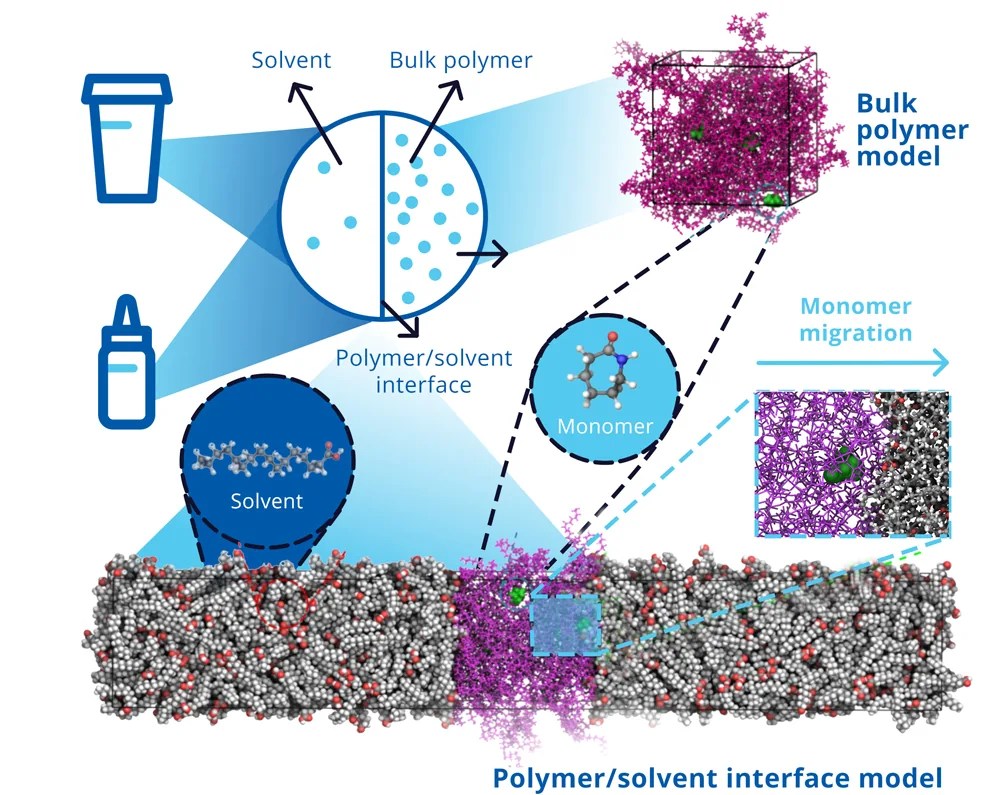
Examples of bulk and interfacial structures employed in the molecular modeling
of penetrant diffusion in polymeric systems.

Approach

In Mileo et al., Schrödinger scientists employed molecular dynamics (MD) simulation using the Schrödinger Materials Science Suite, Desmond MD engine and the OPLS4 force field. The goal of this work was to analyze the transport of monomers in three commercially important, recyclable polymers: polyamide-6 (PA 6), polycarbonate (PC), and poly(methyl-methacrylate) (PMMA). To achieve this, scientists performed the following steps:

  1. Validated bulk polymeric models with respect to properties derived from experimental work 
  2. Verified the predictability of the modeling strategy in reproducing the experimental monomer migration tendencies by employing different solvents to simulate foodstuff
  3. Predicted the monomer migration mechanism in two typical components employed in the food industry (palmitic acid and capric triglyceride)

Conclusion

This work demonstrates how molecular-scale insights can aid the design of safe and functional polymer/formulation interfaces in industry-relevant consumer goods. The methods presented can also be leveraged to understand the risk of contaminants leaching into food or other consumer products, alongside understanding how the product itself can impact the rate of contamination at a barrier interface.

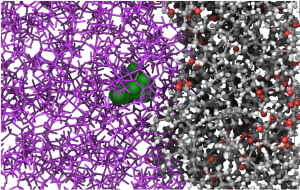
Snapshot obtained from MD simulation displaying the imminent migration of a monomer (methyl methacrylate, in green) from its polymer matrix (polymethyl methacrylate, in purple) towards a palmitic acid formulation.

Publications

  1. Nanoscale Simulation of Plastic Contaminants Migration in Packaging Materials and Potential Leaching into Model Food Fluids

    Mileo PG, et al. Langmuir 2024, 40, 24, 12475–12487

Software and services to meet your organizational needs

Software Platform

Deploy digital materials discovery workflows with a comprehensive and user-friendly platform grounded in physics-based molecular modeling, machine learning, and team collaboration.

Modeling Services

Leverage Schrödinger’s expert computational scientists to assist at key stages in your materials discovery and development process.

Support & Training

Access expert support, educational materials, and training resources designed for both novice and experienced users.

EFMC International Symposium on Medicinal Chemistry

Conference

EFMC International Symposium on Medicinal Chemistry

CalendarDate & Time
  • September 1st-5th, 2024
LocationLocation
  • Rome, Italy

Schrödinger is excited to be participating in the EFMC International Symposium on Medicinal Chemistry taking place on September 1st – 5th in Rome, Italy. Join us for a presentation and workshop by Schrödinger scientists. Stop by booth #60 to speak with Schrödinger scientists.

icon time Monday | 12:30 – 1:15 PM
icon location Room Quirinale
Workshop: Prioritizing DLK Inhibitors for Potency, Selectivity, and Brain-penetration: a Digital Chemistry Design Challenge

Speakers:
Guillaume Paillard, Lead Customer Success Manager, Schrödinger
Jonas Kaindl, Senior Scientist II, Schrödinger

Abstract: In this hands-on workshop, we will use Schrödinger’s LiveDesign platform to design and triage DLK inhibitors using a series of predictive models. We will highlight how LiveDesign can be used to identify and address program challenges as well as predict the various different endpoints to allow for informed synthesis decisions. The workshop will feature the following capabilities:
– Interactive 2D/3D design with Ligand Designer
– Substructure filtering and structurally-aware formulas for labeling subseries
– Use of forms view and plotting to identify correlations between calculated and experimental data points
– Integration of advanced computational methods like E-sol for predicting Kpu,u and FEP+ for predicting binding affinity
– Development of MPO scores for prioritizing synthesis decisions
The workshop will be concluded with a design challenge that is aimed to identify selective and potent inhibitors that match the developed MPO.

icon time Wednesday | 11:45 – 12:05 PM
icon location Auditorium Capitalis
Accelerated In Silico Discovery of SGR-1505: a Potent Malt1 Allosteric Inhibitor for the Treatment of Mature B-cell Malignancies (LE063)

Speaker:
Dr. Michael Trzoss, Principal Scientist, Schrödinger

Abstract: MALT1 (Mucosa-associated lymphoid tissue lymphoma translocation protein 1) is a component of the MALT1-BCL10-CARD11 complex downstream from the Bruton Tyrosine Kinase (BTK) on the B-cell receptor signaling pathway. MALT1 is a key mediator of nuclear factor kappa B (NF-κB) signaling, which is the main driver of a subset of B-cell lymphomas. MALT1 is considered a potential therapeutic target for several subtypes of non-Hodgkin’s B-cell lymphomas and chronic lymphocytic leukemia (CLL), including tumors with acquired BTK inhibitor (BTKi) resistance. Constitutive activation of the NF-κB is a molecular hallmark of activated B cell-like diffuse large B cell lymphoma (ABC-DLBCL), and MALT1 may have utility as a treatment option for ABC-DLBCL. Furthermore, a third-party MALT1 inhibitor recently showed strong anti-tumor activity in mature B cell malignancies from Phase 1 studies.

By applying advanced physics-based modeling techniques, including combining free energy calculations with machine learning methods and chemistry-aware compound enumeration workflow, the team explored extensive sets of de novo design ideas to quickly identify a novel hit series with an in vivo tool molecule to establish an in vivo PD and efficacy mouse model early on in the project. Multi-parameter optimization (MPO) allowed efficient prioritization of molecules with good potency and drug-like properties during lead optimization. This led to the discovery of a highly potent MALT1 inhibitor, SGR-1505, with a well-balanced property profile in under a year, with only 78 compounds synthesized in the lead series and 129 compounds overall. SGR-1505 is a potent and orally available allosteric MALT1 inhibitor. It demonstrated strong anti-tumor activity alone and in combination with BTK inhibitors in multiple in vivo B-cell lymphoma xenograft models. Currently, a Phase 1 clinical trial with SGR-1505 in patients with mature B-cell neoplasms is ongoing (NCT05544019).

MS Microkinetics

MS Microkinetics

Efficient tool for surface reaction kinetics

MS Microkinetics

Overview

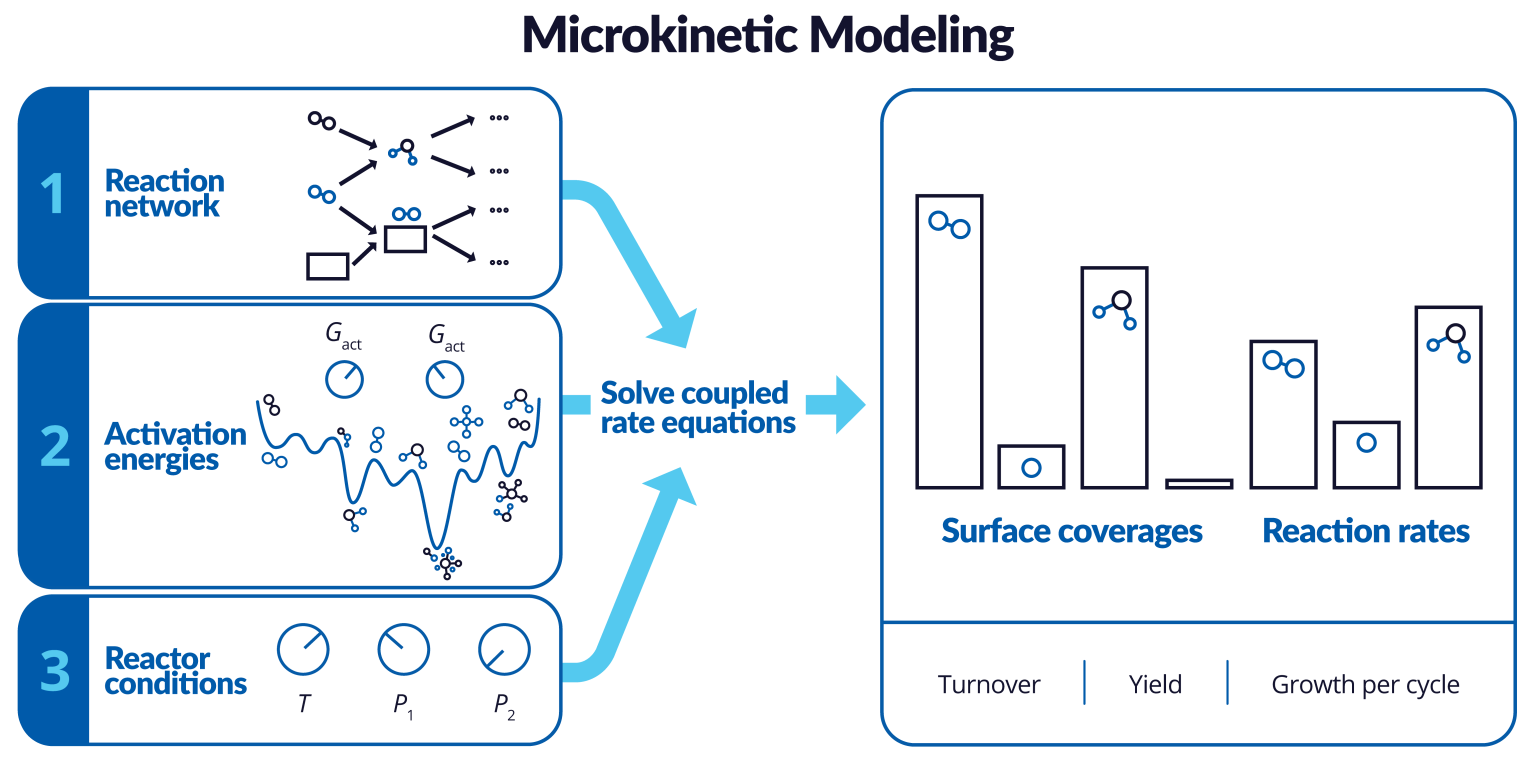
MS Microkinetics is an effective tool for calculating the overall kinetics of a network of surface reactions, which can be used to optimize reaction conditions and to identify reactivity bottlenecks.

Key Capabilities

Given the reaction mechanism (or multiple mechanisms) and activation free energies, MS Microkinetics can calculate:

Reaction rates for the elementary reaction steps
Reaction orders
Degree of rate control
Time-dependent and steady state coverages of the reactants, products, and intermediates
Turnover frequency in the case of catalytic cycles
Selectivity analysis
Growth rate or etch rate in the case of deposition or etch processes

Efficient tools and solutions to predict activation energies

Quantum ESPRESSO GUI

Integrated graphical user interface for nanoscale quantum mechanical simulations

Learn more
MS Reactivity

Automatic workflows for accurate prediction of reactivity and catalysis

Learn more
AutoTS

Automatic workflow for locating transition states for elementary reactions

Learn more

Accelerate the design of high-performance heterogeneous catalysts

Efficient computational solutions leveraging atomic-scale simulation, machine learning, and enterprise informatics for catalytic reactions using solid-state catalysts.

Related Products

Learn more about the related computational technologies available to progress your research projects.

Quantum ESPRESSO Interface

Integrated graphical user interface for nanoscale quantum mechanical simulations

Jaguar

Quantum mechanics solution for rapid and accurate prediction of molecular structures and properties

MS Maestro

Complete modeling environment for your materials discovery

MS Reactivity

Automated workflows for design, optimization, and unsupervised mechanism discovery in molecular chemistry

Learn more about our solutions

Semiconductor
Catalysis & Reactivity
Energy Capture & Storage
Metals, Alloys & Ceramics

Documentation & Tutorials

Get answers to common questions and learn best practices for using Schrödinger’s software.

Materials Science Documentation

MS Microkinetics

An efficient tool for surface reaction kinetics.

Materials Science Documentation

Materials Science Panel Explorer

Quickly learn which Schrödinger tools are the best fit for your research.

Training & Resources

Online certification courses

Level up your skill set with hands-on, online molecular modeling courses. These self-paced courses cover a range of scientific topics and include access to Schrödinger software and support.

Tutorials

Learn how to deploy the technology and best practices of Schrödinger software for your project success. Find training resources, tutorials, quick start guides, videos, and more.

GRC Computational Materials Science and Engineering

Conference

GRC Computational Materials Science and Engineering

CalendarDate & Time
  • July 21st-26th, 2024
LocationLocation
  • Newry, Maine

Schrödinger is excited to be participating in the GRC Computational Materials Science and Engineering conference taking place on July 21st – 26th in Newry, Maine. Join us for a poster by Atif Afzal, Principal Scientist at Schrödinger, titled “Advancements in Polymer Electrolyte Dynamics through Machine Learning-Based Force Fields.”

Biennial Conference on Chemical Education 2024

Conference

Biennial Conference on Chemical Education 2024

CalendarDate & Time
  • July 28th – August 1st, 2024
LocationLocation
  • Lexington, Kentucky

Schrödinger is excited to be participating in the Biennial Conference on Chemical Education 2024 taking place on July 28th – August 1st in Lexington, Kentucky. Join us for a workshop by Rachel Clune, Senior Scientist I at Schrödinger, titled “Online certification courses to help experimental graduate students incorporate molecular modeling into their research.” Stop by booth 43 to speak with Schrödinger scientists.

Speaker:
Rachel Clune, Senior Scientist I, Schrödinger

Abstract:
Schrödinger’s materials science online certification courses teach students about applications of molecular modeling in chemistry and materials science through the use of the Schrödinger Materials Science platform. The target audience of the courses are experimental scientists and engineers wishing to broaden the tools they have at their disposal to understand and advance their research. The courses come with access to computing resources, allowing for researchers without access to computing clusters to still perform complex calculations. This makes the courses particularly useful for graduate students whose main focus is in experimental domains but want to make use of computational tools to further improve their research.

For the workshop, participants will be given a limited license to the Schrödinger Materials Science platform and access to a virtual cluster to run calculations. The courses are guided by active learning principles, with tutorials on how to set up and run different calculations interspersed with short (~10 minute) lectures. We will guide participants through one of the materials science online certification courses for the first 1.5-2 hours of the workshop with periodic breaks for discussion and to make sure participants are staying on track. Examples of the types of tools that will be discussed include density functional theory calculations, all-atom molecular dynamics simulations, and the use of machine learning for predicting material properties. The last hour will be reserved for participants to attempt their own calculations with guidance and help from the workshop presenters. By the end of the workshop, participants should feel comfortable using the Schrödinger’s Materials Science platform and have an understanding of how computational modeling can be an asset to their research goals.

Participants will need to bring their own laptop that is able to connect to the venue wifi and the workshop presenters will need access to a projector.

Pharmaceutical Formulations & Delivery

Pharmaceutical Formulations & Delivery

Deliver better medicines through in silico design

Optimize Drug Formulation Process

Optimize your pharmaceutical at the molecular level

A smart, strategic drug formulation can efficiently advance your drug development projects and inform downstream processes. Advances in molecular modeling and machine learning are enabling atomistic-level insights to improve drug formulations and the ability to evaluate large numbers of candidate materials and formulations prior to experiments.

Schrödinger offers a range of computational solutions for advancing pharmaceutical formulation, from crystalline or amorphous form characterization to selection of materials and excipients for processing, formulation, and delivery.

background pattern

Intuitive computational workflows designed by experts in formulation chemistry

Easy-to-use system builders for complex formulations of large molecular systems
Powerful workflows for molecular simulation, machine learning, and data analysis
Dedicated customer support and extensive training resources

Key Capabilities

Optimize drug process development and manufacturing with predictive characterization

  • Predict pKa, powder X-ray diffraction and crystal morphology 
  • Calculate Young’s and shear moduli to aid in the optimization of tableting conditions
  • Understand solubility in non-aqueous solvents
  • Simulate spectroscopy including VCD, NMR (solution and solid-state), IR, Raman, and UV-Vis

Understand drug stability and reactivity

  • Predict glass transition temperature and water uptake in amorphous materials, including amorphous solid dispersions
  • Evaluate drug stability with respect to various degradation channels
  • Calculate bond dissociation energy to evaluate chemical stability
  • Design molecular catalysts with automated solutions

Predict solubility of drug candidates

  • Accurately predict solubility of amorphous and crystalline forms to encourage the discovery of a soluble active pharmaceutical ingredient (API) and to delineate the potential solubility boost from non-crystalline forms using FEP+
  • Identify instances where pure drug solubility can exceed the expected solubility due to the formation of small drug aggregates

Characterize and optimize drug formulations and delivery

  • Gain insight into the complex requirements and behaviors of lipid-based and polymer-based formulations, including amorphous solid dispersions
  • Evaluate the impact of different polymers or polymer residues on the release solubilization and aggregation of the API
  • Predict key properties such as hygroscopicity, viscosity and miscibility of ingredients, molecular interactions in solution, and drug release profiles

Crystal Structure Prediction Services

De-risk your solid form selection process by identifying the most stable polymorph at room temperature

Overcome the risks associated with disappearing polymorphs in late stage drug development. For a given active pharmaceutical ingredient (API), we will leverage our proprietary crystal structure prediction (CSP) platform to identify the most stable crystal polymorph at room temperature. Starting from a 2D structure of the API, we deliver to you the thermodynamic stability ranking of crystal polymorphs.

Case studies & webinars

Discover how Schrödinger technology is being used to solve real-world research challenges.

Materials Science Webinar

Formulation machine learning and optimization for accelerated materials discovery recording

Join our upcoming webinar to learn how your R&D team can leverage automated data driven solutions to guide the design of versatile chemical solutions.

Materials Science Webinar

Formulation machine learning and optimization for accelerated materials discovery

Join our upcoming webinar to learn how your R&D team can leverage automated data driven solutions to guide the design of versatile chemical solutions.

Materials Science Webinar

A predictive modeling platform for studying degradation, reactivity, and catalysis of small molecule active pharmaceutical ingredients

In this webinar, we present recent advances in automated, end-to-end solutions for studying degradation, reactivity, and catalysis of active pharmaceutical ingredients (APIs).

Materials Science Webinar

A predictive modeling platform for studying degradation, reactivity, and catalysis of small molecule active pharmaceutical ingredients recording

In this webinar, we present recent advances in automated, end-to-end solutions for studying degradation, reactivity, and catalysis of active pharmaceutical ingredients (APIs).

Materials Science Webinar

Accelerating amorphous solid dispersion (ASD) formulation with Schrödinger’s Materials Science Suite

This session will demonstrate how to seamlessly integrate computational insights from mixing energies to glass transition temperatures (Tg) into your existing R&D pipeline to reduce experimental iteration and accelerate time-to-market.

Materials Science Webinar

Accelerating amorphous solid dispersion (ASD) formulation with Schrödinger’s Materials Science Suite Recording

This session will demonstrate how to seamlessly integrate computational insights from mixing energies to glass transition temperatures (Tg) into your existing R&D pipeline to reduce experimental iteration and accelerate time-to-market.

Materials Science Webinar

Formulation ML and Optimization: Making advanced property prediction and experimental design fast and accessible recording

We will showcase how easy it is to apply these tools using experimental datasets across broad MS applications, including formulations, consumer goods, batteries, pharmaceuticals, and beyond.

Materials Science Webinar

Formulation ML and Optimization: Making advanced property prediction and experimental design fast and accessible

We will showcase how easy it is to apply these tools using experimental datasets across broad MS applications, including formulations, consumer goods, batteries, pharmaceuticals, and beyond.

Materials Science Webinar

Formulation ML and Optimization: Making advanced property prediction and experimental design fast and accessible

We will showcase how easy it is to apply these tools using experimental datasets across broad MS applications, including formulations, consumer goods, batteries, pharmaceuticals, and beyond.

Materials Science Webinar

「Formulation MLとFormulation ML Optimization:高度な物性予測と実験計画を高速かつ身近なものに ーAI駆動型マテリアルズ・ディスカバリーの加速」

AIを活用したマテリアルズ・ディスカバリー(材料探索)は、もはや実験的な取り組みではなく、国家レベルの新たなスタンダードとして定着しつつあります。

Featured courseMolecular Modeling for Materials Science: Pharmaceutical Formulations

Learn in silico drug formulation methods with our hands-on online certification course

Level-up your skills by enrolling in our online course, Molecular Modeling for Materials Science: Pharmaceutical Formulations.

Learn More

Documentation & Tutorials

Get answers to common questions and learn best practices for using Schrödinger’s software.

Materials Science Tutorial

De Novo Design of Novel Compounds with REINVENT

Learn to train a generative ML model with REINVENT to design new compounds with property constraints.

Materials Science Tutorial

Machine Learning for Formulations Containing Proteins

Learn to build machine learning models for formulations including proteins.

Materials Science Tutorial

Simulating Complex Protein Solutions

Learn to prepare a complex protein system for a Molecular Dynamics (MD) simulation.

Materials Science Tutorial

Creating a Coarse-Grained Model for Protein Formulations

Learn to use the Coarse-Grained Force Field Builder to automatically fit parameters to the Martini coarse-grained force field for a complex protein solution system.

Materials Science Documentation

Complex Bilayer Builder Panel

Build single or multi-component lipid membranes with or without an embedded membrane protein.

Materials Science Documentation

Membrane Analysis Panel

Calculate structural properties for a lipid membrane over the selected frames of a trajectory.

Materials Science Documentation

Membrane Analysis Viewer Panel

View plots of the structural properties of a lipid over the course of a molecular dynamics trajectory, generated using the Membrane Analysis panel.

Materials Science Documentation

Machine Learning Force Fields

Machine Learning Force Fields (MLFFs) offer a novel approach for predicting the energies of arbitrary systems.

Materials Science Tutorial

Machine Learning Force Field

Learn how to use machine learning force field optimization methods to prepare and simulate various systems.

Materials Science Documentation

MS Transport

Efficient molecular dynamics (MD) simulation tool for predicting liquid viscosity and diffusions of atoms and molecules.

Key Products

Learn more about the key computational technologies available to progress your research projects.

MS Formulation ML

Automated machine learning solution to generate accurate formulation-property relationships and screen new formulations with desired properties

Virtual Cluster

Secure, scalable environment for running simulations on the cloud

MS Maestro

Complete modeling environment for your materials discovery

Desmond

High-performance molecular dynamics (MD) engine providing high scalability, throughput, and scientific accuracy

FEP+

High-performance free energy calculations for drug discovery

MS Morph

Efficient modeling tool for organic crystal habit prediction

MS CG

Efficient coarse-grained (CG) molecular dynamics (MD) simulations for large systems over long time scales

Jaguar

Quantum mechanics solution for rapid and accurate prediction of molecular structures and properties

Crystal Structure Prediction

De-risk your solid form selection process by identifying the most stable polymorph at room temperature

Publications

Browse the list of peer-reviewed publications using Schrödinger technology in related application areas.

Materials Science Publication

Molecular Dynamics Insights into Ibuprofen Nanocrystal Dissolution Put in the Context of Classical Nucleation Theory

Materials Science Publication

Structure-based calculation of excipient effects on the viscosity of concentrated antibody solutions

Materials Science Publication

Kinetics of Polymorphic Phase Transformations of o-Aminobenzoic Acid: Application of a Dispersive Kinetic Model Plus Molecular Dynamics Simulation of Prenucleation Aggregates

Materials Science Publication

Correction to “Calculating Apparent pKa Values of Ionizable Lipids in Lipid Nanoparticles”

Materials Science Publication

A robust crystal structure prediction method to support small molecule drug development with large scale validation and blind study

Materials Science Publication

Evaluating the Binding Potential and Stability of Drug-like Compounds with the Monkeypox Virus VP39 Protein Using Molecular Dynamics Simulations and Free Energy Analysis

Materials Science Publication

Predicting Drug-Polymer Compatibility in Amorphous Solid Dispersions by MD Simulation: On the Trap of Solvation Free Energie

Materials Science Publication

Possible Applications of the Polli Dissolution Mechanism: A Case Study Using Molecular Dynamics Simulation of Bupivacaine

Materials Science Publication

Modelling of Prednisolone Drug Encapsulation in Poly Lactic-co-Glycolic Acid Polymer Carrier Using Molecular Dynamics Simulations

Materials Science Publication

Development of Glecaprevir: Conformations, Crystal Structures, and Efficient Solid–Solid Conversion for a Highly Polymorphic Macrocyclic Drug

Software and services to meet your organizational needs

Software Platform

Deploy digital drug discovery workflows using a comprehensive and user-friendly platform for molecular modeling, design, and collaboration.

Modeling Services

Leverage Schrödinger’s computational expertise and technology at scale to advance your projects through key stages in the drug discovery process.

Support & Training

Access expert support, educational materials, and training resources designed for both novice and experienced users.

38th ACS National Medicinal Chemistry Symposium

Conference

38th ACS National Medicinal Chemistry Symposium

CalendarDate & Time
  • June 23rd-26th, 2024
LocationLocation
  • Seattle, Washington

Schrödinger is excited to be participating in the 38th ACS National Medicinal Chemistry Symposium taking place on June 23rd – 26th in Seattle, Washington. Join us for a presentation and workshop by Jennifer Knight, Director at Schrödinger.

Presentation:

Driving Innovation with Machine Learning: Impact on a Pipeline of Drug Discovery Programs (IL27)

Speaker:
Dr. Jennifer Knight, Director

Abstract:

Physics-based modeling and machine learning approaches are used widely in our drug discovery programs and collaborations to design new compounds and to model potency and ADMET properties. Here, we present several case studies of machine learning strategies employed in our active drug discovery programs including: using active learning with free energy predictions to efficiently profile large chemical spaces, leveraging experimental data for enhancing ADMET profiles in lead optimization using an interactive ML dashboard and applying de novo design workflows for intelligent molecular core design.

Workshop:

Prioritizing DLK inhibitors for potency, selectivity, and brain-penetration: A digital chemistry design challenge

Host:
Wade Miller, Senior Manager

Abstract:
In this hands-on workshop, we will use Schrödinger’s LiveDesign platform to design and triage DLK inhibitors using a series of predictive models:

The DLK program was driven by the models listed above, as well as FEP+ models for both on-target and off-target potency.

The participant who has the best design, as determined by the project MPO, will receive a free seat to one of Schrödinger Online Certification Courses.

Dr. Jennifer Knight

Director, Schrödinger

Dr. Jennifer Knight is a Director at Schrödinger, based in New York City. She received her Ph.D. in Chemistry & Chemical Biology with Ron Levy from Rutgers University and undertook postdoctoral training with Charles Brooks III at The Scripps Research Institute and the University of Michigan. Dr Knight joined the Scientific Development team at Schrödinger in 2012 and for the past seven years has been a member of the Schrödinger Therapeutics Group. She spearheads modeling teams employing the full spectrum of in silico strategies, including free energy calculations and machine learning approaches. She is a champion for workflow optimization and their implementation at-scale to help drive drug discovery projects forward.

Wade Miller

Senior Manager, Schrödinger

Wade Miller is a Senior Manager on the Schrödinger Education team. He received his BA in Chemistry from the University of Pennsylvania, where he performed research on the history and philosophy of chemistry. Since joining Schrödinger, Wade was involved in creating the Introduction to Molecular Modeling in Drug Discovery course and led the creation of the Introduction to Computational Antibody Engineering course. He has run over 100 workshops on molecular modeling for academic and industry audiences.