MS Force Field Applications

MS Force Field Applications

Cutting-edge force field technologies for accurate property predictions

MS Force Field Applications

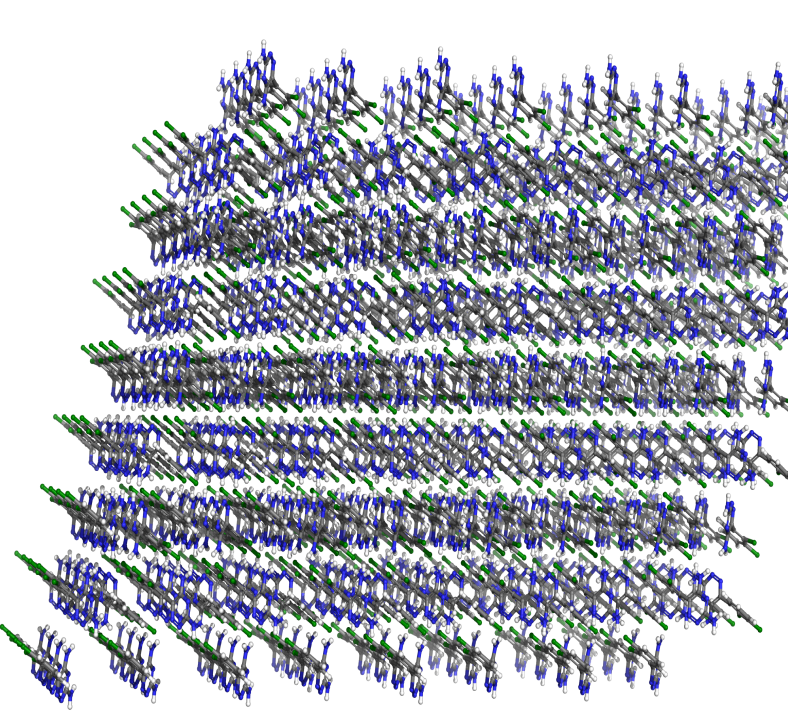
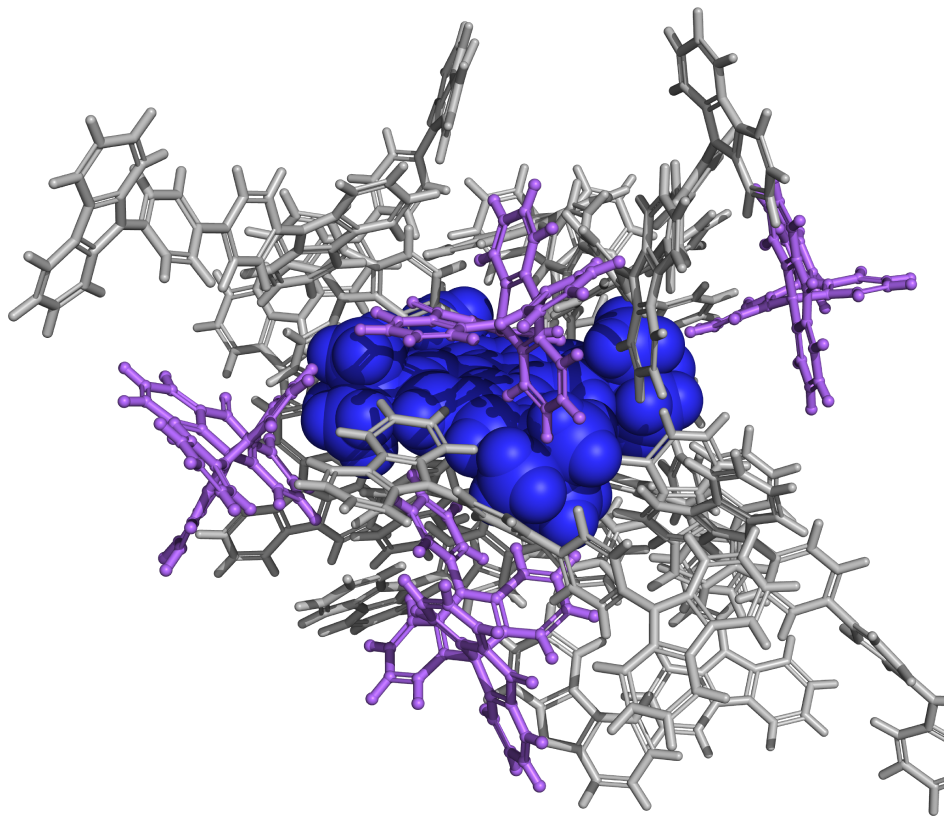
MS Force Field Applications (MS FF Applications) includes access to Schrödinger’s widely-used OPLS4 and new OPLS5 force field, as well as all the Schrödinger machine learning force fields (MLFFs) for diverse property prediction workflows. Schrödinger is committed to advancing innovations in force fields to help you achieve more accurate, reliable modeling outcomes.

What’s New: 

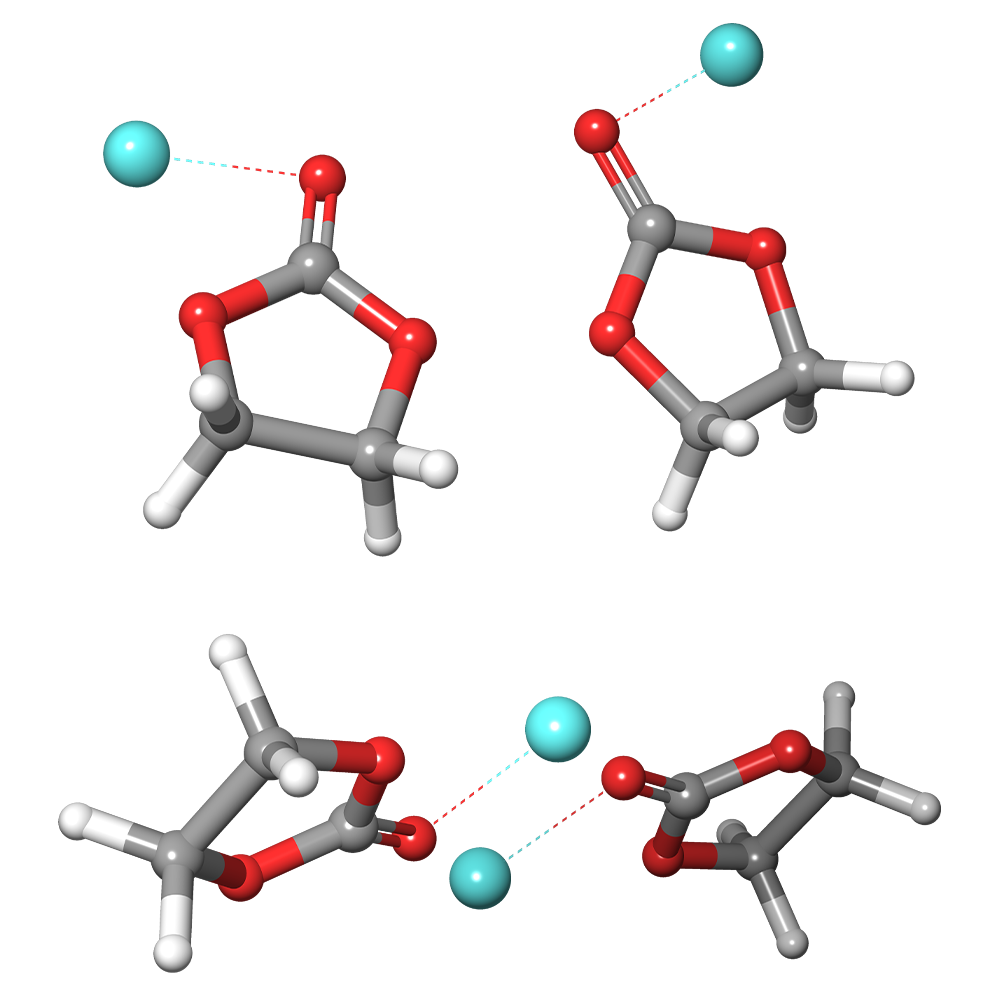
  • OPLS5: Includes an explicit treatment of polarizability via the addition of Drude oscillators that enables accurate modeling of cation-pi interactions and more accurate treatment of hydrogen bonding to charged systems.
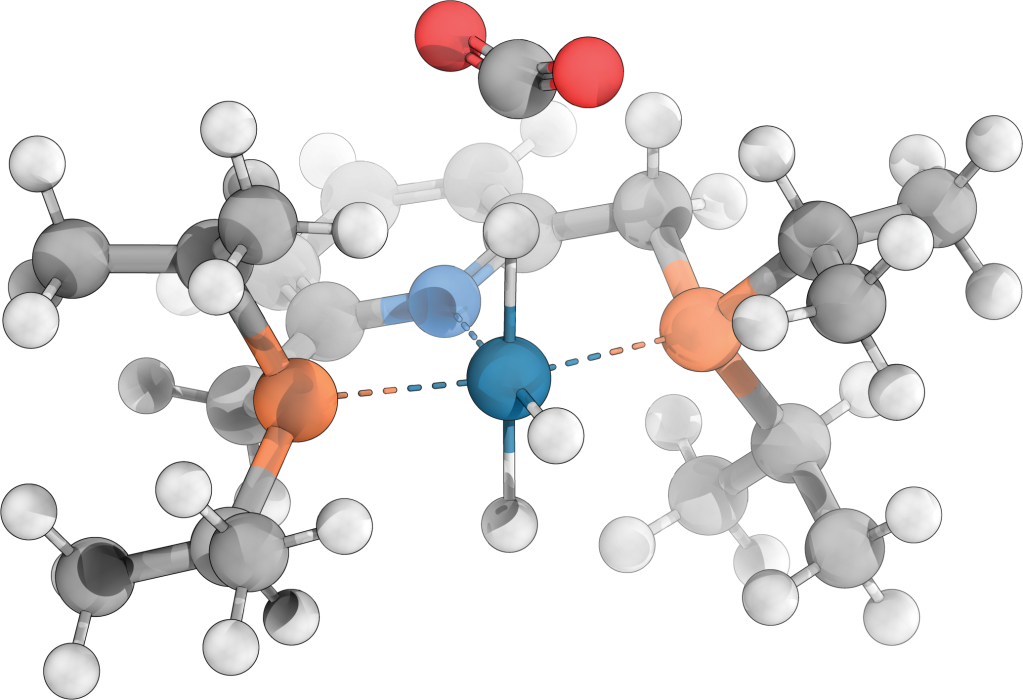
  • MPNICE: Machine learning force fields, also known as machine learning interatomic potentials, represent an intermediate between classical force fields and DFT, maintaining the linear scaling of the former while approaching the accuracy of the latter. Message Passing Network with Iterative Charge Equilibration (MPNICE) is an MLFF architecture developed by Schrödinger for which multiple pre-trained models covering 89 elements are available, and which explicitly incorporates equilibrated atomic charges and long range electrostatics.
  • Fine-tuning: While architectures like MPNICE and UMA offer exceptional generalizability, achieving high-fidelity accuracy for specialized systems often requires tailoring the model through quantum mechanical data. MS FF Applications provides an intuitive, automated interface for fine-tuning MPNICE models using DFT calculations from Jaguar or Quantum Espresso. This enables the development of custom, application-specific MLFFs that integrate seamlessly across the full range of materials science workflows and solutions.
  • MPNICE embeddings for 3D ML models: The internal layers of MLFFs encapsulate a sophisticated, dense mapping of chemical space and 3D atomic configurations. By leveraging these latent representations, MPNICE embeddings allow you to build machine learning models directly from 3D coordinates. This enables the creation of high-fidelity predictive models across organic, inorganic, and hybrid systems – spanning both periodic and non-periodic structures.

background pattern

Benefits of MLFFs

Near DFT-level accuracy with orders of magnitude reduction in computational time
Option for GPU accelerated molecular dynamics with Desmond
Large chemical space spanning 89 elements
Specialized force fields for organics, inorganics, and hybrid materials with the added capability of fine-tuning

Key Capabilities

Batteries

  • Calculate bulk and transport properties, such as diffusion, viscosity, and conductivity, of liquid electrolytes
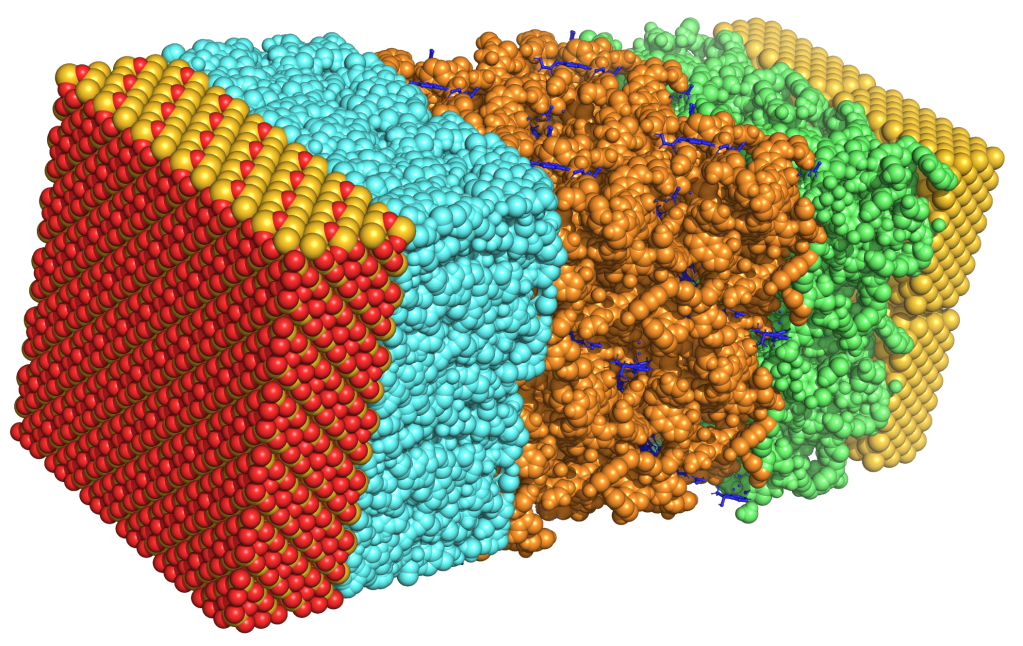
  • Simulate Li-ion diffusion in solid state electrolytes and cathode coating materials
  • Model electrolyte reactivity and SEI formation

Polymers

  • Evaluate polymer dynamical properties
  • Investigate solid polymer electrolyte

Adsorption on surfaces

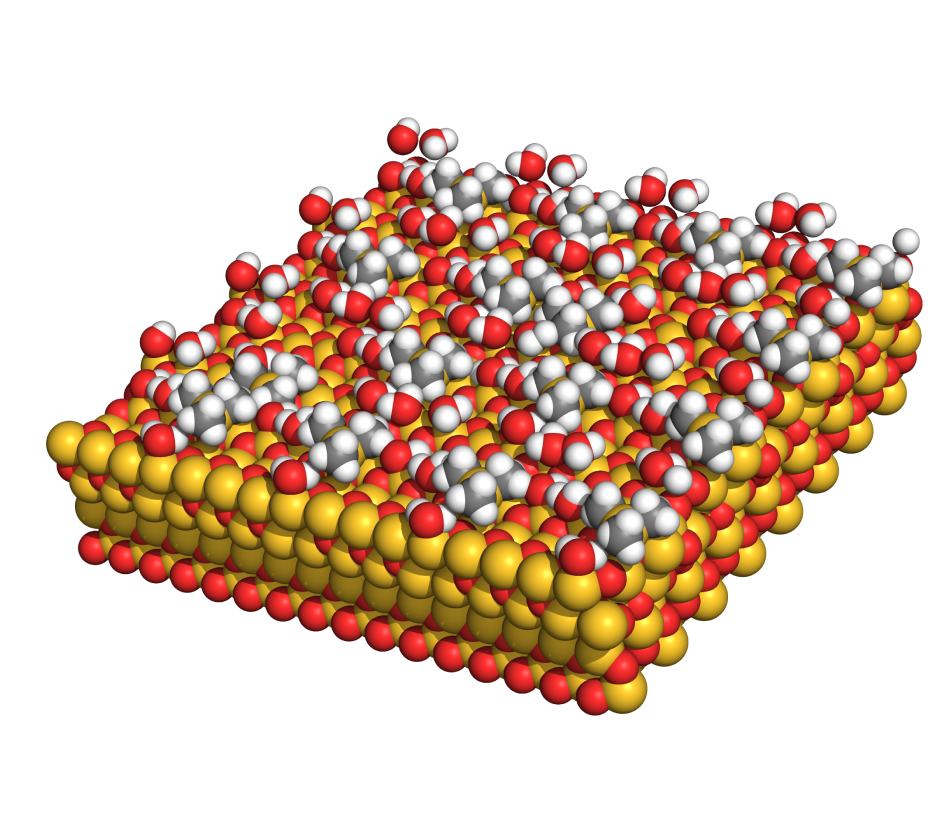
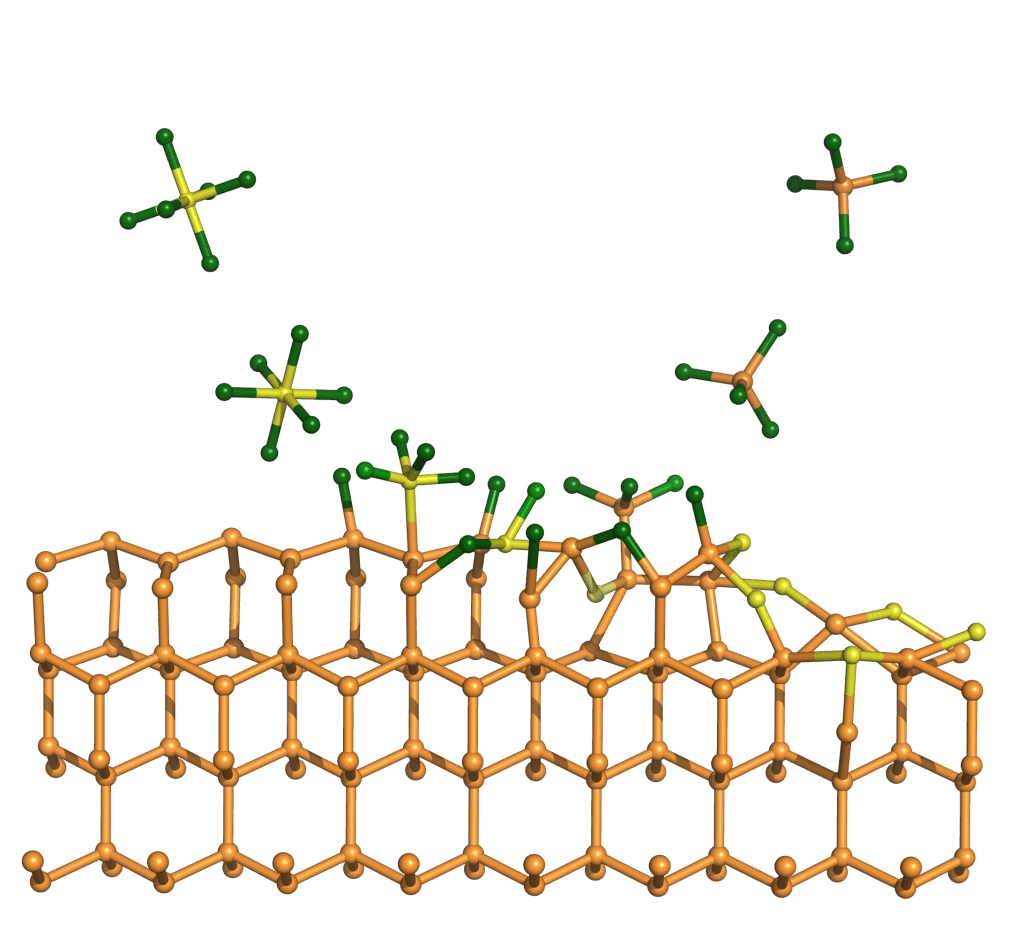
  •  Study reactivity of multiple adsorbates in extended models of complex surfaces

Crystal structure prediction

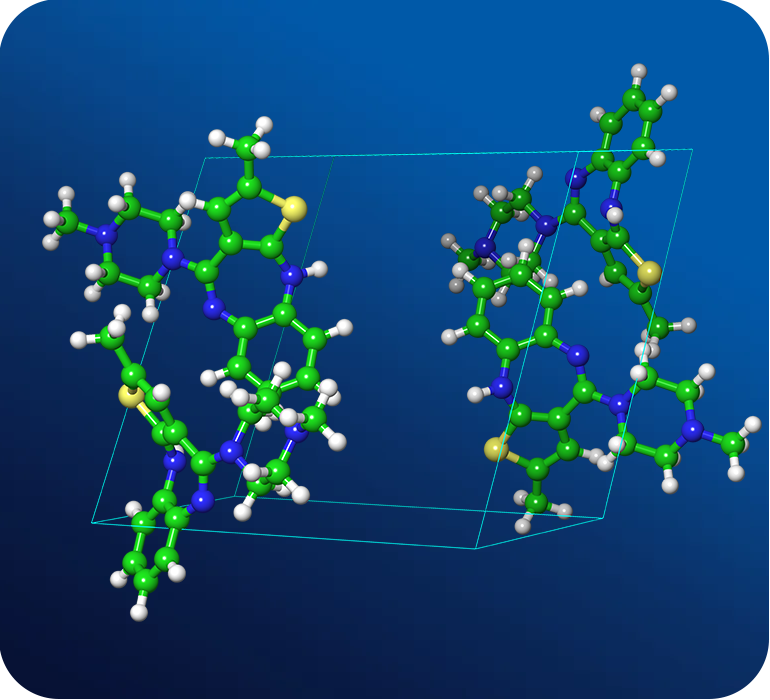
  • Rank order organic crystal structures

OLED materials

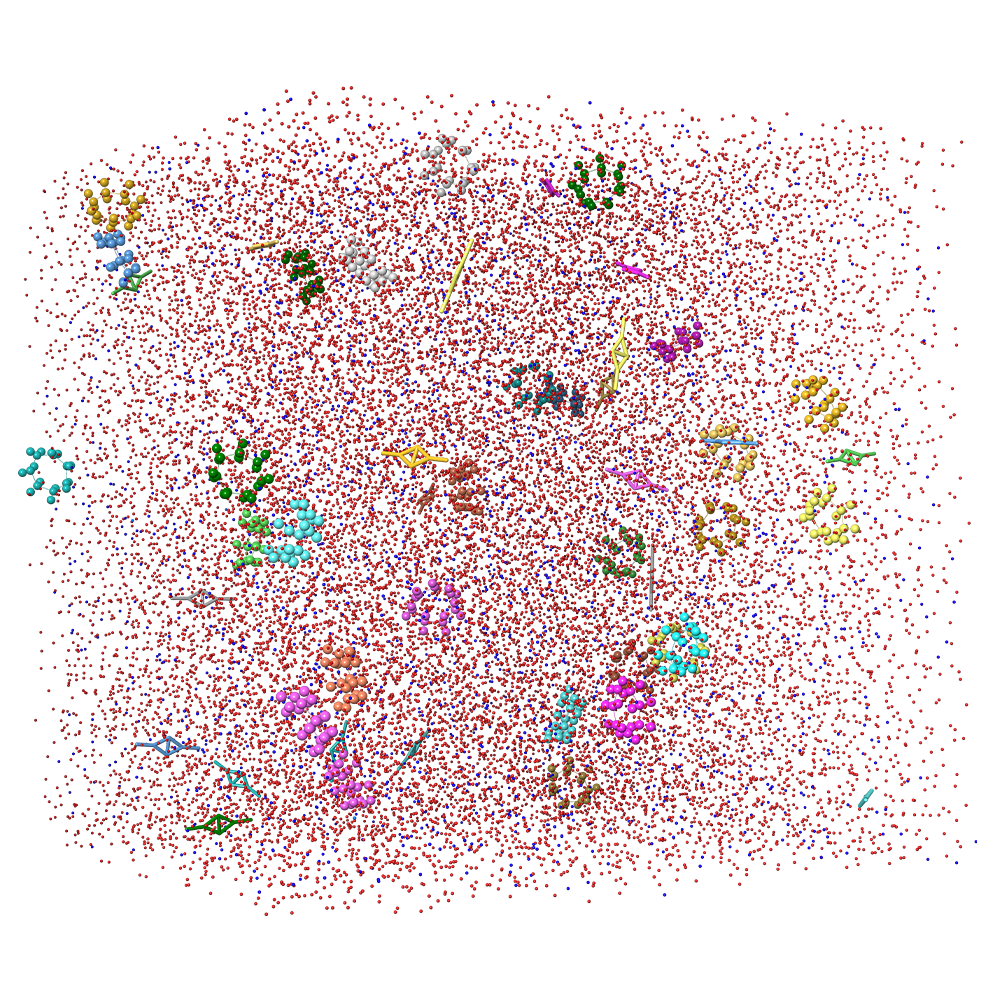
  • Simulate molecular packing and thin-film morphology 
  • Investigate doping, host–guest, and interlayer interactions
  • Link device properties to the static and dynamic disorder of molecular systems
  • Facilitate thermomechanical property prediction
  • Model charge and exciton transport

Case studies & webinars

Discover how Schrödinger technology is being used to solve real-world research challenges.

Materials Science Webinar

Advancing battery materials innovation using charge-aware machine learning force fields

In this webinar, we will demonstrate how Schrödinger is utilizing an integrated computational approach combining physics-based molecular modeling with machine learning force fields (MLFFs) to address key challenges in battery materials design.

Materials Science Webinar

Advancing machine learning force fields for materials science applications 最新機能 MPNICEのご紹介

シュレーディンガーが開発した最先端のMLFFアーキテクチャ「MPNICE(Message Passing Network with Iterative Charge Equilibration)」をご紹介します。

Materials Science Webinar

Advancing machine learning force fields for materials science applications

In this webinar, we will introduce Schrödinger’s state-of-the-art MLFF architecture, called Message Passing Network with Iterative Charge Equilibration (MPNICE), which incorporates explicit electrostatics for accurate charge representations.

Documentation & Tutorials

Get answers to common questions and learn best practices for using Schrödinger’s software.

Materials Science Tutorial

Machine Learning with MPNICE Embedding

Learn to build, analyze, and apply ML models with MPNICE Embedding.

Materials Science Tutorial

Fine-Tuning Machine Learning Force Fields

Learn to fine-tune a pre-trained machine learning force field (MLFF) model to study lattice parameters of 2D materials.

Materials Science Tutorial

Locating Adsorption Sites on Surfaces

Learn how to locate adsorption sites on surfaces.

Materials Science Documentation

Machine Learning Force Fields

Machine Learning Force Fields (MLFFs) offer a novel approach for predicting the energies of arbitrary systems.

Materials Science Quick Reference Sheet

MLFF Calculations: Quick Reference Sheet

Get an overview of the MLFF Calculations panel for predicting quantum mechanical calculations for systems using machine learning force fields.

Materials Science Tutorial

Machine Learning Force Field

Learn how to use machine learning force field optimization methods to prepare and simulate various systems.

Related Products

OPLS4

Modern, comprehensive force field for accurate molecular simulations

Desmond

High-performance molecular dynamics (MD) engine providing high scalability, throughput, and scientific accuracy

Force Field Builder

Efficient tool for optimizing custom torsion parameters in OPLS4

MS Maestro

Complete modeling environment for your materials discovery

Jaguar

Quantum mechanics solution for rapid and accurate prediction of molecular structures and properties

Quantum ESPRESSO Interface

Integrated graphical user interface for nanoscale quantum mechanical simulations

Publications

Materials Science Publication

Efficient long-range machine learning force fields for liquid and materials properties

Materials Science Publication

Leveraging high-throughput molecular simulations and machine learning for the design of chemical mixtures

Materials Science Publication

Advancing material property prediction: using physics-informed machine learning models for viscosity

Materials Science Publication

Machine learning force field ranking of candidate solid electrolyte interphase structures in Li-ion batteries

Schedule a demo on MS Force Field Applications

Contact us today to discuss how you can leverage MLFFs to solve your R&D challenges.

Don’t see your areas of interest in the current lists above? Reach out so we can help.

Form submitted

Thank you, we’ll be in touch soon.

Software & services to meet your organizational needs

Software Platform

Deploy digital materials discovery workflows with a comprehensive and user-friendly platform grounded in physics-based molecular modeling, machine learning, and team collaboration.

Research Services

Leverage Schrödinger’s expert computational scientists to assist at key stages in your materials discovery and development process.

Support & Training

Access expert support, educational materials, and training resources designed for both novice and experienced users.

Contract Research Services

Contract Research Services

Contract Research Services

Expert research support customized for your materials science R&D needs

Leverage Schrödinger’s scientific and engineering expertise

Apply advanced simulation tools to solve your materials science research challenges

Free up time and resources

Let our scientists execute the project while collaborating closely with your team

Data security is of utmost importance

Contract research customers retain all intellectual property

Best suited for companies and teams:

  • Who want to reduce time spent on trial-and error experiments
  • Who want to leverage Schrödinger’s advanced physics-based and machine learning methods and expertise
  • Who want to gain molecular-level insight into their materials
  • Who want to explore the benefits of digital approaches before investing in in-house adoption


Schrödinger’s industry leading technologies:

  • Quantum mechanics modeling
  • Molecular dynamics simulation
  • Molecular mechanics
  • Advanced AI/ML/Active Learning/De novo design
  • Machine learning force fields (MLFFs)

Advance your materials R&D with unrivaled technologies and expertise

Benefit from the full impact of Schrödinger technologies at scale

Services include all computing, licensing, and service hours required to perform comprehensive simulation projects tailored to your R&D needs.

Leverage flexible, customized solutions to ensure project success

No internal software, hardware, or computational resources needed. Benefit from expert knowledge transfer and training throughout and beyond the project. Get tailored tools and solutions designed specifically to meet your project goals.

Complement your domain expert knowledge with our expertise

After collaborating to scope out a work product, dedicated Schrödinger experts in both materials applications and digital simulations execute your projects.

Proven success

Customers across industries have trusted us with their research needs.

Panasonic
Bridgestone

To learn more about our service areas in detail, download the full flyer

Software and services to meet your organizational needs

Software Platform

Deploy digital materials discovery workflows with a comprehensive and user-friendly platform grounded in physics-based molecular modeling, machine learning, and team collaboration.

Research Services

Leverage Schrödinger’s expert computational scientists to assist at key stages in your materials discovery and development process.

Support & Training

Access expert support, educational materials, and training resources designed for both novice and experienced users.

Crystal Structure Prediction

Crystal Structure Prediction (CSP)

Crystal Structure Prediction (CSP)

De-risk your solid form selection process by identifying the most stable polymorph at room temperature

Stability ranking of crystal polymorphs

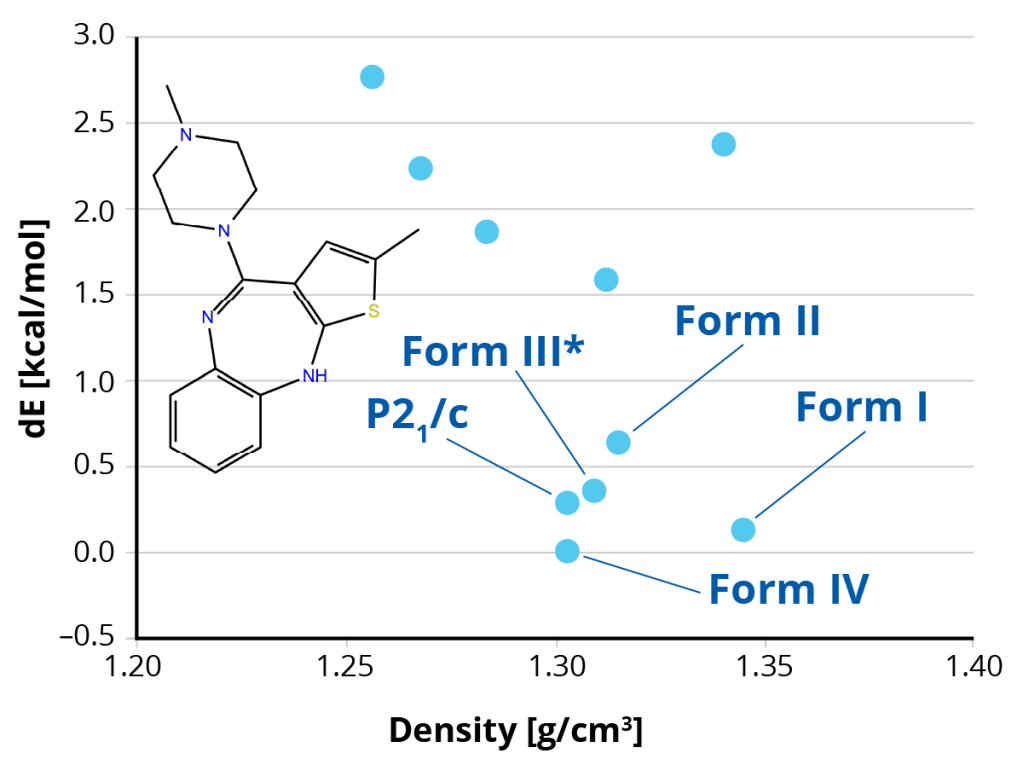
Overcome the risks associated with disappearing polymorphs in late stage drug development. Schrödinger’s proprietary crystal structure prediction platform identifies the stable crystal polymorphs at 0K and RT for a given active pharmaceutical ingredient (API).

Key Capabilities

Fast and comprehensive identification of polymorphs at room temperature and beyond

  • Novel, systematic approach allows exhaustive yet efficient sampling of crystal packings
  • High throughput workflow with quick turnaround time to support CADD and CMC teams working on lead optimization (CSP for scaffold design), polymorph screening experiments (CSP-DoE), and manufacturing processes (CSP-derisk)
  • Includes advanced workflows for the prediction of anhydrous Z’=2, monohydrate, solvate, and salt forms of the API

High accuracy validated on extensive dataset of challenging, diverse drug-like molecules

  • Retrospective validation on a set of 66 drug-like molecules with 137 experimental polymorphs and an accuracy close to 100% in predicting the most stable solid form
  • Prospective validation on a central nervous system drug molecule showed high accuracy and reliability

Crystal Structure Prediction Workflow

Schrödinger solutions for physicochemical property prediction

Optionally predict key properties of an API to support selection of a stable solid form.

Crystalline solubility of polymorphs using free energy methods with FEP+
Learn more
ssNMR chemical shifts to support crystallization experiments with Quantum ESPRESSO
Learn more
Crystal habits (morphology) to support downstream processing with MS Morph
Learn more
Mechanical properties (Young’s and shear modulus) to complement direct compaction and milling experiments with MD engine Desmond

Learn more
Featured Service

Crystal Structure Prediction Services

Work with our team of computational experts to de-risk your solid form selection process. Starting from a 2D structure of the API, Schrödinger’s team will deliver to you the thermodynamic stability ranking of crystal polymorphs.

Publications

Browse the list of peer-reviewed publications using Schrödinger technology in related application areas.

A robust crystal structure prediction method to support small molecule drug development with large scale validation and blind study

Zhou D, et al. Nature Communications, 2025, 16, 2210

Free energy perturbation approach for accurate crystalline aqueous solubility predictions

Hong RS, et al. J. Med. Chem. 2023, 66, 23, 15883-15893

Novel physics-based ensemble modeling approach that utilizes 3D molecular conformation and packing to access aqueous thermodynamic solubility: A case study of orally available bromodomain and extraterminal domain inhibitor lead optimization series

Hong RS, et al. J. Chem. Inf. Model. 2021, 61, 3, 1412-1426

Related Products

Learn more about the related computational technologies available to progress your research projects.

MS Maestro

Complete modeling environment for your materials discovery

FEP+

High-performance free energy calculations for drug discovery

Desmond

High-performance molecular dynamics (MD) engine providing high scalability, throughput, and scientific accuracy

Quantum ESPRESSO Interface

Integrated graphical user interface for nanoscale quantum mechanical simulations

MS Morph

Efficient modeling tool for organic crystal habit prediction

OPLS4

Modern, comprehensive force field for accurate molecular simulations

Software and services to meet your organizational needs

Software Platform

Deploy digital materials discovery workflows with a comprehensive and user-friendly platform grounded in physics-based molecular modeling, machine learning, and team collaboration.

Research Services

Leverage Schrödinger’s expert computational scientists to assist at key stages in your materials discovery and development process.

Support & Training

Access expert support, educational materials, and training resources designed for both novice and experienced users.

Protein Design Services

Protein Design Services

Protein Design Services

Optimize your protein design projects with structure-based modeling

Bridge the gap between traditional wet lab approaches and in silico protein optimization with Schrödinger’s Protein Design Services. Schrödinger scientists will leverage our expertise and unique computationally-driven protein mutation workflow which integrates our differentiated technologies, including FEP+, to propel your discovery program.

Available Services

Affinity engineering:
Enhance or decrease binding affinity of a protein to its target

Selectivity engineering:
Tune preferential binding of a protein to one target over another

Cross-reactivity engineering:
Extending breadth of binding across multiple targets

pH-dependent binding:
Engineer pH-dependent association or dissociation between two proteins

Stability engineering:
Enhance physical stability of a protein-based biologic

Developability assessment:
Optimize properties like solubility, chemical stability, and physical stability

Best suited for:

Companies and Teams who…

Want to reduce protein optimization cost and speed up time-to-results

Want to utilize a computational, structure-based approach to identify better quality candidates

Want to leverage Schrödinger’s advanced physics-based methods and expertise

Projects…

With experimentally determined high resolution 3D structure of the input protein for stability prediction or a protein-protein complex for affinity, selectivity, cross reactivity, and pH-dependent binding prediction

Where optimizing multiple parameters is necessary

Propel your discovery program with unrivaled technologies and expertise

Reduce the cost and time of your protein optimization efforts from months to weeks by discarding irrelevant mutations early, as well as quickly generating new ideas and follow-up designs
Identify better quality candidates faster through simultaneous optimization of multiple parameters to facilitate more rapid testing and triaging of ideas
Benefit from the full impact of Schrödinger technologies at scale. Services include all computing, licensing, and service hours to perform comprehensive protein engineering
Complement your unique project knowledge with our computational expertise, built upon more than 30 years of R&D

Case Study

Challenge

Improving protein affinity is a key determinant in designing biologics with better efficacy, developability, and safety profiles. Traditional approaches like site-directed mutagenesis require the production, purification, and testing of each variant which can be both time consuming and costly, only to yield around 5-10% of mutations with improved affinity. 

Result

On a data set of 702 mutations, 18 mutations at 39 sites, Schrödinger’s Protein Engineering Workflow was able to identify 21 of 33 (64%) of the affinity improving mutations in an experimental panel 1/8 of the size of the full set, in less than 4 weeks. Leveraging FEP+ for protein affinity improvement enables scientists to identify important mutations faster while reducing experimental costs.

Schedule a call to discuss Protein Design Services

Partner with Schrödinger’s experts to ensure your project’s success.

Schedule a call to learn how our experts can help you access in silico solutions – lowering the barrier to entry and helping you advance your protein optimization efforts with ease.

Form submitted

Thank you, we’ll be in touch soon.

Scientifically-validated solutions for structure-based drug discovery

  1. Robust prediction of relative binding energies for protein–protein complex mutations using free energy perturbation calculations

    Sampson JM, et al. J Mol Biol. 2024, 436(16), 168640.

  2. Accurate prediction of protein thermodynamic stability changes upon residue mutation using free Energy perturbation

    Scarabelli G, et al. J Mol Biol. 2022, 434(2), 167375.

  3. Relative binding affinity prediction of charge-changing sequence mutations with FEP in protein–protein interfaces

    Clark AJ, et al. J Mol Biol. 2019, 431(7), 1481-1493.

Software and services to meet your organizational needs

Software Platform

Deploy digital drug discovery workflows using a comprehensive and user-friendly platform for molecular modeling, design, and collaboration.

Modeling Services

Leverage Schrödinger’s computational expertise and technology at scale to advance your projects through key stages in the drug discovery process.

Support & Training

Access expert support, educational materials, and training resources designed for both novice and experienced users.

MS Formulation ML

MS Formulation ML

Automated machine learning solution to generate accurate formulation-property relationships and screen new formulations with desired properties

MS Formulation ML

Create accurate machine learning models to design better formulations

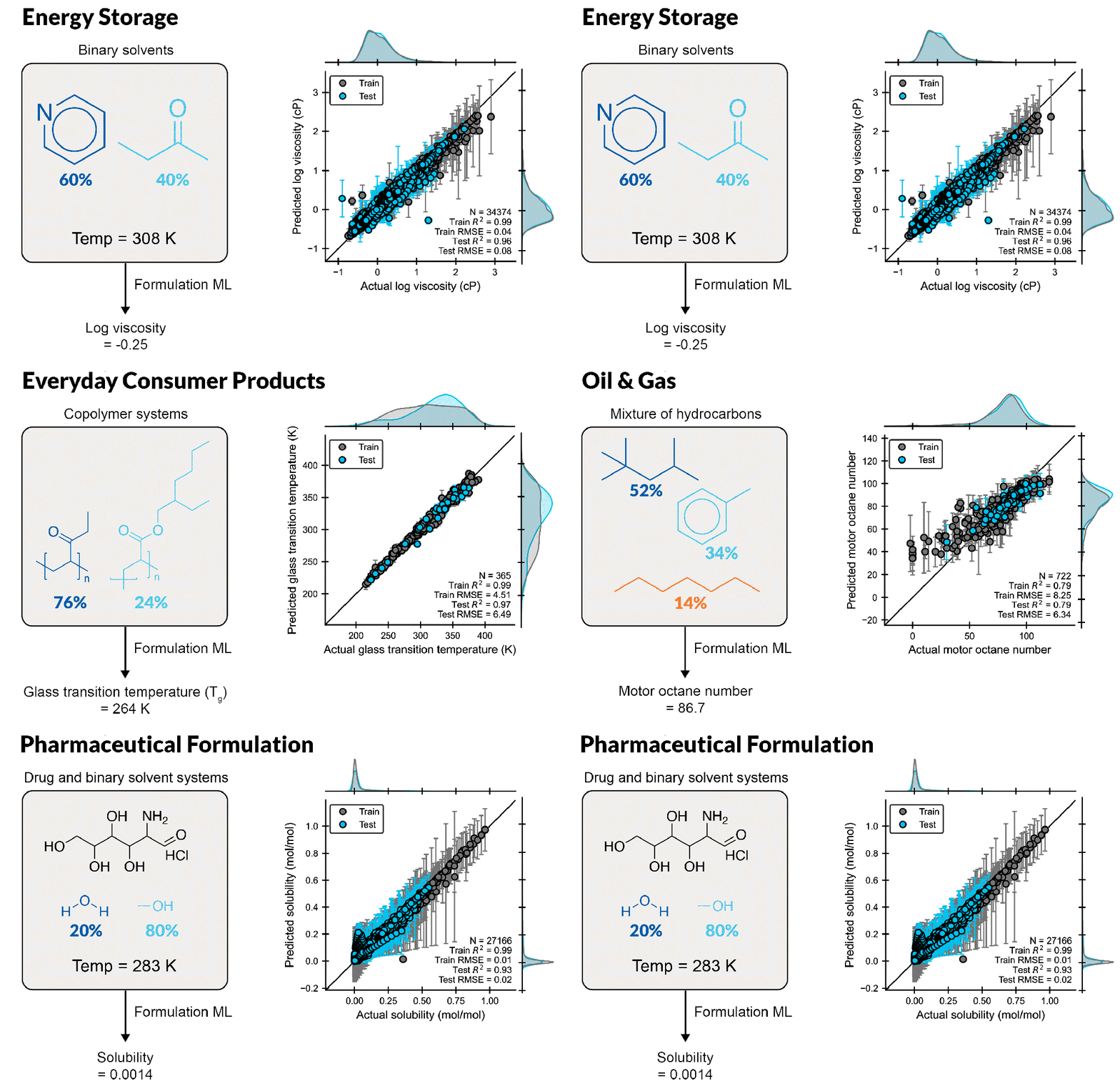
Formulation ML allows scientists to predict properties based on ingredient structures and compositions. Whether you are a formulation expert or just learning in this area, this automated, supervised learning solution enables you to gain deeper insight into formulation-property relationships.

Key Capabilities

Build formulation-property models for chemical mixtures with varying ingredient structures and compositions, which are scalable up to 100 ingredients or more
Rapidly predict novel formulations with new chemistry and composition, requiring only seconds per formulation
Understand which molecular features to focus on to fine-tune properties, leveraging feature importance tools to identify key descriptors for a property using a trained model
Enable accurate ML model development using expert cheminformatic descriptors and automatic hyperparameter tuning with minimal ML expertise
Input customized descriptors, including experimental data, in CSV format into the ML model to improve model performance
Optimize multiple properties simultaneously by modulating ingredient structure and compositions with trained ML models, providing suggestions of best formulations for the next experiment

Featured Resources

Materials Science Informatics Webinar Materials Science
AI/ML meets physics-based simulations: A new era in complex materials design

In this webinar, we demonstrate the application of this combined approach in designing materials and formulations across diverse materials science applications, from battery electrolytes and fuel mixtures to thermoplastics and OLED devices. 

Accelerating pharmaceutical formulations using machine learning approaches Webinar Life Science Materials Science
Accelerating pharmaceutical formulations using machine learning approaches

In this webinar, we will demonstrate how Schrödinger’s integrated ML- and physics-based approaches are transforming pharmaceutical formulation design.

Complex Formulations

Tutorial

Machine Learning for Formulations

Related Products

Desmond

High-performance molecular dynamics (MD) engine providing high scalability, throughput, and scientific accuracy

Jaguar

Quantum mechanics solution for rapid and accurate prediction of molecular structures and properties

DeepAutoQSAR

Automated, scalable solution for the training and application of predictive machine learning models

MS Informatics

Automated machine learning tools for materials science applications

MS Force Field Applications

Cutting-edge force field technologies for accurate property predictions

Publications

Leveraging high-throughput molecular simulations and machine learning for the design of chemical mixtures, Alex, C., et al. npj Comput Mater 11, 72, 2025, https://doi.org/10.1038/s41524-025-01552-2.

Schedule a consultation on Schrödinger’s Formulation ML

Contact us today to explore how you can leverage advanced simulation and AI/ML to transform formulation decisions and gain competitive advantage in your industry.

Don’t see your areas of interest in the current lists above? Reach out so we can help.

Form submitted

Thank you, we’ll be in touch soon.

Software & services to meet your organizational needs

Software Platform

Deploy digital materials discovery workflows with a comprehensive and user-friendly platform grounded in physics-based molecular modeling, machine learning, and team collaboration.

Research Services

Leverage Schrödinger’s expert computational scientists to assist at key stages in your materials discovery and development process.

Support & Training

Access expert support, educational materials, and training resources designed for both novice and experienced users.

OLED Device ML

OLED Device ML

Machine learning solution to investigate relationships between the architecture and performance of OLED devices for accelerated screening

OLED Device ML

Create machine learning models to enable high-throughput design and optimization of OLED devices

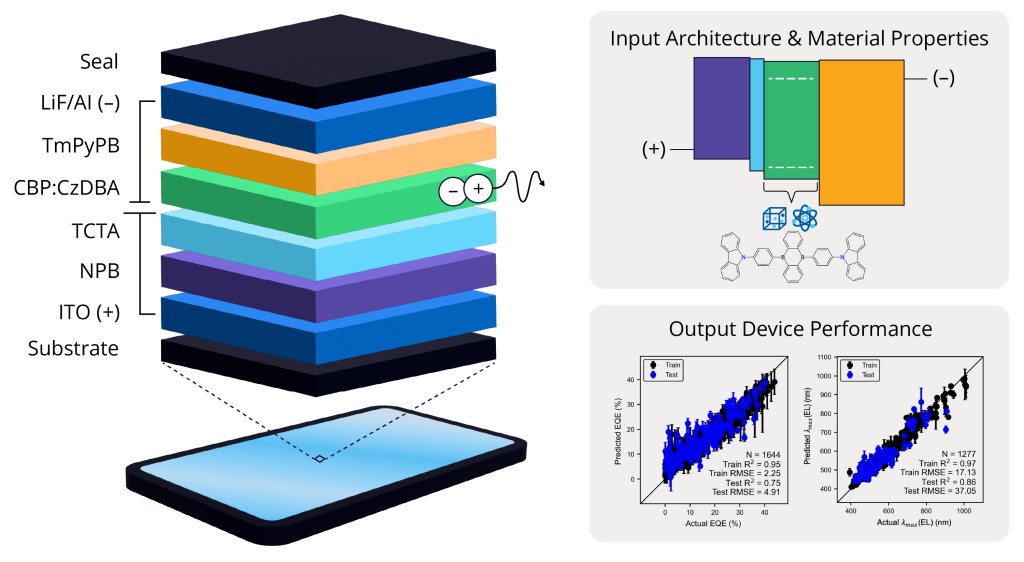
The OLED Device ML solution enables scientists to predict performance metrics that quantify the operational output, efficiency, and stability of multicomponent layered organic light-emitting diodes (OLEDs). These predictions are based upon simple and direct descriptions of device operation and architecture, such as the arrangement and chemical composition of layers. This offers a scalable solution for OLED developers seeking to perform targeted evaluations of device capability across novel design spaces.

Key Capabilities

Train chemistry-informed ML models to predict performance properties for OLED devices with varying layer arrangements and chemical compositions
Rapidly predict the performance of novel device structures to establish interpretable relationships between functionality and layer architectures and chemistry
Use pre-trained ML models to predict six different device performance metrics including external quantum efficiency, current efficiency, power efficiency, electroluminescence maximum peak position, electroluminescence bandwidth, and color of the emitted light
Benefit from an intuitive graphical interface that allows easy design and exploration of novel chemistry and device architectures, facilitated by the visualization of energy level diagrams with out-of-the-box QM descriptors and ML models

White paper

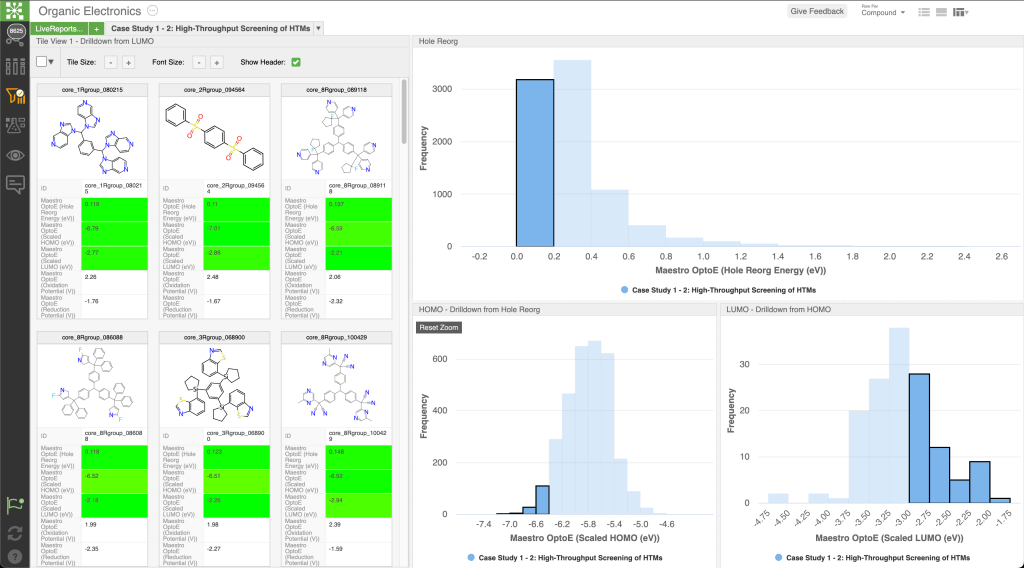
LiveDesign for Organic Electronics

Broad applications across materials science research areas

Related Products

MS Informatics

Automated machine learning tools for materials science applications

DeepAutoQSAR

Automated, scalable solution for the training and application of predictive machine learning models

Schedule a consultation on Schrödinger’s OLED Device ML

Contact us today to explore how you can leverage advanced simulation and AI/ML to design better electronic devices.

Don’t see your areas of interest in the current lists above? Reach out so we can help.

Form submitted

Thank you, we’ll be in touch soon.

Software & services to meet your organizational needs

Software Platform

Deploy digital materials discovery workflows with a comprehensive and user-friendly platform grounded in physics-based molecular modeling, machine learning, and team collaboration.

Research Services

Leverage Schrödinger’s expert computational scientists to assist at key stages in your materials discovery and development process.

Support & Training

Access expert support, educational materials, and training resources designed for both novice and experienced users.

MS Surface

MS Surface

Solution for heterogeneous catalysis and materials processing

MS Surface

Overview

MS Surface provides diverse capabilities for exploring gas-surface reactions, by finding the structure of adsorbed fragments and quantifying adsorption or desorption free energies at the quantum mechanical level.

Key Capabilities

Explore the richness of surface chemistry by enumerating structural models of surface intermediates consisting of molecules or dissociated fragments adsorbed on various surface sites
Efficiently combine multiple molecules with multiple substrates in batch mode
Compute the free energy of adsorption of the reactant gas at a specified temperature and pressure, including reactive adsorption into fragments on the surface
Compute the free energy for desorbing product molecules under specified conditions
Calculate free energies based on quantum mechanical methods, incorporating the dominant contribution to entropy from the gas-phase species
Use MS Surface results as inputs for computing reaction kinetics, ranging from the activation energy along a particular pathway to the microkinetics of the entire process

Broad applications across materials science research areas
Documentation & Tutorials

Atomic Layer Deposition

Modeling Surfaces

Related Products

MS Microkinetics

Efficient tool for surface reaction kinetics

Quantum ESPRESSO Interface

Integrated graphical user interface for nanoscale quantum mechanical simulations

MS Reactivity

Automated workflows for design, optimization, and unsupervised mechanism discovery in molecular chemistry

Software & services to meet your organizational needs

Software Platform

Deploy digital materials discovery workflows with a comprehensive and user-friendly platform grounded in physics-based molecular modeling, machine learning, and team collaboration.

Research Services

Leverage Schrödinger’s expert computational scientists to assist at key stages in your materials discovery and development process.

Support & Training

Access expert support, educational materials, and training resources designed for both novice and experienced users.

FEP+ for Biologics

FEP+ for Biologics

High-performance free energy calculations for biologics discovery

FEP+ for Biologics

Engineer better proteins, faster with FEP+

FEP+ is Schrödinger’s proprietary, physics-based free energy perturbation technology. Use FEP+ in your biologics discovery projects to computationally predict protein mutation effects at an accuracy matching experimental methods to within ~1 kcal/mol.

Reduce time-to-results from months to weeks by discarding irrelevant mutations early, as well as quickly generating new ideas and follow-up designs

Lower protein optimization costs compared to traditional directed evolution wet lab protocols by running fewer cycles and assaying fewer variants

Identify better quality candidates through simultaneous optimization of multiple parameters to facilitate more rapid testing and triaging of ideas

Key application areas

Affinity engineering

Enhance or decrease binding affinity of a protein to its target

Selectivity engineering

Tune preferential binding of a protein to one target over another

Cross-reactivity engineering

Extending breadth of binding across multiple targets

pH-dependent binding

Engineer pH-dependent association or dissociation between two proteins

Stability engineering

Enhance physical stability of a protein-based biologic

Developability assessment

Optimize properties like solubility, chemical stability, and physical stability

Benefit from Schrödinger’s proven protein engineering technologies

Protein FEP+

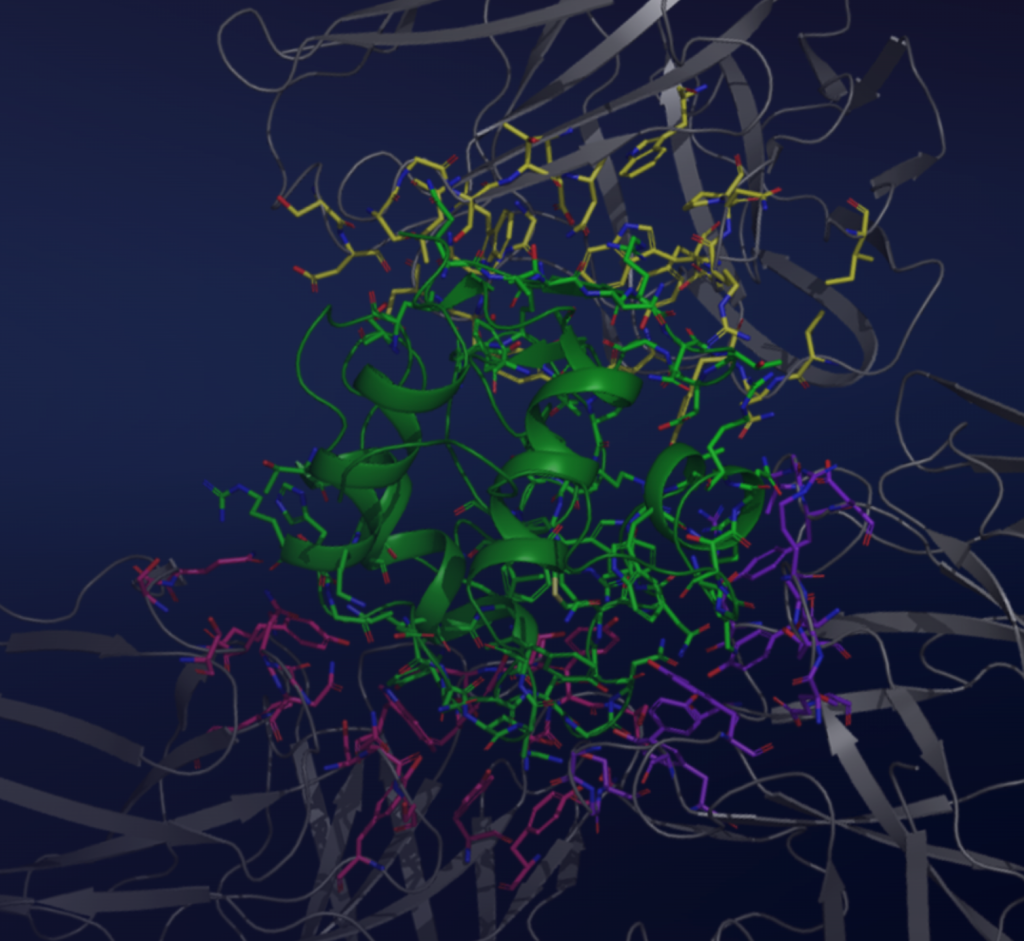
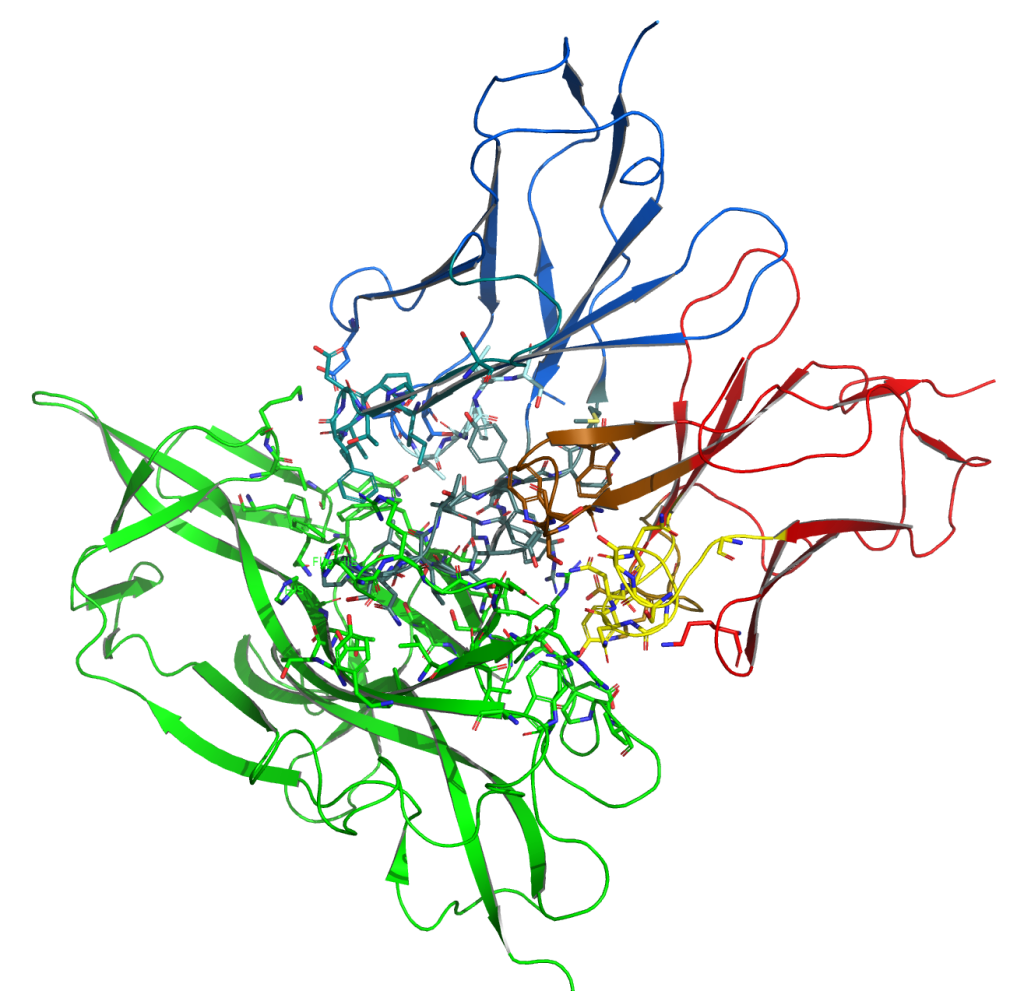
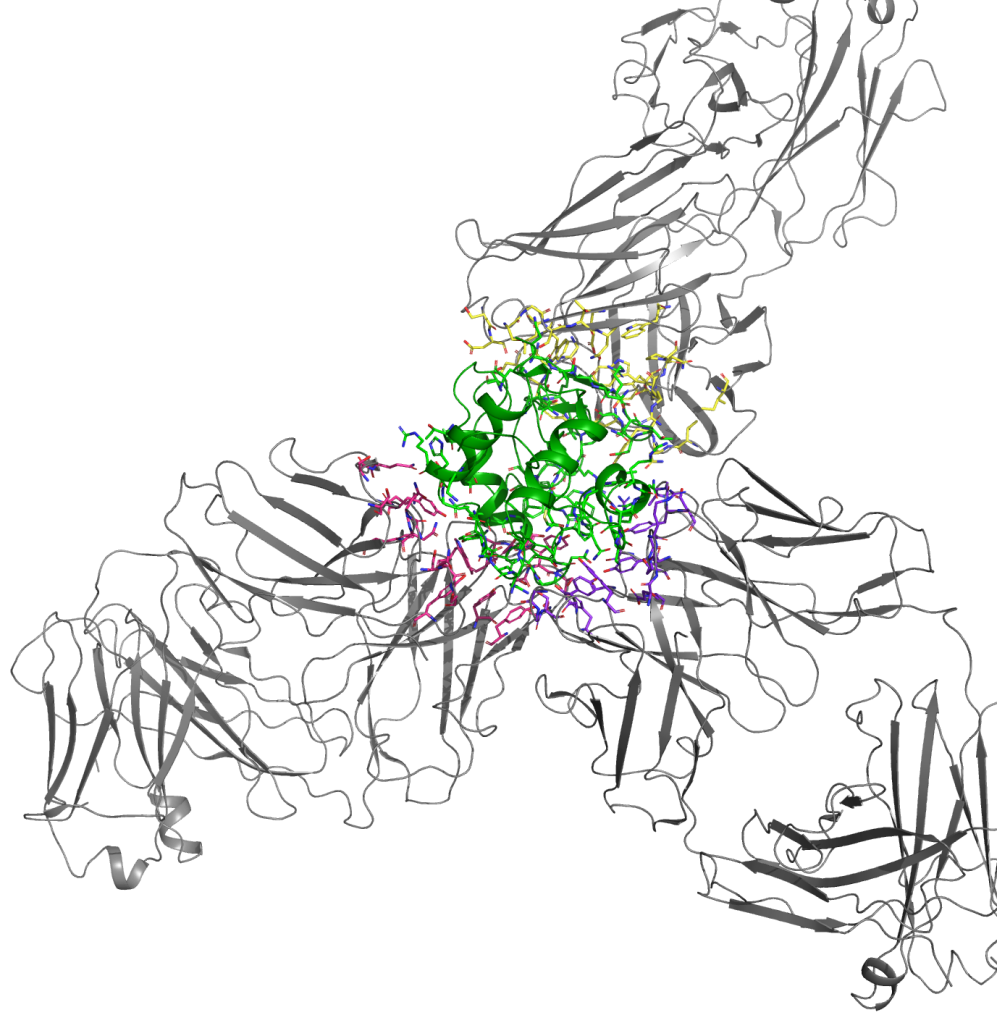
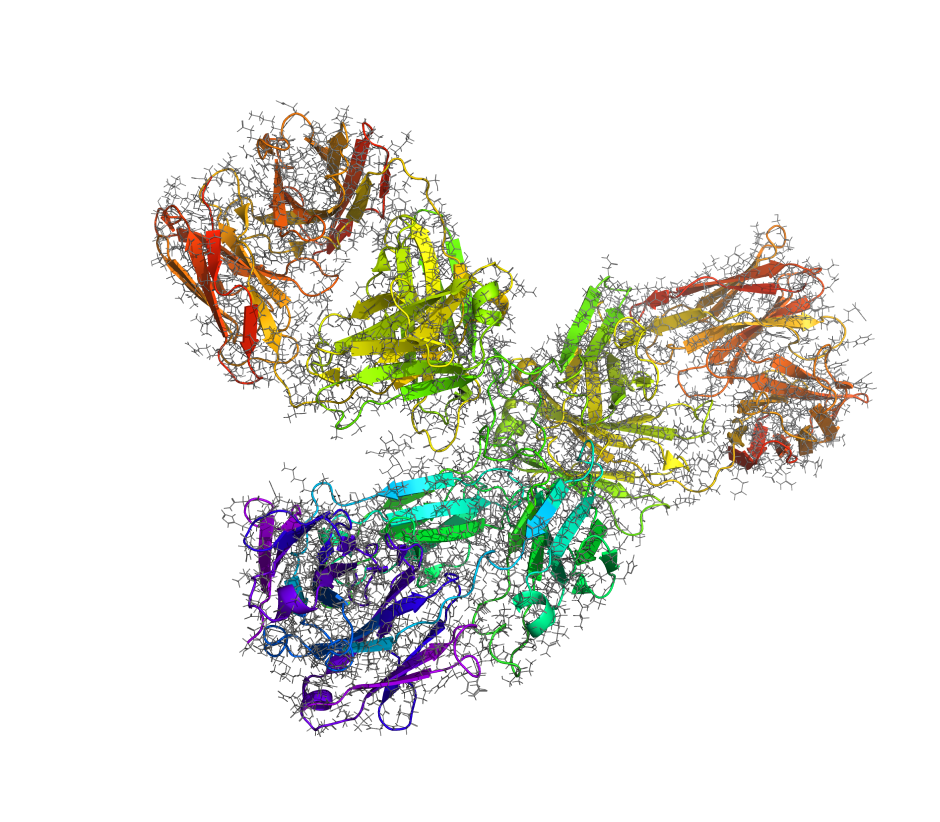
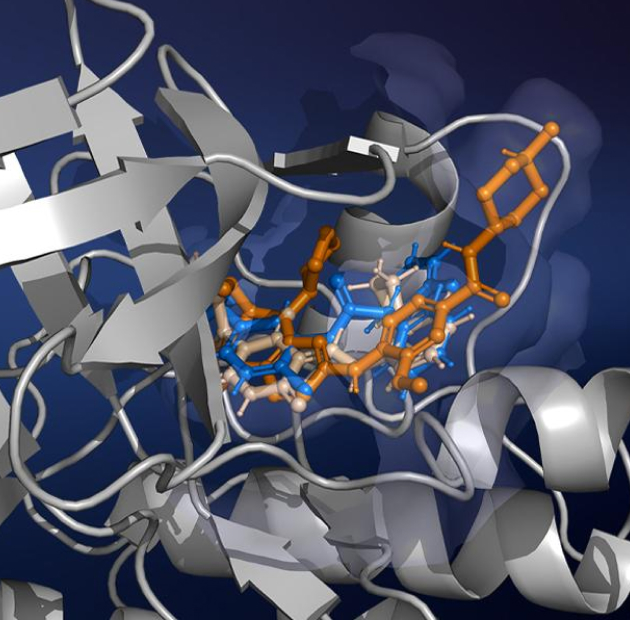
Accurately quantify the effects of mutations on protein stability and protein-protein binding affinities during the optimization of antibodies, antigens, peptides, enzymes, and other biologic products.

FEP+ Residue Scan

Rapidly model single mutations on multiple sites simultaneously to achieve consistent and reliable prediction of mutational effects and dramatically improve the efficiency of FEP+ calculations.

Schrödinger’s customizable protein engineering workflow

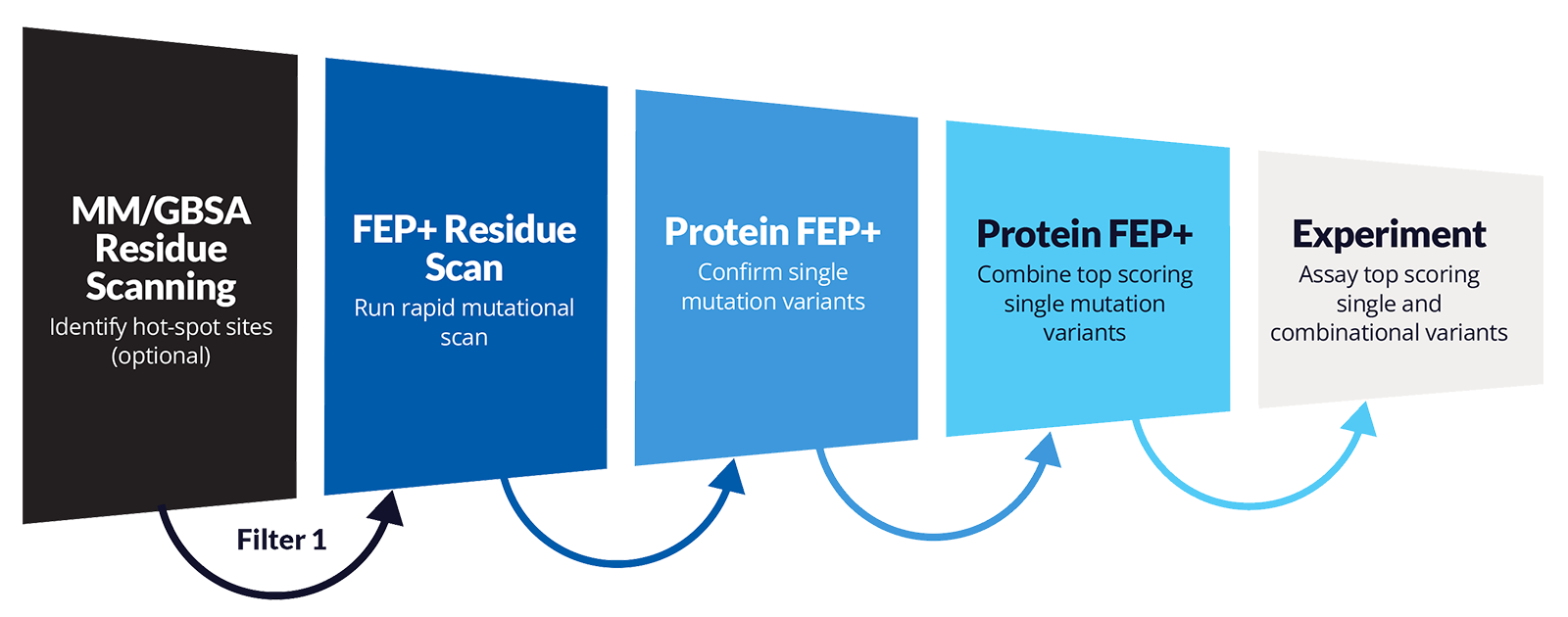
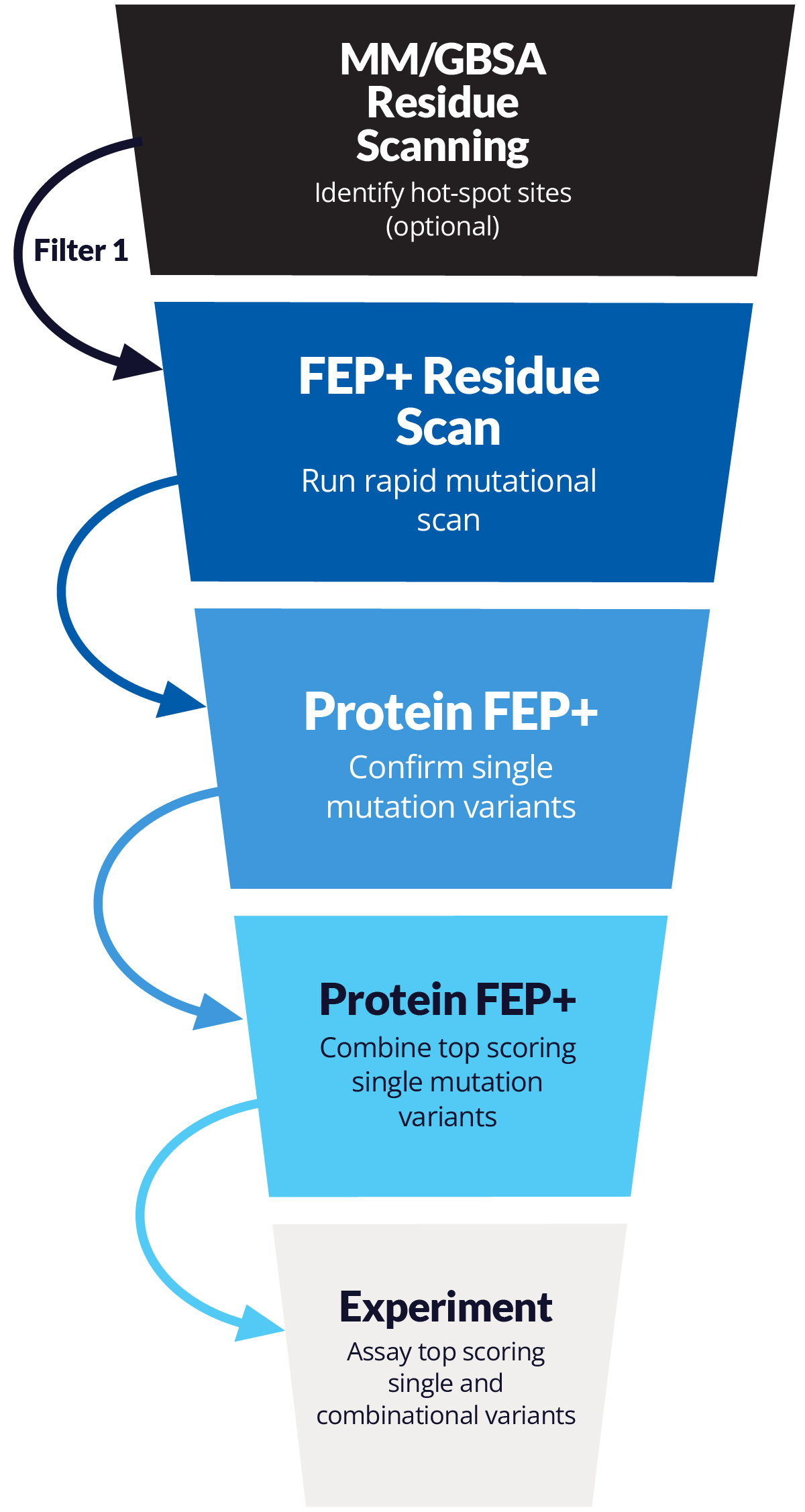
Our workflow leverages FEP+ Residue Scan and Protein FEP+ technologies to enable precise and efficient exploration of protein mutations to simultaneously optimize stability, binding affinity, specificity, pH-dependent binding, and cross-reactivity.

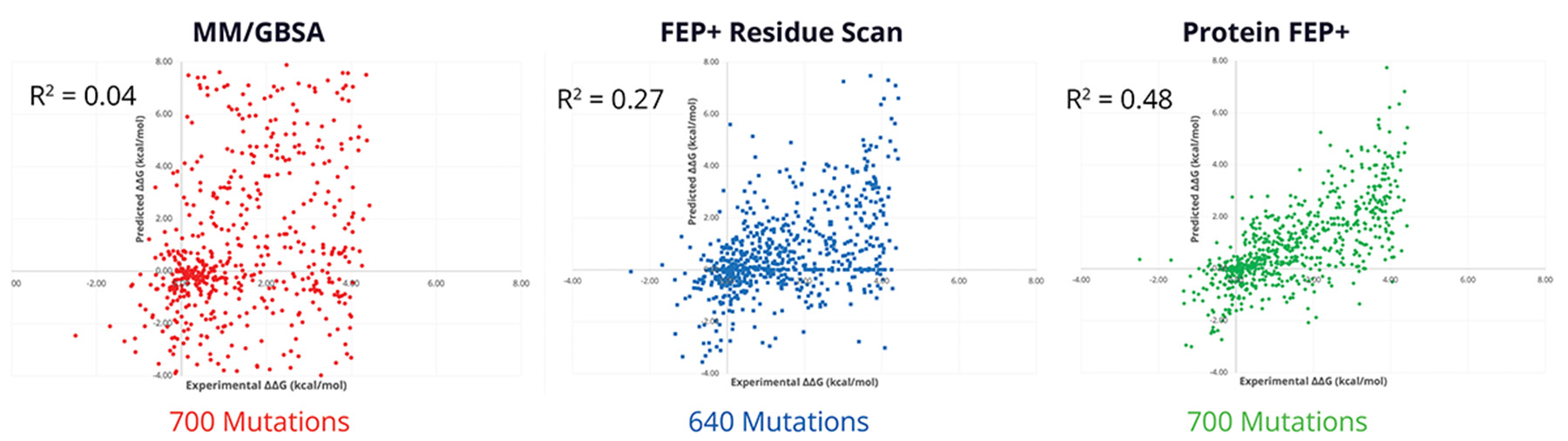
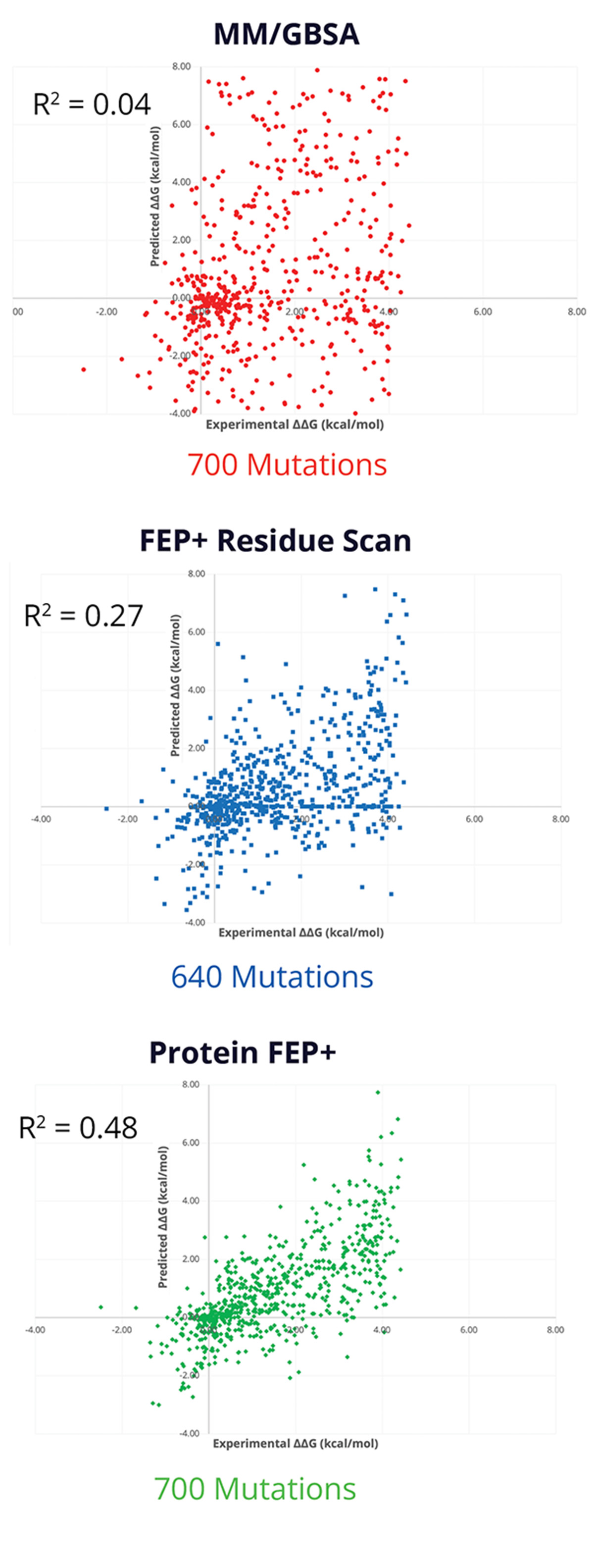
FEP+ Residue Scan offers 7X improvements in accuracy over MM/GBSA and up to 20X speedup over Protein FEP+

Correlation plots between MM/GBSA, FEP+ Residue Scan and Protein FEP+ calculations (y-axis), and relative experimental affinity measurements (x-axis), shown in kcal/mol. All calculations performed on the same system, mutations to and from proline currently excluded from FEP+ Residue Scan results. Pearson correlation coefficient (R2) shown at top left of each plot.

Broad application across protein-based therapeutics discovery

Access refined workflows across multiple biological modalities

Antibody Design

Rationally design potent, safe, and developable monoclonal antibodies

Learn More
Peptide Discovery

Design peptidic drugs using in silico structure-based methods

Learn More
Enzyme Engineering

Efficiently optimize enzymes using structure-based design methods

Learn More

Publications

What is free energy perturbation (FEP)?

If you’re new to using FEP+, get a refresher on the fundamental concepts of relative binding free energy perturbation (FEP) calculations.

Documentation & Tutorials

Get answers to common questions and learn best practices for using Schrödinger’s software.

Life Science Tutorial

Learning Path: Cyclic Peptide Modeling

A structured overview of tools and workflows for cyclic peptides in drug discovery.

Life Science Documentation

FEP+

Computational prediction of protein-ligand binding using physics-based free energy perturbation technology at an accuracy matching experimental methods.

Life Science Documentation

Learning Path: Virtual Screening

A structured overview of how to construct a virtual screening pipeline.

Life Science Tutorial

Protein pKa Prediction with Constant pH Molecular Dynamics

Determine pKa values and protonation states for protein residues.

Life Science Tutorial

Improving the Thermostability of T4 Lysozyme Using Protein FEP+ Guided Design

Increase protein thermostability by filling a buried cavity through mutation with protein FEP+.

Life Science Tutorial

Identifying impactful mutations using FEP+ residue scanning

Perform an FEP+ residue scan for identifying the impact of mutations on the stability and affinity of a protein-protein system.

Life Science Tutorial

Validating a Protein Free Energy Perturbation Model for Thermostability Predictions for Single Point Mutations

Prepare, run and analyze a protein FEP simulation to obtain thermostability predictions for single point mutations in the T4 Lysozyme.

Related Products

Learn more about the related computational technologies available to progress your research projects.

BioLuminate

Comprehensive modeling platform for biologics discovery

LiveDesign

Your complete digital molecular design lab

Prime

A powerful and innovative solution for accurate protein structure prediction

PIPER

A state-of-the-art protein-protein docking program

Desmond

High-performance molecular dynamics (MD) engine providing high scalability, throughput, and scientific accuracy

OPLS4 & OPLS5 Force Field

A modern, comprehensive force field for accurate molecular simulations

Software and services to meet your organizational needs

Software Platform

Deploy digital drug discovery workflows using a comprehensive and user-friendly platform for molecular modeling, design, and collaboration.

Research Services

Leverage Schrödinger’s computational expertise and technology at scale to advance your projects through key stages in the drug discovery process.

Support & Training

Access expert support, educational materials, and training resources designed for both novice and experienced users.

Virtual Cluster

SCHRÖDINGER VIRTUAL CLUSTER

Cloud Computing Environment

A secure, scalable environment for running simulations on the cloud

Virtual Cluster

Simplify your high-performance compute infrastructure with a turn-key cloud environment

The Schrödinger Virtual Cluster is an enabling technology that provides access to Schrödinger software in a standardized, secure, and scalable cloud computing environment. The Virtual Cluster includes pre-configured Schrödinger software, job compute orchestration, a web portal for accessing Maestro and MS Maestro software, and all maintenance and quarterly software release updates.

Strategically partnered with Google Cloud and NVIDIA, Schrödinger offers access to a near-infinite volume of processing power on demand, allowing users to run simulations that require bursts of on-demand compute power, surpassing what can be supplied by on-premise data centers.

Virtual Cluster graphic

Key Capabilities

Automatically scale your compute resources to meet your project demands

The Virtual Cluster automatically provisions compute resources based on the workload requirements, license availability, and configurable scheduling rules.

Reduce your infrastructure maintenance burden

Includes a ready-to-use cloud environment with pre-installed Schrödinger software and all routine cluster maintenance by Schrödinger Solution Architects.

Bring your own cloud or use a Schrödinger-hosted solution

Host the virtual cluster in your own cloud account (all major cloud providers are supported, including Google Cloud, AWS, and Azure) or use a Schrödinger-hosted solution.

Stay confident in your cloud security

Penetration testing is performed, security best-practices incorporated, and automated security scanning applied using industry standard tools on all Schrödinger-hosted systems.

Related Resources

Discover how Schrödinger’s technology is being used to solve real-world research challenges.

Related Products

Learn more about the related computational technologies available to progress your research projects.

MS Maestro

Complete modeling environment for your materials discovery

Desmond

High-performance molecular dynamics (MD) engine providing high scalability, throughput, and scientific accuracy

Jaguar

Quantum mechanics solution for rapid and accurate prediction of molecular structures and properties

DeepAutoQSAR

Automated, scalable solution for the training and application of predictive machine learning models

Training & Resources

Online certification courses

Level up your skill set with hands-on, online molecular modeling courses. These self-paced courses cover a range of scientific topics and include access to Schrödinger software and support.

Tutorials

Learn how to deploy the technology and best practices of Schrödinger software for your project success. Find training resources, tutorials, quick start guides, videos, and more.

MS Reactive Interface Simulator

MS Reactive Interface Simulator

Generate physically relevant electrode-electrolyte interface morphologies for batteries

MS Reactive Interface Simulator

Overview

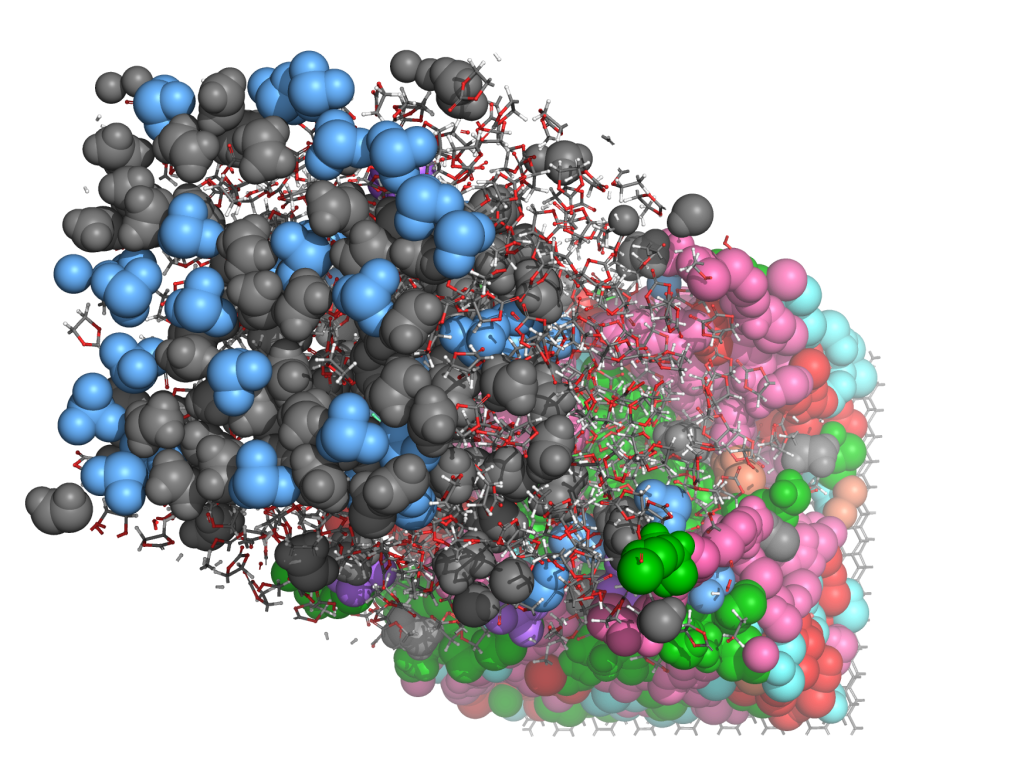
MS Reactive Interface Simulator enables rapid modeling of solid electrolyte interphase (SEI) nucleation and growth in batteries using a template-based reaction approach, and offers atomistic insights into the composition and morphology of this complex battery component. Coupled with Desmond, Schrödinger’s high-speed GPU-based molecular dynamics (MD) engine, and the OPLS force field, MS Reactive Interface Simulator facilitates efficient analysis of electrolyte chemistries by generation of realistic SEI morphologies.

Key Capabilities

Accelerate physically realistic SEI formation with GPU-accelerated MD
Execute reactions using predetermined templates
Enable exploration of multiple chemistries under varying conditions with SMARTS based reaction templates
Employ advanced analysis tools to characterize morphology and understand the properties of the SEI layer

Related Resources

Electrodes, electrolytes & interfaces: Harnessing molecular simulation and machine learning for rapid advancements in battery materials development

Taking experimentation digital: Materials innovation using atomistic simulation and machine learning at-scale

Energy Capture and Storage

Documentation & Tutorials

Get answers to common questions and learn best practices for using Schrödinger’s software.

Materials Science Documentation

MS Reactive Interface Simulator

Generate physically relevant electrode-electrolyte interface morphologies for batteries.

Related Products

Learn more about the related computational technologies available to progress your research projects.

Jaguar

Quantum mechanics solution for rapid and accurate prediction of molecular structures and properties

MS Maestro

Complete modeling environment for your materials discovery

MS Reactivity

Automated workflows for design, optimization, and unsupervised mechanism discovery in molecular chemistry

Desmond

High-performance molecular dynamics (MD) engine providing high scalability, throughput, and scientific accuracy

MS Transport

Efficient molecular dynamics (MD) simulation tool for predicting liquid viscosity, conductivity and diffusions of atoms and molecules

Broad applications across
materials science research areas
Get more from your ideas by harnessing the power of large-scale chemical exploration
and accurate in silico molecular prediction.

Polymeric Materials
Catalysis & Reactivity
Energy Capture & Storage

Publications

Browse the list of peer-reviewed publications using Schrödinger technology in related application areas.

Materials Science Publication

Data-Driven Design of Organic Semiconductors Exhibiting Low Reorganization Energy via Hierarchical Variational Autoencoders, Gaussian Mixture Regression, and Bayesian Optimization

Materials Science Publication

RedCat, an automated discovery workflow for aqueous organic electrolytes

Materials Science Publication

Band Gap and Reorganization Energy Prediction of Conducting Polymers by the Integration of Machine Learning and Density Functional Theory

Materials Science Publication

Designing polymersomes with surface-integrated nanoparticles through hierarchical phase separation

Materials Science Publication

Synthesis, optical and electrochemical properties of thiophene and thieno [3, 2-b] thiophene linked with structurally modified rhodanine based copolymers

Materials Science Publication

Stability enhancement of Amphotericin B using 3D printed biomimetic polymeric corneal patch to treat fungal infections

Materials Science Publication

Advancing efficiency in deep-blue OLEDs: Exploring a machine learning–driven multiresonance TADF molecular design

Materials Science Publication

Conformers influence on UV-absorbance of avobenzone

Materials Science Publication

Synthesis, computational studies and evaluation of benzisoxazole tethered 1,2,4-triazoles as anticancer and antimicrobial agents

Materials Science Publication

Unveiling a Novel Solvatomorphism of Anti-inflammatory Flufenamic Acid: X-ray Structure, Quantum Chemical, and In Silico Studies

Schedule a consultation on Schrödinger’s battery solutions.

Contact us today to explore how you can leverage advanced simulation and AI/ML for battery materials.

Don’t see your areas of interest above? Reach out so we can help.

Form submitted

Thank you, we’ll be in touch soon.

Training & Resources

Online certification courses

Level up your skill set with hands-on, online molecular modeling courses. These self-paced courses cover a range of scientific topics and include access to Schrödinger software and support.

Tutorials

Learn how to deploy the technology and best practices of Schrödinger software for your project success. Find training resources, tutorials, quick start guides, videos, and more.

Hit Discovery Services 

Hit Discovery Services

Hit Discovery Services

Find more diverse hits, faster

Overview

Enable your drug discovery program with Schrödinger’s unrivaled technologies and deep expertise. We’ll give your hit discovery campaigns the best chances of success by leveraging our team of experts and our most advanced technologies for ultra-large virtual screening and rigorous rescoring at scale.

Propel your discovery program with unrivaled technologies and expertise

Benefit from the full impact of Schrödinger’s hit discovery capabilities

• Our team of experts use extensively validated screening and rescoring workflows that leverage Schrödinger’s latest technologies deployed at scale
• Service includes all computing, licensing, and service hours to perform a cutting-edge hit identification campaign with no upfront licensing or hardware costs

Obtain more and higher quality hits with unique rescoring technologies

• Promising compounds are rescored with unmatched accuracy using ABFEP+ amplified by machine learning
• Accurately identify more diverse and potent hits, requiring fewer compounds to be purchased and assayed

Maximize novelty and diversity by screening billions of compounds

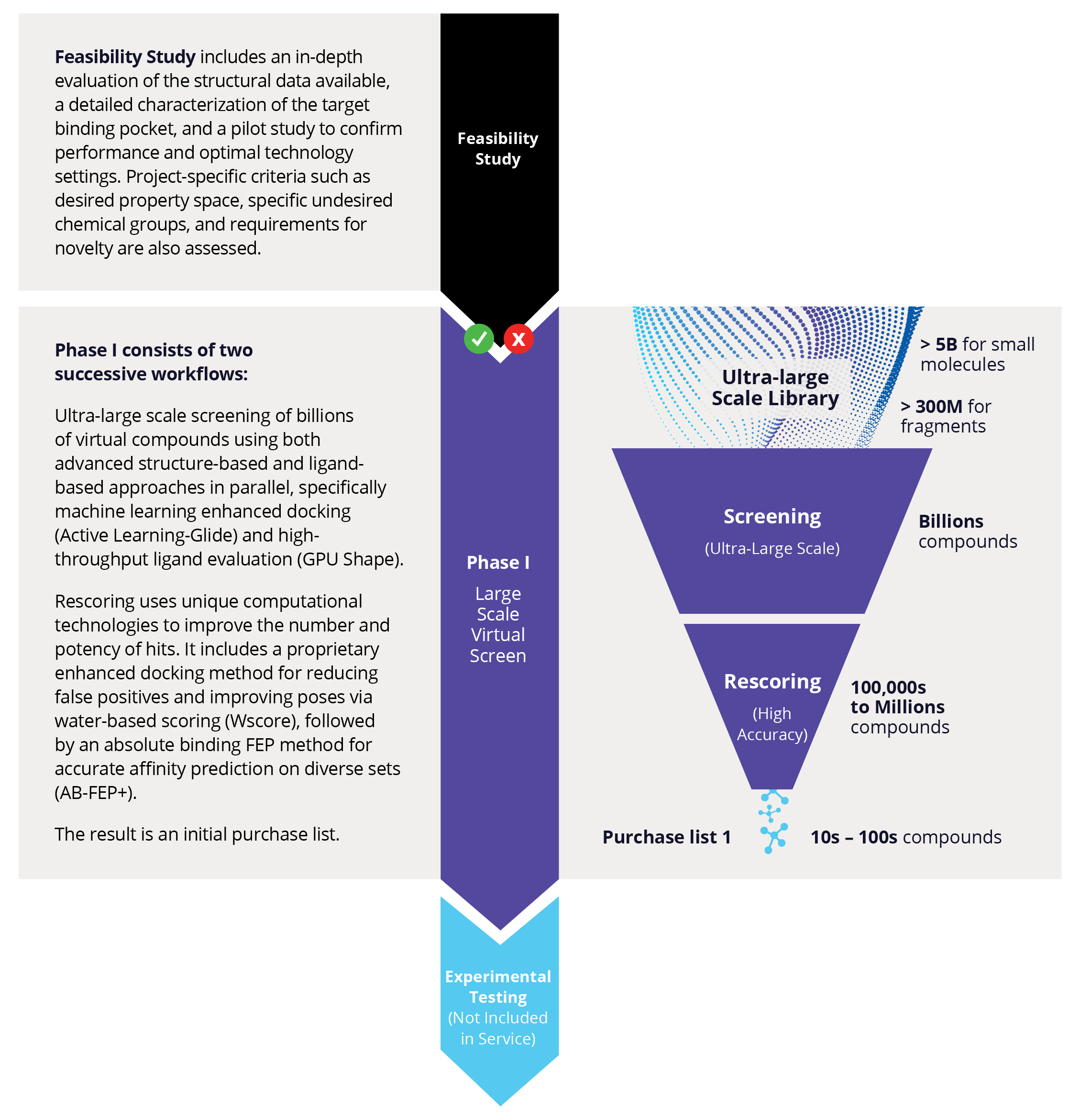
• Screen commercial libraries of >5 billion compounds (or >300M for fragments screens) using both structure- and ligand-based approaches simultaneously to maximize the number of unique hits identified
• Explore the largest commercially available libraries for rapid and reliable procurement, including Enamine REAL and WuXi LabNetwork
• Efficiently screen your proprietary or sculpted libraries to explore alternative chemical spaces

From Feasibility Study to Purchase List

Schrödinger has over 20 years of scientific experience in developing industry-leading virtual screening technologies which are used broadly in pharmaceutical companies worldwide.

Through continuous methodology development effort combined with extensive deployment in active drug discovery programs across diverse targets, our team of computational experts have optimized an advanced virtual screening workflow offered in the Hit Discovery Service.

Scientifically-validated solutions for virtual screening

  1. Efficient Exploration of Chemical Space with Docking and Deep Learning.

    Yang et al. J. Chem. Theory Comput. 2021, 17(11), 7106-7119.

  2. Enhancing Hit Discovery in Virtual Screening through Absolute Protein–Ligand Binding Free-Energy Calculations.

    Chen et al. J. Chem. Inf. Model. 2023, 63, 10, 3171–3185.

  3. Benchmarking Refined and Unrefined AlphaFold2 Structures for Hit Discovery.

    Zhang et al. J. Chem. Inf. Model. 2023, 63, 6, 1656–1667.

  4. WScore: A Flexible and Accurate Treatment of Explicit Water Molecules in Ligand–Receptor Docking.

    Murphy et al. J. Med. Chem. 2016, 59, 9, 4364–4384.

Software and services to meet your organizational needs

Software Platform

Deploy digital drug discovery workflows using a comprehensive and user-friendly platform for molecular modeling, design, and collaboration.

Modeling Services

Leverage Schrödinger’s computational expertise and technology at scale to advance your projects through key stages in the drug discovery process.

Support & Training

Access expert support, educational materials, and training resources designed for both novice and experienced users.


Structure-Based ADMET Services

Structure-Based ADMET Services

Structure-Based ADMET Services

De-risk ADMET liabilities more efficiently using structure-based design

Overview

Resolve CYP3A4, CYP2D6, hERG, and PXR hurdles early to advance your drug discovery program. We’ll help de-risk off-target liabilities by enabling FEP+ for common ADMET anti-targets, using a rigorous, structure-based approach powered by Schrödinger’s technology and expertise.

Advance your discovery program with unrivaled technologies and expertise

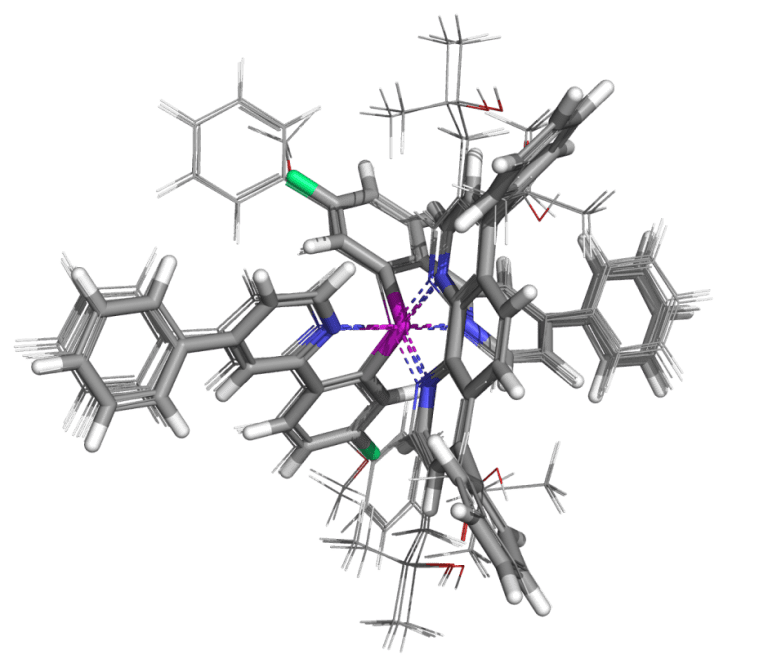
Case study: Prospective hERG modeling

Challenge

A project team within Schrödinger’s therapeutics group discovered that lead compounds showed significant hERG inhibition. The team sought a structure-based approach to allow for rational, precision de-risking of hERG inhibition without impacting other project goals.

Result

A dataset of nine project compounds, each with an experimentally measured hERG IC50, were supplied. Using retrospective agreement for these nine compounds, a model that reproduced the physics of the system was identified and used to successfully rationalize prospective designs and eliminate the hERG liability.
Reference

Enabling structure-based drug discovery utilizing predicted models (Commentary). Miller EB, et al. Cell, 2024, 187, 3, 521-525.

Enabling digital technologies to drive discovery programs

FEP+

High-performance free energy calculations for drug discovery

IFD-MD

Accurate ligand binding mode prediction for novel chemical matter, for on-targets and off-targets

Software and services to meet your organizational needs

Software Platform

Deploy digital drug discovery workflows using a comprehensive and user-friendly platform for molecular modeling, design, and collaboration.

Modeling Services

Leverage Schrödinger’s computational expertise and technology at scale to advance your projects through key stages in the drug discovery process.

Support & Training

Access expert support, educational materials, and training resources designed for both novice and experienced users.