Crystal Structure Prediction

Crystal Structure Prediction (CSP)

Crystal Structure Prediction (CSP)

De-risk your solid form selection process by identifying the most stable polymorph at room temperature
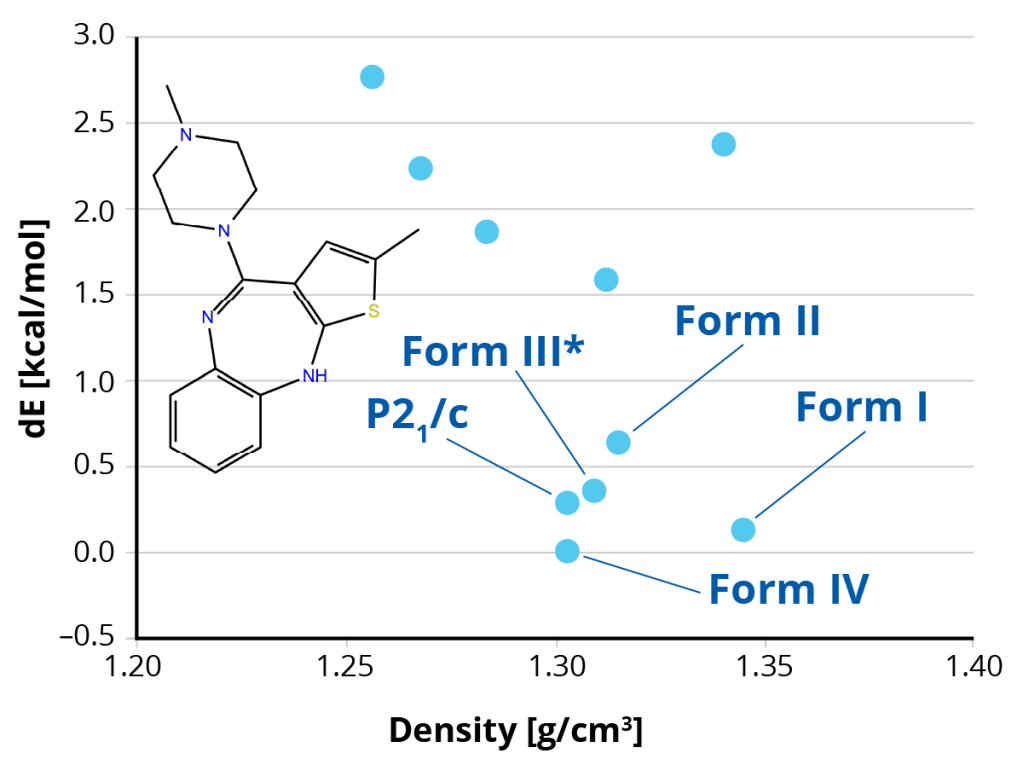
Stability ranking of crystal polymorphs

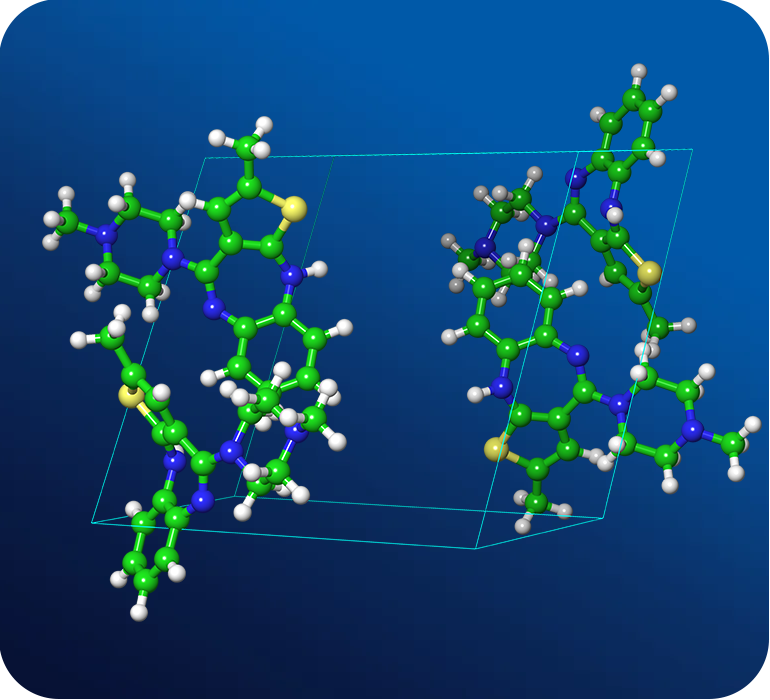
Overcome the risks associated with disappearing polymorphs in late stage drug development. Schrödinger’s proprietary crystal structure prediction (CSP) platform identifies the stable crystal polymorphs at 0K and RT for a given active pharmaceutical ingredient (API). The CSP platform can now be used to predict crystal polymorphs in the Z’=2 search space, salts and monohydrate polymorph systems.

Key Capabilities

Fast and comprehensive identification of polymorphs at room temperature and beyond

  • Novel, systematic approach allows exhaustive yet efficient sampling of crystal packings
  • High throughput workflow with quick turnaround time to support CADD and CMC teams working on lead optimization (CSP for scaffold design), polymorph screening experiments (CSP-DoE), and manufacturing processes (CSP-derisk)
  • Includes advanced workflows for the prediction of anhydrous Z’=2, monohydrate, solvate, and salt forms of the API

High accuracy validated on extensive dataset of challenging, diverse drug-like molecules

  • Retrospective validation on a set of 66 drug-like molecules with 137 experimental polymorphs and an accuracy close to 100% in predicting the most stable solid form
  • Prospective validation on a central nervous system drug molecule showed high accuracy and reliability

Crystal Structure Prediction Workflow

Schrödinger solutions for physicochemical property prediction

Optionally predict key properties of an API to support selection of a stable solid form.

Crystalline solubility of polymorphs using free energy methods with FEP+
Learn more
ssNMR chemical shifts to support crystallization experiments with Quantum ESPRESSO
Learn more
Crystal habits (morphology) to support downstream processing with MS Morph
Learn more
Mechanical properties (Young’s and shear modulus) to complement direct compaction and milling experiments with MD engine Desmond

Learn more

Featured Service

Crystal Structure Prediction Services

Work with our team of computational experts to de-risk your solid form selection process. Starting from a 2D structure of the API, Schrödinger’s team will deliver to you the thermodynamic stability ranking of crystal polymorphs.

Publications

Browse the list of peer-reviewed publications using Schrödinger technology in related application areas.

A robust crystal structure prediction method to support small molecule drug development with large scale validation and blind study

Zhou D, et al. Nature Communications, 2025, 16, 2210

Free energy perturbation approach for accurate crystalline aqueous solubility predictions

Hong RS, et al. J. Med. Chem. 2023, 66, 23, 15883-15893

Novel physics-based ensemble modeling approach that utilizes 3D molecular conformation and packing to access aqueous thermodynamic solubility: A case study of orally available bromodomain and extraterminal domain inhibitor lead optimization series

Hong RS, et al. J. Chem. Inf. Model. 2021, 61, 3, 1412-1426

Related Products

Learn more about the related computational technologies available to progress your research projects.

MS Maestro

Complete modeling environment for your materials discovery

FEP+

High-performance free energy calculations for drug discovery

Desmond

High-performance molecular dynamics (MD) engine providing high scalability, throughput, and scientific accuracy

Quantum ESPRESSO Interface

Integrated graphical user interface for nanoscale quantum mechanical simulations

MS Morph

Efficient modeling tool for organic crystal habit prediction

OPLS4

Modern, comprehensive force field for accurate molecular simulations

Software and services to meet your organizational needs

Software Platform

Deploy digital drug discovery workflows using a comprehensive and user-friendly platform for molecular modeling, design, and collaboration.

Modeling Services

Leverage Schrödinger’s computational expertise and technology at scale to advance your projects through key stages in the drug discovery process.

Support & Training

Access expert support, educational materials, and training resources designed for both novice and experienced users.

Target Enablement Services

Target Enablement Services

Target Enablement Services

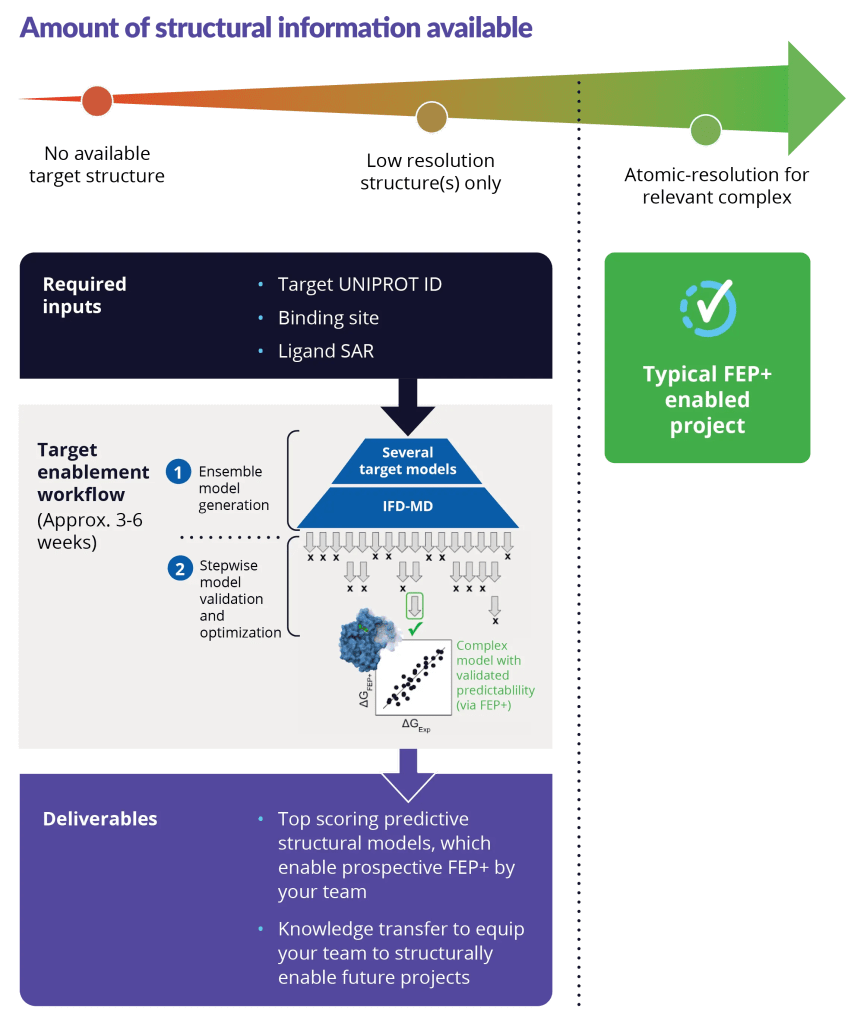
Unlock your protein target and ligand series of interest for FEP+

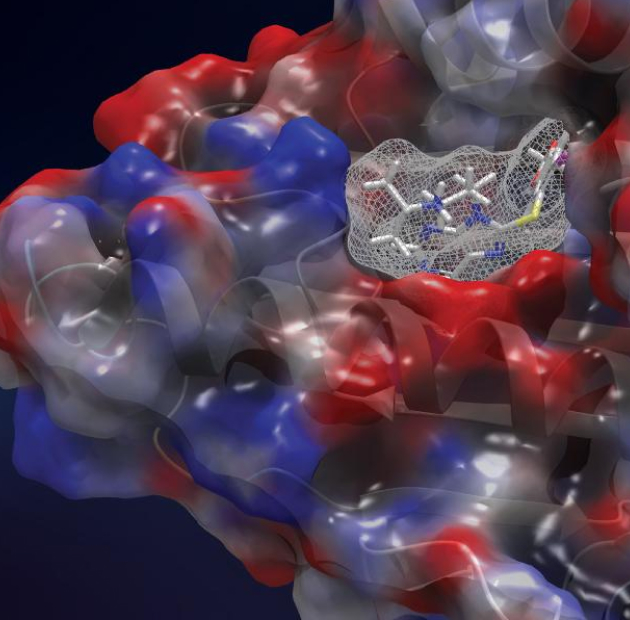
Free up your time and resources — let us prepare your protein-ligand system of interest for structure-based design. Whether you are starting from experimental X-ray structures, cryo-EM structures, AlphaFold predicted structures, or homology models, Schrödinger scientists will leverage our unique technologies and expertise to optimize and validate protein-ligand complexes for highly predictive structure-based design.

Best suited for companies and teams:

• Who want to accelerate hit-to-lead and lead optimization to achieve program milestones
• Who want to minimize time spent on preparing and validating structural models
• Who want to leverage Schrödinger’s advanced physics-based methods and expertise

Best suited for projects:

• Where SAR data is available and location of the binding site is known, but structural data of the target is incomplete (cryo-EM, low resolution X-ray) or missing (homology model, AlphaFold model)
• Where the chemistry is evolving away from the original project hits or lead series and structural data is becoming suboptimal

Propel your discovery program with unrivaled technologies and expertise

Create design-ready structures for your unique on-target or off-target

Schrödinger has successfully enabled use of FEP+ for a wide range of target classes, including GPCR, kinases, and more

Benefit from the full impact of Schrödinger technologies at scale

Service includes all computing, licensing, and service hours to perform comprehensive protein target assessment and build accurate structural models

Complement your unique target knowledge with our computational expertise

Schrödinger brings our years of expertise in enabling challenging targets for structure-based drug design with FEP+

Case Study I

Challenge:

Despite a ~3.2Å cryo-EM structure of the target in complex with a ligand from the series of interest, known SAR could not be explained and the program was, effectively, not structurally enabled.

Result:

Our ensemble trial-and-error approach allowed us to identify an alternate ligand binding mode, as well as small but important protein adjustments necessary for binding. Although the binding mode was flipped compared to the model proposed by the structural biology team, it also fit the experimental density and, importantly, was predictive of all known SAR available.

Case Study II

Challenge:

A series of small molecule inhibitors against a flexible protein target was reaching its limits due to the lack of structural insights to guide the design, as well as off-target activity on a homologue.

Result:

Schrödinger enabled accurate FEP+ predictions for the series of interest both on the target and the anti-target. Importantly, it revealed specific loop and side-chain motions that were necessary for the ligands to bind, and remarkably, the results were counterintuitive as they revealed different binding modes in the two proteins despite their high similarity.

Enable FEP+ starting from all levels of structural information

Whether you are starting with template-based homology and AlphaFold models or if you have incomplete cryo-EM or experimental X-ray structures, Schrödinger’s team has the scientific expertise and computational resources needed to structurally enable your unique project.

Scientifically-validated solutions for structure-based drug discovery

  • Publication
Enabling structure-based drug discovery utilizing predicted models

Miller, E. B. et al. Cell. 2024, 187, 3, 521-525

  • Publication
Benchmarking refined and unrefined AlphaFold2 structures for hit discovery.

Zhang Y, et al. J. Chem. Inf. Model. 2023, 63, 6, 1656–1667.

  • Publication
Induced-fit docking enables accurate free energy perturbation calculations in homology models.

Xu T, et al. J. Chem. Theory Comput. 2022, 18, 9, 5710–5724.

Enabling digital technologies to drive discovery programs

FEP+

High-performance free energy calculations for drug discovery

IFD-MD

Accurate ligand binding mode prediction for novel chemical matter, for on-targets and off-targets

Schedule a call to discuss Schrödinger’s Target Enablement Services

Partner with Schrödinger’s experts to ensure your project’s success. 

Schedule a call to learn how our experts can help you access in silico solutions – let us help you prepare your protein target of interest for prospective FEP+ free energy calculations.

Form submitted

Thank you, we’ll be in touch soon.

Software and services to meet your organizational needs

Software Platform

Deploy digital drug discovery workflows using a comprehensive and user-friendly platform for molecular modeling, design, and collaboration.

Modeling Services

Leverage Schrödinger’s computational expertise and technology at scale to advance your projects through key stages in the drug discovery process.

Support & Training

Access expert support, educational materials, and training resources designed for both novice and experienced users.

MS Microkinetics

MS Microkinetics

Efficient tool for surface reaction kinetics

MS Microkinetics

Overview

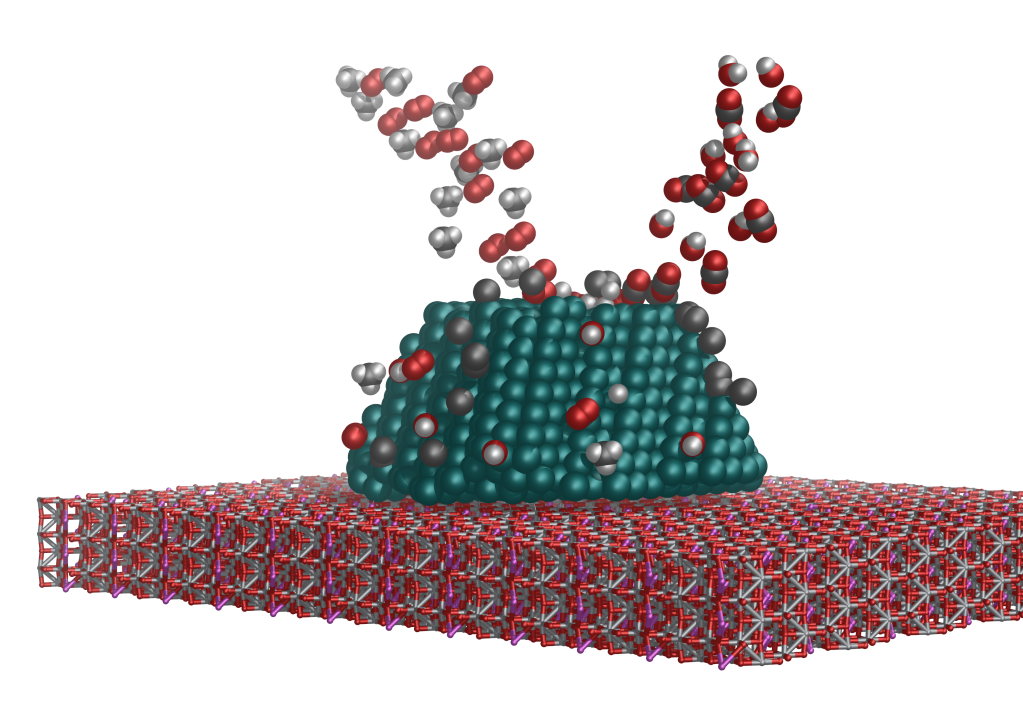
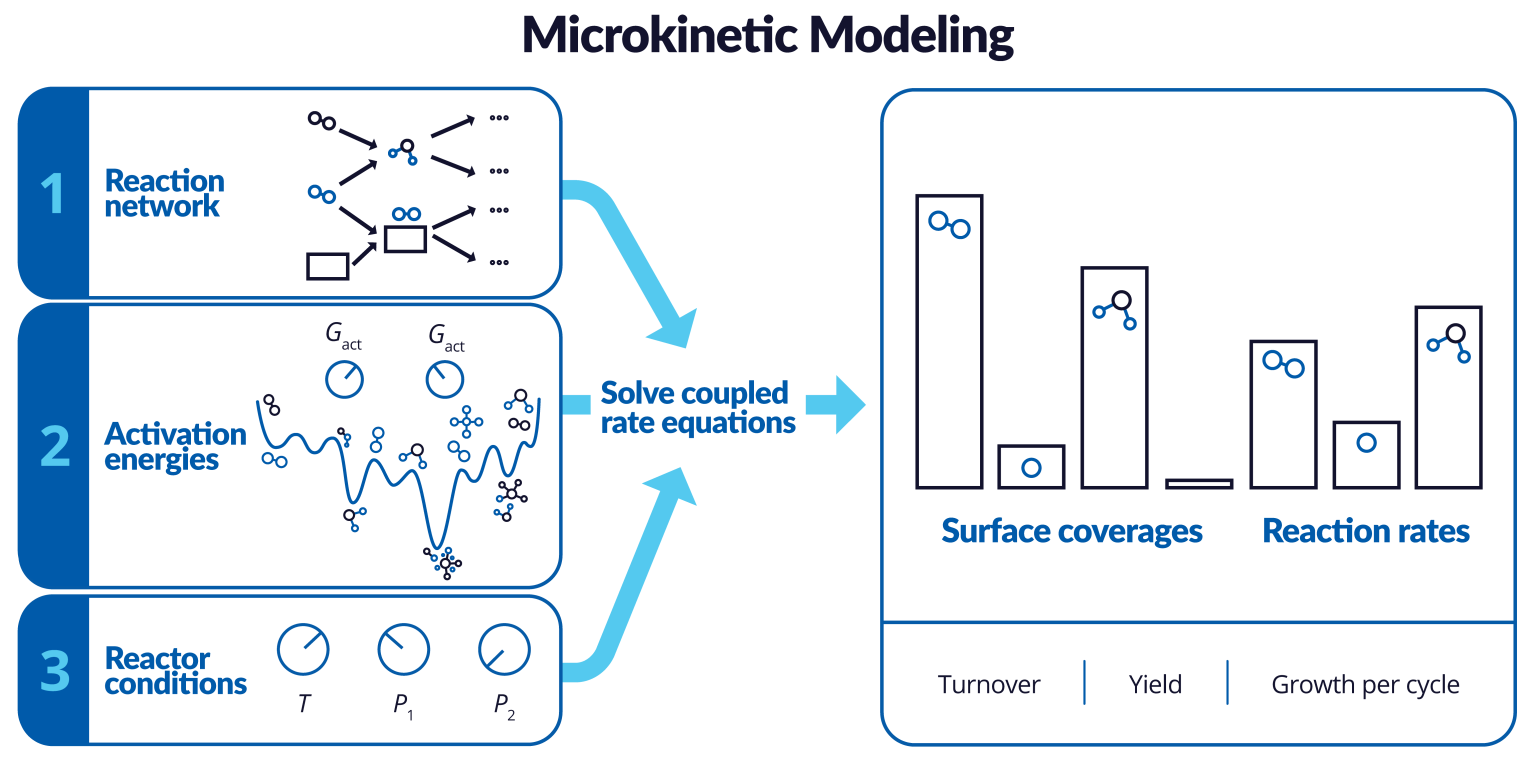
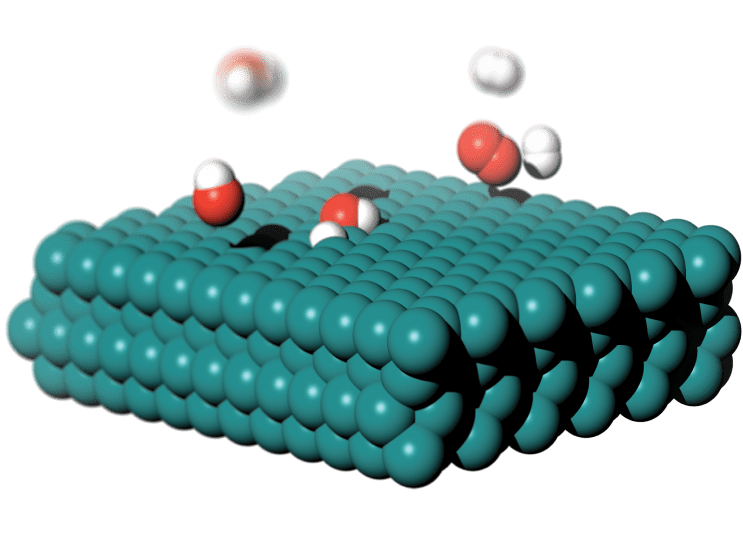
MS Microkinetics is an effective tool for calculating the overall kinetics of a network of surface reactions, which can be used to optimize reaction conditions and to identify reactivity bottlenecks.

Key Capabilities

Given the reaction mechanism (or multiple mechanisms) and activation free energies, MS Microkinetics can calculate:

Reaction rates for the elementary reaction steps
Reaction orders
Degree of rate control
Time-dependent and steady state coverages of the reactants, products, and intermediates
Turnover frequency in the case of catalytic cycles
Selectivity analysis
Growth rate or etch rate in the case of deposition or etch processes

Efficient tools and solutions to predict activation energies

Quantum ESPRESSO GUI

Integrated graphical user interface for nanoscale quantum mechanical simulations

Learn more
MS Reactivity

Automatic workflows for accurate prediction of reactivity and catalysis

Learn more
AutoTS

Automatic workflow for locating transition states for elementary reactions

Learn more

Accelerate the design of high-performance heterogeneous catalysts

Efficient computational solutions leveraging atomic-scale simulation, machine learning, and enterprise informatics for catalytic reactions using solid-state catalysts.

Related Products

Learn more about the related computational technologies available to progress your research projects.

Quantum ESPRESSO Interface

Integrated graphical user interface for nanoscale quantum mechanical simulations

Jaguar

Quantum mechanics solution for rapid and accurate prediction of molecular structures and properties

MS Maestro

Complete modeling environment for your materials discovery

MS Reactivity

Automated workflows for design, optimization, and unsupervised mechanism discovery in molecular chemistry

Learn more about our solutions

Semiconductor
Catalysis & Reactivity
Energy Capture & Storage
Metals, Alloys & Ceramics

Documentation & Tutorials

Get answers to common questions and learn best practices for using Schrödinger’s software.

Materials Science Documentation

MS Microkinetics

An efficient tool for surface reaction kinetics.

Materials Science Documentation

Materials Science Panel Explorer

Quickly learn which Schrödinger tools are the best fit for your research.

Training & Resources

Online certification courses

Level up your skill set with hands-on, online molecular modeling courses. These self-paced courses cover a range of scientific topics and include access to Schrödinger software and support.

Tutorials

Learn how to deploy the technology and best practices of Schrödinger software for your project success. Find training resources, tutorials, quick start guides, videos, and more.

PyMOL

PyMOL 3

PyMOL 3

A modern advance in molecular visualization and animation

Industry leading software for 3D molecular visualization

Hundreds of thousands of scientists worldwide choose PyMOL to view, share, and analyze their molecular data.

In addition to being lightweight and fast, PyMOL creates images of peerless visualization quality, while offering the flexibility of Python-based development and scalability.

bg-circle

Bring your biochemistry to life

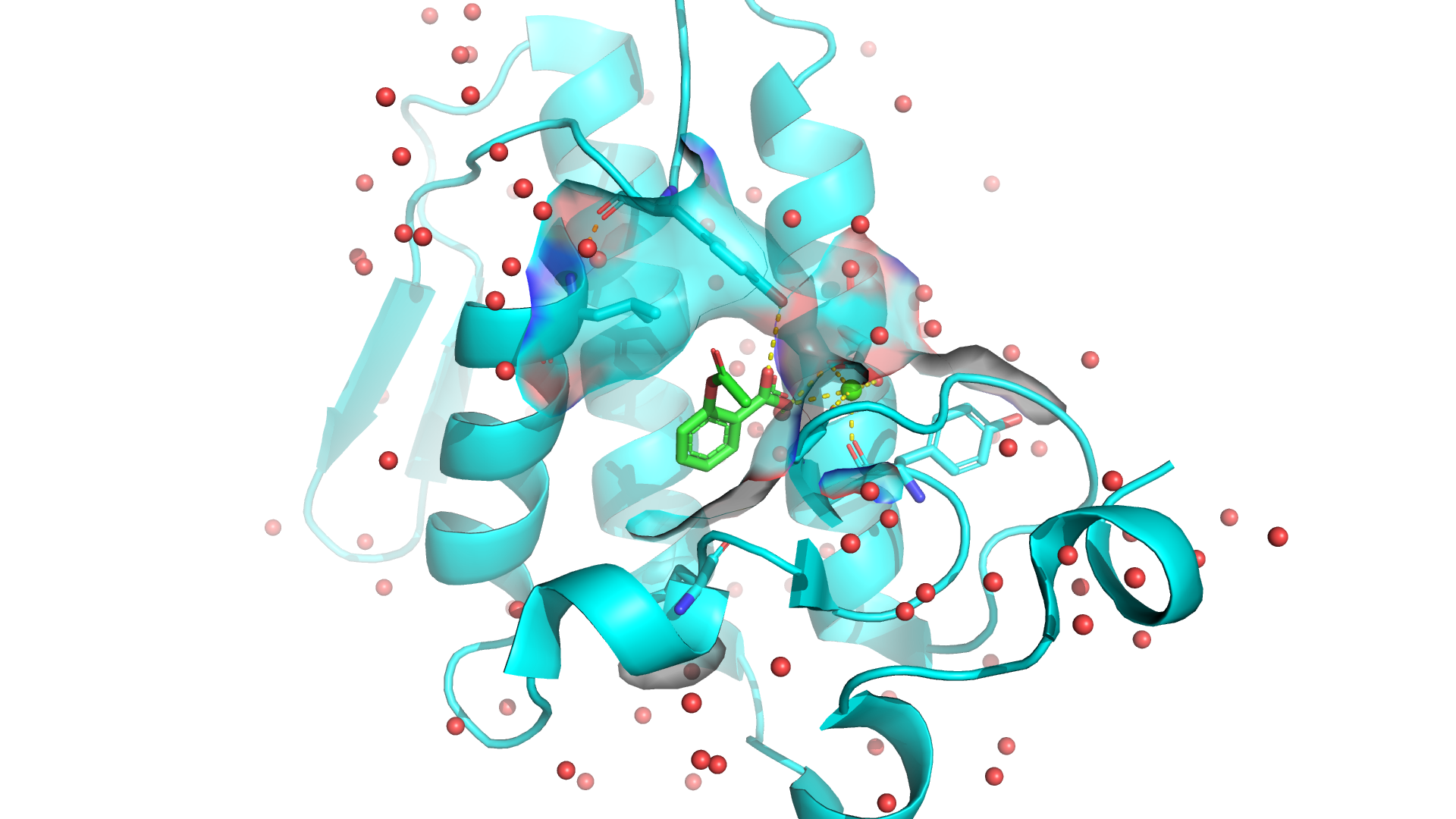
Produce publication quality images

  • Show important interactions, helpful representations, and key labels for any areas of interest
  • Produce stunning ray-traced images that add depth and shadowing to any structure
  • Create consistent figures that are easy to reproduce and modify

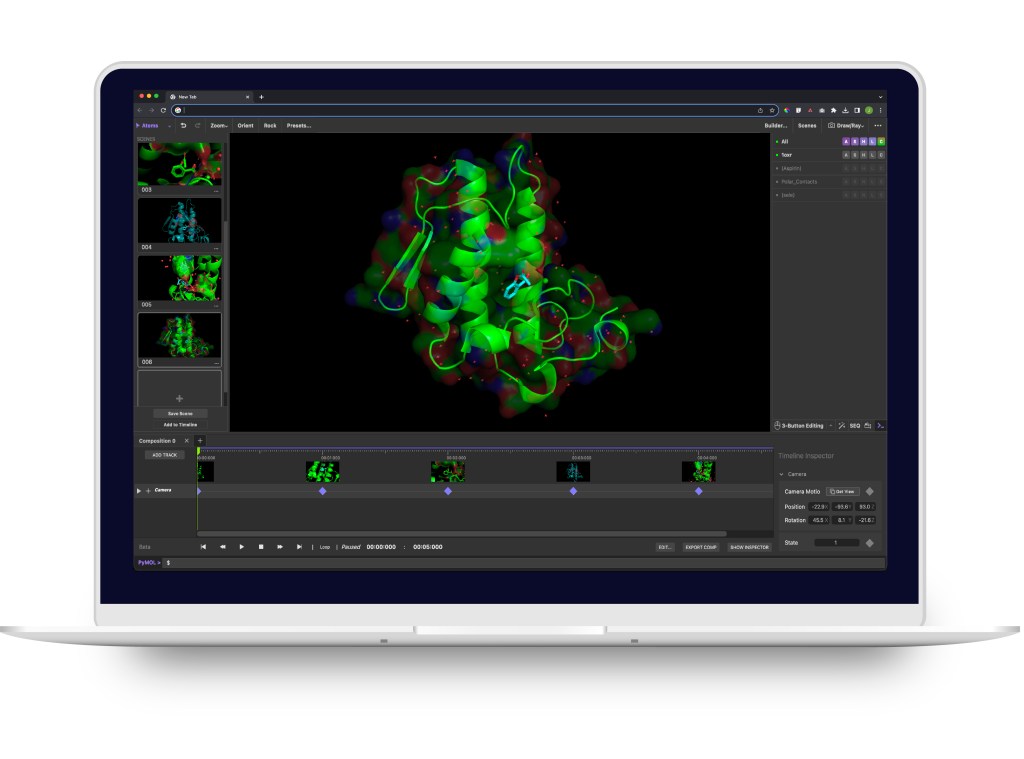
Simplify editing with scenes

  • Store snapshots of the current workspace to easily recall later
  • Use the thumbnails to easily distinguish between scenes
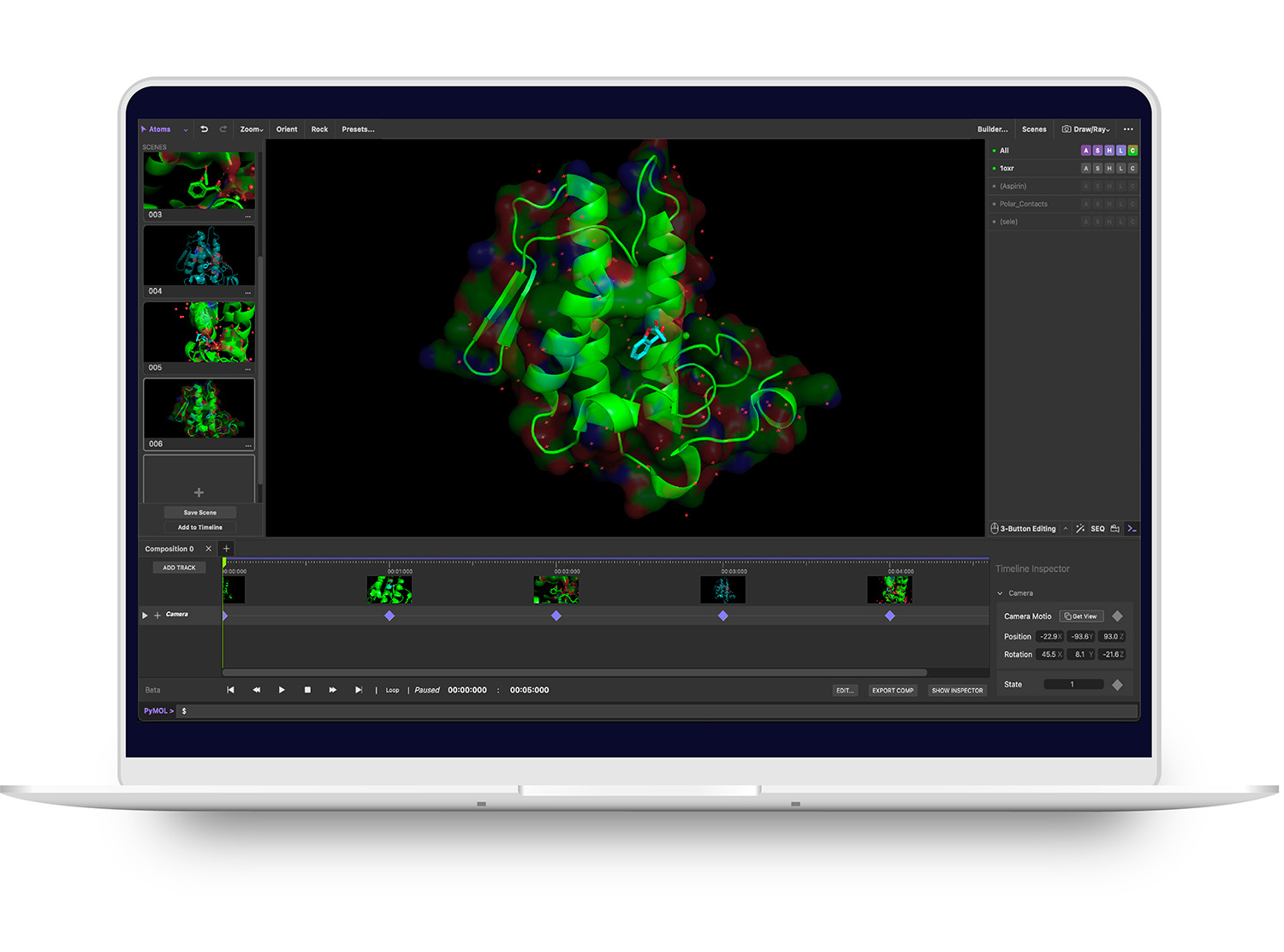
  • Add scenes to the timeline to create movies in only a few clicks

Create insightful movies with ease

  • Create movies that look stunning and convey the complexity of 3D systems
  • Use the new Timeline to create basic movies in a few clicks or devel deeper to unlock its full potential
 

What’s new in the PyMOL 3 interface?

Top Toolbar
The new top toolbar provides easy access to some common actions such as changing the selection mode, reorienting the camera, and launching various panels.
Scenes Panel
The new scenes panel allows the user to quickly store a snapshot of the workspace. These scenes can be easily recalled and now feature convenient thumbnails that can be recognized at a glance.
Contents Panel
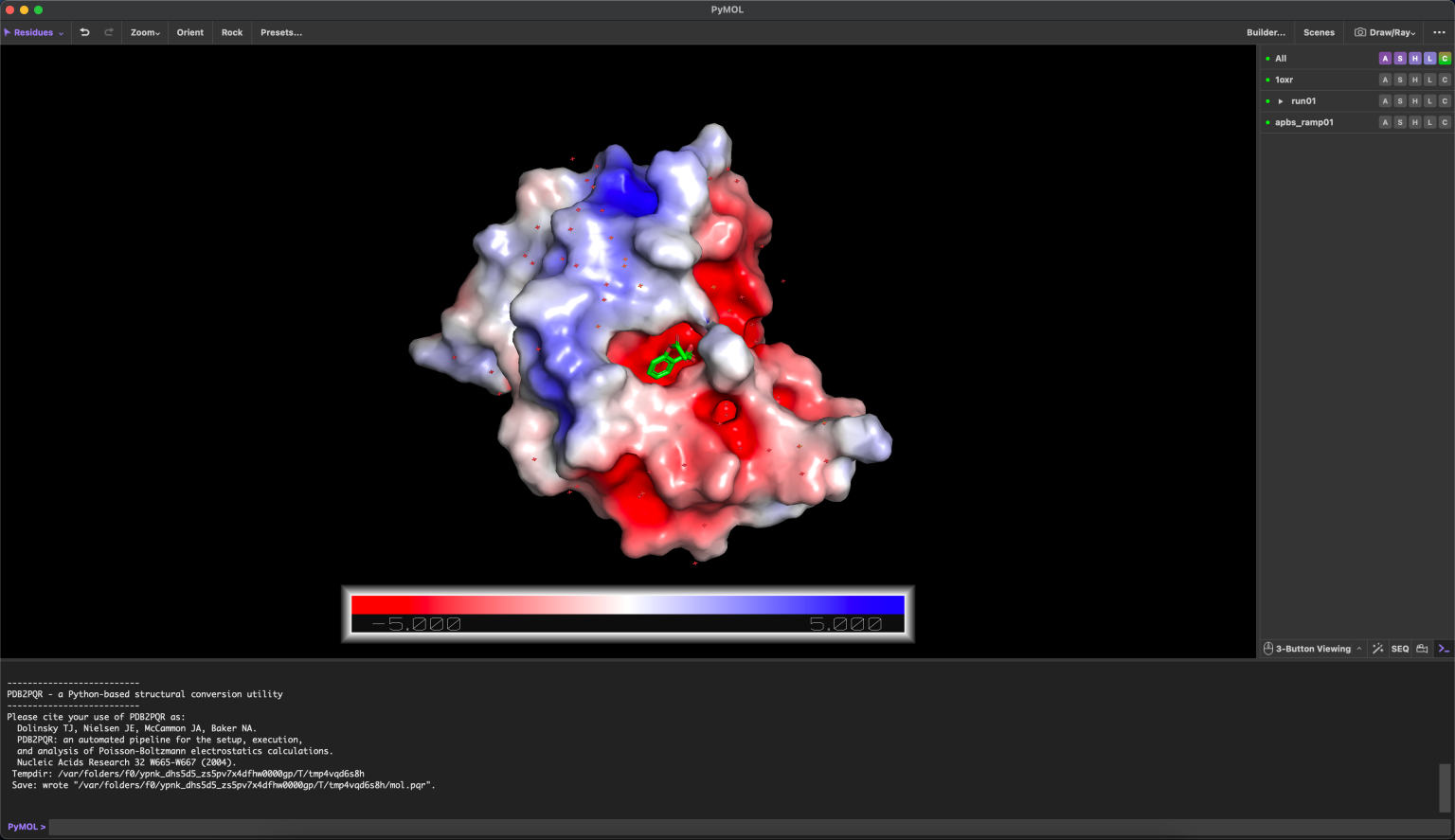
The redesigned contents panel displays all objects and selections that are currently loaded into PyMOL. The ASHLC buttons allow the user to perform various actions including showing/hiding representations, applying specific colors, finding interactions, and much more.
Timeline
The new timeline line is used to interpolate between values, show changes over time, and create insightful movies that breathe life into otherwise static systems. Simple movies can be created by adding scenes to the main camera track.

Communicate your science through images and videos

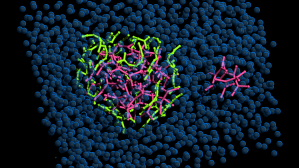
Micelle formation

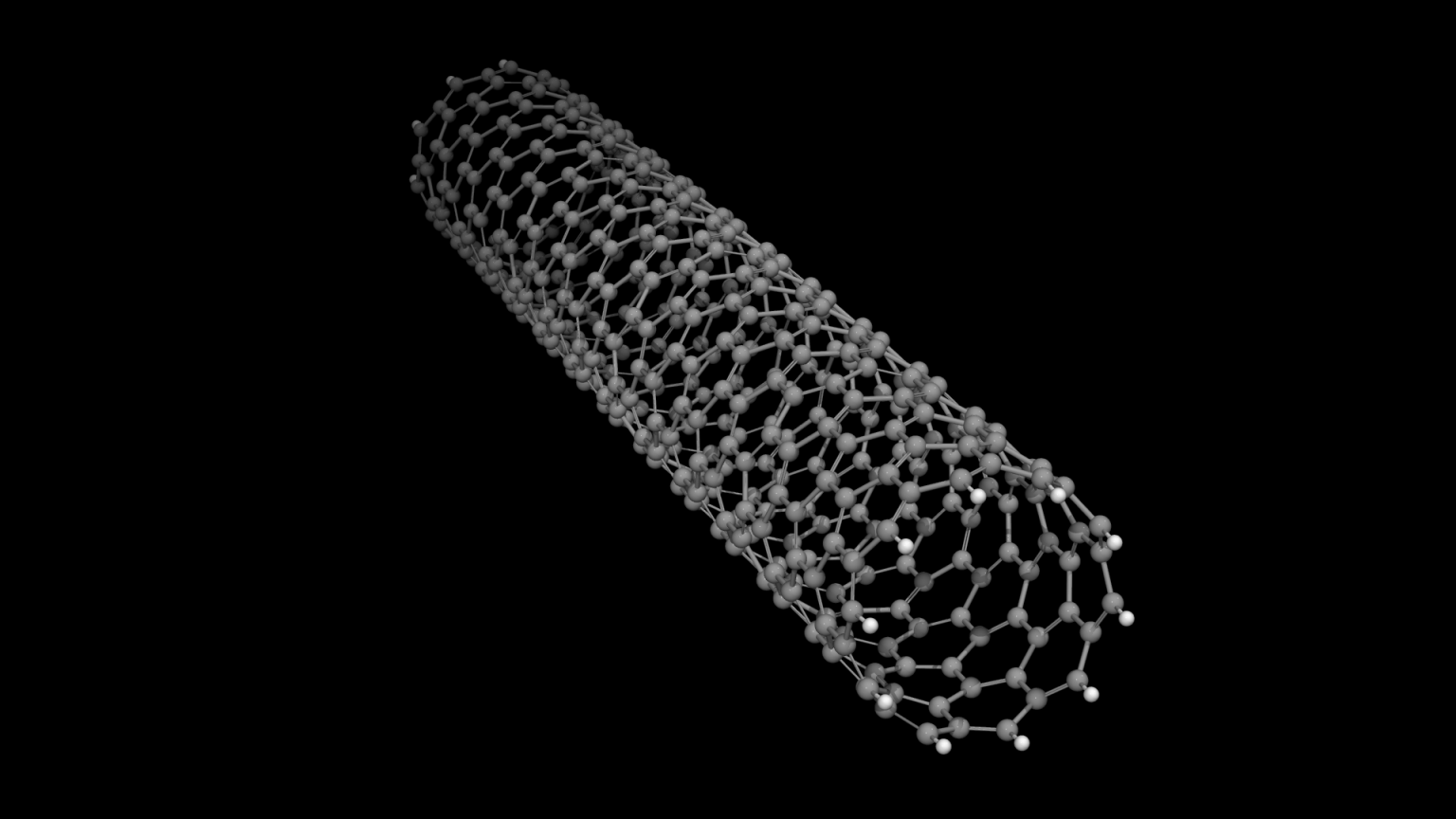
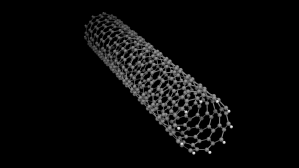
Carbon nannotube

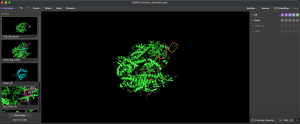
Cas9 inhibition in Scenes panel

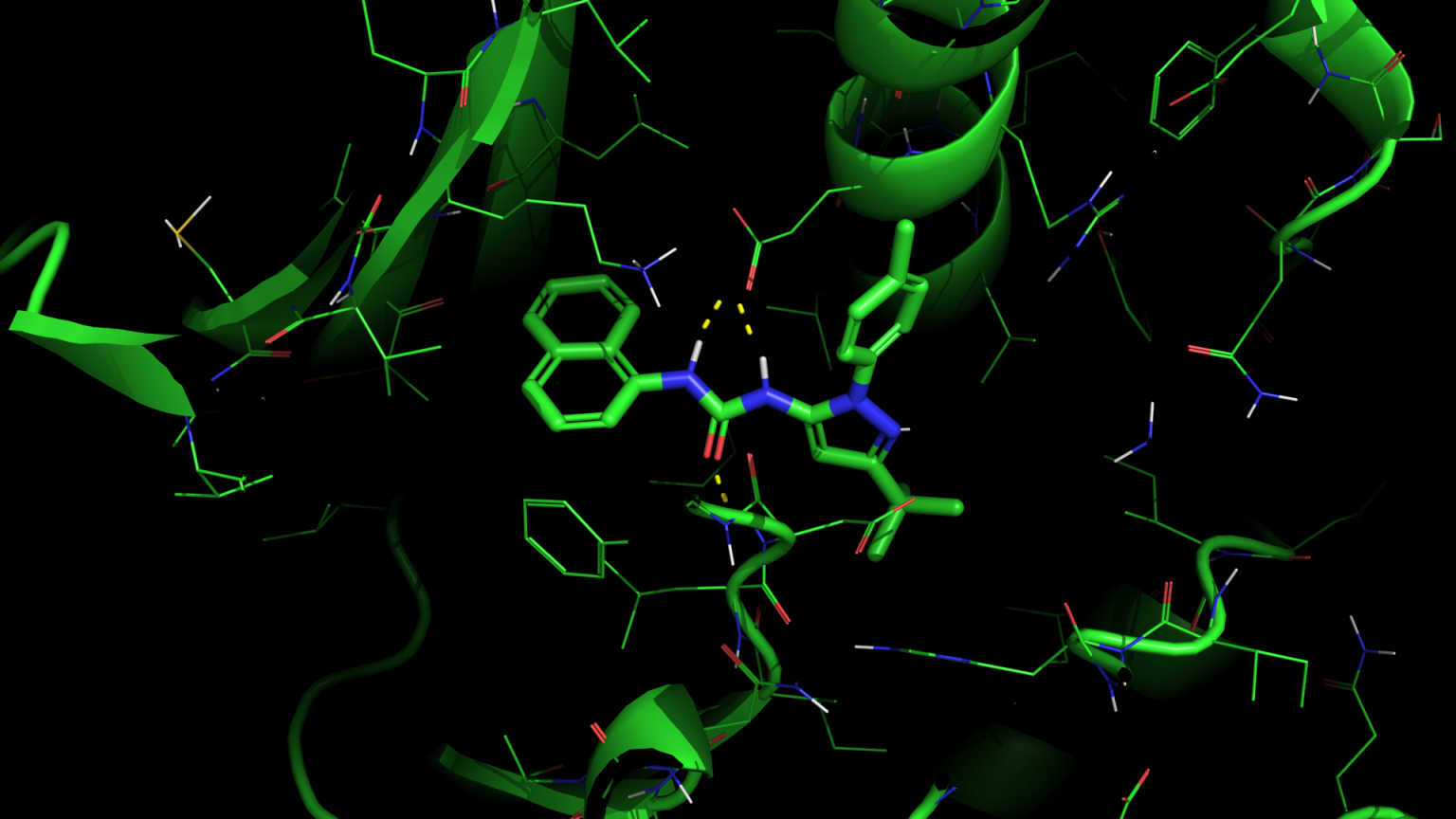
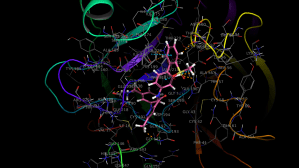
Docking pose

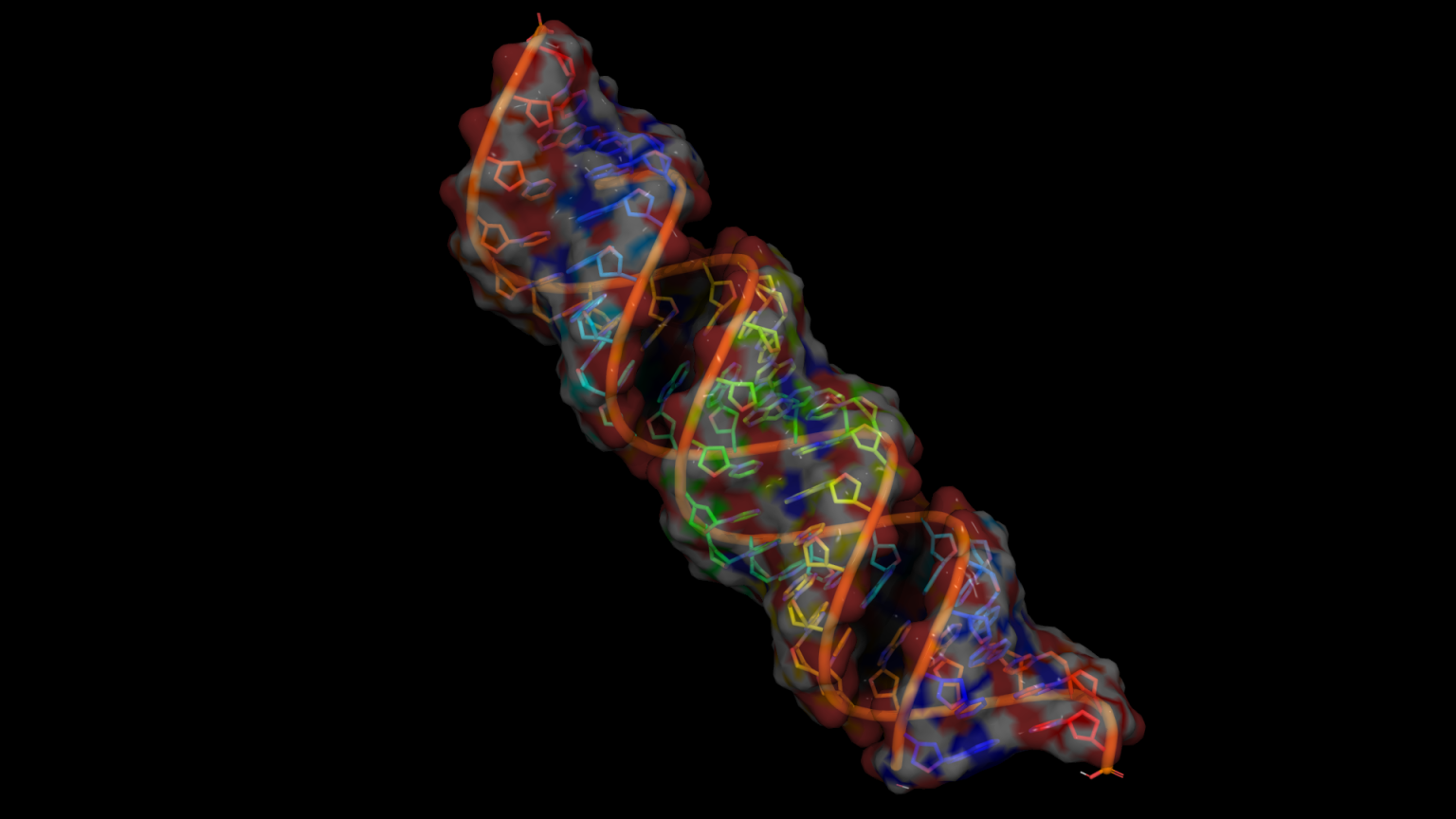
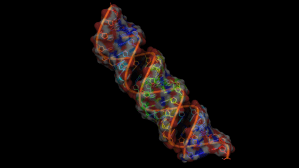
DNA with transparent surface

Creating a simple movie in PyMOL 3

p38 binding

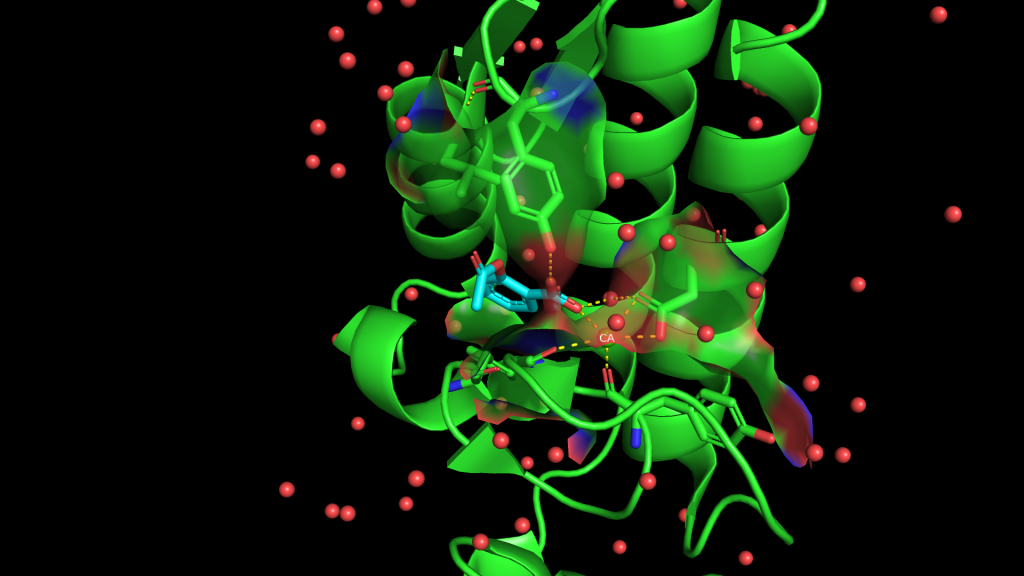
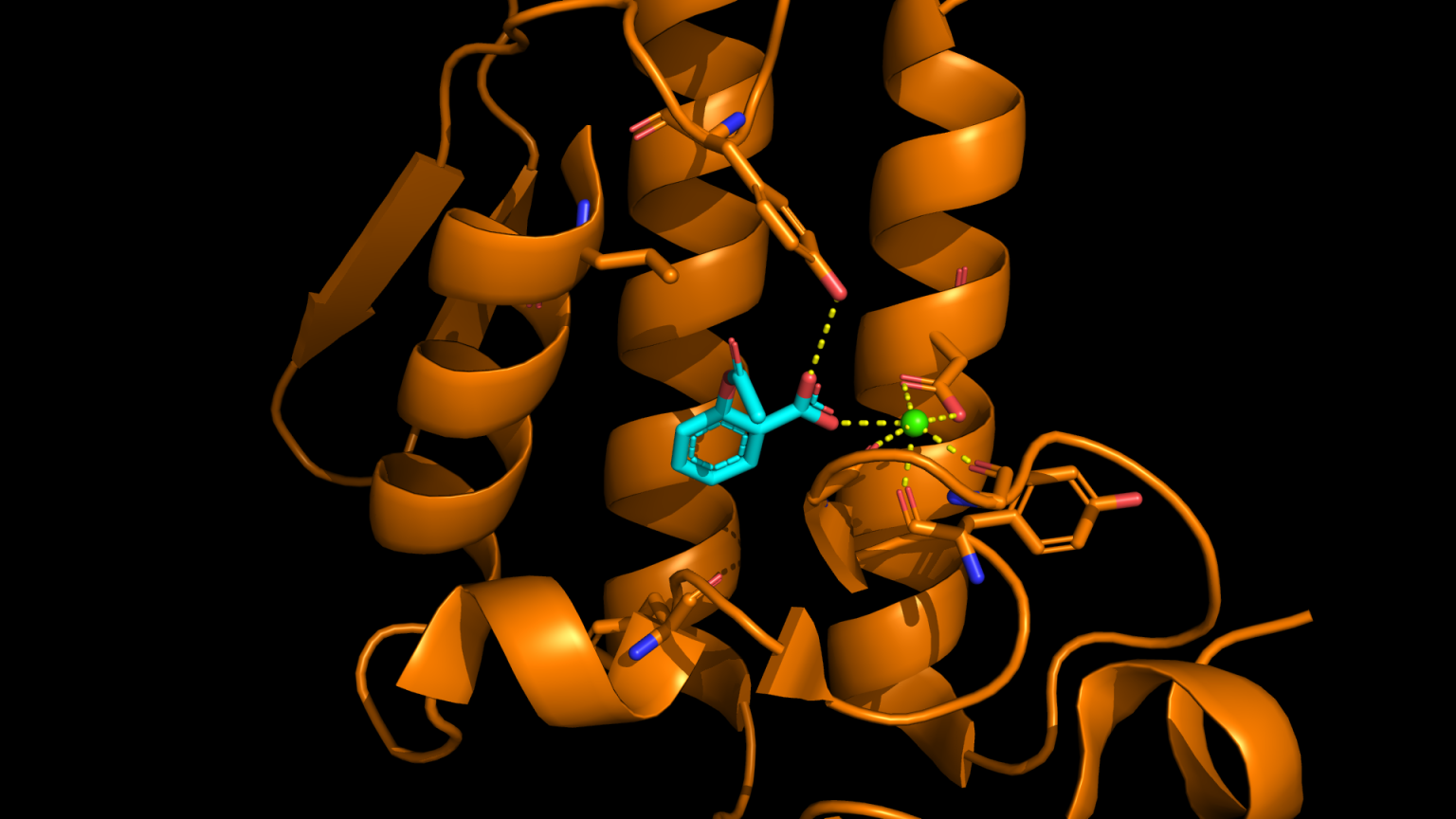
Aspirin binding site

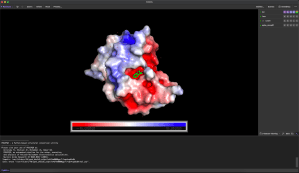
APBS electrostatics GUI

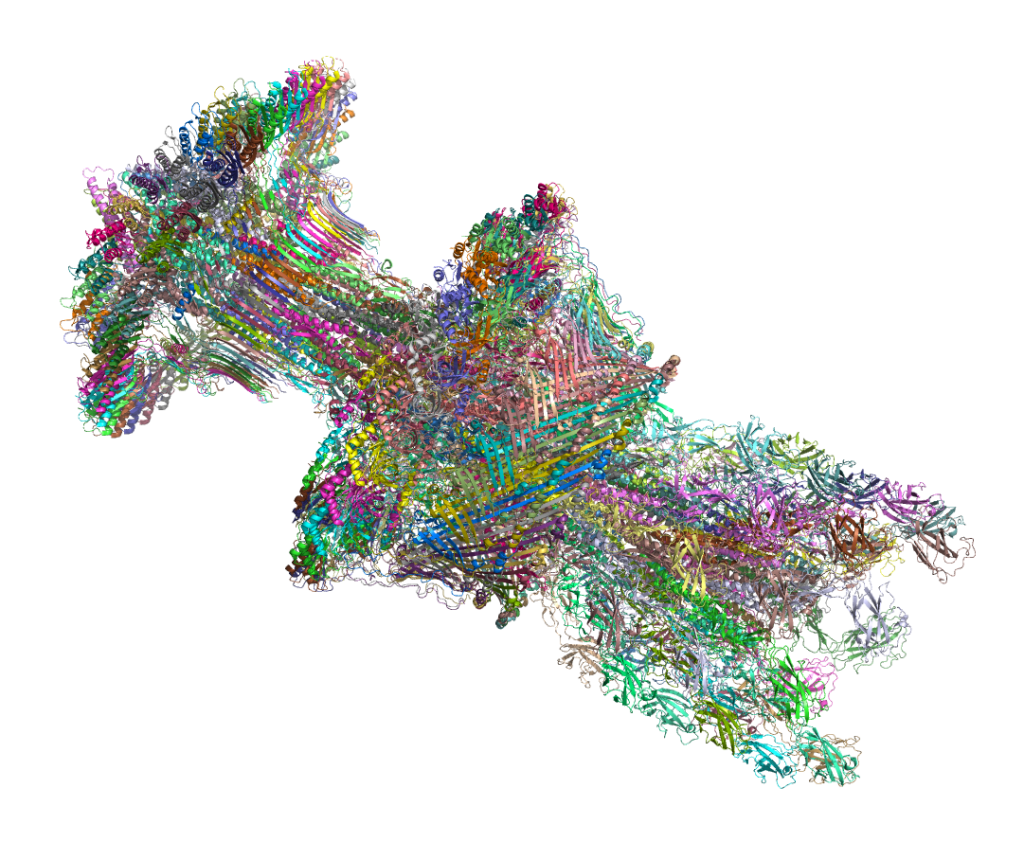
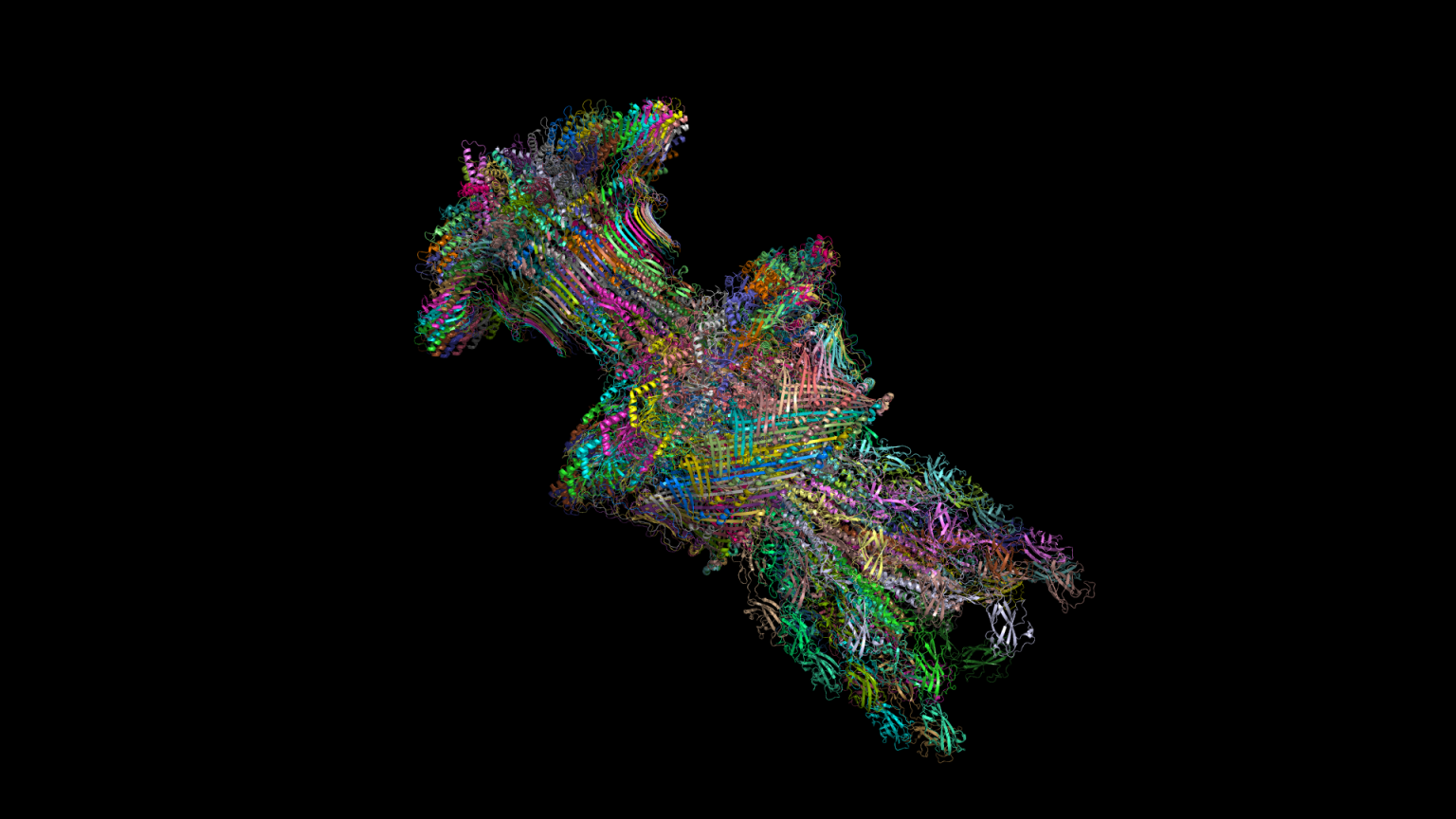
Flagellar motor-hook complex from Salmonella

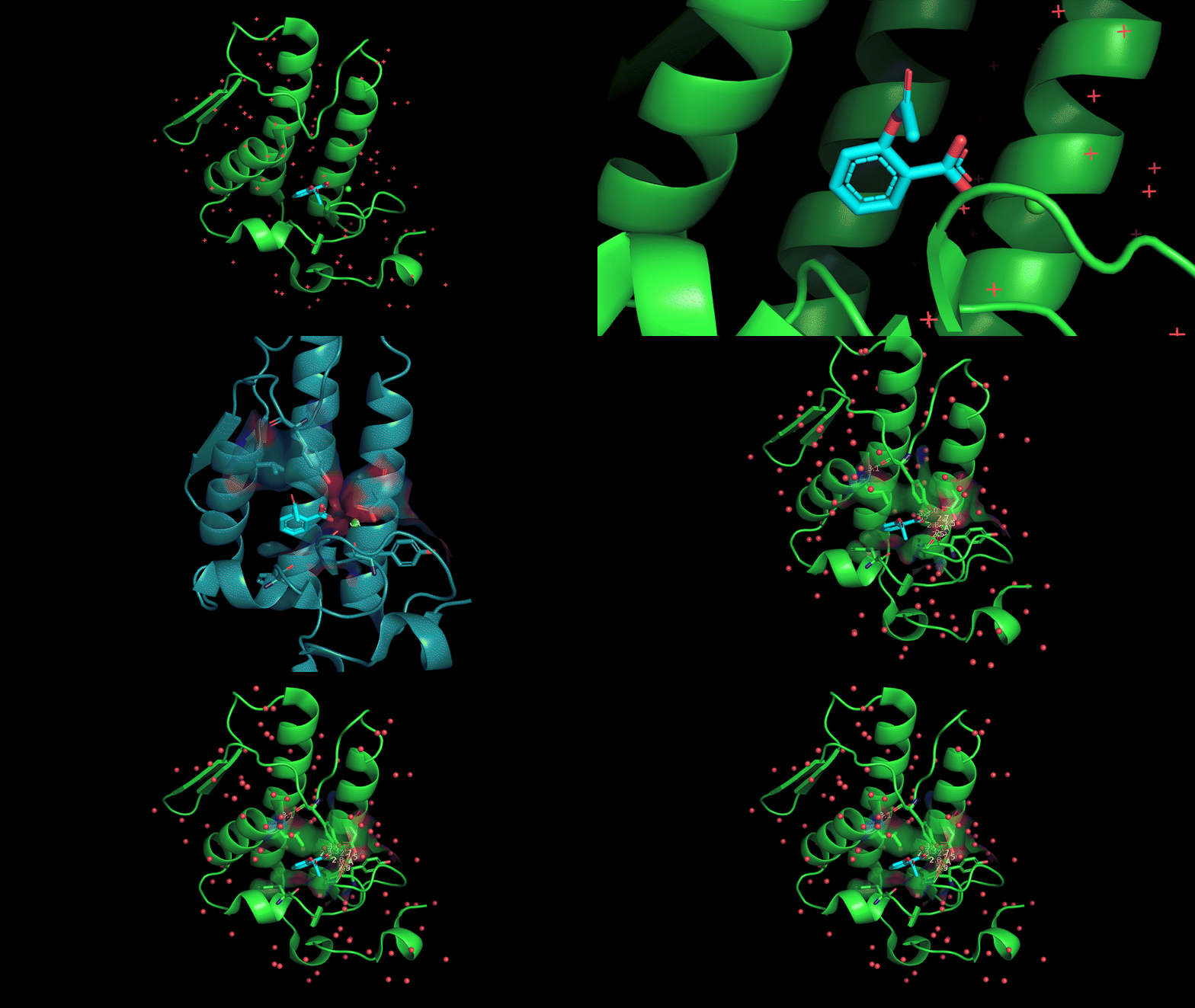
Aspirin animated

Bring your biochemistry to life

Documentation & Tutorials

Get answers to common questions and learn best practices for using Schrödinger’s software.

Life Science

PyMOL

High quality visual representations of molecular structures for visualizing, analyzing, exploring and understanding three dimensional structures of proteins, nucleic acids and other molecules, allowing researchers to analyze and interpret complex biological data.

Training & Resources

Online certification courses

Learn how to unlock the power of movie making in PyMOL with our Visualizing Science with PyMOL 3 Online Certification Course.

PyMOL Wiki

Community-run support site that provides detailed pages on various features and commands. Additional resources and examples can be found in the “Quick Links” section.

QSite

QSite

A high-performance QM/MM program

QSite

Overview

QSite is a multi-scale simulation tool that utilizes the QM/MM method, which combines the principles of quantum mechanics and molecular mechanics. It is designed to accurately predict the molecular configurations, energetics, and the electronic structures of a reactive system through quantum chemical treatment of atoms, providing crucial insights into reactive chemistry essential for understanding chemical transformation in the presence of intermolecular interactions. QSite is equally applicable for describing non-reacting chemical systems.

Key Capabilities

High performance

Outperforms other QM/MM programs because it takes advantage of Jaguar, long recognized as the industry leader in QM calculations.

Advanced technology

Provides an innovative approach to the QM/MM interface specifically addressing protein systems and interactions between QM and MM regions.

Transition metal convergence

Achieves a high degree of accuracy in metalloproteins thanks to Jaguar’s advanced capabilities; it reliably and efficiently converges to the correct ground state of transition metal containing systems.

Wavefunction choices

Offers different levels of theory to evaluate the QM region: Hartree Fock, DFT, and local MP2. This allows the user to choose the best balance between computational cost and accuracy.

Advanced calculation setup and analysis

Automatically applies special interface parameters, making it simple to set up calculations. Computed results, such as molecular orbitals and electron densities, can be visualized within Maestro.

Documentation & Tutorials

Get answers to common questions and learn best practices for using Schrödinger’s software.

Materials Science Documentation

QSite

A multi-scale simulation tool that utilizes the QM/MM method, which combines the principles of quantum mechanics and molecular mechanics.

Life Science Documentation

QSite

A multi-scale simulation tool that utilizes the QM/MM method, which combines the principles of quantum mechanics and molecular mechanics.

Life Science Tutorial

Defining QM and MM regions in QSite

Define regions to treat with QM and with MM for a QSite calculation.

Materials Science Tutorial

Kinetic Monte Carlo (KMC) Charge Mobility

Learn how to calculate charge mobility in semiconducting molecular devices.

Related Products

Learn more about the related computational technologies available to progress your research projects.

FEP+

High-performance free energy calculations for drug discovery

Jaguar

Quantum mechanics solution for rapid and accurate prediction of molecular structures and properties

Maestro

Complete modeling environment for your molecular discovery

MS Mobility

Atomistic simulation and analysis of charge mobility in solid-state films of organic semiconductors

MS Maestro

Complete modeling environment for your materials discovery

Publications

Browse the list of peer-reviewed publications using Schrödinger technology in related application areas.

Materials Science Publication

Sub-micro- and nano-sized polyethylene terephthalate deconstruction with engineered protein nanopores

Life Science Publication

Light Harvesting by Equally Contributing Mechanisms in a Photosynthetic Antenna Protein

Life Science Publication

Mechanistic and Computational Studies of the Reductive Half-Reaction of Tyrosine to Phenylalanine Active Site Variants of d-Arginine Dehydrogenase

Life Science Publication

Water in the active site of ketosteroid isomerase

Life Science Publication

Insights into the different dioxygen activation pathways of methane and toluene monooxygenase hydroxylases

Life Science Publication

Carbon Monoxide Dehydrogenase Reaction Mechanism: A Likely Case of Abnormal CO2 Insertion to a Ni-H- Bond

Life Science Publication

Unexpected electron transfer mechanism upon AdoMet cleavage in radical SAM proteins

Life Science Publication

Lead identification of acetylcholinesterase inhibitors-histamine H3 receptor antagonists from molecular modeling

Life Science Publication

Structure-guided discovery of cyclin-dependent kinase inhibitors

Life Science Publication

Intermediates in dioxygen activation by methane monooxygenase: a QM/MM study

Training & Resources

Online certification courses

Level up your skill set with hands-on, online molecular modeling courses. These self-paced courses cover a range of scientific topics and include access to Schrödinger software and support.

Tutorials

Learn how to deploy the technology and best practices of Schrödinger software for your project success. Find training resources, tutorials, quick start guides, videos, and more.

OPLS4

OPLS4

A modern, comprehensive force field for accurate molecular simulations

OPLS4

Improve the quality of your computational predictions with OPLS4

Force fields are used in molecular simulations to describe the interactions between atoms in a system. Having an accurate force field is at the heart of obtaining useful molecular structures and predicting relative energies, and yet many in silico programs employ force fields that are years, if not decades, old, and suffer from lack of sufficient coverage for many common molecular motifs.

OPLS4 is a highly accurate, modern force field with comprehensive coverage of chemical space for both drug discovery and materials science applications. It builds upon the extensive coverage and accuracy achieved in previous OPLS versions by improving the accuracy of functional groups that have presented significant modeling challenges in the past, such as charged groups and sulfur-containing moieties.

Key Benefits

Continuous scientific development by leading force field experts
Backed by state of the art quantum engine (Jaguar) and extensive experimental validation
Broad coverage of chemical space for small molecules, biologics and materials science applications
Easily extendible into novel project-specific chemistry with Force Field Builder

Applications of OPLS4 for Materials Science

Generate accurate parameters for advanced molecular materials

OPLS4 significantly improved structural stabilization during long MD simulations due to improved parameters for molecular materials composed of small-molecule and macromolecule constituents.

Perform accurate property predictions

OPLS4 produces accurate predictions of solvation free energies, density, glass transition, radius of gyration, cohesive energy, and other properties with Desmond, leading to more accurate rank ordering among compounds.

Model challenging interactions accurately

OPLS4 accurately models challenging organicinteractions including heterocycles, halogen bonds, sulfur-oxygen interactions and salt-bridge formation enabling reliable predictions of small molecules, organics, polymers, OLEDs, silicates, and more. 

Improve conformational analyses

OPLS4 provides a more accurate description of torsional energies and leads to improved conformational analyses and more accurate molecular flexibility.

Documentation & Tutorials

Get answers to common questions and learn best practices for using Schrödinger’s software.

Materials Science Documentation

OPLS4 and OPLS5 Force Field

A force field that is a model of the potential energy of a chemical system – a set of functions and parameters used to model the potential energy of the system, and thereby to calculate the forces on each particle.

Life Science Documentation

OPLS4 and OPLS5 Force Field

A force field that is a model of the potential energy of a chemical system – a set of functions and parameters used to model the potential energy of the system, and thereby to calculate the forces on each particle.

Life Science Tutorial

Exploring Protein Binding Sites with Mixed-Solvent Molecular Dynamics

Identify and characterize binding sites with mixed solvent molecular dynamics.

Materials Science Documentation

Materials Science Panel Explorer

Quickly learn which Schrödinger tools are the best fit for your research.

Related Products

Learn more about the related computational technologies available to progress your research projects.

Desmond

High-performance molecular dynamics (MD) engine providing high scalability, throughput, and scientific accuracy

Force Field Builder

Efficient tool for optimizing custom torsion parameters in OPLS4

MS Transport

Efficient molecular dynamics (MD) simulation tool for predicting liquid viscosity, conductivity and diffusions of atoms and molecules

MS CG

Efficient coarse-grained (CG) molecular dynamics (MD) simulations for large systems over long time scales

MS Penetrant Loading

Molecular dynamics (MD) modeling for predicting water loading and small molecule gas adsorption capacity of a condensed system

MS Force Field Applications

Cutting-edge force field technologies for accurate property predictions

Publications

Browse the list of peer-reviewed publications using Schrödinger technology in related application areas.

Life Science Publication

A robust crystal structure prediction method to support small molecule drug development with large scale validation and blind study

Life Science Publication

Towards automated physics-based absolute drug residence time predictions

Life Science Publication

Accurate physics-based prediction of binding affinities of RNA- and DNA-targeting ligands

Materials Science Publication

Gaining molecular insights towards inhibition of foodborne fungi Aspergillus fumigatus by a food colourant violacein via computational approach

Materials Science Publication

Predicting Drug-Polymer Compatibility in Amorphous Solid Dispersions by MD Simulation: On the Trap of Solvation Free Energie

Materials Science Publication

Possible Applications of the Polli Dissolution Mechanism: A Case Study Using Molecular Dynamics Simulation of Bupivacaine

Materials Science Publication

Modelling of Prednisolone Drug Encapsulation in Poly Lactic-co-Glycolic Acid Polymer Carrier Using Molecular Dynamics Simulations

Materials Science Publication

Cu-TiO2/Zeolite/PMMA Tablets for Efficient Dye Removal: A Study of Photocatalytic Water Purification

Life Science Publication

Coarse-grained simulation of mRNA-loaded lipid nanoparticle self-assembly

Life Science Publication

OPLS5: Addition of polarizability and improved treatment of metals

Training & Resources

Online certification courses

Level up your skill set with hands-on, online molecular modeling courses. These self-paced courses cover a range of scientific topics and include access to Schrödinger software and support.

Tutorials

Learn how to deploy the technology and best practices of Schrödinger software for your project success. Find training resources, tutorials, quick start guides, videos, and more.

MacroModel

MacroModel

Versatile, full-featured molecular modeling program

MacroModel

Overview

MacroModel is a force field-based molecular modeling tool with a range of advanced features and methods for examining molecular conformations, molecular motion, and intermolecular interactions. This flexible program can be utilized for diverse research applications, including organic and inorganic molecules and oligomers, organometallic complexes, and complex biological systems.

Key Capabilities

Trusted energetics

Obtain reliable estimation of energetics using a combination of high-quality force fields and GB/SA implicit solvation model

Industry-leading conformation search

Benefit from a wide range of conformational searching methods, capable of handling systems ranging from small molecules to entire proteins with the ability to apply constraints and focus the calculation on a small region to enhance speed

Flexible constraints

Apply constraints to focus the calculation on a small region to enhance speed

Efficient serial calculations in one click

Automatically perform separate calculations on many different input molecules

Integrated to complement many other tools

Improve efficiency and accuracy of conformational investigation and minimization for molecular mechanics, molecular dynamics and quantum mechanics calculations

Diverse force fields selection options

Leverage a diversity of force fields, including MM2, MM3, AMBER, AMBER94, MMFF, MMFFs, OPLS, OPLS_2005, and OPLS4, to support a wide range of research applications

Documentation & Tutorials

Get answers to common questions and learn best practices for using Schrödinger’s software.

Life Science Tutorial

Modeling Blood-Brain Barrier Penetration Using E-sol

Compute energy of solvation (E-sol) values and analyze the results to assess blood-brain barrier (BBB) permeability.

Life Science Tutorial

Generating ternary complex structures to enable rational design of targeted protein degraders

Generate and score structures for a target-PROTAC-ligase complex to enable linker optimization.

Materials Science Documentation

MacroModel

A force field-based molecular modeling tool, with a range of advanced features and methods for examining molecular conformations, molecular motion, and intermolecular interactions.

Life Science Documentation

MacroModel

A force field-based molecular modeling tool, with a range of advanced features and methods for examining molecular conformations, molecular motion, and intermolecular interactions.

Life Science Tutorial

Conformational Analysis for Small Molecules Using MacroModel and ConfGen

Investigate torsional profiles for related small molecules and how conformation affects intra- and intermolecular interactions.

Materials Science Tutorial

Bond and Ligand Dissociation Energy

Calculate the energy associated with the fragmentation of a parent molecule at various dissociation sites.

Materials Science Tutorial

Kinetic Monte Carlo (KMC) Charge Mobility

Learn how to calculate charge mobility in semiconducting molecular devices.

Related Products

Learn more about the related computational technologies available to progress your research projects.

Desmond

High-performance molecular dynamics (MD) engine providing high scalability, throughput, and scientific accuracy

FEP+

High-performance free energy calculations for drug discovery

Glide

Industry-leading ligand-receptor docking solution

LigPrep

Versatile ligand preparation tool for structure-based workflows

ConfGen

Accurate and efficient conformational search solution

Jaguar

Quantum mechanics solution for rapid and accurate prediction of molecular structures and properties

OPLS4 & OPLS5 Force Field

A modern, comprehensive force field for accurate molecular simulations

BioLuminate

Comprehensive modeling platform for biologics discovery

MS Maestro

Complete modeling environment for your materials discovery

Publications

Browse the list of peer-reviewed publications using Schrödinger technology in related application areas.

Materials Science Publication

Photooxygenation reactions under flow conditions: An experimental and in-silico study

Materials Science Publication

Development of Glecaprevir: Conformations, Crystal Structures, and Efficient Solid–Solid Conversion for a Highly Polymorphic Macrocyclic Drug

Materials Science Publication

Optimization of fluorinated phenyl azides as universal photocrosslinkers for semiconducting polymers

Materials Science Publication

Advantages of Induced Circular Dichroism Spectroscopy for Qualitative and Quantitative Analysis of Solution-Phase Cyclodextrin Host–Guest Complexes

Materials Science Publication

Reaction dynamics as the missing puzzle piece: the origin of selectivity in oxazaborolidinium ion-catalysed reactions

Materials Science Publication

Molecular mechanisms involved in the chemical instability of ONC201 and methods to counter Its degradation in solution

Materials Science Publication

Formation of a Disulfide Bridge on the Resin during Solid-Phase Synthesis of Terlipressin: Influence of the Boc-Protected and Free N-Terminal Amino Group

Materials Science Publication

Benzene Tetraamide: A covalent supramolecular dual motif in dynamic covalent polymer networks

Materials Science Publication

Polymorphic amyloid nanostructures of hormone peptides involved in glucose homeostasis display reversible amyloid formation

Materials Science Publication

Water binding and hygroscopicity in π-conjugated polyelectrolytes

Training & Resources

Online certification courses

Level up your skill set with hands-on, online molecular modeling courses. These self-paced courses cover a range of scientific topics and include access to Schrödinger software and support.

Tutorials

Learn how to deploy the technology and best practices of Schrödinger software for your project success. Find training resources, tutorials, quick start guides, videos, and more.

Force Field Builder

Force Field Builder

Efficient tool for optimizing custom torsion parameters in OPLS4

Force Field Builder

Overview

Force Field Builder is designed to provide force field parameters for torsions that are not explicitly represented in the force field. The set of molecules is analyzed to locate such torsions and then quantum mechanical calculations are performed to obtain parameters for the torsions. New parameters are seamlessly integrated into the OPLS4 parameters directory for easy use in subsequent simulations.

Key Capabilities

Build and optimize custom torsion parameters in OPLS4 force field for previously undefined bond dihedrals
Visualize force field torsion energy profile compared to quantum mechanical (QM) profile
Easily ensure that the best model is used in the calculation by seamless integration with FEP+

Documentation & Tutorials

Get answers to common questions and learn best practices for using Schrödinger’s software.

Materials Science Documentation

Force Field Builder

Customize torsions not explicitly included in the OPLS4 or OPLS5 force field by fitting to quantum-mechanical calculations for a set of molecules.

Life Science Documentation

Force Field Builder

Customize torsions not explicitly included in the OPLS4 or OPLS5 force field by fitting to quantum-mechanical calculations for a set of molecules.

Related Products

Learn more about the related computational technologies available to progress your research projects.

MS Maestro

Complete modeling environment for your materials discovery

Desmond

High-performance molecular dynamics (MD) engine providing high scalability, throughput, and scientific accuracy

FEP+

High-performance free energy calculations for drug discovery

OPLS4 & OPLS5 Force Field

A modern, comprehensive force field for accurate molecular simulations

MS CG

Efficient coarse-grained (CG) molecular dynamics (MD) simulations for large systems over long time scales

MS Penetrant Loading

Molecular dynamics (MD) modeling for predicting water loading and small molecule gas adsorption capacity of a condensed system

MS Transport

Efficient molecular dynamics (MD) simulation tool for predicting liquid viscosity, conductivity and diffusions of atoms and molecules

Publications

Browse the list of peer-reviewed publications using Schrödinger technology in related application areas.

Life Science Publication

A robust crystal structure prediction method to support small molecule drug development with large scale validation and blind study

Life Science Publication

Towards automated physics-based absolute drug residence time predictions

Life Science Publication

Accurate physics-based prediction of binding affinities of RNA- and DNA-targeting ligands

Life Science Publication

Lead optimization of small molecule ENL YEATS inhibitors to enable in vivo studies: Discovery of TDI-11055

Materials Science Publication

Physics-based molecular modeling of biosurfactants

Materials Science Publication

Development of Scalable and Generalizable Machine Learned Force Field for Polymers

Materials Science Publication

High-Throughput Molecular Dynamics Simulations and Validation of Thermophysical Properties of Polymers for Various Applications

Training & Resources

Online certification courses

Level up your skill set with hands-on, online molecular modeling courses. These self-paced courses cover a range of scientific topics and include access to Schrödinger software and support.

Tutorials

Learn how to deploy the technology and best practices of Schrödinger software for your project success. Find training resources, tutorials, quick start guides, videos, and more.

Ligand Designer

Ligand Designer

Intuitive, interactive 3D ligand design for hit-to-lead and lead optimization

Ligand Designer

Overview

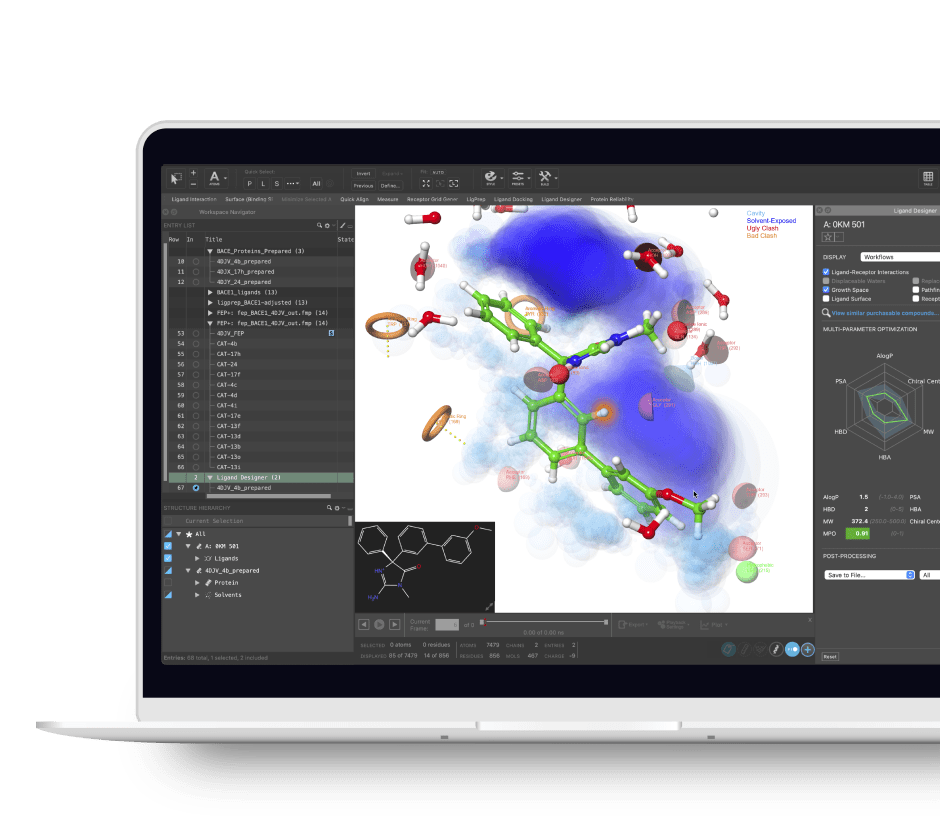
Ligand Designer provides powerful, yet easy to use 3D visualization and ligand building capability that is scientifically proven while making it fun to design ligand modifications in 2D or 3D and see how those changes are likely to impact protein-ligand complex structures. Cutting through the complexity of visualizing 3D information, the Ligand Designer uses concepts from Augmented Reality to enable you to layer relevant information including a novel grow space to quickly recognize where ligand modifications are most desirable.

Ligand Designer democratizes the 3D design process by putting the power of common medicinal chemistry tactics at your fingertips. The tool is available in Maestro and LiveDesign.

bg-circle

Easily design and evaluate ideas with automated expert tools

Interactive design with fully-guided workflows

  • Automatically dock 2D and 3D designs
  • Perform bioisostere replacement and isostere scanning
  • Form protein-ligand interactions
  • Cyclize ligands
  • Recognize and displace unstable waters
  • Optimize for selectivity using multi-receptor mode

Benefits of Ligand Designer

Guided design

Choose your own adventure with manual or guided design to evaluate ideas. Common medicinal chemistry workflows are included so you can test ideas automatically and avoid information overload.

Design your way

Design in 2D and see the structures in the workspace; in 2½ D and see the representation of the binding pocket with key information; or design in 3D with full control.

Automated expert tools

Easily assess the impact of ligand changes by visualizing the complex geometry while reducing the noise of un-needed information to find the next idea. Controls are pre-programmed to fit your function.

Tailor chemistry to your project

Tailor it to your chemistry of interest by using synthetically tractable enumeration or R-group enumeration.

Powerful built-in technology

Glide docking, automated ideation using R-group libraries or Pathfinder, Prime’s Macrocycle, BREED and WaterMap are all used in Ligand Designer.

A map to stable waters

Rationalize SAR, drive potency and tune selectivity using WaterMap to compute the entropy and enthalpy of “hydration sites.”

Documentation & Tutorials

Get answers to common questions and learn best practices for using Schrödinger’s software.

Life Science Tutorial

Learning Path: Cyclic Peptide Modeling

A structured overview of tools and workflows for cyclic peptides in drug discovery.

Life Science Tutorial

Forming RNA – Ligand Interactions with Ligand Designer

Modify ligand bound to RNA receptor to improve binding affinity using Ligand Designer.

Life Science Documentation

Ligand Designer

Interactively design a ligand in the context of a protein or DNA/RNA receptor to optimize its binding and properties.

Life Science Tutorial

WaterMap-Guided Lead Optimization with the Ligand Designer

Displace an unstable water an optimize a hit molecule with the Ligand Designer.

Life Science Tutorial

A Chemist’s Guide to Maestro

Basic Maestro tasks useful for medicinal chemists during idea generation and lead optimization.

Life Science Tutorial

Drug Development with Macrocycles

Sampling, docking, and lead optimization of macrocycles.

Life Science Tutorial

Forming Protein-Ligand Interactions with the Ligand Designer

Form protein-ligand interactions and optimize a hit molecule with the Ligand Designer.

Related Products

Learn more about the related computational technologies available to progress your research projects.

Maestro

Complete modeling environment for your molecular discovery

LiveDesign

Your complete digital molecular design lab

Glide

Industry-leading ligand-receptor docking solution

WaterMap

State-of-the-art, structure-based method for assessing the energetics of water solvating ligand binding sites for ligand optimization

Phase

An easy-to-use pharmacophore modeling solution for ligand- and structure-based drug design

Prime

A powerful and innovative solution for accurate protein structure prediction

Training & Resources

Online Certification Courses

Level up your skill set with hands-on, online molecular modeling courses. These self-paced courses cover a range of scientific topics and include access to Schrödinger software and support.

Tutorials

Learn how to deploy the technology and best practices of Schrödinger software for your project success. Find training resources, tutorials, quick start guides, videos, and more.

Services & Collaborations

Services & Collaborations

Services and collaborations to advance materials science research

Services & Collaborations

Propel your materials science project with unrivaled technologies and expertise

Access Schrödinger’s latest technologies, run at scale

Leverage our team of computational experts to scope projects specific to the needs of your R&D projects

All licensing, computing, and service time included

Achieve success in applying computational workflows to your R&D

Research Services

Each materials design and development project is unique. Work closely with our materials science team to tackle your challenging problems by deploying digital chemistry strategies to guide rapid materials design and optimization.

We offer highly customized services for your materials R&D projects.

Learn more
Research Collaborations

Strategic partnerships are longer-term engagements. As partners, we have shared goals and responsibilities. By working as one team with shared expertise, resources, and costs, we can mitigate risks, foster creative problem-solving, accelerate breakthrough discoveries, open doors to new products, and strengthen competitive advantage in the market, driving collective success.

The importance of human know-how in AI execution for R&D

How Schrödinger’s materials science domain experts ensure partner success

Read the article

Trusted by global leaders in industry

“Using Schrödinger’s digital molecular simulation platform, we’ve explored thousands of new materials in silico and used that exploration to select the most likely candidates to improve LMB cell performance and stability. This approach has led to a 10-fold improvement in our battery performance over the past two years.”
Jessica GoldenDirector of R&D, Sepion Technologies
“Schrödinger provides us with more than just software as part of our service agreement — they are a true partner in our research. Having access to Schrödinger’s advanced simulation tools and unprecedented computational power has changed the way we innovate at Panasonic Industry Co. Ltd., helping us make the electronic devices of tomorrow achievable today.”
Nobuyuki N. MatsuzawaGeneral Manager, Panasonic Industry Co., Ltd.
“By working closely with Schrödinger experts, we were impressed by how fast we were able to learn to apply molecular simulations, even with no prior modeling experience.”
Martin SettleSenior Research Manager, Polymer Science Sustainability & Packaging, Reckitt
“Schrödinger’s platform has enabled us to circumvent years of conventional materials discovery and not only achieve but exceed our ambitious battery roadmap milestones.”
Don DeRosaCo-founder, Eonix

Software and services built for your needs

Software Platform

Deploy digital materials discovery workflows with a comprehensive and user-friendly platform grounded in physics-based molecular modeling, machine learning, and team collaboration.

Online certification courses

Level up your skill set with hands-on, online molecular modeling courses. These self-paced courses cover a range of scientific topics and include access to Schrödinger software and support.

Support & Training

Access expert support, educational materials, and training resources designed for both novice and experienced users.

LiveDesign

LiveDesign

Your complete digital molecular design and discovery lab

Life Science: LiveDesign

Digitally design, predict, analyze, and collaborate in a single platform

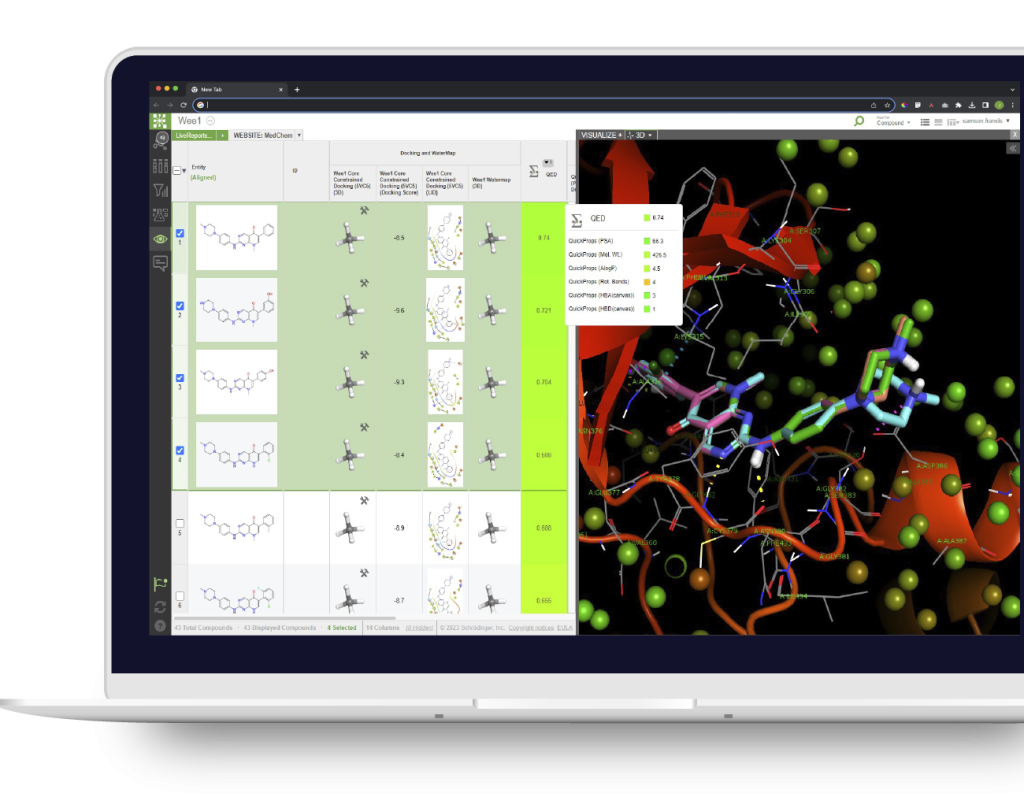
LiveDesign is a flexible, cloud-native working environment for your entire discovery team — spanning both small and large molecule research. Streamline workflows with centralized access to all project data (experiment and in silico predictions), cutting-edge computational modeling tools, and collaborative decision-making technology — all in a single interface.

The digital platform for modern drug discovery teams

Bridge the gap between your real and virtual data

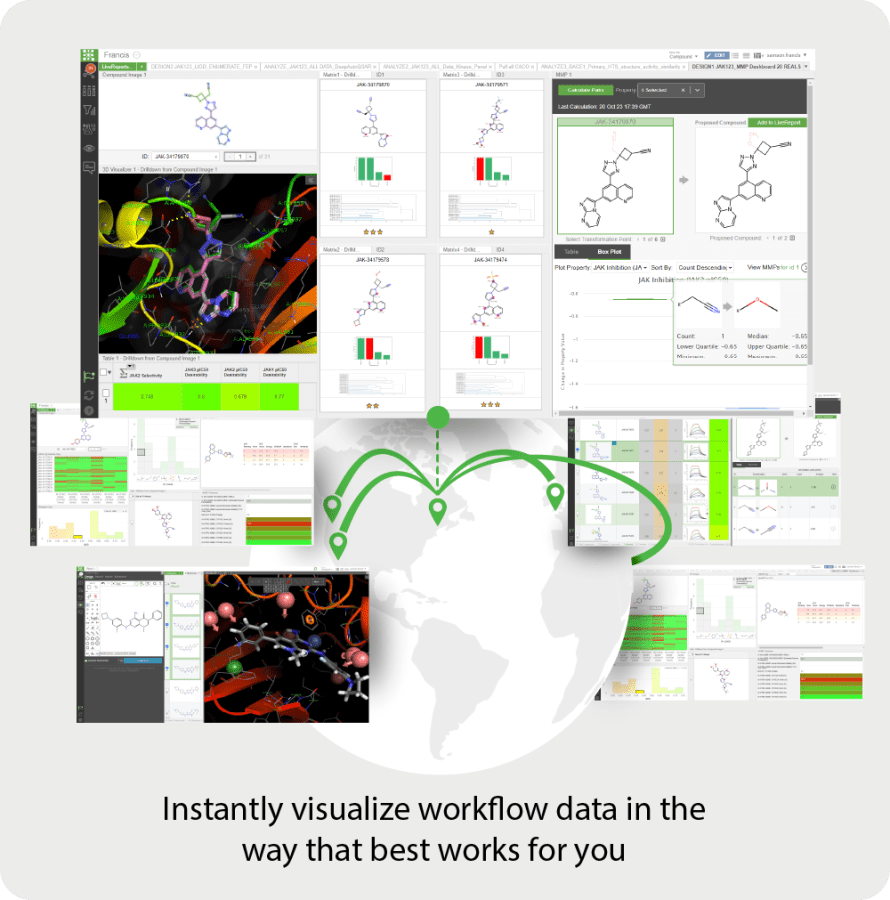
Break data silos and gain real-time access to all project data — in silico and experimental — in a single centralized platform

Drive fewer, faster design cycles

Empower creativity and capture your best ideas with powerful predictive modeling workflows at your fingertips

Centralize collaboration and decision-making

Crowdsource ideas and interactively revise design strategies with your colleagues — anytime, anywhere

Accelerate discovery for a broad range of therapeutic modalities

bg-circle

Empower digital discovery across entire project teams

MEDICINAL CHEMISTRY
Perform full in silico DMTA cycles

  • Capture design ideas and hypotheses
  • Utilize powerful cheminformatics and predictive modeling to digitally test ideas and prioritize synthesis decisions
  • Track compound progression with live data updates
  • Build rich dashboards to analyze whole project data or individual molecules
  • Leverage integrated ML/AI technologies for iterative improvement on predictive models

COMPUTATIONAL CHEMISTRY
Expand the impact of predictive modeling

  • Increase the impact of computational methods to drive discovery outcomes
  • Easily share validated models for self-service use across the entire project team
  • Outsource routine computational tasks and spend more time working on challenging modeling problems

BIOTHERAPEUTICS DISCOVERY
Power your biologics discovery workflows

  • Combine all of your data — from sequence to structure to experiment
  • Streamline workflows such as candidate analysis and lead selection, candidate optimization and ideation, and collaborative data transitions
  • Track decisions and communication across all stages of common biologics discovery workflows
  • Flexibly develop and explore emerging AI/ML technologies with an agnostic snap-in/snap-out API framework

LEADERSHIP & PROGRAM MANAGEMENT
Streamline discovery processes and team collaboration

  • Track and visualize key project metrics
  • Utilize customizable dashboards for project monitoring and support team efforts
  • Standardize discovery workflows across programs and teams

EXTERNAL PARTNER MANAGERS
Share and track data with CRO partners

  • Dynamically manage and view Make and Test queues
  • Create custom workflows for progression of compound synthesis and testing
  • Utilize live data systems to eliminate communication through spreadsheets and timezone constraints — data is available as soon as it’s loaded

RESEARCH IT
Easily integrate any corporate data source

  • Snap-in web-based or in-house developed technologies via a connected API
  • Centralize design technologies into a single platform and data system
  • Reduce your integration and support burden by using a single SaaS platform
Featured Product

LiveDesign ML

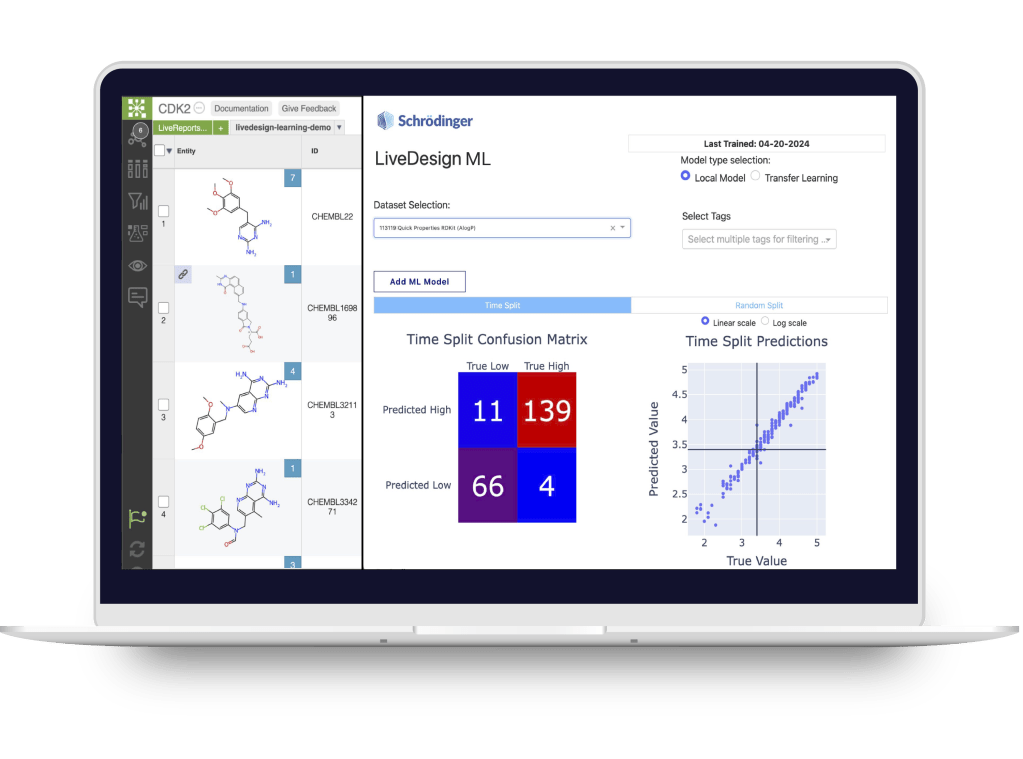
Your complete solution for rapid AI/ML molecular property predictions. Train and deploy state-of-the-art AI/ML models for small molecule drug discovery and easily integrate models into team decision-making and design workflows via a centralized collaborative platform.
Documentation & Tutorials

Get answers to common questions and learn best practices for using Schrödinger’s software.

Life Science Tutorial

The LiveDesign Assistant

Learn how to build and adjust coloring rules, create Freeform and Formula columns, and plot data using the LiveDesign Assistant.

Life Science Tutorial

Build a Residual LogD Machine Learning Model in LiveDesign

Learn how to build a Residual logD machine learning model using AlogP as a prospective triage filter for solubility and hepatotoxicity risk.

Life Science Tutorial

RetroSynth in LiveDesign

Leverage project-specific chemistry via known building blocks and transformations to promote relevant synthetic routes for your CRO.

Life Science Tutorial

Reaction-Based Enumeration Using a Provided Reaction

Select a Schrödinger reaction, configure reactants, explore reaction output options, and generate enumerated products.

Life Science Tutorial

R-Group Enumeration in LiveDesign

Explore the chemical space around a scaffold using R-group libraries.

Life Science Tutorial

Ligand Designer Configurations

Set up the Ligand Designer for interactive 3D ligand editing using existing Glide models or manual file imports.

Life Science Tutorial

Ligand Designer in LiveDesign

Learn how to select, design, edit, and run docking predictions for a molecule within the Ligand Designer in LiveDesign.

Life Science Tutorial

Limited Assay Columns in LiveDesign

Learn how to display different assay data in the LiveReport.

Life Science Documentation

Formula Column Examples

Explore formula column examples that allow you to calculate, analyze, and transform data using custom expressions and built-in functions.

Life Science Tutorial

Exploring Forms View in LiveDesign

Learn how to create new Forms and visualize data in new ways.

You’re in good company

“The ability to collaborate through LiveDesign was key — it meant that no matter when or where inspiration might strike, we had a platform to capture and share ideas.”
Matt BursavichVP, Head of Chemical Sciences, Morphic Therapeutic
“In Schrödinger’s LiveDesign we could consolidate best-of-breed scientific capabilities in a single interface, so that chemists can run standard modeling workflows in just a few clicks.”
Miriam Lopez-RamosComputational Chemistry Group Leader, Galapagos
“Seeing the ways in which different people on your team think can really open up new possibilities. We are often in meetings with LiveDesign open in front of us, editing in real time, presenting ideas, and making decisions about the best designs.”
Gloria Hernandez Torres & Daniel CarneySenior Scientists, Gastrointestinal & Inflammation (GI) Chemistry, Takeda

Case studies & webinars

Discover how Schrödinger technology is being used to solve real-world research challenges.

Life Science Webinar

The unified antibody workbench: Optimizing antibody candidate selection through centralized team collaboration

Join us for an interactive webinar where we showcase the power of LiveDesign for Biologics in a live demo and walk you through how you can quickly start benefiting from this powerful enterprise informatics platform today!

Life Science Webinar

The unified antibody workbench: Optimizing antibody candidate selection through centralized team collaboration recording

Join us for an interactive webinar where we showcase the power of LiveDesign for Biologics in a live demo and walk you through how you can quickly start benefiting from this powerful enterprise informatics platform today!

Life Science Webinar

Amplifying medicinal chemist impact with large-scale ideation, FEP+, machine learning, and retrosynthesis through LiveDesign

Join us to see how Schrödinger’s Enterprise Informatics Platform, LiveDesign, serves as the single terminal to bridge this gap.

Life Science Webinar

Amplifying medicinal chemist impact with large-scale ideation, FEP+, machine learning, and retrosynthesis through LiveDesign recording

Join us to see how Schrödinger’s Enterprise Informatics Platform, LiveDesign, serves as the single terminal to bridge this gap.

Life Science Webinar

Building a biotech: Enabling a successful digital drug discovery program with a connected platform

Join us to see how this powerful solution can accelerate your DMTA cycles and enable your teams – this isn’t about complex simulations, it’s about giving your team the tools they need to make better decisions, faster.

Life Science Webinar

Building a biotech: Enabling a successful digital drug discovery program with a connected platform

Join us to see how this powerful solution can accelerate your DMTA cycles and enable your teams – this isn’t about complex simulations, it’s about giving your team the tools they need to make better decisions, faster.

Life Science Webinar

Schrödinger デジタル創薬セミナー: Into the Clinic~計算化学がもたらす創薬プロセスの変貌~第16回

APR 16, 2025 | Accelerating protein degrader discovery: Computational strategies for degrader design and optimization

Life Science Webinar

Accelerating protein degrader discovery: Computational strategies for degrader design and optimization

Join us to explore how these workflows can accelerate the design of protein degraders—from predicting ternary complexes to optimizing linker properties—and can empower real-time collaboration through Schrödinger’s LiveDesign platform.

Life Science Webinar

Schrödinger デジタル創薬セミナー: Into the Clinic~計算化学がもたらす創薬プロセスの変貌~第12回

Accelerated In silico Discovery of SGR-1505: a Potent MALT1 Allosteric Inhibitor for the Treatment of Mature B-cell Malignancies

Life Science Webinar

Empowering scientists with integrated AI/ML modeling for rapid molecular property predictions

In this webinar, we present LiveDesign ML, a new module in Schrödinger’s LiveDesign collaborative enterprise informatics platform, for training and deploying state-of-the-art AI/ML models with minimal manual intervention.

Schedule a call to discuss LiveDesign

Form submitted

Thank you, we’ll be in touch soon.

Training & Resources

Online certification courses

Level up your skill set with hands-on, online molecular modeling courses. These self-paced courses cover a range of scientific topics and include access to Schrödinger software and support.

Tutorials

Learn how to deploy the technology and best practices of Schrödinger software for your project success. Find training resources, tutorials, quick start guides, videos, and more.