Explore our latest software

Explore our latest software

What’s new in the Life Science Schrödinger Suite Release 2026-1

We release new platform usability and technological improvements quarterly.

  • New AI-driven RetroSynth for faster, more accurate and cheaper synthesis planning
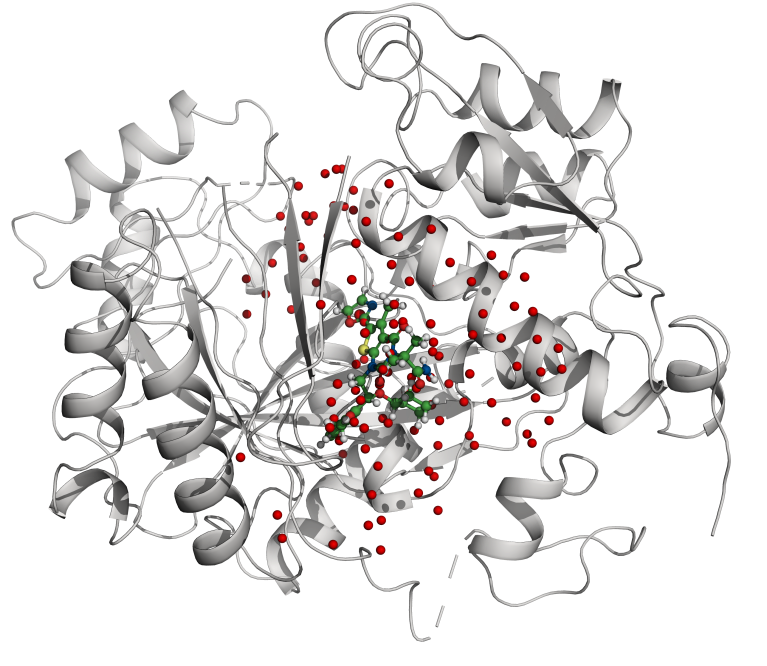
  • New LiveDesign ML to deliver turnkey ML model deployment and maximize every AI decision
  • Automatically create accurate and clash-aware FEP-ready poses with FEP+ Pose Builder
  • New agentic capabilities in AI-powered Maestro Assistant (Beta)
Release notes

What’s new in the Materials Science Schrödinger Suite Release 2026-1

We release new platform usability and technological improvements quarterly.

  • Automated analysis workflow for thermochemistry of point defects in crystalline materials
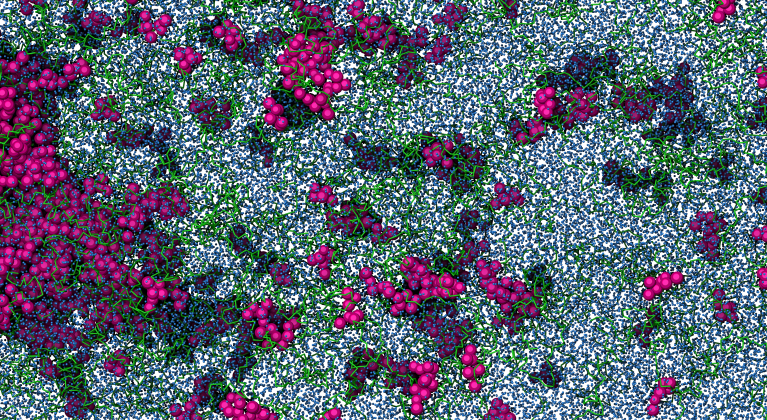
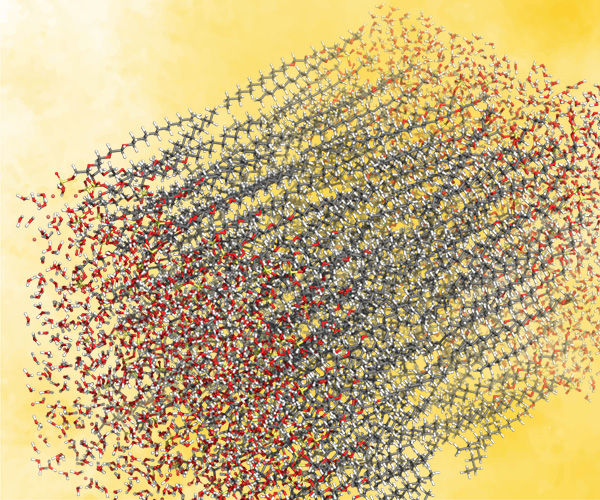
  • Workflow solution to use umbrella sampling algorithm for surfactant and lipid bilayers
  • Genetic optimization of materials accelerated by machine learning property prediction models
  • Refined machine learning solution for materials formulations
Release notes

Interested in downloading PyMOL?

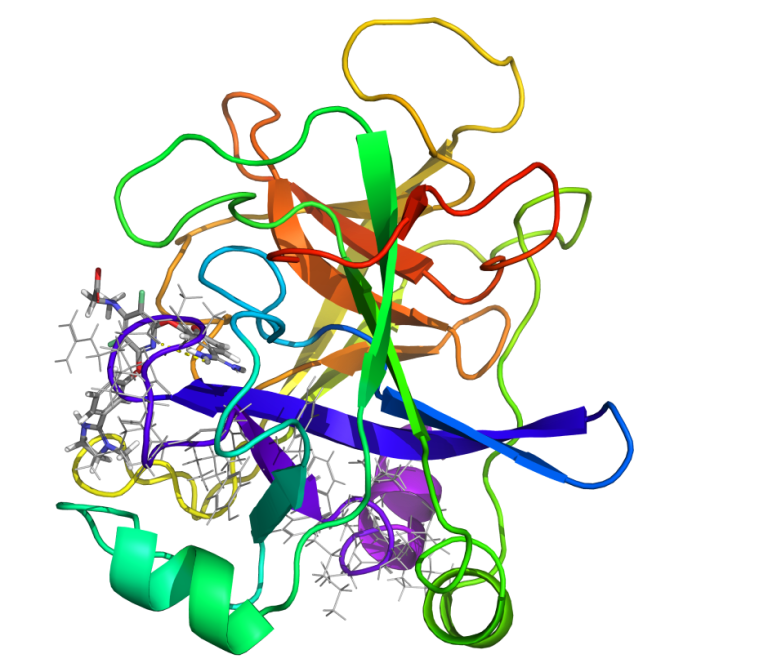
PyMOL is a user-sponsored molecular visualization system on an open-source foundation, maintained and distributed by Schrödinger.

Dark Background

System Requirements

View all system requirements for Linux, Windows, Mac installations and supported GPU hardware.

LiveDesign

LiveDesign for Materials Science

Your complete digital materials design lab

LiveDesign for Materials Science

Digitally design, predict, analyze, and collaborate in a single platform

Democratize your digital design process for new materials, formulations, and chemical processes by harnessing the power of physics-based modeling, advanced cheminformatics, chemistry-informed machine learning, virtual design and analysis technologies, and centralized access to project data – all from a single interface.

Real-time collaborative design, modeling, and project management to accelerate materials design

Bridge the gap between your real and virtual data

Break data silos and gain real-time access to all project data — virtual and experimental — in a single centralized platform

Drive faster, better materials design

Empower creativity and capture your best ideas with powerful predictive modeling workflows at your fingertips

Centralize collaboration and decision-making

Crowdsource ideas and interactively revise design strategies with your colleagues – anytime, anywhere

Key Capabilities

Data visualization and management

Intuitive, user-friendly tools to import compounds from files, run computational models, and view 3D results. Search for experimental data, add custom formulas, and flag interesting compounds for follow-up.

Deploying and tracking predictive models

Sophisticated, expert tools to set up and modify complex scientific simulations and enable everyone on the team to run the simulations on imported or sketched materials. Computational results automatically appear side-by-side with other data of the same material.

Data analysis and machine learning

Customized and focused insights into data with comprehensive, easy-to-use data analysis tools, such as multi-parameter optimization (MPO), multi-dimensional plots, tile view, and form view. Machine learning technology embedded on the platform speeds up material design cycles.

bg-circle

Functionality for a broad range of industries

Customize LiveDesign for various materials applications and project areas

Organic Electronics

Organic Electronics

Automate and streamline sophisticated molecular and bulk simulations and analysis to predict important optoelectronic properties, while assessing the key performance of novel electronic materials based on both physics-based and data-driven methods

Catalysis & Reactivity

Catalysis & Reactivity

Efficient, highly-automated solutions for computational design of catalytic and non-catalytic reactivity leveraging the combination of quantum mechanics, molecular dynamics, and machine learning

Thin Film Processing

Thin Film Processing

Apply machine learning technology to experimental and simulated data to find out how properties of chemicals, process conditions, and integration schemes all contribute to the final performance of devices in areas such as logic, memory, sensing, or energy conversion

Polymeric Materials

Polymeric Materials

Design polymer monomers and formulations with embedded polymer sketching and integration of predictive models including machine learning and physics-based simulations

Energy Capture & Storage

Energy Capture & Storage

Optimize electrolyte formulations, electrode structure, and cell-level performance simultaneously using advanced informatics, hierarchical machine-learning, and multi-scale physics-based simulations

Documentation & Tutorials

Get answers to common questions and learn best practices for using Schrödinger’s software.

Life Science Video

Introducing the 2D Sketcher

An overview of modes, shortcut keys, mouse actions, and right-click menus.

Life Science Quick Reference Sheet

R-Group Enumeration in LiveDesign

Explore the chemical space around a scaffold using R-group libraries.

Life Science Documentation

Formula Column Examples

Explore formula column examples that allow you to calculate, analyze, and transform data using custom expressions and built-in functions.

Life Science Video

Introducing Ligand Designer

An overview of the LigandDesigner workflow, Editing in 2D and 3D, using display options and overlays, and accessing the Admin Panel.

Life Science Video

Sample Workflows for Collaborative Drug Design

Using templates, ideating, using Freeform Columns to share ideas with colleagues, using the GPU Similarity Tool, and setting up MPOs.

Life Science Tutorial

Ligand Designer Configurations

Learn how to set up Ligand Designer for use in structurally-enabled projects.

Life Science Tutorial

Exploring Forms View in LiveDesign

Learn how to create new Forms and visualize data in new ways.

Life Science Tutorial

Analyzing Data in LiveDesign

Explore SAR Analysis and Multi-Parameter Optimizations to analyze data and drive compound progression.

Life Science Tutorial

Advanced Techniques with LiveDesign

Learn how to create formulas, perform regression analysis, save a template, set up an MPO, and push information to Maestro.

Life Science Video

Organize Data and Collaborate Effectively Pt. 2

A case study exercise following a project team in LiveDesign and an overview of the LiveDesign interface.

  • Materials Science
  • White Paper

An automated workflow for rapid large-scale computational screening to meet the demands of modern catalyst development

Learn how Schrödinger’s AutoRW and LiveDesign enable rational catalyst design in an automated, accelerated, and collaborative manner on a single, collaborative web-based platform.

Read white paper
  • Materials Science
  • White Paper

LiveDesign for Organic Electronics

Schrödinger’s LiveDesign is a flexible, cloud-native working environment to democratize digital design processes for new materials and improved formulations across R&D teams.

Read white paper

Training & Resources

Online certification courses

Level up your skill set with hands-on, online molecular modeling courses. These self-paced courses cover a range of scientific topics and include access to Schrödinger software and support.

Tutorials

Learn how to deploy the technology and best practices of Schrödinger software for your project success. Find training resources, tutorials, quick start guides, videos, and more.
Desmond

Desmond for Materials Science

High-performance molecular dynamics (MD) engine providing high scalability, throughput, and scientific accuracy

Understand and predict key properties of materials with fast, accurate molecular dynamics

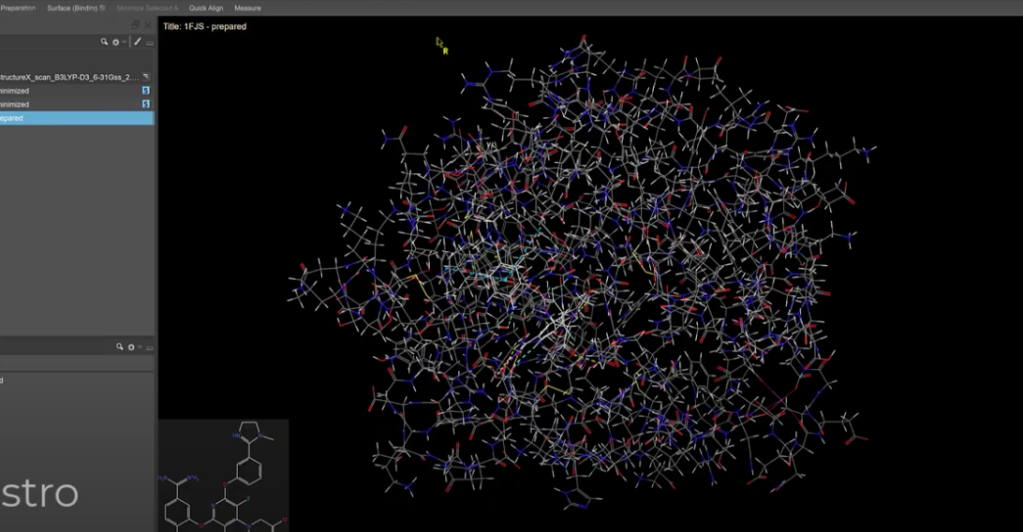
Desmond is a GPU-powered high-performance molecular dynamics (MD) engine for predicting bulk properties of materials, such as thermophysical properties, elastic constants, stress/strain relationships, diffusion coefficients, viscosity, persistence length, free energy of solvation, and more. Desmond also characterizes structure and properties in complex systems involving non-equilibrium systems as well as interfaces or self-assembled structures.

Comprehensive molecular dynamics capabilities

Exceptional performance

Achieve exceptional throughput on commodity Linux clusters with both typical and high-end networks. Improve computing speed by 100x on general-purpose GPU (GPGPU) versus single CPU.

Superior accuracy

Constructed with a focus on numerical accuracy, stability, and rigor. Enables the simulation of large scale features of nanometers to micron size over time scales of picoseconds to microseconds.

Trusted energetics

Provides a robust framework for the calculation of energies and forces for atomistic and coarse grained force field models. Compatible with chemistries commonly used in both biomolecular and condensed-matter research.

Realistic simulations

Perform explicit solvent simulations with periodic boundary conditions using cubic, orthorhombic, truncated octahedron, rhombic dodecahedron, and arbitrary triclinic simulation boxes with careful attention to the efficient and accurate calculation of long-range electrostatics, and can be used to model explicit membrane systems, complex mixtures, polymers, and interfaces under various conditions.

Easy-to-use interface

Support automated simulation setup, including multistage MD simulations with built-in simulation protocols, prediction of equation of states (EOS) at multiple temperatures, and advanced techniques such as non-equilibrium dynamics and enhanced sampling. An intuitive interface provides intelligent default settings and allows for rapid setup of computational experiments.

Powerful analysis tools

Visualize and examine computed results within the same MS Maestro modeling environment that connects to a comprehensive suite of modeling tools from quantum mechanics to machine learning.

Case studies & webinars

Discover how Schrödinger technology is being used to solve real-world research challenges.

Materials Science Webinar

Beyond the bench: Getting started with molecular dynamics simulations recording

Join Schrödinger’s Katie Dahlquist, as she’ll show you how Desmond can be used to improve your development.

Materials Science Webinar

Beyond the bench: Getting started with molecular dynamics simulations

Join Schrödinger’s Katie Dahlquist, as she’ll show you how Desmond can be used to improve your development.

Materials Science Case Study

Advancing sustainable food processing through integrated experimental and molecular simulation approaches

Scientists from Schrödinger and UMass carried out comprehensive studies experimentally and computationally to investigate the key properties and extrusion performance of zein-formulated meat alternatives.

Materials Science Webinar

Accelerating OLED innovation with multi-scale, multi-physics simulations

Join us to explore how integrated digital workflows drive the design of next-generation, high-performance OLEDs.

Materials Science Case Study

The Future of Food: Molecular Simulations and AI/ML Reshaping Product Development

Materials Science Case Study

Advancing the design and optimization of drug formulations with combined computational and experimental approaches

Materials Science Case Study

Characterizing lipid nanoparticle self-assembly and structure using coarse-grained simulations

Materials Science Case Study

Designing better packaging materials with a reduced risk of contamination and longer shelf-life using molecular simulations 

Materials Science Webinar

Schrödinger Materials Science Seminar Japan 2024 

《無料Webセミナー》材料開発向けシミュレーション・ソフトウェアおよびマテリアルズ・インフォマティクスの活用事例を紹介。

Materials Science Webinar

Taking experimentation digital: Materials innovation using atomistic simulation and machine learning at-scale

In this webinar, we introduce a modern approach to materials R&D using a digital chemistry platform for in silico analysis, optimization and discovery.

Broad applications across materials science research areas

Get more from your ideas by harnessing the power of large-scale chemical exploration and accurate in silico molecular prediction.

Polymeric Materials
Pharmaceutical Formulations & Delivery
Energy Capture & Storage
Organic Electronics
Consumer Packaged Goods

Official NVIDIA Partner

Schrödinger has a strategic partnership with NVIDIA to optimize our computational drug discovery platform for NVIDIA GPU technology.

Documentation & Tutorials

Get answers to common questions and learn best practices for using Schrödinger’s software.

Materials Science Tutorial

Ionic Conductivity

Learn to calculate the ionic conductivity.

Materials Science Tutorial

Locating Adsorption Sites on Surfaces

Learn how to locate adsorption sites on surfaces.

Materials Science Tutorial

Simulating Complex Protein Solutions

Learn to prepare a complex protein system for a Molecular Dynamics (MD) simulation.

Materials Science Tutorial

Building and Analyzing a Complex Lipid Bilayer and Embedding a Membrane Protein

Learn to build and analyze a complex lipid bilayer and how to embedd a protein.

Materials Science Documentation

Machine Learning Force Fields

Machine Learning Force Fields (MLFFs) offer a novel approach for predicting the energies of arbitrary systems.

Materials Science Tutorial

Machine Learning Force Field

Learn how to use machine learning force field optimization methods to prepare and simulate various systems.

Materials Science Documentation

Desmond

Simulate biological systems with a GPU-powered high-performance molecular dynamics (MD) engine.

Materials Science Tutorial

Nanoemulsions with Automated DPD Parameterization

Learn how to automatically build a coarse-grained force field for dissipative particle dynamics (DPD) from a nanoemulsions system with water and perform a molecular dynamics simulation.

Materials Science Tutorial

Umbrella Sampling

Learn to calculate the free energy profile for butanol permeation through a DMPC membrane using umbrella sampling.

Materials Science Tutorial

Thermal Conductivity

Learn to use the Thermal Conductivity Calculation and Results panels to calculate thermal conductivity.

Related Products

Learn more about the related computational technologies available to progress your research projects.

Virtual Cluster

Secure, scalable environment for running simulations on the cloud

MS Maestro

Complete modeling environment for your materials discovery

OPLS4 & OPLS5 Force Field

A modern, comprehensive force field for accurate molecular simulations

MS CG

Efficient coarse-grained (CG) molecular dynamics (MD) simulations for large systems over long time scales

MS Morph

Efficient modeling tool for organic crystal habit prediction

MS Penetrant Loading

Molecular dynamics (MD) modeling for predicting water loading and small molecule gas adsorption capacity of a condensed system

MS Transport

Efficient molecular dynamics (MD) simulation tool for predicting liquid viscosity, conductivity and diffusions of atoms and molecules

Publications

Browse the list of peer-reviewed publications using Schrödinger technology in related application areas.

Life Science Publication

STX-721, a Covalent EGFR/HER2 Exon 20 Inhibitor, Utilizes Exon 20–Mutant Dynamic Protein States and Achieves Unique Mutant Selectivity Across Human Cancer Models

Life Science Publication

A robust crystal structure prediction method to support small molecule drug development with large scale validation and blind study

Materials Science Publication

Uncovering the light absorption mechanism of the blue natural colorant allophycocyanin from Arthrospira platensis using molecular dynamics

Materials Science Publication

Evaluating the Binding Potential and Stability of Drug-like Compounds with the Monkeypox Virus VP39 Protein Using Molecular Dynamics Simulations and Free Energy Analysis

Materials Science Publication

Predicting Drug-Polymer Compatibility in Amorphous Solid Dispersions by MD Simulation: On the Trap of Solvation Free Energie

Materials Science Publication

Possible Applications of the Polli Dissolution Mechanism: A Case Study Using Molecular Dynamics Simulation of Bupivacaine

Materials Science Publication

Designing the Next Generation of Polymers with Machine Learning and Physics-Based Models

Materials Science Publication

Modelling of Prednisolone Drug Encapsulation in Poly Lactic-co-Glycolic Acid Polymer Carrier Using Molecular Dynamics Simulations

Materials Science Publication

Cu-TiO2/Zeolite/PMMA Tablets for Efficient Dye Removal: A Study of Photocatalytic Water Purification

Life Science Publication

Predicting the Release Mechanism of Amorphous Solid Dispersions: A Combination of Thermodynamic Modeling and In Silico Molecular Simulation

Schedule a consultation on Schrödinger’s molecular dynamics solutions

Contact us today to explore how you can leverage advanced molecular dynamics simulations to drive innovation and gain competitive advantage in your industry.

Don’t see your areas of interest above? Reach out so we can help.

Form submitted

Thank you, we’ll be in touch soon.

Training & Resources

Online certification courses

Level up your skill set with hands-on, online molecular modeling courses. These self-paced courses cover a range of scientific topics and include access to Schrödinger software and support.

Tutorials

Learn how to deploy the technology and best practices of Schrödinger software for your project success. Find training resources, tutorials, quick start guides, videos, and more.

Virtual Screening Web Service

background pattern

Virtual Screening Web Service

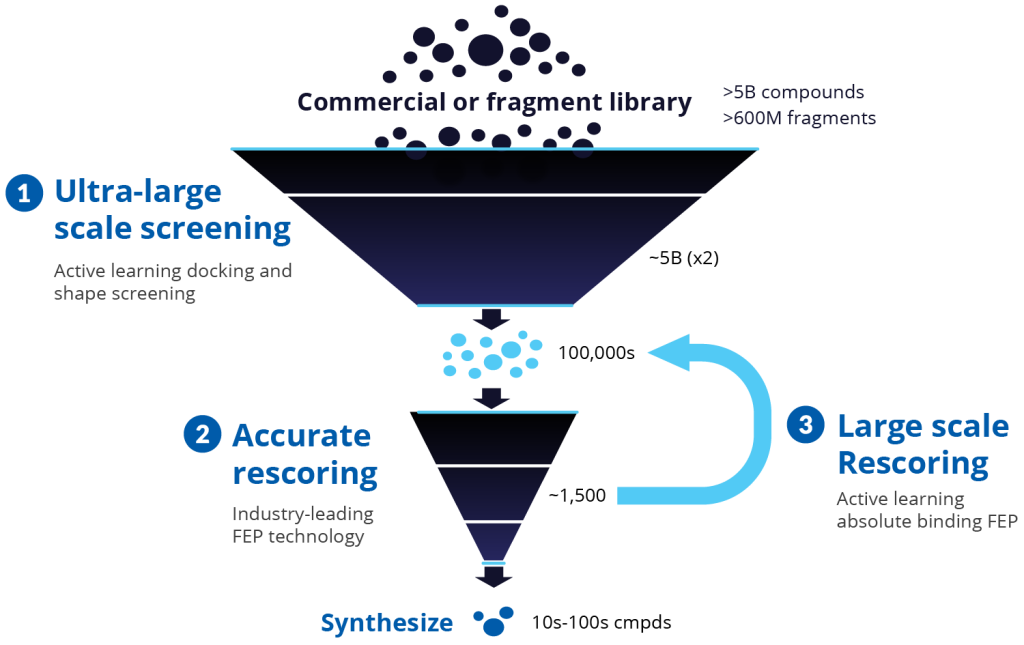
Virtual, novel hits from a billion-compound library delivered in one week

Increase the likelihood of finding diverse and novel virtual hits in your virtual screening campaigns

The Virtual Screening Web Service delivers secure access to industry-leading hit identification methods and burst computing power to perform ultra-large screens quickly and efficiently.

Successful virtual screens produce chemically diverse molecules with affinity to a target protein
Maximize the diversity of hits by screening ultra-large-scale purchasable compound libraries through the combined power of physics-based methods and machine learning.

Access industry-leading virtual screening workflows in the cloud
Schrödinger’s Virtual Screening Web Service accommodates the demands of teams with occasional large-scale screening needs but who lack the infrastructure or technical resources to screen in-house efficiently.

Identify novel hits from libraries of >1B compounds in a week

Fully automated screening workflow

Benefit from on demand cloud-based workflows with the click of a button.

Built-in scientific validation

Ensure desired screening goals through a gated, built-in pilot study.

Results in one week

Keep projects on schedule by leveraging the power of massive parallel compute environments.

Easily sourced compounds

Use vendor compound IDs associated with every virtual hit to easily purchase compounds.

Secure, exclusive cloud server

Ensure legal and security compliance through a dedicated data server with enterprise-grade security.

Diverse and novel IP discovery

Access over a billion compounds, allowing exploration of more avenues for program progression.

Access industry-leading 3D docking workflows amplified by machine learning

Apply 3D docking techniques

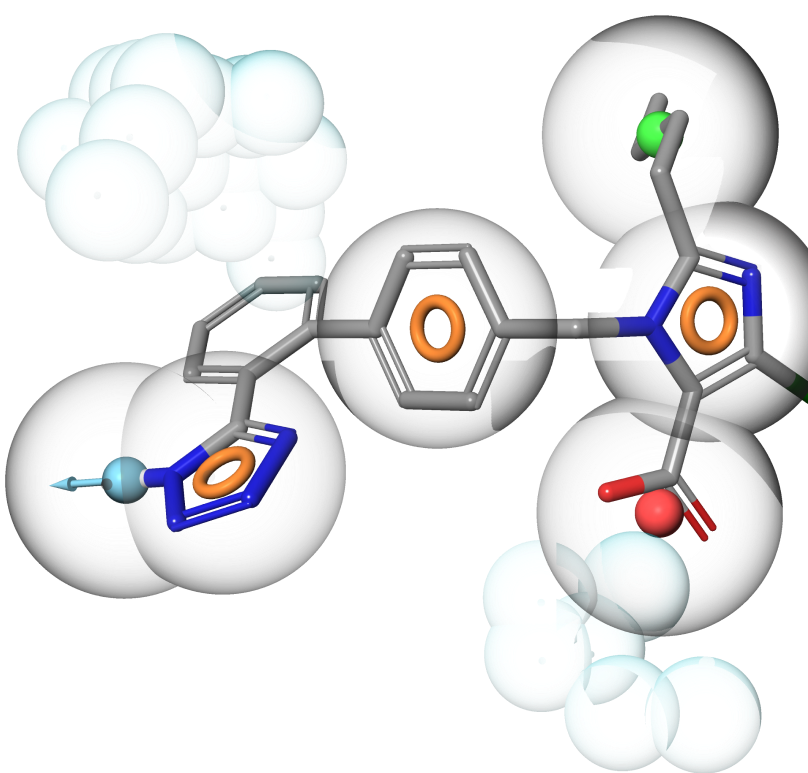
Find novel scaffolds beyond training sets using extrapolative 3D screening methods. 2D screening methods have prediction limitations, while 3D docking methods can extrapolate into novel chemical space.

Accelerate screens with machine learning

Leverage machine learning to accelerate 3D docking methods. Accurate docking methods coupled with machine learning techniques make 1+ billion compounds screens straightforward and cost-effective.

Benefit from parallel screening approaches

Use multiple virtual screening approaches for the highest chemical diversity. Different screening technologies are shown to produce unique ligand scaffolds.

bg-circle

How it Works:
Automate screens of more than a billion purchasable compounds virtually

  1. Upload one or more virtual screening inputs which include the docking model, shape screening probes, and known active compounds.
  2. Select multiple libraries to screen including one billion library.
  3. Review results of pilot screen to assess likelihood of active active learning Glide finding high quality hits for your target.
  4. Launch the fully automated ultra-large-scale screen once satisfied with pilot screen results.
  5. Receive thousands of virtual hits within one week and access all data from an enterprise-grade secure server.
Enamine
MolPort
Sigma-Aldrich
MCule

Related Products

Learn more about the related computational technologies available to progress your research projects.

Glide

Industry-leading ligand-receptor docking solution

Shape Screening

Efficient ligand-based virtual screening of millions to billions of molecules

Active Learning Applications

Accelerate discovery with machine learning

Publications

Browse the list of peer-reviewed publications using Schrödinger technology in related application areas.

Life Science Publication

Glide WS: Methodology and Initial Assessment of Performance for Docking Accuracy and Virtual Screening

Life Science Publication

Discovery of highly potent noncovalent inhibitors of SARS-CoV-2 main protease through computer-aided drug design

Life Science Publication

Optimizing drug design by merging generative AI with a physics-based active learning framework

Life Science Publication

Enabling in-silico Hit Discovery Workflows Targeting RNA with Small Molecules

Life Science Publication

Drugit: crowd-sourcing molecular design of non-peptidic VHL binders

Materials Science Publication

Taste-Guided Isolation of Bitter Compounds from the Mushroom Amaropostia stiptica Activates a Subset of Human Bitter Taste Receptors

Materials Science Publication

Gaining molecular insights towards inhibition of foodborne fungi Aspergillus fumigatus by a food colourant violacein via computational approach

Materials Science Publication

Steviol rebaudiosides bind to four different sites of the human sweet taste receptor (T1R2/T1R3) complex explaining confusing experiments

Life Science Publication

FEP augmentation as a means to solve data paucity problems for machine learning in chemical biology

Life Science Publication

Lead optimization of small molecule ENL YEATS inhibitors to enable in vivo studies: Discovery of TDI-11055

Training & Resources

Online certification courses

Level up your skill set with hands-on, online molecular modeling courses. These self-paced courses cover a range of scientific topics and include access to Schrödinger software and support.

Tutorials

Learn how to deploy the technology and best practices of Schrödinger software for your project success. Find training resources, tutorials, quick start guides, videos, and more.

MS – Biotech & Pharmaceuticals

Materials Science

Biotech & Pharmaceuticals

Biotech & Pharmaceuticals

Harness molecular simulation to optimize drug formulations and medical materials

Schrödinger works closely with leading biotech companies and start-ups, offering efficient digital tools to drive innovation in pharmaceutical formulations and materials for medical applications. With Schrödinger’s Materials Science platform, scientists can leverage molecular simulation and machine learning to optimize drug formulations, synthesize novel drug molecules, and develop high-performance polymer materials tailored for medical use.

Digital solutions for pharmaceuticals and medical materials

Discover better molecules, faster with modern drug discovery tools

Drive high precision molecular design using a digital chemistry platform that provides scale and accuracy across all stages of your drug discovery programs.

Drug Discovery
Enable efficient synthesis of pharmaceutical ingredients

Digitally investigate reaction mechanisms to identify the best catalysts and reactions for innovative pharmaceutical ingredients.

Catalysis & Reactivity
Optimized drug product formulations

Predict key properties of drug formulations and crystal forms, informing ingredient selection and downstream formulation processes to advance your drug discovery projects.

Pharmaceutical Formulations & Delivery
Optimize material properties for medical-grade applications

Predict key properties such as binding of proteins to polymer surfaces to identify high-performance polymers for medical applications (e.g. biocompatible coatings, minimally-invasive surgical tools, suture materials, dialysis membranes, precision cancer imaging and neuroimaging).

Polymeric Materials
Improve the development of natural proteins with bioprocessing

Gain insights at the molecular level to guide the development of sustainable active pharmaceutical ingredients and excipients from natural resources through techniques like precision fermentation, enzyme design, and strain engineering.

Case studies & webinars

Discover how Schrödinger technology is being used to solve real-world research challenges.

Materials Science Webinar

Accelerating pharmaceutical formulations development: A computational approach

This webinar series will explore how cutting-edge computational methods are revolutionizing the design and optimization of pharmaceutical drugs, biologics , and advanced materials.

Materials Science Webinar

Modelling amorphous solid dispersion (ASD) release mechanisms

In this webinar, AbbVie and Schrödinger will present the results of a study using a combination of Perturbed-Chain Statistical Associating Fluid Theory (PC-SAFT) thermodynamic modeling and molecular simulation to investigate the release mechanism and the occurrence LoR of an ASD formulation.

Materials Science Webinar

Computational insights into polymer excipient selection for amorphous solid dispersions

In this webinar, we will highlight how molecular models can aid our ability to screen through standard polymer excipients for target lists to push into lab testing.

Materials Science Case Study

Advancing lipid nanoparticle development with structure-based modeling platform and services

Materials Science Webinar

Accelerating pharmaceutical formulations using machine learning approaches

In this webinar, we will demonstrate how Schrödinger’s integrated ML- and physics-based approaches are transforming pharmaceutical formulation design.

Materials Science Case Study

Advancing the design and optimization of drug formulations with combined computational and experimental approaches

Materials Science Webinar

Modeling lipid nanoparticles: Self-assembly and apparent pKa calculation

In this webinar, we introduce Schrödinger’s coarse-grained simulation technology that can simulate the formation of LNP structures from a random mixture.

Materials Science Webinar

Crystal structure prediction workflow for small molecule drug formulation

In this webinar, we describe how early assessment of crystal polymorphism and thermodynamic solubility continues to be elusive for drug discovery and development despite its critical importance, especially for the ever-increasing fraction of poorly soluble drug candidates.

Materials Science Webinar

Molecular-level insight into solubility-enhancement via cosolvents and amorphous solid dispersions

In this webinar, we highlight how molecular models can aid our ability to anticipate challenges prior to candidate selection as well as to quickly understand issues that arise in later stages of development.

Materials Science Case Study

Characterizing lipid nanoparticle self-assembly and structure using coarse-grained simulations

Featured courseMolecular Modeling for Materials Science: Pharmaceutical Formulations

Molecular modeling for materials science applications: Pharmaceutical formulations

Online certification course: Level-up your skill set in drug formulation modeling

Learn how to apply Schrödinger’s industry-leading software to understand the behaviors of active pharmaceutical ingredients (APIs) in your drug formulations.

  • Self-paced learning content
  • Hands-on access to Schrödinger software
  • Guided and independent case studies
Learn More

Software and services to meet your organizational needs

Software Platform

Deploy digital materials discovery workflows with a comprehensive and user-friendly platform grounded in physics-based molecular modeling, machine learning, and team collaboration.

Research Services

Leverage Schrödinger’s expert computational scientists to assist at key stages in your materials discovery and development process.

Support & Training

Access expert support, educational materials, and training resources designed for both novice and experienced users.

Membrane Permeability

Membrane Permeability

Physics-based solution for rapid and accurate prediction of passive membrane permeability

Membrane Permeability

Evaluate membrane permeability with unmatched accuracy

Membrane Permeability is a robust solution to accurately predict passive membrane permeability of small molecules across diverse chemistries. By considering conformation dependent phenomena such as internal hydrogen-bonding, which can have a dramatic effect on permeability, it offers tremendous advantages over QSAR and machine learning-based approaches.

Key Capabilities

Accelerate hit-to-lead and lead optimization by rapidly scoring and prioritizing large sets of idea compounds based on predicted permeability, prior to running advanced modeling such as FEP+
Predict partition energy for inserting a small molecule into the membrane using a physics-based approach
Benefit from automatic detection and sampling of macrocycles using an advanced sampling algorithm
Featured Case StudyDesign of a novel potent CDC7 inhibitor development candidate with high ligand efficiency and optimized properties

Design of a novel potent CDC7 inhibitor development candidate with high ligand efficiency and optimized properties

See how Membrane Permeability enabled the Schrödinger team to prioritize designs in the discovery of a novel, potent CDC7 inhibitor development candidate with high ligand efficiency and optimized properties

read the case study

Documentation & Tutorials

Get answers to common questions and learn best practices for using Schrödinger’s software.

Life Science Documentation

Membrane Permeability

Calculate the passive membrane permeability of a set of congeneric ligands.

Related Products

Learn more about the related computational technologies available to progress your research projects.

Prime

A powerful and innovative solution for accurate protein structure prediction

Case studies & webinars

Discover how Schrödinger technology is being used to solve real-world research challenges.

Life Science Webinar

Schrödinger デジタル創薬セミナー: Into the Clinic ~計算化学がもたらす創薬プロセスの変貌~ 第21回

MDシミュレーションによる化合物の膜透過性の予測

Life Science Case Study

Design of a novel, potent CDC7 inhibitor development candidate with high ligand efficiency and optimized properties

Life Science Case Study

Stories from drug discovery: Modeling strategies in the pursuit of development candidate in oncology program 1

Publications

Browse the list of peer-reviewed publications using Schrödinger technology in related application areas.

Life Science Publication

Simple Predictive Models of Passive Membrane Permeability Incorporating Size-Dependent Membrane-Water Partition

Life Science Publication

Testing physical models of passive membrane permeation

Life Science Publication

Predicting and improving the membrane permeability of peptidic small molecules

Life Science Publication

Conformational flexibility, internal hydrogen bonding, and passive membrane permeability: Successful in silico prediction of the relative permeabilities of cyclic peptides

Life Science Publication

Testing the Conformational Hypothesis of Passive Membrane Permeability Using Synthetic Cyclic Peptide Diastereomers

Training & Resources

Online certification courses

Level up your skill set with hands-on, online molecular modeling courses. These self-paced courses cover a range of scientific topics and include access to Schrödinger software and support.

Tutorials

Learn how to deploy the technology and best practices of Schrödinger software for your project success. Find training resources, tutorials, quick start guides, videos, and more.

Specialty Chemicals

Specialty Chemicals

Specialty Chemicals

Accelerate the optimization and discovery of high-performance chemicals with digital chemistry

With Schrödinger’s digital chemistry platform, you have the tools to develop more reliable and cost-efficient specialty chemicals with excellent performance. Leverage molecular simulation and machine learning for in silico design of novel monomers and additives that are used in plastics and rubbers, industrial coatings and paints, adhesives and personal care products, as well as catalysts used in the production of such chemicals.

Efficient digital solutions for designing and developing next-generation specialty chemicals

Improve quality and scalability of specialty chemicals

Digitally explore reaction mechanisms to optimize catalyst design and catalytic synthesis for specialty chemicals.

Learn more
Discover the best-performance chemicals for downstream products

Design new chemistries from alternative sources and identify new applications through simulating downstream products properties. Expedite new product development by screening out undesirable candidates virtually.

Learn more
Develop alternative green chemistry

Virtually simulate and screen alternative molecules from bio-sources or that have favorable life cycle behavior and predict the impact on properties of end products.

Learn more
Facilitate communications across the supply chain

Gain a better understanding of customer needs and manufacturing requirements with digital simulations of product performance. Diagnose customer issues and provide better feedback and improvement to customers.

Read more
Accelerate the discovery of precursor chemicals

Explore numerous metal-ligand combinations for novel organometallic complexes and compute their potential as precursor chemicals for thin film deposition or etching, so as to quickly find the best candidates for lab synthesis and testing.

Learn more

Case studies & webinars

Discover how Schrödinger technology is being used to solve real-world research challenges.

Materials Science Webinar

Advancing machine learning force fields for materials science applications

In this webinar, we will introduce Schrödinger’s state-of-the-art MLFF architecture, called Message Passing Network with Iterative Charge Equilibration (MPNICE), which incorporates explicit electrostatics for accurate charge representations.

Materials Science Webinar

Accelerating chemical innovation with AI/ML: Breakthroughs across materials applications

In this webinar, we will explore how AI/ML is driving impactful advancements in materials innovation, highlighting case studies that illustrate cutting-edge ML techniques in diverse applications.

Materials Science Webinar

High-performance materials discovery: A decade of cloud-enabled breakthroughs

This talk will showcase how Schrödinger’s integrated materials science platform enables massive parallel screening and de novo design campaigns across diverse applications.

Materials Science Webinar

Accelerating the Design of Asymmetric Catalysts with Schrödinger’s Digital Chemistry Platform

In this webinar, we demonstrate how Schrödinger’s advanced digital chemistry platform can be used to accelerate the direct design and discovery of asymmetric catalysts.

Materials Science Webinar

AI/ML meets physics-based simulations: A new era in complex materials design

In this webinar, we demonstrate the application of this combined approach in designing materials and formulations across diverse materials science applications, from battery electrolytes and fuel mixtures to thermoplastics and OLED devices. 

Materials Science Webinar

Harnessing Molecular Modeling to transform innovation in Polymeric Materials and Consumer Packaged Goods

In this webinar, we highlight Schrödinger’s Materials Science tools that can accelerate R&D efforts in these scientific domains.

Materials Science White Paper

Advanced Machine Learning and Molecular Simulations for Formulation Design

Materials Science Webinar

Computational Catalysis at Schrödinger

In this webinar, we highlight the digital simulation tools specifically for Catalysis & Reactivity.

Materials Science Webinar

Taking experimentation digital: Materials innovation using atomistic simulation and machine learning at-scale

In this webinar, we introduce a modern approach to materials R&D using a digital chemistry platform for in silico analysis, optimization and discovery.

Materials Science Webinar

Automated digital prediction of chemical degradation products

In this webinar, we present Schrödinger’s enhanced Nanoreactor, expanding upon the tool developed by Grimme and co-workers with many new features, including improved energy refinement of results and integrated user interface.

Online certification courses

Level up your skill set in formulation modeling with our self-paced, hands-on online certification courses.

Consumer Packaged Goods Course
Consumer packaged goods
Learn how to apply Schrödinger’s software to predict key properties of simple and complex material formulations with automated workflows and machine learning models.
Online certification course: Level-up your skill set in catalysis modeling
Homogeneous catalysis & reactivity
Learn how to apply industry-leading computational software to predict key properties of organic and organometallic compounds, determine transition state, and generate reaction profiles with automated workflows and machine learning models.

Schedule a consultation on Schrödinger’s specialty chemicals solutions.

Contact us today to explore how you can leverage advanced simulation and AI/ML for specialty chemicals.

Don’t see your areas of interest above? Reach out so we can help.

Form submitted

Thank you, we’ll be in touch soon.

Software and services to meet your organizational needs

Software Platform

Deploy digital materials discovery workflows with a comprehensive and user-friendly platform grounded in physics-based molecular modeling, machine learning, and team collaboration.

Research Services

Leverage Schrödinger’s expert computational scientists to assist at key stages in your materials discovery and development process.

Support & Training

Access expert support, educational materials, and training resources designed for both novice and experienced users.

Research IT & cloud computing

background pattern

Research IT & Cloud Computing

Power your research teams with a collaborative, scalable molecular design & discovery platform

As predictive technologies and computational data continue to escalate in both volume and qualitative contribution, Research IT teams are increasingly tasked with managing complex cross-functional data systems, discovery workflows, and large-scale compute infrastructure. Schrödinger offers centralized digital molecular design solutions with cloud-native capabilities to provide real-time access to virtual and experimental data and predictive modeling.

Flexible data management and cloud computing solutions

Centralize access to your real and virtual data

  • Deploy a flexible, cloud-native molecular design and collaboration platform for your entire discovery team
  • Easily integrate with any corporate data source and maintain data security with project and group-level access controls
  • Snap in your web-based or in-house developed technologies via a model-agnostic API
> LiveDesign

Easily and cost-efficiently scale your compute resources on the cloud 

  • Deploy Maestro to the cloud, utilizing our auto-scaling, vendor-agnostic cloud solution
  • Reduce the HPC management overhead of your team by providing your users heterogeneous CPU/GPU clusters with minimal support required
> Virtual Cluster

Manage your team’s modeling jobs with a flexible, built-in job server infrastructure 

  • Efficiently manages all of the job data and integrates with industry standard queuing systems
  • Benefit from simple UI integration with Maestro and LiveDesign

Work with our team of solutions architects to customize your deployment 

  • Leverage our enterprise-grade deployment and compute infrastructure knowledge to supplement your internal IT capabilities
  • Snap-in your own corporate databases and workflows to create a true enterprise platform

Looking for information on Schrödinger supported platforms and licensing?

Software and services to meet your organizational needs

Software Platform

Deploy digital materials discovery workflows with a comprehensive and user-friendly platform grounded in physics-based molecular modeling, machine learning, and team collaboration.

Research Services

Leverage Schrödinger’s expert computational scientists to assist at key stages in your materials discovery and development process.

Support & Training

Access expert support, educational materials, and training resources designed for both novice and experienced users.

Polymeric Materials

Polymeric materials

Develop higher performing, more sustainable polymers, faster

Polymeric Materials

Harness molecular simulation to develop tomorrow’s polymeric materials

R&D scientists across broad industries face challenges in developing the next-generation of polymers and composites that are high-performance, multifunctional, and meet society’s demands for sustainability.

Schrödinger’s digital chemistry platform allows scientists to understand and predict product performance through simulations of polymers at molecular and atomic scales, to tackle materials challenges across diverse polymer applications.

background pattern

Intuitive computational workflows designed by polymer experts

Easy-to-use system builders for all polymer types
Powerful workflows for molecular simulation, machine learning, and data analysis
Dedicated customer support and extensive training resources

Predict key properties to drive polymer development & design

Design new monomers, gain a deeper understanding of polymer synthesis and degradation, and improve polymer formulations.

Better understand polymer and fluid formulations

  • Predict binding to polymer molecules and interfaces, small molecule leaching, and gas permeation for applications in medical device, consumer packaged goods, and membranes
  • Calculate polymer Rg in solution to understand the solvation in lubricants, cosmetics, and more
  • Determine the impact of components and conditions on aggregation and phase behavior

Deliver more efficient electronic polymers

  • Simulate interactions of packaging polymers with processing solvents and water to predict stability during use
  • Simulate atomic interactions and transport of ions in liquid and polymer electrolytes
  • Calculate electronic and optical properties

Discover new biopolymers

  • Simulate and predict properties of high-performance resins made from bio-based materials, and automate discovery of new biomaterials
  • Predict miscibility, structure, and properties of bio-based polymer mixtures
  • Simulate the behavior of bio-based polymers in solution

Identify high-performance polymer composites

  • Model water uptake and co-continuous morphological stability in polymer composites
  • Predict glass transition, thermal stability, and thermal expansion with new polymers
  • Predict polymer gel point during curing process

Case studies & webinars

Molecular dynamics simulations accelerate the development and optimization of recyclable tire materials

Materials Science Webinar

Integrating AI and Machine Learning to Accelerate Composite Resin Formulation

Schrödinger is excited to be hosting a webinar in collaboration with Composites World, taking place on May 13th at 11:00AM EDT.

Materials Science Webinar

Getting started in polymer compute-driven design: Predicting glass transition temperature in the Materials Science Suite

Learn from a live demo of building polymers and polymer formulations and running a Tg prediction workflow.

Materials Science Webinar

Accelerating product development with computational materials engineering

Learn how Ansys and Schrödinger are transforming product development with Integrated Computational Materials Engineering (ICME) to accelerate material discovery and innovation.

Materials Science Webinar

Accelerating materials discovery with physics-informed AI/ML

This webinar series will explore how cutting-edge computational methods are revolutionizing the design and optimization of pharmaceutical drugs, biologics , and advanced materials.

Materials Science Webinar

Advancing machine learning force fields for materials science applications

In this webinar, we will introduce Schrödinger’s state-of-the-art MLFF architecture, called Message Passing Network with Iterative Charge Equilibration (MPNICE), which incorporates explicit electrostatics for accurate charge representations.

Materials Science Webinar

Accelerating chemical innovation with AI/ML: Breakthroughs across materials applications

In this webinar, we will explore how AI/ML is driving impactful advancements in materials innovation, highlighting case studies that illustrate cutting-edge ML techniques in diverse applications.

Life Science Webinar

Computational insights into polymer excipient selection for amorphous solid dispersions

In this webinar, we will highlight how molecular models can aid our ability to screen through standard polymer excipients for target lists to push into lab testing.

Materials Science Webinar

High-performance materials discovery: A decade of cloud-enabled breakthroughs

This talk will showcase how Schrödinger’s integrated materials science platform enables massive parallel screening and de novo design campaigns across diverse applications.

Materials Science Webinar

Accelerating the Design of Asymmetric Catalysts with Schrödinger’s Digital Chemistry Platform

In this webinar, we demonstrate how Schrödinger’s advanced digital chemistry platform can be used to accelerate the direct design and discovery of asymmetric catalysts.

Materials Science Webinar

How Physics-based Modeling and Machine Learning Enable Accelerated Development of Battery Materials

In this webinar, we focus on examples to demonstrate the application of automated solutions for accurate prediction of thermodynamic stability and voltage profile of cathode materials, ion diffusion pathways and kinetics in electrode materials, transport properties of liquid electrolytes and modeling the nucleation and growth of solid electrolyte interphase (SEI) layers using Schrödinger’s SEI simulator module.

Address polymer challenges across industries

Automotive

Develop high-performance polymers that are durable, lightweight, sustainable and processable.

Learn more
Specialty Polymers

Enhance performance and production of raw materials for downstream applications.

Learn more
Batteries

Discover the best-performing polymer electrolyte materials and improve battery performance.

Learn more
Pharmaceutical Formulation

Optimize the design of drug carriers and formulations for effective drug delivery.

Learn more
CPG Packaging

Innovate with natural materials for high-performance, sustainable packaging materials.

Learn more
Aerospace

Design high-performance composites and sealants for high-temperature applications and flame stability.

Learn more
Featured CourseMolecular modeling for materials science applications: Polymeric materials course

Molecular modeling for materials science applications: Polymeric materials course

Online certification course: Level-up your skill set in polymer modeling

Learn how to apply industry-leading computational software to predict key properties of simple and complex polymer mixtures with automated workflows and machine learning models.

  • Self-paced learning content
  • Hands-on access to Schrödinger software
  • Guided and independent case studies
Learn More

Documentation & Tutorials

Get answers to common questions and learn best practices for using Schrödinger’s software.

Materials Science Documentation

Machine Learning Force Fields

Machine Learning Force Fields (MLFFs) offer a novel approach for predicting the energies of arbitrary systems.

Materials Science Tutorial

Machine Learning Force Field

Learn how to use machine learning force field optimization methods to prepare and simulate various systems.

Materials Science Documentation

MS Transport

Efficient molecular dynamics (MD) simulation tool for predicting liquid viscosity and diffusions of atoms and molecules.

Materials Science Documentation

MS Penetrant Loading

Molecular dynamics (MD) modeling for predicting water loading and small molecule gas adsorption capacity of a condensed system.

Materials Science Documentation

MS Dielectric

An automatic workflow to calculate dielectric properties and refractive index.

Materials Science Documentation

Formulation ML

A machine learning solution to generate accurate formulation-property relationships and screen new formulations with desired properties.

Materials Science Documentation

MS CG

Efficient coarse-grained (CG) molecular dynamics (MD) simulations for large systems over long time scales.

Materials Science Tutorial

Umbrella Sampling

Learn to calculate the free energy profile for butanol permeation through a DMPC membrane using umbrella sampling.

Materials Science Tutorial

Applied Machine Learning for Formulations

Learn to apply the Formulation Machine Learning Panel across a range of materials applications. This tutorial assumes that you have already completed the Machine Learning for Formulations tutorial.

Materials Science Tutorial

Thermal Conductivity

Learn to use the Thermal Conductivity Calculation and Results panels to calculate thermal conductivity.

Key Products

Learn more about the key computational technologies available to progress your research projects.

MS Formulation ML

Automated machine learning solution to generate accurate formulation-property relationships and screen new formulations with desired properties

Virtual Cluster

Secure, scalable environment for running simulations on the cloud

MS Maestro

Complete modeling environment for your materials discovery

MS Penetrant Loading

Molecular dynamics (MD) modeling for predicting water loading and small molecule gas adsorption capacity of a condensed system

MS Transport

Efficient molecular dynamics (MD) simulation tool for predicting liquid viscosity, conductivity and diffusions of atoms and molecules

Desmond

High-performance molecular dynamics (MD) engine providing high scalability, throughput, and scientific accuracy

MS CG

Efficient coarse-grained (CG) molecular dynamics (MD) simulations for large systems over long time scales

OPLS4 & OPLS5 Force Field

A modern, comprehensive force field for accurate molecular simulations

DeepAutoQSAR

Automated, scalable solution for the training and application of predictive machine learning models

Publications

Browse the list of peer-reviewed publications using Schrödinger technology in related application areas.

Materials Science Publication

Designing the Next Generation of Polymers with Machine Learning and Physics-Based Models

Materials Science Publication

Electrochemical Sensing of Phenylalanine using Polyaniline-Based Molecularly Imprinted Polymers

Materials Science Publication

Optimization of fluorinated phenyl azides as universal photocrosslinkers for semiconducting polymers

Materials Science Publication

Advancing material property prediction: using physics-informed machine learning models for viscosity

Materials Science Publication

Tuning the Mobility of Indacenodithiophene-Based Conjugated Polymers via Coplanar Backbone Engineering

Materials Science Publication

Physics-based molecular modeling of biosurfactants

Materials Science Publication

Molecular-scale exploration of mechanical properties and interactions of poly(lactic acid) with cellulose and chitin

Materials Science Publication

Study of water sorption in Methacryl-based Polyhedral Oligomeric Silsesquioxane (POSS) dental composites using molecular dynamics simulations

Materials Science Publication

Whole-cell mediated carboxylation of 2-Furoic acid towards the production of renewable platform chemicals and biomaterials

Materials Science Publication

Understanding the Effect of the Oil-to-Surfactant Ratio on Eugenol Oil-in-Water Nanoemulsions Using Experimental and Molecular Dynamics Investigations

Schedule a consultation on Schrödinger Polymer Solutions

Contact us today to explore how you can leverage advanced simulation and AI/ML to gain competitive advantage in your industry.

Don’t see your areas of interest in the current lists above? Reach out so we can help.

Form submitted

Thank you, we’ll be in touch soon.

Software and services to meet your organizational needs

Software Platform

Deploy digital materials discovery workflows with a comprehensive and user-friendly platform grounded in physics-based molecular modeling, machine learning, and team collaboration.

Research Services

Leverage Schrödinger’s expert computational scientists to assist at key stages in your materials discovery and development process.

Support & Training

Access expert support, educational materials, and training resources designed for both novice and experienced users.

Epik

background pattern

Epik

Rapid pKa and protonation state prediction tool

Prioritize the right protonation states for your drug discovery or materials science research

Epik is a tool for accurately and rapidly predicting the aqueous phase pKa values and protonation state distributions of complex, drug-like molecules. Leveraging the power of Schrödinger’s machine learning technology, the Epik model employs an ensemble of atomic graph convolutional neural networks, trained across a broad range of chemical space.

Key Capabilities

Query the microscopic and macroscopic pKa values of a small molecule
Enumerate and score protonation states to obtain the lowest energy states at a specified pH
Generate an easy-to-read report that includes the macroscopic pKa values of a small molecule, its different constituent protonation states and their populations, and a speciation diagram for the major species in solution
Make reliable predictions across an extremely broad range of chemistry supported by ML technology
FeaturedSchrödinger solutions for small molecule protonation state enumeration and pKa prediction

Schrödinger solutions for small molecule protonation state enumeration and pKa prediction

Schrödinger provides several solutions for predicting pKa values, protonation state distribution, and derived properties that can be applied across a range of drug discovery stages – from screening through lead optimization.

Read the white paper

Documentation & Tutorials

Get answers to common questions and learn best practices for using Schrödinger’s software.

Life Science Documentation

Epik

Accurately and rapidly predict the aqueous phase pKa values and protonation state distributions of complex, drug-like molecules.

Related Products

Learn more about the related computational technologies available to progress your research projects.

Jaguar

Quantum mechanics solution for rapid and accurate prediction of molecular structures and properties

Macro-pKa

Accurate, physics-based modeling of the aqueous ionization and speciation behavior of small molecules

LigPrep

Versatile ligand preparation tool for structure-based workflows

Glide

Industry-leading ligand-receptor docking solution

Publications

Browse the list of peer-reviewed publications using Schrödinger technology in related application areas.

Life Science Publication

Towards automated physics-based absolute drug residence time predictions

Life Science Publication

Accurate physics-based prediction of binding affinities of RNA- and DNA-targeting ligands

Life Science Publication

FEP augmentation as a means to solve data paucity problems for machine learning in chemical biology

Life Science Publication

Epik: pKa and Protonation State Prediction through Machine Learning

Life Science Publication

The transcriptional corepressor CtBP2 serves as a metabolite sensor orchestrating hepatic glucose and lipid homeostasis

Life Science Publication

Adverse Drug Reactions Triggered by’the Common HLA-B*57:01 Variant: A Molecular Docking Study

Life Science Publication

Discovery of Thienoquinolone Derivatives as Selective and ATP Non-Competitive CDK5/p25 Inhibitors by Structure-Based Virtual Screening

Life Science Publication

Boosting virtual screening enrichments with data fusion: Coalescing hits from two-dimensional fingerprints, shape, and docking

Life Science Publication

Testing physical models of passive membrane permeation

Life Science Publication

Predicting and improving the membrane permeability of peptidic small molecules

Training & Resources

Online certification courses

Level up your skill set with hands-on, online molecular modeling courses. These self-paced courses cover a range of scientific topics and include access to Schrödinger software and support.

Tutorials

Learn how to deploy the technology and best practices of Schrödinger software for your project success. Find training resources, tutorials, quick start guides, videos, and more.

Organic Electronics

Organic Electronics

Unlock the next generation of organic electronics

Organic Electronics

Discover and optimize organic electronic materials at the molecular level

The reduced weight, flexibility and low-cost of organic electronics has led to their strong — but delivering the next generation of high performance organic electronics remains a challenge.

With Schrödinger’s digital chemistry platform, you can access advanced computational workflows leveraging both physics-based modeling and machine learning to discover optimal organic electronic materials, with good conductivity, mechanical and thermal stability, and suitability for fabrication — setting you on the path to deliver materials that enable the future of displays and flexible electronics.

background pattern

Intuitive computational workflows designed by experts in organic electronics

Easy-to-use system builders for all material types
Powerful workflows for molecular simulation, machine learning, and data analysis
Dedicated customer support and extensive training resources

Your toolkit for organic electronics innovation

Optimize device efficiency

  • Compute carrier mobility and optical properties such as refractive index, along with molecular orientation in films for achieving high outcoupling efficiency
  • Accurately predict key properties of optoelectronic materials including color, spectrum, excited states, and intersystem crossing
  • Model the characteristics of electronic transitions including hyperfluorescence and luminescence quenching

Extend device lifetime

  • Better understand the atmospheric impact on device lifetime, such as exposure to oxidants
  • Accurately predict the thermal and electrochemical degradation of materials
  • Model and gain insights into the degradation of excitons

Optimize Fabrication

  • Predict key thermophysical properties such as mechanical response and glass transition temperature (Tg)
  • Simulate layer fabrication processing, including vapor deposition and solution processing
  • Model film morphology, including solvent, as well as materials compatibility during processing

Technology in action

Panasonic leverages Schrödinger’s platform to design novel materials faster Blog
Panasonic leverages Schrödinger’s platform to design novel materials faster

Learn how Panasonic incorporated molecular simulations to their innovation approach to speed up the development of new materials.

Case studies & webinars

Discover how Schrödinger technology is being used to solve real-world research challenges.

Materials Science Webinar

Fast, accurate, and tunable: Advancing battery materials innovation with Schrödinger’s Machine Learning Force Fields

Join us for live demos showcasing applications of MLFFs for accurate modeling of complex systems including liquid and solid-state electrolytes.

Materials Science Webinar

Fast, accurate, and tunable: Advancing battery materials innovation with Schrödinger’s Machine Learning Force Fields recording

Join us for live demos showcasing applications of MLFFs for accurate modeling of complex systems including liquid and solid-state electrolytes.

Materials Science Webinar

Accelerating materials discovery with physics-informed AI/ML

This webinar series will explore how cutting-edge computational methods are revolutionizing the design and optimization of pharmaceutical drugs, biologics , and advanced materials.

Materials Science Webinar

Advancing machine learning force fields for materials science applications

In this webinar, we will introduce Schrödinger’s state-of-the-art MLFF architecture, called Message Passing Network with Iterative Charge Equilibration (MPNICE), which incorporates explicit electrostatics for accurate charge representations.

Materials Science Webinar

Schrödinger 디지털 플랫폼 솔루션을 응용한 디스플레이 소재/소자 및 배터리 소재 기술의 혁신

최근 계산과학과 신소재기술의 발전에 힘입어, 컴퓨터를 활용한 디지털 재료 설계 솔루션을 보다 쉽고 빠르게 연구개발에 적용할 수 있는 기회가 마련되었습니다.

Materials Science Webinar

Accelerating chemical innovation with AI/ML: Breakthroughs across materials applications

In this webinar, we will explore how AI/ML is driving impactful advancements in materials innovation, highlighting case studies that illustrate cutting-edge ML techniques in diverse applications.

Materials Science Webinar

Accelerating OLED innovation with multi-scale, multi-physics simulations

Join us to explore how integrated digital workflows drive the design of next-generation, high-performance OLEDs.

Materials Science Webinar

High-performance materials discovery: A decade of cloud-enabled breakthroughs

This talk will showcase how Schrödinger’s integrated materials science platform enables massive parallel screening and de novo design campaigns across diverse applications.

Materials Science Webinar

How Physics-based Modeling and Machine Learning Enable Accelerated Development of Battery Materials

In this webinar, we focus on examples to demonstrate the application of automated solutions for accurate prediction of thermodynamic stability and voltage profile of cathode materials, ion diffusion pathways and kinetics in electrode materials, transport properties of liquid electrolytes and modeling the nucleation and growth of solid electrolyte interphase (SEI) layers using Schrödinger’s SEI simulator module.

Materials Science Webinar

AI/ML meets physics-based simulations: A new era in complex materials design

In this webinar, we demonstrate the application of this combined approach in designing materials and formulations across diverse materials science applications, from battery electrolytes and fuel mixtures to thermoplastics and OLED devices. 

Featured courseMolecular modeling for materials science applications: Organic electronics course

Molecular modeling for materials science applications: Organic electronics course

Online certification course: Level-up your skill set in organic electronics modeling

Learn how to apply industry-leading computational software to predict key optoelectronic properties to accelerate the discovery of novel materials for organic electronics.

  • Self-paced learning content
  • Hands-on access to Schrödinger software
  • Guided and independent case studies
Learn More

Documentation & Tutorials

Get answers to common questions and learn best practices for using Schrödinger’s software.
Materials Science Tutorial

Locating Adsorption Sites on Surfaces

Learn how to locate adsorption sites on surfaces.

Materials Science Tutorial

Computational Ellipsometry

Learn how to compute the refractive index and extinction coefficient of systems of organic optoelectronics.

Materials Science Documentation

Machine Learning Force Fields

Machine Learning Force Fields (MLFFs) offer a novel approach for predicting the energies of arbitrary systems.

Materials Science Tutorial

Machine Learning Force Field

Learn how to use machine learning force field optimization methods to prepare and simulate various systems.

Materials Science Documentation

MS Reactivity

Automated workflows for design, optimization, and unsupervised mechanism discovery in molecular chemistry.

Materials Science Documentation

MS Informatics

Automated machine learning tools for materials science applications

Materials Science Documentation

MS Dielectric

An automatic workflow to calculate dielectric properties and refractive index.

Materials Science Documentation

MS Mobility

Atomistic simulation and analysis of charge mobility in solid-state films of organic semiconductors.

Materials Science Documentation

GA Optoelectronics

A design solution for novel molecular materials in optoelectronic applications based on a generative algorithm.

Materials Science Documentation

Active Learning Applications

Active Learning Glide documentation including online help and user manual.

Key Products

Learn more about the key computational technologies available to progress your research projects.

OLED Device ML

Machine learning solution to investigate relationships between the architecture and performance of OLED devices for accelerated screening

Virtual Cluster

Secure, scalable environment for running simulations on the cloud

GA Optoelectronics

Design solution for novel molecular materials in optoelectronic applications based on a generative algorithm

Jaguar

Quantum mechanics solution for rapid and accurate prediction of molecular structures and properties

Desmond

High-performance molecular dynamics (MD) engine providing high scalability, throughput, and scientific accuracy

MS Mobility

Atomistic simulation and analysis of charge mobility in solid-state films of organic semiconductors

OPLS4 & OPLS5 Force Field

A modern, comprehensive force field for accurate molecular simulations

DeepAutoQSAR

Automated, scalable solution for the training and application of predictive machine learning models

LiveDesign

Your complete digital molecular design lab

Publications

Browse the list of peer-reviewed publications using Schrödinger technology in related application areas.

Materials Science Publication

Band Gap and Reorganization Energy Prediction of Conducting Polymers by the Integration of Machine Learning and Density Functional Theory

Materials Science Publication

Charge Transport Regulation in Solution-Processed OLEDs by Indenocarbazole–Triazine Bipolar Host Copolymers

Materials Science Publication

Advancing efficiency in deep-blue OLEDs: Exploring a machine learning–driven multiresonance TADF molecular design

Materials Science Publication

Exploring Molecules with Low Viscosity: Using Physics-Based Simulations and De Novo Design by Applying Reinforcement Learning

Materials Science Publication

A machine learning approach for in silico prediction of the photovoltaic properties of perovskite solar cells based on dopant-free hole-transport materials

Materials Science Publication

Modified t-butyl in tetradentate platinum (II) complexes enables exceptional lifetime for blue-phosphorescent organic light-emitting diodes

Materials Science Publication

Understanding of complex spin up-conversion processes in charge-transfer-type organic molecules

Materials Science Publication

Multifaceted Study of a Y-Shaped Pyrimidine Compound: Assessing Structural Properties, Docking Interactions, and Third-Order Nonlinear Optics

Materials Science Publication

Dimeric cyanopyridine with methylenebis(oxy)-based linker: A tactic to luminescent molecules exhibiting room temperature liquid crystalline property

Materials Science Publication

Benzanthrone sulfides: Synthesis, solvatochromism characterization and analysis of experimental photophysical parameters and theoretical calculations

Software and services to meet your organizational needs

Software Platform

Deploy digital materials discovery workflows with a comprehensive and user-friendly platform grounded in physics-based molecular modeling, machine learning, and team collaboration.

Research Services

Leverage Schrödinger’s expert computational scientists to assist at key stages in your materials discovery and development process.

Support & Training

Access expert support, educational materials, and training resources designed for both novice and experienced users.

Desmond

Desmond

High-performance molecular dynamics (MD) engine providing high scalability, throughput, and scientific accuracy

Life Science: Desmond

Understand and predict key properties of systems with fast, accurate molecular dynamics

Desmond is a GPU-powered high-performance molecular dynamics (MD) engine for simulating biological systems such as small protein, viral capsids, protein-ligand complexes, small molecules in mixed solvents, organic solids, and synthetic macromolecular complexes.

Benefits of Desmond

GPU-accelerated perfomance

Achieves exceptional throughput on commodity Linux clusters with both typical and high-end networks and improves computing speed by 100x on general-purpose GPU (GPGPU) compared to single CPU

Superior accuracy

Constructed with a focus on numerical accuracy, stability, and rigor, Desmond’s performance enables the simulation of large-scale features of nanometer to micron size over time scales of picoseconds to microseconds

Trusted energetics

Provides a robust framework for the calculation of energies and forces for atomistic force field models and is compatible with chemistries commonly used in biomolecular research

Realistic simulations

Performs explicit solvent simulations with periodic boundary conditions using simulation boxes with careful attention to the calculation of long-range electrostatics, and can be used to model protein and nucleic acid systems with explicit lipid membranes

Easy-to-use interface

Provides intelligent default settings and allows for rapid setup of computational experiments in an intuitive interface, while supporting automated simulation setup including system building, analysis tools, and force field assignment

Powerful analysis tools

Enables visualization and examination of computed results within the same Maestro modeling environment that connects to a comprehensive suite of modeling tools from quantum mechanics to machine learning

Applications

Use the left and right arrow keys to navigate between slides.

Mixed Solvent Molecular Dynamics (MxMD)

Improved cryptic pocket identification through enhanced sampling. Leverage MxMD with our new interface for simplified setup, analysis, and customizable visualization of cryptic binding pockets on protein surfaces.

Unbinding Kinetics

Characterize ligand-receptor interactions with unbinding kinetics analysis. Visualize unbinding pathways using enhanced sampling methods to identify and optimize promising lead compounds based on their dissociation rates.

Official NVIDIA Partner

Schrödinger has a strategic partnership with NVIDIA to optimize our computational drug discovery platform for NVIDIA GPU technology.

Documentation & Tutorials

Get answers to common questions and learn best practices for using Schrödinger’s software.

Life Science Tutorial

Generating ternary complex structures to enable rational design of targeted protein degraders

Generate and score structures for a target-PROTAC-ligase complex to enable linker optimization.

Life Science Tutorial

Simulating Complex Protein Solutions

Learn to prepare a complex protein system for a Molecular Dynamics (MD) simulation.

Life Science Tutorial

Enzyme Engineering with BioLuminate

Investigate the effect of mutations in an alkene reductase from the OYE family on enzyme stability and ligand binding.

Life Science Tutorial

Building and Analyzing a Complex Lipid Bilayer and Embedding a Membrane Protein

Learn to build and analyze a complex lipid bilayer and how to embedd a protein.

Life Science Tutorial

Thin Plane Shear

Learn to calculate the thin plane shear viscosity and friction coefficient.

Life Science Documentation

Learning Path: Oligonucleotide Modeling

A structured overview of tools and workflows for nucleic acids in drug discovery.

Life Science Tutorial

Predicting Drug Residence Times from Unbinding Kinetics Simulations

Run the unbinding kinetics workflow on a kinase system and analyze the results.

Life Science Documentation

Desmond

Simulate biological systems with a GPU-powered high-performance molecular dynamics (MD) engine.

Life Science Tutorial

Exploring Protein Binding Sites with Mixed-Solvent Molecular Dynamics

Identify and characterize binding sites with mixed solvent molecular dynamics.

Life Science Documentation

Learning Path: Computational Target Analysis

A structured overview of tools and workflows for analyzing and understanding the behavior of target proteins.

Related Products

Learn more about the related computational technologies available to progress your research projects.

Virtual Cluster

Secure, scalable environment for running simulations on the cloud

Maestro

Complete modeling environment for your molecular discovery

OPLS4 & OPLS5 Force Field

A modern, comprehensive force field for accurate molecular simulations

FEP+

High-performance free energy calculations for drug discovery

IFD-MD

Accurate ligand binding mode prediction for novel chemical matter, for on-targets and off-targets

Case studies & webinars

Discover how Schrödinger technology is being used to solve real-world research challenges.

Life Science Webinar

In silico cryptic binding site detection and prioritization

In this webinar, we will introduce a novel computational workflow that integrates mixed solvent molecular dynamics (MxMD) with SiteMap to reveal and identify cryptic binding sites.

Life Science Webinar

Schrödinger Software 2024-3 新機能紹介ウェビナーアーカイブ配信

SEPT 3, 2024 | この度、最新版となる2024-3をリリースいたしました。本ウェビナーでは、主要な新機能についてご紹介いたします。

Life Science Webinar

Antibody Humanization Guided by Computational Modeling

Life Science Webinar

Desmond分子动力学模拟 | Molecular Dynamics Simulations

Desmond分子动力学模拟”培训将演示Desmond分子动力学工作流程,其中包括

Life Science Webinar

Computational workflows for bifunctional degrader design

Life Science Webinar

Enzymes by Design: Structure-based Methods for Modeling Enzymes

An overview of how the Schrödinger technology can be used to optimize enzymes using structure-based rational design.

Life Science Webinar

Case Studies in Molecular Dynamics and Enhanced Sampling Methods

In this webinar, we present applications for small molecules conformational sampling and membrane permeability.

Publications

Browse the list of peer-reviewed publications using Schrödinger technology in related application areas.

Life Science Publication

STX-721, a Covalent EGFR/HER2 Exon 20 Inhibitor, Utilizes Exon 20–Mutant Dynamic Protein States and Achieves Unique Mutant Selectivity Across Human Cancer Models

Life Science Publication

A robust crystal structure prediction method to support small molecule drug development with large scale validation and blind study

Materials Science Publication

Uncovering the light absorption mechanism of the blue natural colorant allophycocyanin from Arthrospira platensis using molecular dynamics

Materials Science Publication

Evaluating the Binding Potential and Stability of Drug-like Compounds with the Monkeypox Virus VP39 Protein Using Molecular Dynamics Simulations and Free Energy Analysis

Materials Science Publication

Predicting Drug-Polymer Compatibility in Amorphous Solid Dispersions by MD Simulation: On the Trap of Solvation Free Energie

Materials Science Publication

Possible Applications of the Polli Dissolution Mechanism: A Case Study Using Molecular Dynamics Simulation of Bupivacaine

Materials Science Publication

Designing the Next Generation of Polymers with Machine Learning and Physics-Based Models

Materials Science Publication

Modelling of Prednisolone Drug Encapsulation in Poly Lactic-co-Glycolic Acid Polymer Carrier Using Molecular Dynamics Simulations

Materials Science Publication

Cu-TiO2/Zeolite/PMMA Tablets for Efficient Dye Removal: A Study of Photocatalytic Water Purification

Life Science Publication

Predicting the Release Mechanism of Amorphous Solid Dispersions: A Combination of Thermodynamic Modeling and In Silico Molecular Simulation

Training & Resources

Online certification courses

Level up your skill set with hands-on, online molecular modeling courses. These self-paced courses cover a range of scientific topics and include access to Schrödinger software and support.

Tutorials

Learn how to deploy the technology and best practices of Schrödinger software for your project success. Find training resources, tutorials, quick start guides, videos, and more.