PIPER

PIPER

A state-of-the-art protein-protein docking program
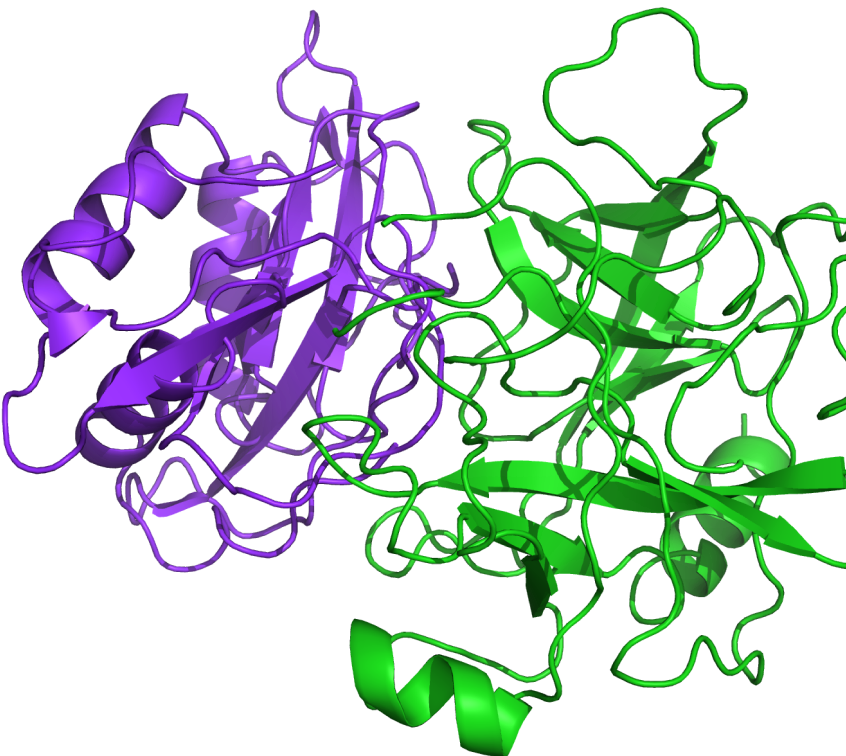
PIPER

Understand and predict protein-protein interactions at the atomic level

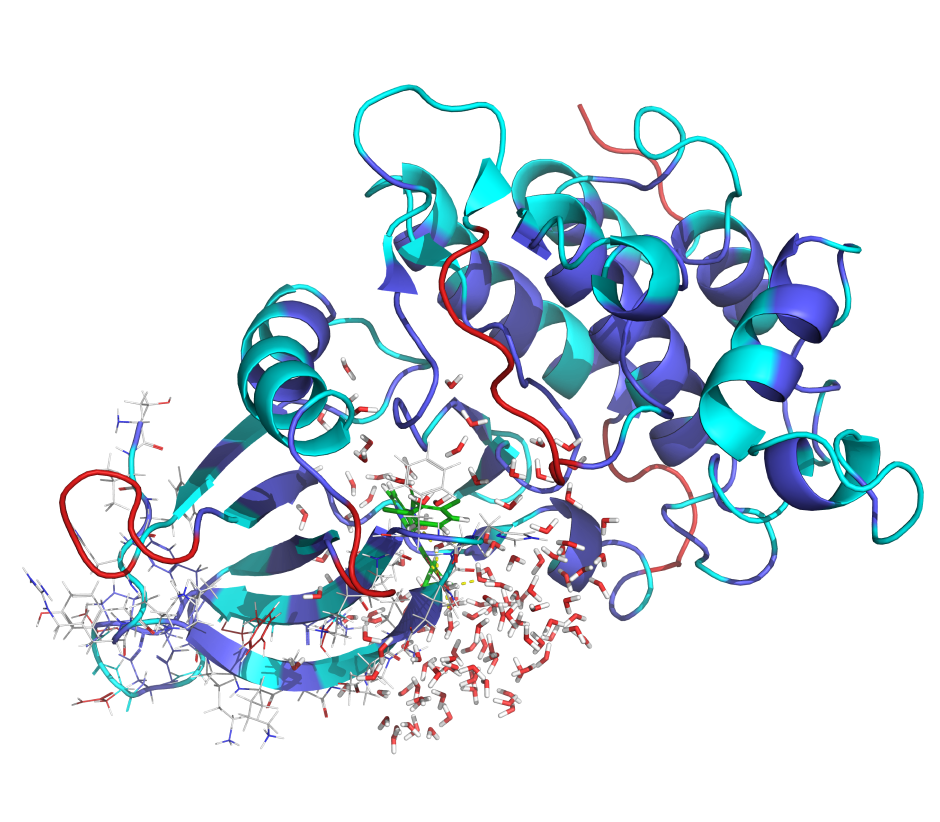
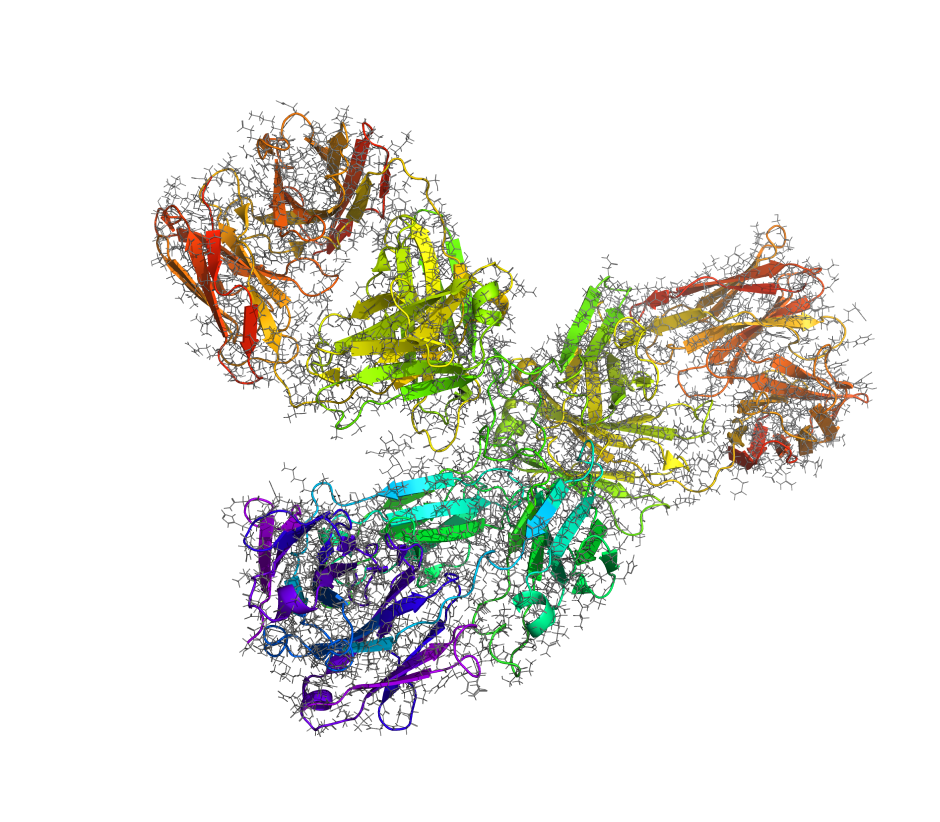
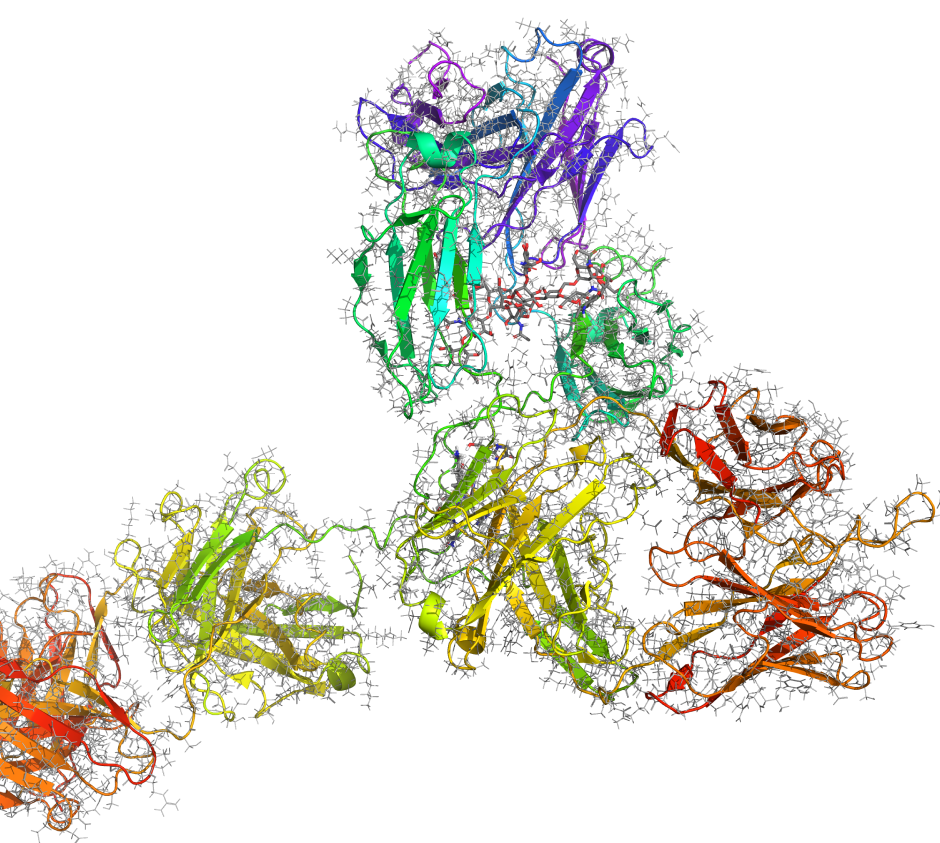
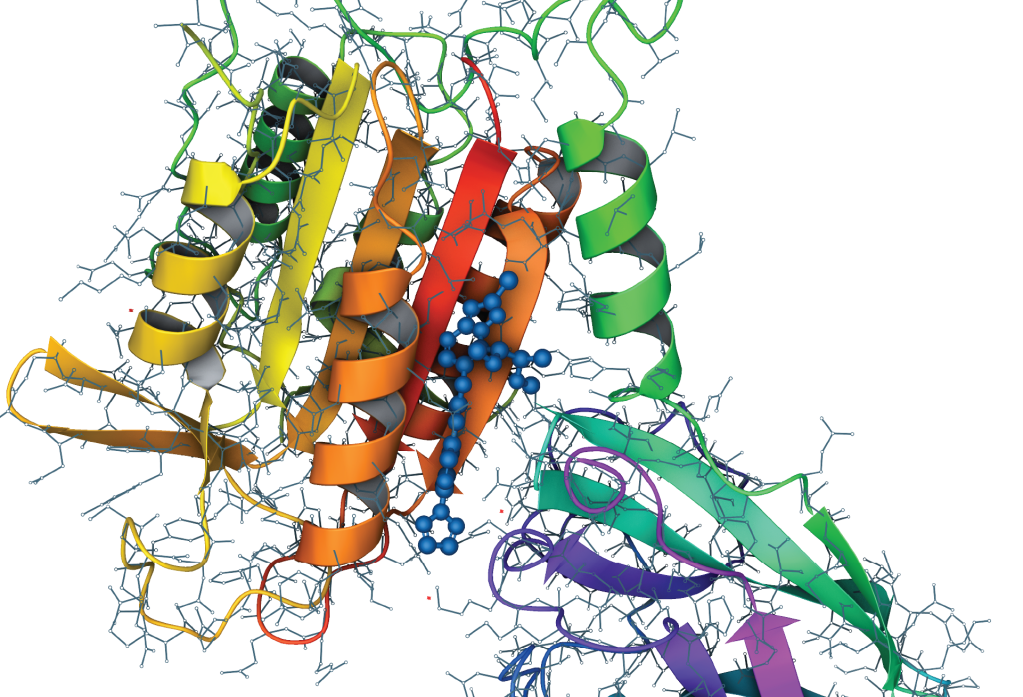
PIPER is a well-validated protein-protein docking program based on a multi-staged approach and advanced numerical methods that generates reliable structures of protein-protein complexes. Based on docking code from the Vajda lab at Boston University, PIPER has a proven track record as an outstanding predictor of protein-protein complexes as judged by previous CAPRI (Critical Assessment of Prediction of Interactions) blind experiments.

Key Capabilities

Easily set up  and run protein-protein docking computations using the intuitive biologics interface, BioLuminate
Rapidly sample and score billions of relative orientations of interacting proteins using PIPER’s efficient Fast Fourier Transformation (FFT) approach, along with accurate pairwise potentials
Increase the number of near-native conformations in the initial selection of poses relative to other FFT-based docking programs, while reducing the number of false positives 
Improve results using specialized potentials optimized for specific classes of protein–protein complexes such as antibody-antigen and enzyme-inhibitor pairs
Use experimental data to bias selection of the correct pose by applying a broad range of constraints, including attractive or repulsive biasing constraints or declare specific residues to be buried

Documentation & Tutorials

Get answers to common questions and learn best practices for using Schrödinger’s software.

Life Science Tutorial

Learning Path: Cyclic Peptide Modeling

A structured overview of tools and workflows for cyclic peptides in drug discovery.

Life Science Tutorial

Filtering and Validating Protein-Protein Docked Poses with Macromolecular Pose Filtering and MM-GBSA Residue Scanning

Identify which poses from protein-protein docking satisfy experimental observations about the protein-protein interface.

Life Science Tutorial

Antibody – Antigen Docking with PIPER

Dock the antibody and antigen structures using PIPER to get the antibody-antigen complex.

Life Science Tutorial

Generating ternary complex structures to enable rational design of targeted protein degraders

Generate and score structures for a target-PROTAC-ligase complex to enable linker optimization.

Life Science Documentation

Learning Path: Oligonucleotide Modeling

A structured overview of tools and workflows for nucleic acids in drug discovery.

Life Science Documentation

PIPER

A state-of-the-art protein-protein docking program.

Life Science Tutorial

Introduction to T Cell Receptor Modeling with BioLuminate

Structure preparation, visualization and analysis of key interactions in the TCR-peptide-MHC complex.

Related Products

Learn more about the related computational technologies available to progress your research projects.

FEP+

High-performance free energy calculations for drug discovery

BioLuminate

Comprehensive modeling platform for biologics discovery

Publications

Browse the list of peer-reviewed publications using Schrödinger technology in related application areas.

Life Science Publication

Performance and Its Limits in Rigid Body Protein-Protein Docking

Life Science Publication

Investigating Protein-Peptide Interactions Using the Schr’dinger Computational Suite

Life Science Publication

Selection of Nanobodies that Block the Enzymatic and Cytotoxic Activities of the Binary Clostridium Difficile Toxin CDT

Life Science Publication

Consensus Induced Fit Docking (cIFD): Methodology, validation, and application to the discovery of novel Crm1 inhibitors

Life Science Publication

The 4th meeting on the Critical Assessment of Predicted Interaction (CAPRI) held at the Mare Nostrum, Barcelona

Life Science Publication

DARS (Decoys As the Reference State) Potentials for Protein-Protein Docking

Life Science Publication

PIPER: An FFT-based protein docking program with pairwise potentials

Training & Resources

Online certification courses

Level up your skill set with hands-on, online molecular modeling courses. These self-paced courses cover a range of scientific topics and include access to Schrödinger software and support.

Tutorials

Learn how to deploy the technology and best practices of Schrödinger software for your project success. Find training resources, tutorials, quick start guides, videos, and more.
OPLS4 & OPLS5 Force Field

OPLS4 & OPLS5 Force Fields

Modern, comprehensive force fields for accurate molecular simulations

OPLS4 & OPLS5 Force Fields

Improve the quality of your computational predictions with Schrödinger’s state of the art force fields

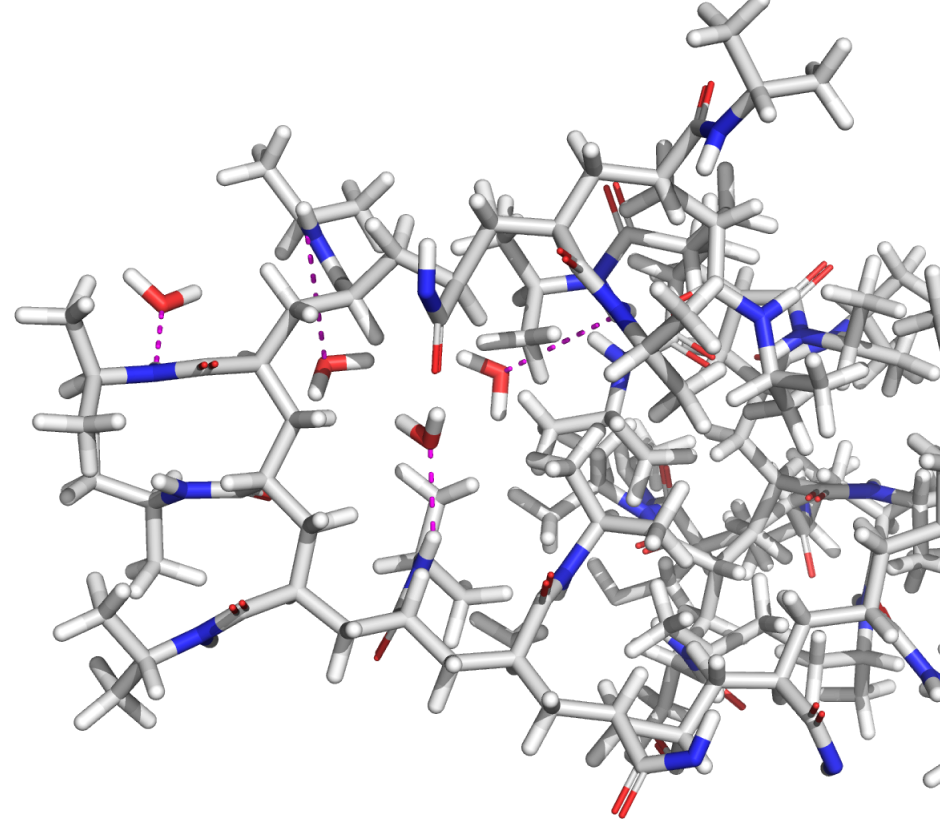
Force fields are used in molecular simulations to describe the interactions between atoms in a system. Having an accurate force field is at the heart of obtaining useful molecular structures and predicting relative energies, and yet many in silico programs employ force fields that are years, if not decades, old and suffer from lack of sufficient coverage for many common molecular motifs.

OPLS4 and OPLS5 are highly accurate, modern force fields with comprehensive coverage of chemical space for both drug discovery and materials science applications. They build upon the extensive coverage and accuracy achieved in previous OPLS versions by improving the accuracy of functional groups that have presented significant modeling challenges in the past.

New OPLS5: A polarizable force field

Full release of the OPLS5 polarizable small molecule force field: Provides broad coverage of organic functional groups for improved FEP+ and Desmond simulation accuracy

Key Benefits of Schrödinger OPLS

Continuous scientific development by leading force field experts
Backed by state of the art quantum engine (Jaguar) and extensive experimental validation
Broad coverage of chemical space for small molecules, biologics and materials science applications
Easily extendible into novel project-specific chemistry with Force Field Builder

Applications for drug discovery

Obtain more accurate predictions of binding affinity

OPLS produces accurate predictions of binding free energies in FEP+, leading to more accurate rank ordering among congeneric series of compounds.

Predict binding modes of novel scaffolds

OPLS aids in accurately predicting binding modes of novel scaffolds with advanced induced fit docking methods in IFD-MD.

Perform accurate molecular dynamics simulations

OPLS helps elucidate mechanisms of action and interaction energies captured by accurately modeling molecular dynamics with Desmond.

Improve conformational analyses

OPLS provides a more accurate description of torsional energies and leads to improved conformational analyses and docking poses in Glide, ConfGen, MacroModel, and Prime.

Documentation & Tutorials

Get answers to common questions and learn best practices for using Schrödinger’s software.

Materials Science Documentation

OPLS4 and OPLS5 Force Field

A force field that is a model of the potential energy of a chemical system – a set of functions and parameters used to model the potential energy of the system, and thereby to calculate the forces on each particle.

Life Science Documentation

OPLS4 and OPLS5 Force Field

A force field that is a model of the potential energy of a chemical system – a set of functions and parameters used to model the potential energy of the system, and thereby to calculate the forces on each particle.

Life Science Tutorial

Exploring Protein Binding Sites with Mixed-Solvent Molecular Dynamics

Identify and characterize binding sites with mixed solvent molecular dynamics.

Materials Science Documentation

Materials Science Panel Explorer

Quickly learn which Schrödinger tools are the best fit for your research.

Related Products

Learn more about the related computational technologies available to progress your research projects.

FEP+

High-performance free energy calculations for drug discovery

IFD-MD

Accurate ligand binding mode prediction for novel chemical matter, for on-targets and off-targets

Desmond

High-performance molecular dynamics (MD) engine providing high scalability, throughput, and scientific accuracy

Force Field Builder

Efficient tool for optimizing custom torsion parameters in OPLS4

MS Transport

Efficient molecular dynamics (MD) simulation tool for predicting liquid viscosity, conductivity and diffusions of atoms and molecules

MS CG

Efficient coarse-grained (CG) molecular dynamics (MD) simulations for large systems over long time scales

MS Penetrant Loading

Molecular dynamics (MD) modeling for predicting water loading and small molecule gas adsorption capacity of a condensed system

Publications

Browse the list of peer-reviewed publications using Schrödinger technology in related application areas.

Life Science Publication

A robust crystal structure prediction method to support small molecule drug development with large scale validation and blind study

Life Science Publication

Towards automated physics-based absolute drug residence time predictions

Life Science Publication

Accurate physics-based prediction of binding affinities of RNA- and DNA-targeting ligands

Materials Science Publication

Gaining molecular insights towards inhibition of foodborne fungi Aspergillus fumigatus by a food colourant violacein via computational approach

Materials Science Publication

Predicting Drug-Polymer Compatibility in Amorphous Solid Dispersions by MD Simulation: On the Trap of Solvation Free Energie

Materials Science Publication

Possible Applications of the Polli Dissolution Mechanism: A Case Study Using Molecular Dynamics Simulation of Bupivacaine

Materials Science Publication

Modelling of Prednisolone Drug Encapsulation in Poly Lactic-co-Glycolic Acid Polymer Carrier Using Molecular Dynamics Simulations

Materials Science Publication

Cu-TiO2/Zeolite/PMMA Tablets for Efficient Dye Removal: A Study of Photocatalytic Water Purification

Life Science Publication

Coarse-grained simulation of mRNA-loaded lipid nanoparticle self-assembly

Life Science Publication

OPLS5: Addition of polarizability and improved treatment of metals

Training & Resources

Online certification courses

Level up your skill set with hands-on, online molecular modeling courses. These self-paced courses cover a range of scientific topics and include access to Schrödinger software and support.

Tutorials

Learn how to deploy the technology and best practices of Schrödinger software for your project success. Find training resources, tutorials, quick start guides, videos, and more.
MacroModel

MacroModel

Versatile, full-featured molecular modeling program

MacroModel

Overview

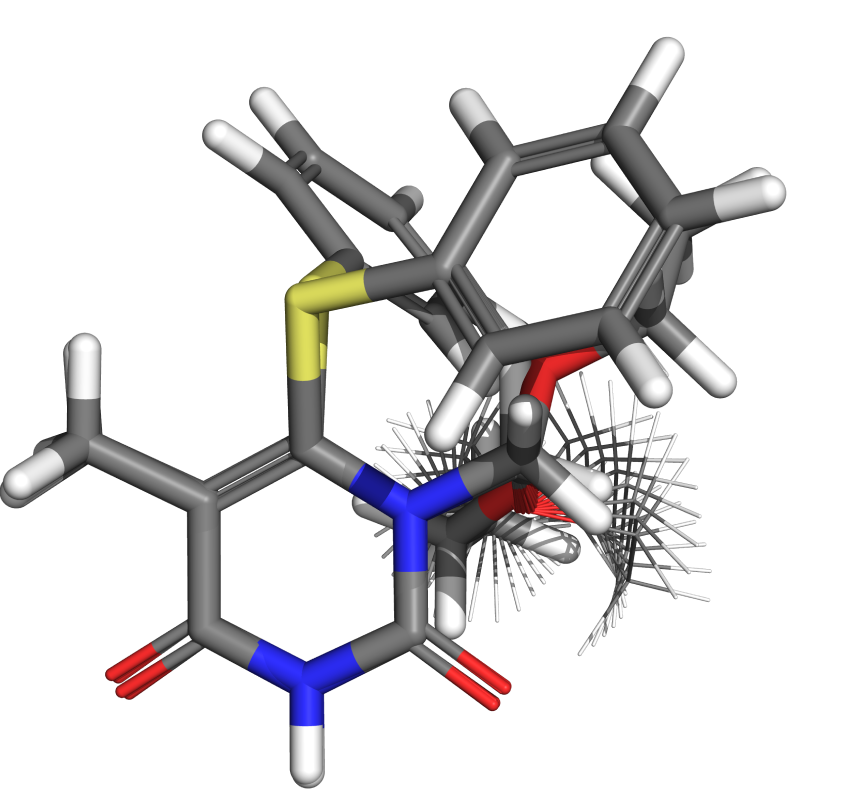
MacroModel is a force field-based molecular modeling tool with a range of advanced features and methods for examining molecular conformations, molecular motion, and intermolecular interactions. This flexible program can be utilized for diverse research applications, including organic and inorganic molecules and oligomers, organometallic complexes, and complex biological systems.

Key Capabilities

Trusted energetics

Obtain reliable estimation of energetics using a combination of high-quality force fields and GB/SA implicit solvation model

Industry-leading conformation search

Benefit from a wide range of conformational searching methods, capable of handling systems ranging from small molecules to entire proteins with the ability to apply constraints and focus the calculation on a small region to enhance speed

Flexible constraints

Apply constraints to focus the calculation on a small region to enhance speed

Efficient serial calculations in one click

Automatically perform separate calculations on many different input molecules

Integrated to complement many other tools

Improve efficiency and accuracy of conformational investigation and minimization for molecular mechanics, molecular dynamics and quantum mechanics calculations

Diverse force fields selection options

Leverage a diversity of force fields, including MM2, MM3, AMBER, AMBER94, MMFF, MMFFs, OPLS, OPLS_2005, and OPLS4, to support a wide range of research applications

Documentation & Tutorials

Get answers to common questions and learn best practices for using Schrödinger’s software.

Life Science Tutorial

Modeling Blood-Brain Barrier Penetration Using E-sol

Compute energy of solvation (E-sol) values and analyze the results to assess blood-brain barrier (BBB) permeability.

Life Science Tutorial

Generating ternary complex structures to enable rational design of targeted protein degraders

Generate and score structures for a target-PROTAC-ligase complex to enable linker optimization.

Materials Science Documentation

MacroModel

A force field-based molecular modeling tool, with a range of advanced features and methods for examining molecular conformations, molecular motion, and intermolecular interactions.

Life Science Documentation

MacroModel

A force field-based molecular modeling tool, with a range of advanced features and methods for examining molecular conformations, molecular motion, and intermolecular interactions.

Life Science Tutorial

Conformational Analysis for Small Molecules Using MacroModel and ConfGen

Investigate torsional profiles for related small molecules and how conformation affects intra- and intermolecular interactions.

Materials Science Tutorial

Bond and Ligand Dissociation Energy

Calculate the energy associated with the fragmentation of a parent molecule at various dissociation sites.

Materials Science Tutorial

Kinetic Monte Carlo (KMC) Charge Mobility

Learn how to calculate charge mobility in semiconducting molecular devices.

Related Products

Learn more about the related computational technologies available to progress your research projects.

Desmond

High-performance molecular dynamics (MD) engine providing high scalability, throughput, and scientific accuracy

FEP+

High-performance free energy calculations for drug discovery

Glide

Industry-leading ligand-receptor docking solution

LigPrep

Versatile ligand preparation tool for structure-based workflows

ConfGen

Accurate and efficient conformational search solution

Jaguar

Quantum mechanics solution for rapid and accurate prediction of molecular structures and properties

OPLS4 & OPLS5 Force Field

A modern, comprehensive force field for accurate molecular simulations

BioLuminate

Comprehensive modeling platform for biologics discovery

Maestro

Complete modeling environment for your molecular discovery

Publications

Browse the list of peer-reviewed publications using Schrödinger technology in related application areas.

Materials Science Publication

Photooxygenation reactions under flow conditions: An experimental and in-silico study

Materials Science Publication

Development of Glecaprevir: Conformations, Crystal Structures, and Efficient Solid–Solid Conversion for a Highly Polymorphic Macrocyclic Drug

Materials Science Publication

Optimization of fluorinated phenyl azides as universal photocrosslinkers for semiconducting polymers

Materials Science Publication

Advantages of Induced Circular Dichroism Spectroscopy for Qualitative and Quantitative Analysis of Solution-Phase Cyclodextrin Host–Guest Complexes

Materials Science Publication

Reaction dynamics as the missing puzzle piece: the origin of selectivity in oxazaborolidinium ion-catalysed reactions

Materials Science Publication

Molecular mechanisms involved in the chemical instability of ONC201 and methods to counter Its degradation in solution

Materials Science Publication

Formation of a Disulfide Bridge on the Resin during Solid-Phase Synthesis of Terlipressin: Influence of the Boc-Protected and Free N-Terminal Amino Group

Materials Science Publication

Benzene Tetraamide: A covalent supramolecular dual motif in dynamic covalent polymer networks

Materials Science Publication

Polymorphic amyloid nanostructures of hormone peptides involved in glucose homeostasis display reversible amyloid formation

Materials Science Publication

Water binding and hygroscopicity in π-conjugated polyelectrolytes

Training & Resources

Online certification courses

Level up your skill set with hands-on, online molecular modeling courses. These self-paced courses cover a range of scientific topics and include access to Schrödinger software and support.

Tutorials

Learn how to deploy the technology and best practices of Schrödinger software for your project success. Find training resources, tutorials, quick start guides, videos, and more.
Macro-pKa

Macro-pKa

Accurate, physics-based modeling of the aqueous ionization and speciation behavior of small molecules

Macro-pKa

Overview

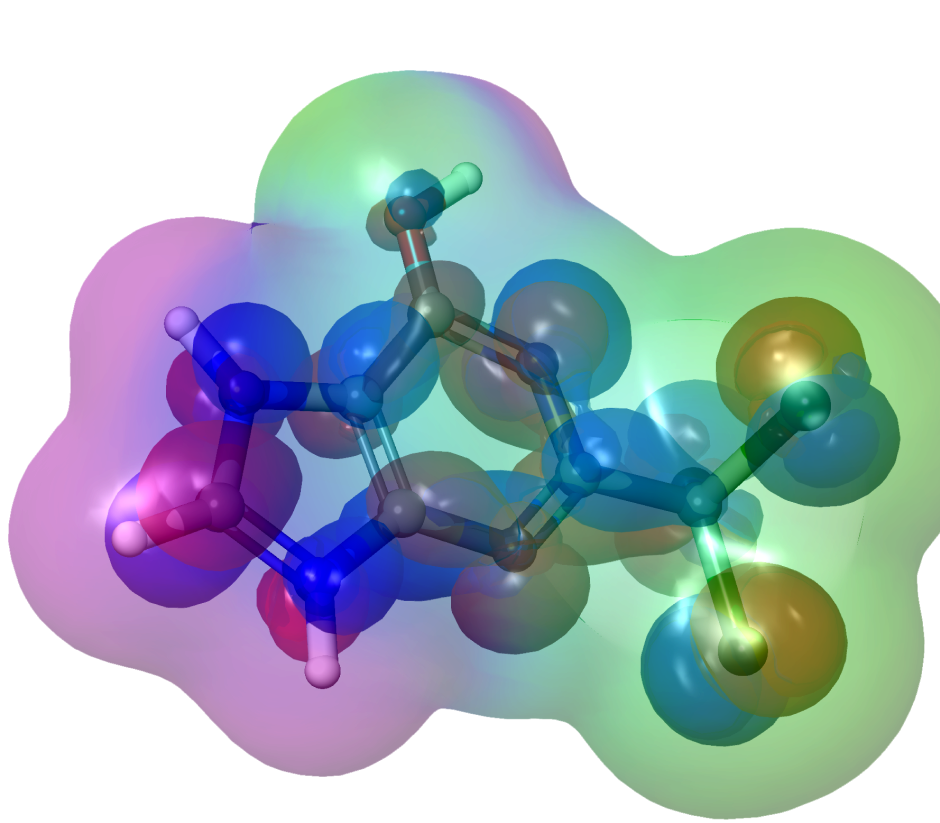
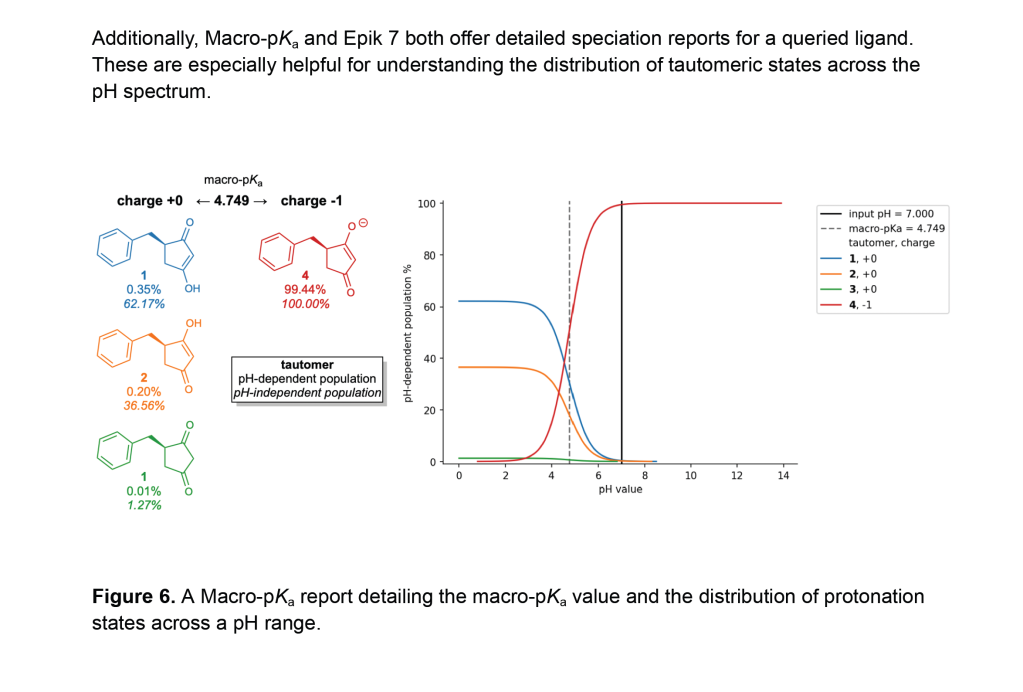
Macro-pKa  is an automated solution for predicting macroscopic pKa values and pH-dependent tautomeric populations of ligands that combines physics-based DFT calculations with empirical corrections.

Key Capabilities

Automatically identify protonatable/deprotonatable sites, enumerate the protonation states, and calculate the micro-pKa values with an enhanced scheme for generating empirical corrections 
Calculate the complex aqueous speciation behavior of tautomerizable ligands
Capture nuanced but important energetic effects like conformational averaging, solvation/shielding, hydrogen bonding, and stereochemistry
Generate an easy-to-read report that includes predicted macro-pKa of a small molecule, its different constituent protonation states and their populations, and a speciation diagram for the major species in solution
FeaturedSchrödinger solutions for small molecule protonation state enumeration and pKa prediction

Schrödinger solutions for small molecule protonation state enumeration and pKa prediction

Learn about the various solutions for predicting pKa values, protonation state distribution, and derived properties that can be applied across a range of drug discovery stages, from screening through lead optimization.

Read the white paper

Documentation & Tutorials

Get answers to common questions and learn best practices for using Schrödinger’s software.

Life Science Documentation

Macro-pKa

An automated solution for predicting macroscopic pKa values and pH-dependent tautomeric populations of ligands that combines physics-based DFT calculations with empirical corrections.

Related Products

Learn more about the related computational technologies available to progress your research projects.

Jaguar

Quantum mechanics solution for rapid and accurate prediction of molecular structures and properties

Jaguar Spectroscopy

Conformationally-dependent spectroscopic characterization based on quantum mechanics calculations

Epik

Rapid pKa and protonation state prediction tool

Publications

Browse the list of peer-reviewed publications using Schrödinger technology in related application areas.

Life Science Publication

Discovery of a Novel Class of d-Amino Acid Oxidase Inhibitors Using the Schr’dinger Computational Platform

Training & Resources

Online certification courses

Level up your skill set with hands-on, online molecular modeling courses. These self-paced courses cover a range of scientific topics and include access to Schrödinger software and support.

Tutorials

Learn how to deploy the technology and best practices of Schrödinger software for your project success. Find training resources, tutorials, quick start guides, videos, and more.
Jaguar Spectroscopy

Jaguar Spectroscopy

Conformationally-dependent spectroscopic characterization based on quantum mechanics calculations

Jaguar Spectroscopy

Accurately predict VCD/IR, ECD/UV-vis, and NMR spectra using an automated workflow

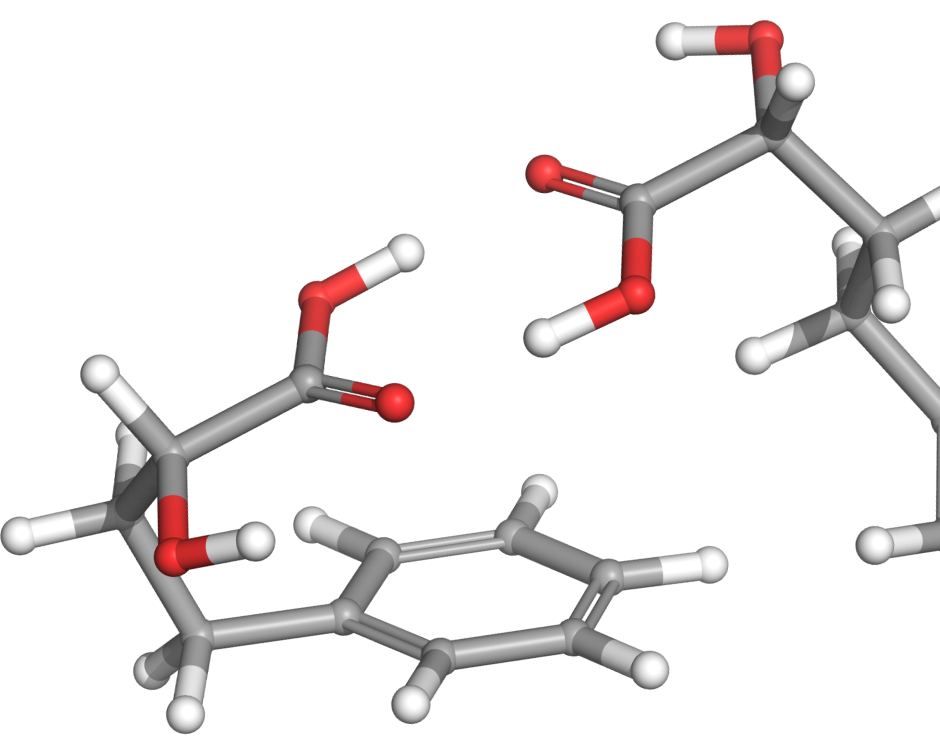
Jaguar Spectroscopy is an advanced computational spectra prediction tool that helps characterize the molecular structure of small molecules. Determine stereo configuration in chiral molecules without crystallizing the molecule or using X-ray spectroscopy. Benefit from the combined accuracy of conformational search by MacroModel and fast calculations based on pseudo-spectral density functional theory with Jaguar.

Key Capabilities

Fast VCD/IR, ECD/UV-vis, and NMR calculations with a pseudospectral DFT implementation
Automated Boltzmann averaging of VCD/IR, ECD/UV-vis, and NMR spectra, as well as alignment of VCD/IR theoretical and experimental spectra
Support for water, chloroform, ethanol, methanol, DMSO, and acetonitrile solvents through an implicit solvent model in VCD/IR and ECD/UV-vis spectra modeling
Simulated NMR spectra of isotopes 1H, 13C, 15N, 19F, and 31P and support of partly deuterated compounds
Highly accurate, automated conformational search with proprietary OPLS4 force field
Needleman-Wunsch and scaling algorithms for automated alignment of theoretical and experimental VCD/IR spectra

Resources

Discover how Schrödinger technology is being used to solve real-world research challenges.

Improving absolute configuration assignments with vibrational circular dichroism (VCD) by modeling solvation and dimerization effects

VCD/IR, ECD/UV-vis, and NMR spectra prediction with Jaguar Spectroscopy

Documentation & Tutorials

Get answers to common questions and learn best practices for using Schrödinger’s software.

Life Science Documentation

Jaguar Spectroscopy

Calculate VCD, ECD, or NMR spectra for a set of structures, with optional MM conformational search and QM refinement.

Life Science Tutorial

NMR Spectra Prediction

Learn to predict nuclear magnetic resonance (NMR) spectra.

Materials Science Tutorial

NMR Spectra Prediction

Learn to predict nuclear magnetic resonance (NMR) spectra.

Materials Science Documentation

Materials Science Panel Explorer

Quickly learn which Schrödinger tools are the best fit for your research.

Materials Science Tutorial

Vibrational Circular Dichroism (VCD)

Learn to perform vibrational circular dichroism (VCD) calculations.

Life Science Tutorial

Vibrational Circular Dichroism (VCD)

Learn to perform vibrational circular dichroism (VCD) calculations.

Related Products

Learn more about the related computational technologies available to progress your research projects.

Jaguar

Quantum mechanics solution for rapid and accurate prediction of molecular structures and properties

OPLS4 & OPLS5 Force Field

A modern, comprehensive force field for accurate molecular simulations

Maestro

Complete modeling environment for your molecular discovery

Training & Resources

Online certification courses

Level up your skill set with hands-on, online molecular modeling courses. These self-paced courses cover a range of scientific topics and include access to Schrödinger software and support.

Tutorials

Learn how to deploy the technology and best practices of Schrödinger software for your project success. Find training resources, tutorials, quick start guides, videos, and more.
IFD-MD

IFD-MD

Accurate ligand binding mode prediction for novel chemical matter, for on-targets and off-targets

Hit-to-Lead & Lead Optimization

Open new doors to structure-based design for a broader range of targets and off-targets

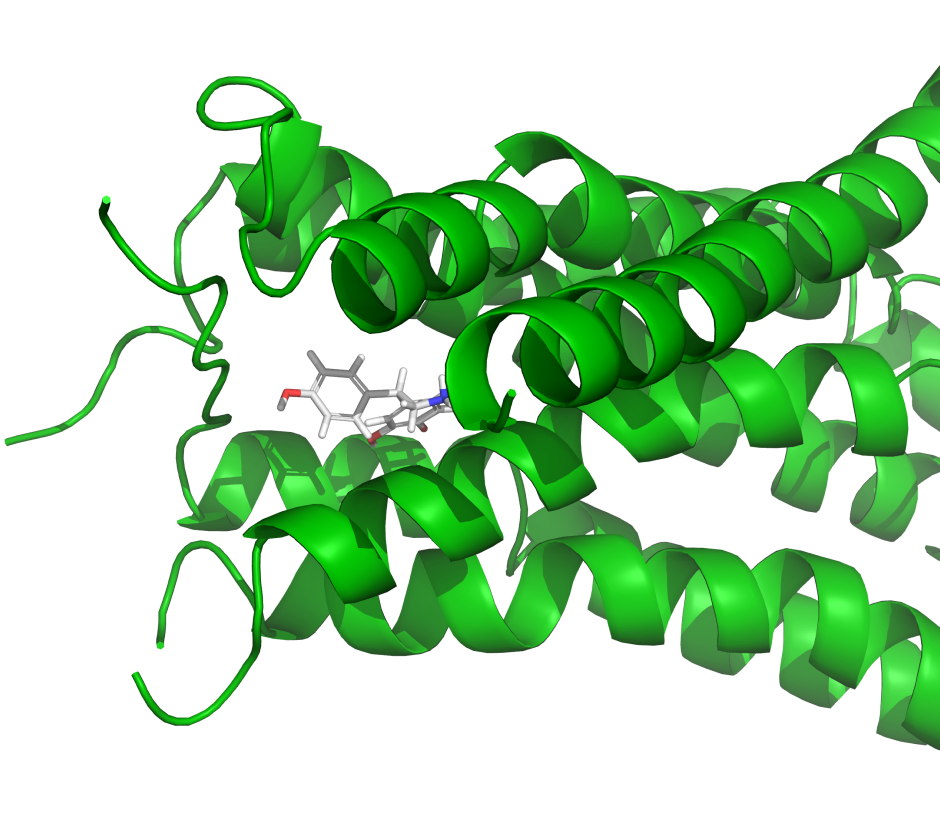
IFD-MD is a powerful GPU-accelerated solution for predicting receptor-ligand binding poses at an accuracy approaching experimental methods, but at a reduced cost and faster turnaround. Using IFD-MD in combination with FEP+ for model validation allows a full in silico method for deploying high precision structure-based drug discovery starting from homology models, AlphaFold structures, or experimental structures bound to unrelated chemical matter.

Advantages of IFD-MD for ligand-binding mode prediction

Expedite programs without waiting to obtain an experimental structure

Progress structure-based design efforts without waiting for an experimental crystal structure of a new chemical series 

Understand and de-risk off-target activities

Eliminate the need to initiate a new crystallization program of a known off-target bound to chemical matter

Applicable to a wide range of modalities

From non-covalent ligands to covalent ligands and macrocycles

Rationalize membrane protein targets

with explicit water molecules in the binding site and explicit lipid molecules in the membrane region

How it works

Incorporates the effects that water molecules have on binding as an important component of the IFD-MD scoring function
Detects and penalizes desolvation of polar groups caused by non-native ligand poses
Utilizes a consensus mode to produce models that can help explain potential liabilities from common promiscuous off-targets
FeaturedCase Study Feature CDC7

Design of a novel, potent CDC7 inhibitor development candidate with high ligand efficiency and optimized properties

Learn how Schrödinger’s digital chemistry platform facilitates efficient multi-parameter optimization of selectivity, cell potency, and toxicity at scale.

read the case study

Documentation & Tutorials

Get answers to common questions and learn best practices for using Schrödinger’s software.

Life Science Documentation

IFD-MD

GPU-accelerated prediction of receptor-ligand binding poses.

Life Science Tutorial

Homology Modeling of Protein-Ligand Binding Sites with IFD-MD

Create a homology model of TYK2 from JAK3 and including a bound ligand. Compare this model with the crystal structure for TYK2 bound to 4GIH.

Life Science Tutorial

Approximating Protein Flexibility without Molecular Dynamics

Soften potentials in Glide and run induced-fit docking for side chain conformational changes and loop refinement.

Life Science Tutorial

Designing Out Common ADMET Liabilities using Consensus IFD-MD

Use Consensus IFD-MD to generate a model that can be used to improve selecitvity between an on-target protein and hERG.

Life Science Tutorial

Using IFD-MD on a Membrane-bound protein

Set up a membrane-bound protein for IFD-MD and visualize the results.

Life Science Tutorial

Using IFD-MD on a Covalently Bound Ligand

Set up IFD-MD for a covalently bound ligand and visualize the results.

Life Science Tutorial

Cross-Docking with IFD-MD

Use IFD-MD to generate a predicted binding pose of a known active compound using a holo structure solved with a different ligand as a starting point.

Related Products

Learn more about the related computational technologies available to progress your research projects.

FEP+

High-performance free energy calculations for drug discovery

Prime

A powerful and innovative solution for accurate protein structure prediction

Glide

Industry-leading ligand-receptor docking solution

WaterMap

State-of-the-art, structure-based method for assessing the energetics of water solvating ligand binding sites for ligand optimization

Desmond

High-performance molecular dynamics (MD) engine providing high scalability, throughput, and scientific accuracy

Publications

Browse the list of peer-reviewed publications using Schrödinger technology in related application areas.

Life Science Publication

Structure–activity relationship of a pyrrole based series of PfPKG inhibitors as anti-malarials

Life Science Publication

Enabling Structure-Based Drug Discovery Utilizing Predicted Models

Life Science Publication

Using AlphaFold and Experimental Structures for the Prediction of the Structure and Binding Affinities of GPCR Complexes via Induced Fit Docking and Free Energy Perturbation

Life Science Publication

Benchmark and Refinement of AlphaFold2 Structures for Hit Discovery

Life Science Publication

Pathfinder-Driven Chemical Space Exploration and Multiparameter Optimization in Tandem with Glide/IFD and QSAR-Based Active Learning Approach to Prioritize Design Ideas for FEP+ Calculations of SARS-CoV-2 PLpro Inhibitors

Life Science Publication

Induced-Fit Docking Enables Accurate Free Energy Perturbation Calculations in Homology Models

Life Science Publication

Reliable and Accurate Solution to the Induced Fit Docking Problem for Protein-Ligand Binding

Training & Resources

Online certification courses

Level up your skill set with hands-on, online molecular modeling courses. These self-paced courses cover a range of scientific topics and include access to Schrödinger software and support.

Tutorials

Learn how to deploy the technology and best practices of Schrödinger software for your project success. Find training resources, tutorials, quick start guides, videos, and more.

FEP+

FEP+

High-performance free energy calculations for drug discovery

Life Science: FEP+

Discover better quality molecules, faster with FEP+

FEP+ is Schrödinger’s proprietary, physics-based free energy perturbation technology for computationally predicting protein-ligand binding at an accuracy matching experimental methods, across broad chemical space.

Explore vast chemical space and reduce costs

Leverage FEP+ as an accurate in silico binding affinity assay to drive rapid virtual design cycles and focus experimental efforts on only the highest quality ideas

Improve molecular profiles, efficiently

Optimize multiple properties simultaneously, including potency, selectivity, and solubility, to improve the profile and developability of small and large molecules

Pursue novel chemistry with confidence

Synthesize novel and challenging chemistry with a high degree of confidence through prospective application of FEP+

Continuously pushing the state of the art in free energy methods

Gold standard accuracy

Predictive accuracy approaching experiment (1 kcal/mol) as demonstrated in large-scale validation studies across diverse ligands and protein classes

Proven impact in drug discovery

Widely adopted by leading pharma and biotech companies, with several drug candidates in the clinic driven by FEP+

Highly versatile

Supports the broadest range of applications and perturbation types common in drug discovery scenarios and consistently expanded through active R&D

Apply FEP+ to diverse applications across the drug discovery process

Structure Prediction & Target Enablement

Structure Prediction & Target Enablement

  • Check greenValidate protein models without experimental structures or from low resolution structures using IFD-MD with FEP+
  • Check greenStructurally enable off-targets and design out common ADMET liabilities
Hit Discovery

Hit Discovery

  • Check greenRescore hits from virtual screens to prioritize synthesis lists and improve using absolute binding FEP+

  • Check greenLeverage available chemical matter to efficiently discover novel cores via core hopping 

  • Check greenPerform large-scale in silico fragment screens using absolute binding FEP+ and solubility FEP+
Hit-to-Lead & Lead Optimization

Hit-to-Lead & Lead Optimization

  • Check greenRapidly optimize on-target potency by leveraging FEP+ as an in silico binding affinity assay

  • Check greenOptimize selectivity to known off-targets and across large gene families

  • Check greenMaintain on-target potency and selectivity while optimizing ADMET properties
In Silico Protein Engineering

In Silico Protein Engineering

  • Check greenRefine antibody candidate selection with accuracy that reproduces experimentally determined relative free energies
  • Check greenPredict binding affinity, selectivity, and thermostability of peptides
  • Check greenEngineer enzymes for substrate selectivity and specificity

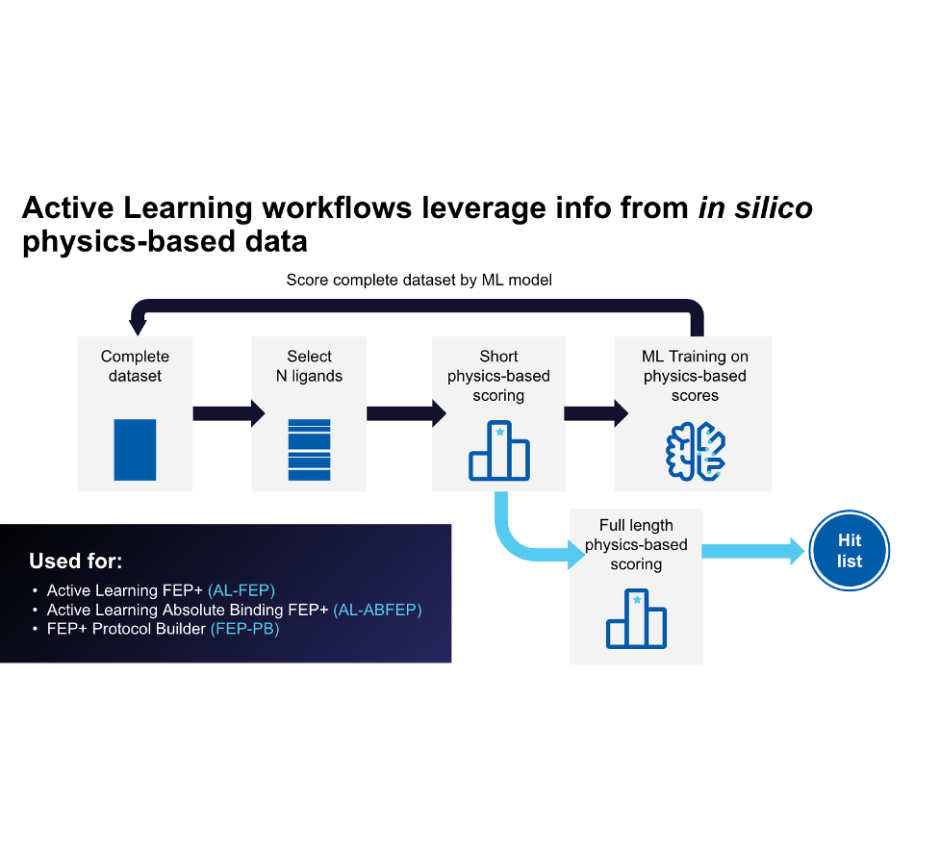
Accelerate FEP+ calculations across large compound libraries with Active Learning

Leverage a well-validated, automated workflow which trains a machine learning model on project-specific FEP+ data to allow processing of up to millions of compounds with highly accurate FEP+ calculations efficiently.

Featured CourseFree energy calculations for drug design with FEP+

Learn how to apply FEP+ to your project with our online certification course

Level-up your FEP+ skills and enroll in our online molecular modeling course, Free Energy Calculations for Drug Design with FEP+.

View Course

Case studies & webinars

Discover how Schrödinger technology is being used to solve real-world research challenges.

Life Science Webinar

Is structure-based drug design and toxicology ready for ion channels and transporters?

In this webinar, we will answer this question by presenting the results of a large scale study of potency prediction for seven clinically relevant ion channels and two transporters.

Life Science Webinar

Standing out in a competitive landscape: The power of structure-based biologics design

Join our upcoming webinar to learn how to leverage advanced in silico methods to de-risk your molecules and increase your experimental success rates.

Life Science Webinar

Standing out in a competitive landscape: The power of structure-based biologics design recording

Join our upcoming webinar to learn how to leverage advanced in silico methods to de-risk your molecules and increase your experimental success rates.

Life Science Webinar

Schrödinger デジタル創薬セミナー ~計算化学がもたらす創薬プロセスの変貌~ 第24回

APR 24, 2026 | Diverse computational strategies enable the discovery of p38α-MK2 molecular glues

Life Science Webinar

デジタル創薬セミナー ~計算化学がもたらす創薬プロセスの変貌~ 第23回

MAR 18, 2026 | Rethinking the rules: Exploiting solvent exposed salt-bridge interactions with free energy perturbation simulations for the discovery of potent inhibitors of SOS1

Life Science Webinar

Diverse computational strategies enable the discovery of p38α-MK2 molecular glues

In this webinar, Schrödinger’s medicinal and computational chemists will show how they used a multipronged computational design strategy to discover multiple structurally diverse, potent, and highly selective molecular glues.

Life Science White Paper

FEP+ Pose Builder — maximizing utility and productivity in FEP simulations

FEP+ Pose Builder is a methodological advancement introduced as an integrated feature to drastically enhance accessibility, user-friendliness, and productivity within the FEP+ pipeline.

Life Science Webinar

Scaling FEP+ for success: Strategic deployment of FEP+ and AI/ML to accelerate chemical space exploration

Join us to map out your strategy for maximizing the organizational impact of FEP+ and to achieve the full potential of your computational drug discovery and business goals. 

Life Science Webinar

Rethinking the rules: Exploiting solvent exposed salt-bridge interactions with free energy perturbation simulations for the discovery of potent inhibitors of SOS1

In this webinar, we will walk you through the SOS1 program, as well as our exploration of other examples where these salt-bridge interactions are influential.

Life Science Webinar

FEP+ State of the Union: Advancing computational rigor and scaling predictivity in drug discovery

In this webinar, Robert Abel, Schrödinger’s chief scientific officer, and Schrödinger’s FEP+ experts will provide an in-depth analysis of FEP+’s latest accuracy benchmarks and its expanding domain of applicability, maintaining its position as the gold standard in the industry.

Official NVIDIA Partner

Schrödinger has a strategic partnership with NVIDIA to optimize our computational drug discovery platform for NVIDIA GPU technology.

Documentation & Tutorials

Get answers to common questions and learn best practices for using Schrödinger’s software.

Life Science Tutorial

Learning Path: Cyclic Peptide Modeling

A structured overview of tools and workflows for cyclic peptides in drug discovery.

Life Science Documentation

Learning Path: Oligonucleotide Modeling

A structured overview of tools and workflows for nucleic acids in drug discovery.

Life Science Tutorial

Potency Predictions for RNA-Binding Small Molecules Using RB-FEP

Performing RB-FEP calculations to predict binding affinities for congeneric ligands binding to an RNA receptor.

Life Science Documentation

FEP+

Computational prediction of protein-ligand binding using physics-based free energy perturbation technology at an accuracy matching experimental methods.

Life Science Documentation

Learning Path: Virtual Screening

A structured overview of how to construct a virtual screening pipeline.

Life Science Tutorial

Protein pKa Prediction with Constant pH Molecular Dynamics

Determine pKa values and protonation states for protein residues.

Life Science Tutorial

Improving the Thermostability of T4 Lysozyme Using Protein FEP+ Guided Design

Increase protein thermostability by filling a buried cavity through mutation with protein FEP+.

Life Science Tutorial

Ligand Binding Pose Generation for FEP+

Generate starting poses for FEP simulations for a series of BACE1 inhibitors using core constrained docking.

Life Science Tutorial

Identifying impactful mutations using FEP+ residue scanning

Perform an FEP+ residue scan for identifying the impact of mutations on the stability and affinity of a protein-protein system.

Life Science Tutorial

FEP Solubility

Perform a Free Energy of Perturbation (FEP) Solubility simulation on ibuprofen.

Related Products

Learn more about the related computational technologies available to progress your research projects.

Active Learning Applications

Accelerate discovery with machine learning

De Novo Design Workflow

Fully-integrated, cloud-based design system for ultra-large scale chemical space exploration and refinement

OPLS4 & OPLS5 Force Field

A modern, comprehensive force field for accurate molecular simulations

IFD-MD

Accurate ligand binding mode prediction for novel chemical matter, for on-targets and off-targets

Maestro

Complete modeling environment for your molecular discovery

LiveDesign

Your complete digital molecular design lab

Publications

Browse the list of peer-reviewed publications using Schrödinger technology in related application areas.

Life Science Publication

Discovery of 2H-Pyrrolo[3,4-c]pyridin-3-one Derivatives as Type-III c-MET Inhibitors Enabled by Free-Energy Perturbation CalculationsCl

Life Science Publication

Structure-Based Discovery of Imidazo[4,5-c]pyridine SARM1 Modulators Showing Paradoxical Activation

Life Science Publication

Accelerated in silico discovery of SGR-1505: A potent MALT1 allosteric inhibitor for the treatment of mature B-cell malignancies

Life Science Publication

Discovery of highly potent noncovalent inhibitors of SARS-CoV-2 main protease through computer-aided drug design

Life Science Publication

Accurate hydration free energy calculations for diverse organic molecules with a machine learning force field

Life Science Publication

Knowledge and structure-based drug design of 15-PGDH inhibitors

Life Science Publication

Harnessing free energy calculations to achieve kinome-wide selectivity in drug discovery campaigns: Wee1 case study

Life Science Publication

ToxBench: A Binding Affinity Prediction Benchmark with AB-FEP-Calculated Labels for Human Estrogen Receptor Alpha

Life Science Publication

Enabling in-silico Hit Discovery Workflows Targeting RNA with Small Molecules

Life Science Publication

Active Learning FEP: Impact on Performance of AL Protocol and Chemical Diversity

Training & Resources

Online certification courses

Level up your skill set with hands-on, online molecular modeling courses. These self-paced courses cover a range of scientific topics and include access to Schrödinger software and support.

Tutorials

Learn how to deploy the technology and best practices of Schrödinger software for your project success. Find training resources, tutorials, quick start guides, videos, and more.

ConfGen

ConfGen

Accurate and efficient conformational search solution

Life Science: ConfGen

Explore ligand conformational landscape to produce plausible, thermodynamically accessible structures

ConfGen is a knowledge-based method that combines empirically derived heuristics and physics-based force field calculations to efficiently produce high-quality, diverse, low-energy 3D conformers of small molecules. It improves the recovery of bioactive conformations among generated conformers and drastically speeds conformer generation in ligand-based virtual screening.

Key Capabilities

Generate fewer efficient conformations, which results in faster search speeds for downstream applications and enhanced enrichment without sacrificing accuracy
Accurately identify local torsional minima as dictated on a case-by-case basis using single-point energy calculations
Choose from several well-validated preset options for full control over individual settings or select a project-appropriate compromise between speed and accuracy
Reproduce low RMSD bioactive conformations at an exceptional speed and ability
FeaturedAccurate and rapid conformation generation with ConfGen

Accurate and rapid conformation generation with ConfGen

Given its exceptional speed and ability to reproduce low RMSD bioactive conformations, ConfGen is the ideal solution for generating conformations for ligand-based virtual screening. This white paper outlines the speed and accuracy of ConfGen for virtual screening applications.

Read the white paper

Documentation & Tutorials

Get answers to common questions and learn best practices for using Schrödinger’s software.

Life Science Tutorial

Learning Path: Cyclic Peptide Modeling

A structured overview of tools and workflows for cyclic peptides in drug discovery.

Life Science Tutorial

Generating ternary complex structures to enable rational design of targeted protein degraders

Generate and score structures for a target-PROTAC-ligase complex to enable linker optimization.

Life Science Documentation

ConfGen

ConfGen documentation including online help and user manual.

Life Science Documentation

Learning Path: Virtual Screening

A structured overview of how to construct a virtual screening pipeline.

Life Science Tutorial

Conformational Analysis for Small Molecules Using MacroModel and ConfGen

Investigate torsional profiles for related small molecules and how conformation affects intra- and intermolecular interactions.

Related Products

Learn more about the related computational technologies available to progress your research projects.

FEP+

High-performance free energy calculations for drug discovery

Phase

An easy-to-use pharmacophore modeling solution for ligand- and structure-based drug design

Shape Screening

Efficient ligand-based virtual screening of millions to billions of molecules

Publications

Browse the list of peer-reviewed publications using Schrödinger technology in related application areas.

Life Science Publication

Benchmarking Commercial Conformer Ensemble Generators

Life Science Publication

Exploring Conformational Search Protocols for Ligand-based Virtual Screening and 3-D QSAR Modeling

Life Science Publication

Optimization, Pharmacophore Modeling and 3D-QSAR Studies of Sipholanes as Breast Cancer Migration and Proliferation Inhibitors

Life Science Publication

Bioguided discovery and pharmacophore modeling of the mycotoxic indole diterpene alkaloids penitrems as breast cancer proliferation, migration, and invasion inhibitors

Life Science Publication

Improved docking of polypeptides with Glide

Life Science Publication

Boosting virtual screening enrichments with data fusion: Coalescing hits from two-dimensional fingerprints, shape, and docking

Life Science Publication

Drug-like Bioactive Structures and Conformational Coverage with the LigPrep/ConfGen Suite: Comparison to Programs MOE and Catalyst

Life Science Publication

ConfGen: A Conformational Search Method for Efficient Generation of Bioactive Conformers

Training & Resources

Online certification courses

Level up your skill set with hands-on, online molecular modeling courses. These self-paced courses cover a range of scientific topics and include access to Schrödinger software and support.

Tutorials

Learn how to deploy the technology and best practices of Schrödinger software for your project success. Find training resources, tutorials, quick start guides, videos, and more.

BioLuminate

BioLuminate

Comprehensive modeling platform for biologics discovery

BioLuminate

Unlock the possibilities of biologics design

Maestro BioLuminate is Schrödinger’s comprehensive interface to streamline computationally-guided biologics drug discovery. By leveraging industry-leading molecular simulations and logically organizing tasks and workflows, BioLuminate provides predictive methods to optimize properties of biomolecules from sequence to structure.

bg-circle

Design better quality biomolecules with a comprehensive, user-friendly platform

Build & Model

  • Easily build accurate structural models which serve as key starting points for rational design of biologics
  • Model antibody structures using a fully guided, specialized workflow incorporating de novo CDR loop sampling
  • Leverage advanced protein sequence analysis tools, including annotation capabilities

Predict & Analyze

  • Access cutting-edge, predictive computational modeling workflows for biologics discovery within a streamlined portal
  • Predict and analyze protein-protein or protein-nucleic acid interactions at the atomic level using computational workflows
  • Calculate descriptors for characterizing and triaging antibodies and proteins, including protein surface properties and aggregation propensity

Design & Engineer

  • Enumerate potential amino acid substitutions and design focused libraries
  • Perform in silico mutagenesis to engineer novel variants with superior binding affinity, selectivity, and thermostability
  • Design flexible linkers and rigid linkers to generate multi-functional fusion proteins

Broad application across protein-based therapeutics discovery

Access refined workflows across multiple biological modalities

Antibody Design

Rationally design potent, safe, and developable monoclonal antibodies

Learn More
Peptide Discovery

Design peptidic drugs using in silico structure-based methods

Learn More
Enzyme Engineering

Efficiently optimize enzymes using structure-based design methods

Learn More

Documentation & Tutorials

Get answers to common questions and learn best practices for using Schrödinger’s software.

Life Science Tutorial

Handling Non-standard Amino Acids

Design non-standard amino acids (NSAAs), add the NSAAs to database, run and analyze MM-GBSA Residue Scanning incorporating designed NSAAs.

Life Science Tutorial

Preparing Cyclic Peptides and Aligning them to a Reference Structure

Prepare cyclic peptides for modeling application using LigPrep and align them to a reference structure using tug_align script.

Life Science Tutorial

Peptide Cyclization

Cyclize peptides using macrocyclize.py script via the command line interface and rank-order the cyclized structures using Prime MM-GBSA.

Life Science Tutorial

Antibody Structure Prediction and Visualization with BioLuminate

Predict antibody structure, analyze the structure quality, and perform necessary refinements in the predicted structure.

Life Science Tutorial

Humanizing Antibody Structures with BioLuminate

Humanize antibody structure through CDR grafting and residue mutation.

Life Science Tutorial

Antibody – Antigen Docking with PIPER

Dock the antibody and antigen structures using PIPER to get the antibody-antigen complex.

Life Science Tutorial

Improving Antibody Stability/Affinity Using MM-GBSA Residue Scanning

Perform an MM-GBSA residue scanning in antigen-antibody complex to improve stability/affinity.

Life Science Tutorial

Enzyme Engineering with BioLuminate

Investigate the effect of mutations in an alkene reductase from the OYE family on enzyme stability and ligand binding.

Life Science Tutorial

Building and Analyzing a Complex Lipid Bilayer and Embedding a Membrane Protein

Learn to build and analyze a complex lipid bilayer and how to embedd a protein.

Life Science Documentation

BioLuminate

Schrödinger’s comprehensive modeling platform for biologics discovery.

Featured CourseIntroduction to Computational Antibody Engineering Course

Learn how to use BioLuminate for antibody engineering with our hands-on, online certification course

Level-up your computational modeling skills and enroll in our online course, Introduction to Computational Antibody Engineering.

view course

Case studies & webinars

Discover how Schrödinger technology is being used to solve real-world research challenges.

Life Science Webinar

Biologics modeling for wet lab scientists: Detecting and deprioritizing dead ends before they reach the bench recording

Join us to learn how to detect and deprioritize high-risk candidates, effectively discarding developability dead-ends before they ever reach the bench.

Life Science Webinar

Biologics modeling for wet lab scientists: Detecting and deprioritizing dead ends before they reach the bench

Join us to learn how to detect and deprioritize high-risk candidates, effectively discarding developability dead-ends before they ever reach the bench.

Life Science Webinar

Biologics modeling for wet lab scientists: Detecting and deprioritizing dead ends before they reach the bench recording

Join us to learn how to detect and deprioritize high-risk candidates, effectively discarding developability dead-ends before they ever reach the bench.

Life Science Webinar

MAY 14, 2025 | Schrödinger デジタル創薬セミナー17 | Schrödinger’s approach to physics-based antibody analysis and design

Schrödinger’s approach to physics-based antibody analysis and design

Life Science Webinar

Antibody Humanization Guided by Computational Modeling

Life Science Webinar

Accelerating Antibody Drug Discovery Through Computational Modeling

In this webinar, we provide an overview of computational modeling strategies for antibody design.

Life Science Webinar

生物制药设计 | BioLuminate

本培训我们将演示BioLuminate生物制药设计工作流程,其中包括

Life Science Webinar

Antibody modeling with the Schrödinger Platform

This webinar presents the tools available in BioLuminate to model antibody structures, covering homology modeling, humanization, antigen-antibody docking, liability prediction, and in silico mutations.

Life Science Webinar

Homology modeling with the Schrödinger Biologics Suite

In this webinar, we present a short introduction to homology modeling followed by a a demonstration of how to use Schrödinger tools to build and analyze homology models.

Life Science Webinar

Aggregation scoring and liability prediction using Schrödinger’s Biologics Suite

Publications

Browse the list of peer-reviewed publications using Schrödinger technology in related application areas.

Life Science Publication

Novel druggable space in human KRAS G13D discovered using structural bioinformatics and a P-loop targeting monoclonal antibody

Life Science Publication

Robust prediction of relative binding energies for protein–protein complex mutations using free energy perturbation calculations

Life Science Publication

Study of key residues in MERS-CoV and SARS-CoV-2 main proteases for resistance against clinically applied inhibitors nirmatrelvir and ensitrelvir

Life Science Publication

Structure-guided engineering of immunotherapies targeting TRBC1 and TRBC2 in T cell malignancies

Life Science Publication

Predictive modeling of concentration-dependent viscosity behavior of monoclonal antibody solutions using artificial neural networks

Life Science Publication

Rational design of a highly immunogenic prefusion-stabilized F glycoprotein antigen for a respiratory syncytial virus vaccine

Life Science Publication

A novel method for in silico assessment of Methionine oxidation risk in monoclonal antibodies: Improvement over the 2-shell model

Life Science Publication

Computational Design and Biological Evaluation of Analogs of Lupin Peptide P5 Endowed with Dual PCSK9/HMG-CoAR Inhibiting Activity

Life Science Publication

A Descriptor Set for Quantitative Structure-Property Relationship Prediction in Biologics

Life Science Publication

Accurate Prediction of Protein Thermodynamic Stability Changes upon Residue Mutation using Free Energy Perturbation

Training & Resources

Online certification courses

Level up your skill set with hands-on, online molecular modeling courses. These self-paced courses cover a range of scientific topics and include access to Schrödinger software and support.

Tutorials

Learn how to deploy the technology and best practices of Schrödinger software for your project success. Find training resources, tutorials, quick start guides, videos, and more.

De Novo Design Workflow

background pattern

De Novo Design Workflow

Fully-integrated, cloud-based design system for ultra-large scale chemical space exploration and refinement

Expand your compound design strategies with unbiased chemical space exploration for hit-to-lead and lead opt

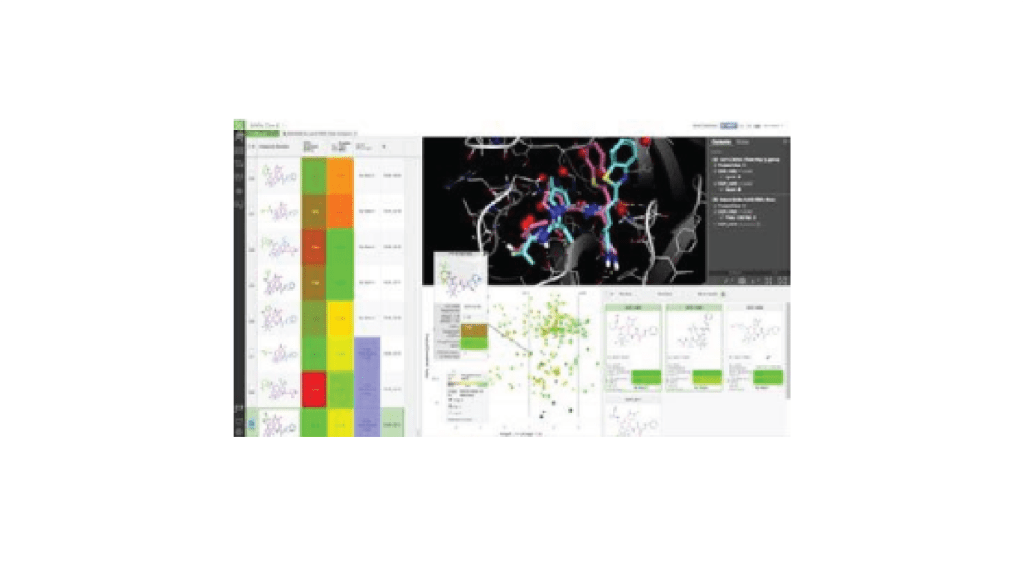
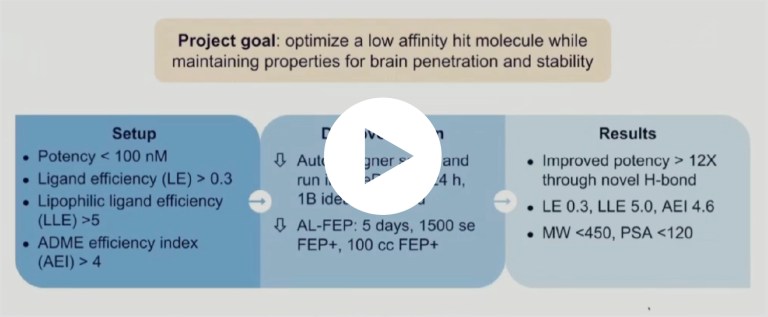
Schrödinger’s De Novo Design Workflow is a fully-integrated, cloud-based design system for ultra-large scale chemical space exploration and refinement. Starting from a hit molecule or lead series, the technology identifies synthetically tractable molecules that meet key project criteria by combining multiple compound enumeration strategies with an advanced filtering cascade (AutoDesigner) and rigorous potency scoring with free energy calculations (Active Learning FEP+).

Key Capabilities

Dramatically improve synthetic tractability of the identified molecules

Through built-in reaction-based enumeration combined with advanced filtering to rule out undesired and unrealistic chemistry

Efficiently identify potent lead compounds in favorable physicochemical property space

By leveraging accurate potency predictions combined with active learning

Fast-track ligand optimization and program success

By efficiently evaluating up to billions of project-relevant virtual molecules

Accelerated, seamless exploration of large chemical space

The De Novo Design Workflow offers a cloud-deployable solution with the flexibility to customize settings and property space for the unique needs of your program.

1. Control the chemical space to be explored with project-specific input parameters

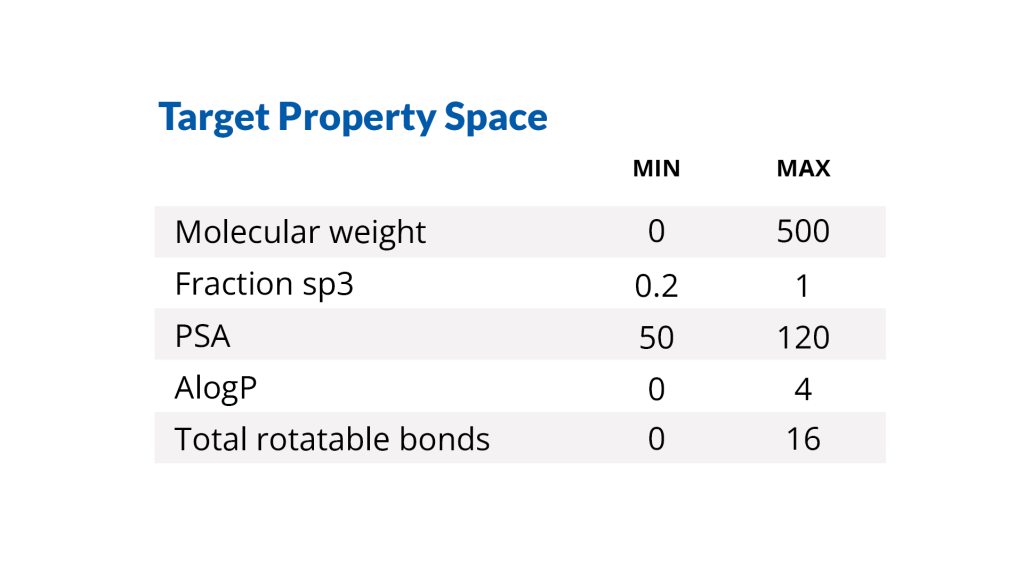
Define the starting molecule, the portion of the molecule to explore, the desired physicochemical property space, and additional project-specific filters within LiveDesign, a web-based enterprise molecular design and collaboration platform.

2. Expand into synthetically-tractible space of interest to medicinal chemists

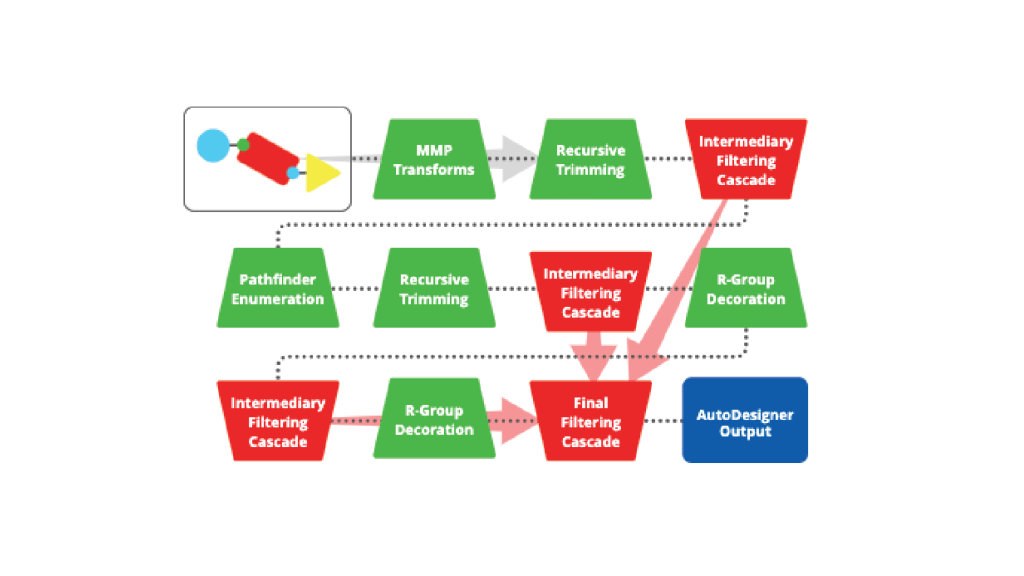
Automatically carry out successive rounds of compound generation and filtering within desired chemical space using cloud-native, multi-stage enumeration strategies combined with an advanced filtering cascade based on physical properties, amenability to FEP+, IP, and docking.

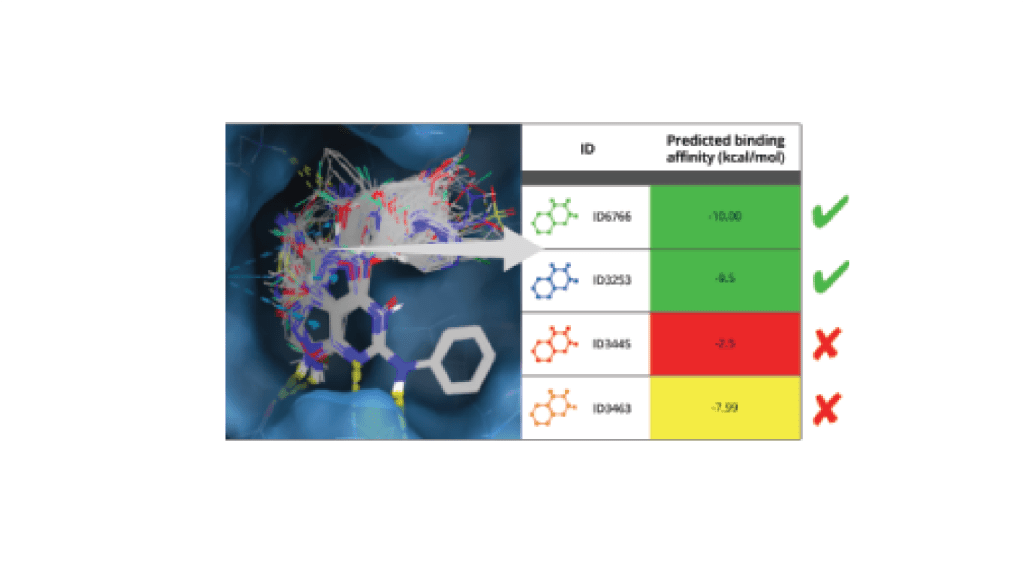
3. Score idea molecules with a highly accurate in silico binding affinity assay

Leverage a well-validated, automated workflow which trains a machine learning model on project-specific FEP+ data to allow processing of up to millions of compounds with highly accurate FEP+ calculations efficiently.

4. Analyze and prioritize output molecules with a collaborative design platform

Review the top scoring compounds and use the FEP+-trained machine learning model in LiveDesign — allowing evaluation, interactive optimization, and prioritization by the project team.

Publications

Browse the list of peer-reviewed publications using Schrödinger technology in related application areas.

Life Science Publication

Accelerated in silico discovery of SGR-1505: A potent MALT1 allosteric inhibitor for the treatment of mature B-cell malignancies

Life Science Publication

Harnessing free energy calculations to achieve kinome-wide selectivity in drug discovery campaigns: Wee1 case study

Life Science Publication

Discovery of a novel mutant-selective epidermal growth factor receptor inhibitor using an in silico enabled drug discovery platform

Life Science Publication

AutoDesigner – Core Design, a De Novo Design Algorithm for Chemical Scaffolds: Application to the Design and Synthesis of Novel Selective Wee1 Inhibitors

Life Science Publication

Discovery of a Novel Class of d-Amino Acid Oxidase Inhibitors Using the Schr’dinger Computational Platform

Life Science Publication

AutoDesigner, a De Novo Design Algorithm for Rapidly Exploring Large Chemical Space for Lead Optimization: Application to the Design and Synthesis of D-Amino Acid Oxidase Inhibitors

FeaturedHit to development candidate in 10-months: Rapid discovery of a novel, potent MALT1 inhibitor

Hit to development candidate in 10-months: Rapid discovery of a novel, potent MALT1 inhibitor

In a recent MALT1 drug discovery program led by Schrödinger’s Therapeutics Group, the De Novo Design Workflow amplified the team’s design efforts.

view case study

Training & Resources

Online certification courses

Level up your skill set with hands-on, online molecular modeling courses. These self-paced courses cover a range of scientific topics and include access to Schrödinger software and support.

Tutorials

Learn how to deploy the technology and best practices of Schrödinger software for your project success. Find training resources, tutorials, quick start guides, videos, and more.
Jaguar

Jaguar for Life Science

Quantum mechanics solution for rapid and accurate prediction of molecular structures and properties

Background Image Jaguar for Life Science
 

Structure prediction of molecular systems at unmatched speed

Jaguar is a well-validated, robust, high-performance quantum mechanics package that applies rapid ab initio calculations to accurately predict structures and compute molecular properties of novel molecular systems of all sizes.

Key Capabilities

Access a diversity of DFT functionals

With analytic second derivatives and dispersion corrections

Model solvent effects

Model important solvent effects by a variety of implicit solvation models

Construct reaction coordinates

Between reactants, products, and transition states; generate potential energy surfaces with respect to variations in internal coordinates

Use automated workflows for advanced analysis

Including pKa prediction, conformationally-averaged VCD and ECD spectroscopy, tautomer generation and ranking, and heat of formation

Generate publication-quality 3D surfaces

Including molecular orbitals, electrostatic potential projected on isodensity, spin density, and non-covalent interactions

Easily scale to different molecular sizes

Which facilitates the study of large, challenging real-world systems

Case studies & webinars

Discover how Schrödinger technology is being used to solve real-world research challenges.

Life Science Webinar

Chinese Webinar: 薛定谔中文讲座:DLK在计算机辅助药物设计中的案例研究 ,网络讲座录制 计算机驱动用于治疗神经退行性疾病的高效、高选择性和穿透脑血屏障的DLK抑制剂的发现

双亮氨酸拉链激酶(DLK)(又名MAP3K12)是混合系谱激酶(MLK)家族的成员,它包含一个N-末端激酶结构域,后面跟着两个亮氨酸拉链结构域以及一个富含甘氨酸/丝氨酸/脯氨酸的C-末端结构域。它主要在神经元细胞中表达,特别是在神经元的突触末端和轴突中

Life Science Webinar

In silico enabled discovery of KAI-11101, a potent, selective, and brain-penetrant DLK inhibitor for the treatment of neurodegenerative diseases

In this webinar, we detail the program led by Schrödinger Therapeutics Group to discover a novel, potent, selective, and brain-penetrant DLK inhibitor (KAI-11101).

Life Science Webinar

Beyond the Lab: Unleashing the Potential of In Silico Modeling in Drug Product Formulation

In this webinar, we explore Schrödinger’s leading molecular modeling and machine learning platform.

Life Science Case Study

High precision, computationally-guided discovery of highly selective Wee1 inhibitors for the treatment of solid tumors

Life Science Case Study

Schrödinger solutions for small molecule protonation state enumeration and pKa prediction

Life Science Webinar

Into the Clinic: Developing potent and selective kinase inhibitors using at-scale FEP and protein FEP: a Wee1 case study

In this webinar, we discuss the discovery of novel Wee1 kinase inhibitors using a strategy that couples ligand free energy calculations with protein free energy calculations to simultaneously find promising chemical matter and de-risk for off-target liabilities.

Life Science Case Study

Morphic Therapeutic leverages digital chemistry strategy to design a novel small molecule inhibitor of α4β7 integrin

Life Science Webinar

Resolving Absolute Stereochemistry in Early Drug Discovery with VCD

Determining the absolute configuration of small molecules is important early in the drug discovery process.

Life Science Webinar

Rationalizing Non-covalent Interactions with Density Functional Theory

Jaguar Datasheet

Learn more about the technical details of Jaguar and its applications.

Documentation & Tutorials

Get answers to common questions and learn best practices for using Schrödinger’s software.

Life Science Tutorial

Modeling Blood-Brain Barrier Penetration Using E-sol

Compute energy of solvation (E-sol) values and analyze the results to assess blood-brain barrier (BBB) permeability.

Life Science Documentation

Jaguar

A well-validated, robust, high-performance quantum mechanics package.

Life Science Tutorial

Computational Ellipsometry

Learn how to compute the refractive index and extinction coefficient of systems of organic optoelectronics.

Life Science Tutorial

NMR Spectra Prediction

Learn to predict nuclear magnetic resonance (NMR) spectra.

Life Science Tutorial

pKa Predictions with Jaguar pKa

Predict the pKa of organic molecules with more than one acidic functional group.

Life Science Tutorial

Introduction to Geometry Optimizations, Functionals and Basis Sets

Perform geometry optimizations on simple organic molecules and learn basics regarding functionals and basis sets.

Life Science Tutorial

Locating Transition States: Part 1

Locate a transition state (TS) for a typical organometallic reaction via three methods: standard TS search, coordinate scan, and AutoTS.

Life Science Tutorial

Locating Transition States: Part 2

Demonstrate how to use a known transition state to locate the transition state of a similar reaction.

Life Science Tutorial

pKa Prediction with Macro-pKa

Learn how to carry out DFT-based pKa calculations with the Macro-pKa workflow and how to analyze the results it produces.

Life Science Tutorial

Vibrational Circular Dichroism (VCD)

Learn to perform vibrational circular dichroism (VCD) calculations.

Related Products

Learn more about the related computational technologies available to progress your research projects.

Virtual Cluster

Secure, scalable environment for running simulations on the cloud

Maestro

Complete modeling environment for your molecular discovery

Macro-pKa

Accurate, physics-based modeling of the aqueous ionization and speciation behavior of small molecules

AutoTS

Automatic workflow for locating transition states for elementary reactions

Jaguar Spectroscopy

Conformationally-dependent spectroscopic characterization based on quantum mechanics calculations

Publications

Browse the list of peer-reviewed publications using Schrödinger technology in related application areas.

Materials Science Publication

Multiobjective Design of Electrolyte Solvents via Physics-Based Modeling and Reinforcement Learning

Materials Science Publication

Quantum-Enhanced Neural Exchange-Correlation Functionals

Materials Science Publication

Screening Antioxidant Ingredients Using Quantum Mechanics and Machine Learning

Materials Science Publication

Band Gap and Reorganization Energy Prediction of Conducting Polymers by the Integration of Machine Learning and Density Functional Theory

Life Science Publication

Correction to “Calculating Apparent pKa Values of Ionizable Lipids in Lipid Nanoparticles”

Materials Science Publication

Charge Transport Regulation in Solution-Processed OLEDs by Indenocarbazole–Triazine Bipolar Host Copolymers

Materials Science Publication

A density functional theory study of keto-enol tautomerism in 1,2-cyclodiones: Substituent effects on reactivity and thermodynamic stability

Life Science Publication

In silico enabled discovery of KAI-11101, a preclinical DLK inhibitor for the treatment of neurodegenerative disease and neuronal injury

Materials Science Publication

Catalytic Intermolecular Asymmetric [2π + 2σ] Cycloadditions of Bicyclo[1.1.0]butanes: Practical Synthesis of Enantioenriched Highly Substituted Bicyclo[2.1.1]hexanes

Materials Science Publication

Investigation of the atomic layer etching mechanism for Al2O3 using hexafluoroacetylacetone and H2 plasma

Training & Resources

Online certification courses

Level up your skill set with hands-on, online molecular modeling courses. These self-paced courses cover a range of scientific topics and include access to Schrödinger software and support.

Tutorials

Learn how to deploy the technology and best practices of Schrödinger software for your project success. Find training resources, tutorials, quick start guides, videos, and more.
DeepAutoQSAR

DeepAutoQSAR

Automated, scalable solution for the training and application of predictive machine learning models

DeepAutoQSAR

Create high-performing machine learning models using state-of-the-art methods

DeepAutoQSAR is a machine learning (ML) solution that allows users to predict molecular properties based on chemical structure. The automated supervised learning pipeline enables both novice and experienced users to train and inference best-in-class quantitative structure activity/property relationship (QSAR/QSPR) models.

Key Capabilities

Streamline model building with fully automated workflows

Automatically compute descriptors and fingerprints, create models with multiple machine learning architectures, and evaluate model performance.

Customize models to your project with unique project-specific descriptors

Provide your own descriptors in CSV format to be used in addition to or instead of those generated by DeepAutoQSAR for a wide range of applications beyond small molecules, such as polymers, organic electronics, catalysis, and more.

Ensure model optimization using best practices

Employ QSAR/QSPR best practices to minimize the likelihood of overfitting or misrepresenting a model’s performance while ensuring maximum predictive model performance.

Understand the domain of applicability using model confidence estimates

DeepAutoQSAR provides uncertainty estimates alongside model predictions to help determine how much confidence should be placed on predictions generated for candidate molecules which may lie beyond the model’s training set.

Visualize and analyze results to gain further insights 

Visualize color-coded atomic contributions towards target property facilitating ideation of novel chemistry. Visualize and analyze DeepAutoQSAR metrics reports and plots in Maestro to enable further experiments — quickly learn what model architectures are most effective and how models generalize on holdout sets.  

Scalable training to support small or large datasets

Use classical ML methods like boosted trees on smaller datasets while also supporting the largest scale QSAR/QSPR models using graph neural networks and other modern deep learning approaches.

Case studies & webinars

Discover how Schrödinger technology is being used to solve real-world research challenges.

Materials Science Webinar

Accelerating OLED innovation with multi-scale, multi-physics simulations

Join us to explore how integrated digital workflows drive the design of next-generation, high-performance OLEDs.

Materials Science Webinar

Electrodes, electrolytes & interfaces: Harnessing molecular simulation and machine learning for rapid advancements in battery materials development

In this webinar, we demonstrate the application of automated solutions for accurate prediction of electrode materials.

Materials Science Webinar

Schrödinger Materials Science Seminar Japan 2024 

《無料Webセミナー》材料開発向けシミュレーション・ソフトウェアおよびマテリアルズ・インフォマティクスの活用事例を紹介。

Materials Science Webinar

Taking experimentation digital: Materials innovation using atomistic simulation and machine learning at-scale

In this webinar, we introduce a modern approach to materials R&D using a digital chemistry platform for in silico analysis, optimization and discovery.

Materials Science Webinar

In silico materials development: Integrating atomistic simulation into academic chemistry and engineering labs

In this webinar, we explore Schrödinger’s leading physics-based and machine learning computational technologies and provide a comprehensive introduction to the capabilities of computational modeling in chemistry, materials science, and engineering.

Materials Science Webinar

Data-driven materials innovation: Where machine learning meets physics

In this webinar, we demonstrate how Schrödinger’s tools can help overcome these common challenges by using a combination of physics-based simulation data, enterprise informatics, and chemistry-informed ML.

Materials Science Webinar

Cutting-Edge Cosmetics: Innovating for Sustainability with Machine Learning & Molecular Simulations

In this webinar, we explore the challenges chemists face, and how new approaches can help find solutions quicker.

Materials Science Case Study

De novo design of hole-conducting molecules for organic electronics

Materials Science Webinar

Battery Tech – Leveraging Atomic Scale Modeling for Design and Discovery of Next-Generation Battery Materials

In this webinar, we present an advanced digital chemistry platform for developing next-generation battery materials with improved properties.

Materials Science Webinar

Chinese: 利用原子尺度建模设计和发现下一代电池材料 | Leveraging Atomic Scale Modeling for Design and Discovery of Next-Generation Battery Materials

This webinar discussed how to drive the development of novel battery materials with molecular simulations.

Documentation & Tutorials

Get answers to common questions and learn best practices for using Schrödinger’s software.

Materials Science Tutorial

De Novo Design of Novel Compounds with REINVENT

Learn to train a generative ML model with REINVENT to design new compounds with property constraints.

Materials Science Documentation

DeepAutoQSAR

Predict molecular properties based on chemical structure using machine learning (ML).

Materials Science Documentation

Materials Science Panel Explorer

Quickly learn which Schrödinger tools are the best fit for your research.

Related Products

Learn more about the related computational technologies available to progress your research projects.

Virtual Cluster

Secure, scalable environment for running simulations on the cloud

Active Learning Applications

Accelerate discovery with machine learning

FEP+

High-performance free energy calculations for drug discovery

Glide

Industry-leading ligand-receptor docking solution

De Novo Design Workflow

Fully-integrated, cloud-based design system for ultra-large scale chemical space exploration and refinement

Jaguar

Quantum mechanics solution for rapid and accurate prediction of molecular structures and properties

LiveDesign

Your complete digital molecular design lab

MS Informatics

Automated machine learning tools for materials science applications

Quantum ESPRESSO Interface

Integrated graphical user interface for nanoscale quantum mechanical simulations

Publications

Browse the list of peer-reviewed publications using Schrödinger technology in related application areas.

Materials Science Publication

Band Gap and Reorganization Energy Prediction of Conducting Polymers by the Integration of Machine Learning and Density Functional Theory

Materials Science Publication

A machine learning approach for in silico prediction of the photovoltaic properties of perovskite solar cells based on dopant-free hole-transport materials

Materials Science Publication

Machine learning-based design of pincer catalysts for polymerization reaction

Materials Science Publication

Development of Scalable and Generalizable Machine Learned Force Field for Polymers

Life Science Publication

Pathfinder-Driven Chemical Space Exploration and Multiparameter Optimization in Tandem with Glide/IFD and QSAR-Based Active Learning Approach to Prioritize Design Ideas for FEP+ Calculations of SARS-CoV-2 PLpro Inhibitors

Materials Science Publication

Benchmarking Machine Learning Descriptors for Crystals

Materials Science Publication

Machine Learning for the Design of Novel OLED Materials

Life Science Publication

A Descriptor Set for Quantitative Structure-Property Relationship Prediction in Biologics

Materials Science Publication

Active Learning Accelerates Design and Optimization of Hole-Transporting Materials for Organic Electronics

Materials Science Publication

Design of organic electronic materials with a goal-directed generative model powered by deep neural networks and high-throughput molecular simulations

Training & Resources

Online certification courses

Level up your skill set with hands-on, online molecular modeling courses. These self-paced courses cover a range of scientific topics and include access to Schrödinger software and support.

Tutorials

Learn how to deploy the technology and best practices of Schrödinger software for your project success. Find training resources, tutorials, quick start guides, videos, and more.