Membrane Permeability

Membrane Permeability

Physics-based solution for rapid and accurate prediction of passive membrane permeability
Membrane Permeability

Evaluate membrane permeability with unmatched accuracy

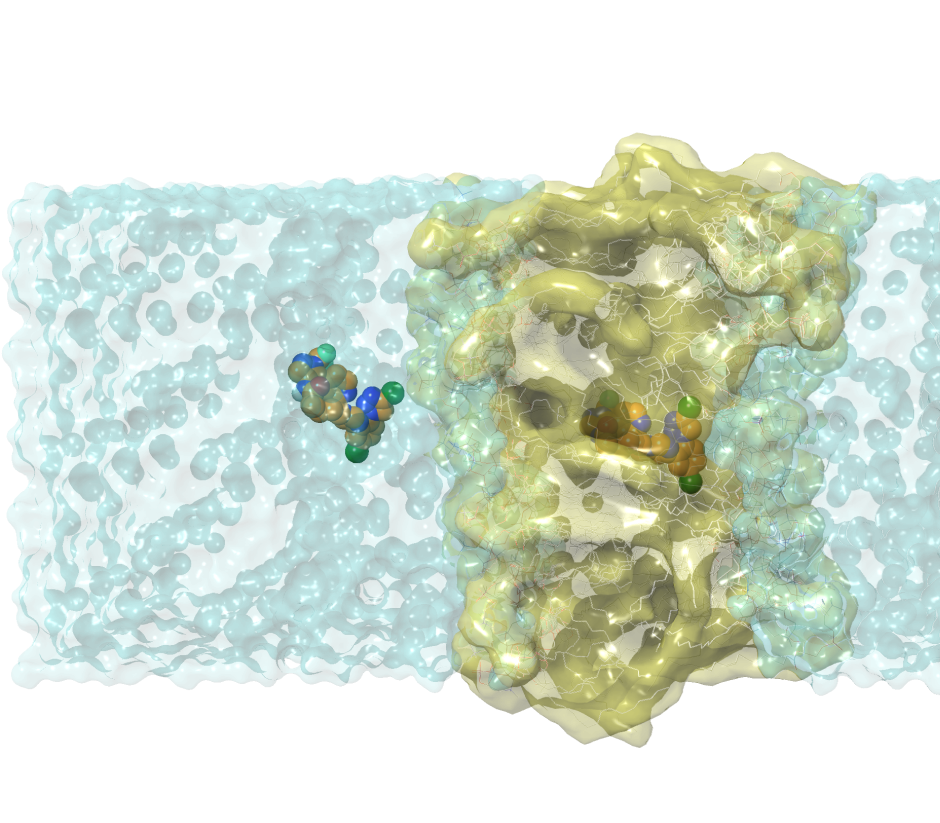
Membrane Permeability is a robust solution to accurately predict passive membrane permeability of small molecules across diverse chemistries. By considering conformation dependent phenomena such as internal hydrogen-bonding, which can have a dramatic effect on permeability, it offers tremendous advantages over QSAR and machine learning-based approaches.

Key Capabilities

Accelerate hit-to-lead and lead optimization by rapidly scoring and prioritizing large sets of idea compounds based on predicted permeability, prior to running advanced modeling such as FEP+
Predict partition energy for inserting a small molecule into the membrane using a physics-based approach
Benefit from automatic detection and sampling of macrocycles using an advanced sampling algorithm
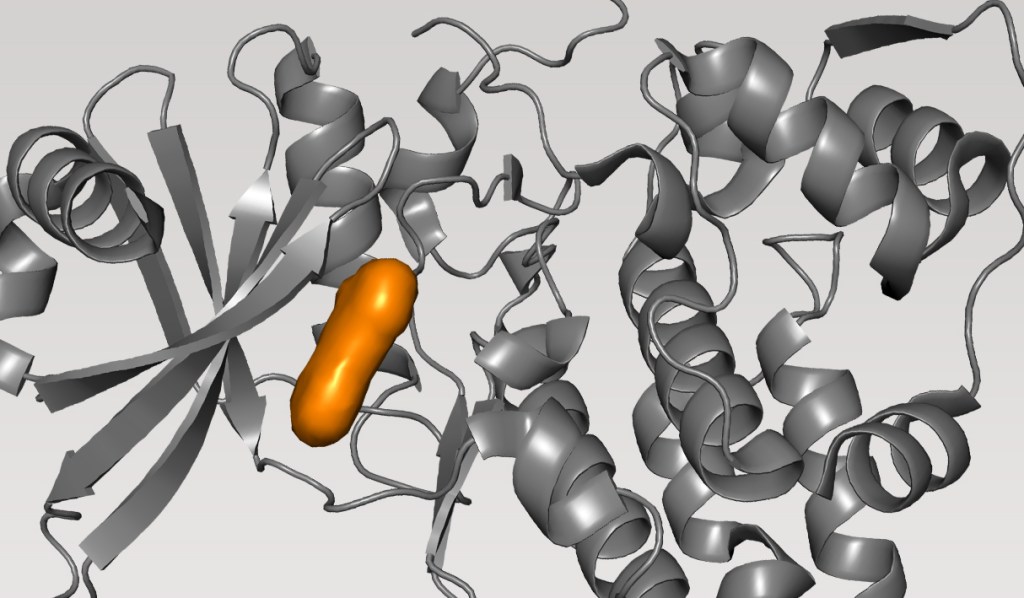
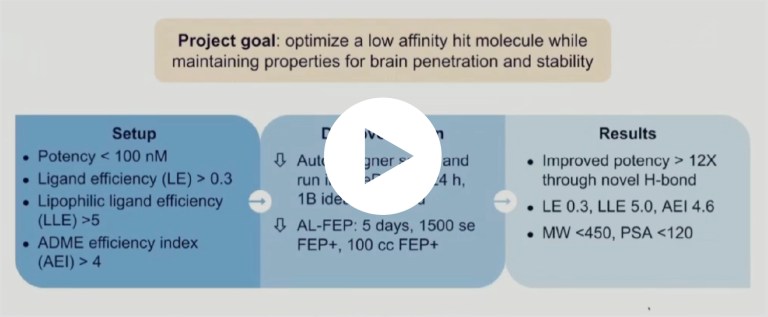
Featured Case StudyDesign of a novel potent CDC7 inhibitor development candidate with high ligand efficiency and optimized properties

Design of a novel potent CDC7 inhibitor development candidate with high ligand efficiency and optimized properties

See how Membrane Permeability enabled the Schrödinger team to prioritize designs in the discovery of a novel, potent CDC7 inhibitor development candidate with high ligand efficiency and optimized properties

read the case study

Documentation & Tutorials

Get answers to common questions and learn best practices for using Schrödinger’s software.

Life Science Tutorial

Learning Path: Cyclic Peptide Modeling

A structured overview of tools and workflows for cyclic peptides in drug discovery.

Life Science Documentation

Membrane Permeability

Calculate the passive membrane permeability of a set of congeneric ligands.

Related Products

Learn more about the related computational technologies available to progress your research projects.

Prime

A powerful and innovative solution for accurate protein structure prediction

Case studies & webinars

Discover how Schrödinger technology is being used to solve real-world research challenges.

Life Science Webinar

Schrödinger デジタル創薬セミナー: Into the Clinic ~計算化学がもたらす創薬プロセスの変貌~ 第21回

MDシミュレーションによる化合物の膜透過性の予測

Life Science Case Study

Design of a novel, potent CDC7 inhibitor development candidate with high ligand efficiency and optimized properties

Life Science Case Study

Stories from drug discovery: Modeling strategies in the pursuit of development candidate in oncology program 1

Publications

Browse the list of peer-reviewed publications using Schrödinger technology in related application areas.

Life Science Publication

Simple Predictive Models of Passive Membrane Permeability Incorporating Size-Dependent Membrane-Water Partition

Life Science Publication

Testing physical models of passive membrane permeation

Life Science Publication

Predicting and improving the membrane permeability of peptidic small molecules

Life Science Publication

Conformational flexibility, internal hydrogen bonding, and passive membrane permeability: Successful in silico prediction of the relative permeabilities of cyclic peptides

Life Science Publication

Testing the Conformational Hypothesis of Passive Membrane Permeability Using Synthetic Cyclic Peptide Diastereomers

Training & Resources

Online certification courses

Level up your skill set with hands-on, online molecular modeling courses. These self-paced courses cover a range of scientific topics and include access to Schrödinger software and support.

Tutorials

Learn how to deploy the technology and best practices of Schrödinger software for your project success. Find training resources, tutorials, quick start guides, videos, and more.
LigPrep

LigPrep

Versatile ligand preparation tool for structure-based workflows

LigPrep

Overview

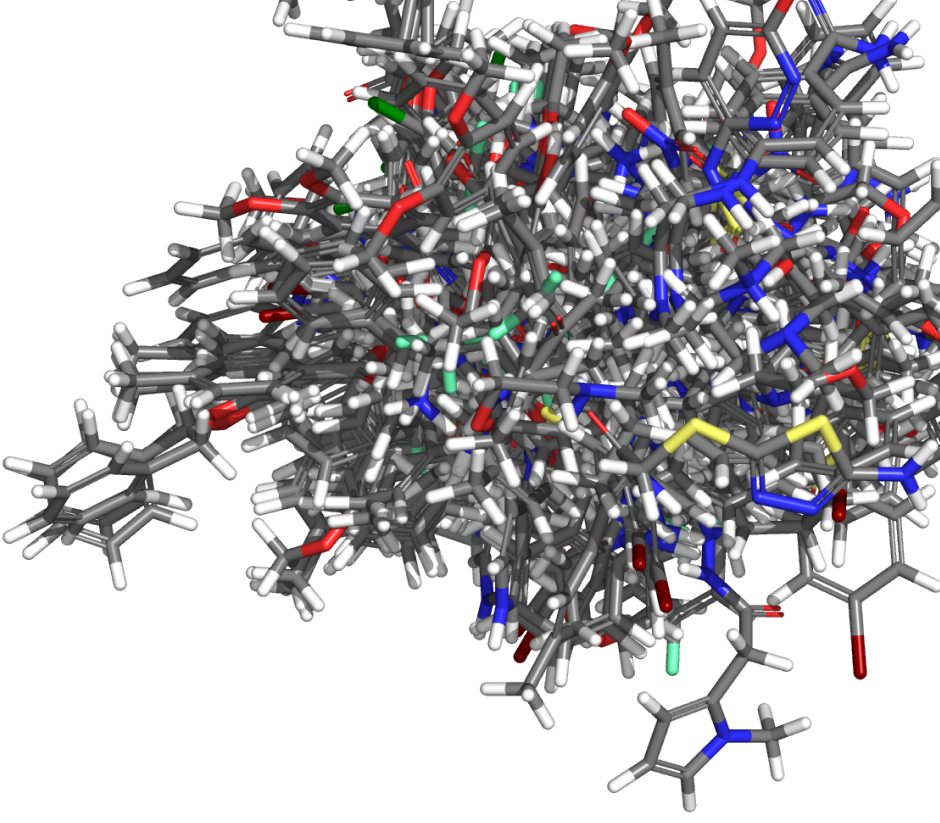
LigPrep is a tool to robustly and rapidly prepare high-quality small molecule ligand structures for structure-based virtual screening and other computational workflows. LigPrep works by expanding tautomeric and ionization states, ring conformations, and stereoisomers consistent with the input information to fully capture the relevant states of the molecule in 3D.

Key Capabilities

Easily translate molecular structures from 1D, 2D to 3D while carefully enumerating structural and chemical possibilities to ensure the accuracy of subsequent modeling predictions
Build a completely customized ligand library through automatic elimination of compounds that do not meet user-specified criteria
Optimize output structures to meet the requirements of the downstream simulation workflows
Efficiently process an entire database at once at a rate of one ligand per second on a single CPU in calculations that can be distributed across many processors in a cluster

Documentation & Tutorials

Get answers to common questions and learn best practices for using Schrödinger’s software.

Life Science Tutorial

Learning Path: Cyclic Peptide Modeling

A structured overview of tools and workflows for cyclic peptides in drug discovery.

Life Science Documentation

Learning Path: Oligonucleotide Modeling

A structured overview of tools and workflows for nucleic acids in drug discovery.

Life Science Documentation

LigPrep

Rapidly prepare high-quality small molecule ligand structures for structure-based virtual screening and other computational workflows.

Related Products

Learn more about the related computational technologies available to progress your research projects.

FEP+

High-performance free energy calculations for drug discovery

Epik

Rapid pKa and protonation state prediction tool

Jaguar

Quantum mechanics solution for rapid and accurate prediction of molecular structures and properties

Glide

Industry-leading ligand-receptor docking solution

Phase

An easy-to-use pharmacophore modeling solution for ligand- and structure-based drug design

Prime

A powerful and innovative solution for accurate protein structure prediction

Membrane Permeability

Physics-based solution for rapid and accurate prediction of passive membrane permeability

Publications

Browse the list of peer-reviewed publications using Schrödinger technology in related application areas.

Life Science Publication

Accurate physics-based prediction of binding affinities of RNA- and DNA-targeting ligands

Life Science Publication

Structure-based discovery and development of highly potent dihydroorotate dehydrogenase inhibitors for malaria chemoprevention

Materials Science Publication

Improving color and digestion resistibility of 3D-printed ready-to-eat starch gels using anthocyanins

Life Science Publication

AutoDesigner – Core Design, a De Novo Design Algorithm for Chemical Scaffolds: Application to the Design and Synthesis of Novel Selective Wee1 Inhibitors

Life Science Publication

FEP augmentation as a means to solve data paucity problems for machine learning in chemical biology

Life Science Publication

Lead optimization of small molecule ENL YEATS inhibitors to enable in vivo studies: Discovery of TDI-11055

Materials Science Publication

Comprehensive evaluation of chiral sedaxane with four stereoisomers for risk reduction: Bioactivity, toxicity, and stereoselective dissipation in crop planting systems

Materials Science Publication

Investigation of drug-polymer miscibility and design of ternary solid dispersions for oral bioavailability enhancement by Hot Melt Extrusion

Materials Science Publication

Computational prodrug design methodology for liposome formulability enhancement of small-molecule APIs

Materials Science Publication

Antibacterial, Antioxidant, and in silico NADPH Oxidase Inhibition Studies of Essential Oils of Lavandula dentata against Foodborne Pathogens

Training & Resources

Online certification courses

Level up your skill set with hands-on, online molecular modeling courses. These self-paced courses cover a range of scientific topics and include access to Schrödinger software and support.

Tutorials

Learn how to deploy the technology and best practices of Schrödinger software for your project success. Find training resources, tutorials, quick start guides, videos, and more.
Glide

Glide

Industry-leading ligand-receptor docking solution

Expand the impact of structural biology on drug design

Amplify your ligand discovery with an accurate, versatile docking program

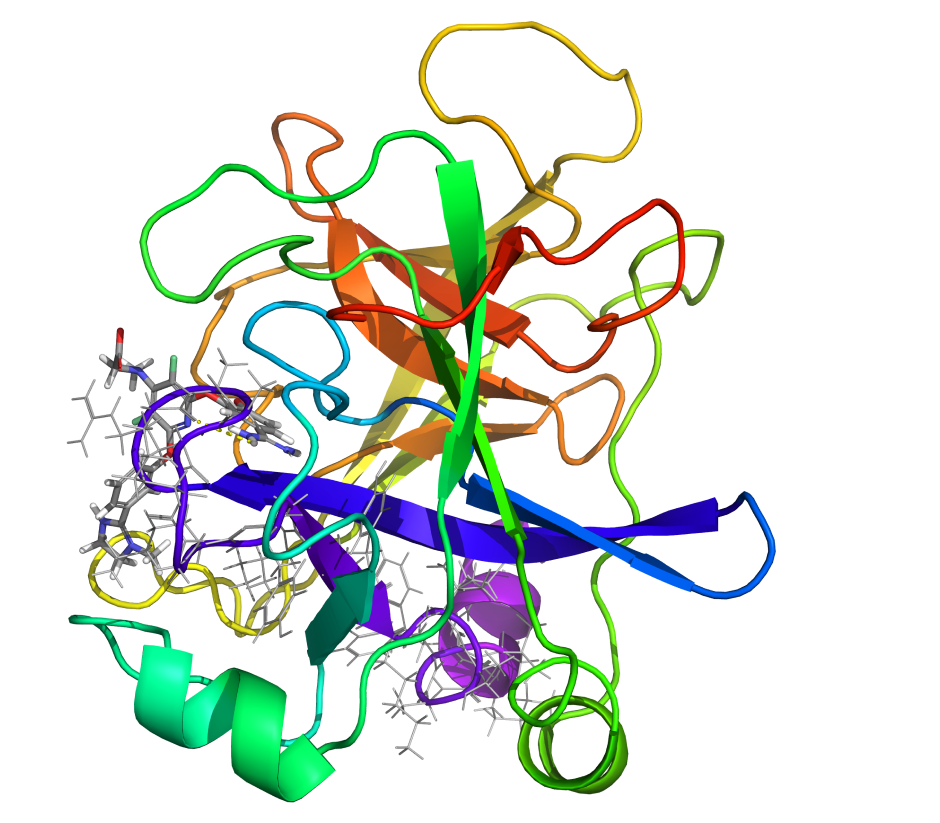
Glide is the leading industrial solution for reliable ligand-receptor docking. It augments and accelerates structure-based drug design across a range of applications, including virtual screening, binding mode prediction and interactive 3D molecular design.

Advantages of Glide for ligand-receptor docking

Easy-to-use graphical interface

Easily create and validate docking models with a simple, guided graphical user interface

High docking accuracy across diverse receptor types

Achieve high enrichment across a diverse range of receptor types, including small molecules, peptides, and macrocycles

Customizable constraints

Benefit from a broad range of constraints to easily bias docking calculations to meet experimentally-observed requirements and desired chemical space

Optionally leverages explicit water energetics

Achieve accurate pose predictions and eliminate false positive virtual hits with Glide WS

background pattern

Includes multiple scoring workflows to enhance your virtual screens

Glide SP is a widely used and precise docking workflow designed for high-throughput virtual screens. Glide SP employs hierarchical filter technology that is ideal for large-scale screening to yield fast and accurate hits.

Glide WS is an advanced docking tool that leverages explicit water dynamics from WaterMap. Built on the foundation of Glide SP and WScore, Glide WS provides significantly improved sampling and scoring of small molecules in the binding pocket.

Glide is a key element of Schrödinger’s modern virtual screening workflow

Powerful use cases across drug discovery

Interactive 3D design

Interactively design and dock in 3D using goal-directed ligand design workflows in Ligand Designer and LiveDesign

Pose prediction

Accurately predict ligand poses to understand interaction with receptor and provide initial pose for rescoring with AB FEP+

Virtual screening

Perform virtual screens with automated workflows that are customizable to fit project needs and accelerate screening of ultra-large libraries (>1B compounds) using Glide enhanced by Active Learning

Covalent docking and scoring

Dock a set of ligands that bind covalently to the receptor, using predefined or custom reaction chemistry – CovDock

Rescoring with Glide WS

Incorporate detailed water analysis from WaterMap calculations to evaluate protein-ligand binding interactions and reduce false positives from Glide SP screenings

Save compute time and effort using prepared commercial libraries for Glide

Schrödinger has partnered with leading providers to help you access commercial databases of fragments, lead-like, near drug-like, and drug-like compounds ranging from millions to billions of compounds encompassing a vast chemical space.

MCule
PWuXi-AppTec
Sigma-Aldrich
MolPort
Enamine

Case studies & webinars

Discover how Schrödinger technology is being used to solve real-world research challenges.

Life Science Webinar

Generative Glide: AI-driven ultra-large virtual screening for real-world drug discovery recording

Join us as we go beyond slides and run a demo of the workflow, showing how Generative Glide performs in practice from setup through results.

Life Science Webinar

Schrödinger デジタル創薬セミナー: Into the Clinic ~計算化学がもたらす創薬プロセスの変貌~ 第19回

Computational strategies for discovering and optimizing RNA- and DNA-targeting molecules

Life Science Webinar

Schrödinger デジタル創薬セミナー: Into the Clinic ~計算化学がもたらす創薬プロセスの変貌~ 第18回

Enabling cryoEM structures for drug discovery with the Schrödinger Suite

Life Science Webinar

Enabling cryoEM structures for drug discovery with the Schrödinger Suite

In drug discovery, the relevance and value of protein structures is directly related to their ability to rationally optimize molecular properties.

Life Science Webinar

Schrödinger デジタル創薬セミナー: Into the Clinic ~計算化学がもたらす創薬プロセスの変貌~ 第15回

Water matters: Enhancing early drug discovery with insights from water energetics

Life Science Webinar

Water matters: Enhancing early drug discovery with insights from water energetics

In this webinar, we discuss the impact of two technologies that leverage explicit water energetics in the binding pocket to enhance drug design—WaterMap and Glide WS.

Life Science Case Study

Design of a highly selective, allosteric, picomolar TYK2 inhibitor using novel FEP+ strategies

Life Science Webinar

Modern Virtual Screening Technologies 利用薛定谔数字化平台进行现代虚拟筛选

Life Science Webinar

The Predict-First Paradigm: How Digital Chemistry is Shaping the Future of Drug Discovery 预测优先范式: 数字化学如何塑造药物发现的未来

Life Science Webinar

 Schrödinger デジタル創薬セミナー: Into the Clinic ~計算化学がもたらす創薬プロセスの変貌~  

AI/Machine LearningによるアクティブラーニングとAbsolute Binding FEP+を活用した新しいバーチャルスクリーニング手法最新の創薬研究事例を紹介します。

Documentation & Tutorials

Get answers to common questions and learn best practices for using Schrödinger’s software.

Life Science Tutorial

Learning Path: Cyclic Peptide Modeling

A structured overview of tools and workflows for cyclic peptides in drug discovery.

Life Science Tutorial

Screening ultra-large libraries with Generative Glide

Screen billion-sized libraries in 24 hours with a generative ML approach.

Life Science Tutorial

Enzyme Engineering with BioLuminate

Investigate the effect of mutations in an alkene reductase from the OYE family on enzyme stability and ligand binding.

Life Science Documentation

Learning Path: Oligonucleotide Modeling

A structured overview of tools and workflows for nucleic acids in drug discovery.

Life Science Tutorial

Small Molecule – Oligonucleotide Docking with Glide

Generate receptor grid, dock co-crystal and congeneric ligands, and analyze the results.

Life Science Documentation

Glide

Easy-to-use, reliable ligand-receptor docking.

Life Science Documentation

Learning Path: Virtual Screening

A structured overview of how to construct a virtual screening pipeline.

Life Science Tutorial

Refining crystallographic protein-ligand structures using GlideXtal and Phenix/OPLS

Re-dock and refine ligand pose in a crystal structure with GlideXtal.

Life Science Tutorial

Structure-Based Virtual Screening using Glide

Prepare receptor grids for docking, dock molecules and examine the docked poses.

Life Science Tutorial

Ligand Binding Pose Generation for FEP+

Generate starting poses for FEP simulations for a series of BACE1 inhibitors using core constrained docking.

Related Products

Learn more about the related computational technologies available to progress your research projects.

Active Learning Applications

Accelerate discovery with machine learning

LiveDesign

Your complete digital molecular design lab

Prepared Commercial Libraries

Fully prepared databases of purchasable compounds

FEP+

High-performance free energy calculations for drug discovery

Publications

Browse the list of peer-reviewed publications using Schrödinger technology in related application areas.

Life Science Publication

Glide WS: Methodology and Initial Assessment ofPerformance for Docking Accuracy and Virtual Screening

Life Science Publication

Glide WS: Methodology and Initial Assessment of Performance for Docking Accuracy and Virtual Screening

Life Science Publication

Discovery of highly potent noncovalent inhibitors of SARS-CoV-2 main protease through computer-aided drug design

Life Science Publication

Optimizing drug design by merging generative AI with a physics-based active learning framework

Life Science Publication

Enabling in-silico Hit Discovery Workflows Targeting RNA with Small Molecules

Life Science Publication

Drugit: crowd-sourcing molecular design of non-peptidic VHL binders

Materials Science Publication

Taste-Guided Isolation of Bitter Compounds from the Mushroom Amaropostia stiptica Activates a Subset of Human Bitter Taste Receptors

Materials Science Publication

Gaining molecular insights towards inhibition of foodborne fungi Aspergillus fumigatus by a food colourant violacein via computational approach

Materials Science Publication

Steviol rebaudiosides bind to four different sites of the human sweet taste receptor (T1R2/T1R3) complex explaining confusing experiments

Life Science Publication

FEP augmentation as a means to solve data paucity problems for machine learning in chemical biology

Training & Resources

Online certification courses

Level up your skill set with hands-on, online molecular modeling courses. These self-paced courses cover a range of scientific topics and include access to Schrödinger software and support.

Tutorials

Learn how to deploy the technology and best practices of Schrödinger software for your project success. Find training resources, tutorials, quick start guides, videos, and more.

Epik

background pattern

Epik

Rapid pKa and protonation state prediction tool

Prioritize the right protonation states for your drug discovery or materials science research

Epik is a tool for accurately and rapidly predicting the aqueous phase pKa values and protonation state distributions of complex, drug-like molecules. Leveraging the power of Schrödinger’s machine learning technology, the Epik model employs an ensemble of atomic graph convolutional neural networks, trained across a broad range of chemical space.

Key Capabilities

Query the microscopic and macroscopic pKa values of a small molecule
Enumerate and score protonation states to obtain the lowest energy states at a specified pH
Generate an easy-to-read report that includes the macroscopic pKa values of a small molecule, its different constituent protonation states and their populations, and a speciation diagram for the major species in solution
Make reliable predictions across an extremely broad range of chemistry supported by ML technology
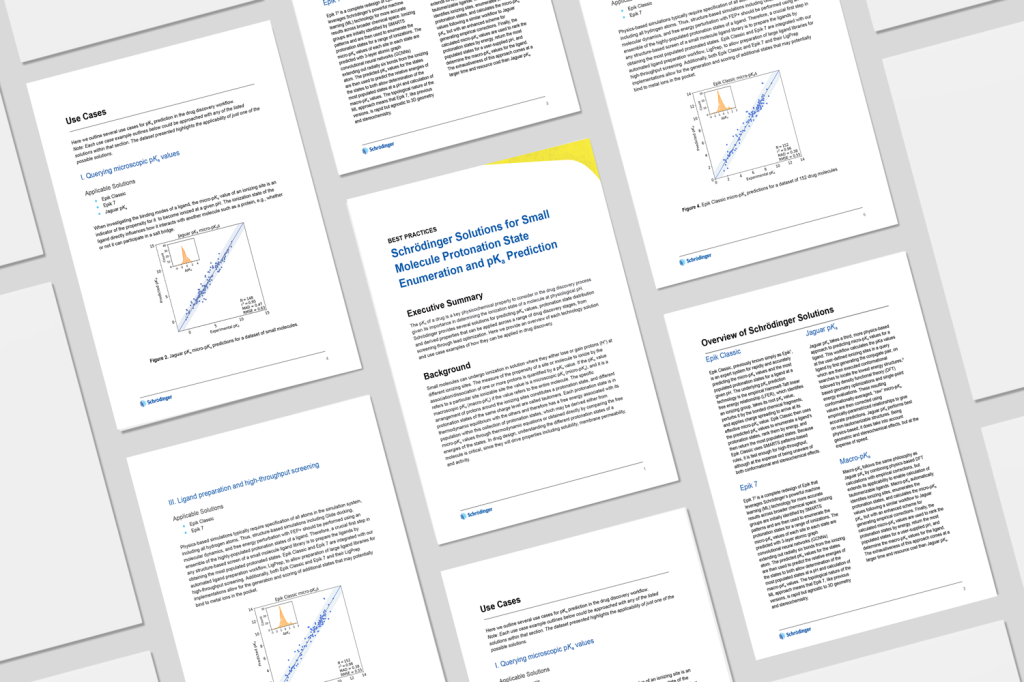
FeaturedSchrödinger solutions for small molecule protonation state enumeration and pKa prediction

Schrödinger solutions for small molecule protonation state enumeration and pKa prediction

Schrödinger provides several solutions for predicting pKa values, protonation state distribution, and derived properties that can be applied across a range of drug discovery stages – from screening through lead optimization.

Read the white paper

Documentation & Tutorials

Get answers to common questions and learn best practices for using Schrödinger’s software.

Life Science Documentation

Epik

Accurately and rapidly predict the aqueous phase pKa values and protonation state distributions of complex, drug-like molecules.

Related Products

Learn more about the related computational technologies available to progress your research projects.

Jaguar

Quantum mechanics solution for rapid and accurate prediction of molecular structures and properties

Macro-pKa

Accurate, physics-based modeling of the aqueous ionization and speciation behavior of small molecules

LigPrep

Versatile ligand preparation tool for structure-based workflows

Glide

Industry-leading ligand-receptor docking solution

Publications

Browse the list of peer-reviewed publications using Schrödinger technology in related application areas.

Life Science Publication

Correction to “Calculating Apparent pKa Values of Ionizable Lipids in Lipid Nanoparticles”

Life Science Publication

Towards automated physics-based absolute drug residence time predictions

Life Science Publication

Accurate physics-based prediction of binding affinities of RNA- and DNA-targeting ligands

Life Science Publication

FEP augmentation as a means to solve data paucity problems for machine learning in chemical biology

Life Science Publication

Epik: pKa and Protonation State Prediction through Machine Learning

Life Science Publication

The transcriptional corepressor CtBP2 serves as a metabolite sensor orchestrating hepatic glucose and lipid homeostasis

Life Science Publication

Adverse Drug Reactions Triggered by’the Common HLA-B*57:01 Variant: A Molecular Docking Study

Life Science Publication

Discovery of Thienoquinolone Derivatives as Selective and ATP Non-Competitive CDK5/p25 Inhibitors by Structure-Based Virtual Screening

Life Science Publication

Boosting virtual screening enrichments with data fusion: Coalescing hits from two-dimensional fingerprints, shape, and docking

Life Science Publication

Testing physical models of passive membrane permeation

Training & Resources

Online certification courses

Level up your skill set with hands-on, online molecular modeling courses. These self-paced courses cover a range of scientific topics and include access to Schrödinger software and support.

Tutorials

Learn how to deploy the technology and best practices of Schrödinger software for your project success. Find training resources, tutorials, quick start guides, videos, and more.

Desmond

Desmond

High-performance molecular dynamics (MD) engine providing high scalability, throughput, and scientific accuracy

Life Science: Desmond

Understand and predict key properties of systems with fast, accurate molecular dynamics

Desmond is a GPU-powered high-performance molecular dynamics (MD) engine for simulating biological systems such as small protein, viral capsids, protein-ligand complexes, small molecules in mixed solvents, organic solids, and synthetic macromolecular complexes.

Benefits of Desmond

GPU-accelerated perfomance

Achieves exceptional throughput on commodity Linux clusters with both typical and high-end networks and improves computing speed by 100x on general-purpose GPU (GPGPU) compared to single CPU

Superior accuracy

Constructed with a focus on numerical accuracy, stability, and rigor, Desmond’s performance enables the simulation of large-scale features of nanometer to micron size over time scales of picoseconds to microseconds

Trusted energetics

Provides a robust framework for the calculation of energies and forces for atomistic force field models and is compatible with chemistries commonly used in biomolecular research

Realistic simulations

Performs explicit solvent simulations with periodic boundary conditions using simulation boxes with careful attention to the calculation of long-range electrostatics, and can be used to model protein and nucleic acid systems with explicit lipid membranes

Easy-to-use interface

Provides intelligent default settings and allows for rapid setup of computational experiments in an intuitive interface, while supporting automated simulation setup including system building, analysis tools, and force field assignment

Powerful analysis tools

Enables visualization and examination of computed results within the same Maestro modeling environment that connects to a comprehensive suite of modeling tools from quantum mechanics to machine learning

Applications

Use the left and right arrow keys to navigate between slides.

Mixed Solvent Molecular Dynamics (MxMD)

Improved cryptic pocket identification through enhanced sampling. Leverage MxMD with our new interface for simplified setup, analysis, and customizable visualization of cryptic binding pockets on protein surfaces.

Unbinding Kinetics

Characterize ligand-receptor interactions with unbinding kinetics analysis. Visualize unbinding pathways using enhanced sampling methods to identify and optimize promising lead compounds based on their dissociation rates.

Official NVIDIA Partner

Schrödinger has a strategic partnership with NVIDIA to optimize our computational drug discovery platform for NVIDIA GPU technology.

Documentation & Tutorials

Get answers to common questions and learn best practices for using Schrödinger’s software.

Life Science Tutorial

Protein Characterization: Part 2

Explore the characterization of bovine β-lactoglobulin proteins across various pH levels by performing and analyzing molecular dynamics simulations.

Life Science Tutorial

Learning Path: Cyclic Peptide Modeling

A structured overview of tools and workflows for cyclic peptides in drug discovery.

Life Science Tutorial

Protein Characterization: Part 1

Learn a protein characterization workflow: preparing the structure, analyzing surface properties, and performing mixed solvent molecular dynamics.

Life Science Tutorial

Introduction to Performing Metadynamics Simulations with Desmond

Perform metadynamics simulations for conformational sampling or mapping potential energy surfaces.

Life Science Tutorial

Generating ternary complex structures to enable rational design of targeted protein degraders

Generate and score structures for a target-PROTAC-ligase complex to enable linker optimization.

Life Science Tutorial

Simulating Complex Protein Solutions

Learn to prepare a complex protein system for a Molecular Dynamics (MD) simulation.

Life Science Tutorial

Enzyme Engineering with BioLuminate

Investigate the effect of mutations in an alkene reductase from the OYE family on enzyme stability and ligand binding.

Life Science Tutorial

Building and Analyzing a Complex Lipid Bilayer and Embedding a Membrane Protein

Learn to build and analyze a complex lipid bilayer and how to embedd a protein.

Life Science Tutorial

Thin Plane Shear

Learn to calculate the thin plane shear viscosity and friction coefficient.

Life Science Documentation

Learning Path: Oligonucleotide Modeling

A structured overview of tools and workflows for nucleic acids in drug discovery.

Related Products

Learn more about the related computational technologies available to progress your research projects.

Virtual Cluster

Secure, scalable environment for running simulations on the cloud

Maestro

Complete modeling environment for your molecular discovery

OPLS4 & OPLS5 Force Field

A modern, comprehensive force field for accurate molecular simulations

FEP+

High-performance free energy calculations for drug discovery

IFD-MD

Accurate ligand binding mode prediction for novel chemical matter, for on-targets and off-targets

Case studies & webinars

Discover how Schrödinger technology is being used to solve real-world research challenges.

Life Science Webinar

In silico cryptic binding site detection and prioritization

In this webinar, we will introduce a novel computational workflow that integrates mixed solvent molecular dynamics (MxMD) with SiteMap to reveal and identify cryptic binding sites.

Life Science Webinar

Schrödinger Software 2024-3 新機能紹介ウェビナーアーカイブ配信

SEPT 3, 2024 | この度、最新版となる2024-3をリリースいたしました。本ウェビナーでは、主要な新機能についてご紹介いたします。

Life Science Webinar

Antibody Humanization Guided by Computational Modeling

Life Science Webinar

Desmond分子动力学模拟 | Molecular Dynamics Simulations

Desmond分子动力学模拟”培训将演示Desmond分子动力学工作流程,其中包括

Life Science Webinar

Computational workflows for bifunctional degrader design

Life Science Webinar

Enzymes by Design: Structure-based Methods for Modeling Enzymes

An overview of how the Schrödinger technology can be used to optimize enzymes using structure-based rational design.

Life Science Webinar

Case Studies in Molecular Dynamics and Enhanced Sampling Methods

In this webinar, we present applications for small molecules conformational sampling and membrane permeability.

Publications

Browse the list of peer-reviewed publications using Schrödinger technology in related application areas.

Materials Science Publication

Material Property Simulation for Advanced Packaging

Life Science Publication

STX-721, a Covalent EGFR/HER2 Exon 20 Inhibitor, Utilizes Exon 20–Mutant Dynamic Protein States and Achieves Unique Mutant Selectivity Across Human Cancer Models

Life Science Publication

A robust crystal structure prediction method to support small molecule drug development with large scale validation and blind study

Materials Science Publication

Uncovering the light absorption mechanism of the blue natural colorant allophycocyanin from Arthrospira platensis using molecular dynamics

Materials Science Publication

Evaluating the Binding Potential and Stability of Drug-like Compounds with the Monkeypox Virus VP39 Protein Using Molecular Dynamics Simulations and Free Energy Analysis

Materials Science Publication

Predicting Drug-Polymer Compatibility in Amorphous Solid Dispersions by MD Simulation: On the Trap of Solvation Free Energie

Materials Science Publication

Possible Applications of the Polli Dissolution Mechanism: A Case Study Using Molecular Dynamics Simulation of Bupivacaine

Materials Science Publication

Designing the Next Generation of Polymers with Machine Learning and Physics-Based Models

Materials Science Publication

Modelling of Prednisolone Drug Encapsulation in Poly Lactic-co-Glycolic Acid Polymer Carrier Using Molecular Dynamics Simulations

Materials Science Publication

Cu-TiO2/Zeolite/PMMA Tablets for Efficient Dye Removal: A Study of Photocatalytic Water Purification

Training & Resources

Online certification courses

Level up your skill set with hands-on, online molecular modeling courses. These self-paced courses cover a range of scientific topics and include access to Schrödinger software and support.

Tutorials

Learn how to deploy the technology and best practices of Schrödinger software for your project success. Find training resources, tutorials, quick start guides, videos, and more.

Active Learning Applications

background pattern

Active Learning Applications

Accelerate discovery with machine learning

Amplify discovery across vast chemical space

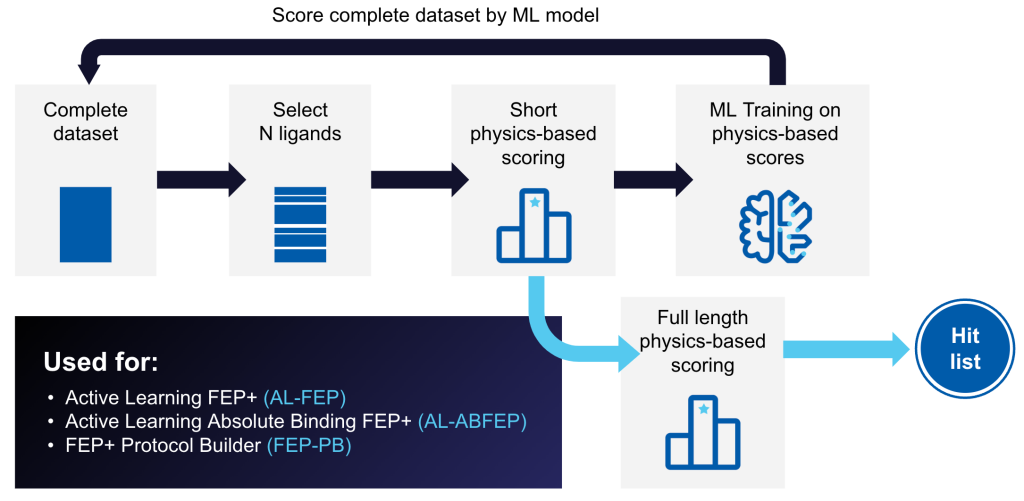
Active Learning Applications is a powerful tool that trains a machine learning (ML) model on physics-based data, such as FEP+ predicted affinities or Glide docking scores, iteratively sampled from a full library.

Trained models can rapidly generate predictions for new molecules and identify the highest-scoring compounds in ultra-large libraries at a fraction of the cost and speed of brute force methods.

Key applications across drug discovery

Active Learning Glide
Find potent hits in ultra-large libraries

Screen billions of compounds with Glide docking amplified by cutting-edge machine learning models in a fraction of the time. Use Active Learning to recover ~70% of the same top-scoring hits that would have been found from exhaustive docking of ultra-large libraries with Glide, for only 0.1% of the cost.

Active Learning FEP+
Explore diverse chemical space in lead optimization

Explore tens of thousands to hundred of thousands of idea compounds with Active Learning FEP+, against multiple hypotheses simultaneously, to quickly identify compounds that maintain or improve potency while achieving other design objectives.

FEP+ Protocol Builder
Expedite FEP+ use for challenging systems with a fully automated workflow

Rapidly generate accurate FEP+ protocols for systems that do not perform well with default settings. FEP+ Protocol Builder uses an Active Learning workflow to iteratively search the protocol parameter space to develop accurate FEP+ protocols, saving researcher time and increases the chances of successfully enabling FEP+.

Learn more

Active Learning Calculator

Glide (Dock All Compounds)

days
compute
cost

Active Learning Glide

Faster
days
compute
cost

For Compounds

Enter in the numbers for your project (type in the box or use slider) to compare compute time and cost.

*Estimated customer compute costs only, based on $0.06 per CPU hour and $.35 per GPU hour. Recommended hardware for AL-Learning Glide.
License costs are not included. Contact us for a quote.
We assume 1M of the best ligands are docked with the final model.

De Novo Design Workflow

Schrödinger’s De Novo Design Workflow is a fully-integrated, cloud-based design system for ultra-large scale chemical space exploration and refinement.

Starting from a hit molecule or lead series, the technology identifies synthetically tractable molecules that meet key project criteria by combining multiple compound enumeration strategies with an advanced filtering cascade (AutoDesigner) and rigorous potency scoring with free energy calculations (Active Learning FEP+).

Documentation & Tutorials

Get answers to common questions and learn best practices for using Schrödinger’s software.

Life Science Tutorial

Screening ultra-large libraries with Generative Glide

Screen billion-sized libraries in 24 hours with a generative ML approach.

Life Science Documentation

Active Learning Applications

Active Learning Glide documentation including online help and user manual.

Life Science Tutorial

Evaluating Large Ligand Libraries with Active Learning Glide

Set up a virtual screen to analyze a 1M ligand library from using Active Learning Glide.

Related Products

Learn more about the related computational technologies available to progress your research projects.

Glide

Industry-leading ligand-receptor docking solution

FEP+

High-performance free energy calculations for drug discovery

De Novo Design Workflow

Fully-integrated, cloud-based design system for ultra-large scale chemical space exploration and refinement

Publications

Browse the list of peer-reviewed publications using Schrödinger technology in related application areas.

Life Science Publication

Harnessing free energy calculations to achieve kinome-wide selectivity in drug discovery campaigns: Wee1 case study

Life Science Publication

Optimizing drug design by merging generative AI with a physics-based active learning framework

Life Science Publication

Active Learning FEP: Impact on Performance of AL Protocol and Chemical Diversity

Life Science Publication

FEP augmentation as a means to solve data paucity problems for machine learning in chemical biology

Life Science Publication

Pathfinder-Driven Chemical Space Exploration and Multiparameter Optimization in Tandem with Glide/IFD and QSAR-Based Active Learning Approach to Prioritize Design Ideas for FEP+ Calculations of SARS-CoV-2 PLpro Inhibitors

Life Science Publication

Discovery of a Novel Class of d-Amino Acid Oxidase Inhibitors Using the Schr’dinger Computational Platform

Life Science Publication

AutoDesigner, a De Novo Design Algorithm for Rapidly Exploring Large Chemical Space for Lead Optimization: Application to the Design and Synthesis of D-Amino Acid Oxidase Inhibitors

Materials Science Publication

Design of organic electronic materials with a goal-directed generative model powered by deep neural networks and high-throughput molecular simulations

Life Science Publication

Impacting Drug Discovery Projects with Large-Scale Enumerations, Machine Learning Strategies, and Free-Energy Predictions

Life Science Publication

Efficient Exploration of Chemical Space with Docking and Deep-Learning

Training & Resources

Online certification courses

Level up your skill set with hands-on, online molecular modeling courses. These self-paced courses cover a range of scientific topics and include access to Schrödinger software and support.

Tutorials

Learn how to deploy the technology and best practices of Schrödinger software for your project success. Find training resources, tutorials, quick start guides, videos, and more.

MS Transport

MS Transport

Efficient molecular dynamics (MD) simulation tool for predicting liquid viscosity, conductivity and diffusions of atoms and molecules

Materials Science

Overview

MS Transport provides access to MD simulation workflows for calculating shear viscosity, ionic conductivity and the isotropic and anisotropic diffusion coefficients for a particular type of atom or molecule. From the diffusion of Li+ ions in battery polymers to the viscosity of solvents, the equilibrium MD based workflows in MS Transport provide valuable insight into the performance of materials.

Key Capabilities

Leverage high-speed MD with Desmond to calculate diffusion, ionic conductivity and viscosity in industrially-relevant clock times
Calculate diffusion of gasses through matrices, ions through battery polymers, and additives in plastics with user-friendly workflows and analysis viewers
Predict viscosity with the latest equilibrium molecular dynamics approaches
Calculate transport properties at desired temperatures and explore the temperature dependence of diffusion, ionic conductivity and viscosity
Explore the salt concentration dependence of ionic conductivity of complex battery electrolyte formulations
Visualize mean squared displacement and pressure correlation plots
FeaturedMolecular dynamics simulations accelerate the development and optimization of recyclable tire materials

Molecular dynamics simulations accelerate the development and optimization of recyclable tire materials

Scientists from Evonik and Schrödinger gain a deeper understanding of the impact of additives and macrocyclic structures on trans-polyoctenamer rubber (TOR).

read the case study

Broad applications across materials science research areas

Get more from your ideas by harnessing the power of large-scale chemical exploration and accurate in silico molecular prediction.

Polymeric Materials
Energy Capture & Storage
Pharmaceutical Formulations & Delivery
Semiconductor
Consumer Packaged Goods

Documentation & Tutorials

Get answers to common questions and learn best practices for using Schrödinger’s software.

Materials Science Documentation

MS Transport

Efficient molecular dynamics (MD) simulation tool for predicting liquid viscosity and diffusions of atoms and molecules.

Materials Science Documentation

Materials Science Panel Explorer

Quickly learn which Schrödinger tools are the best fit for your research.

Materials Science Tutorial

Liquid Electrolyte Properties: Part 1

Learn to perform a variety of calculations on a liquid electrolyte system using Materials Science (MS) Maestro. These properties include: density, radial distribution function, viscosity, and dielectric properties such as polarizability, refractive index, and dielectric constant.

Materials Science Tutorial

Liquid Electrolyte Properties: Part 2

Learn to perform a variety of calculations on a liquid electrolyte system using Materials Science (MS) Maestro. These properties include: determining the radial distribution function, performing cluster analysis, and calculating the diffusion coefficient.

Materials Science Tutorial

Diffusion

Learn to use the Diffusion Coefficient Calculations and Results panels to study diffusion for a Li, TFSI and PEG system.

Materials Science Tutorial

Viscosity

Calculate shear viscosities of a series of alkanes.

Related Products

Learn more about the related computational technologies available to progress your research projects.

Desmond

High-performance molecular dynamics (MD) engine providing high scalability, throughput, and scientific accuracy

MS Maestro

Complete modeling environment for your materials discovery

OPLS4 & OPLS5 Force Field

A modern, comprehensive force field for accurate molecular simulations

MS CG

Efficient coarse-grained (CG) molecular dynamics (MD) simulations for large systems over long time scales

MS Penetrant Loading

Molecular dynamics (MD) modeling for predicting water loading and small molecule gas adsorption capacity of a condensed system

Force Field Builder

Efficient tool for optimizing custom torsion parameters in OPLS4

Publications

Browse the list of peer-reviewed publications using Schrödinger technology in related application areas.

Materials Science Publication

Data-Driven Design of Organic Semiconductors Exhibiting Low Reorganization Energy via Hierarchical Variational Autoencoders, Gaussian Mixture Regression, and Bayesian Optimization

Materials Science Publication

RedCat, an automated discovery workflow for aqueous organic electrolytes

Materials Science Publication

Band Gap and Reorganization Energy Prediction of Conducting Polymers by the Integration of Machine Learning and Density Functional Theory

Materials Science Publication

Designing polymersomes with surface-integrated nanoparticles through hierarchical phase separation

Materials Science Publication

Synthesis, optical and electrochemical properties of thiophene and thieno [3, 2-b] thiophene linked with structurally modified rhodanine based copolymers

Materials Science Publication

Stability enhancement of Amphotericin B using 3D printed biomimetic polymeric corneal patch to treat fungal infections

Materials Science Publication

Advancing efficiency in deep-blue OLEDs: Exploring a machine learning–driven multiresonance TADF molecular design

Materials Science Publication

Conformers influence on UV-absorbance of avobenzone

Materials Science Publication

Synthesis, computational studies and evaluation of benzisoxazole tethered 1,2,4-triazoles as anticancer and antimicrobial agents

Materials Science Publication

Unveiling a Novel Solvatomorphism of Anti-inflammatory Flufenamic Acid: X-ray Structure, Quantum Chemical, and In Silico Studies

Training & Resources

Online certification courses

Level up your skill set with hands-on, online molecular modeling courses. These self-paced courses cover a range of scientific topics and include access to Schrödinger software and support.

Tutorials

Learn how to deploy the technology and best practices of Schrödinger software for your project success. Find training resources, tutorials, quick start guides, videos, and more.

Quantum ESPRESSO Interface

Quantum ESPRESSO Interface

Integrated graphical user interface for nanoscale quantum mechanical simulations

Quantum ESPRESSO GUI

Overview

Quantum ESPRESSO, developed by Quantum ESPRESSO Foundation (QEF), is the leading high-performance, open-source quantum mechanical software package for nanoscale modeling of materials. Quantum ESPRESSO implements plane wave density-functional theory in conjunction with periodic boundary conditions and pseudopotentials.

Schrödinger collaborates with QEF in methods development and develops the proprietary Quantum ESPRESSO interface automating complex workflows for structure generation, calculations, and analysis. The QE Interface  provides a comprehensive graphical user interface for streamlined calculation set-up, job control, and results analysis, enabling ab initio modeling of bulk materials, their surfaces, and interfaces. The tool is embedded directly into MS Maestro to provide a simple user interface.

Key Capabilities

Provide predictions for bulk, surface and interface properties
Support Ultrasoft (US), Norm-Conserving (NC) and Projector Augmented Wave (PAW) pseudopotentials
Perform structural optimization and ab initio molecular dynamics
Simulate transition states and minimum energy paths using Nudged Elastic Bands (NEB) method 
Model linear response properties within Density Functional Perturbation theory (DFPT)
Predict spectroscopic properties
Calculate defect formation energy

Case studies & webinars

Discover how Schrödinger technology is being used to solve real-world research challenges.

Materials Science Webinar

Purposeful simulation: Maximising impact in surface chemistry modelling

In this webinar, learn about a variety of atomistic models of surfaces and gain perspective on the underlying rationale, benefits and limitations of each.

Materials Science Webinar

Schrödinger Materials Science Seminar Japan 2024 

《無料Webセミナー》材料開発向けシミュレーション・ソフトウェアおよびマテリアルズ・インフォマティクスの活用事例を紹介。

Materials Science Webinar

Taking experimentation digital: Materials innovation using atomistic simulation and machine learning at-scale

In this webinar, we introduce a modern approach to materials R&D using a digital chemistry platform for in silico analysis, optimization and discovery.

Materials Science Webinar

In silico materials development: Integrating atomistic simulation into academic chemistry and engineering labs

In this webinar, we explore Schrödinger’s leading physics-based and machine learning computational technologies and provide a comprehensive introduction to the capabilities of computational modeling in chemistry, materials science, and engineering.

Materials Science Webinar

Progress in understanding atomic level processing at the atomic scale

In this webinar, we dip into stories about how simulations have advanced our understanding of the growth mechanisms of ALD, and lately of ALE too.

Materials Science Webinar

Sublime Precursors: How Modelling Organometallics at Surfaces Drives Innovation in Materials Processing

In this webinar, we look at simulations of organometallic complexes as precursor molecules for the deposition or etching of materials.

Materials Science Webinar

Quick Start Workshop: Materials Simulation for Experimentalists

In this webinar, learn how an experimentalist can take advantage of simulation and modeling, as well as practical knowledge about how to get started.

Materials Science White Paper

Innovation in atomic-level processing with atomistic simulation and machine learning

Materials Science White Paper

How machine learning enables accurate prediction of precursor volatility

Materials Science White Paper

Massive theoretical screening of organic semiconductor materials using cloud computing

Broad applications across materials science research areas

Get more from your ideas by harnessing the power of large-scale chemical exploration and accurate in silico molecular prediction.

Organic Electronics
Energy Capture & Storage
Catalysis & Reactivity
Semiconductor
Metals, Alloys & Ceramics

Documentation & Tutorials

Get answers to common questions and learn best practices for using Schrödinger’s software.

Materials Science Tutorial

Catalytic Selectivity Through Microkinetic Modeling

Learn to analyze the selectivity of the catalytic oxidation of CO and H2 on a Pd(111) surface using Microkinetic Modeling (MKM) calculations.

Materials Science Documentation

Machine Learning Force Fields

Machine Learning Force Fields (MLFFs) offer a novel approach for predicting the energies of arbitrary systems.

Materials Science Quick Reference Sheet

MLFF Calculations: Quick Reference Sheet

Get an overview of the MLFF Calculations panel for predicting quantum mechanical calculations for systems using machine learning force fields.

Materials Science Tutorial

Machine Learning Force Field

Learn how to use machine learning force field optimization methods to prepare and simulate various systems.

Materials Science Documentation

Quantum ESPRESSO Interface

A comprehensive graphical user interface for calculation set-up, job control and results analysis.

Materials Science Tutorial

Ab initio Molecular Dynamics Simulations of Li-ion Diffusion in Solid State Electrolytes

Learn to perform an ab initio molecular dynamics simulation and calculate the Li-ion diffusion in a solid state electrolyte.

Materials Science Tutorial

Phase Diagrams

Plot phase diagrams for a two- and three-component system.

Materials Science Tutorial

Defect Formation Energy Calculation

Learn to generate defects and calculate their formation energy, including a correction for charged defects.

Materials Science Tutorial

Electronic Structure Calculations of Bulk Crystals Using Quantum ESPRESSO

Learn the basics of the Quantum ESPRESSO interface for periodic density functional theory (DFT) calculations of bulk solids, including convergence testing, geometry optimization, band structures, the density of states (DOS), and the projected density of states (PDOS).

Materials Science Tutorial

Atomic Layer Deposition

Tutorial to show how to use adsorption tools to model atomic layer deposition (ALD) processes.

Related Products

Learn more about the related computational technologies available to progress your research projects.

Jaguar

Quantum mechanics solution for rapid and accurate prediction of molecular structures and properties

MS Maestro

Complete modeling environment for your materials discovery

DeepAutoQSAR

Automated, scalable solution for the training and application of predictive machine learning models

AutoTS

Automatic workflow for locating transition states for elementary reactions

MS Reactivity

Automated workflows for design, optimization, and unsupervised mechanism discovery in molecular chemistry

Training & Resources

Online certification courses

Level up your skill set with hands-on, online molecular modeling courses. These self-paced courses cover a range of scientific topics and include access to Schrödinger software and support.

Tutorials

Learn how to deploy the technology and best practices of Schrödinger software for your project success. Find training resources, tutorials, quick start guides, videos, and more.
MS Penetrant Loading

MS Penetrant Loading

Molecular dynamics (MD) modeling for predicting water loading and small molecule gas adsorption capacity of a condensed system

Materials Science: Penetrant Loading

Overview

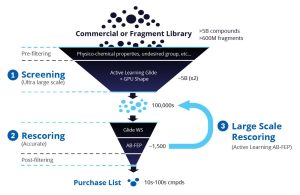
MS Penetrant Loading allows simulations of the loading of a condensed system such as a polymer, zeolite, or molecular solid by a small rigid molecule, such as water or methane. The calculation provides a measure of the hygroscopicity or loading capacity of the condensed phase. It runs Grand Canonical Monte Carlo (GCMC) simulations in Desmond, allowing for the combination of Monte Carlo and molecular dynamics (MD) for substrate relaxation. This results in more realistic loading while allowing for the quick screening of materials for equilibrium adsorption.

Key Capabilities

Calculate small molecule adsorption into solid or liquid materials using GCMC combined with NVT or NPT MD
Calculate uptake of water at varying temperatures and humidities
View results in standard experiment formats such as % uptake and % volume change
Provide access to high speed simulation workflows with Desmond GPU 
Consider the impact of water on properties such as glass transition temperature (Tg)
Provide insights into the swelling of materials during water uptake

Case studies & webinars

Discover how Schrödinger technology is being used to solve real-world research challenges.

Materials Science Webinar

Schrödinger Materials Science Seminar Japan 2024 

《無料Webセミナー》材料開発向けシミュレーション・ソフトウェアおよびマテリアルズ・インフォマティクスの活用事例を紹介。

Materials Science Webinar

Taking experimentation digital: Materials innovation using atomistic simulation and machine learning at-scale

In this webinar, we introduce a modern approach to materials R&D using a digital chemistry platform for in silico analysis, optimization and discovery.

Materials Science Webinar

Beyond AI: The importance of physics-based simulations in next generation food design

In this webinar, we explore how physics-based simulations are used in food research and the synergy that can be achieved when they are combined with machine learning models.

Materials Science Webinar

Chemical innovation for regulatory changes: Leveraging digital simulations for efficient molecular design

In this webinar, we explore how digital simulations and molecular modeling tools can be leveraged to better screen substitute chemistry.

Materials Science Webinar

In silico materials development: Integrating atomistic simulation into academic chemistry and engineering labs

In this webinar, we explore Schrödinger’s leading physics-based and machine learning computational technologies and provide a comprehensive introduction to the capabilities of computational modeling in chemistry, materials science, and engineering.

Materials Science Case Study

Molecular dynamics and coarse-grained simulations facilitate the design of new eco-friendly cosmetic formulations

Materials Science Webinar

Cutting-Edge Cosmetics: Innovating for Sustainability with Machine Learning & Molecular Simulations

In this webinar, we explore the challenges chemists face, and how new approaches can help find solutions quicker.

Materials Science Case Study

Exploration and validation of polycyanurate thermoset crosslinking mechanisms

Materials Science Case Study

Prediction of moisture adsorption and effects on amorphous amylose starch

Materials Science Webinar

Overview of Molecular Modelling for Formulations

In this webinar, we give an overview of molecular modeling calculations relevant for formulations in the pharmaceuticals, inks, 3D printing, polymers, batteries and agricultural chemicals industries.

Broad applications across materials science research areas

Get more from your ideas by harnessing the power of large-scale chemical exploration and accurate in silico molecular prediction.

Polymeric Materials
Pharmaceutical Formulations & Delivery
Consumer Packaged Goods
Organic Electronics
Energy Capture & Storage

Documentation & Tutorials

Get answers to common questions and learn best practices for using Schrödinger’s software.

Materials Science Documentation

MS Penetrant Loading

Molecular dynamics (MD) modeling for predicting water loading and small molecule gas adsorption capacity of a condensed system.

Materials Science Tutorial

Penetrant Loading

Learn to use the penetrant loading and viewer panels to place water molecules into a crosslinked polymer matrix using grand canonical Monte Carlo and molecular dynamics simulation.

Related Products

Learn more about the related computational technologies available to progress your research projects.

MS Maestro

Complete modeling environment for your materials discovery

OPLS4 & OPLS5 Force Field

A modern, comprehensive force field for accurate molecular simulations

Desmond

High-performance molecular dynamics (MD) engine providing high scalability, throughput, and scientific accuracy

MS Transport

Efficient molecular dynamics (MD) simulation tool for predicting liquid viscosity, conductivity and diffusions of atoms and molecules

MS Mobility

Atomistic simulation and analysis of charge mobility in solid-state films of organic semiconductors

MS CG

Efficient coarse-grained (CG) molecular dynamics (MD) simulations for large systems over long time scales

Publications

Browse the list of peer-reviewed publications using Schrödinger technology in related application areas.

Materials Science Publication

Data-Driven Design of Organic Semiconductors Exhibiting Low Reorganization Energy via Hierarchical Variational Autoencoders, Gaussian Mixture Regression, and Bayesian Optimization

Materials Science Publication

RedCat, an automated discovery workflow for aqueous organic electrolytes

Materials Science Publication

Band Gap and Reorganization Energy Prediction of Conducting Polymers by the Integration of Machine Learning and Density Functional Theory

Materials Science Publication

Designing polymersomes with surface-integrated nanoparticles through hierarchical phase separation

Materials Science Publication

Synthesis, optical and electrochemical properties of thiophene and thieno [3, 2-b] thiophene linked with structurally modified rhodanine based copolymers

Materials Science Publication

Stability enhancement of Amphotericin B using 3D printed biomimetic polymeric corneal patch to treat fungal infections

Materials Science Publication

Advancing efficiency in deep-blue OLEDs: Exploring a machine learning–driven multiresonance TADF molecular design

Materials Science Publication

Conformers influence on UV-absorbance of avobenzone

Materials Science Publication

Synthesis, computational studies and evaluation of benzisoxazole tethered 1,2,4-triazoles as anticancer and antimicrobial agents

Materials Science Publication

Unveiling a Novel Solvatomorphism of Anti-inflammatory Flufenamic Acid: X-ray Structure, Quantum Chemical, and In Silico Studies

Training & Resources

Online certification courses

Level up your skill set with hands-on, online molecular modeling courses. These self-paced courses cover a range of scientific topics and include access to Schrödinger software and support.

Tutorials

Learn how to deploy the technology and best practices of Schrödinger software for your project success. Find training resources, tutorials, quick start guides, videos, and more.

MS Morph

MS Morph

Efficient modeling tool for organic crystal habit prediction

Materials Science: Morph

Overview

Crystal morphology critically affects many aspects of drug formulation and manufacturability. To some extent it can be controlled by a suitable choice of solvent and additives and crystallization conditions, such as temperature and supersaturation. Optimized crystal morphology helps to Increase the efficiency of the filtration process of the active pharmaceutical ingredient (API), improve product purity and tabletability, improve API bioavailability, optimize drying, packaging, handling and storage, and comply with toxicity requirements

MS Morph predicts crystal shape (or habits) for molecular crystals based on the surface energies and Wullf’s theorem. It provides valuable insights for crystal growth mode and powder processing.

Key Capabilities

Gain valuable insights for crystal growth mode and powder processing

  • Utilize molecular dynamics (MD) simulations for calculation and ranking of surface energies for a custom range of surface Miller indices
  • Predict equilibrium shape of crystallites based on relative surface energies and Wulff’s theorem

Documentation & Tutorials

Get answers to common questions and learn best practices for using Schrödinger’s software.

Materials Science Documentation

MS Morph

Efficient modeling tool for organic crystal habit prediction.

Materials Science Documentation

Materials Science Panel Explorer

Quickly learn which Schrödinger tools are the best fit for your research.

Materials Science Tutorial

Crystal Morphology

Learn to predict the macroscopic shape of a crystal using the Crystal Morphology and Wulff Viewer panels.

Broad applications across materials science research areas

Get more from your ideas by harnessing the power of large-scale chemical exploration and accurate in silico molecular prediction.

Organic Electronics
Metal, Alloys & Ceramics
Pharmaceutical Formulations & Delivery
Catalysis & Reactivity

Related Products

Learn more about the related computational technologies available to progress your research projects.

Desmond

High-performance molecular dynamics (MD) engine providing high scalability, throughput, and scientific accuracy

MS Transport

Efficient molecular dynamics (MD) simulation tool for predicting liquid viscosity, conductivity and diffusions of atoms and molecules

MS Mobility

Atomistic simulation and analysis of charge mobility in solid-state films of organic semiconductors

MS Dielectric

Automatic workflow to calculate dielectric properties and refractive index

Training & Resources

Online certification courses

Level up your skill set with hands-on, online molecular modeling courses. These self-paced courses cover a range of scientific topics and include access to Schrödinger software and support.

Tutorials

Learn how to deploy the technology and best practices of Schrödinger software for your project success. Find training resources, tutorials, quick start guides, videos, and more.

MS Mobility

MS Mobility

Atomistic simulation and analysis of charge mobility in solid-state films of organic semiconductors

Materials Science: Mobility

Overview

MS Mobility utilizes Marcus rate theory and kinetic Monte Carlo (KMC) approach to analyze factors affecting charge mobility in amorphous and crystalline solids. The module automatically analyzes provided solid morphology and calculates all necessary quantum mechanical parameters. The calculated parameters are passed into the KMC calculations or stored for further calculations and analysis.

Key Capabilities

Predict charge carrier mobility for molecular semiconductors
Calculate electron and hole hopping rates based on Marcus theory
Analyze how critical theory parameters such as site and reorganization energies and coupling integrals are affected by molecular film morphology
Analyze mobility as function of field direction, temperature, and charge carrier concentration
Allow visualization of most probable charge trajectories and trap sites and their relation to a local morphology

Documentation & Tutorials

Get answers to common questions and learn best practices for using Schrödinger’s software.

Materials Science Documentation

MS Mobility

Atomistic simulation and analysis of charge mobility in solid-state films of organic semiconductors.

Materials Science Documentation

Materials Science Panel Explorer

Quickly learn which Schrödinger tools are the best fit for your research.

Materials Science Tutorial

Kinetic Monte Carlo (KMC) Charge Mobility

Learn how to calculate charge mobility in semiconducting molecular devices.

Broad applications across materials science research areas

Get more from your ideas by harnessing the power of large-scale chemical exploration and accurate in silico molecular prediction.

Organic Electronics
Catalysis & Reactivity
Energy Capture & Storage
Thin Film Processing

Related Products

Learn more about the related computational technologies available to progress your research projects.

Jaguar

Quantum mechanics solution for rapid and accurate prediction of molecular structures and properties

MS Maestro

Complete modeling environment for your materials discovery

MS Dielectric

Automatic workflow to calculate dielectric properties and refractive index

MS Penetrant Loading

Molecular dynamics (MD) modeling for predicting water loading and small molecule gas adsorption capacity of a condensed system

MS Morph

Efficient modeling tool for organic crystal habit prediction

QSite

High-performance QM/MM program

Training & Resources

Online certification courses

Level up your skill set with hands-on, online molecular modeling courses. These self-paced courses cover a range of scientific topics and include access to Schrödinger software and support.

Tutorials

Learn how to deploy the technology and best practices of Schrödinger software for your project success. Find training resources, tutorials, quick start guides, videos, and more.

Jaguar

Jaguar for Materials Science

Quantum mechanics solution for rapid and accurate prediction of molecular structures and properties

Jaguar for Materials Science

Structure prediction of molecular systems at unmatched speed

Jaguar is a well-validated, robust, high-performance quantum mechanics package that specializes in fast predictions of electronic structure and properties for molecular systems of all sizes via the use of pseudospectral density functional theory (PS-DFT) based method which scales favorably with system size.

Jaguar can also be used for the ab initio-assisted design and high throughput virtual screening of new materials solutions with novel or enhanced properties for a variety of applications such as catalysts, batteries, organic electronics, and more.

Key Capabilities

Perform a wide range of QM calculations

Including geometry optimization, transition state search, thermo-chemical properties, implicit solvation, spectra prediction, and more

Access a diversity of DFT functionals

With analytic second derivatives and dispersion corrections

Speed up calculations at a negligible loss of accuracy

Using the optional pseudospectral approximation

Use automated workflows for advanced analysis

Including pKa prediction, conformationally-averaged VCD and ECD spectroscopy, tautomer generation and ranking, heat of formation, etc.

Generate publication-quality 3D surfaces

Including molecular orbitals, electrostatic potential projected on isodensity, spin density, non-covalent interactions, etc.

Case studies & webinars

Discover how Schrödinger technology is being used to solve real-world research challenges.

Materials Science Webinar

Accelerating OLED innovation with multi-scale, multi-physics simulations

Join us to explore how integrated digital workflows drive the design of next-generation, high-performance OLEDs.

Materials Science Webinar

Electrodes, electrolytes & interfaces: Harnessing molecular simulation and machine learning for rapid advancements in battery materials development

In this webinar, we demonstrate the application of automated solutions for accurate prediction of electrode materials.

Materials Science Webinar

Schrödinger Materials Science Seminar Japan 2024 

《無料Webセミナー》材料開発向けシミュレーション・ソフトウェアおよびマテリアルズ・インフォマティクスの活用事例を紹介。

Materials Science Webinar

Taking experimentation digital: Materials innovation using atomistic simulation and machine learning at-scale

In this webinar, we introduce a modern approach to materials R&D using a digital chemistry platform for in silico analysis, optimization and discovery.

Materials Science Webinar

Automated digital prediction of chemical degradation products

In this webinar, we present Schrödinger’s enhanced Nanoreactor, expanding upon the tool developed by Grimme and co-workers with many new features, including improved energy refinement of results and integrated user interface.

Materials Science Webinar

In silico materials development: Integrating atomistic simulation into academic chemistry and engineering labs

In this webinar, we explore Schrödinger’s leading physics-based and machine learning computational technologies and provide a comprehensive introduction to the capabilities of computational modeling in chemistry, materials science, and engineering.

Materials Science Webinar

Progress in understanding atomic level processing at the atomic scale

In this webinar, we dip into stories about how simulations have advanced our understanding of the growth mechanisms of ALD, and lately of ALE too.

Materials Science Case Study

De novo design of hole-conducting molecules for organic electronics

Materials Science Webinar

Accelerating the Design of Asymmetric Catalysts with a Digital Chemistry Platform

In this webinar, we demonstrate how Schrödinger’s advanced digital chemistry platform can be used to accelerate the direct design and discovery of asymmetric catalysts.

Materials Science Webinar

Vibrational and electronic circular dichroism calculations with Jaguar

In this webinar, we review the existing capabilities of Jaguar with regards to VCD and ECD and show examples of applications of these computational techniques.

Jaguar Datasheet for Materials Science

Learn more about the technical details of Jaguar and its applications.

Broad applications across materials science research areas

Get more from your ideas by harnessing the power of large-scale chemical exploration and accurate in silico molecular prediction.

Catalysis & Reactivity
Energy Capture & Storage
Organic Electronics

Documentation & Tutorials

Get answers to common questions and learn best practices for using Schrödinger’s software.
Life Science Tutorial

Modeling Blood-Brain Barrier Penetration Using E-sol

Compute energy of solvation (E-sol) values and analyze the results to assess blood-brain barrier (BBB) permeability.

Materials Science Tutorial

Computational Ellipsometry

Learn how to compute the refractive index and extinction coefficient of systems of organic optoelectronics.

Materials Science Documentation

Machine Learning Force Fields

Machine Learning Force Fields (MLFFs) offer a novel approach for predicting the energies of arbitrary systems.

Materials Science Quick Reference Sheet

MLFF Calculations: Quick Reference Sheet

Get an overview of the MLFF Calculations panel for predicting quantum mechanical calculations for systems using machine learning force fields.

Materials Science Tutorial

Machine Learning Force Field

Learn how to use machine learning force field optimization methods to prepare and simulate various systems.

Materials Science Documentation

Jaguar

A well-validated, robust, high-performance quantum mechanics package.
Life Science Documentation

Jaguar

A well-validated, robust, high-performance quantum mechanics package.

Life Science Tutorial

Computational Ellipsometry

Learn how to compute the refractive index and extinction coefficient of systems of organic optoelectronics.

Materials Science Tutorial

Introduction to Geometry Optimizations, Functionals and Basis Sets

Perform geometry optimizations on simple organic molecules and learn basics regarding functionals and basis sets.

Materials Science Tutorial

Singlet-Triplet Intersystem Crossing Rate

Learn to compute the singlet-triplet intersystem crossing rate for a system of organic optoelectronics.

Related Products

Learn more about the related computational technologies available to progress your research projects.

Virtual Cluster

Secure, scalable environment for running simulations on the cloud

MS Maestro

Complete modeling environment for your materials discovery

GA Optoelectronics

Design solution for novel molecular materials in optoelectronic applications based on a generative algorithm

AutoTS

Automatic workflow for locating transition states for elementary reactions

MS Mobility

Atomistic simulation and analysis of charge mobility in solid-state films of organic semiconductors

MS Dielectric

Automatic workflow to calculate dielectric properties and refractive index

MS Reactivity

Automated workflows for design, optimization, and unsupervised mechanism discovery in molecular chemistry

Publications

Browse the list of peer-reviewed publications using Schrödinger technology in related application areas.

Materials Science Publication

Multiobjective Design of Electrolyte Solvents via Physics-Based Modeling and Reinforcement Learning

Materials Science Publication

Quantum-Enhanced Neural Exchange-Correlation Functionals

Materials Science Publication

Screening Antioxidant Ingredients Using Quantum Mechanics and Machine Learning

Materials Science Publication

Band Gap and Reorganization Energy Prediction of Conducting Polymers by the Integration of Machine Learning and Density Functional Theory

Life Science Publication

Correction to “Calculating Apparent pKa Values of Ionizable Lipids in Lipid Nanoparticles”

Materials Science Publication

Charge Transport Regulation in Solution-Processed OLEDs by Indenocarbazole–Triazine Bipolar Host Copolymers

Materials Science Publication

A density functional theory study of keto-enol tautomerism in 1,2-cyclodiones: Substituent effects on reactivity and thermodynamic stability

Life Science Publication

In silico enabled discovery of KAI-11101, a preclinical DLK inhibitor for the treatment of neurodegenerative disease and neuronal injury

Materials Science Publication

Catalytic Intermolecular Asymmetric [2π + 2σ] Cycloadditions of Bicyclo[1.1.0]butanes: Practical Synthesis of Enantioenriched Highly Substituted Bicyclo[2.1.1]hexanes

Materials Science Publication

Investigation of the atomic layer etching mechanism for Al2O3 using hexafluoroacetylacetone and H2 plasma

Training & Resources

Online certification courses

Level up your skill set with hands-on, online molecular modeling courses. These self-paced courses cover a range of scientific topics and include access to Schrödinger software and support.

Tutorials

Learn how to deploy the technology and best practices of Schrödinger software for your project success. Find training resources, tutorials, quick start guides, videos, and more.